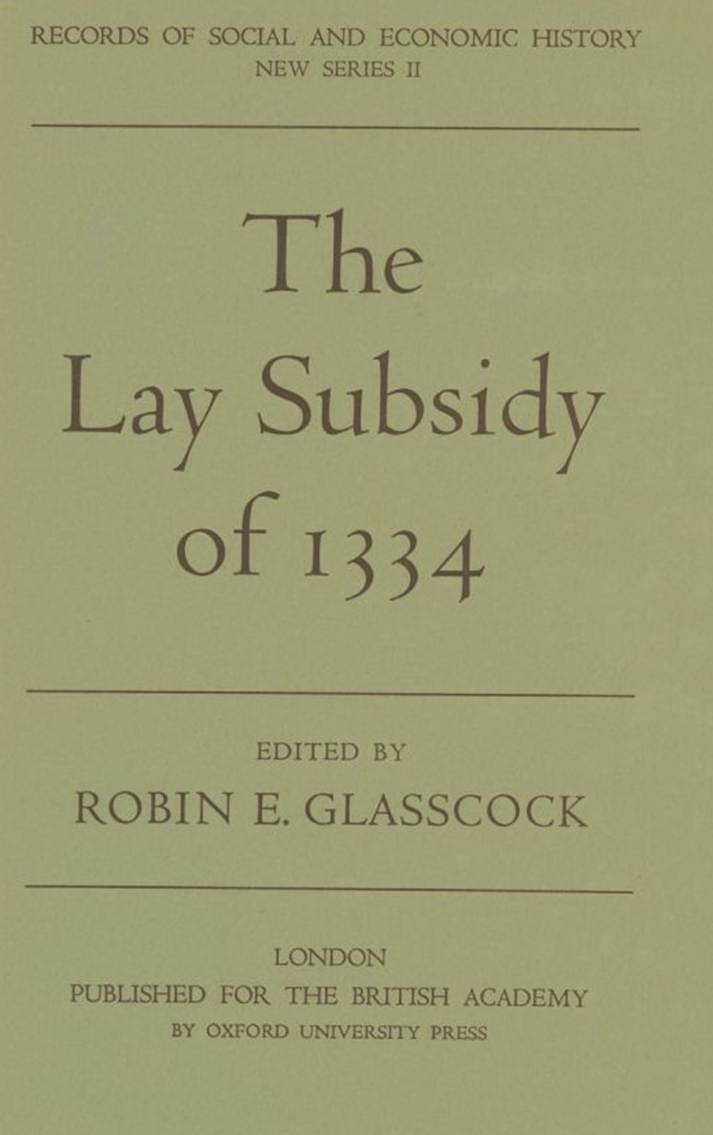
Lay Subsidies
Medieval taxation
|
Return to the Home Page of the Farndale Family
Website |
The story of one family’s journey through two
thousand years of British History |
The 83 family lines into which the family is divided.
Meet the whole family and how the wider family is related |
Members of the historical family ordered by date of
birth |
Links to other pages with historical research and
related material |
The story of the Bakers of Highfields, the Chapmans,
and other related families |
Subsidy
Rolls are records of taxation in England made
between the 12th and 17th centuries. They are often valuable sources of
historical information.
The
lists are arranged by county, and the description of each document indicates
the area covered, usually by hundred or wapentake.
The 1332 subsidy was the first for which many assessments survive. It was
primarily confined to prosperous householders. The poll tax returns of 1378-80,
which in theory covered all male adults except the itinerant and the very poor,
give occupations and the relationships between members of the household. The
subsidies of 1532-1535 again covered extensively the householders of middling
and higher status.
The
best known surviving assessments are probably the hearth tax returns
from 1662-1674, which give the names of householders and number of hearths for
which they were responsible. County volumes of liable householders have been
published by the British Record Society.
Records
of many other taxes are listed in M Jurkowski, C Smith and D
Crook, Lay Taxes in England and
Wales, 1188-1688.
The subsidy was
imposed upon persons according to the reputed value (moderate estimate) of
their estates. The rate at one time was fixed as 4s for land and
2s 8d for goods. The word subsidy is used to define a
specific set of records as well as an umbrella name for a group of records.
Lay Subsidy Rolls included the taxes
assessed against the laity ("common" people). Clerical Subsidies were
similarly collected at the rate of 4s assessed on ecclesiastical
preferments, and made by the clergy in Convocation and afterwards confirmed by
Parliament.
Records
Subsidies
consist of rolls of accounts, assessments, inquisitions, certificates and other
documents bearing on the assessment and collection of the following items.
· Hidage
and carucage, on lands not held by military service.
·
Tallage,
paid by the King's ancient demesnes, and by cities and towns.
·
Scutages, in lieu of military service.
·
Subsidies, of a percentage (tenth, fifteenth, etc.) on
moveables.
·
Poll taxes, per head on all types of land.
· Hearth
tax, 2s per year for each hearth, with some exceptions.
Information in the
records
Between
the years 1290-1334, the names of the people paying the tax, usually the
freeholder, were entered on a roll. The rate of the tax was given at the head
of the roll. The amount assessed depended on how much money the Crown needed
for various military campaigns in France, Scotland and Wales. Rolls were
arranged village by village and listed the names of the individuals responsible
to pay the tax. From 1334 to about 1542, the total quotas were listed along
with place names; no individuals were recorded. The Great Subsidy of 1524-5
lists all people over the age of 16 years with income from land or with taxable
goods worth £2 per annum, or with annual wages of £1 or more.
Value of the Records
The
value of these records is in the evidence they provide, to place an individual
in a specific parish at a given time. There are instances where escaped the
assessment. There is evidence that some rolls appeared to contain only a
fraction of the population. Combined with other lists and returns, the local
historian can study:
· Changes
in medieval population and
wealth.
·
Development of place-names and surnames
· Development
of crafts and trades.
Finding the records
Many
printed editions of the original subsidy rolls exist, leaving little need for a
person to go to the originals. Subsidy Rolls are housed at The
National Archives, Kew, in class E 179.
Extant items cover the time period for approximately 1154 to 1700. They are
sub-divided into two series: Lay and Clerical.
For
additional information, read Tax Records in England.