Roulston Scar
A massive Iron Age promontory Hill
Fort only 20km from Farndale
Directions
As you
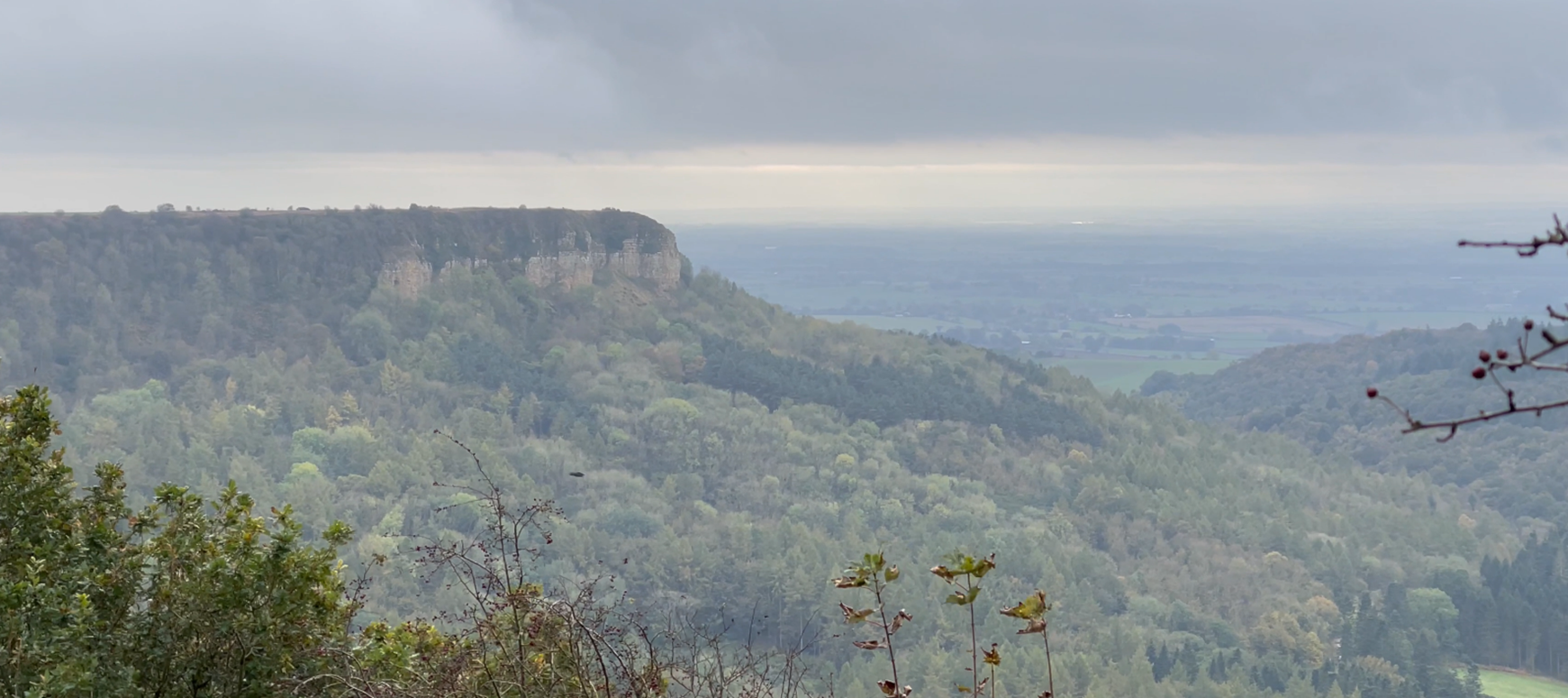
follow the A170 between Thirsk and Helmsley you will follow a steep climb at
Sutton Bank and you will see before you a wooded cliff which dominates the
land. What might not be immediately apparent is that this once formed an Iron
Age hill fort on colossal scale.

There is a
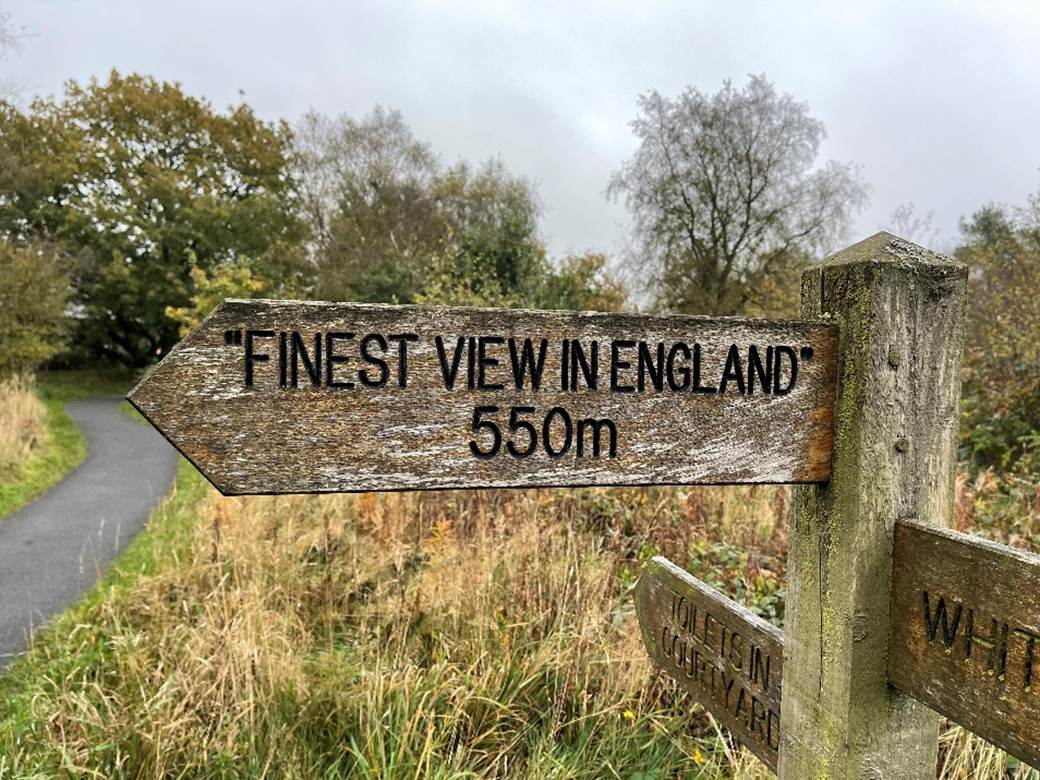
car park and visitor centre at the top of the hill. It costs a bit to park your
car. From there you can walk along the ridgeline by following the Cleveland
Way, and after about a kilometre you will come to the hillfort of Roulston
Scar. A little further along you will also see the top of a preserved hill
figure, known as the
Kilburn White Horse, a Victorian work, inspired by the story of the Kilburn
Horse.
Alternatively
you can take the minor road which leads to the Yorkshire Gliding Club and there
is a car park at the end. From there you can follow a slightly shorter path to
Roulston Scar.
Iron Age
Promontory Hill Fort on Colossal Scale
Roulston
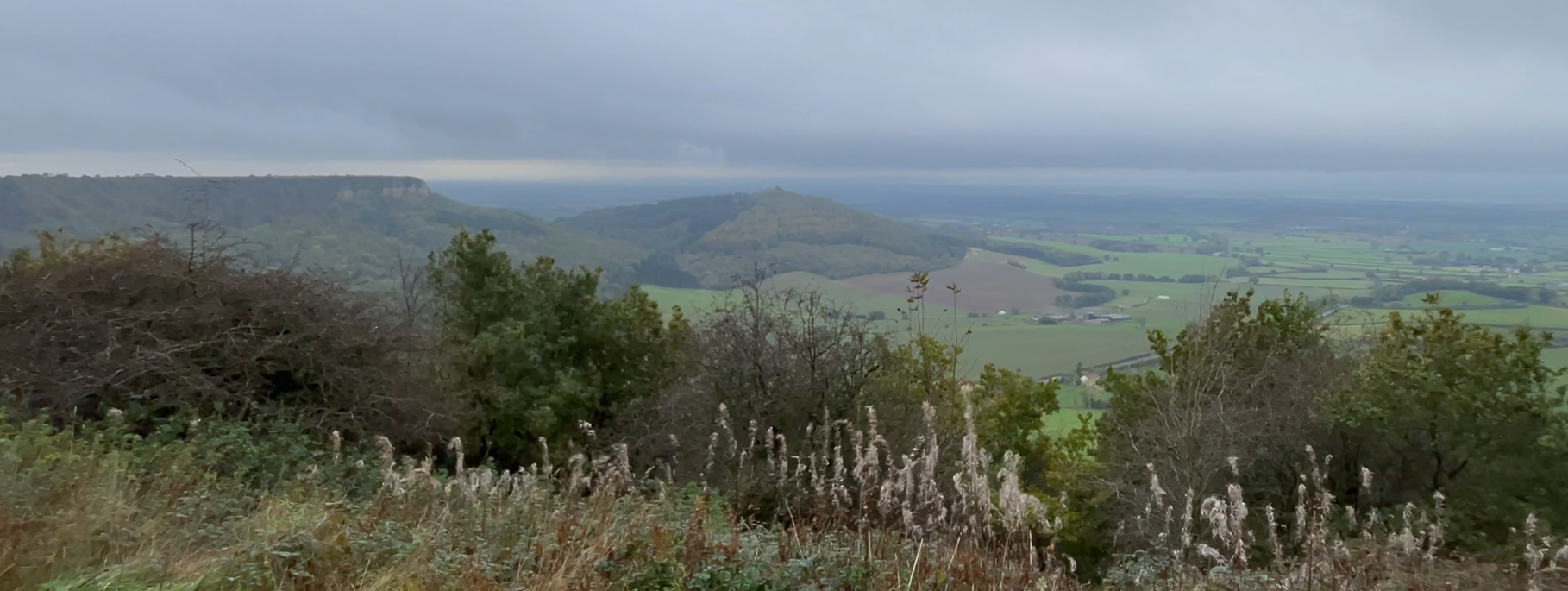
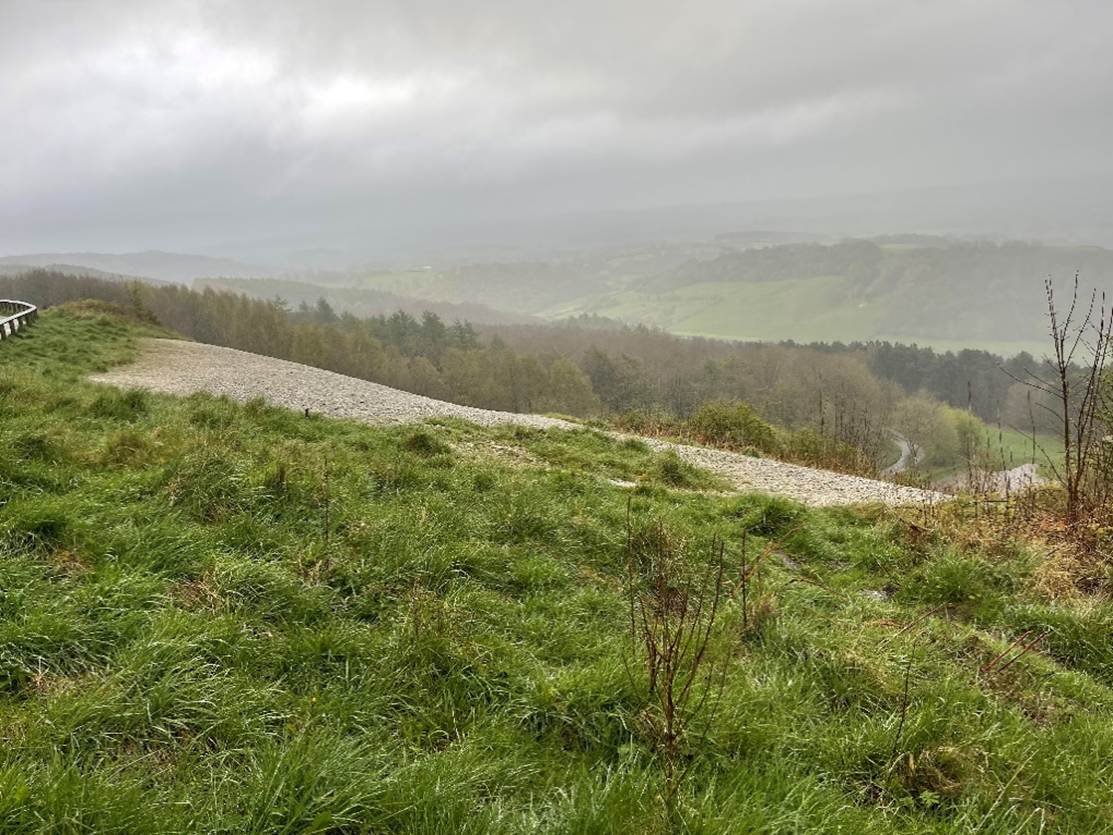
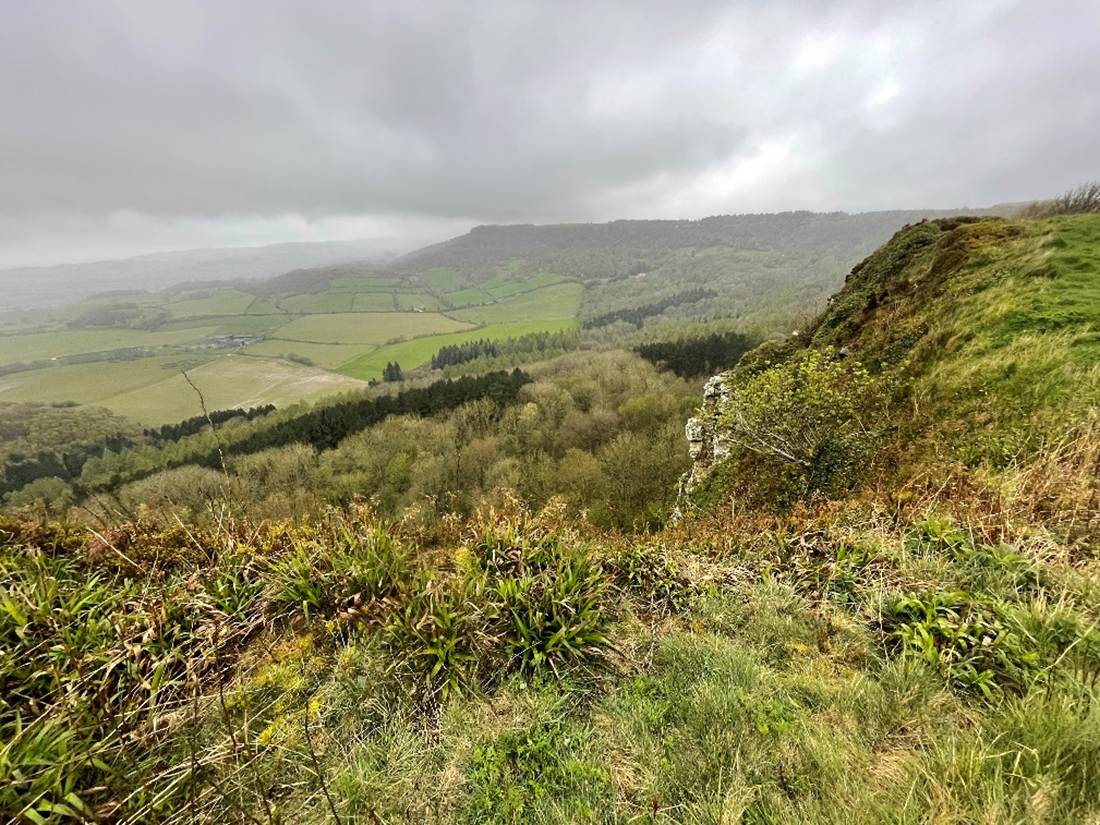
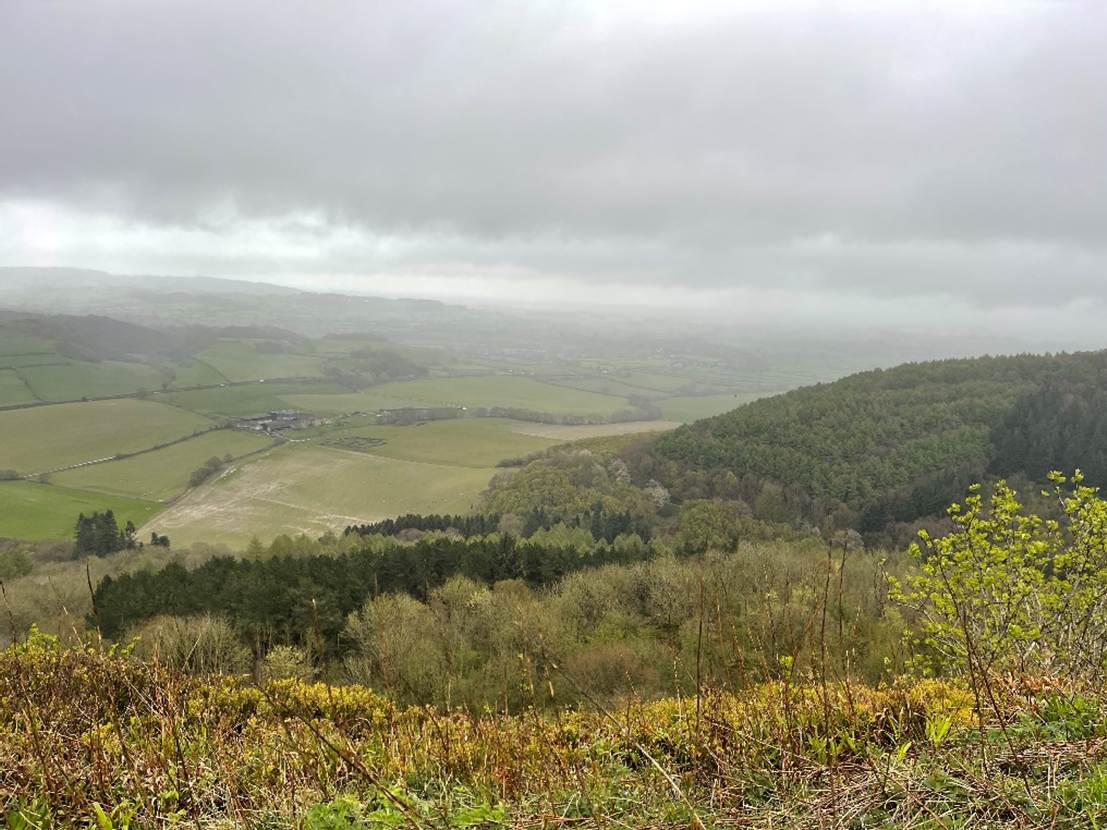
Scar at Sutton Bank is a limestone cliff which overlooks the Vale of York,
between Helmsley and Thirsk, some 20km to the west of Kirkbymoorside and
Farndale. It is a large Iron Age promontory fort dating to about 500 to 400
BCE.


The fort is
built of timber palisades encircled by a two kilometre circuit of ramparts cut
out of solid limestone. The scale of the site is extraordinary.
The English
Heritage archaeologist Alastair Oswald was astonished by its scale, “Such a
large fort would have taken a vast amount of timber and labour to build, which
poses many more intriguing questions.”
Roulston
Scar is the largest of a series of promontory forts located along the west and
north edges of the Hambleton Hills. Promontory forts are a type of hillfort in
which conspicuous, naturally-defended sites are adapted as enclosures by earth
or stone ramparts placed across the neck of a spur to divide it from the
surrounding land.
The large,
impressive scale of the fort was likely to have demonstrated aristocratic
prestige as well as its defensive nature. The fort might have been sited on a
boundary between the late Iron Age tribes known as the Parisi and Brigantes.
or
Go Straight to Chapter 6 – the
Primeval Swamp
Report on
a Bronze Age Burial at Sutton Bank, Edward Fawcett, Yorkshire Archaeological Journal, Volume
33, page 419.