Fenton House
A
history of Fenton House
|
Return to the Home Page of the Bakers Family part of the website |
The Bakers of Highfields Story
The Story of the Dods and Bakers and of Highfields,
Fenton House and Hasfield Court. A journey through the history of Cheshire
and Staffordshire, an Anglo-Saxon nobleman who retained his lands after the
Conquest, pottery at Stoke on Trent, an encounter with Elgar, and the history
of an Elizabethan manor house at Audlem |
The family tree of the Bakers of Highfields |
The Family Tree of the Dods, predecessors to the
Bakers of Highfields |
The Bakers of
Fenton House and Hasfield Court
The Family Tree of the pottery Bakers of Stoke on Trent |
The Family Tree of the Bellyse Family |
The main part
of this website tells the story of the Farndale family from Yorkshire Descendants of Arthur Baker, the story of the Farndale
ancestry is told through the main part of this website You can also return to the Farndale
website home page |
The genealogy of the family of James Hall, linked to
the Baker family through marriage to Arthur Baker |
Headlines of are
in brown.
Dates are in red.
Hyperlinks to
other pages are in dark
blue.
References and
citations are in turquoise.
Context and local
history are in purple.
This page is work in progress
Fenton House in Stoke-on-Trent was
a prominent late eighteenth century mansion built by the wealthy industrialist
William Baker near City Road and Glebedale Road. It
served as the family home and administrative hub for the prominent Bourne & Baker pottery dynasty, before
eventually being sold and demolished to make way for community healthcare
facilities.
Fenton was built in the late eigtheenth century on high ground alongside the family's
expanding pottery works by William Baker and his stepfather Ralph Bourne.
The Baker Firm evolved into the
largest manufacturing firm in Fenton by the mid nineteenth century under
William Baker (1800–65), employing nearly 500 workers. The family enterprise
expanded to include the adjacent Glebe Colliery and local brickworks to supply
coal and raw materials directly to their pot-banks.
As industrial operations wound down
during the Great Depression, the historic property was sold to the local parish
in 1931.
The old estate grounds were
repurposed, with the original structure eventually cleared to establish the
Fenton Health Centre.
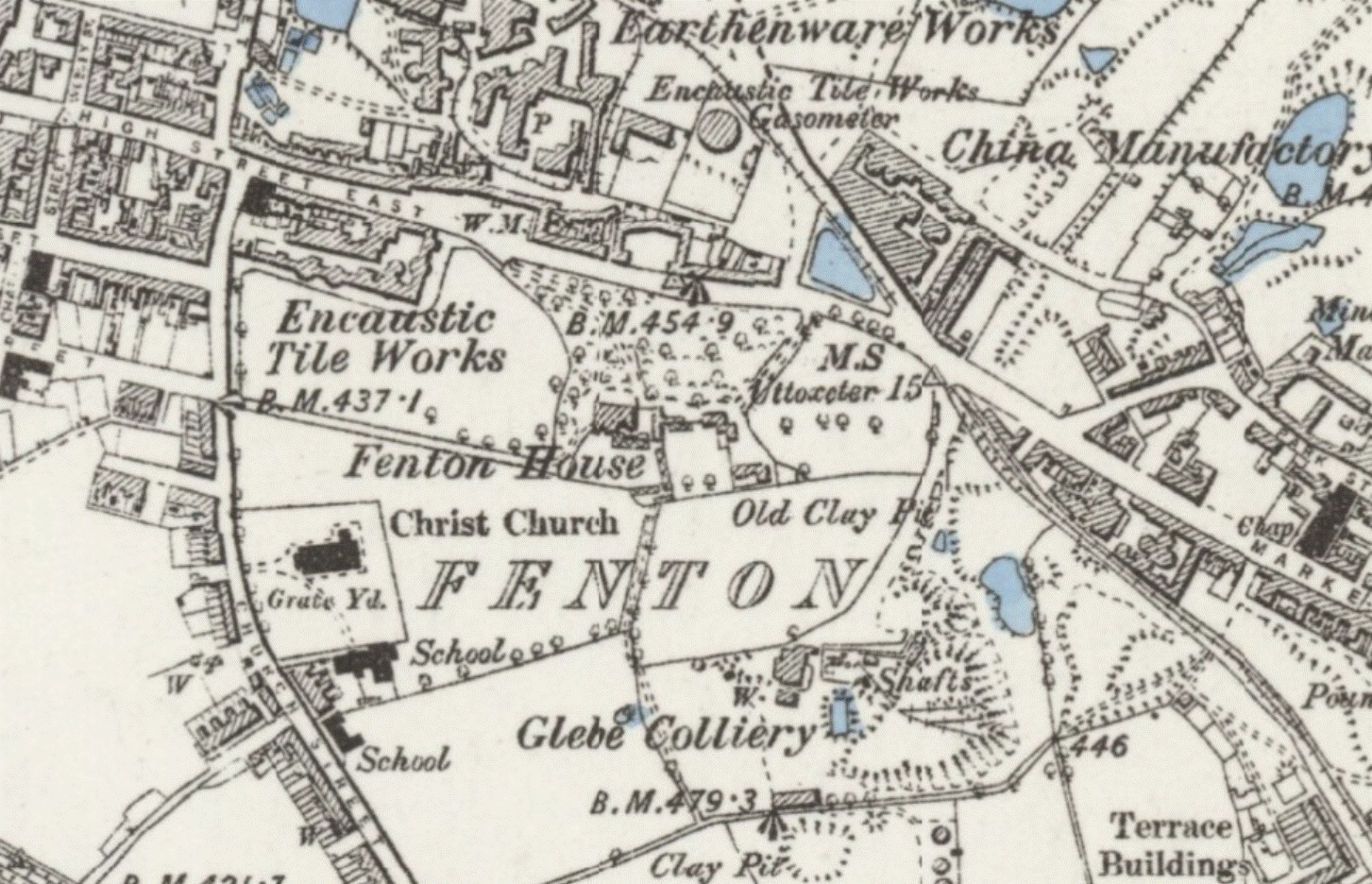
Fenton House, First Edition Six
Inch Map, 1866 to 1877