The Hundred of Dudderstone (later the Hundred of Broxton)
The
history and geography of the Hundred of Dudderstone
|
Return to the Home Page of the Bakers Family part of the website |
The Bakers of Highfields Story
The Story of the Dods and Bakers and of Highfields,
Fenton House and Hasfield Court. A journey through the history of Cheshire
and Staffordshire, an Anglo-Saxon nobleman who retained his lands after the
Conquest, pottery at Stoke on Trent, an encounter with Elgar, and the history
of an Elizabethan manor house at Audlem |
The family tree of the Bakers of Highfields |
The Family Tree of the Dods, predecessors to the
Bakers of Highfields |
The Bakers of
Fenton House and Hasfield Court
The Family Tree of the pottery Bakers of Stoke on Trent |
The Family Tree of the Bellyse Family |
The main part
of this website tells the story of the Farndale family from Yorkshire Descendants of Arthur Baker, the story of the Farndale
ancestry is told through the main part of this website You can also return to the Farndale
website home page |
The genealogy of the family of James Hall, linked to
the Baker family through marriage to Arthur Baker |
Headlines of are
in brown.
Dates are in red.
Hyperlinks to
other pages are in dark
blue.
References and
citations are in turquoise.
Context and local
history are in purple.
This page is work in progress
The Hundred of Duddeston,
spelled Dudestan in Latin records, was an administrative district in
Cheshire during the Domesday Book survey of 1086. It encompassed around 40
settlements in the southwestern portion of the county, much of which had
previously been held by the Anglo-Saxon Earl Edwin of Mercia before the Norman
Conquest.
Before 1066, key manors like Malpas
were controlled by Earl Edwin, representing large consolidated Mercian estates.
After the Conquest, the major portion of the hundred’s villages was held by
Robert fitzHugh, Robert son of Hugh, a Norman baron who held lands directly
from Earl Hugh of Chester.
Many holdings showed signs of
disruption or devastation from the conquest era, with several individual manors
recording drops in annual value compared to their pre-1066 worth under Saxon
rule.
In later centuries, the northern portion
of the Duddeston Hundred evolved directly into the Broxton Hundred, while
southern segments were transferred into Welsh-administered border territories,
later known as Maelor Saesneg.
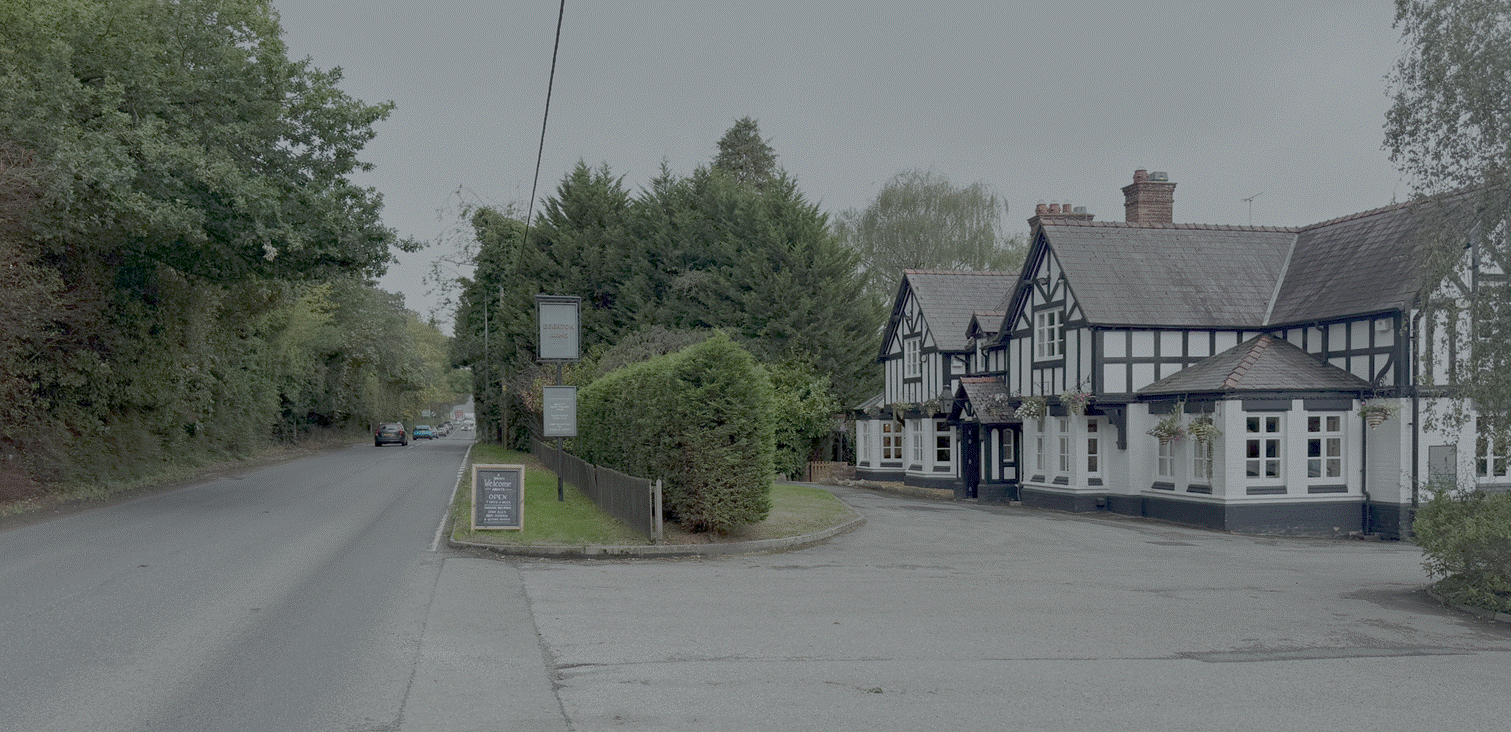
The Broxton Roundabout
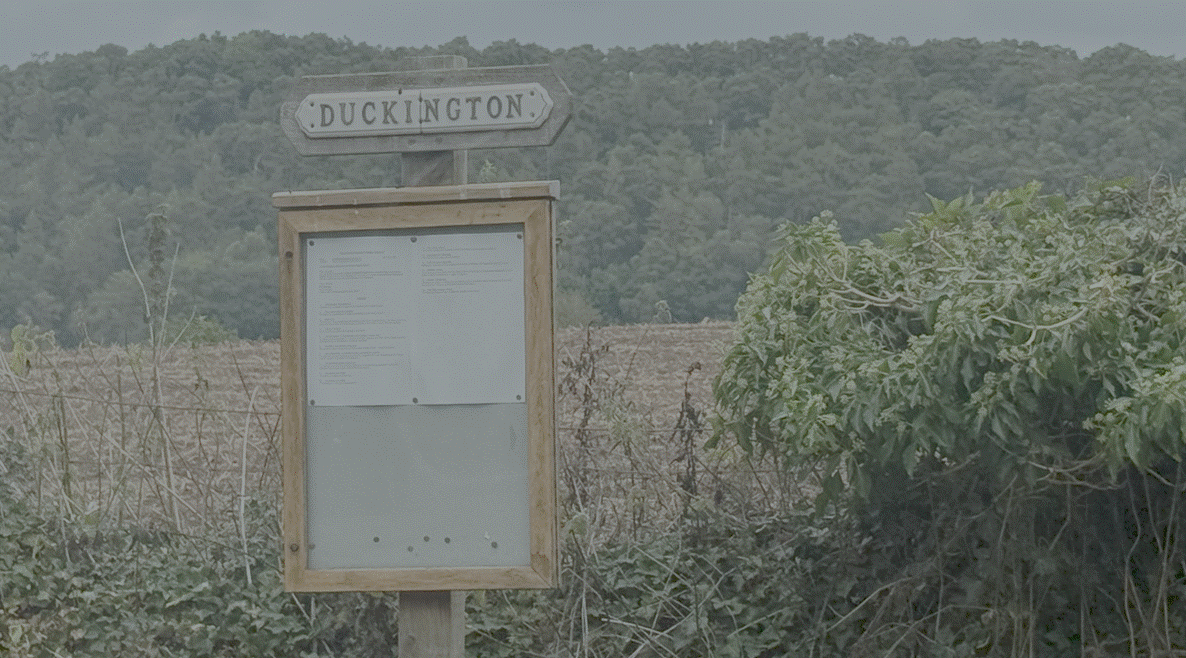
Duckington, in the lee of Maiden Castle