All The World’s A Stage
The Sexagenarian
The sixth age shifts into the lean
and slipper’d pantaloon, with spectacles on nose and
pouch on side; his youthful hose, well sav’d, a world
too wide for his shrunk shank; and his big manly voice, turning again toward
childish treble, pipes and whistles in his sound
|
Return to the Home Page of the Bakers Family part of the website |
The Bakers of Highfields Story
The Story of the Dods and Bakers and of Highfields,
Fenton House and Hasfield Court. A journey through the history of Cheshire
and Staffordshire, an Anglo-Saxon nobleman who retained his lands after the
Conquest, pottery at Stoke on Trent, an encounter with Elgar, and the history
of an Elizabethan manor house at Audlem |
The family tree of the Bakers of Highfields |
The Family Tree of the Dods, predecessors to the
Bakers of Highfields |
The Bakers of
Fenton House and Hasfield Court
The Family Tree of the pottery Bakers of Stoke on Trent |
The Family Tree of the Bellyse Family |
The main part
of this website tells the story of the Farndale family from Yorkshire Descendants of Arthur Baker, the story of the
Farndale ancestry is told through the main part of this website You can also return to the Farndale
website home page |
The genealogy of the family of James Hall, linked to the
Baker family through marriage to Arthur Baker |
This page is still to be drafted
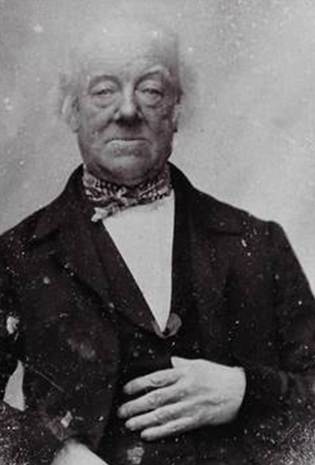
The ‘story’ of the RBT variation goes back to
about 1895, before I had any connection with the family. They were doing some amateur
of theatricals that Hasfield Court, the home of W M Baker, and someone was
wanted to take the part of an old man. No one could be found who was really suitable so they ran in RBT, who was staying there to act,
much against his will. He had never taken part in anything of the sort before
and, I was assured, never did so again. The difficulty was in what sort of
voice should he speak? His voice sounded as though it had never broken. He
spoke in the sort of high falsetto, rather a soft voice, and one which was
eminently suitable for the telling stories of his travels and life in Colorado
and for the same reason he was a capital reader of Uncle Remus. He decided to
put on a deep bass voice for the old man's part, but he couldn't keep it up and
his occasional lapses into his ordinary voice convulsed the audience! Richard
Baxter Townsend was rather an eccentric looking person with his brick red, weather-beaten
face, bright blue eyes and shock of grey hair. And he rode about Oxford on a
tricycle. Being slightly deaf he invented the idea of a bell which could be set
to ring continuously like an alarm clock. It was dreadful! Cycling with him one
day I called out “Why do you let that bell ring all the time?” “So that people
can hear me coming. I can't hear them!” I've called this variation a
caricature, but it requires special explanation. RBT was, by any reckoning, a
very unusual person. He was a classical scholar of Cambridge, a first-class
rifle shot, had been a cattle rancher, gold prospector, and had written books
and stories about it. His two books, A Tenderfoot in Colorado and The Tenderfoot
in New Mexico (the Bodley Head), are interesting and amusing. He also wrote a
novel, Lone Pine, which achieved the distinction of being reprinted in 1913 as
a “Sevrenpenny” (Messrs Methuen and Co). His
brother-in-law, WMB, called him a wild Irishman and objected strongly to the
strange clothes he generally wore. He had a curious didactic way of speaking,
the first few bars of the variation give it to you, and he had a trick of
finishing up a rather tall sounding story with an impressive “I'm telling you”,
to convince you of the truth of it. Retailing more lurid stories of his life in
New Mexico to men friends, I have been told that RBT’s blue eyes blazed with
exasperation and excitement when the audience did not seem sufficiently
impressed. “Damn and blast it, man! Can't you understand what I'm telling you?”
It is amusing to note what may be a suggestion of this in the four bars before
No 10 in the full score. So this variation can be
truly called a portrait after all: Elgar has got him with his funny voice and
manner, and the tricycle! It is all there and is just a huge joke to anyone who
knew him well. No wonder that WMB burst out laughing when he first heard it. (Powell, R (1937), Edward Elgar, Memories of a
Variation, page 124).