John Baker
28 July 1642 (baptised) to 22 March 1685 (buried)
BAK00050
|
Return to the Home Page of the Bakers Family part of the website |
The Bakers of Highfields Story
The Story of the Dods and Bakers and of Highfields,
Fenton House and Hasfield Court. A journey through the history of Cheshire
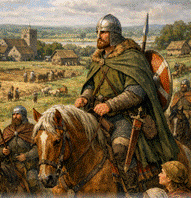
and Staffordshire, an Anglo-Saxon nobleman who retained his lands after the
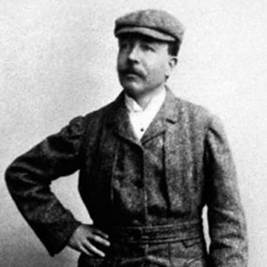
Conquest, pottery at Stoke on Trent, an encounter with Elgar, and the history
of an Elizabethan manor house at Audlem |
The family tree of the Bakers of Highfields |
The Family Tree of the Dods, predecessors to the
Bakers of Highfields |
The Bakers of Fenton House and Hasfield Court
The Family Tree of the pottery Bakers of Stoke on Trent |
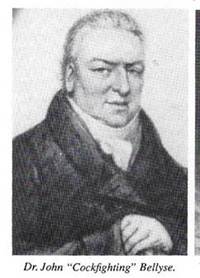
The Family Tree of the Bellyse Family |
The main part
of this website tells the story of the Farndale family from Yorkshire Descendants of Arthur Baker, the story of the
Farndale ancestry is told through the main part of this website You can also return to the Farndale
website home page |
The genealogy of the family of James Hall, linked to
the Baker family through marriage to Arthur Baker |
Error in previous analysis
According to Burke’s Landed
Gentry, John Baker was the son of Sampson and Mary Baker (BAK00034).
John Baker was born after 1643. Sampson Baker of Norwich and London,
merchant, born about 1610; believed to have been a younger son of Sir Richard
Baker MP, of Middle Aston, Oxfordshire and St Bride’s, London, the historian,
who married Margaret, daughter of Sir George Mainwaring, of Ightfield,
Salop, and died in Fleet debtor’s prison 18 February 1644/5, buried St Brides,
son of John Baker, distinguished elder son of Rt Hon Sir John Baker of
Sissinghurst, Kent, married, and whose issue were (1) Sampson, gentleman of
Market Bosworth, Leicestershire and Rugby, Warwickshire, born about 1643,
married (licence 15 February 1671) Jane Ley of Burton-on-Trent, Staffordshire,
and had issue in Edward, baptised 16 July 1676, educated at Rugby and died
August 1690, and (2) this John Baker (Burke, John and Burke, Sir Bernard (1836)(Eighteenth
Edition, 1972), Bellyse Baker of Highfields in Burke’s Landed Gentry,
Volume 3, pages
35 to 38).
Richard
Baker (1676-1749), was a surgeon who moved from London to
Leominster in Herefordshire. Burke's Landed Gentry says that his father was
John Baker, the younger son of Sampson Baker of Norwich and London, merchant,
who was 'believed to be a younger son of Sir Richard Baker MP of Middle Aston,
Oxon and St Bride's, London, the historian... who died in Fleet debtors' prison
18 February 1644/5'. As far as the connection with Sir Richard Baker (and thus with
the Bakers of Sissinghurst) is concerned, this seems to be a specious fantasy
(Sir Richard did not marry until c.1621, and his children are all accounted
for), and it is far from clear how much reliance should be put on the rest. (Kingsley, Nicholas (2018), (333) Bakers of Highfields in Landed
Families of Britain and Ireland).
This seems to be in error.
If I have correctly identified Richard
Baker's baptism at Stepney (Middx) in 1676, his parents were indeed John and
Margaret, as Burke's suggests. But no marriage of a John Baker and Margaret
Leighton is to be found, and nor is a baptism for a John, son of Sampson Baker.
It may, however, be relevant to note that Burke's gives John a brother, Sampson
Baker, gent., of Market Bosworth (Leics) and Rugby
(Warks), born about 1643, and it is possible to find baptisms for both
'Samson', son of William & Susanna Baker in 1637 and his brother
John in 1642 in the parish registers of Market Bosworth. (Landed
Families of Britain and Ireland, 333 Baker of Highfields).
1642
It therefore seems more likely
that John Baker was the son of William and Susannah Baker (BAK00031). Indeed
there was also a John Baker baptised in Market Bosworth on 28 July 1642, who
was the son of William and Susannah Baker.

(Market Bosworth Parish Records)
1654
Since John older brother Sampson
died in London (buried in the City) in early 1654, it seems
that the family moved from Market Bosworth to London between 1642 and 1654.
1670
John Baker, of St Bride’s parish,
London, married 1670 Margaret Leighton of Lindon-on-Stroud, Gloucestershire
(who married secondly George Gregory of London and thirdly William Baxter of
London), and had issue (Burke, John and Burke, Sir
Bernard (1836)(Eighteenth Edition, 1972), Bellyse
Baker of Highfields in Burke’s Landed Gentry, Volume 3, pages
35 to 38).
John Baker married Margaret
Claiton or Leighton in or about 1670.
St Bride’s parish is on Fleet
Street in the City, so the family seem to have originally settled in the City.
I have not found a clear match in
the marriage records (there was a Margaret Claxton who married John Minns at St
Dunstan, Stepney (St Dunstan, Stepney
Parish Records) on 26 September 1671, which
could be relevant), so we are relying here on Burke’s record.
1676
William Baker’s grandfather and
great grandfather were merchants of Norwich and London (Baker, J Bellyse
(1982), Highfields,
Audlem: Sixteenth Century Home of the Dod and Baker Families, Audlem
District History Society, page 12).
Richard Baker (1676 to 1749)(BAK00060) was
born in 1676. When Richard was baptised on 28 May 1676, John Baker was a wine cooper
at Ratcliff, London. (St Dunstan, Stepney
Parish Records).
They also had another son, John,
who tragically died of smallpox as a young man in January 1676 while lodging on
Pudding Lane.
As a wine cooper, John Baker was a
skilled craftsman responsible for making, repairing, and maintaining the wooden
casks, barrels, and tuns used to import and store wine. During the Stuart
period, London’s wine trade was expanding rapidly, making coopers essential to maritime
commerce and the hospitality industry. Ratcliff was a bustling hamlet located
on the north bank of the River Thames, under the parish of Stepney. In 1676, it
was a major hub for shipbuilding, provisioning, and maritime trades, situated
just downriver from the City of London. Operating out of Ratcliff allowed a
wine cooper direct access to the ships unloading imported European wines at the
docks.
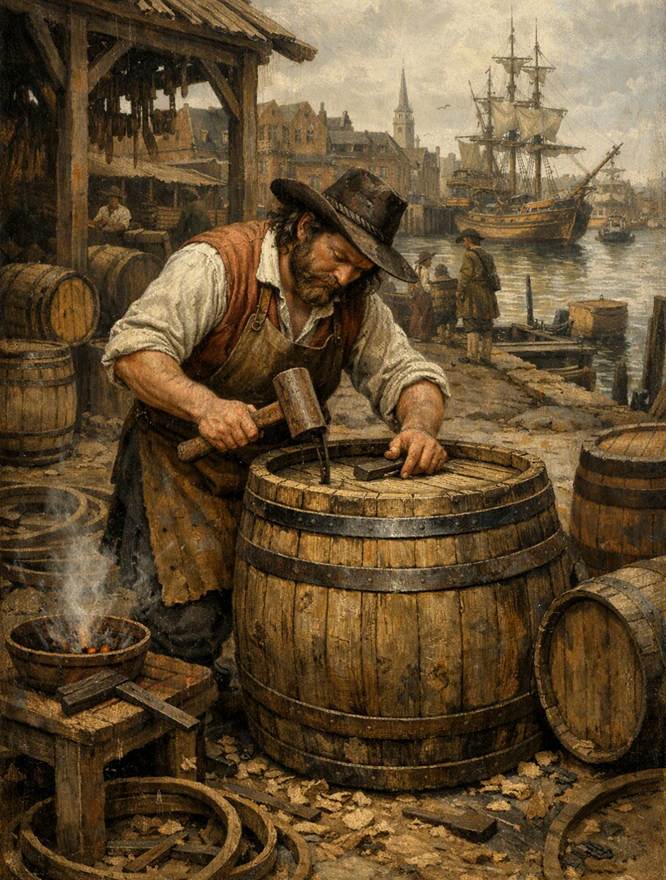
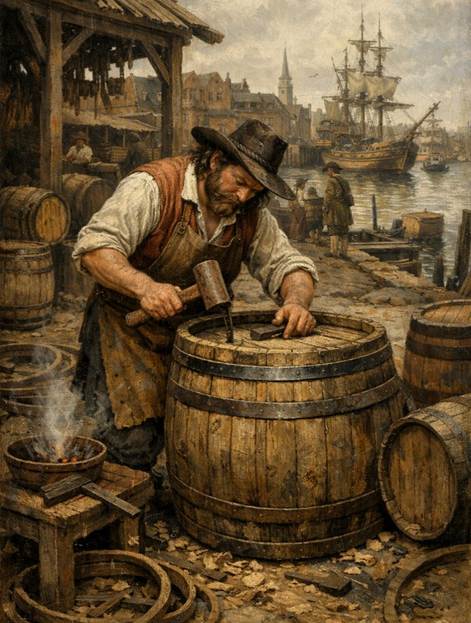
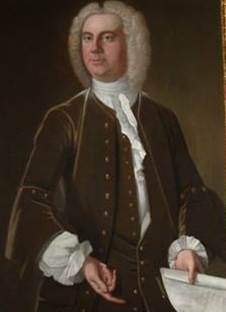
John Baker, wine cooper, in Ratcliff,
London in about 1676, reimagined using artificial intelligence.
1685
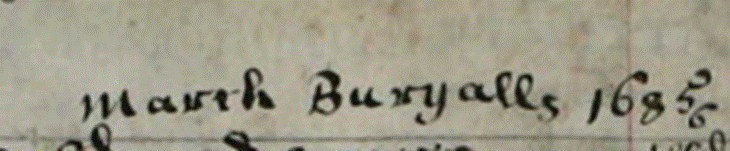
John Baker died in 1685 and was
buried on or about 22 March 1685 at St Bride’s, London (St Brides, Fleet Street, Parish
Records).