William Baker III of Fenton
25 November 1771 (baptised) to 2 July 1833 (buried)
BAK00106
|
Return to the Home Page of the Bakers Family part of the website |
The Bakers of Highfields Story
The Story of the Dods and Bakers and of Highfields,
Fenton House and Hasfield Court. A journey through the history of Cheshire and
Staffordshire, an Anglo-Saxon nobleman who retained his lands after the
Conquest, pottery at Stoke on Trent, an encounter with Elgar, and the history
of an Elizabethan manor house at Audlem |
The family tree of the Bakers of Highfields |
The Family Tree of the Dods, predecessors to the
Bakers of Highfields |
The Bakers of Fenton House and Hasfield
Court
The Family Tree of the pottery Bakers of Stoke on Trent |
The Family Tree of the Bellyse Family |
The main part
of this website tells the story of the Farndale family from Yorkshire Descendants of Arthur Baker, the story of the
Farndale ancestry is told through the main part of this website You can also return to the Farndale
website home page |
The genealogy of the family of James Hall, linked to
the Baker family through marriage to Arthur Baker |
Headlines of
William Baker III’s life are in brown.
Dates are in red.
Hyperlinks to
other pages are in dark
blue.
References and
citations are in turquoise.
Context and local
history are in purple.
1771
William Baker was the son of
William and Sarah (nee Bagnall) Baker (FAR00084).
He was born in 1771 and baptised at Fulford,
Staffordshire on 25 November 1771.
William Baker II’s widow Sarah
later remarried on 21 December 1793 to Ralph Bourne (d. 1835) of Hilderstone Hall, Staffordshire, with whom she had a
further family. Ralph Bourne was a man of consequence, who was also a Deputy
Lieutenant and a Justice of the Peace, who lived at Hilderstone
Hall. Ralph’s father, James Bourne had come to the area to join the pottery
industry. Ralph Bourne was a potter and a philanthropist. Ralph became partners
with his step son, the third William Baker and they traded as Bourne and Baker.
The business made staple products and exported them on a considerable scale. It
was later said that unglazed clayware was exported to
Africa. The business flourished and by 1829, they had expanded to a second
factory and acquired a flint mill. A
History of Stoke on Trent by Ward referred
to very extensive earthenware manufactories, which for many years were carried
on by the firm of Bourne, Baker and Bourne (Ralph’s brother John had also
joined the business) and raised the proprietors to the first rank among the
preeminent and opulent potters who flourished during the by-gone portion of the
[nineteenth] century.
1784
William’s father died when William
III was only thirteen.
1793
William
(II) died in 1784, when his son was only 13, and nine years later, in 1793,
Sarah married again, her new husband being Ralph Bourne, a man of some
consequence, who was also Deputy Lieutenant of the County and a J.P. and who
lived at Hilderstone Hall. Ralph's father, James
Bourne (born 1718) was the third son of John Bourne of Madeley Heath who was a
landowner in Barthomley. James came to Fenton,
presumably to go into the pottery industry, married and had three sons, Ralph,
John and Charles. Ralph Bourne as well as being a potter was a philanthropist.
He had built and endowed, at his own expense, the church at Hilderstone
and, after his marriage to Mrs. Baker extended his generosity to Fenton. He and
William Baker, his step-son, became partners in the pottery business trading as
Bourne and Baker, later taking in Ralph's other brother, John, the firm then
becoming known as Bourne, Baker and Bourne. The factory was on the North side
of City Road, between Manor Street and Fountain Street.
According
to Mankowicz and Haggar's Dictionary they made staple
products exporting them on a considerable scale. Mr. Bellyse Baker told me that
the story passed down on his side of the family was that unglazed red clayware was made and exported to Africa! Whatever the
product, the business flourished and by 1829 they had taken over another
factory opposite to the first. This is the factory mentioned earlier which
later had the iron gates with W. M. B.'s monogram. They also acquired a flint
mill near to the factories. Ward's History of Stoke-on-Trent refers to
"the very extensive earthenware manufactories, which for many years were
carried on by the firm of 'Bourne, Baker and Bourne and raised the proprietors
to the first rank among the eminent and opulent potters who flourished during
the by-gone portion of the present century [i.e. in the nineteenth
century]".
Both
William Baker (III) and his step-father Ralph Bourne built houses near to their
factories. Baker's was on the slightly higher ground at the corner of what is
now Glebedale Road and City Road and Bourne's was a
little further along the main road opposite Victoria Place. Simeon Shaw in his
Staffordshire Potteries refers to them as spacious mansions and says that they
were square houses with hipped roofs. "Bourne's was neat but being only a
kind of business residence was without exterior decoration, his main residence
being Hilderstone Hall. Mr. Baker's was spacious and commodious
surrounded with gardens and pleasure grounds and enjoying a tolerably extensive
prospect". It was called "Fenton House" and continued to be
occupied by various members of the Baker family until almost the end of the
century. The two houses were still there in 1960 but have now been demolished.
Offices are on the site of Bourne's house and the Elizabeth Findlay Centre
occupies part of Baker's site.
(Dodd, F
(1987), The Baker Family and Fenton, Presidential Address in Transactions
1986 to 1987, The North Staffordshire Field Club, pages 12 and 13).
William,
of Fenton House, Church Fenton, Staffordshire (which he built in c 1800), and
which became Ch Ch vicarage c 1920, and later a china factory), of Doveridge
Woodhouse, Derbyshire, and Moorville, Caverswall, Staffordshire, Lord of the Manor of Fenton
Culbvert, DL, JP Staffordshire, Cornet Staffordshire Volunteer Cavalry 1798,
partner in Bourne, Baker and Bourne of Fenton, potters (established 1796), born
1771, married 4 October 1794, Mary (Molly) (died 1855), elder daughter of James
Bourne, of Great Fenton Hall, Staffordshire, and sister of Ralph Bourne, DL,
JP, of Hilderstone Hall, Staffordshire, and died 6
June 1833, having had issue. (Burke, John and Burke,
Sir Bernard (1836)(Eighteenth Edition, 1972), Bellyse Baker of Highfields
in Burke’s Landed Gentry, Volume 3, pages
35 to 38).
William Baker III, with his
step father, Ralph Bourne, built themselves
houses near to the new factories.
Simeon Shaw in Staffordshire Potteries refers to them as spacious mansions
which were square houses with hipped roofs. “Mr Baker’s was spacious and
commodious surrounded with gardens and pleasure grounds and enjoying a
tolerably extensive prospect.” It became known as Fenton House and continued to be occupied by the family until the
end of the nineteenth century. The house still existed in 1960, but has since
been demolished.
William Baker III was described as
being of Doveridge Woodhouse in Derbyshire and Moorville, Caverswall, as well as
Fenton House. These were probably retreats away from the Fenton factories.
1794
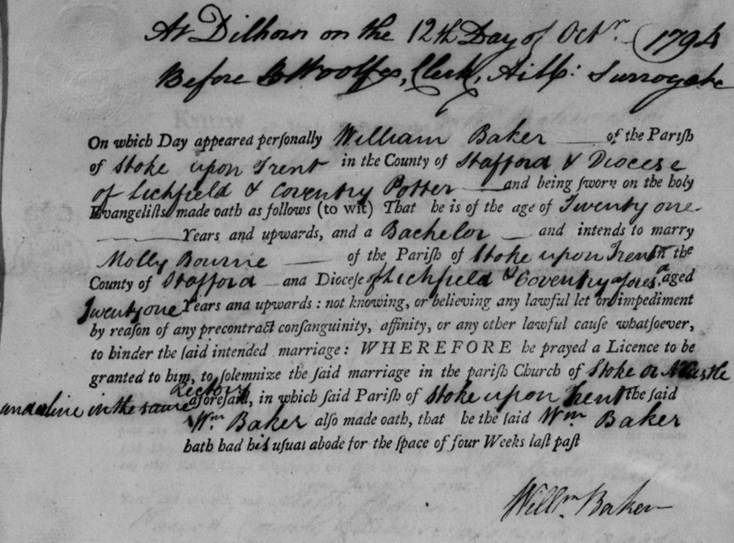
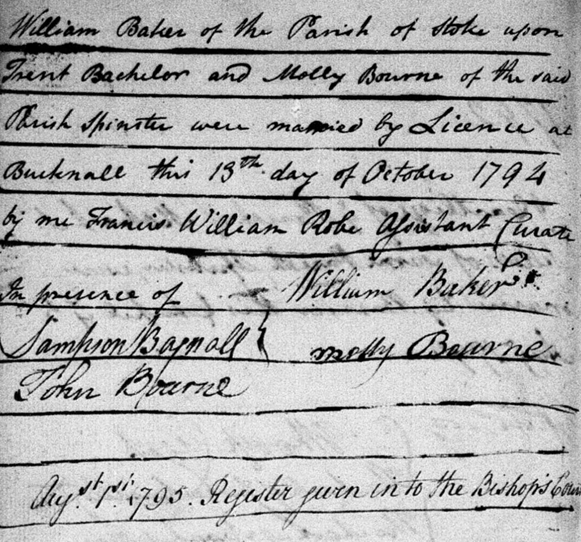
William Baker III, a
potter, married Molly Bourne
(born 1773), the youngest sister of his stepfather, on 13 October 1794 (St Mary, Bucknall, Staffordshire
Parish Records). They had ten children. In 1794 he married his stepfather's youngest sister
Mary Bourne, and they had 10 children, the boys being another William (IV) born
in 1800, John born in 1806 and Ralph Bourne Baker born 1808. The seven girls
were Harriet, Charity, Mary, Jane, Sarah, Charlotte and Elizabeth. Sarah
married John Hitchman of Leamington Spa and she and her sister Charlotte are
mentioned later. (Dodd, F (1987), The Baker Family and Fenton,
Presidential Address in Transactions 1986 to 1987, The North
Staffordshire Field Club, page 13).
1798
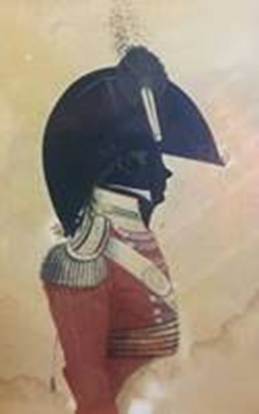
William III was appointed
to be a Deputy Lord Lieutenant and JP and
in 1798, he joined the Staffordshire Volunteer
Cavalry. The unit had been formed by
Josiah Spode when Napoleon threatened to invade Britain, and William was a Cornet, or
fifth commissioned officer.
William
Baker (III) is described as of Doveridge Woodhouse in
Derbyshire, and Moorville, Caverswall
as well as of Fenton House. The first two were, perhaps, bought as retreats,
away from the Fenton factories. Moorville is on the
road from Meir to Cellarhead and is an attractive location
– now with an hotel on the site of the Hall. He was appointed a Deputy Lord
Lieutenant and was a J.P. In 1798 he joined the troop of the Staffordshire
Volunteer Cavalry, formed by Josiah Spode, when Napoleon threatened to invade
Britain, and he was a Cornet (5th. Commissioned Officer). (Dodd, F (1987), The Baker Family and Fenton,
Presidential Address in Transactions 1986 to 1987, The North
Staffordshire Field Club, page 13).
1828
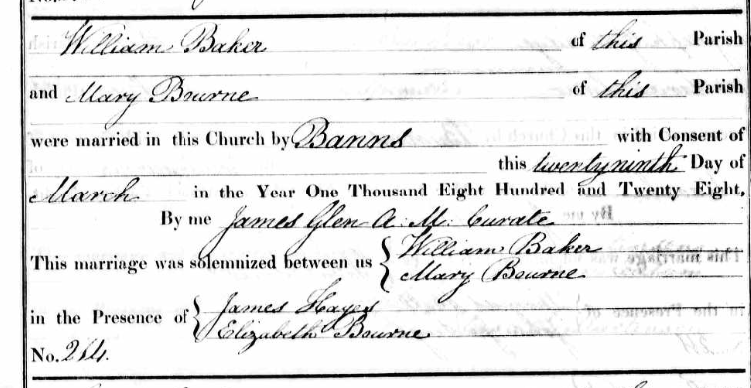
William Baker married Mary
Bourne on 29 March 1828 (Parish Records St George,
Hanover Street, Westminster). Was this a reaffirmation of his earlier
marriage?
1833
William Baker II died in
1833, aged 62, and his
partner, John Bourne, died the same year. William was buried at St Peter ad
Vincula, Stoke on Trent on 2 July 1833 (St
Peter ad Vincula, Stoke on Trent Parish Records).

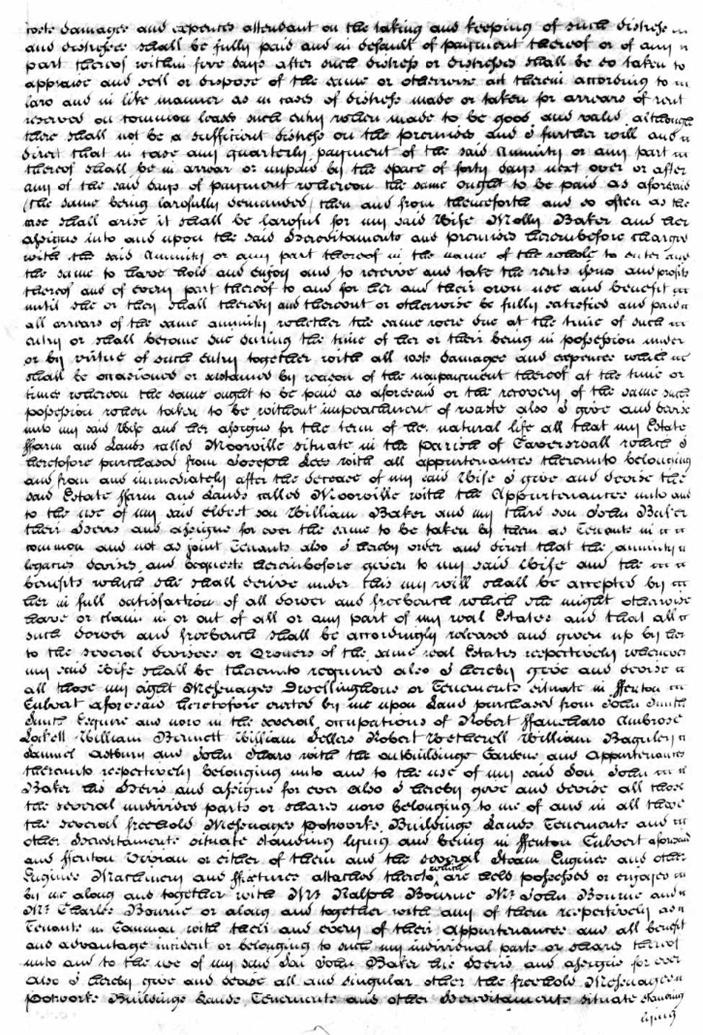
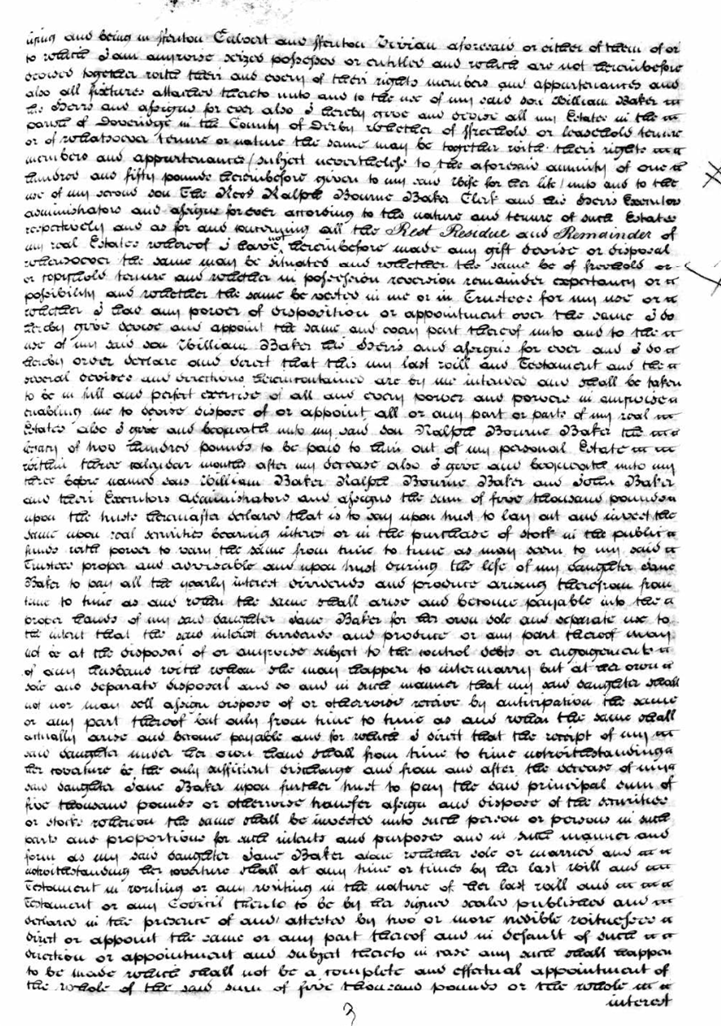
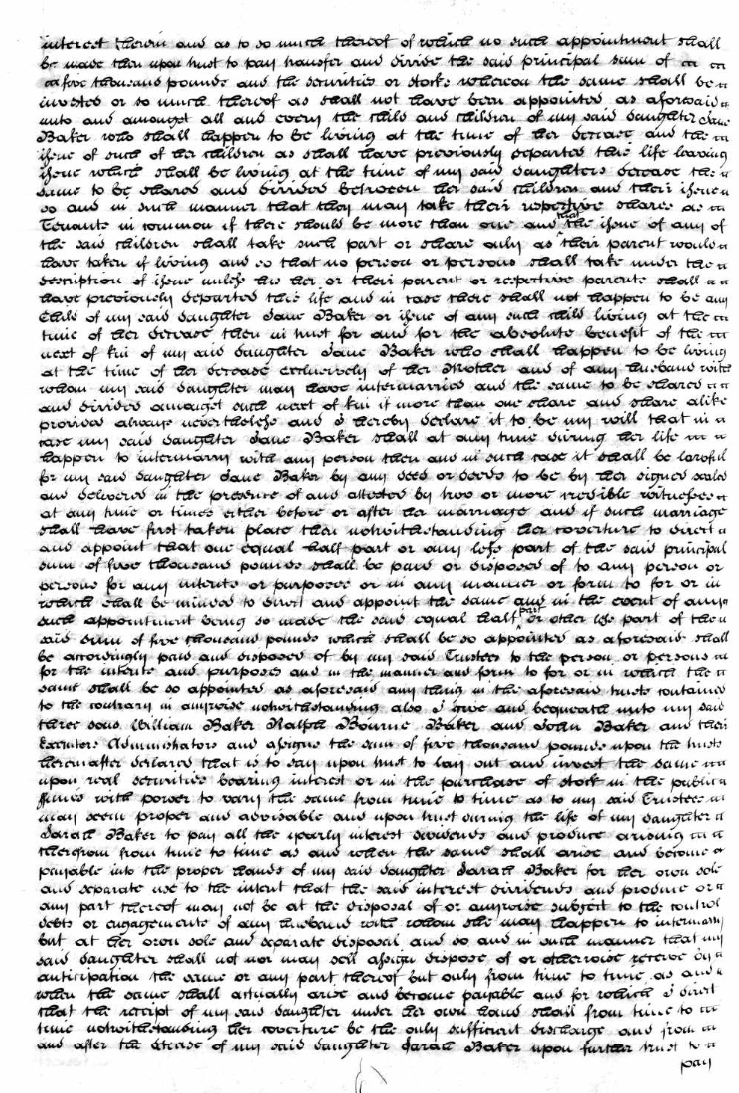
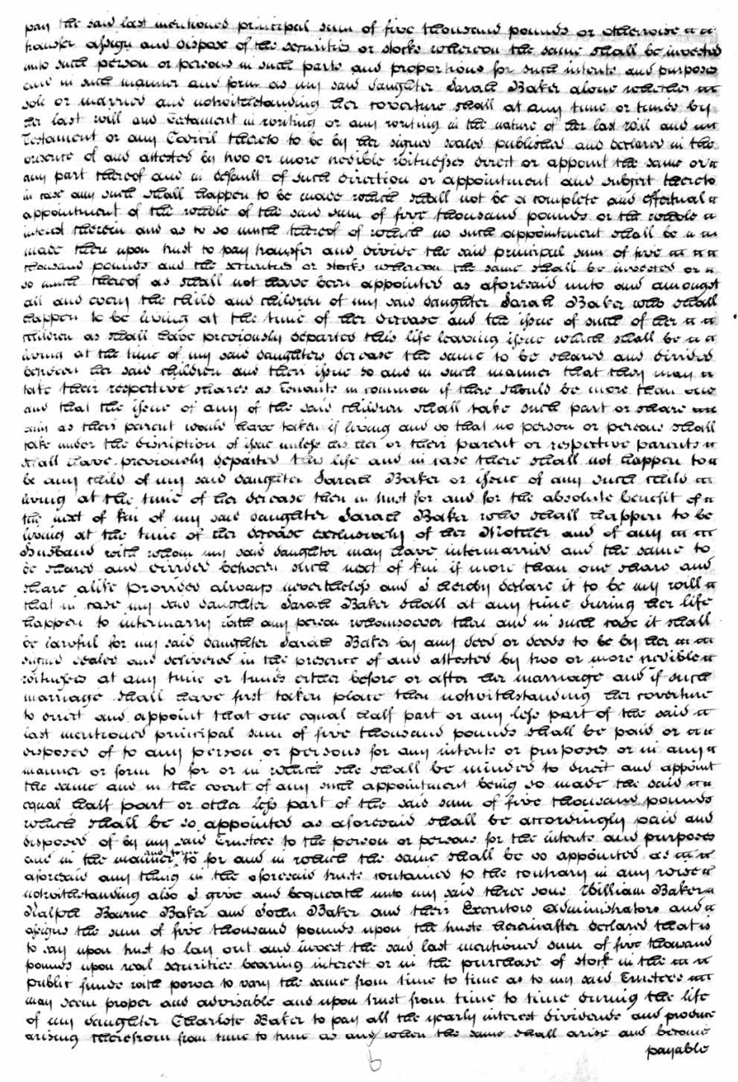
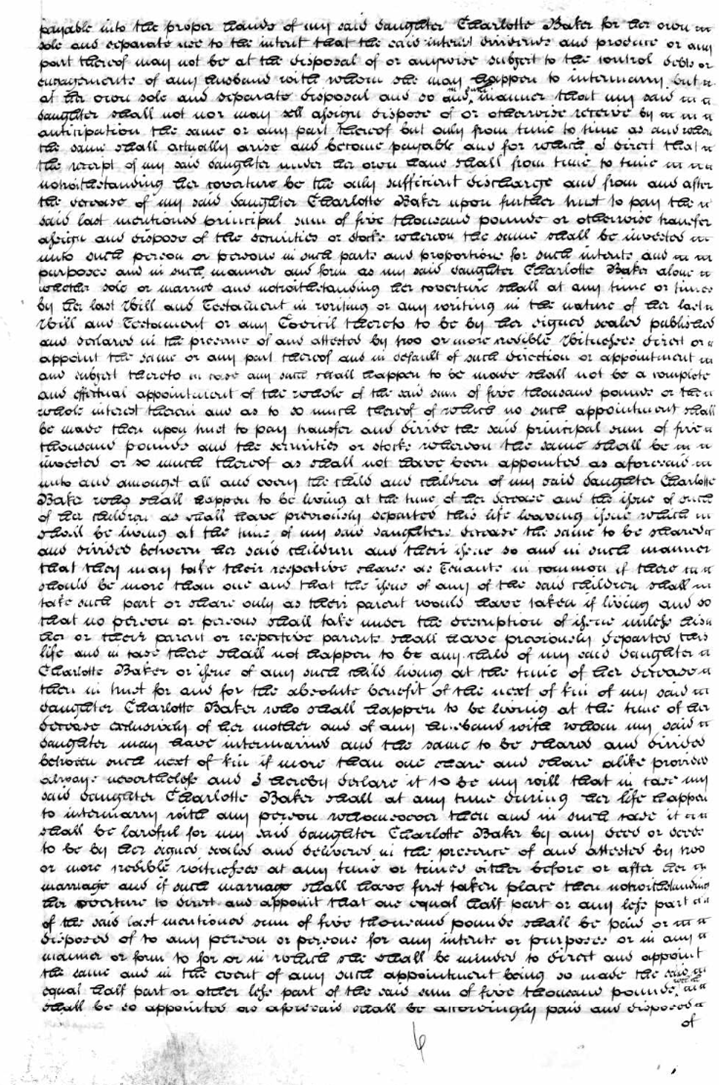
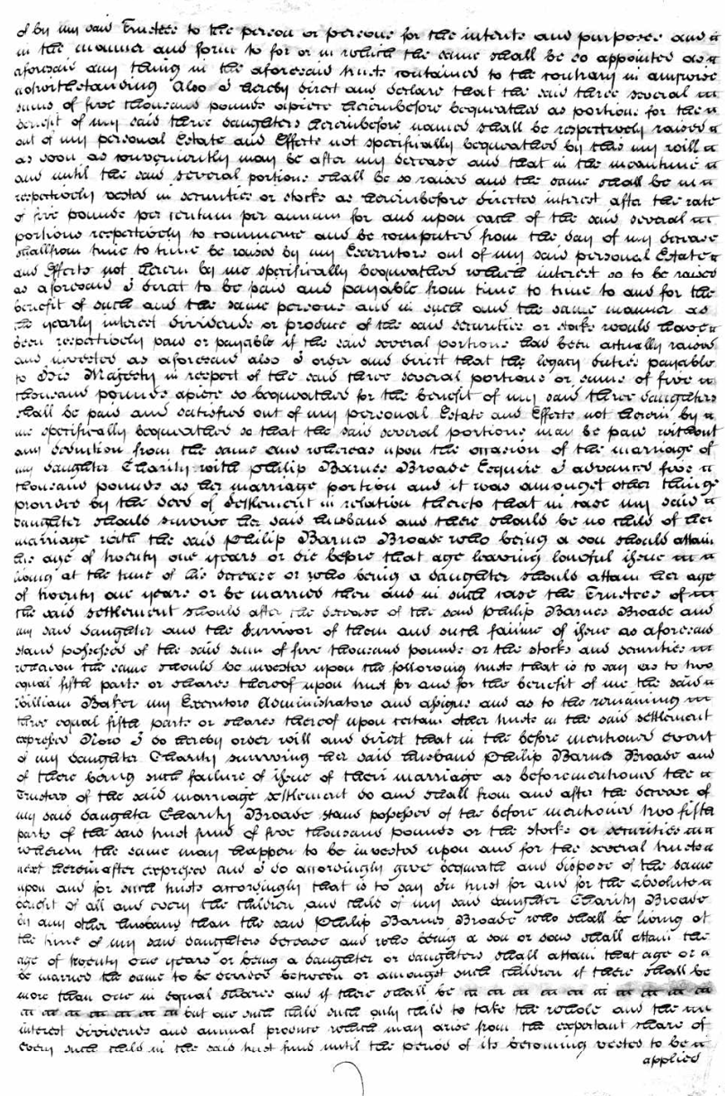
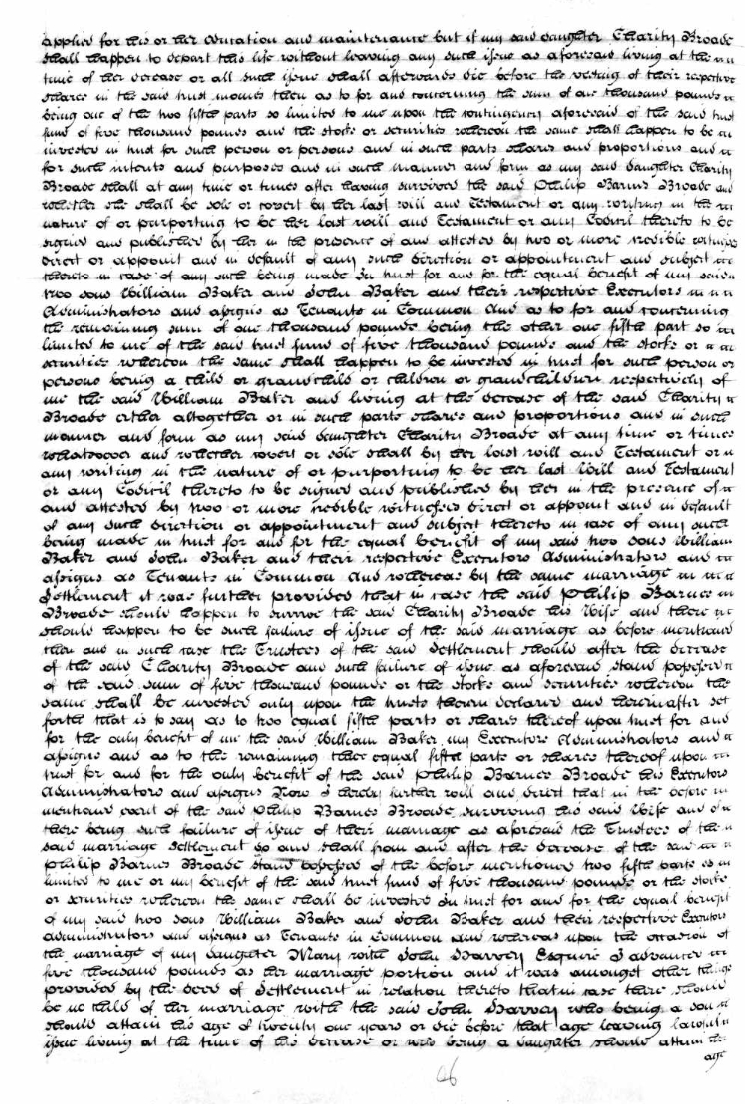
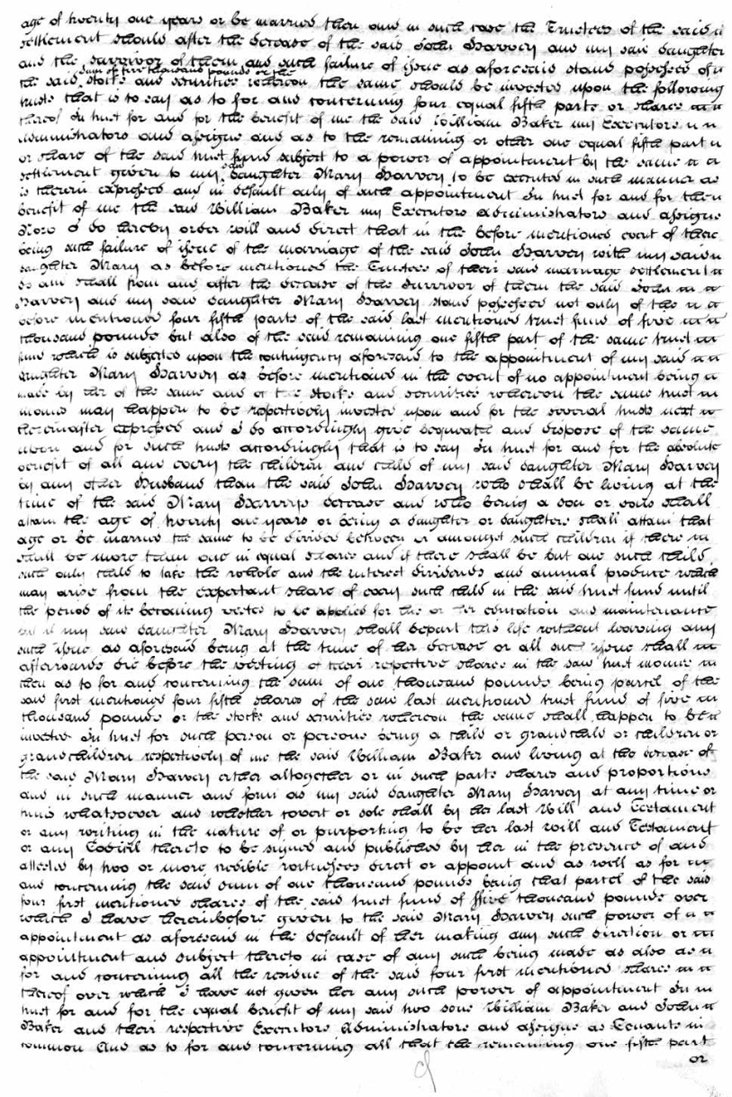
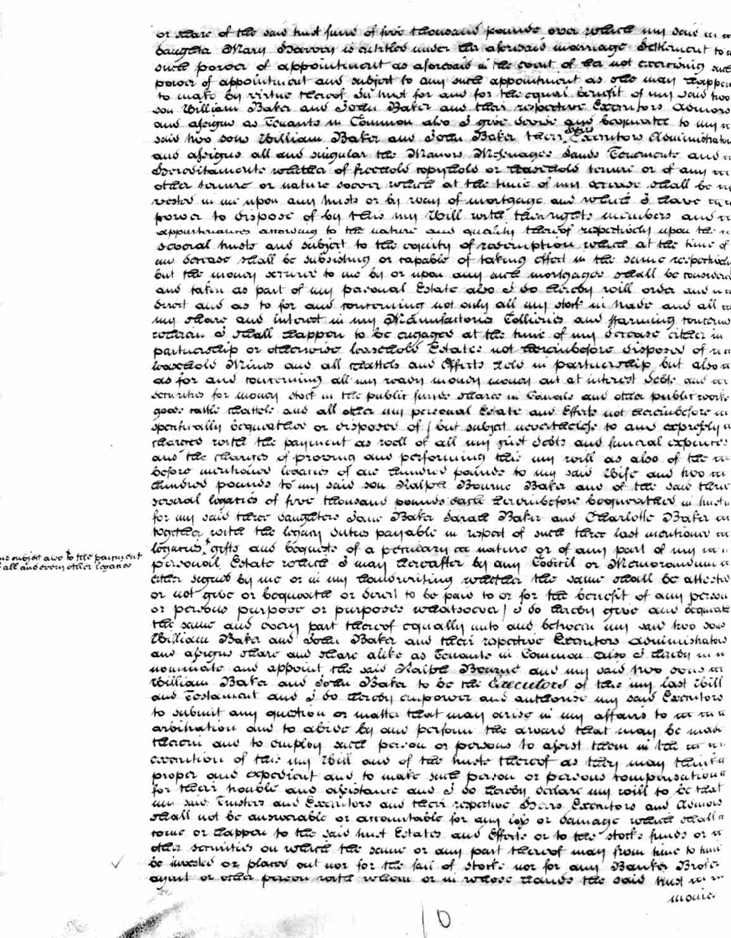
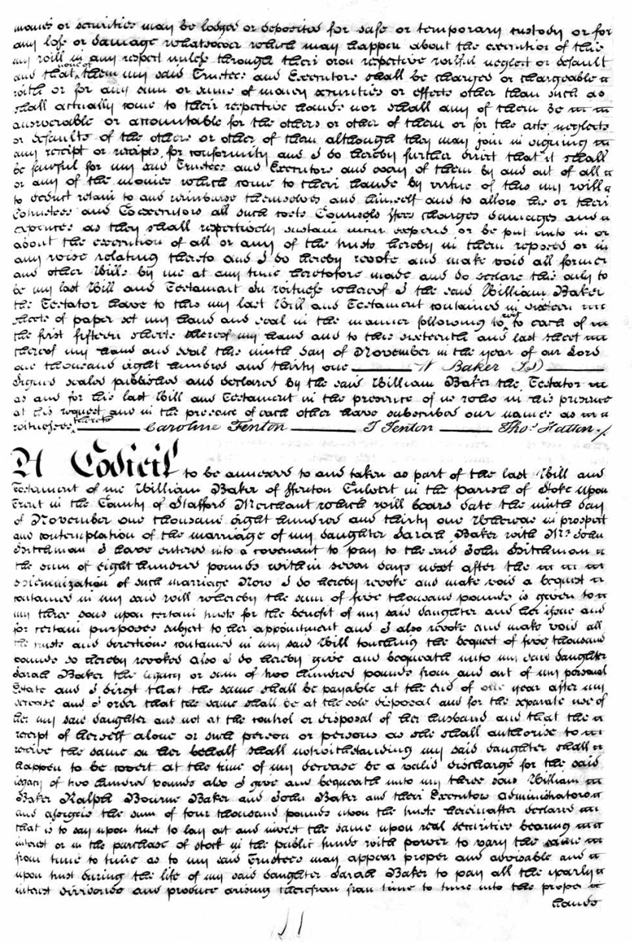
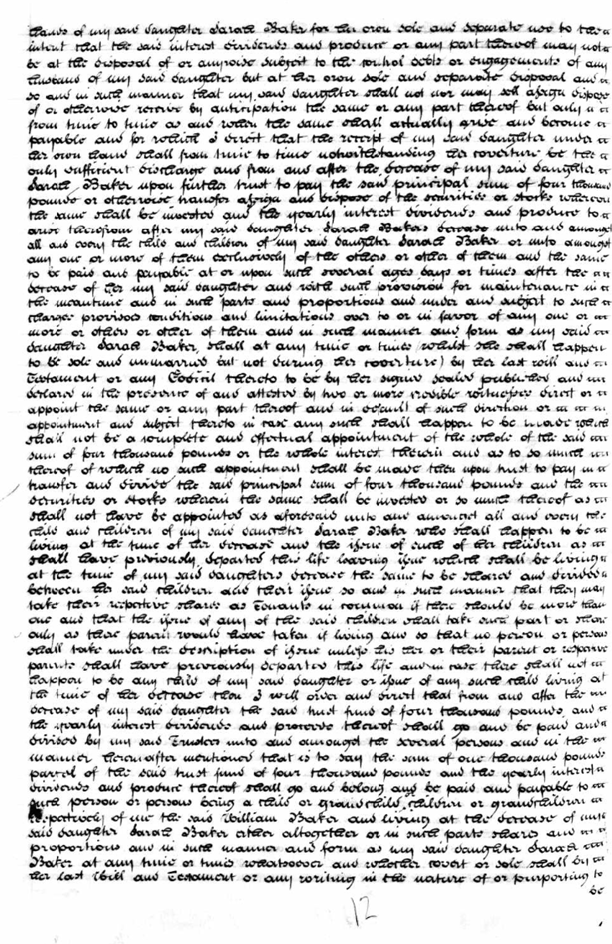
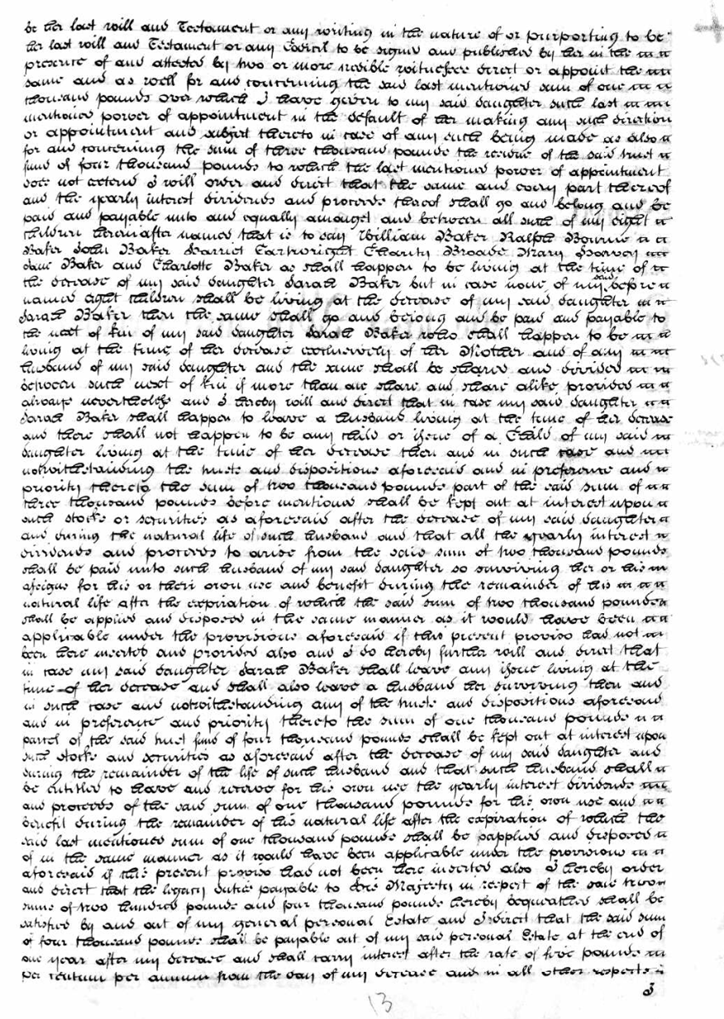
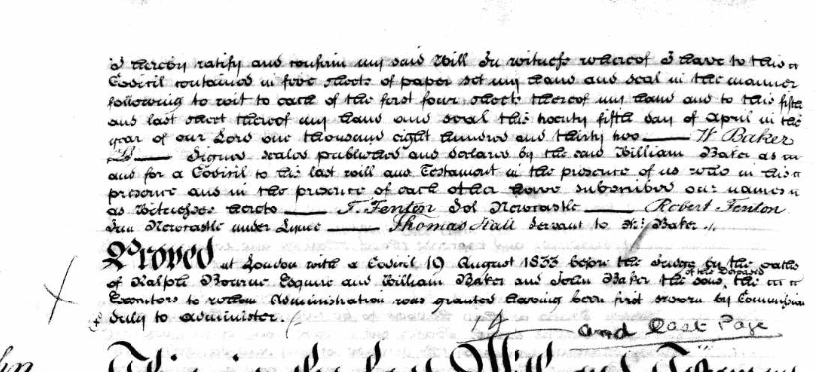
William (III) died in 1833 as did
his partner John Bourne. Ralph Bourne carried on the works with their executors
for a short time but later on he took William (IV) and John Baker into
partnership and the firm traded as Bourne, Baker and Baker.
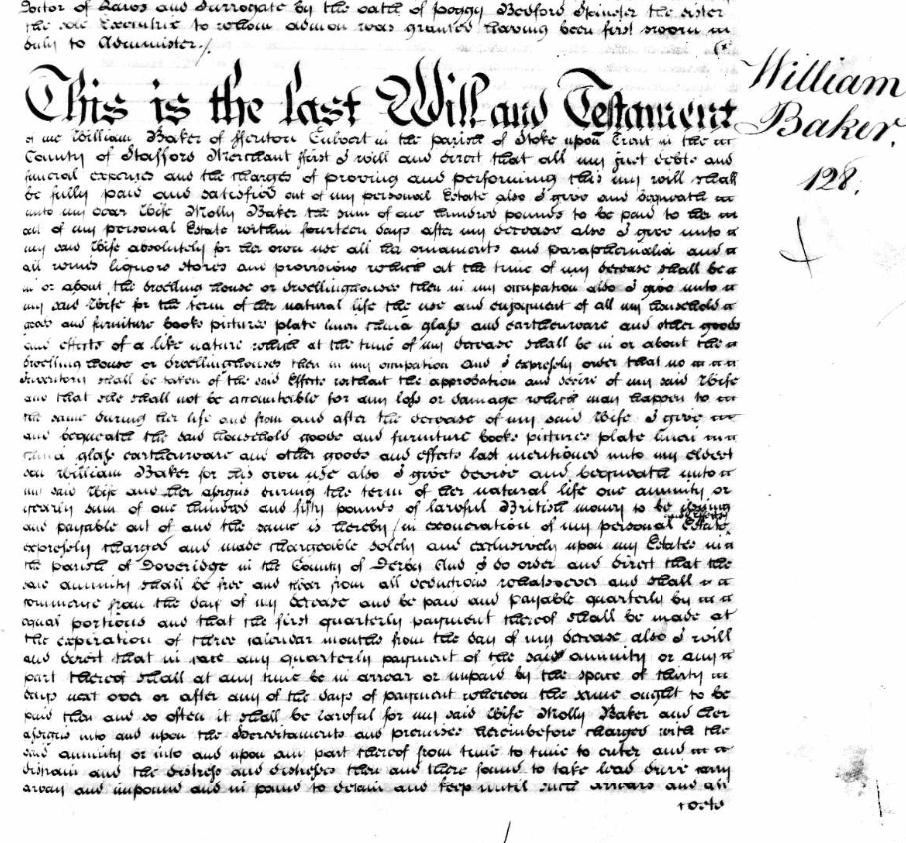
(Prerogative Court of Canterbury Wills)
1835
Two years later, in November 1835,
Ralph Bourne died.
By Ralph Bourne's will, a sum of £2500
was placed in the hands of trustees (Viscount Sandon and the Rev. R. Bourne Baker)
for the erection of a church in Fenton together with a sum of £1000 for its
endowment. He also gave to John Baker two acres of land upon an implied trust
for the site of the Church and a cemetery. This was the beginning of a
remarkable pattern of benevolence and philanthropy towards Fenton. Both Fenton
townships were part of the large parish of Stoke at this period and they had no
church of their own. Henry Ward was chosen as architect and the church was built
roughly on the site of the present church. The money given was not sufficient
to cover the cost and an additional £3000 was given by Mrs. William Baker
(Ralph Bourne's sister). An East window and organ were also provided by
Bourne's family connections, and the church was dedicated in January 1839. The
amounts of money given must be multiplied by factors well over 100 times to
convert to our present values and the Staffordshire Advertiser's reference, in its
obituary notice of Ralph Bourne, to his various deeds of princely munificence
seems entirely justified. (Dodd, F
(1987), The Baker Family and Fenton, Presidential Address in Transactions
1986 to 1987, The North Staffordshire Field Club, page 13).