Dot of Huyton
c
1030 to c 1100 (estimated)
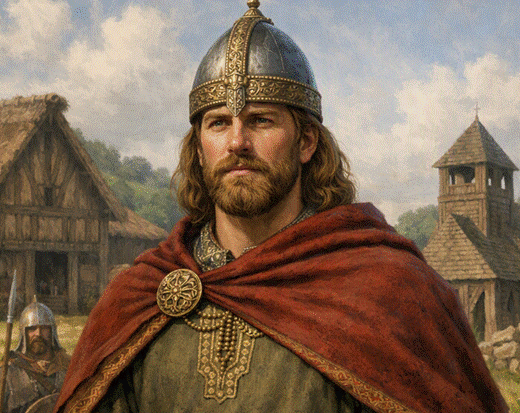
BAK00010
|
Return to the Home Page of the Bakers Family part of the website |
The Bakers of Highfields Story
The Story of the Dods and Bakers and of Highfields,
Fenton House and Hasfield Court. A journey through the history of Cheshire
and Staffordshire, an Anglo-Saxon nobleman who retained his lands after the
Conquest, pottery at Stoke on Trent, an encounter with Elgar, and the history
of an Elizabethan manor house at Audlem |
The family tree of the Bakers of Highfields |
The Family Tree of the Dods, predecessors to the
Bakers of Highfields |
The Bakers of Fenton House and Hasfield
Court
The Family Tree of the pottery Bakers of Stoke on Trent |
The Family Tree of the Bellyse Family |
The main part
of this website tells the story of the Farndale family from Yorkshire Descendants of Arthur Baker, the story of the
Farndale ancestry is told through the main part of this website You can also return to the Farndale
website home page |
The genealogy of the family of James Hall, linked to
the Baker family through marriage to Arthur Baker |
Headlines of are
in brown.
Dates are in red.
Hyperlinks to
other pages are in dark
blue.
References and
citations are in turquoise.
Context and local
history are in purple.
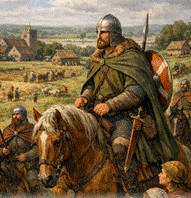
Dot was a Saxon landholder listed in the
Domesday Book who lost his lands after the 1066 Norman Conquest.
Nothing is known about the
ancestors or family lineage of Dot of Huyton. Dot held Huyton as a local
Anglo-Saxon lord or freeholder owing service to King Edward the Confessor as
overlord before the Norman Conquest. Anglo-Saxon
land tenure records in the Northwest were sparse. Genealogies only survived for
high royal houses or major ealdormen, not local lords of small manors like
Huyton. Dot or Dote was a known Old English
and Scandinavian personal name current in late Anglo-Saxon England, but it
provides no clues to a wider family tree or ancestral background.
It seems that the family was well
established in the district before the Norman conquest. One Dot, among several
of that name, appears in Domesday as a dispossessed owner, but is not mentioned
under Edge, where land was held by Edwin. Dot, Edwin and Drogo were all free
men, and Dot's grandson, possibly Hova, married Edwin's granddaughter and so
acquired “Egge”. This was Little Edge,
as distinct from Great Edge;
but men named Dot, or the same person, are recorded at 13 different places, and
of course were subject to the Norman appointee as overlord, Earl Edwin of Cholmondeley
Castle. Edge itself
is situated in lightly rolling country only three miles east of the Welsh
border on the Dee and three miles north of the old English Maelor of
Flintshire. While Edwin presumably was a Saxon, the recurrence of Welsh
sounding names, such as Kadugan, Hova
and Kendrick, alongside Norman ones in the 12th and 13th century records of the
Dods suggest there were English-Welsh marriages; and Hova (derived from Hwfa), remains
a family Christian name. The proximity to Wales becomes relevant again in the
18th century, but for the moment it is enough to note that the earliest Dods
called ‘of Egge’, Kadugan and Reginald, sons of
Reginald, mentioned in about 1170. (Haslam, Richard (1985), Edge
Hall, Cheshire, The Home of Mr and Mrs Anthony Wolley Dod, in Country Life,
21 November 1985, pages 1612 to 1615).
Huyton was first settled between
about 600 and 650 CE. The name derives from Old English, Hitune,
meaning High Town or an enclosure on high ground surrounded by marshland. It
was founded by Anglian settlers on a small, dry hill amid local marshlands near
the headwaters of the River Alt. It has been suggested that St Michael's Church
occupies the site of an earlier Anglo-Saxon church foundation established on
the highest ground of the settlement.
1030
Dot may have been born in or about
1030.
Before
1066
Dot of Huyton was associated
with twenty locations in Cheshire before the Conquest.

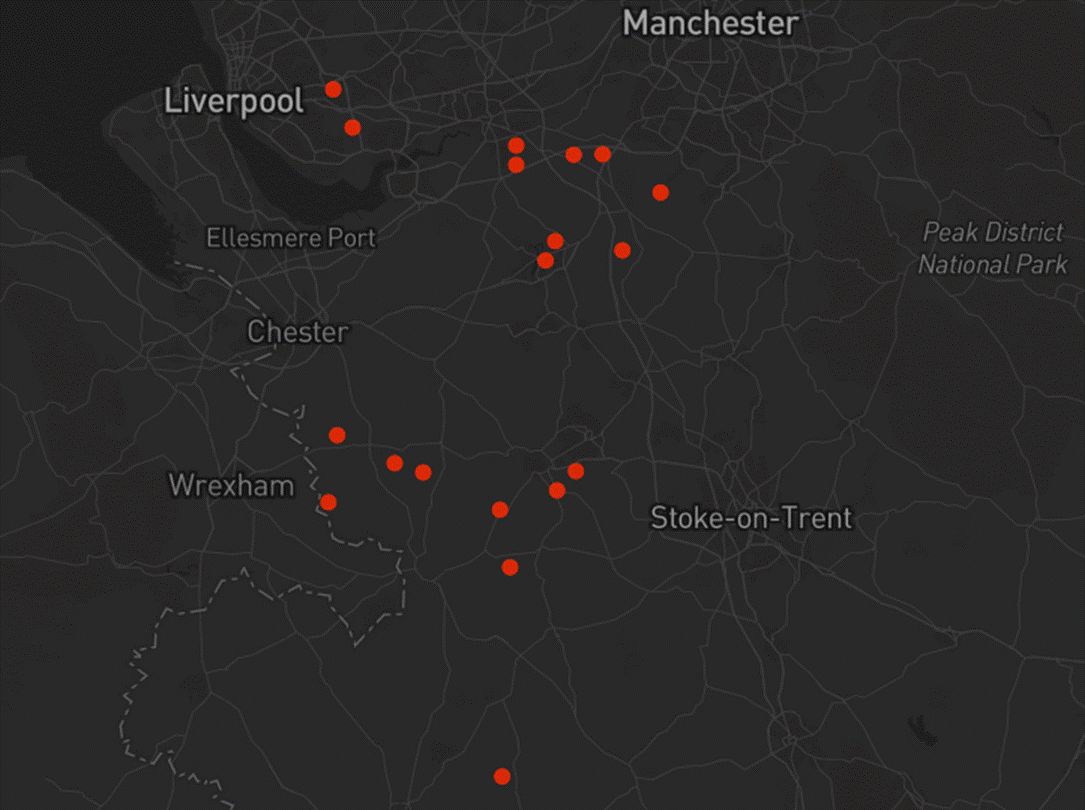
Appleton, Bucklow,
Cheshire
Aston, Warmundestrou,
Cheshire
Bickerton, Duddeston, Cheshire
Calvintone, Duddeston, Cheshire
Cholmondeley, Duddeston, Cheshire
Coddington, Duddeston, Cheshire
Grappenhall, Bucklow,
Cheshire
[High] Legh, Tunendune,
Cheshire
Huyton, [West] Derby, Cheshire
Millington, Tunendune,
Cheshire
Mobberley, Bucklow,
Cheshire
[Nether and Over] Peover, Tunendune, Cheshire
Rowton, Hodnet,
Shropshire
Shavington, Warmundestrou,
Cheshire
Shocklach, Duddeston, Cheshire
Stapeley, Warmundestrou,
Cheshire
Tarbock, [West] Derby, Cheshire
Wilkesley, Warmundestrou,
Cheshire
Wincham, Tunendune,
Cheshire
Witton, Middlewich, Cheshire
Many of these lands were part of the Hundred
of Duddeston.
The Dot
family seem to have been a rare Saxon Survival post Domesday, though their
lands were redistributed.
Dot, the
Saxon Lord of sixteen manors, either exclusively, or of a considerable portion
thereof was joint Lord of Cholmondeley, Hampton, Grappenhall and two thirds of
the Bickerton with this very Edwin. Dot was ejected from all his manors (after
the Norman conquest), and the circumstance of the heiress of the relics of
Edwin 's lands matching herself with a man who bore the name of one so closely
connected with her apparent ancestor seems to make this marriage the results of
an old family friendship and alliance, and to lead to a deduction of Cadwgan
Dot from the Dot of Domesday. A descent in the male line from a Saxon, noticed
in that record, would be unique in the county of Chester. (see Baker,
J Bellyse (1982), Highfields, Audlem: Sixteenth Century Home of the Dod and
Baker Families, Audlem District History Society, page 3, referring
to Burke, John (1835), A Genealogical and
Heraldic History of the Commoners of Great Britain and Ireland, London:
Henry Colburn, Volume
1, page 297).
The reference is to the marriage
of his grandson, Hova Dod (DOD00012)
to the heiress of Edwin, Lord of Edge. Dot lost his manors after the Conquest,
but his descendants reacquired many lands in the Hundred of Duddeston when his
grandson, Hova, married the daughter of the Lord of Edge.
The placename Dodleston
derives from the Old English personal name Dod(d)el or Dot
combined with tūn (farmstead or
settlement), pointing to a shared root personal name associated with the same
early Anglo-Saxon kin-group or landholder footprint in Cheshire. Still to
explore the link between Duddeston (part of the estates of Edge) and Dodleston, southwest of Chester near the Welsh border and
their potential links with the Dod name.
1100
Dot may have died in about 1100.