William Dod of Losford or Lostford
c
1505 to c 1575 (estimated)
DOD00061
|
Return to the Home Page of the Bakers Family part of the website |
The Bakers of Highfields Story
The Story of the Dods and Bakers and of Highfields,
Fenton House and Hasfield Court. A journey through the history of Cheshire
and Staffordshire, an Anglo-Saxon nobleman who retained his lands after the
Conquest, pottery at Stoke on Trent, an encounter with Elgar, and the history
of an Elizabethan manor house at Audlem |
The family tree of the Bakers of Highfields |
The Family Tree of the Dods, predecessors to the
Bakers of Highfields |
The Bakers of Fenton House and Hasfield Court
The Family Tree of the pottery Bakers of Stoke on Trent |
The Family Tree of the Bellyse Family |
The main part
of this website tells the story of the Farndale family from Yorkshire Descendants of Arthur Baker, the story of the
Farndale ancestry is told through the main part of this website You can also return to the Farndale
website home page |
The genealogy of the family of James Hall, linked to
the Baker family through marriage to Arthur Baker |
Headlines of are
in brown.
Dates are in red.
Hyperlinks to
other pages are in dark
blue.
References and
citations are in turquoise.
Context and local
history are in purple.
1505
William Dod was the younger son of
Dod of Cloverley (DOD00058) and may have been born in or
about 1505, or perhaps earlier given the timescale of taking credit. The Dod
(or Dodd) family of Lotfield (sometimes recorded as Lutfield or connected to Edge, or maybe Lostford)
was a prominent Cheshire landed gentry family, with several members named
William Dod, often in the 16th and 17th centuries. The family held lands at Lotfield, often associated with the township of Edge, near
Malpas in Cheshire.
William Dod was the youngest son of
John Dod, Lord of the Manor of Cloverley. Cloverley Hall was, at that time, an
early moated manor house, built round an open courtyard. (Baker, J Bellyse (1982), Highfields, Audlem: Sixteenth
Century Home of the Dod and Baker Families,
Audlem District History Society, page 3).
William Dod, of Losford, Shropshire, purchased land known as Highfields,
pasture, near Audlem, Cheshire, from Hugh Chester 1553, married 1530 Anne, and
had issue (Burke, John and Burke, Sir
Bernard (1836)(Eighteenth Edition, 1972), Bellyse
Baker of Highfields in Burke’s Landed Gentry, Volume 3, pages
35 to 38). The Burkes entry
suggests a purchase from Hugh Chester, and marriage to an unknown Anne, but the
general view is that Anne was Anne Chester and Hugh Chester was William’s father in law.
1529
William Dod may have taken on
debts from Thomas Cromwell between 1518 and 1529, which were formally recorded in
1529. This may have been a factor in his strategy to marry into the Highfields
property, the span of years ending the year before his marriage.
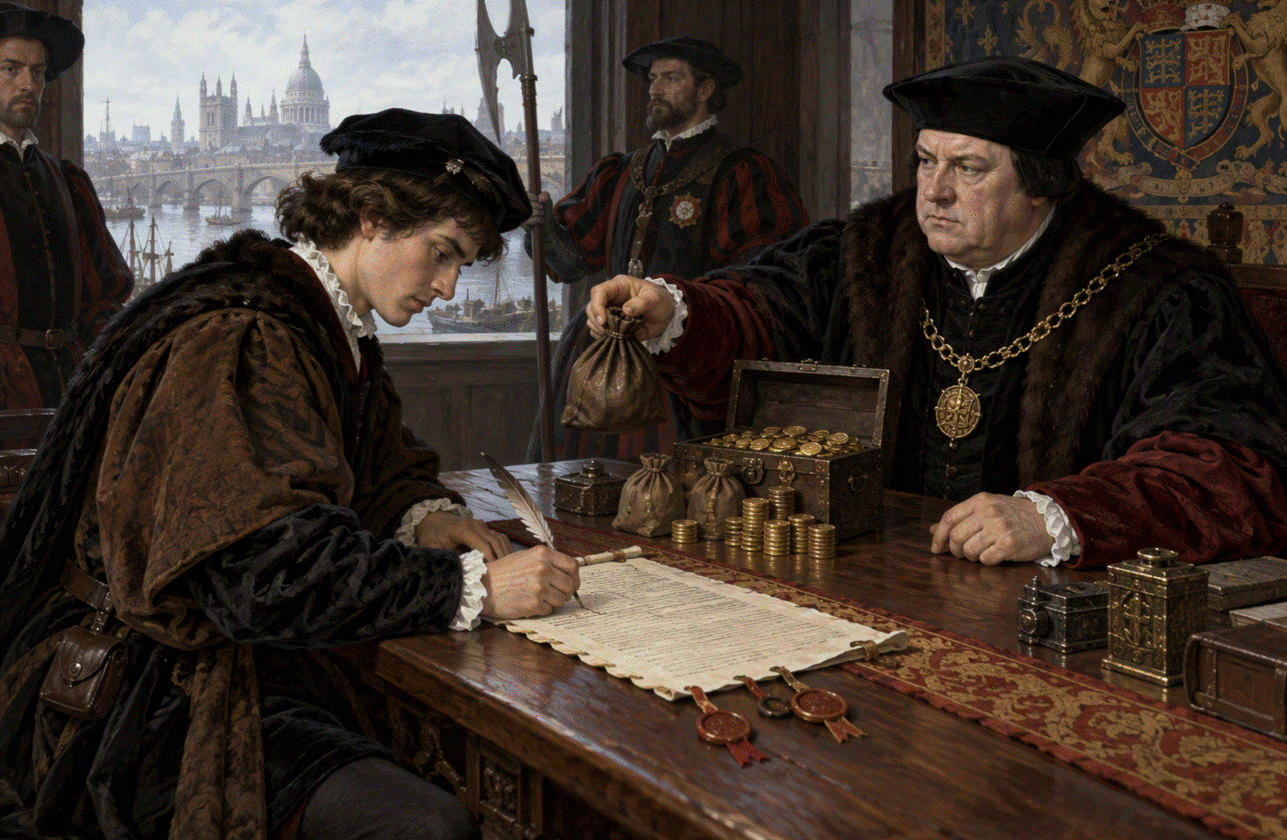
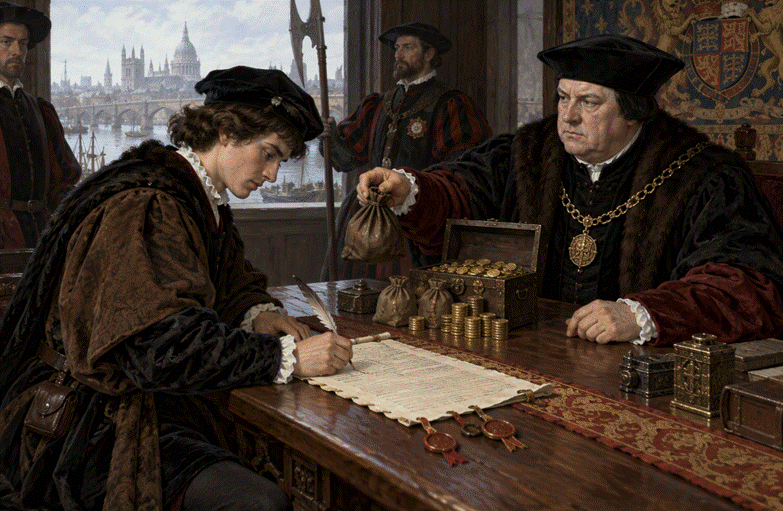
Taking credit from Thomas
Cromwell, reimagined by artificial intelligence
In 1529, William Dod was a debtor
to Thomas Cromwell. Debts due to me, Thomas Cromwell, by statutes, bills,
and obligations. The dates of the obligations range from 8 December 10 Henry
VIII (1518) to 16 February 20 Henry VIII (1529). The acceptors are … William
Dod (Public Records of the reign of Henry VIII, Volume 4, Part 3,
Folio 5330).
The document is part of the
Letters and Papers, Foreign and Domestic, during the Reign of Henry VIII, which
details the private and public transactions of Thomas Cromwell in 1529. In
1529, Thomas Cromwell was not yet the Chief Minister of England. He was still a
highly successful London lawyer, merchant, and the right-hand man to Cardinal
Thomas Wolsey. Alongside his public tasks for Wolsey, such as managing the
dissolution of several small monasteries to fund Cardinal College, Oxford,
Cromwell ran a lucrative private legal and money-lending practice. Cromwell had
been lending money, acting as a financial broker, or holding legal bonds over a
wide network of clients for over a decade. Statutes, bills, and obligations were formal legal ties. A debtor
would sign an obligation, a bond, promising to pay a specific sum, often
enforceable by the strict mercantile laws of London.
In the 1520s, Cromwell routinely
dealt with wealthy provincial gentry, merchants, and landowners who needed
ready cash in London or legal intervention in court disputes. The Dods of
Cloverley were prominent landed gentry capable of entering into substantial
statutory obligations. It seems likely that this was the relevant William Dod.
That said, there was also a William
Dod who was a vintner in London who was recorded as a debtor of Thomas Cromwell
in 1532 (Public Records of the reign of Henry VIII, Volume 5,
Folio 1285
iv). There may therefore be
two Willkiam Dods, or the relevant William Dod may
have had interests in London too.
In early modern England, it was
common for the younger sons or even the heads of provincial gentry families,
like the Dods of Cloverley, to become freemen of London Livery Companies, such
as the Vintners' Company, to engage in trade, secure capital, and navigate
London's financial markets. This allowed them to sue
and be sued under London’s highly efficient mercantile law (Lex Mercatoria), which governed the statutes, bills, and
obligations mentioned in Cromwell's accounts.
It is possible that William Dod was
using a London vintner business to generate cash, by accumulating debts to a
powerhouse financier like Cromwell between 1518 and 1529. Marrying into the Highfields
property in 1530 would have secured his provincial landownership. As he was the
younger son, his brother John Dod (DOD00060) taking on the Cloverley
property, this seems a likely interpretation.
1530
William married Anne Chester (CHE00001), daughter of Hugh Chester (CHE00002), in 1530.
1535
William and Anne’s son Thomas Dod
(DOD00070) was born in or about 1535.
1536
On 20 June 15636 there was a list
of bonds owing by different persons, the latest in date being 20 June 28 Henry
VIII (1536) and the first dated 14 January 26 Henry VIII (1535) and which fell due
at Christmas 1536 and the list included William Dod (Public
Records of the reign of Henry VIII, Volume 10,
Folio 1171). Perhaps William was continued
to take loans to fund his ambitions.
1537
William and Anne’s son
William Dod (DOD00071) was born in or about
1537.
1551
There was a lease of land
at Cloverley to the Chester family in 1551.
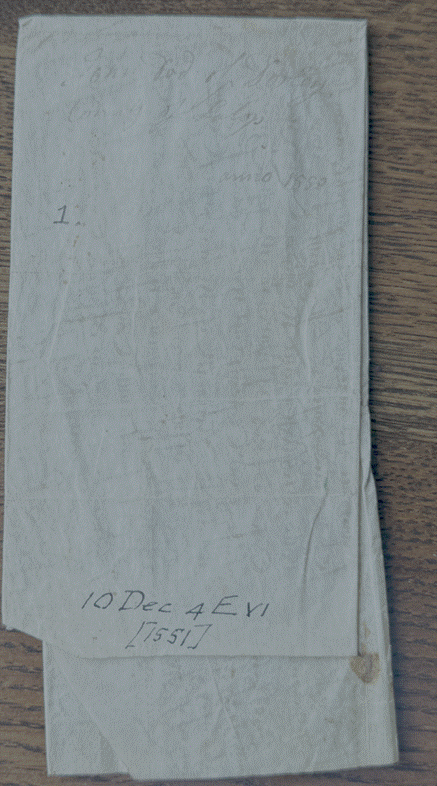
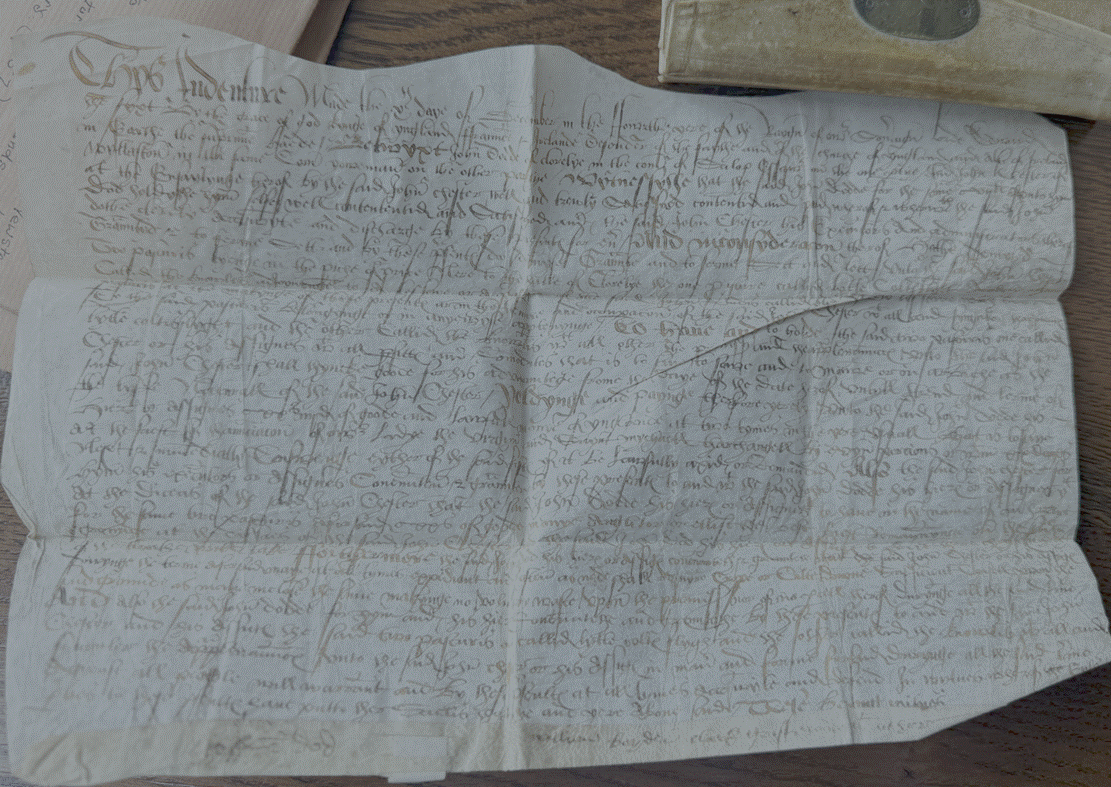
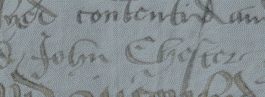


(Lease dated 10 December
1551, in the fourth year of the reign of Edward VI between John Dod of
Cloverley, Shropshire and John Chester of Wistaston,
Shropshire, Yeoman of two pastures near Cloverley called Little Coltsflight and the Knowles).
1553
William inherited the Highefields pasture with other lands from Hugh
Chester, his father-in-law.
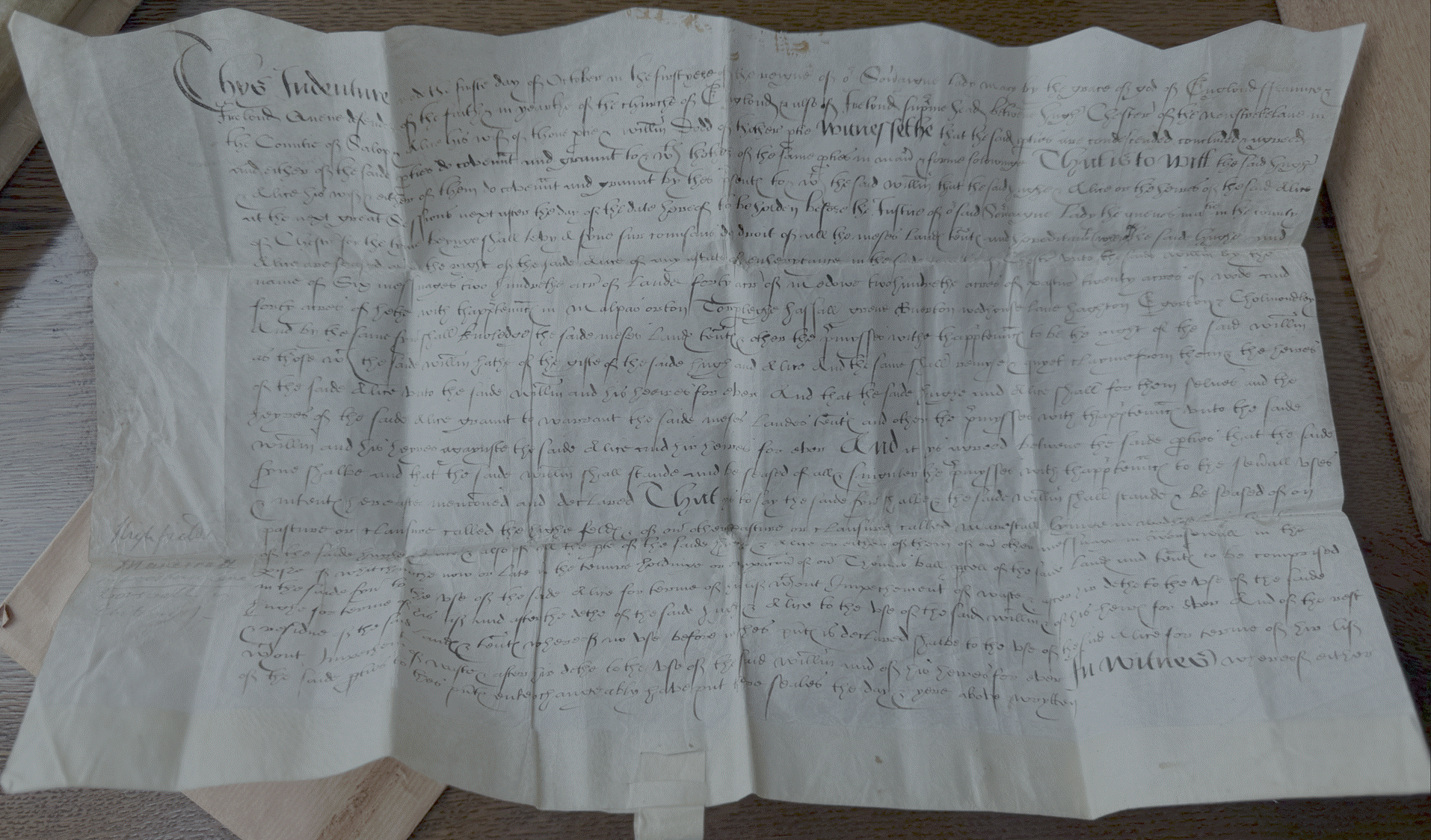
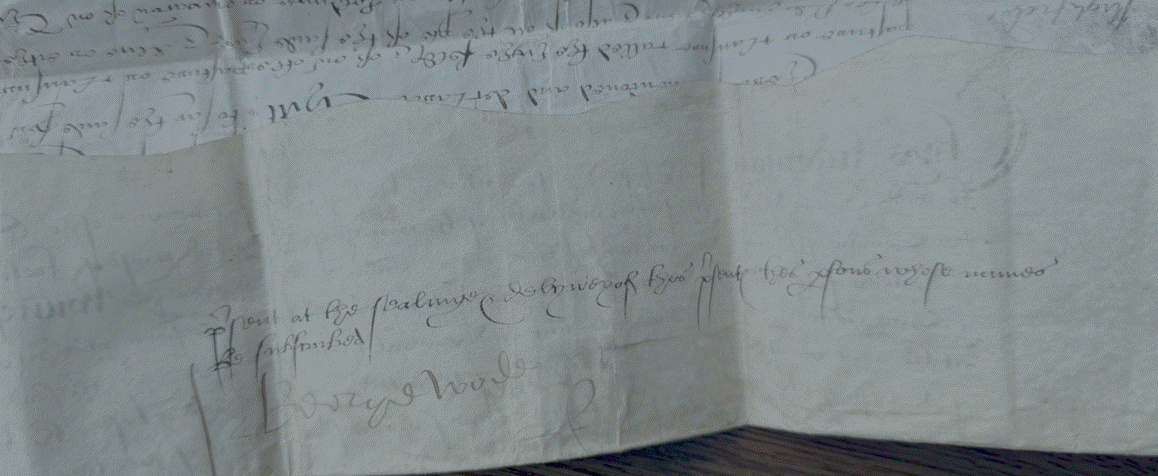
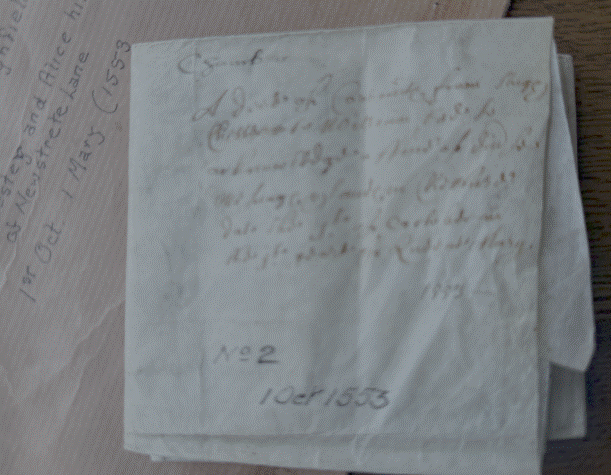
(Conveyance of the Highfields and other lands from
Hugh Chester of Newstrete Lane and Alice his wife to
William Dod of Knowles and Losford, 1st
October in the first year of the reign of Mary (1553))

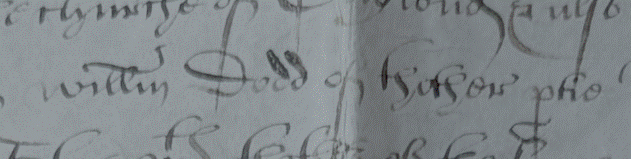
The
first mention of Highfields is in the deed between William Dod of Losford, County Salop, Gentleman and Hugh Chester of Newstrete Lane, County Salop, dated 1st October 1553. In
this deed, William “and his heirs forever”, inherit, on the death of Hugh and his
wife Alice, various lands and properties, some 500 acres in all. These include
the pastures situated in Woodhouse Lane known as the Highfields and Marestalls. (Baker, J Bellyse (1982), Highfields,
Audlem: Sixteenth Century Home of the Dod and Baker Families,
Audlem District History Society, page 3).
As
already mentioned, William Dod of Losford (presumably
Lostford, near Tern Hill) inherited various lands
including the pastures known as Highfields and the Marestalls
from the Chester family in 1553. This deed is a recognition of right in which
William Dot received five hundred acres including a house in Woodhouse Lane.
There is no payment involved, so one can only assume that William’s wife, whom
we know in deeds as “Anne”, was the daughter and heiress of Hugh and Alice
Chester. As the Highfields is referred to as a “pasture or close”, it seems
that the house did not then occupy the site. In Camden's Britannia
of 1695, Highfields is marked, also Maer Houses, where Mere farm now stands
in Woodhouse Lane. Could this be the Marestalls
referred to in the document? (Baker,
J Bellyse (1982), Highfields,
Audlem: Sixteenth Century Home of the Dod and Baker Families,
Audlem District History Society, page 5).
Highfields, only a few hundred yards
from the Shropshire border and approached through a labyrinth of narrow, hedged
lanes, is typical of these smaller, timber framed country houses. With its
gables and patterned facades, it is the perfect picture of a “mansion of olden
time”. The property has belonged to the Bakers and their ancestors the Dods,
with only one short interruption, since the early sixteenth century, when the
land was acquired through the marriage of William Dod, a younger son of John
Dod of Cloverley Hall in Shropshire, to Ann, daughter of Hugh Chester. By the
terms of a deed dated 1553, William “and his heirs forever”” were to inherit
from his father-in-law 500 acres including the pasture known as “Highefelds”. This is the earliest reference to Highfields,
and it is clear from the wording that there was no house there at that time. (Robinson, John Martin (1991), Highfields, Audlem,
Cheshire, Seat of John Bellyse Baker, Country Life 31 January 1991, page 48).
1557
Four years
later, in 1557, William made the estate over to his son, William Dod of Newstrete Lane “in consideration of £3”. (Baker,
J Bellyse (1982), Highfields,
Audlem: Sixteenth Century Home of the Dod and Baker Families,
Audlem District History Society, page 5).
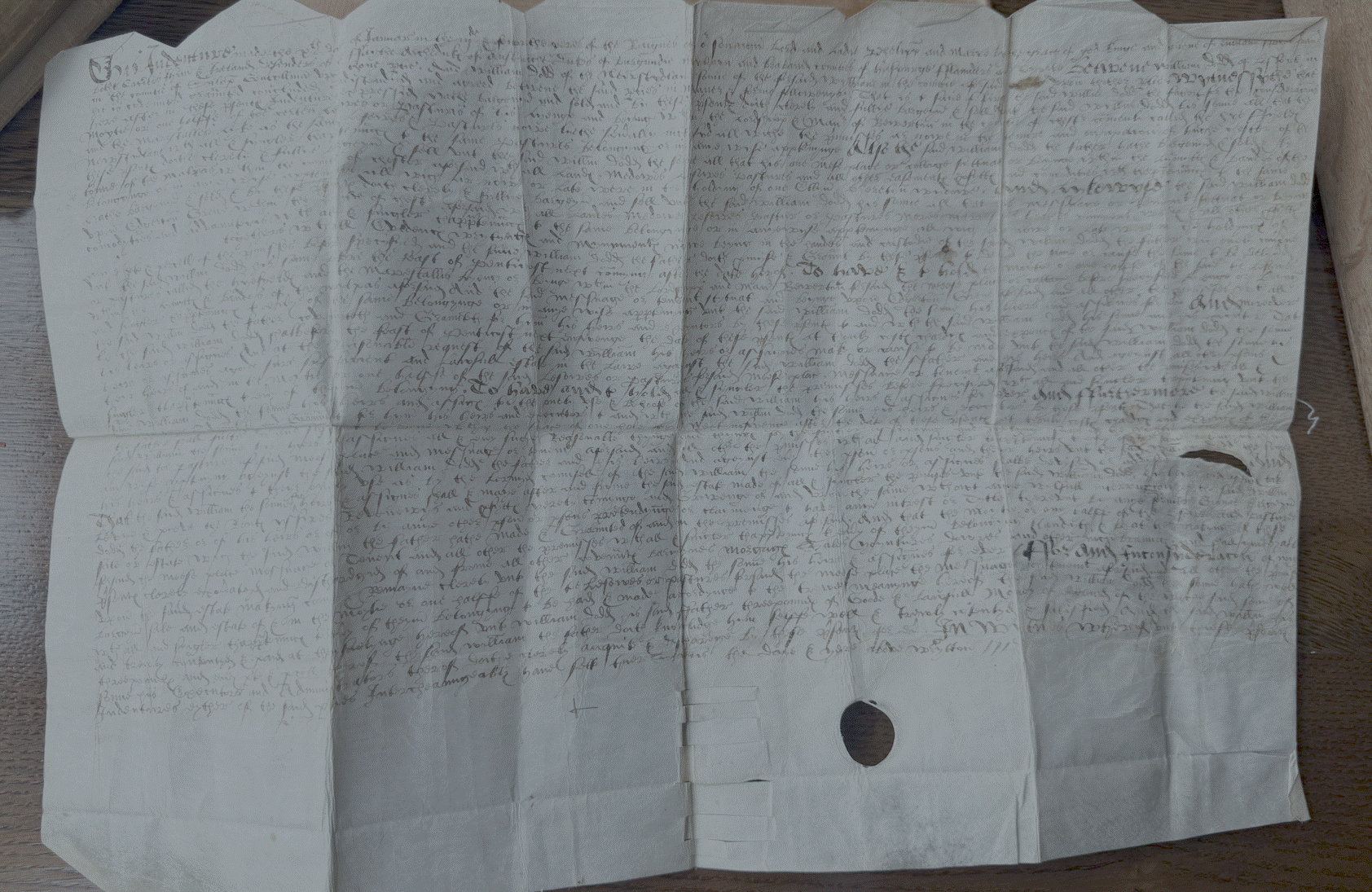
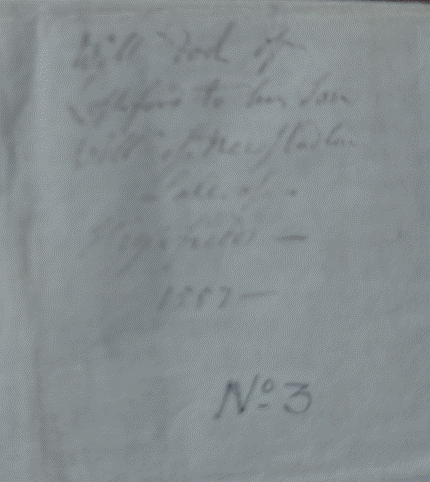

(William Dod of Losford to his son, William Dod of Newstreet
Lane, sale of Highfields pasture and other lands. 10 January in the third and
fourth years of the reign of Philip and Mary (1557)).
1575
William may have died in or about 1575.