Northumbria’s Golden Age
A Northern Renaissance, Seventh and Eighth Centuries CE
|
Return to the Home
Page of the Farndale Family Website |
The story of one
family’s journey through two thousand years of British History |
The 83 family lines
into which the family is divided. Meet the whole family and how the wider
family is related |
Members of the
historical family ordered by date of birth |
Links to other pages
with historical research and related material |
The story of the
Bakers of Highfields, the Chapmans, and other related families |
Headlines are in brown.
Dates are in red.
Hyperlinks to
other pages are in dark
blue.
References and
citations are in turquoise.
Context and local
history are in purple.
Geographical
context is in green.
This page is work in progress
Introduction
The 7th
and 8th centuries CE were the Golden Age of Northumbria, the period when the
northern Anglo-Saxon kingdom reached its peak in political power, intellectual
endeavour and artistic output (Northumbria’s Golden Age, J
Hawkes and S Mills, 1999; Northumbria 500 to 1100. Creation and Destruction
of a Kingdom. Cambridge University Press, Cambridge, D Rollason 2003, Coastal
Landscapes and early Christianity in Anglo Saxon Northumbria,
David Petts, Estonian Journal of Archaeology, 2009, Volume 13, pages
79 to 95).
Gregory and his puns, an
idea of Englishness
Cuthbert
Abbess Hild
Lastingham
|
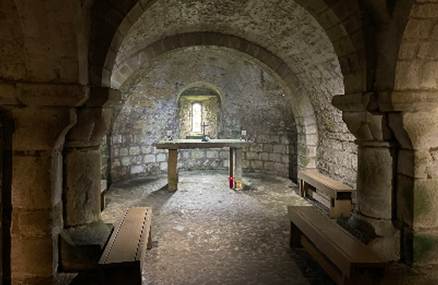
The founding of a Celtic Christian
monastery by Cedd, 2 km from the entrance to Farndale |
Cedd
|
|
Chad
Synod of Whitby
|
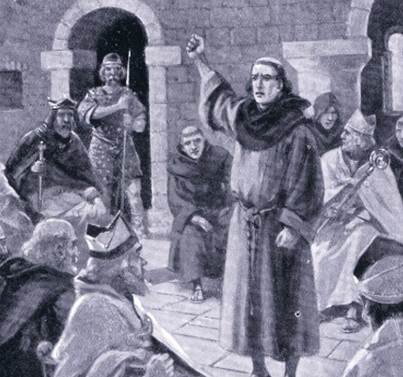
The
momentous agreement at Whitby, 30 km northeast of Farndale, which resolved
incompatibilities between Roman and Celtic Christian traditions, and placed
Britain onto the European stage |
Kirkdale
|
Kirkdale
from its founding in about 685 CE to the beginning of the Scandinavian period
in about 800 CE |
Benedict Biscop
Wilfred
Theodore
Deiran Monarchy
Monkwearmouth-Jarrow
Bede
|
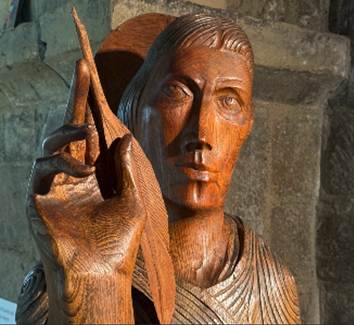
This
life of Bede and the history of Monkwearmouth-Jarrow, providing context for the
founding of Lastingham and Kirkdale, and the work of Alcuin and the York
scholars |
Northumbria and the
Frankish Kingdom
Cathedral School of York
Archbishop Ecgberht
Alcuin
|
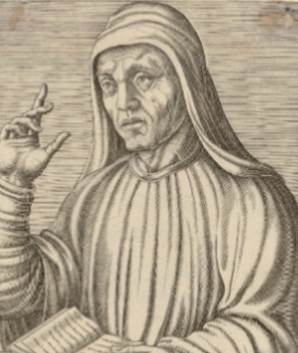
Alcuin and the birth of modern education
The world of Ecgberht and Aethelbert,
successors to Bede, and their pupil Alcuin, who took York’s powerhouse of
knowledge to the court of Charlemagne to pioneer the European educational
system |
The end of the Golden Age –
Viking destruction
Bibliography
Coastal
Landscapes and early Christianity in Anglo Saxon Northumbria, David Petts,
Estonian Journal of Archaeology, 2009, Volume 13, pages
79 to 95.