Act 21
The Victorian Policemen
The story of two Chief Constables and
a wartime detective
|
A Policeman’s Lot is not a Happy One
An introduction from Gilbert and Sullivan’s Pirates of
Penzance, 1880 |

This Act of
the Farndale Story differs from the others. It follows the lives of three
individuals in some detail and the Act is quite lengthy as it incorporates
contemporary media articles. It reflects attitudes, innovations, society and
events from the Victorian Age to the Second World War and provides a unique
perspective on social history. Not everyone following the Farndale Story will
wish to read the full Act, given its length and detail, so the Act is well
interspersd with sub titles, so that those who wish can dip in to topics that
might take your fancy.
There is
even more for those who are interested in every detail of these three men. A
full account of the lives of the elder Joseph
Farndale, the younger Joseph
Farndale, and Thomas Henry
Farndale can be read in their own webpages, but this Act of the Farndale
Story brings out the main features of their stories.
Part 1 – Joseph Farndale the Chief
Constable of Birmingham
Scene 1 - The
Middlesbrough Bobby
In 1861, the nineteen year old Joseph Farndale
was working as a farmhand, driving the plough one weary day when his employer
came up to him and complained about his work. The young man felt that life
could be better than that, and he threw down his tools and declared that he
would go off and be a policeman.[1]
Thereby Joseph, and later his nephew
and his nephew’s nephew, started three long and illustrious careers with the
police.
By 1862, the elder Joseph
Farndale was a police constable in Middlesbrough,
charging one offender with using foul and disgraceful language, and
another with being drunk and riotous[2]. He dealt with miscreants who variously stole
boots from a market stall[3], were caught as pickpockets[4], stole eight yards of flannel[5] and fought when drunk[6]. Another offender was violent as he was taken
to the nick after kicking and drawing a knife[7]. By 1864, Joseph was a police sergeant[8] and in 1865, he married Jane Newton, the
daughter of a Middlesbrough coachman[9].
By November 1867, Joseph had been
promoted to Police Inspector[10]. He was soon dealing with cases of fraud[11] and he dealt with the mysterious death of a
seven year old child from suffocation[12]. His rise was so meteoric that by 1868 he was
confident enough to apply for a Police Superintendent/Chief Constable role at
Durham[13], for which he was shortlisted, and in the
following year he was appointed to be Chief Constable of Chesterfield Police in
Derbyshire[14]. By his gentlemanly manners and thorough
efficiency as an officer, Mr Farndale has gained the respect of all classes at
Middlesbro’; and we have no doubt he will fill the responsible office to which
he has been elected with credit to himself and advantage to the community among
whom he is placed[15].
Scene 2 - The
Chesterfield Chief Constable
In 1869, the year he was appointed, he
was soon dealing with a case of multiple robberies taking place in the local
brothels and opposing applications for the renewal of licences for beerhouses
that harboured improper characters[16]. That year he managed to get a raise for all
his police officers of 1s per week[17]. In his Chief Constable role, he was also
appointed to be the Sanitary Inspector[18] and by 1 January 1870 he had arranged for the
opening of new slaughter houses, so that slaughtering of animals in the old
Shambles was to be forbidden[19]. He was also appointed Inspector of Weights
and Measures, at a salary of £25 per year[20] and borough inspector under the Factory Act[21].
Joseph appeared regularly in court and
was even involved in cross examination of witnesses. When a labourer of
Chesterfield was charged with cutting and wounding with intent to cause
grievous bodily harm in Church Walk, Chesterfield, the prisoner, as he was
referred to, asked another witness “If you tell the truth about that knife, I
gave your wife a gill of beer for it”. Joseph Farndale quickly stepped in and
asked him “Then you don’t deny it was your knife”, to which the prisoner
responded that he didn’t.[22]
Control of Dogs
In August 1870, John Crampton,
medical botanist, was charged, that after public notice had been given
directing dogs to be confined on suspicion of canine madness, he did suffer his
dog to be at large during the time specified. He was also charged with being
drunk and riotous on Friday last. Mr Farndale said the man was a thorough
nuisance to the town.[23]
In August 1871, Joseph was able to
report that Gentlemen. I beg to state that since your last meeting the town
has been free from offences of a serious nature; that the conduct of the
offices and constables with one exception has been good, and they have been
active in the discharge of their various duties. There has been a considerable
decrease in indictable offences, as compared with the corresponding quarter of
the previous year, and a slight increase in cases determined summarily.[24]
Within a short time, Joseph Farndale
was making a further move to promotion to the Chief Constable of the Leicester
Police and he was selected for that role in October 1871 out of a pool of sixty
candidates[25]. The deputy town clerk read Mr Farndale's
letter resigning his post, which concluded by a hearty expression of thanks
to the Mayor and members of the Council for their assistance in the duties he
had to perform[26]. It was remarked that it is a great proof
of Mr Farndale's high position in his profession that the testimonials of those
with whom he has come in contact during his career should have been so
favourable[27].
Scene 3 - Chief
Constable of Leicester Police
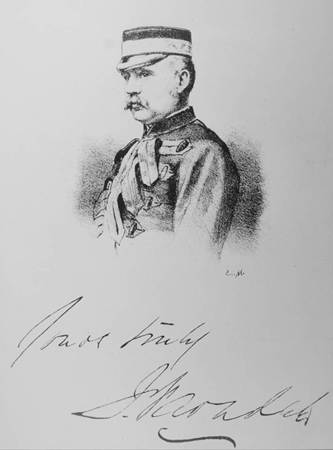
Joseph Farndale
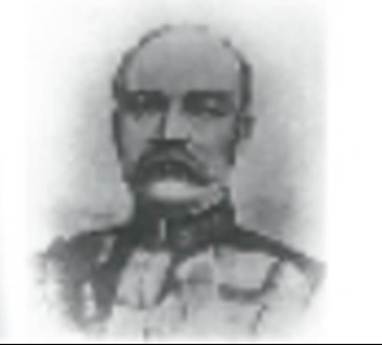
probably from his time with the Leicester Police Force[28]
Joseph Farndale was appointed Head
Constable of Leicester Police on 27 October 1871. He replaced Mr Charters. His
salary was £220 per annum, with a house included.[29]
Charters was
succeeded by Joseph Farndale, who more than anyone else, laid the foundations
of the efficient police system which modern Leicester possesses. When Farndale
came to Leicester in the 70s the force was only 90 strong, although the
population had increased to 25,000 people. Farndale was not long in making
changes. He scrapped the tall hats and frock coats which made the constables
look more like funeral mules then policemen and substituted helmets and tunics.
The townspeople were rather critical of these changes, but in time they came to
appreciate that the new uniforms tended to create a cleaner respect for the
power of the law. Many of the recruits to the force were not used to
discipline, and hardly likely to inspire respect, even if they did create fear.
Drunkenness was all too common in the force and the Watch Committee had a
difficult job to improve matters. One step in the campaign was taken when
Farndale endeavoured to create a team spirit by forming a police band, under
the conductorship of Inspector Smith. This soon became one of the most popular
institutions of the town. The band played in the municipal square every Friday
night and was always in demand for concerts. But alas, good intentions do not
always bring the best of results. It was found that the police became much more
interested in their music and their concerts then in their duties as policemen,
and the Watch Committee had reluctantly to disperse the band. There was at that
time an astonishing amount of undetected crime in Leicester for a small town,
and Farndale set out to discover the reason. In those days, the practice was to
make the person robbed pay the costs of apprehending a prisoner who had left
the town after the crime, and many people either could not afford to pay for a
police chase or preferred to allow justice to go unsatisfied, rather than make
a personal sacrifice. This of course was a ridiculous state of affairs and
before long Farndale had persuaded the Watch Committee to allow the cost of
such arrests to be borne by the ratepayers. How far Farndale would eventually
have gone in this war against crime we are never to know because at the peak of
his career he was offered the Chief Constableship of Birmingham and naturally
accepted it. Farndale, I remember, was succeeded by James Dunn of Durham whose
chief claim to fame was that he altered the system of night beats, following a
big sale robbery at Gimson’s Vulcan Works, when thieves got away with £1,000 in
cheques and money. In Farndale's time there was a fixed beat system, which
enabled criminals to choose their time for a robbery and carry it out more or
less at leisure.[30]
A new look for
the Leicester Force
Thus it was that in 1872, Joseph Farndale
called for a change in image, replacing long frock coats with tunics, heavy
rattles with a whistle and chain and high silk hats with lighter caps. He also
introduced a probationary period of up to 5 weeks during which time a police
officer required to prove his suitability for role. In the same year, sergeants
of the Borough wrote to Joseph Farndale to complain about the practice of
turning off street lights during summer months.
The perils of
throwing orange peel and flying kites
In January 1872, the thoughtless
and dangerous practice of throwing orange peel on the causeways was commented
upon by the mayor. He called the attention of Head Constable Farndale to the
circumstances and he hoped he would give instructions to his men to remove the
orange peel from the footpaths whenever they saw it, and that persons would
refrain from the culpable habit of endangering the limbs of their fellow
creatures. With the aid of the police, and the cooperation of the more
reflective portion of the public, it is hoped a check will be put upon this
abominable nuisance.[31] The mayor was clearly a person quick to be
enraged and in September 1872 the Mayor called the attention of Mr Farndale,
the Chief Constable, to the practice of flying kites in the streets, and
pointed out the danger of it both to foot passengers and those who were
driving, as it was liable to frighten the horses. It had been complained of in the
papers and otherwise. He had no wish to debar children from enjoying
themselves, but that was not the way to do it. Mr Farndale said he had given
instructions to the police to report all cases to the Local Board.[32]
Controlling a
protest in 1872
Joseph had to deal with a more serious
incident in Leicester that year. In August 1872, from the many
manifestations of disapproval evidenced in Leicester during the past week by
the issuing of a magisterial order requiring that all public houses be closed,
in accordance with the provisions of the Licensing Act, by eleven o’clock at
night, it was generally anticipated that Saturday night would have witnessed a
very serious tumult. Accordingly every
precaution was adopted by the local authorities to guard against a disturbance,
a considerable number of county police being drafted into the town and held in
reserve, while all the available borough force was out on duty. In their
efforts to preserve the peace, the magistrates were well aided by the
publicans, most of whom, especially the occupiers of vaults, took the
precaution of putting up their shutters by half past ten o'clock, and
intimating to their customers the desirableness of withdrawing quietly at the
appointed hour.
As eleven o’clock
drew near a large concourse of persons had assembled at the Old Haymarket, the
principal thoroughfare, and shortly afterwards the crowd was considerably
augmented, until it numbered several thousands, by those who had been turned
out of the vaults &c in the neighbourhood. A large body of police, under
the charge of Chief Constable Farndale, however, kept them moving for some
time. At length one of the mob, named James Stevens, a shoe fisher, who was the
worse for liquor, declined to move on and struck the police. He was at once
taken into custody, when an attempt was made to rescue him. A large number of
policemen then rushed to the aid of their comrade when some of the mob began to
throw stones, which struck some of the police, one of whom was also struck with
a ginger beer bottle. For a little time it appeared as though this slight
skirmish would lead to serious consequences, but the police obtained complete
power over their prisoner, and formed in line with their staves drawn at the end
of the street. He was quickly conveyed up a bye street to the police station
where he was charged with assaulting two of the officers. This coupled with the
appearance of a reinforcement of police seemed to act as a deterrent, and the
crowd became less dense and more scattered. A successful effort was then made
to clear the streets, the spectators being driven before the police, with
staves drawn, up the various thoroughfares, and by half past twelve the riot
was suppressed.[33]
Rescue from a fire
In the same month, Chief Constable Farndale was passing down the street a little before nine, and saw several persons standing, looking up at the windows above the shop, from which smoke was issuing. Seeing at once what was the matter he immediately despatched messengers to the Borough Fire Brigade, for Mr Tacey’s son, who lives in Leicester, and for Mr Tacey himself, who resides at Humberstone. The brigade was on the spot a few minutes afterwards, and the hose having been attached to the street main, was soon set to play upon the building. The flames did not make their appearance till the door was forced open when they burst forth with a rather threatening aspect. Some fears were expressed regarding the safety of the adjoining property, but happily beyond that caused by the water in one of the upper rooms of the Swan Hotel, no other damage was done. The efforts of the firemen were principally directed to the front shop, and the flames were quenched in a very short time. A ladder was laced against the window of the first storey, and an entrance effected there, but it appears the fire was wholly confined to the ground floor. The counters and several of the other fittings were completely burned, and the entire stock destroyed. We understand the loss is partially covered by insurance.[34]
Joseph’s
posse
In October 1872, a posse of police
under the superintendence of Head Constable Farndale, were engaged in the
preservation of order at Leicester Races.[35]
The Band
In 1873 Chief Constable Joseph
Farndale formed the Leicester Borough Police brass band and over the succeeding
years they gave concerts in the town’s public parks[36].
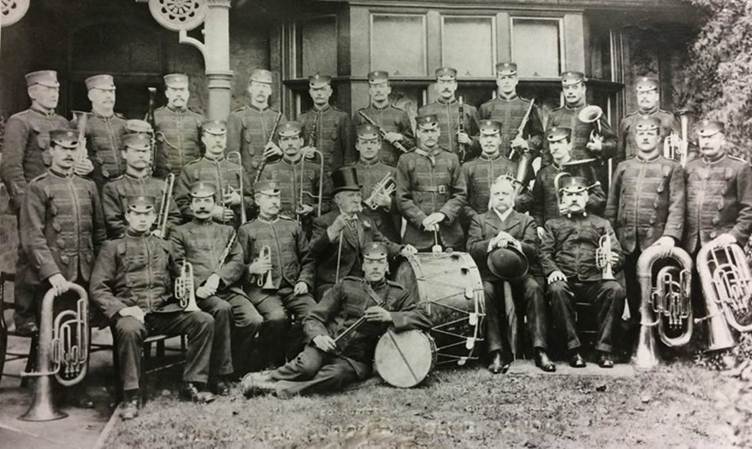
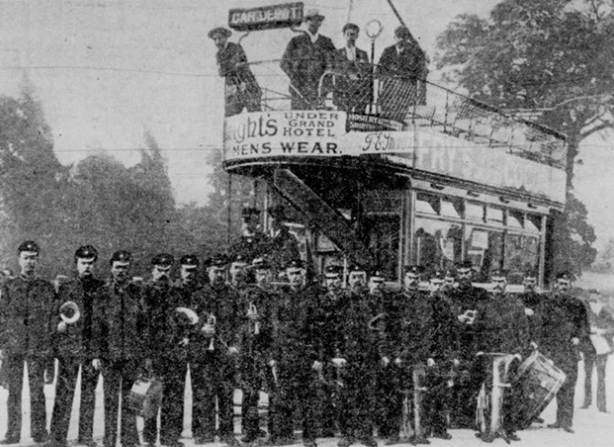
Leicester’s popular police band at the turn of the century, with an open
topped tram in the background
Joseph’s new
office
By August 1873, Now that the plans have been accepted
for the new Municipal Buildings, and everything seems in a fair way for
operations being commenced, people in the town, who will have to find the where
with all, are beginning to grumble and ask what advantage the erection will be
to the general public when finished? True it is that the civic rulers may have
a chance of “reclining on velvet lining, with sunlight floating o’er” instead
of the hard cane bottomed chairs with which they have now to be content. The
local bench will then dispense justice in a place consistent with their
dignity; Mr Farndale will have a residence befitting his position; and all his
subordinates in any way connected with the conduct of town affairs will be able
to discharge their duties with more satisfaction to the public and comfort to
themselves. This is all as it should be, and there are very few ratepayers who
begrudge it.[37]
Joseph’s a jolly good fellow
At the police annual dinner in
February 1874, Inspector Newell said they had many privileges since Mr
Farndale had been in their midst, which they did not previously enjoy. In fact
before Mr Farndale came, he had only had one Sunday in 22 years, and the last
was when he went to the Dublin Exhibition in 1851, but now he had one every
month. He had therefore great pleasure in proposing the health of Mr Farndale –
the toast was drunk with enthusiasm, the band playing “For he’s a jolly good
fellow.” Tune by the Band: “We’ll run ‘em in” which was received with
applause. Mr Farndale in responding, said he begged to tender his heartfelt
thanks for the kind manner in which they had drunk his health. He felt that the
proposer had said a great deal more of him than he was entitled. He might say
however that since he had been there he had endeavoured to do his duty to the
best of his ability, both to the public and to the force, and judging from the
way they had received the toast, he might fairly conclude that he had, to some
extent, succeeded with them.[38]
The first salary rise
In November 1874 the Watch Committee
recommended an increase in Joseph Farndale’s salary from £250 to £350 per
annum. There was some public muttering but the Watch Committee concluded
that Now, in regard to Mr Farndale, they had in him a most valuable officer
and it was the unanimous opinion of the profession that Mr Farndale was most
deserving of the increase proposed.[39]
Branch Stations
One of Joseph’s missions at
Leicester was to establish branch stations across the City. In February
1875, the Inspector makes one suggestion which we trust the Town
Council will see its way clear to adopt. The same suggestion had been
previously made by Chief Constable Farndale, and is one which it is highly
essential should be speedily carried out. We refer to the establishment in
various localities of divisional station houses, so that the constables may not
be taken off their beats so far as to the central police station on every
apprehension.[40] Indeed in
June 1875, Chief Constable Farndale is very desirous to have branch
stations, but for some unexplained cause the Council hesitates to comply with
his wish. When a police officer is severely injured in the discharge of his
duty, then we suppose something in this direction will be done, but until then
our sluggish Corporation prefers to wait.[41]
Feeding poor quality meat to
Joseph’s dog
In an article about poor quality
meat on 15 May 1875, the meat was destroyed; part of it was given to Mr
Farndale’s dog, and three quarters and the head he saw boiled up for the pigs
of Mr Gibbs.[42]
After the assault of a wife at
Christmas 1877, on Friday evening, last week, between five and six o’clock,
Mr Hetley, house surgeon at the Infirmary, intimated to the police authorities
that a considerable change for the worse had taken place in the condition of
Mrs White, who had been severely burned through her husband throwing a lamp at
her on Saturday night last. Mr Farndale at once sent a cab for Mr W Rowlett JP
and another for Mr Blackwell, the magistrate’s clerk, in order that depositions
of the woman might be taken, and the husband of the woman was also conveyed to
the Infirmary so that he might be present.[43]
In September 1879, a presentation was
made to the Head Constable of the Borough Police Force (Mr. J Farndale), by the
men under his command. The Head Constable has recently been taking his holiday,
and during his absence a subscription was entered into by the members of the
force for the purpose of presenting him with a token of their attachment to him
as their superior officer. Sergeant Poultney said during the seven or eight
years Mr Farndale had been amongst them, he had gained the good feeling of
every member of the force by the straightforward and honest manner in which he
dealt with the men. If a man did his duty, he found himself rewarded, as was
proved by the fact that no less than five or six men who had belonged to the
force under the command of Mr Farndale, had been appointed to the office of
chief constables in other towns. On the other hand, if a man did not do his
duty, he got what was called ‘the straight tip’; or rather, he was cautioned,
and received another opportunity of pulling himself together by better conduct.
He hoped Mr Farndale would live long to look upon the timepiece, and that he
would value it not on account of its intrinsic worth, but on account of the
good feeling it manifested towards him (applause).[44]
In
March 1882, Joseph Farndale left the Leicester Force to become Chief Constable
of Birmingham. James Duns took over as Chief Constable by which time the salary
was increased to £300 per annum plus rent, rates, free coal and uniform.
Scene 4 - Chief
Constable of Birmingham City Police
Joseph Farndale was appointed to be
chief of the Birmingham Police Force on 24 January 1882[45]. Mr Joseph Farndale, Chief Constable of
Leicester, has been appointed chief superintendent of the Birmingham Police
Force, at a salary of £700 per annum[46].
Seditious utterings in the force – a portent of an Irish
bombing campaign
In May 1882, an early issue was that of seditious utterings within the police force. The new Chief Constable of Birmingham, Mr Joseph Farndale, who has taken the place of Major Bond, has just made a sharp example of an indiscreet member of the force who had been heard to express sympathy with the perpetrators of the recent outrages in Ireland. The constable, who is a young Irishman, and had not long joined the force, used disloyal words in the presence of some of his colleagues, and the matter was immediately laid before the Chief Constable. The office was reported, and his explanation not being deemed satisfactory, he was called upon to resign. This is the first case of the kind that has ever happened in the Birmingham police force. The prompt action of the chief of police has met with general approval, though the severity of the measure appears to have taken the indiscreet officer completely by surprise.[47]
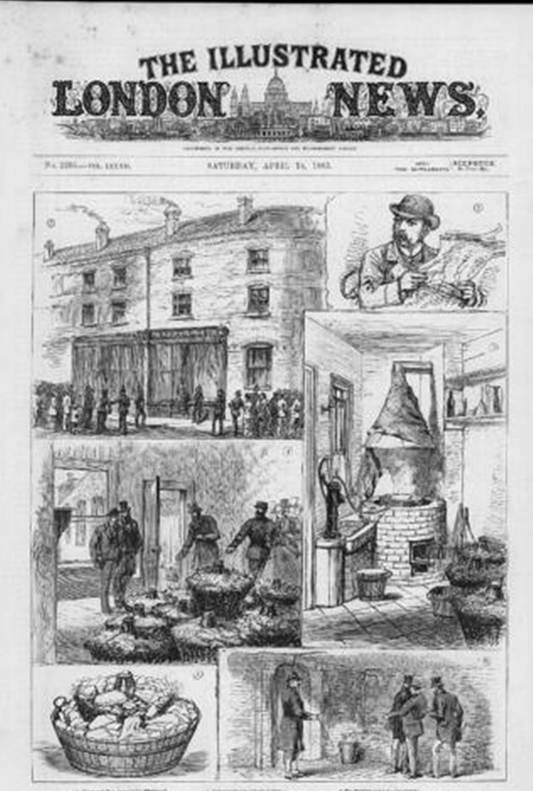
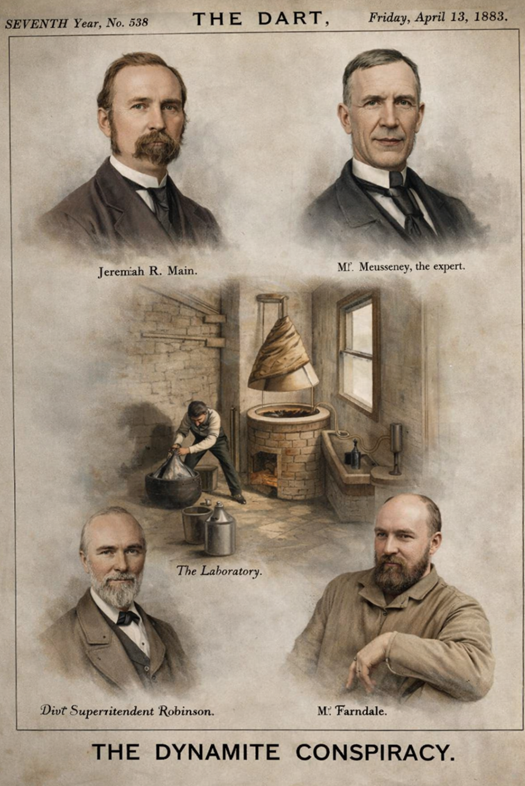
The Ledsam Street
Dynamite Conspiracy of 1883
Joseph Farndale’s career at
Birmingham was dominated by the Irish Bombing campaigns often called the Fenian
Dynamite Campaign, 1881 to 1885[48].
One of the most serious offences
committed in Birmingham was discovered when Alfred Whitehead was arrested on 5
April 1883, on the charge of manufacturing nitro-glycerine, or dynamite, at 128
Ledsam Street[49].
Whitehead was a member of the
Irish-American party of the Land Leaguers or Home Rulers, who planned
outrages to make Ireland free from the galling yoke of Saxon tyranny.
Well supplied with funds from New York, Whitehead quietly arranged his small
manufactory in Birmingham, buying glycerine from one firm and nitric and
sulphuric acids from others, certain members of the conspiracy coming from
London to take away the stuff when it was completely mixed. The deliveries of
the peculiar ingredients attracted the attention of Gilbert Pritchard, whose
chemical knowledge led him to guess what they were required for. He informed
his friend, Sergeant Price, of his suspicions. Price and his superior officers
made nightly visits to Ledsam Street, getting into the premises, and taking
samples for examination. They witnessed Whitehead sending off two lots of
explosive to London and when they raided there were 200 lbs weight of
explosives found on the premises.
The men who carried it to London
were quickly caught with the dynamite in their possession, and with Whitehead
were brought to trial and each of them sentenced to penal servitude for life.
The dynamite outrages were a significant event in Birmingham
in the 1880s. Joseph Farndale, the Chief of Police, was granted an addition to
his salary of £100 per year. Inspector Black was promoted to the rank of
Superintendent, adding £50 a year to his salary, and was presented with £100
from Government. Sergeant Price, became Inspector, with a rise of £41 12s. a
year, and received a bonus of £200. Inspector Rees' salary was raised
to two guineas a week, with a gift, of £50. Gilbert Pritchard was rewarded with
£50.[50]
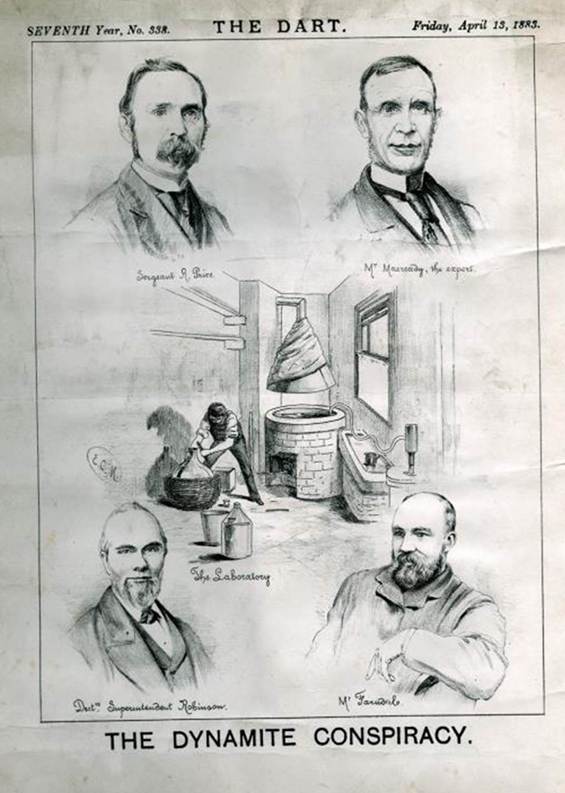
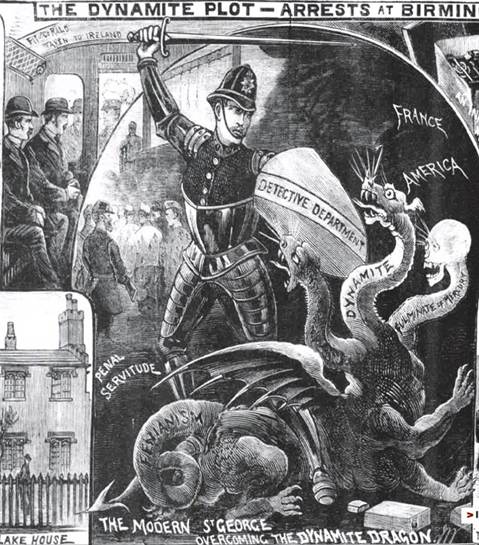
Illustrations from the Dart and
the Illustrated London News[51] and also
enhanced by AI in colour
Joseph Farndale was involved in
a further incidence of the Dynamite Conspiracies only a year later.
In April 1884, another
American Fenian conspiracy has been traced to Birmingham. Some time ago, Chief
Constable Farndale, of Birmingham, was informed by the Home Office that an
American emissary had arrived in the country, and a strict watch was kept on
all suspects. They directed their attention more particularly to the house of a
man named Jas Egan, described as a commission agent. The police kept a vigilant
watch on this man.[52]
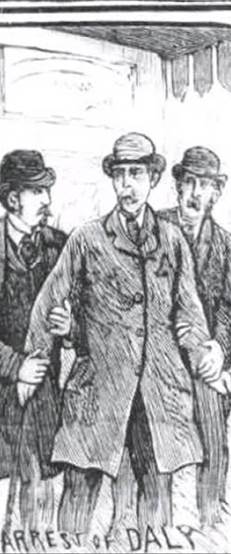
Contemporaneous with the capture
of Daly, was the arrest of James Francis Egan, thirty eight, clerk,
of Kyott’s Lane House, Grafton road, Sparkbrook, Birmingham. During
the five or six months the premises were watched the observations of the police
were regularly reported to Sir Wm Harcourt, Chief constable Farndale making a
midnight journey to the Home Office to communicate important information.
As the result of the capture of
Egan and Daly, the police hope to make further arrests. Acting under the
provisions of the Explosives Act, the Chief constable (Mr Farndale) caused to
be searched the apartments of Patrick Hogan, drill instructor of the Birmingham
volunteers, a colour sergeant in the 6th (Royal Warwickshire) regiment. The
attention of the police was directed to him by his being frequently in the
company of Daly and Egan at public houses.[53]
There was the discovery
in the garden of Mr Egan a bottle containing a thick liquid of suspicious
appearances. Mr Farndale, Chief of Police reported the matter to Her Majesty’s
Inspector of Explosives, Colonel Majendie. There was also a letter found
in the bottle from William McDonell of Wednesbury, so Mr Farndale proceeded to
Wednesbury to interview McConnell and several other people there.[54]
The new Coffee Houses
On 4 May 1883 the
Birmingham Coffee House Company opened a new coffee house in Newton Row. It was
an interesting fact in connection with the movement of the Birmingham coffee
house Company that the same kind of work had been taken up and carried on with
more or less success in many of the large towns in England; and he was glad to
learn that the movement was being imitated in New York and Philadelphia.
Probably some of the bearers had noticed in a recent police case some remarks
by Mr Farndale and one of the magistrates as to the prevalence of gambling in
coffee houses.[55]
Royal Visit
In December 1883 there was a
Royal visit to Birmingham. The occasion was the visit to Birmingham of
their Royal Highnesses the Prince and Princess Christian and the Marquis of
Lorne, paid in connection with the Birmingham cattle and poultry show. On
arriving at Washwood Heath the Prince and Princess were met by Mr
Farndale, the chief superintendent of police.[56]
Joseph doing well so far
In April 1884, the chief
constable of that Birmingham was described as a man who has few rivals in
his particular walk of life, and he fully deserves the eulogium passed upon him
by the Home Secretary last year. Mr Farndale commenced life as an ordinary
constable, I believe in Middlesbrough, and he has worked his way upwards to his
present position. He occupied the post of chief constable in two or three other
towns before going to Birmingham, in each one of which he added to his
reputation. The circumstances of his career have given him an amount of
experience which is comparatively rare, and he has added to it a very careful
study of the criminal law, in the knowledge of which he has not many superiors.
Mr Farndale is very much opposed to the practice of selecting retired army
officers for the posts of chief constable, and he himself is a strong argument
in favour of his theory that such positions ought to be filled by men
practically acquainted with the routine of police work.[57]
Children armed to the teeth with
bayonets
In March 1886 attention of
the local police has just been called to the wholesale distribution of old
bayonets among children and others in the town at several of the Board schools
in the town the teachers were startled to see their young scholars march in
literally “armed to the teeth”. As soon as this became known there was quite a
rush to the shops, and the dealers drove a roaring trade among the juvenile
population. Mr Farndale, the Chief of Police, mentioned the matter yesterday
morning to Mr Kynnersley at the Public Office, but the stipendiary said he
thought no steps could be taken in the matter.[58]
Protecting Jo Chamberlain
In September 1886 Joseph
Chamberlain was under police protection during his holiday. This
morning Mr Chamberlain had a long interview with Mr Farndale, the chief of
police in Birmingham, and it is understood that an arrangement was arrived at
for a detective to accompany him on his holidays. The right hon gentleman
starts in a few days for the Continent, accompanied by Mr Jesse Collings.[59]
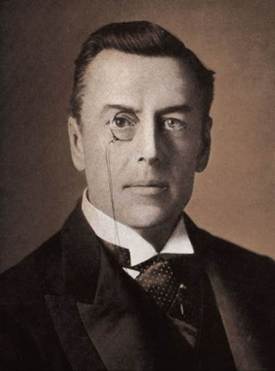
A song was written to satirise
the event.
|
So Joseph
and Jesse far away will sojourn, The shame
of it is, they’ll be sure to return. A
detective goes with them, who’ll have a great try To
“detect” Jesse’s genius and Joe’s honesty. |
Farewell
to the Bobby; His task
will be hard; That
he’ll ne’er overcome it Is quite
the card.[60] |
It is understood that it was
arranged that Inspector Van Helden should accompany the right hon gentleman
throughout his tour. Van Helden speaks several European
languages.[61]
Joseph Chamberlain (1836 to 1914) was a liberal and
later conservative politician and the father of Neville Chamberlain[62]. He made his career
in Birmingham as a manufacturer of screws and later as mayor. He resigned from
Gladstone’s government in 1886 in opposition to Irish Home Rule. He helped
engineer a split in the liberal party and became a Liberal Unionist.
Tram cars exceeding four miles
an hour
In February 1887 there was
concern about the speed of tram cars. The bye laws provided that the
speed should not exceed four miles an hour, but the borough surveyor reported
that the cars were occasionally run at the rate of 9 ¼ miles per hour. The
Chief Constable, Mr Farndale, replied that they go 19 ¼ miles an hour in some
places outside the borough[63].
Victoria’s Jubilee
In the Jubilee year of Queen
Victoria, Joseph Farndale was involved in the Queen’s visit to
Birmingham. With reference to the illuminations we understand that Mr
Farndale, the chief constable, will probably suggest to the Watch Committee
that vehicular traffic in the central streets should be prohibited. Experience
of the last similar occasion proved that even a single line of traffic could
not be worked without difficulty and confusion, as well as leading to numerous
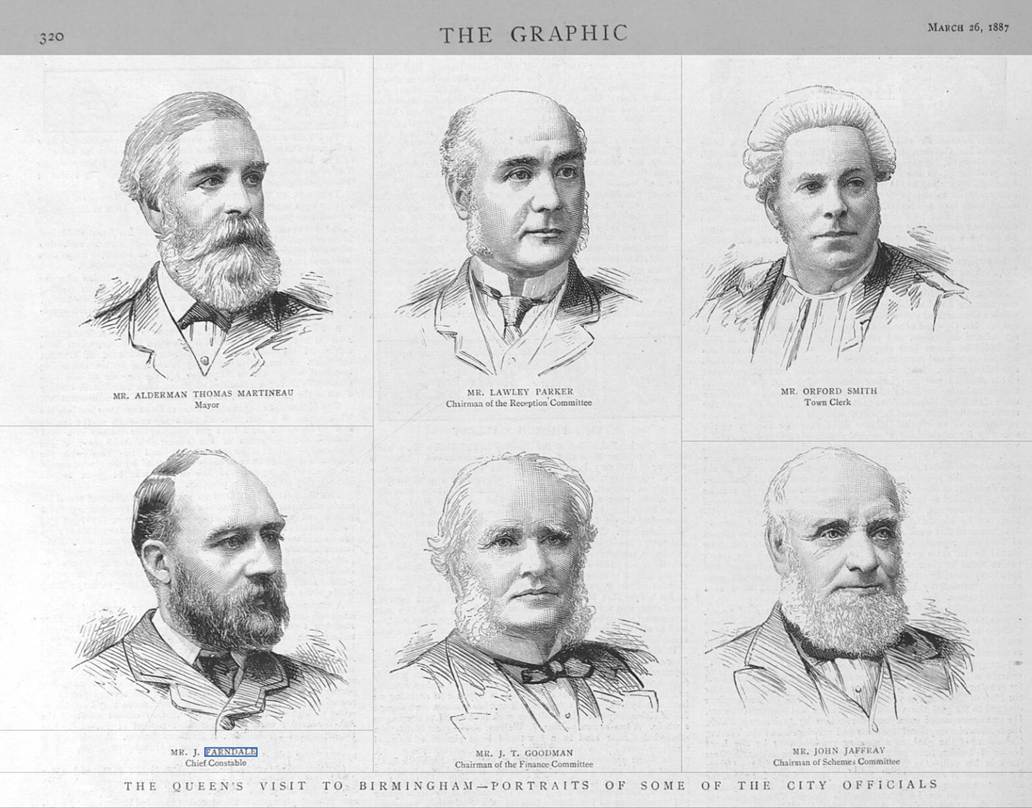
accidents.[64] The
Queen’s Visit to Birmingham was illustrated on 26 March 1887 in The
Graphic[65].
Joseph Farndale and Jack the
Ripper
Joseph Farndale was involved in
a hoax relating to the Jack the Ripper murders (“the Whitechapel Murders”) in
1888[66].
Birmingham Police Court in
October 1888, before Sir Thomas Martineau, a respectfully dressed man,
named Alfred Napier Blanchard (34), who described himself as a canvasser was
charged by his own confession with having committed the Whitechapel murders.
Detective Ashby explained that on Friday morning the prisoner went into a
public house in Newton Row, and openly accused himself of having committed the
Whitechapel murders. Witness took him into custody, and when they reached Duke
Street police station he denied having made any confession. Was he drunk at the
time? Mr Farndale: he was sober when he first broached the subject, but by the
time the police were called he was undoubtedly under the influence of drink. Mr
Farndale now said he did not attach the least importance to the arrest, but, at
the same time the prisoner had placed himself in the position in which he now
stood, and he could not complain if the Bench remanded him. Mr Goodman: Do you
know anything about him? Mr Farndale: Nothing, except what has been gleaned
from papers found in his possession.[67]
The Secret of the handsome
Joseph Farndale’s success
It was reported in November 1888
that the secret of Joseph’s success is that he carefully avoids
any display of force. Shortly after the disturbances and the sacking of the
West end, there was some fear of a similar occurrence in Birmingham. The Chief
Constable dealt with the situation in a very admirable manner. He did not
attempt to interfere with the demonstration, and carefully refrained from
crowding Costa-green with policemen or from irritating the people by any
unnecessary display of authority. There was no bludgeoning, no violence, and
the consequence was that the crowd, amongst whom were a good many bad
characters who would have stuck at nothing in the way of plunder, gradually
dispersed.
The Chief Constable himself
preserved his good temper throughout, and was cheered by the crowd as he
passed. He has the advantage of being a handsome man - a great point with the
crowd. He looks remarkably well in his uniform and on horseback, and he is always
in evidence whenever there is anything moving.
When the dynamite plot was
discovered in Birmingham, the Chief Constable was in his proper place and
directed the investigations so well that not a mistake was made. Night and day
he remained at his post until the right moment came, and then the police swooped
down and captured the gang. The result was that the dynamite conspiracy, which
had its head-quarters in Birmingham, was completely crushed out of existence.
Mr. Farndale looks something
over 40. He is tall, broad-shouldered, athletic, has good features and looks
like a gentleman. He has the bald head that comes of wearing a constable's
helmet.[68]
Gladstone’s Visit
In the same month, Mr
Gladstone left Hawarden for Birmingham this morning, for the purpose of
fulfilling a series of arrangements in connection with the National Liberal
Federation. The train steamed into Birmingham station at 1.15 precisely.
Outside the station there was an immense concourse of people. Here, however, as
well as along the whole route to the Town Hall, strong barricades had been
erected, and a large force of police being in attendance, under the command of
Mr Farndale, a perfectly clear space was kept for the procession. An
enthusiastic cheer was given as Mr Gladstone emerged from the station.[69]
Of Gladstone’s visit, in
dealing with so large a number, it is impossible to ensure that all shall be sympathisers,
with the object of the gathering, or even respectable men, there will be a
strong police force in the hall, commanded by the Chief Constable (Mr Farndale)
who has frequently shown himself a man of rare tact and energy on such
occasions.[70]
Chief Commissioner opportunity,
illness and recovery
Joseph Farndale started to be
named as a possible candidate for Chief Commissioner of the Metropolitan
Police. There was a comment in November 1888 that Sir Charles Warren
has taken the course of a sensible man, in resigning from a position for which
it is evident he was not fitted. The police are a civil body charged with the
maintenance of order and the detection of crime and the Whitechapel horrors have
shown how incapable Scotland yard is in this respect. They make the fatal error
of transferring even their detectives from division to division, so that they
have not men with intimate local knowledge as Mr Coathupe has in
Bristol, or Mr Farndale has in Birmingham, acquainted with the criminal classes
and all the dark places of the city, so that very few hours would elapse before
the arrival of a suspicious stranger or a suspicious occurrence in the lowest
haunts in the place would become known at police headquarters.[71]
However illness struck in
December 1888. Although Mr Farndale has been incapacitated for a
considerable time, it has not yet been announced what he has actually been
suffering from. A severe cold was at the outset said to be the cause, but when
he was recommended to repair to the South of England it was generally accepted
that his illness was of much greater severity than his medical attendants chose
to announce. During his absence he continued to lose strength, and the
development of the obstinate complaint manifested itself in a manner which
occasioned considerable apprehension. The fact is that the Chief of Police
contracted an attack of diphtheria of such a peculiar character that his
medical advisers were baffled in their diagnosis. During the latter part of his
stay at Torquay, however, paralysis supervened, and then it dawned upon them
that the primary complaint was diphtheria. The paralysis gave rise to much
alarm, and Mr Farndale’s return was at once ordered. Since he has been at home
he has been attended by Sir W Foster and Drs Wilders and Hunt, and we are
pleased to be able to announce that he is now showing some signs of
improvement, although some time must yet transpire ere he is able to resume his
duties.[72]
A snowball fight
Meantime in February 1889, anyone
passing a certain police station within the limits of the city early on Monday
morning last, might have witnessed a very lively snowballing encounter, between
a dozen or so of Mr Farndale’s most trusted officers. Of course very few people
were about at the time, but these opened their eyes in astonishment with which
the myrmidons of the law entered into their game. The scene would have
delighted some of the ragamuffins who were later in the day rebuked by
the self same officers for doing a similar thing.[73]
Welcome back, an illuminated
address
Joseph was back at work by April
1889[74]. He was
welcomed back to work with speeches and an Illuminated Address. The
Chief Constable of Birmingham (Mr Farndale) is shortly to be made the recipient
of a testimonial from the Birmingham Magistrates and many influential citizens.
The committee which has been formed to carry out the presentation consider that
as the prolonged illness of the chief has entailed a very heavy expense, a
substantial monetary testimonial would be both an appropriate and graceful act.
Already a resolution has been passed expressive of cordial congratulation on
his recovery. The presentation committee also aim at showing their high
appreciation of Mr Farndale’s many excellent services in connection with the
force by the fund which they have initiated. Circulars asking for subscriptions
have even forwarded to those who it is thought would like to participate in the
testimonial, but the appeal is in no wise a public one – in fact it is being
made privately.[75]
The address, which was read by
Superintendent Sheppard, was as follows. Address to Joseph Farndale
Esq, Chief Constable for the City of Birmingham. We, the undersigned, deputed
by a meeting assembled and representing the whole body of the Birmingham Police
Force, consisting of 550 members, heartily congratulate you upon your
resumption of duties as chief in this large and important city. We rejoice at
your restoration to health, as we sympathised with you in your serious and
protracted illness; and it is now a source of happiness for us to have the
opportunity of thus expressing to you how much we cherish and admire those
qualities so characteristic of you, and which have drawn and endeared us to you
during your chief constableship here. We feel that when and wherever qualities
abound which have distinguished your career in such an eminent degree then will
a true appreciating and grateful people respond and unmistakably demonstrate in
no uncertain way the inspiration in their hearts. We therefore ask you sir,
prompted by these feelings, to accept this illuminated address, not for its
intrinsic value, but rather as an outcome of our expression of pleasure and
congratulations upon your resumption of duties, and as a small token of our
admiration of your worth as chief, man and friend. With a fervent wish that
your convalescence be of long duration and that you live long in the buoyancy
of health to champion our cause as hitherto in the course and conduct of our
duties, and in the path of wisdom, justice and right. Signed, on behalf of the
members of the force, Superintendents Wm Wilcox, Rd Sheppard, Wm Shaw, Philip
Stephenson, Joseph Hervey, James Black, and David Noon.[76]
The Shah of Persia ain’t
worth a tanner
There was a visit by the Shah of
Persia in July 1889. His Majesty the Shah of Persia is expected to
arrive at New Street Station by special train from Bromsgrove at about 11.30am
on the morning of Thursday, the 11th instant. The street traffic will be under
the control of the Chef Constable (Mr Farndale). As it is expected that
considerable interest will be evinced in the visit of the Shah and in his
progress through the streets, the Mayor hopes that the inhabitants will
maintain the reputation of the city in assisting in the preservation of order
along the line of the procession, and by keeping the route clear and free of
obstruction.[77]
The Shah paid his promised visit
to Birmingham yesterday, but the event was robbed somewhat of the éclat which
would otherwise have attended it through an unfortunate upsetting of the
programme which had been arranged. The article refers to the
changed plans of the Shah which led to delays whilst sightseers had already
turned out and shop keepers found their business suspended or closed. A
great many undoubtedly thought the time too valuable to idle away, even to show
respect to England’s guest – for the crowds in the street thinned. Those who
remained behind either waited patiently at their posts or promenaded along the
pavements willing away the time as best they could. The name of the illustrious
visitor was in every one’s mouth but what was said about him had better not be
published. “What a shame!”. “Our Queen wouldn’t serve us such a trick”, “I
suppose he thinks he can do as he likes with us”, were among the very mildest
of the grumbling comments … “He ain’t worth a tanner” suggested one irreverent passer
by. “”What!”, shrieked the man in the cart, “not worth a tanner, when he’s
doing all this to save war with old England! – Bah!” Quite a sigh of relief
went up as Mr Farndale and a few mounted policemen rode down to the station.
The Mayor followed, the ugly rumours that the Shah was not coming at all were
thrown to the winds, and in due course patience was rewarded and curiosity to a
certain extent satisfied by the Imperial possession. As soon as the
Shah’s carriage had left the station yard, it was surrounded by a squadron of
the 9th Lancers, under Major Mackenizie who formed the escort. The
procession was headed by Mr Farndale, the chief superintendent of police, and
the carriages not covered by the escort were flanked by mounted constables. [78]
A brine bath
In August 1889, amongst the
visitors of Droitwich, who are taking the brine baths, are Mr Farndale (chief
of the Birmingham Police) and many others of lesser note[79].
1889, another age
There was an account of events
during 1889 from 50 years later in 1939. The Right Honourable Henry
Cecil Raikes MP, Postmaster General, laid the foundation stone of the new post
office. In a cavity beneath the stone was placed a copy of the ‘Mail’. Mr
Joseph Chamberlain was present and spoke of the Birmingham of a further 50
years ago, the 1830s, when there were no parks, baths, or wash houses, no
museums, very few schools, very little paving, except for the petrified kidney
order, no sewerage, no sanitary arrangements and the death rate was five or six
and 1000 higher. In the large crowd present pickpockets got a gaol hall, but
three of them were chased and arrested after a struggle. The Council Chamber
and the Reception Hall of the Council House were being fitted up in the form of
temporary law courts for the opening of the Spring Assize. The ailing chief
constable of Birmingham, Mr Farndale, had to give up his home on the Hagley
Road for Her Majesty's judges, and he had been moved in a bath chair under the
care of his physician to a friends house in Calthorpe Road. Board
school teachers had been accused of inflicting cruel secret punishments on
their charges, and the school Board had announced that it must stop. After
inflicting corporal punishment a teacher had to record it in a special book. A
headmaster wrote to the Mail: “Imagine the trials and tribulations of a young
assistant shut up in a classroom with 60 or 70 children, hour after hour, day
off today, week after week. Some of the scholars have been born to lying,
thieving and impudence, yet almost every one of them, capacity or no capacity,
must be made to pass the government examinations at the end of the year. The
restricted assistant yields to temptation, and punishes on the sly.[80]
The 8 hour duty system
In March 1890 the old eight
hours duty system was debated. The part played by the police forces of
the country in the public affairs is so important that any question bearing
upon the administration of their official duties becomes a matter in which all
law abiding citizens should not only take an interest, but if necessary, their
opinion should be earnestly consulted. We have now before us the fact that a
section of our police force is agitating for a return to the old system of duty
viz, that of performing the entire eight hours duty straight off the reel, thus
leaving the remaining sixteen hours at their disposal. The discussion at the
Council meeting clearly showed that this satisfactory feature of administration
is the result of the system instituted by Mr Farndale.[81]
The debate in the City Council
on the management of the police force has not, as it may be supposed to have
done, settled the question. The long duty system was in force during the
greater part of Major Bond’s term of headship; the short duty system was introduced
by Mr Farndale seven years ago. Its introduction was marked by the concession
of a day’s leave per month, and thus was in the nature of a compensation. The
chief motive of the agitation is to obtain a longer spell off duty. The sole
question which has to be considered by the management of the force is as to the
effect upon discipline, physique and general efficiency; and as soon as this
question is raised the case against the long duty system appears to be very
strong. The Watch Committee and the Chief Constable seem, at all events, to be
agreed upon this point. It was this consideration which induced Mr Farndale
eight years ago to recommend the abandonment of the system. He was struck by an
absence of smartness in the appearance of the men, especially of those who were
doing an early spell of duty from 6am to 2pm. It occurred to him that,
supporting the men were sensible enough in every case to make a temperate use
of their sixteen hours freedom, it was hardly probable that they would get a
warm meal before starting out so early in the morning, or find very much time
for brushing up their uniforms.[82]
Joseph Farndale’s doubts about
the Dynamitard arrests
The issue of the Dynamitards,
then recurred and questions arose about the legitimacy of the arrests of Daly
and others in the 1884 arrests, as distinct from the very successful arrest of
Whitehead in 1883. Joseph Farndale appeared to have had his doubts about the
legitimacy of those 1884 arrests and was concerned about methods adopted by the
Irish Police, although there was controversy about exactly what Joseph Farndale
said to Alderman Manton. He was clearly a man of conscience who worried about
the legitimacy of the arrests when facts came to his attention later.
In September 1890, Mr W
T Bryan, secretary of the demonstration which took place in Tipperary on Sunday
to protest against the treatment to which Mr John Daly and his fellow prisoners
have been subjected in Chatham gaol, received a letter from Mr William O’Brien
MP. I have for some time been in communication with an English gentleman of
much eminence in Birmingham, who has discovered startling proofs that John Daly
is the victim of a plot organised by emissaries of the Irish Constabulary. His
authority for this terrible charge is no less a personage than the chief
constable of one of the principal English cities, whose confession has been
before the Home Secretary. It will be our duty to press for the fullest
investigation of this horrible business, and to insist that pending such
investigation there shall be no continuance of the barbaric system of prison
torment revealed in the evidence before the late unfairly constituted
commission.[83]
It appears that Mr Farndale told
the Birmingham Watch Committee, and subsequently Alderman Manton, that he
entertained the gravest objections to the methods which the Irish police had
employed in obtaining the conviction, and that had he known from the outset of
the extent to which the agent provocateur had been employed he would have
declined all connection with the Case. These opinions Mr Farndale still holds,
but he has never stated, as alleged by Mr John O’Connor that “the whole thing
was a put up job”, or has he expressed any doubt as to the justice of Daly’s
conviction. The whole question indeed, turns on the propriety of the employment
of spies for the purpose for which the agent was used.[84]
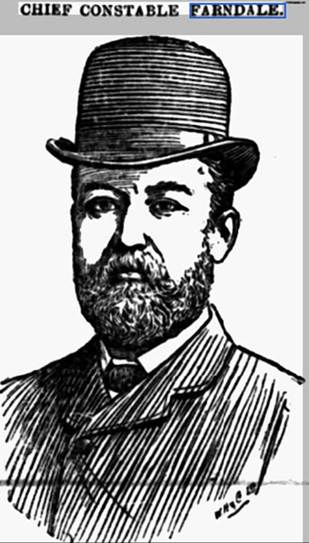
The contemporaneous evidence of
the media was that Joseph Farndale acted entirely properly in 1884, but when he
later learned of facts that gave him rise to have concerns, he immediately
consulted others about what should be done to resolve the matter. This was
clearly not a deathbed confession, for the matter was debated in
Parliament at the time, well before Joseph Farndale’s death and this must have
arisen because Joseph Farndale had tried to do something about facts of which
he had subsequently become aware.
In January 1893, James
Francis Egan was, by order of the Home Secretary on Saturday afternoon released
from Portland Prison, where he had been a convict for several years past. James
Frances Egan arrived in Birmingham at 1.43 this (Sunday) afternoon). In London,
on Saturday evening, he visited the National Liberal Club. He was very reticent
towards the representatives of the press, but expressed his indebtedness to the
Irish political party for their efforts towards his release, and especially he
is grateful to Ald Manton and Mr Farndale for the part he understood they had
taken.[85] He later
said I never despaired, because I knew perfectly well that what I had heard
of the disclosures by Alderman Manton, and the action taken by Mr Farndale in
honestly exposing the affair, would bring the public to see that a gross
injustice had been done to me.[86]
In February 1893, there was a
debate in the House of Commons. Mr John Redmond, resuming the debate on
the Address, moved his amendment humbly representing to Her Majesty that the
time had come when the cases of all prisoners under the Treason Felons Act who
are and have been many years undergoing punishment for offences arising out
of insurrectory movements connected with Ireland may be
advantageously reconsidered. He especially instanced the case of Day, as to
whom, he recalled the statement of Mr Farndale, of the Birmingham police, who
had informed the local Watch Committee that it was in his knowledge that the
explosives found in Daly’s possession were ‘planted’ upon him. Mr
Clancy seconded the motion. He joined in the expression of the belief that Daly
was an innocent man. Did the Chief Secretary or the Home Secretary believe that
if Mr Farndale had given the evidence at the trial in Warwick which he and
given since, Daly would have been convicted?
In what was described as an
Important Speech by the Home Secretary, Mr Asquith, in replying on
behalf of the Government, assured the mover that he entertained no fear that
the action which had been taken would embarrass the Government. The Government
welcomed the opportunity to speak plainly on the subject (Ministerial cheers).
A number of documents were found at Daly’s lodgings, showing he was undoubtedly
a member of the Irish Republican Brotherhood, and had taken an active part in
its proceedings. Daly was released after eight and a half years penal servitude
because he had had sufficient punishment.
Mr Powell Williams said that Mr
Farndale had told him he did not believe the bombs were placed upon Daly by an
agent provocateur. The statement of the Home Secretary would be welcomed by the
whole country.
Mr Asquith: Now I will deal in a
sentence or two with Mr Farndale. I have no jurisdiction of any sort or kind
over him. He is a servant of the Birmingham Corporation. Mr Farndale has been
questioned as to the statement Alderman Manton attributed to him, and he has
declared it to be purely imagination. If so, what becomes of the suggested
testimony of Mr Farndale that Daly was a victim of the police. The truth is Mr
Farndale, who was the head of the police, was considerably annoyed that the
arrest of Daly, in whose innocence at the time he did not believe, should have
been procured not by the Birmingham, but by the Irish police.
Mr Powell Williams said the
contradiction was made to the Watch Committee, of whom at Mr Farndale was the
servant, and he at the time and as early as he could, repudiated that statement
of Alderman Manton to the effect that he, Mr Farndale, considered that Daly was
an innocent person. What the Honourable Member said was that the Chief
Constable of Birmingham had admitted, first of all, that those bombs were
placed upon daily by an agent provocateur, and secondly, that he knew him to be
an innocent man. To all those statements he could give on Mr Farndale's behalf
an emphatic contradiction.
Mr Harrington:: Does the
Honourable Member pledge himself that he has the authority of Mr Farndale to
say that he did not make the statement that these bombs were planted on daily
by a member of the Irish police?
Mr Powell Williams said he was
not authorised in any way to state (laughter). How could he be authorised
within 10 minutes to make a statement for Mr Farndale. But he would tell the
honourable member and he would tell the house what Mr Farndale had stated to
him. He said to him that those bombs were not in his opinion placed upon daily
by an agent provocateur.
Mr W Redmond asked the Home
Secretary if he would order a fresh investigation into the allegations made
against the police by Alderman Manton, and question Mr Farndale, the Chief
Constable of Birmingham upon the subject.
Mr Asquith said so far as the
matter was a personal one affecting Alderman Manton and Chief Constable
Farndale, he had no right to interfere, so far as it affected the innocence or
otherwise of Daly, the allegations had already been fully investigated, with
the result which he stated to the House the other night (hear, hear).
Mr W Redmond asked the right hon
gentleman whether, in view of the opinions held by 80 Irish members out of 103,
he would have a personal interview with Mr Farndale, and grant a fresh
investigation into the case.
Mr Asquith did not think any
useful purpose would be served by his having a personal interview with Mr
Farndale. He was in possession of all the facts of the case.
Mr J Redmond gave notice that in
Committee of Supply he would press for further investigation.[87]
In March 1894 Mr Redmond
asked Having referred to the fact that Mr Farndale, the Chief Constable of
Birmingham, was still of the opinion that the explosives found on the prisoner
Daly had been ‘planted’ upon him by an agent in the pay of the Irish police,
the hon and learned member said he had an entirely new case to bring under the
notice of the Home Secretary. It was that of a man called Curtin Kent, a
labourer and an illiterate man, who could not by any possibility have been a
principal in the dynamite conspiracy. He was put on trial with the other me
and, although the only evidence against him was that he had written to
Gallagher and got £5 from him, he was convicted and sentenced to penal
servitude for life.
Mr Asquith reminded the House
that the general considerations which affected this question were fully debated
a year ago, when he expressed at considerable length and in much detail the
views of her Majesty’s Government.[88]
Salary reaches £900
In April 1892, Mr
Wilders submitted the report of the Watch Committee, and in accordance with its
recommendation moved that the salary of Mr Farndale should increase from £800
to £900 per annum. He said the proposal had received the most careful
consideration of the committee, who had come to the conclusion that it was
simply an act of justice to a most energetic, efficient and experienced
officer. Mr Farndale had been a policeman thirty years; he was forty none years
of age, and one of the most energetic, experienced and efficient chief
constables in the kingdom. He was a thorough disciplinarian, always kind and
considerate to his men; and he possessed sound judgment and tact in a
remarkable degree. Mr Farndale could if he chose leave the force tomorrow, and
claim a pension of £532 per annum from the Police Superannuation Fund. Mr
Stevens proposed as an amendment “That the increase of Mr Farndale’s salary be
deferred until after November next in order that the ratepayers may have an
opportunity of expressing their opinion on this. There was further debate. The
amendment only received 5 votes and the original motion was carried.[89]
A railway accident
In June 1892, a terrible
railway accident happened shortly before five o’clock on Friday in Birmingham, two
expresses making for the Derby junction at the end of the Lawley Street viaduct
colliding at the points. The body was quickly removed to the Duke Street
mortuary, when the full extent of the catastrophe was learned, the railway
officials along with the Chief Constable (Mr Farndale), did everything they
could to aid the injured passengers, who were sent to the General and Queen’s
Hospital in cabs and other available vehicles.[90]
The military man’s whisky and
cigar
In the same month, Edwin
Glover (40), a military looking man, of no occupation, was charged with
obtaining two glasses of whisky and a cigar from George Hawthorne of the Malt
Shovel Inn, and with consuming the same without having the means to pay for it.
He later stated that he was Captain Glover and was well known to Mr Farndale.[91]
Death of Jane
Jane Farndale died suddenly in
Stockton on 18 July 1893[92]. On
the 18th inst, at the house of her cousin, Mrs Hodgson, at Stockton on Tees, Jane, wife of Joseph Farndale, Chief
Constable of Birmingham, formerly chief constable of Chesterfield.[93]
A new office
By February 1894, Central
Police Offices in Corporation Street adjoining the Victoria Courts, are rapidly
approaching completion, and in a few days the removal of the scaffolding will
give an uninterrupted view of the building. The police offices are entered into
by the first door in Newton Street, opening into an entrance hall, which is to
be fitted with benches for the convenience of that portion of the general
public who may have business at the offices. From the hall, doors open to the
rooms to be occupied by Mr Farndale and by Superintendent Wilcox and the clerks
and a lobby adjoining the hall leads to the general store room and other
apartments. An elaborately constructed staircase from the hall gives access to
the first floor, where accommodation is found for the detective department.[94]
Recovery of as valuable diamond
In April 1894 by a
curious combination of chances a valuable diamond which was lost more than 20
years ago at Birmingham has been discovered, and is now in the possession of Mr
Farndale, the chief constable. Some days ago one of the workmen in the employ
of Messrs Taunton, safe manufacturers, was engaged in repairing a safe, and
came across a piece of paper in which was a large diamond, estimated to be
worth at least £100.[95]
Royal Visit
There was another Royal visit to
Birmingham on 8 September 1894. All the arrangements for the visit to
Birmingham of their Royal Highnesses the Duke and Duchess of York on September
8 are now completed. Their Royal Highnesses will arrive at the city boundaries
on the Castle Bromwich Road at noon, and will be met by an escort of the 17th
lancers, the Chief Constable (Mr Farndale), and mounted police.[96]
Forming an orderly queue
Joseph Farndale was responsible
perhaps for the British habit of forming an orderly queue. An article in April
1942 recalled that the new Order making it compulsory for six or more
persons to form a queue when boarding bus or tram recalls the origin of a
similar disciplinary measure in Birmingham nearly fifty years ago. In the
autumn of 1894 Henry Irving came to the Prince of Wales theatre. Prices for all
parts of the house, with the exception of the gallery’ were doubled. All
Birmingham, so to speak, made for the gallery door, and there was a terrible
commotion! When this had happened on two successive nights, Irving instructed
his manager, Brian Stoker, to see the chief constable about it. “Tell the Chief
Constable,” he said “that outside my theatre in London we have adopted the
system of a queue, two by two, and that it works very well”. Mr Stoker carried
this message to the chief constable, and Mr Farndale agreed to make an
experiment. He sent along members of the force, Mr Edwin Bennett, later Chief Superintendent,
among them, and they arranged the first queues. But not without difficulty.
Some roughs attempted to rush the entrance hall and according to Mr Bennett,
five watches were found in the gutter. Birmingham gradually got accustomed to
the queue habit, but not before Sir Charles Rafter brought a prosecution for
disorderly conduct against some who attempted to break through. Much of the
voluntary queuing outside Birmingham shops today may be traceable to the
initial steps of half a century ago.[97]
The brave constable who reported
the Chief Constable
In May 1895 a brave young
constable reported his own Chief Constable. A good story reaches us
from the Birmingham police force, viz, that a common constable, a humble member
of the rank and file, has had the temerity to lodge a report against no less a
personage than his commanding officer. The constable is a young officer who is
not been very long in the force, and it would seem that he is burning to
distinguish himself in some unprecedented way. There can be no doubt he has
succeeded, and it may be safely asserted that the number of men in the force
who would have had the courage to take such a step is very small indeed. The
officer was on duty in Harborne Road, when he saw his commander in chief, who
much effects equestrian exercise, approaching on his steed. It would seem that
the animal proved refractory in some way, for it became subject to a sharp
chastisement from its rider. The constable appears to have considered that the
chastisement exceeded do bounds, so he pulled out his little notebook and pencil,
and made an entry to the effect that his superior had beating his horse about
the head more than was justifiable, and looking upon his chief as no more
privileged and hit this respect than common John Smith the civilian, he
reported the matter in writing to the Superintendent. This put the divisional
officer in a quandary. What was he to do with the report against his chief
officer? To pass such a thing on to the central office seemed like sacrilege.
Yet it was made in the books, and he could not get rid of it otherwise without
committing a serious breach of the regulations. So he came to the conclusion
that he had no alternative but to send the report, with his other reports, to
the headquarters. There it has gone and it would be interesting to know what
happened there when the report was given. A live, smoking bombshell would
probably have created no more profound sensation. Presumably the report will
come before the judicial subcommittee at their meeting on Monday, and it will
be very interesting to know the issue of it. We can imagine Mr Farndale, who is
about the last man against whom one might expect such charge to be made,
reading the report with blended feelings of admiring surprise, comical
annoyance, and roll amusement. He must admire the Spartan sense of duty of his
young officer, must feel annoyed that he should have fallen into such an error,
and experience amusement at the humour of the whole business.
Afghan royalty
In June 1895 there was a
visit by His Highness the Shahzada, the second son of the Ameer of Afghanistan.
In the central drive between Railway Stations, there was an escort of 25
mounted police, under the command of the Chief Constable (Mr Farndale).[98]
Horseless carriages, the first cars
and transport legislation
In February 1896, there
were early encounters with horseless carriages. At Solihull today Gascoine
& Co, horseless carriage builders was summoned as the owner of a locomotive
used on the public highway for not having a person on foot preceding the
locomotive by 20 yards as prescribed by section 3 of the Locomotives Act 1865,
and section 29 of the Highways and Locomotives (Amendment) Act
1879[99]. Police
Constable Clifton stated that on Saturday morning, the 22nd December, he was on
duty in Stratford Road, Shirley, and saw a motor car, or horseless carriage,
travelling in the direction of Birmingham. There was no one in front of it to
warn the public of its approach. The vehicle was travelling at the rate of five
or six miles an hour; and it made a certain amount of noise, and steam was
issuing from an exhaust pipe at the rear. As it was only within the last five
years that the vehicle had been used in England, the Legislature could not in
fact, or in imagination, have known of a horseless carriage when they
formulated the Acts referred to, and therefore the regulations could not apply.[100]
Mr McCardie replied Yes,
and if you wanted to take a little trip of 30 or 40 miles, taking in the three
neighbouring counties, it would cost you £30, besides the wages of the three
men to drive, where only one is wanted, and another useless person to go in
front.
The Clerk mused that going
as fast as it does too, the man in front would have to go on a bicycle
(Laughter).
Mr McCardie replied Oh
yes, it is manifestly absurd. Fancy all the expense I have mentioned when the
machine only costs a half penny per mile for propulsion. Besides, I notice that
the tires would have to be no narrower than three inches, and that would spoil
the vehicle altogether, I contend that it in no way answers the definition of a
locomotive, and that the Bench are entitled to dismiss the summons. I may add
that Mr Farndale, the chief of the Birmingham police, has stated that he would
not allow any proceedings to be taken against such carriages. [101]
In the early 1890s the first
cars to be driven on the roads in Britain were imported. In 1895, the first man
to own and drive a car in Britain was Ebvelyn Ellis. It is estimated
that by 1895, there were still only about 15 cars in Britain, imported from
abroad. By 1900, the number had risen to about 700. Work to build the first
motor car in Britain began in 1892 by Frederick Bremner, a gas fitter and
plumber. His vehicle first ran on the public highway in 1894. Fords started to
arrive in Britain from about 1908.
The Locomotives Act 1865[102] was
also known as the Red Flag Act and stipulated that
self-propelled vehicles should be accompanied by a crew of three; if the
vehicle was attached to two or more vehicles an additional person was to
accompany the vehicles; a man with a red flag was to walk at least 60 yd (55 m)
ahead of each vehicle, who was also required to assist with the passage of
horses and carriages. The vehicle was required to stop at the signal of the
flagbearer. The Highways and Locomotives (Amendment) Act 1878 was an
Act to amend the Law relating to Highways in England and the Acts relating to
Locomotives on Roads and for other purposes.
At the same time his
nephew, Joseph Farndale, then
Chief Constable of Margate Police, was involved in a charge against a motor car
driver for exceeding a speed of two miles per hour.
Registration of bicycles and the
scorchers
Joseph Farndale recommended a
system for registration of bicycles in April 1896. The Home Secretary has
just issued a circular to the Chief Constables of counties and boroughs on a
matter which will give rise to a great deal of discussion in the cycling world.
Sir M White Ridley explains that he has received various complaints with regard
to cycling in the streets, and that from the nature of the objections laid
before him, he has felt prompted to make a general enquiry as to the present
cycling system, and ascertain whether further legislation is essential to check
reckless riders being a danger to the community. The Chief said police are
therefore invited to express an opinion on the desirability of amending the
present law, and they are further requested to add any suggestions they may
think expedient.
Mr Farndale has had this
circular under careful consideration, and it is understood that he has replied
very fully as to the prevailing state of affairs in this district. Probably in
no other city in the Kingdom has the popularity of the cycle reestablished
itself with such rapidity and so generally as in Birmingham. Unfortunately this
circumstance has had the effect of producing an increased number of foolhardy
scorchers, who are a nuisance to everyone, and reckless riders who, unmindful
of their own risk, pay no heed to the safety of others. The inevitable result
of the presence of these riders has been a considerable number of accidents
under great many complaints.[103]
At the meeting of the Birmingham
watch committee in September 1897, Councillor Baker drew attention to
what he described as the practice of scorching on the Moseley Road, his object
being to ascertain whether the Chief Constable (Mr Farndale) was prepared to
adopt measures to check the indiscretion of offending cyclists. The wood
pavement, he said, was an irresistible incentive to most people, and the
practise complained of was becoming a source of serious danger to the public.
Mr Bishop asked perhaps
Councillor Baker does not know what ‘scorching’ is. They don't ‘scorch’ on the
Mosley Rd. Mr. Baker replied Oh don't they?. Bishop
retorted Well what do you call ‘scorching’? Baker
said I would call ‘scorching’ going at 12 miles an hour. Mr Bishop
said They don't go at 12 miles an hour. Mr. Baker responded What!
Not on that wood payment pavement I think they do.
Mr Farndale said the
matter was one of some difficulty for the police to deal with, in as much as it
has recently been held in the law courts that though a police officer could
summon a scorcher he might not lay his hands on him to stop him. Two or three
years ago when there were complaints of ‘scorching’ in Broad Street, policemen
were provided with bicycles to capture the offenders, and they simply had to
‘scorch’ after the ‘scorchers’ until they overtook them.
Mr Bishop had no doubt the chief
constable would give the matter every attention. Mr Farndale was a nice, quiet
rider himself, as he could bear witness.
Mr Farndale replied I
followed the example of the chairman of the judicial committee, Mr Bishop, who
goes at a reasonable pace.
The subject then dropped.[104]
The Diamond Jubilee
1897 was the year of Queen
Victoria’s Diamond Jubilee, celebrating sixty years since her accession. A
meeting of chief constables of counties, cities and boroughs in Great Britain
was held in May 1897 at the office of Mr Farndale, Chief Constable of
Birmingham, to consider the most suitable form of celebrating the Queen’s
reign. It was reported that the Scottish police had decided to join the
national scheme. It was decided to draw up an illuminated address
congratulating Her Majesty on her historic accomplishment.[105]
There was a Royal visit to
Birmingham in July 1897, when the General Hospital was opened. Much
enthusiasm was manifested in Birmingham yesterday on the occasion of the visit
of Princess Christian, as the representative of the Queen, to open the new
General Hospital. Along the route of the royal procession the streets were
gaily decorated, with Venetian masts at intervals, and garlands of flowers.
After the formal receptions the trumpet sounded, and their royal highnesses
proceeded, the procession was headed by Chief Constable Farndale and mounted
police. As the royal visitors entered the Council House, a salute was given by
a detachment of the Bedfordshire regiment, which formed a guard of honour. Her
Royal Highness, in reply, said “It gives me very great pleasure to visit the
City of Birmingham on behalf of the Queen, my dear mother, and in her name I
thank you for your loyal and beautiful address. Her Majesty desires me to
express the great gratitude with which she bears of her people at Birmingham
having made this latest addition to the hospital.[106]
In January 1898, interviewed
in reference to the marked increase of drunkenness in Birmingham, the Chief
Constable, Mr Farndale, said that good wages had most to do with the increase.
He had been struck by the fact that rainy Saturdays, which prevented indulgence
in outdoor sports, usually meant a great increase in drunkenness. The
popularity of football, generally speaking, has been the means of diverting a
good deal of interest from the taproom.[107]
Illness and the end of a career
By March 1898, Joseph Farndale
was ill again. We regret to hear that Mr Farndale, Chief Constable of
the city, is lying seriously ill at the Grand Hotel. An attack of chill or
influenza contracted at the Charity Sports, on Wednesday week, was followed by
pneumonia, and at one time his condition was considered critical. Under the
care of Dr Hutchinson, the crisis was tided over, and, although very ill, Mr
Farndale was yesterday reported to be out of danger. Late last night Mr
Farndale was progressing very favourably.[108]
By 18 March 1899 the
health of Mr Joseph Farndale, the popular and brilliant Chief Constable of
Birmingham, is causing the greatest anxiety. I earnestly hope to be able to
report better new next week. Mr Farndale has many friends in Derbyshire, which
he made when Chief Constable of Chesterfield.[109]
Mr Farndale, chief constable of
Birmingham, is lying seriously ill, through the breaking of a blood vessel,
consequent upon violent sneezing.[110]
Then on 14 April 1899, the
Chief Constable of Birmingham, Mr Farndale, had a narrow escape from serious
injury yesterday morning. He was being driven in a closed brougham to the city
to discuss police matters with the superintendents for the first time since his
serious illness, when the horse, a high spirited animal, bolted in Broad
Street, owing to the snapping of one of the reins. A futile effort to stop its
progress was made by police constable Goldby, who caught at the shafts, but was
struck on the chest by the horse’s head, and thrown back. At the corner of Easy
Row the carriage was brought into collision with a cart, and Mr Farndale’s
coachman, Thomas Terry, was thrown violently from the box. Even this check,
however, did not stop the horse, which dashed round the corner into Paradise
Street, where a few yards to the right it collided with an oil float, and was
brought to a standstill at the edge of the pavement. Mr Farndale escaped with
nothing more serious than shock and injury to the nose by broken glass. Terry,
the coachman, had his leg fractured.[111]
Mr Farndale, Chief Constable of
Birmingham, is to be commiserated with on the curiously bad luck which is
dogging him. He recovers from a serious illness, only to be involved in a
carriage accident, which might have had dangerous results. Like Bret Harte’s
miner, the Chief Constable has struck a streak of bad luck. Let us hope it will
soon change.[112]
Finally Joseph Farndale was
forced to resign due to his continuing illness in May 1899. Mr Joseph
Farndale has resigned the Chief Constableship of Birmingham in consequence of
ill health. He has occupied the post for 17 years.[113]
His career summarised
When he resigned a summary of
his career was published.
Mr Joseph Farndale was appointed
chief constable of Birmingham on the resignation of Major Bond in 1882. Prior
to his selection out of some 90 candidates, Mr Farndale had occupied the
position of chief constable at Leicester, where he had served for 10 years He
is a native of the North Riding, Yorkshire. It was about 1863 when he first
became connected with police work. He joined the force in his native Riding at
the early age of 19. He remained there, however but a short time, joining the
Middlesbrough force, where he soon attained the rank of Inspector. Some seven
years afterwards, Mr Farndale was appointed chief constable of Chesterfield.
Here he remained for 2 ½ years when he was selected to a similar
position at Leicester, where, as previously stated, he remained until his
appointment to Birmingham. In this city Mr Farndale’s reputation was enhanced
by the breaking up of what was known as the Ledsam Street dynamite conspiracy.
The arrest of Whitehead in Ledsam Street in April, 1883, and the subsequent capture
of Daly and Egan in the same month of the following year, are matters of local
history. In consequence of the part he played in the arrest of these men the
Watch Committee, with the approval of the then Home Secretary, increased Mr
Farndale’s salary by the sum of £100 per annum.[114]
His resignation will be received
with regret not only by the members of the Watch Committee and the citizens,
but the whole of the police force with whom he was very popular.
Mr Farndale's salary is £900 a
year, and he is entitled from length of service to a superannuation of 2/3 of
this amount. This morning's paper.
Mr Farndale is a Yorkshireman,
and commenced his police career in the ranks at Middlesbrough. We like to hear
of men rising from the ranks.
The other day we were stimulated
with the story of Hector MacDonald, one of the heroes of Omdurman, who, from
the ranks, had risen by sheer merit and sterling worth to the highest rung in
the military ladder.
This morning the name of another
man is honourably prominent, because he is ending his career in a distinguished
position. He also has risen from the ranks.
The retiring chief constable of
Birmingham has had a career which is worth studying in these degenerate days.
It is full of instructive points. Mr Farndale is a man of strong individuality.
Yet he invariably got on well with his Watch Committees. He was their servant
as well as their master. He was competent, and therefore would not be dictated
to. He was respected, because he had the courage of consistency. He would
perhaps not have been happy in Hull.
The story of his early life is
quite picturesque. Mr Farndale was a farmhand. He was driving the plough one
weary day when his employer came up, and farmer like, complained of his work.
Young Farndale had a vigorous and independent spirit and was pining for a more
active and satisfying field of labour, and throwing down what he had in his
hand he said he would go off and be a policeman. What an accident of fortune!
He made good his words at once,
and entered upon a career which he has unquestionably adorned. The path of the
chief constable of a large city is often beset with difficulty and perplexity!
It is also one of grave and constant responsibility. An efficient, fearless,
and fair minded chief constable is a boon that a large town like Birmingham
cannot afford to rate cheaply. But Watch Committees have often a great deal to
answer for, and strong chief constables are not popular everywhere.
At the early age of 26, Mr
Farndale was appointed chief constable of Chesterfield, and from that
comparatively unimportant town he went to Leicester. He was not then 29 years
of age. He remained at Leicester for 10 years, and then obtained one of the
plums of the profession. He was appointed chief constable of Birmingham when
still in his thirties. It is admitted that he has greatly improved the police
administration there, and that he has shown market ability in dealing with
large crowds of people. His discovery of the Ledsam Street dynamite conspiracy
at Birmingham one him much favour at the Home Office; And even Sir William
Harcourt did not withhold very graceful appreciation.
Chief constables of large towns
who have risen from the ranks are rare. It is one thing to be chief constable
of an obscure borough and quite another to be responsible for the security and
public morality of a city of the size and character of Birmingham. Nor is the
man who has risen from the ranks always a success in high office. The retiring
chief constable of Birmingham, however, was not demoralised, he was
strengthened by success. If success could always be born with good sense and
fortitude it would often be a spectacle more gratifying to contemplate.[115]
Mr Joseph Farndale, for 17 years
chief constable of Birmingham, in which office he followed Major Bond, formerly
chief constable of Cardiff, has resigned his position owing to prolonged and
serious ill health, which has necessitated frequent vacations in the last few
years. Mr Farndale is a Yorkshire man, and commenced his police career in the
ranks at 26. He was appointed chief constable of Chesterfield over a force of
17, and after three years became chief of police at Leicester, whence he went
to Birmingham. His retirement allowance will be £600 per year.
Mr Farndale was appointed in
1882 at a salary of £700 per annum. At that time the total strength of the
police force was 520, as against 700 at present time. The area of the borough
was 8,420 acres, as against the existing area of 12,705 acres. The population
was 400,774, the estimated population at present time being 514,955. The
committee proposed to advertise for candidates for the office of chief
constable, at a salary of £800 per annum, without allowances of any kind, and
to appoint the candidate whom they deem most eligible for the office.[116]
At a meeting of the Birmingham
judicial subcommittee, on Monday, the chairman of the Watch Committee,
communicated to his colleagues the fact that he had received a communication
from Mr Joseph Farndale resigning his position as chief constable of Birmingham.
Mr Farndale's resignation is due to the counsel of his medical advisor, who, in
view of the nature of his recent illness and his incomplete recovery, regarded
the step as imperative. The announcement was received with unanimous regret. Mr
Farndale was eligible to retire on a pension several years ago, but it was his
own desire to remain in harness sometime longer, and the Watch Committee
cordially approved of this course.
Mr Farndale has always been
popular with the citizens of Birmingham, and enjoys the distinction of having
been the most efficient officer of that the local police force has had since it
came into existence. His relations alike with the City Council, the police, and
the public have from the commencement of his association with Birmingham been
of the most cordial character. Mr Farndale who is a native of Yorkshire has
been connected with police duties from his boyhood. At the age of 19 he became
a constable in the North Riding Constabulary, from whence he removed to
Middlesbrough. His fine presence, combined with a high degree of intelligence,
led to his rapid promotion, and it was not long before he attained the rank of
Inspector.
He had only seven years police
experience when the vacancy occurred in the police in the post of chief
constable of Chesterfield, and to this Mr Farndale was appointed. The
Chesterfield force was only a small one, the borough having a very limited
area, but it afforded Mr Farndale administrative experience which was of great
value to him. He was, we believe, at the time of his appointment, the youngest
chief constable in the Kingdom. Mr Farndale remained at Chesterfield for only 2
½ years, but he had he had secured a standing which led to his appointment to
the far more important position of chief constable of Leicester. How he
composed himself there is shown by the terms of the testimonial given to him by
the Mayor of Leicestershire at the time he became a candidate for command of
the Birmingham police force. The Mayor of Leicester wrote: “Mr Farndale is a
thoroughly practical man, and an excellent disciplinarian. Towards the men he
is considerate and firm, and has won their entire confidence and respect. Throughout
the town, by the authorities he is fully trusted and highly esteemed.” While at
Leicester Mr Farndale's salary was twice increased each time by the sum of
£100. Several of the leading officers who served under him there rose to
important positions in other forces, and the Leicester police became known as
one of the best organised bodies in the provinces.
Mr Farndale succeeded the late
Major Bond as Chief Constable of Birmingham, and his services in connection
with the dynamite conspiracy will be remembered. He has won the esteem of the
citizens of the Midland metropolis, and will retire on an allowance of £600 a
year. On his leaving Leicester, it may be added, he was presented with a silver
salver and purse of £200, the members of the police force testifying to their
goodwill in an illuminated address.[117]
Mr Farndale’s reputation was
enhanced by the breaking up of what was known as the Ledsam Street dynamite
conspiracy. The arrest of Whitehead in Ledsham street in 1883 and the
subsequent capture of Daly and Egan is in the same month of the following year are
matters of history. In consequence of the part he played in the arrest of these
men, the Watch Committee, with the approval of the then Home Secretary,
increased Mr Farndale’s salary by £100 per annum. Sir William Harcourt, in
writing to express his approval of the action of the committee, said, “I desire
to testify the very high opinion I have formed at Mr Farndale, the Chief
Constable of Birmingham, throughout the whole of this matter and in other
transactions of a similar nature, in which I have received from him valuable
assistance” Not only the public of Birmingham, but those of Leicester and
Chesterfield, who know Mr Farndale’s worth, and have had the pleasure of his
friendship, will wish that in his retirement he may be restored to health.[118]
The resignation of the Chief
Constable of Birmingham (Mr Joseph Farndale) through ill health will cause a
vacancy in a post to which a salary of £900 a year is attached. Like the Chief
Constable of Exeter, and many of the best men at the head of the police force,
he rose from the ranks. He was Chief Constable of Chesterfield at the age of
26. Mr Farndale’s reputation was enhanced by the breaking up of what was known
as the Ledsam Street Dynamite Conspiracy. The arrest of Whitehead in Ledsam
Street in 1883 and the subsequent capture of Daly and Egan in the same month
are matters of history. In consequence of the part he played in the arrest of
those men the Watch Committee, with the approval of the home secretary,
increased Mr Farndale’s salary to £100 per annum. Sir William Harcourt, in
writing to express his approval of the action of the Committee said, “I desire
to testify the very high opinion I have formed of Mr Farndale, the Chief
Constable of Birmingham, throughout the whole of this matter and in other transactions
of a similar nature, in which I have received from him valuable assistance.”[119]
Scene 5 – Joseph’s final years
after retiring
On Joseph Farndale’s resignation
as Chief Constable of Birmingham through ill health, his nephew, the younger Joseph
Farndale was
shortlisted amongst eight to succeed his uncle, but in the event Sir Charles
Haughton Rafter was appointed.
Joseph Farndale’s health
continued to be a concern. It is reported that the health of Mr
Farndale, ex Chief Constable of Birmingham, is still in a state which causes
anxiety. He is at present staying near Blackpool.[120] The health
of ex Chief Constable Farndale, of Birmingham, who is staying at the hydro,
near Blackpool, has not improved on the unsatisfactory state we reported some
time back. It is still such as to give his friends cause for anxiety.[121] The late
Chief Constable, Mr Farndale has returned to Birmingham from Blackpool. He
contemplates taking up his residence in the city, I understand, and is at
present residing in Calthorpe Road. His health is now much better than it has
been lately. The presentation which the police purpose making him will assume
the form of a dog cart, an easy chair, and an illuminated address in book form.
The presentation will, in all probability, be made next week.[122]
Joseph Farndale died, aged 59,
at the Hollies, Sutton Coldfield, on 8 August 1901, having served for 17 years
as Chief Constable of Birmingham, and previously as Chief Constable of
Chesterfield and Leicester.
Passing the grapes to the wrong
man
A reminiscence of Joseph
Farndale, the unintended recipient of some grapes wrote in 1907, reading
the article in the Mail the other evening on Police Court officers of the past
in Birmingham, I was reminded of an amusing little incident of which I was a
witness some years ago at the Victoria Law courts. At the time it occurred I
was sitting by the side of the late Mr. Hammond, as genial and genuine an old
soul as ever pleaded before the magistrates. Mr. Hammond had retired from
active practise in those days, yet he remained one of the most familiar figures
at the courts, where he seemed to have a smile and a nod of recognition for
everybody. It was one of his little eccentricities to carry in his trouser
pocket a supply of grapes, to which his hand stole every now and again as lunch
drew near. Among the messenger boys who flitted in and out of the press seats,
these grapes were a well known quantity, by reason of the fact that Mr Hammond
often gave the lads a few, the fruit generally passing from one to the other
undercover of the table provided in front of the dock, or the convenience of
the solicitors addressing the bench. On the day in question Mr Hammond had
motioned a messenger boy on his side, but the lad had no sooner taken his seat
than the chief constable of that day, the late Mr Farndale, appeared at the
table. The boy instantly rose to make way for the chief, and down sat Mr
Farndale, without his presence being apparent to Mr Hammond, who at the moment
was deeply engrossed in certain evidence that was being tendered from the
witness box. He still had his eyes fixed intently on the witness when, dipping
a hand abstractedly into his pocket, he pulled out a few grapes and pushed them
quietly into Mr Farndale's hand. I leave readers who remember the somewhat
pompous dignity of the late chief to imagine the astonishment, not unmixed with
a semblance of annoyance, with which he regarded the proffered fruit; but even
Mr Farndale’s surprise was mild compared with that of the worthy lawyer when he
realised the embarrassing nature of the situation. Mr. Hammond had a rare fund
of reminiscence, and I have heard him tell some remarkable stories of the
historic days of the gun making boom in Birmingham in the early 70s.[123]
Superman
Before long he was recalled as a
‘superman’. A retrospect on the municipal aspect in 1921 was sent to the editor
of the Leicester Mail. Sir, I settled in Leicester in the 1877. The
present Sir James Bell of London, was certainly the Superman, with Mr Hiley a
remarkably good second. I remember on one occasion when it was proposed to
bring forth a Bill in Parliament for borough extensions, Mr Hiley took leading
counsel's opinion, with the result that it was dropped as being impracticable
at the time. Would that similar course had been adopted with regard to the
present I should imagine him to be a very capable waterworks engineer and
reliable advisor. There have been several, I believe half a dozen, chief
constables of whom there is no doubt the late Mr Farndale was a Superman. At
the same time I think the present holder of the position is a thoroughly
reliable and efficient officer.[124]
The handsomest Chief Constable
And there were those arguing
that Joseph Farndale had been the handsomest chief constable. It
was written in 1921 of the late Mr Farndale. Another correspondent
challenges my assertion that Mr Farndale was the handsome list chief constable
Leicester ever had. He writes: “The handsomest chief constable in recent times
and distant, for the matter of that, was not Mr Farndale, but Chief Constable
Lumley, particularly when he was in uniform. He was by far the handsomest chief
constable Leicester has ever heard, and chief constable Alan is the brainiest.”[125]
In 1929, one must not
forget to notice to the Chief Constable of his day, Joseph Farndale, the most
distinguished chief constable in living memory, so like the Prince of Wales
people used to say of him.[126]
|
1842 to 1901
The Chief
Victorian Constable of Birmingham who foiled a Jack the Ripper Hoax and
played a key role in uncovering the Ledsam Dynamite Conspiracy |
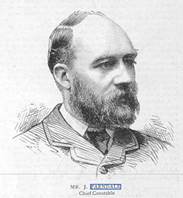
Part 2 –
Joseph Farndale, Chief Constable of Bradford
Scene 1 - The Halifax Policeman
Joseph Farndale’s nephew
was also called Joseph Farndale,
born at the Smith Arms, Wakefield on 6 April 1965[127]. His father was an innkeeper. On leaving school the younger Joseph was apprenticed to a
chemist. Chemistry, however, had no attraction to him. Becoming imbued with an
ambition to make his mark in police and detective work, he joined the Halifax
police force at the age of 20 as an ordinary constable.[128] He married
Emma Selby in 1883[129].
Joseph joined the police at the
age of twenty in 1884.
Rescue from a fire
The younger
Joseph extinguished a house fire in October 1889. About four
o’clock on Thursday afternoon information was taken to the police office that a
fire had broken out at the house occupied by Squire Ackroyd, carter, Governor
Street, off Waterhouse Street. PC Farndale went to the place and found the door
was locked and the room full of smoke. The door was forced open, and it was
discovered that the bed was on fire. Farndale procured a few buckets of water
and extinguished the fire, but not before the clothes and the bed were
destroyed. Ackroyd and his wife were not at home during the afternoon and it is
not known how the fire originated.[130]
Rapid promotion
By December 1888, Joseph had
been promoted to Sergeant. The unusual spectacle of a solicitor
being ordered out was witnessed at the Halifax police court on Wednesday,
Frederick J Chapman and Mark Briggs, millhands, Spring Hall lane, were charged
on remand with having committed an unprovoked assault upon Franklin Ro,
painter, on the evening of November 26th. Mr Moore, who was for the defence
persisted in interfering and raising objections in the case with a vehemence
which the Bench appeared to resent, and eventually, upon a sergeant from the
adjoining barracks being called to speak to the fact of finding the complainant
in the road, Mr Moore objected several times to his evidence. At last after
several altercations with Mr Boorcock, the Bench told Mr Moore that if he again
interfered they would have him removed from the court. Mr Moore persisted in
his interference and the Bench directed the Chief Constable (Mr C Pole) to have
him removed from court. Police Sergeant Farndale was entrusted with the task of
carrying out the instruction of the Bench, but Mr Moore proceeded to leave the
court, intimating that he would take action against the magistrate on account
of the treatment he had received. The further hearing of the case was adjourned
until Friday.[131]
In May 1890 Ellen
Dobson, a married woman, whose husband is employed at the coal yard at the
railway station, and who resides at Range-lane, Halifax, was brought before the
magistrates. Police Sergeant Farndale said that shortly after ten o’clock the
woman came to the police office with a knife in her hand and said she wanted to
cut her throat. He sent for her husband. He was evidently suffering from the
effects of drink. The husband said she had been drinking for a fortnight. They
had no family. The woman was remanded.[132]
By 1891 Joseph Farndale, head,
26, was described as a Police Clerk living at 18 Colberk Street, with Emma
Farndale, his wife, 28; Florence Farndale, aged 6; Eveline Farndale, aged 5[133]. He was
soon promoted to Chief Clerk with the Halifax police, with ambitions for
Chief Constableship, like his uncle. In September 1891 the Watch
Committee of the Grantham Town Hall appointed Chief Inspector Holland, of
Bootle, Liverpool, as Chief Constable of the Borough. Thirty applications were
sent in, from which six were selected and applicants attended before the
committee. The others included Chief Clerk
Farndale, Halifax.[134]
The forger
He soon gained a reputation as a
detective when he chased down a forger to Liverpool. In December
1892 at the Halifax Borough Court on Monday, Charles Fawcett, of the
Square, Halifax, was charged with having forged a cheque for £2,000 on the
Halifax branch of the Lancashire and Yorkshire Bank, in the name of David
Haigh, who has a deposit account there. Prisoner is only 19 years of age, has
for some time been employed as a bank clerk at the bank. Prisoner is well known
and respectably connected. For some time past he has expended his money
lavishly, and Inspector Farndale, of the Halifax Borough Police Force, traced
him to Walton on the Hill, Liverpool and arrested him on Saturday night. He had
over £80 in his possession and a loaded six chambered revolver. The disclosures
have created a great deal of a stir in Halifax.[135]
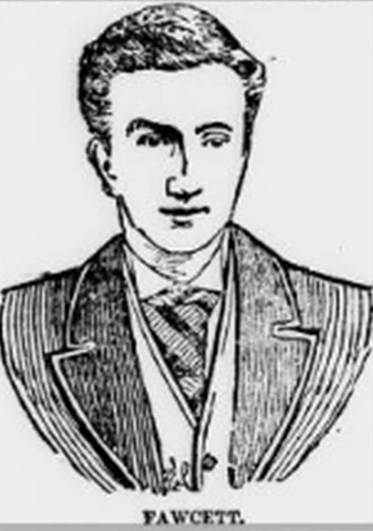
Head of Halifax Detectives
Joseph Farndale became head
of the Halifax detective department at Christmas 1892. The
appointment of Chief Clerk Inspector Farndale to the head of the Halifax
Detective Department will be perceived with favour by those with whom the
Inspector will come into contact. During the discharge of the onerous duties of
Chief Clerk he has displayed abilities which fit him for the post of Detective
Inspector, and he is a worthy successor to the late Inspector, Mr E Newburn.
The compliment paid by Mr Evans to Inspector Farndale, of the Halifax police on
Friday on his smart capture of the alleged Forger Fawcett was well merited and
adds another feather to the cap of the Inspector. The pace by Fawcett was
hotter than generally known, and the young man being known to be in possession
of firearms, the chase implied a certain amount of risk. Fawcett took the train
to Littleborough, where he alighted. Rochdale was reached by a subsequent
train, and Preston was afterwards visited, Fawcett taking the precaution to
change his attire. The same evening Fawcett took part in a fancy dress ball at
Preston and then decamped to Liverpool where the Inspector “ran him to earth”
in the suburbs. Altogether the capture was a very smart one.[136]
Scene 2 - Chief Constable of
Margate Police
The younger Joseph became Chief
Constable of Margate Borough Police in June 1893.
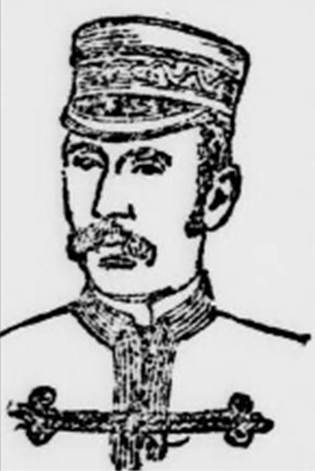
Detective Inspector Farndale, of
the Halifax Borough Police, has been appointed Chief Constable of Margate. Mr
Farndale, who is only 30 years of age, is a native of Wakefield, being the son
of a well known tradesman in that city. He was educated at Fieldhouse Academy,
Aberford, and was intended for a chemist and druggist. Ten years ago, he
relinquished that profession for the police force, which had greater
attractions for him, and he became a constable at Halifax. His ability was
recognised, and at the end of four years he has risen to be chief clerk. For
six years he has discharged the duties of that position ably and successfully.
Upon the retirement of Detective Inspector Newburn he was appointed head of the
detective department, and the success which he achieved in another sphere
followed him there. Mr Farndale's appointment to the Chief Constableship of
Margate his well deserved. He is in a nephew of Chief Constable Farndale, of Birmingham, who
also commenced at the bottom rung of the ladder, starting as a constable
at Middlesbrough some 30 years ago.[137]
The new chief constable of
Margate, Mr Farndale, started, like his uncle, the chief constable of Birmingham,
from the bottom rung of the ladder. A native of Wakefield, he began life in an
apothecary’s shop, but at the age of twenty abandoned the pestle and mortar and
took service in the Halifax police force. His choice of an occupation was
justified in the event, for in four years he rose to be chief clerk, and five
years later was appointed head of the detective department. He is still a young
man, having yet to complete his thirty first year.[138]
‘Tramps’ and pedlars
Amongst other concurrent roles,
Joseph became, in the antiquated language of the day, the Assistant
Relieving Officer for Tramps. A letter was received from Mr J
Farndale, Chief Constable of Margate, in which he state that his predecessor
(Mr Buck) having held the appointment of assistant relieving officer for
tramps, at a salary of £5 5s per annum, he should be pleased if the Guardians
would appoint him to the post. On the motion of Mr Holttum, Mr Farndale was
appointed to the same office at the same salary as his predecessor.[139]
In August 1893, in the trial
of a man charged with having acted as a pedlar and assault, Chief Constable
Farndale said he had received several complaints of the conduct of
pedlars, who intimidated women by forcing goods on them.[140]
In August 1896 Joseph wrote,
in reply to the Board’s letter, that he quite agreed with the Guardians that the
accommodation for vagrants was inadequate in Margate, and he intended shortly
to bring the matter before the local authority. It was not the custom to put
vagrants into a common lodging house unless it was too late to send them by
train to Minster.[141]
Controlling horses
In a question of leaving
horses uncontrolled in September 1893 Chief Constable Farndale
said he took up these cases on grounds of public safety, as a few days before
this offence a horse attached to a brewer’s van (which was being unloaded) ran
away along Marine terrace and it was a miracle that there was not a serious
accident.[142]
Weights and measures
Joseph was also the Inspector of
Weights and Measures. In June 1894 Mr J Farndale, formerly detective
inspector at Halifax, and now Chief Constable of Margate, has passed the
examination held by the Board of Trade for inspector of weights and measures.[143]
Failing to whistle on a bike
Joseph Farndale was regularly
involved in bicycling offences. In August 1895, William
Sparn was summoned for riding a bicycle in Paradise street without giving an
audible warning of his approach. Chief Constable Farndale said the defendant
rode the bicycle, on the 3rd inst, between 7 and 8 o’clock in the evening, down
Paradise street, and there collided with a foot passenger, who was crossing the
roadway. He was not heard to whistle or ring his bell.[144]
The regretful maid
In February 1896 Jane
Dack, domestic servant, aged 17, from Norfolk, was charged by her master, Mr
Hugh Denny, 29 with stealing a gold ring and about £10. The prisoner pleaded
guilty and said she was sorry for it. She also said her mistress had been very
kind to her, and she had had a good place. Head Constable Farndale, having said
she told him how she spent the money, and that she was seized with a temptation
to steal, which she deeply regretted. Her mistress had very kindly informed the
magistrates that she would take her back into service, therefore they would
bind her over for six months to be of good behaviour to her mistress and
everybody. The prisoner thanked the magistrates and her mistress, and said she
would do all she could to be a good girl in future.[145]
Motor cars exceeding two miles
an hour
There was concern about
a motor car driving in excess of 2 miles per hour. Times were changing and
the law needed to catch up. In August 1896 Charles Turrell, of 40
Holborn Viaduct, London, was summoned before the Borough Justices on Wednesday
for, on two dates, driving a locomotive on the high street at a greater speed
than two miles an hour. The Chief Constable said the locomotive was a motor car
and came within the provisions of the Act. PC Bellingham proved that on 31st
July he saw the defendant driving his motor car down Paradise Street to the
Parade at the rate of 14 miles an hour. In cross examination by Mr Hills, he
said he had seen another motor car on the street, and had not reported it; that
one was driven carefully, and less than 14 miles an hour. Herbert Twyman swore
that the motor car in this instance was driven at the speed of 14 miles an
hour. Chief Constable Farndale, examined by Mr Hills, said he knew it was an
offence to drive a motor car in the streets more than two miles an hour. He knew
that a motor car was plying for hire in this borough for a month, and he had
ridden in it. He did not proceed against the man by whom it was driven, because
he did not think it was desirable to do so, but in this case, the driver
travelled at a rate dangerous to the public, viz, 14 miles an hour. He did not
know when he issued the summons that an Act of Parliament had been passed into
law permitting motor vehicles to travel on the highway like other vehicles. Mr
Hills stated that the Act had received Royal Asset; he could not say when; but
it had passed through Parliament before the summons was issued. The case was
dismissed, and the second summons was withdrawn.[146]
Driving a horse and cart under
the influence
An early case of drunk
horse and trap driving was brought to the Police Court in early January
1897. On Saturday, at the Margate Borough Police Court, a fly driver
named John William Woodward, appeared in answer to a summons for being drunk in
charge of a horse and trap, on Christmas Eve. Defendant continually interrupted
whilst the officers gave evidence and caused much amusement when he made the
remark “I was as sober as I am now.” It was quite evident that whilst the
defendant stood in the dock he was suffering from the effects of liquor. The
Chief Constable stated that he had seen several times previously convicted, but
in view of the festive season, the chairman intimated that he would only be
fined 10s and costs. Defendant: I won’t pay. The Chairman: Fourteen days.
Defendant was about to be removed to the cells, when he shouted “Give us
another minute” and clung to the rails of the dock. The assistance of three
policemen had to be obtained in order to take the prisoner downstairs. Woodward
was placed in the dock again on Monday morning when Chief Constable Farndale
informed the magistrates that the prisoner was not in a fit condition to be
admitted to the gaol on Saturday. He (prisoner) now wished to apologise for his
conduct at the previous hearing and wanted to know if the mayor would allow him
time to pay the fine. Prisoner said he was sorry for what had occurred, but
before going to the Court his master gave him some drink which upset him. The
magistrates refused the application and the prisoner was removed below.[147] A fly
driver drove a one horse lightweight carriage.
Arson by chimney fire
In February 1897, on a
charge against a man for wilfully setting fire to his chimney Chief Constable
Farndale said when a witness told the defendant his chimney was on fire, he
said he knew it, and was going to burn the place down. At that time there was a
quantity of timber on a large coal fire, and some waste paper in the fender.[148]
Too many passengers on an
omnibus
The omnibus bye
laws were infringed in August 1897 when Edwin Gayward, 28, Byron
Road, was summoned for conveying a greater number of persons in an omnibus of
which he was the driver that he was authorised to do. Chief Constable Farndale
said the proceedings were taken under the 15th of the Omnibus Bylaws, which
laid down that no more than 18 persons, exclusive of the driver and conductor,
should occupy an omnibus drawn by two horses. The defendant had 20 passengers,
and when PC Leper pointed that fact out to him, before he left the stand, he
defied to the constable and drove off. PC Leper having proved the case, the
defendant said his break was licenced by the Watch Committee to accommodate 22
persons, but Alderman Wootton, who is on the Watch Committee, denied that was
the case. Sergeant Ferrier said there were twenty adult passengers and one
child. The defendant repeated that his break was licenced to carry 22, and that
he did not know anything of 18. He admitted that, including children, he had 21
passengers; two children counted as one passenger. The defendant was fined 5s
and 8s costs.[149]
Scene 3 - Chief Constable of
York Police
Joseph Farndale became Chief
Constable of York from 1897 to 1900[150].
Joseph was given a good send off
from Margate. In October 1897, presentations were made to Mr Joseph Farndale,
the chief constable of this borough, who has recently been appointed to the
command of the city police of York. The mayor presided and there were present.[151]
Itchy feet
Clearly ambitious, it wasn’t
long before Joseph Farndale was looking for another upgrade. In November
1898 four selected candidates for the appointment of chief constable of
Sheffield are Mr. James Enright, chief constable of Rotherham; Mr Joseph
Farndale, chief constable of York; Commander Scott, chief constable of Salford,
and Mr Edward Sperrin, Chief Superintendent at Liverpool There were 19
candidates.[152] In
December 1898 Mr A C Mackintosh, at present chief constable of
Maidstone, formerly chief clerk in the Leeds police office, is among the
applicants for the vacant chief constable ship of Newcastle. The list also
includes the names of Mr Joseph Farndale, chief constable of York, and Mr W H
Jones, chief constable of Stockport. Another of the applicant is a London
barrister, while the chief clerk of the Bucks County council figures in the
list.[153] In January
1899 the Watch Committee of Newcastle Corporation yesterday made a
selection of five from the list of candidates for the position of Chief
Constable of the city, at a salary to begin with of £500. The Council will be
invited to make the final choice to which the Watch Committee will give effect
next Friday. The selected five included Joseph Farndale, chief
constable of York.[154] He didn’t
do well in the Newcastle Chief Constable application, perhaps it was too
soon. A meeting of the Newcastle City Council was held yesterday, in
the council chamber, Mr George Harkus, Mayor, presiding, the principal business
being the appointment of a chief constable for the city. The following was the
result of the vote voting: The first vote. The first vote was Wilson, 22;
Wright, 20; Wymer, 10; Morant, 8; Farndale, 3. Second vote. The name of Mr
Farndale was dropped.[155] In
January the Newcastle City Council yesterday took a vote upon the five
candidates selected by the Watch Committee from the applicants for the position
of Chief Constable. District Inspector James B Wright (37) was appointed.
The other selected candidates included Joseph Farndale (34), chief
constable, York.[156]
Within months Joseph was
applying for the vacancy for Chief Constableship of the city of Birmingham,
after his uncle Joseph Farndale had resigned that post
due to ill health[157].
Killing a swan on the Ouse
On 8 January 1899, some
person or persons wilfully killed a young swan on the Rover Ouse, near
Clifton Ings, the property of the Ouse Navigation Committee, by shooting it in
the neck. A reward was offered to any person giving such
information as will lead to the conviction of the offender. Joseph Farndale,
Chef Constable, Chief Constable’s Office, York.
The new fire engine is son
tested
In May 1899, York took
possession of a splendid new fire engine. Yesterday afternoon, in St
George’s Fields, the power of a new fire engine, which has been supplied to the
town of Thornaby on Tees by Messrs Rose, of Manchester, was tested. The
operations were under the superintendence of the Chief Constable (Mr Farndale).
The engine is guaranteed to pump 350 gallons per hour, but when under full
pressure it threw 153 gallons more, or a total of 503 gallons per hour.[158]
In December 1899 a fire
broke out in the Salem Chapel, York,
last night which was fortunately subdued before it reached very large
proportions, although it caused a considerable amount of damage while it
lasted. The information of the outbreak was conveyed to the central police
station by Mr. Smith of the steam laundry, Aldwark, by telephone at 4.46. The
steamer and fire escape were at once sent off in the charge of Superintendent
Gains and Inspector Mason who were subsequently joined by the chief constable
Mr Farndale. On their arrival the brigade found flames issuing from the gallery
windows on the left-hand side of the building. Mr Smith's men were at work with
the hosepipe throwing water on the flames through the windows. The brigade
connected their hose with the hydrant in St Saviourgate, and went into the building
and played on the flames, which they soon succeeded in extinguishing. There are
two means of heating the chapel, one by gas which warms the upper part and the
other by hot water pipes which heats the lower portion, and it is supposed that
the fire originated in some way from the gas apparatus.[159]
Queen’s birthday
The 80th birthday of the
Queen was celebrated in May 1899 in York with
becoming loyalty. The following magistrates preceded by the Chief Constable (Mr
J Farndale) were the first of the civic dignitaries to arrive.[160]
Scene 4 - Chief Constable of
Bradford City Police Force, 1 August 1900 to 31 December 1930 (30 years)
Joseph became Chief Constable
at Bradford in 1900, to succeed Roderick Ross, who had
left for Edinburgh[161].
In July 1900 there were
congratulations and regrets in York. At
the York City Police Court on Monday the magistrates present were the Lord
Mayor, Alderman Rymer and Mr H Tennant. The Lord Mayor addressing the chief
constable, Mr. J Farndale, said that since they had seen him in that court they
had heard that he had been appointed to the chief constableship of Bradford.
They could congratulate Mr Farndale, although he did not think that they could
congratulate themselves. They could congratulate him on getting the appointment
at Bradford, and upon the able way in which he had discharged his duties in
that court.[162]
Clearly the issue was that the
councillors of York were skimping on pay, and in
consequence were not keeping their high officers. A special meeting of
the York City council was held on Monday evening, to receive and consider the
following report of the Watch Committee: “Your committee have to report that
the chief constable has tendered his resignation, having received the appointment
of chief constable at the city of Bradford. The committee desire to record
their high appreciation of the efficient manner in which Mr Joseph Farndale has
discharged the duties of chief constable of this city, and whilst
congratulating him on his promotion to the chief constable ship of Bradford,
they regret that his services will be lost to the city. The committee recommend
that they be authorised to advertise for a successor to Mr Farndale at a
commencing salary of £350 per annum.[163] A letter
soon appeared to the editor of the Yorkshire Herald. Sir, will you
allow me to give expression through your paper to the general opinion which
exists in the city, that the corporation of York have made another serious
mistake in permitting Mr Farndale to accept a more lucrative and responsible
position, when an advance of salary would have secured his continued services
in this city. If I am informed that on each of the three occasions when Mr
Farndale became a candidate for vacant appointments, he had previously
intimated his intention to the Watch Committee, but had received no
encouragement to stir any advance either then, or in the future, and he was
therefore compelled to obtain preferment outside the City of York, where his
services would be better recognised and appreciated. There is another instance
of that short sighted policy of penny wise and pound foolish, which
characterised characterise the actions of the majority of our councillors.[164]
On 9 August 1900 Mr J
Farndale, late of York, and now the Chief Constable of Bradford, was formally
introduced to his men.[165]
Juvenile crime
There was a problem
with juvenile crime in Bradford. Bradford is creating an undesirable
reputation just now for juvenile criminality. Of late months the number of
young persons brought before the City Court has been greatly in increase of
anything experienced for some considerable period, and the Stipendiary
Magistrate ha's intimated that he will in future adopt a much sterner attitude
to those who are bought before him, especially after a first conviction. During
the quarter just closed no less than 52 persons under the age of 16, consisting
of 50 boys and 2 girls, have been charged with various offences, as compared
with only five in the previous quarter. Recently there have been systematic
raids on pigeon cotes and places where poultry is kept, whilst other youths
have devoted their attention to stripping the metal from uninhabited houses and
warehouses. The subject has occupied the serious attention of the Chief
Constable (Mr Farndale), and he has come to the conclusion that the facilities
afforded young persons for the disposal of the stolen property is an important
element in the present undesirable condition of affairs. The law restricts the
purchase of smaller quantities of metals, but this fact notwithstanding, there
are brokers and marine store dealers who are open to take small lots of
material from young people, and the police complain that they have not powered
sufficiently comprehensive to deal in the most effective way with these
dealers. To remedy this defect as far as possible, application is to be made to
parliament in the next session cover for an extension of the powers the city
police at present possess, and a clause to that effect has been included in the
bill which the Bradford Corporation is promoting. By this means it is hoped
something will be done to lessen the number of juvenile criminals in the
district; And meanwhile the city Chief Constable is making what use he can of
the powers he now possesses, and proceedings are to be taken against some
dealers who have not, it is thought, exercised such discretion as is necessary
by persons in their position. It is a fact that today there are in Armley gaol
more young criminals from Bradford than from any other large city centre of
population in the West Riding of Yorkshire.[166]
In 1901, Joseph Farndale, Chief
Constable of Police, head, aged 36 was living at 2 Undercliffe Lane, Bradford
with Emma Farndale, his wife, aged 38; Florence Selby Farndale, aged 16; Eveline Farndale, aged 15; Emma Elsie Gladys Farndale, aged 7; and Luch
Woodhams and Maria Mocarthy, servants[167].
Dawn of a new century
The new century was
welcomed in at Bradford. In commemoration of the opening of the
twentieth century, the Mayor (Mr W C Lupton), the members of the City Council,
the chief officials of the Corporation, the city magistrates, and a number of
gentlemen representing institutions of the town, attended Divine service
yesterday at Bradford Parish Church. The procession consisted of a posse of
police under Chief Constable Farndale (who had altogether 120 men on duty in
connection with the proceedings).[168]
Looking splendid with his
mounted posse
The inspection of the Bradford
City Police Force afternoon at Manningham park was quite a smart and
interesting event. Beautiful spring weather prevailed, and the park looked
well. The green on the left hand side of the main carriage drive had been staked
off for the occasion by a number of flags, and shortly after two o’clock the
men of the force were marshalled in various sections fronting the main road.
The constables were paraded pending the arrival of the Government Inspector by
Sergeant Brown (Drill instructor to the force). All told they numbered over 300
men. This included 25 sergeants, 13 inspectors, and superintendents Blenkinsop,
Ackroyd, Bogart, White, and Thompson. Both officers and men were in full
uniform, and presented an imposing appearance. Exceptional pains had been taken
to thoroughly clean all the metal facings, and the citizens of Bradford have
reason to be proud of the smart body of men whose duty it is to patrol the
streets of this city and to protect our lives and belongings. A detachment of
mounted police, in charge of inspector Mattocks, was a feature of the
proceedings, and the detective staff, under the command of Chief Inspector
Abbey, were attired in smart civilian dress and wearing silk hats. The Chief
Constable, Mr Farndale, was the most conspicuous feature of the assembly. He
was mounted on a spirited steed, and was dressed in an attractive uniform, with
a glittering sword hanging by his side. His chapeau was surmounted by plumes.[169]
The curious cases of fortune
tellers
In 1901, Joseph Farndale became
involved in a number of cases of fortune tellers ripping off their
clients.
A curious case of fortune
telling came before Mr Skidmore (Stipendiary Magistrate), who found the affair
very funny. On the evening of 25 May 1901 a defendant was visited at
his house by two of the police matrons.
According to the evidence of the
former, the defendant’s first device was to fold two pieces of paper into the
form of diamonds, after which he asked the visitors when and where they were
born. Mr Skidmore: That is a very dangerous question to ask a lady; I hope you
didn’t tell him (laughter). Continuing the witness said that the defendant
wrote the information on the diamond formed papers, and then retired saying he
was going to meditate as to what planet or planets the visitors were born
under. After an absence of about ten minutes, he returned with the information
that witness was born under Venus (laughter). He predicted for witness a lot of
trouble and sickness this year, but said there would be a change for the better
next year. She would he added do well as a lodging house keeper, and he warned
her against taking a voyage on the water until next year; this year there was
an evil aspect over her (laughter). Had the hour of her call been midnight he
would have predicted a voyage abroad next year. He advised her to transact all
her important business on the Thursday directly following a new moon. He told
her that she would have two offers of marriage during the next year – one from
a single man and one from a widower (laughter). Mr Skidmore: Is the defendant a
widower? (renewed laughter). The witness said she paid the defendant
1s 6d for telling her fortune. The defendant told her if she preferred to have
it written down it would cost 2s 6d.
In cross examination the
defendant complained that the callers had given wrong names. Mr Skidmore: That
doesn’t matter; they were told a great many things at your house that were
wrong. Defendant: I didn’t send for them. Mr Skidmore: Nobody says you did.
Defendant: I haven’t been doing much business during the last three or four
years due to my health. Mr Skidmore: And you will do less after today.
Ellen Whitehouse, a married
woman, corroborated the testimony of the first witness. The defendant predicted
for her two offers of marriage (laughter).
Detective Haigh said he had made
inquiries as to the defendant’s antecedents. He had ascertained that the
defendant had drawn considerably over £1,000 from a gentleman in Knaresborough
in this kind of business – driving away the evil aspect (laughter). He had been
carrying on in this way for sixteen years. Mr Skidmore: I shouldn’t have
thought there was so much money in Knaresborough. Detective Haigh: The
gentleman there has now become seriously ill, and the doctor says it is all due
to this man bothering him. He is nearly seventy years of age.
In reply to Mr Skidmore, the
Chief Constable (Mr Farndale) aid there was no previous conviction against the
defendant for this kind of offence, but he had been fined for assaulting his
wife. He had been carrying on business for twenty years in Bradford and called
himself a herbalist. Defendant (to the detective): I haven’t drawn over £1000
from that man. Detective Haigh: You have had £1 a week from him for over twenty
years. Defendant: No, I haven’t had 10s. Mr Skidmore: You ought not to have had
10d.
Detective Haigh: He has gone
down to this gentleman’s house regularly about once a week, ad has spent the
night in boiling down beats’ hearts and putting it into ginger beer bottles to
drive the evil spirits away. He would spend the night in this way and leave
next morning. Mr Skidmore: I see, a sort of incantation (laughter).
The Chief Constable said the
visitors to the defendant’s house were not confined to any particular class.
This Knaresborough business had been put to an end.
Mr Skidmore (to the defendant):
You are a rogue and a vagabond. That is what the law calls you. If you had been
convicted before you would have been sent to prison for a long term without the
option of a fine. There is no doubt that you have been carrying on this
business and imposing upon His Majesty’s subjects for a long period of time.
You will be fined £10 and 12s costs, or six weeks imprisonment.
In June 1901 at Bradford City
Police Court a defendant was charged with stealing a pair of bathing
drawers, value 6d, the property of the Bradford Corporation. The Chief
Constable (Mr J Farndale) remarked that no fewer than 100 pairs of drawers had
disappeared from one of the baths within the last six weeks.[170]
The problem of fortune
teller ‘scams’ returned in 1902. A well dressed and somewhat handsome
woman named Mrs Annis Wood, of 7 Nelson Square, Bradford, was before the
Bradfords Stipendiary, Mr C Skidmore, this morning on two charges of unlawfully
telling fortunes. The chief constable, Mr. J Farndale, said that the
prosecution was under the Vagrancy Act of 1824[171]. Defendant
had lived at the address named for three years, and her visitors numbered
sometimes 100 a day. They were principally ladies, who called to have their
fortunes told. Defendant looked at her clients’ hands and then pretended to
tell them something about their future. After that she took their handkerchief,
rolled it into a ball, and preceded with her story. They then paid a fee of a
shilling or so, the amount varying according to the client's circumstances. Mrs
Annie Ledger, of 39 Alexander St, said that on Friday, February 28, she visited
the defendant's house, and arranged to call again on the following Thursday.
She went at three o’clock, and arranged to call again at four o’clock.
Defendant answered the door, and showed her into a room where there were five
other ladies. These took their turns to visit Mrs Wood in another room, and
witness, who had taken her wedding ring off, was the last but one. Witness said
the defendant told her she was a single woman. The Stipendiary: “A very bad
shot”. Witness: “She said I should not be engaged for a very long time. She
then asked me if I knew a dark man with eyes darker than my own who had not
been true to me? Then she asked if I knew another darker than her? I said no.
She said he thought the world of me (laughter) and that I knew it. I told her I
did not know that.” Then she said I was not really strong, that I should have a
lot of sickness, but nothing dangerous. She gave a prescription, one ounce of
Epsom salts, an ounce of magnesium, and announce of essence of peppermint. The
Stipendiary: “That is what they call a love powder”. (Laughter). Witness,
proceeding, said , “Then she said there would be two deaths in the family. I
should not bother about one, but for the other I should have to go into a very
deep mourning. The last death was to bring me some money. She asked me for my
handkerchief, which she rolled up. She next told me that a married man thought
more about me than he did about his wife, and there was no love between them.
(Laughter). She said that if I was not careful it would be a law case. The man
would go in for a divorce, and marry me at once if I was agreeable. She said I
should have a very successful year. I should have money, and things would be
brighter all around. I asked her fee, and she said 1s 6d. I put two single
shillings down, and she took one and returned the other.” Witness added that
she went at the instigation of the police. Cross examined by Mr Earnshaw,
barrister, who appeared for the defendant,: “There was no pressure put upon me
by the defendant. She did not know whether Mrs Wood advertised. She made a note
of the proceedings when she got home. The Stipendiary: “If this is true it is
an offence”. Mr Earnshaw submitted it was not a case of fortune telling. There
was no intention to impose upon people. Palmistry was not illegal, and was not
fortune telling. The act had been framed for the protection of people against
gypsies. This was not an offence under the Act. The Stipendiary held that if
the witness’s story was true an offence had been proved. Mr Earnshaw put his
client into the box. Mrs Wood said that she had been engaged in clairvoyance
for nine years, and in palmistry for four years. Mr Earnshaw, “How do you know
you have the power of clairvoyance?” Defendant: “It is only in born”. Defendant
added that before she took money she advised friends and neighbours
gratuitously. People paid her what they thought fit. She remembered Mrs Ledger
coming. She took her hands and read the lines. “They were very fine lines,”
said the defendant in an impressive voice and with a theatrical air. “I said,”
Defendant went on “you are a married lady.” she said “No”. I said “Be truthful
to me and I will be truthful to you.” I said “you certainly know a gentleman
that works at a large building within 3 minutes of the railway station. The
gentleman before long will have an improvement in his position.” Defendant
added that in the course of her career she had been consulted by a large number
of people, about 25 a day, but not 100. Stipendiary: “A very nice way of
getting a living. It is much easier than mine”. (Laughter). Defendant: “I only
work four days a week. It is not true that I receive fees of a sovereign or
even half a sovereign. I have had girls visit me of 18 years of age, but none
younger. Mr Earnshaw: “Have you done it in the hope of reward?” Defendant: “A
clergyman gets reward”. The chief constable, in answer to the Stipendiary, said
that they estimated the Defendant was making £300 a year. She had plenty of
clients, including carriage people. She told things to young girls which had
caused stress in many respectable Bradford homes. He asked for the law to be
enforced. Stipendiary: “If you come here again and the offences proved you will
be sent to gaol. This morning I shall find you find you pounds £25 and 12 S
costs, or one month. The chief constable was proceeding to examine his witness
in the second case when Mr Earnshaw pleaded guilty. He asked for time in which
to pay the fine. The Stipendiary: “I am pleased to see she can engage counsel”.
Mr Earnshaw: “I am engaged by the Occultist's League, and not by Mrs wood. On
the second charge a fine of £10 and 12s costs, or 21 days was imposed. The
chief constable objected to allowing the defendant time to pay under the
circumstances.[172]
His famous uncle’s death
When Joseph’s uncle, Joseph Farndale died in 1901, at
a meeting of the Watch Committee today, a letter was read from Mr J Farndale,
Chief Constable at Bradford, thanking the committee for the resolution of
condolence in respect to the death of the late Mr Joseph Farndale.[173]
Music licences and the signing
‘oils
In January 1902, Joseph Farndale
became involved in a moral crusade against music licences for the “Singing
‘oils” of Bradford. Transplant the average Midland
“man about town” on a Saturday night or a bank holiday night, into any of the
larger Yorkshire centres of population, and the first feature of “about town”
life which would strike him would be the public house “singing ‘oil” or free
and easy, for he knows none such. The present writer's first introduction to
one was in 1893, at Sheffield, and the recollection of its melodiousness, its
rowdiness, its rudimentary harmony, and its flood of ale, is yet with him. An
atmosphere reeking with bad tobacco, a room crowded with men and women, in whom
the “wine” with more than mellow, sloppy tables, sloppy songs, vigorous
applause, and vigorous language, that is the sum and substance of the
recollection. Since those days the Yorkshire singing ‘oil has somewhat improved
but its main features remained the same on that night of all nights for
alcoholic enjoyment - Saturday night. There is a little more outward seeming
decency, and Bradford, Leeds, Sheffield... These recollections and reflections
are prompted by the recent action of the Bradford chief constable, Mr Joseph
Farndale. In Bradford there are 618 hotels and public houses; 368 of these have
music licences, and 37 other places have similar licences. Altogether 405 music
licences are held in the city. These are two fully fledged musicals, two
theatres, and St. Georges hall and the mechanics institute to contribute to the
legitimate amusement of the week in week out. In addition 10 or a dozen public
houses in the centre of the city run singing ‘oils, some with the concomitant
dignity of a regular playbill, some with millie a scratch selection of paid or
amateur talent.[174]
A gold watch
In March 1902 Mr J
Farndale, formerly chief of police of Margate, has been presented with a gold
watch by the subordinate members of the Bradford force, in recognition of
his successful endeavours to make the policeman’s lot a happy one.[175]
Always on duty
The Chief Constable (Mr Joseph
Farndale) stated that a police officer was never off duty until he left the
service.[176]
No more drinking time at the
Coronation
No extra hours in
pubs were allowed in 1902 in Bradford for the Coronation, even though Joseph
did not object. A special sitting of the Bradford licencing bench, Mr. J
Godwin presiding, was held this morning at the town hall to consider the
application of Mr. A Neil, on behalf of the licenced victors, for an hour
extension, eleven o’clock to twelve midnight, on the nights of June 26th and
27th. Mr Newell appeared on behalf of the beer sellers. The chief constable,
Mr. J Farndale, said he had no objection to the application. He was told that
the Diamond Jubilee the police had had no cause of complaint. The Bench refused
to grant any extension. Mr Neil also applied for an all night extension at the
New Inn, Idle, stating that an ox was to be roasted in front of the hotel. The
Bench refused the application.[177]
The baccarat players were
not tolerated. The Chief Constable (Mr J Farndale) contended that
baccarat was an unlawful game wherever it was played. The Stipendiary (Mr C
Skidmore) found that, firstly, the club was a bona fide club; secondly, that
baccarat was an unlawful game as habitually played there, and, thirdly, the
club was kept for two purposes – social and gambling, and that constituted a
common gaming house.[178]
The folk of Bradford behaved well for the King’s Coronation. After
the holiday for the new King’s coronation: Chief Constable Farndale expressed
himself highly pleased with the conduct of the people yesterday and assures us
that the police were given every assistance. To use his own words: “It was a
good natured and thoroughly well-behaved crowd.” The streets were certainly
well kept yesterday by the force.[179]
Standing up for his force
In September 1902 the
magistrates dismissed a charge brought against a Cleckheaton labourer, to
Joseph’s consternation. The evidence was contradictory and the Bench
decided not to convict. The Chief Constable (Mr J Farndale): Then, I am to
understand you do not believe my officer? The Chairman: I don’t like your way
of putting the question. I am sure it is far from us to accuse your officer of
speaking an untruth. It is possible he has got a mistaken idea. The Chief
Constable: Well, sir, I must do my duty. If I put men into the box whom you
cannot believe then I must endeavour to rid the city of them. The Chairman:
There is a want of corroboration on both sides. The Chief Constable: I am not
complaining because you have discharged the prisoner. I am concerned as to the
truthfulness of my officers. The Chairman: We do not feel justified in
convicting. That is all. The matter then dropped.[180]
Getting to know Joseph, the new
model of Chief Constable
There was a Pen Portrait of
Joseph Farndale in the Bradford Weekly Telegraph, Saturday 2 May 1903
entitled The Chief.
It may be either fortunate or
unfortunate to know Mr Farndale, the gentleman who sits at the Town Hall as
Chief Presenter of crime in the city of Bradford. If he is your friend, you
will find him what the gamins call “OK”, but if you happen to come within the
clutches of his myrmidons of the law you would be less appreciative, perhaps,
of this man and his office. The chief constable has not been with us very long,
but he has gained the respect of the law abiding citizens by his courtesy. He
is not too big a man to oblige. We have known chief constables with a good deal
fewer than 300 policemen at their beck and call who fancied all the powers of
earth and heaven were committed to their charge. The swelling importance of
such men is not pleasant to behold. Mr Farndale does not presume upon the
dignity of his position, nor carry out his office despoticly in any way. He is
rather of a modest and retiring disposition than otherwise and does not have
thirst to fill the public eye. We have known some very autocratic chief
constables. They used to exercise their functions mainly in county divisions
and in the old days of quarter sessions. They were very great men in those
days, and all chief constables were great men. The growth of democracy and the
rise of county councils has reduced the awful state of the chiefs of police.
They, for the most part, now do their duty like ordinary men. There was one of
these personages in our youth who rejoiced in the dubious nickname, when in the
army, of “Hellfire Jack”, and who as chief of police chastened public offenders
in the street with a thick oaken stick, and who used to sit besides the
magistrates on the bench and help the magistrates to administer the law.
Now we lay stress on the
contrast between the old theology, beg pardon, the old style of chief
constable, and the new. Mr Farndale is of the new model. His ideal is that
the police should serve the people with civility and fidelity, and that
perfect confidence should prevail between the force and the public. No man was
more deeply hurt than he at the discredit thrown upon the Constabulary a few
months back by the irregularities. Good relations exist between the chief
constable hand and his men, and while strict he is no martinet. The consequences
that we believe are force is an improvement on what it was a few years back. Mr
Farndale having risen from the ranks, knows the whole round of a policeman's
duties, and he judges his men with the eye of knowledge. The consequence is
that the men had full faith in their chief, and tried to serve him well
accordingly.
Mr Farndale is a quiet, dark
man, who rules his men firmly, who tries to bring about obedience to the law,
and yet is not guilty of straining the law against the accused person. As a
rule a policeman acquires a certain amount of bias in the pursuit of his
calling, and is not sufficiently inclined to give the prisoner the benefit of
the doubt. We have seen no excessive straining after convictions on the part of
Mr Farndale, and this is the more noteworthy as he has a police ancestry.
Mr Farndale was born at
Wakefield in 1864, and is the nephew of Mr Joseph Farndale, the late
distinguished chief constable Birmingham. He was educated at Field House
Academy, Aberford, and was, early in life, apprenticed
to a chemist. Chemistry, however, had no attraction to him. Becoming imbued
with an ambition to make his mark in police and detective work, he joined the
Halifax police force at the age of 20 as an ordinary constable. For 10
years he was connected with that force, during which time he worked his way
successfully through the different grades of Constable, Detective Constable,
Sergeant, Inspector, Chief Clerk, and Detective Inspector. In 1893, when second
in command of the Halifax police force, Mr Farndale was appointed chief
constable of Margate, which position he filled with marked success until 1897,
when he was appointed chief constable of York. From there he came to Bradford,
succeeding Mr Roderick Ross as chief constable in 1900.
During the three years he has
been in Bradford, Mr Farndale has affected many
reforms in the police administration of the city, and now it can truly be said
that the force never was in a more efficient condition. With the example of his
uncle before him, he is an enthusiast in his profession, and it was just that
enthusiasm for his work which led to his rapid promotion in his early days of
police service. Among his many smart pieces of work as a different detective at
Halifax was his arrest of a bank clerk for forgery. The clerk absconded, and
with but the slightest description, Mr Farndale started his pursuit, traced and
followed his man to Littleborough, thence from place to place from Rochdale to
Preston and Saint Helens to near Liverpool, where he ran his quarry to earth.
In the course of his career some thousands of “wanteds” have passed through his
hands, and his keen remembrance of faces once seen has often led to the arrest
of the man wanted even after the lapse of a considerable time. Himself a smart
man, Mr Farndale will tolerate none but smart men in his force; the sluggard
has no sympathy from him, whereas the man of intelligence and security and is
certain sooner or later to attract his high and receive promotion. Hence it may
be that in the minds of some of his force he is unpopular, but he has the good
opinion of the honest policeman, just as he enjoys the goodwill of the
authorities and respectable portion of the community. Above all, he is a man of
principle. His every action speaks that. From every town and city in which he
has laboured Farndale has brought away some more or less tangible expression of
appreciation of his work. When he went to Margate he found himself confronted
with the difficulty of the overcrowding of passenger steamers. He faced the
difficulty with unsparing hand. Some heavy fines were inflicted, and Mr
Farndale today holds a special letter of thanks from the Board of Trade for the
efforts which he made to curtail a practise which threatened disaster.
Similarly the Bradford Temperance Party and free church council have thanked
him publicly for the part paid him played in bringing about the suppression of
the public house music licences. We cannot conclude this appreciative article
without recounting an experience which he had in his early days at Bradford
when he used to parade the streets at night disguised in order to ascertain for
himself whether his men were doing their duty. Prowling about Westgate in the
“wee sma’ hours” he was accosted by a constable, and peremptorily ordered to
“move on or be locked up”. Failing to convince the constable as to his identity
he discreetly “moved on” and we have not heard since of his zealousness leading
him into such methods of supervision.[181]
The Fingerprints Pioneer
Joseph Farndale was a pioneer of
the new use of fingerprints in Bradford. The city police authorities have just adopted
the new system of identifying prisoners, and henceforth Bradford miscreants will be subjected to what is
already known as the fingerprinted process. The old form of identification
consisted of taking measurements, and a record of any marks on the person,
together with photograph, but there were many defects in that system. The
measurements were found to be unreliable and other methods employed were not
altogether satisfactory. Often a great deal of valuable time was wasted in
completing investigations regarding a prisoner's previous convictions, and the
methods in which he carried out his work. The new system of establishing
identity by means of a man's fingerprints appears to be a much more certain and
satisfactory method, and from experiments which have recently been made at
Scotland Yard it appears that there is no possibility of any mistake being
made. Although new to Bradford, the system is by no means a recent invention,
for it has for some time been adopted with very great success in other parts of
the world. In China it has been used for many years with signal success, and in
India it is likewise being utilised very extensively in all branches of the
civil service and Police Department.
In the course of an interview
with a “Telegraph” reporter had yesterday with the chief constable, Mr Joseph
Farndale, that gentleman said that the system was introduced into Scotland Yard
some seven years ago as a means of identifying criminals of the worst type, and
the authorities have so satisfied themselves with its efficiency that they are
encouraging its general adoption. “It was brought to its present state of great
utility,” said the chief constable, “by Mr Henry, the chief Commissioner of
Police. At first it was confined to specially trained officials at the prisons
throughout the country, but now sanction has been given for impressions to be
taken by capable officers in any police force. Now the impressions are taken
and sent by first post to Scotland Yard, and particulars of the man's identity
are forwarded by the following post”.
In answer to a question as to
the advantage of the new over the old system Mr Farndale replied: “In the old
system the only method of identifying a prisoner was to show him or his
photograph to the officer who had actually had him in custody, but in the new
system once a man's impressions are secured they remain at the headquarters,
Scotland Yard, and are always available.”
It is a well known fact that the
impressions of the fingers of different persons are never like. The lines on
the tips are part of his individuality, and, what is of more importance to the
police, do not vary in formation at any period of his life.
Speaking on this point the chief
constable said: “It is beyond doubt that there are no two sets of fingerprints
identically the same. It has often been said that in the general design of
fingerprints there are no two fingers alike. The system is the most perfect
one. The more you study it the more satisfied you are regarding its
practicability.”
But a work of this description
must be of a complicated nature? interjaculated our representative.
“It would appear so,” replied
the chief constable, £but Mr Henry, of Scotland Yard, has devised a most
remarkable system of classification. It is in the form of a large cabinet,
which already contains the impressions of about 50,000 criminals. These are classified
in such a way that it could be easy for any officer after once becoming
acquainted with the system to go to the cabinet and produce a person’s
impressions in the space of a few seconds.”
The chief constable has studied
the system for a couple of years, and is perfectly satisfied that it is the
best system which has yet been introduced. Last week Detective Inspector Talbot
and Sergeant Nicholson were at Scotland Yard, and these two officers, under the
supervision of the Chief Constable, will have charge of the new system in
Bradford. Already several impressions have been taken and sent to London, where
they have been classified, and the convictions of the prisoner have been
returned.[182]
In February 1905, there were
further developments in the use of fingerprints. When the
Bertillon method[183] of
identifying criminals by the prints of their fingers was first introduced into
England much doubt was expressed as to the efficacy of the system. Those doubts
have been to a great extent dispelled by several recent cases, where criminals
have been identified by and convicted on the evidence of their fingerprints.
Additional arguments in support of the system has been supplied by the Chief
Constable of Bradford, Mr Joseph farndale, in his Annual Report just issued. Mr
Farndale states that this system of identifying criminals has been in operation
in Bradford for the past 18 months, with highly satisfactory results, and he
adds that it has been of valuable assistance in the detection of serious crime.
In one case a finger impression was left on a glass panel which had been broken
in effecting an entry to an office; in another an impression was left on a
small polished medicine chest which had been opened; In a third case an
impression was left on a bathroom door, the top of which had been grasped by
the thief in lowering himself from the ceiling through which he had entered the
premises; in a fourth the thief drank beer from a bottle inside the premises
entered, leaving a finger impression on the bottle. All the articles mentioned
were brought to the Town Hall, where photographs of the impressions were taken
and enlarged. In one instance the impression was found to be identical with a
finger impression of a well known convicted thief, whose prints were contained
in the local record. He was arrested and upon this and evidence of a
circumstantial nature he was committed for trial and eventually convicted. In
other cases the thieves were apprehended upon circumstantial evidence, which
upon their trial was conclusively supported by further evidence that the
fingerprint impressions referred to with theirs, and they were convicted.
Mr Farndale states that the
finger impressions of prisoners sentenced at any court for indictable offences,
that is, offences against the person, against property with or without
violence, forgery etc, are recorded at the Habitual Criminals Registry at Scotland
Yard, where there are at present records of the impressions of over 100,000
prisoners. These records are so classified that on the receipt of the
impression of a prisoner two or three minutes is sufficient to ascertain
whether or not a duplicate copy is on the record. If it is, the prisoner’s
criminal history is supplied by return of post. The result is that the courts
dealing with old offenders have their complete criminal history before them.
Where no records are obtainable it may safely be assumed that there has been no
previous conviction of serious crime.[184]
Joseph is staying
In November 1903 a
general rumour has been going about the city lately to the effect that our
account our Chief Constable, Mr. J Farndale, is a candidate for the vacancy
which has occurred at Hull. The other day, in the course of some conversation I
had with “the chief”, I learned that the report is absolutely without
foundation. Mr Farndale is not likely to leave Bradford. He finds our city most
congenial, and what is more, he is most happy with his men, and in fact finds
much to be proud of in the force of which he is the head.[185]
A lesson for his detective
Joseph Farndale was involved in
a furious row with his detective in November 1903 when a
strange and somewhat exciting incident occurred in the Bradford City police
court yesterday, whilst the stipendiary magistrate, Mr Charles Skidmore, was
engaged with a case in which a labourer named John Whelan, of 10 Haworth St,
Bradford, charged with loitering in White Abbey Road, Bradford, with intent to
commit a felony. The solicitor whom the prisoner had retained was unable to be
present, and it was therefore decided to remand the case until today, the
stipendiary remarking that Mr Atkinson, the solicitor in question, was engaged
the West Riding police courts, and could not be expected to be in two places at
once. He asked the chief constable, Mr. J Farndale, whether there was any
reason why the prisoner should not have bail, and it was at this stage that the
incident arose. The chief constable was proceeding to speak when Detective
Willoughby, of the city force, rose from his seat and stepped into the witness
box, and said “Allow me, Sir”. He was going to speak when the chief constable
said: “Willoughby, step out of the box.” Willoughby: I will do. The chief
constable preceded to state that he would take responsibility of the prisoner
being remanded. Detective Willoughby: He is innocent; and if the case is gone
on with I and Detective Green will give evidence in his favour. The chief
constable said “Stand down sir. If you don't if you don't know your position I
will teach you. Detective Willoughby: “You have done”. The stipendiary: “Is
there any reason why the prisoner should not have bailed? I cannot of course,
shut my eyes to what Willoughby has said”. The chief constable said he would
agree to bail, and the prisoner was remanded a £5 bail. The stipendiary to the
chief constable: “Of course you will inquire into this”. The chief constable:
“Yes Sir; Very seriously.” The incident then closed. After the police court
proceedings Willoughby was suspended by the chief constable, and his conduct
will be investigated by the Watch Committee.[186]
The controversial suppression of
offensive postcards
Joseph Farndale’s moral crusade
turned its attention to offending picture postcards in September
1904. A letter appeared: Sir, it is about time that Bradford as a whole
should rise in protest at the support which Chief Constable Farndale is giving
to the whimsicalities of the free church council. First, the pubs (music
licences), then the theatres, and now the innocent shopkeeper are being made to
suffer. And all this fuss is being made about an unoffending picture postcard,
which is probably caused more merriment than anything, published in Bradford
during the last 12 months, and that included the satirical “J....” Possibly
Joseph Farndale would like to see the shop windows of fancy stationers
plastered with pictorial postcards depicting him in his glorious war paint.
Forsooth, it would be a subject to hand down to our children's children, that
is if the London comics did not steal the copyright. We shall next have an
objection about policemen smiling when on duty, and possibly the chiefs
thoroughbred may be induced to wear a shirt. I'm afraid that in this age
progress we are mentally on the decline, and it is certainly a pity that they
cannot find detectives something more to do than patrol the town in a hunt
after picture postcards, especially of the kind to which objection has been
taken. There is quite sufficient work for the police in looking after the
thieving fraternity, judging by the number of robberies that have recently
taken place in Bradford. Trusting that the bench, if it comes to that, will not
be guiled by these puritanical crusaders, believe me to be, J Jackson,
Girlington, September 11th, 1904.[187]

One of the culprits
Chief Constable Farndale, the
head of the Bradford police force, has already gained some notoriety for his
attitude on certain questions affecting the morals of the people, but his
latest stricture is likely to bring him increased popularity among the large
class of citizens in this connection. It is to take the form of the suppression
of a certain class of picture post card, which has been largely in demand in
the city during the past weeks. In addition to the one reproduced above there
are two other equally ridiculous postcards purporting to depict “Shipley Glen
after dark.” Naturally enough, the action of the chief constable is being
strongly resented by certain retailers of picture postcards, and in all
probability these city magistrates will in a few days be called upon to decide
the issue. Yesterday, visits were paid to shops by officers of the police force
with special instructions from the Chief Constable to effect the purchase of
the complete set from each of the largest establishments in the centre of the
town. At the same time the proprietor or person in charge was made aware of the
mission of the police with the information that if the sale of these particular
cards was discontinued nothing further would be heard of the matter. In the
event of a refusal to comply with Mr Farndale's request, however, it was made
clear that proceedings would probably be instituted in the police court.
Almost without exception the
shopkeepers have failed to comply with his request, and have decided to fight
the matter out. As a body they maintain that the offending post cards are
in no way immoral, but merely a humorous satire upon the conversation
usually heard in these places after dusk. Regarding the sale of these
particular cards some idea of the extent of their popularity may be gathered
from the fact that one dealer not far from the bottom of Manchester Road
declared that his sale for the past month has averaged many thousands per week.
In the course of an interview one manager remarked: “I don't know what we're
coming to. We shall have to show our marriage licence to the milkman next. It
would be far better if Mr Farndale would only turn his attention to the number
of loose women who are allowed to wander about the streets at night in search
of their prey, rather than try to interfere with the innocent enjoyment to the
people.” Another of the offending shop men was equally indignant, and expressed
himself thus: “Why don't the police stop us from breathing? If we had exposed
pictures for sale which were allowed in other towns there would have been just
cause for complaint, but to seize an innocent little card with a few silly
cover ridiculous suggestions upon it seems to me to be perfectly absurd. I
cannot believe that the common sense of the Bradford Bench will be misled by
such tactics as these.” Generally the impression prevails amongst dealers in
picture postcards that the action of the Chief Constable is an unwarrantable
interference at the privileges of the people, and it will be interesting to
know what will be the ultimate result.[188]
Another letter soon appeared.
Sir, from the shopkeeper 's point of view the action of the Chief Constable,
with regards to suppressing a certain series of picture postcards,
is puritanical in the extreme, and is another hardship upon a class which
already has enough to bear. While rates are steadily going up in the town, the
retail trade is growing worse, and this action seems to many of us like the
thin end of the wedge. Already stationers and other tradesmen have been injured
a good deal by the Bradford Exhibition, and it is hard indeed to find any
justification for this latest action. At the very worst the postcards can only
be described as nonsensical, and I would defy Mr Farndale to show any
indecency about them. Shopkeepers who deal in picture postcards now exercise a
great deal of discretion, and large numbers of those which are exhibited in
shop windows on the Continent are boycotted by retailers here. What these
over-efficious authorities would say to some of the series openly displayed in
continental towns I don't know. But I can assure them that in many cases one or
two of the worst of a series imported from abroad is destroyed. I admit that so
far the matter has not become serious, but we regard this of a warning of
stricter measures yet forthcoming. Thanking you in anticipation for inserting
this letter. Yours truly. Indignant shopkeeper. September 10 1904.[189]
The case of the stolen ring
On 27 December 1904 before
the Stipendiary, Mr Skidmore, Thomas Harrington, 45, labourer, 35 Burlington
St, pleaded guilty to attempting to steal 2s 6d by trick from George Bates. The
Chief Constable, Mr Joseph Farndale, said that on Christmas Eve the prisoner
accosted two young men from Dewsbury and ask them to buy a ring. It was only
brass, and he represented it to be 18 carat gold. The prisoner had been in
trouble 29 times previously for all manner of offences. He was now sentenced to
two months imprisonment with hard labour.[190]
The Prince and Princess of Wales
There was a visit by the
Prince and Princess of Wales to Bradford in 1904. The truth of the old maxim
which says something of “the best laid schemes of mice and men” was fully
demonstrated on Friday when the Prince and Princess of Wales made their return
visit to Bradford for the express purpose of inspecting Manningham Mills. The
visit was to be of a strictly private character, and the edict went forth but
the movements of the royal couple yesterday were to be kept strictly secret.
But the fulfilment of the injunction appeared at the outset to be well nigh
possible, and, as everybody expected, the whole scheme of arrangements leaked
out, with the gratifying results that Bradford had a still further opportunity
of testifying to its strong sense of a spirit of loyalty. To have made any
attempts to decorate the station at which the royal party were to alight would,
of course, have been to at once let out the secret, but this precaution made no
difference, for everybody appeared to be ‘in the know’, and again Bradford
extended a hearty welcome to their Royal Highnesses. The arrival at
Frizinghall. The Princess the Prince and Princess and suite travelled by a
special train, to which was attached the Great Northern Company’s royal saloon.
It was due to arrive at the frizinghall station at 11:19 am. A few minutes
before that time the Mayor, Alderman David Wade, drove up to the station, and
was followed on the platform by the chief constable, Mr. J Farndale.[191]
An early speed trap
The Bradford police set an early speed trap in
September 1905. A trap for unwary motorists on the Keighly Road,
Frizinghall, Bradford, resulted in a prosecution at the city county court
yesterday. The defendant was an electrical and mechanical engineer, and he was
summoned for driving a motor car at a speed exceeding 20 miles an hour. The
chief constable, Mr Farndale, said the defendant passed a measured 220 yards at
a speed equal to 24 miles, 1,276 yards, an hour. He was timed by two police
officers with stopwatches, who signalled each other with umbrellas. The times
varied 4/5 of a second, and the defendant had been given the benefit of this by
a calculation of the longest time. The Stipendiary, Mr Skidmore, said the
locality was most dangerous one. He had nearly been run over himself there on
the previous evening. Inspector Seed, one of the police officers, said there
was other traffic on the road at the time, but no one was in danger. Mr W G
Purnell, on behalf of the defendant, complained that the distance of 220 yards
was much too short and unfair. He pointed out the considerable difference one
second would make in timing over such a short distance and expressed the
opinion that the length should be no less than ¼ of a mile. The Stipendiary
said the police officers would not have been visible to each other at this
point if such a distance had been taken. Proceeding, Mr Purnell said the
defendant had had experience of the motor trade generally for eight or nine
years, and in the last three years he had driven all over the United Kingdom
without having a complaint raised against him. The defendant gave evidence and
estimated the speed of the car at 18 miles an hour. He admitted that he had no
means on the car of ascertaining its speed. He did not agree with the chief constable
that speed grew with motorists. Mr North, a Bradford gentleman who was in the
car at the time, also estimated the speed at 18 miles. The bench convicted and
imposed a fine of £3 and 9s 6d costs.[192]
In another incident of scorching, two
further summonses against motorists for enforcing the legal limit came on for
hearing at the Bradford City court today. In the first case the accused’s
counsel pleaded guilty to exceeding 20 miles an hour. The chief
constable, Mr Joseph Farndale, said that the defendant travelled over a
distance of an eighth of a mile at a speed of 26 miles an hour. There was
however no traffic on the road at the time. The accused’s counsel said the
accused had a very important appointment to keep. He was considered to
be the most expert driver in Bradford, and he was sorry that he had broken the
law.[193]
Three blind beggars prefer
freedom to the workhouse
On 12 May 1906, at the City
Police Courts, three blind persons were dealt with or for begging. The
first, of the Lodging Houses, charged with soliciting alms in Godwin Street;
the second, of George Street, charged with begging in Kirk Gate; and the other,
of Jermyn Street, charged with begging in Bank Church. The Chief Constable
stated that this was a serious offence, and a great nuisance in Bradford. One
man was a vagrant in the true sense of the term. He had had friends who had
left him money which he had squandered in drink. He had been tried by a
committee of the Corporation, but he would do nothing, and persisted in getting
his living in this precarious way. He had been taught to work at the Blind
Institute, but he absolutely refused to follow employment there. One accused
said that the trade he had been taught to work at was not sufficiently
remunerative. He was sent to gaol for seven days hard labour. In the case of
another, the Chief Constable said he was worthless fellow. He was formerly at
Halifax during the time that he, Mr Farndale, was there. He was not blind then,
but had brought on his blindness by his vicious habits, and had been convicted
16 times for all manner of offences, principally drunkenness. Then he came to
Bradford and had lived on the generous public ever since. He had since many
times can been convicted of drunkenness at Bradford. The Stipendiary asked:
“Why don't you go to the workhouse?” “Because I'd sooner have my liberty”. One
man was sent to gaol for 21 days hard labour.[194]
Dancing without a licence
The police turned their
attention in 1907 to public dancing regulations. On 23 January 1907 at the
Bradford Police Court, a man of Carlton House, Little Horton Lane, was
summoned for using a room for public dancing without a licence. The Chief
constable, Mr Joseph Farndale, said to the proceedings were taken under the
Public Health Amendment Act. The stipendiary: I tried this question many years
ago in a test case. Continuing, the chief constable said that the defendant was
the occupier of rooms at the rear of his residence in Little Horton lane. The
rooms were built for the purpose of dancing. Up to last year the defendant was
the holder of a dancing licence in the Collegian Rooms, and he had apparently
transferred his business to these rooms, for which he had no license. The only
difference in the conduct between the two places was that in the case of the
Collegian Rooms, the tickets were sold at the door, and at the rooms in Little
Horton lane, tickets were sold for four nights, any four nights during the
season. Mr. Brown gave instruction in dancing on certain nights in the week,
and the other nights were devoted to public dancing. On one occasion these
rooms were let to a young man connected with a Bradford firm, and this
gentleman sold tickets to the public for dancing. The chief constable argued
that the rooms were not a dancing school within the meaning of the Act, and should
be subjected to the same conditions as other public dancing institutions. PC
Shaw, a probationer, who was sent to those rooms to make inquiries, said he
took out a ticket for four nights, and on the second night he had to complain
of his partner being awkward. The Stipendiary: Perhaps she thought you were
awkward. (Laughter). PC Shaw further stated that on almost every occasion
instruction in dancing was given by Mr. Brown, and new dances were explained.
Mr Alex Neil, who appeared for the defendant, denied that the room had been
used for public dancing, and maintained that the rooms were simply a dancing
school. Mr. Brown then went into the witness box, and made a remark about the
police witness, which was considered offensive. The chief constable: Did you
find anything amiss with the constable while you while at your rooms? Mr.
Brown: no. The chief constable: Why do you go out of your way to say that the
constable was no good? I did not say he was no good. I put it to you that the
reason why you don't take out a licence is because you object to policemen
coming into your rooms? Witness: I do not object to the police coming, I am
master at my own house. They stipendiary in dismissing the case expressed the
opinion that the rooms were dancing rooms to which the public were
promiscuously admitted.[195]
A Wesleyan Mission was
picked up for unlicensed singing and dancing on 4 April 1911. Mr H
W W Wilberforce, the Bradford stipendiary magistrate, yesterday gave his
decision in the case of the Chief Constable of Bradford v Thomas Pratt. He said
that it was alleged the defendant, as honorary secretary, was using for the
public music and singing, on Saturday evenings and without a licence, a room in
the Eastbrook hall, Bradford, a place registered for religious service. The
programmes showed that the concerts were opened with hymn and prayer, and were
followed by vocal and instrumental numbers, reproductions of songs,
cinemagraphic views, and even occasional humorous items. The charge for
admission was small, and there was no attempt to secure a profit. The concerts
were organised by Mr Nield, the Wesleyan missioner, to provide innocent and
elevating recreation for persons who otherwise might be spending their Saturday
evenings in a worse fashion. The effort was laudable in the extreme, and
neither that court nor the justices who had been dealing with licences, would
put any undue obstacle in its way. The question he had to deal with was whether
this was public singing and entertainment of such character as to require a
licence? It had been contended that these concerts were really religious
services, but after seeing the programme, he did not think that could be
sustained in the ordinary meaning of the word ‘religious’. He hopes that the
application for a licence in this case would be nothing more than a mere formality,
but it must be gone through, if the concerts were to be continued. Mr Trewavas,
who appeared for the defendant, asked for an adjournment, so the committee
could consider their position. He did not apprehend that the decision of the
stipendiary would be challenged, but they were near the end of their concert
season, and it would be necessary to consult the committee having charge of
them, Eastbrook Hall not being run by one man, but by a committee. The
stipendiary said he had no doubt if it was decided to apply for a licence in
future, the chief constable would be willing to withdraw the case on payment of
costs, as it would be undesirable to record a conviction against such a place.
The Chief Constable, Mr Farndale, said that the promoters of similar concepts
in connection with other places of worship in the city secured occasional
licences, and the defendant could do the same. These stipendiary said that if
the defendant continued the concerts during the period of adjournment without a
licence, he would do so at his own risk. Mr Trewavas said he would take the
adjournment, which was granted for three weeks.[196]
Milo, the living statue
The next moral issue to hit
Bradford was the appearance of the actress known as Milo who posed as a
‘living statue’.
Actress Pansy Montague[197] was
also known as La Milo. Her posings as a statue, on the London stage and
in various music halls around the country, provoked controversy. Pansy
Montague, La Milo appeared as a chorus girl and actress in
Melbourne from about 1898, and in 1901 understudied Nellie Stewart in Sydney.
In 1905 she appeared in Melbourne and Sydney for Harry Rickards’ Variety
Theatre as The Modern Milo in a series of poses described
as a facsimile of Ancient and Modern Statuary and Sculpture. In
1906 she went to England and Europe, where through again exhibiting
herself clad in next to naught, she revived public interest in living
statues. In the first half of 1907 the Bishop of London called for the
London Council to ban living statues, but at the Coventry Pageant in August
1907 La Milo enacted the role of Lady Godiva, riding a horse
for five hours in pink fleshings under chiffon drapery and
lengthy wig before 150,000 spectators including at least one incensed
clergyman. In 1908 at the Grand Hotel, Birmingham, she went through a ceremony
of marriage to a man going by the name of Ferdinand Eggena. In 1910, the couple
appeared in court along with a motor car agent named Percy Easton, the three
accused of fraudulently deceiving a jeweller. Pansy Montague claimed that over
the past three years, she had earned five thousand pounds a year and could buy
herself all the jewels she wanted. She and Easton were acquitted, but Eggena
was convicted. La Milo consistently laid claim to the
integrity of her art, in 1910 stating There has been much opposition,
much unkind criticism, which has pained me very much, and in a half-night of
weeping has made me determine to give the whole business up. The only thing
that has prevented me from doing so is the conscientious conviction that I am
in the right. From late 1914 she toured America to packed houses. Soon
after, however, she disappeared from the historical record; possibly, the war
interrupted the supply of white paint which was made for her by a German
chemist to simulate marble.
A prohibition was discussed in
May 1907. There is still a good deal of uncertainty as to whether there
will be a general prohibition of the living statuary exhibition throughout the
country. La Milo, the premier posseuse, is billed to appear at Bradford this
week, at the Empire, and on Saturday morning the chairman of the Watch
Committee, Alderman H B Priestman, had a conference with the Chief Constable,
Mr Joseph Farndale who this morning, at a meeting of the Fire Brigade and
Licencing Committee, which has charge of such matters, will report against the
exhibitions of living statuary, and suggest prohibition. It is probable that
the licencing committee will resolve to visit the Empire before coming to any
decision.[198]
The Empire theatre, Bradford, where la Milo is appearing this week, was crowded
to excess at both performances last night. It so happened that a meeting of the
Corporation Fire Brigade and Licencing Committee had been fixed for yesterday
morning, when the subject of the agitation was informally mentioned, and the
committee decided to see the performance before coming to any decision.
Accordingly, at the first performance last night, the members of the committee
and some of their wives, together with the Chief Constable, Mr Farndale, were
in attendance, when poses given by La Milo were Hebe, Canova’s Venus, the Venus
de Milo, Sappho, Maidenhood, and Diana. At the close of her performance La Milo
was accorded a hearty reception. Subsequently the members of the fire brigade
and licencing committee held another meeting at the town hall, under the
presidency of Alderman James freeman, when, after brief consideration of what
they had seen, they passed unanimously the following resolution: “The committee
visited the empire theatre, and witnessed the whole of the performance, and
they observed no breach of the rules and regulations in force in the city with
regard to dramatic licences.” La Milo’s performance will, therefore, be
continued in Bradford.[199]
Under age drinking
In June 1901, Joseph
Farndale made new law on the sale of beer to children under age, when he
appealed a decision of the Stipendiary Magistrate to the appeal court[200]. The
appeal established that beer could only be sold to children under 14
(ostensibly for their parents!) as bottled beer, and not in an empty bottle
which was then corked and sealed by the publican. It might be recalled
that Joseph’s father was a publican in
Wakefield.
In December 1907 an important
decision was made regarding children and public houses when Mr
Muscat, appearing for the Commissioner of Police, at Tower Bridge, made an
important statement in a case against Richard Simmons of the Coopers Arms
public house, Bermondsey, of selling beer in an improperly sealed bottle to a
child under 14 years. He said that an entirely new interpretation had been
placed upon section one of the Intoxicating Liquor (Sale to Children) Act by a
special case, Farndale v Dillon, which was decided by the divisional court on
June 13th last. In that case it was decided by the Lord Chief Justice, Mr
Justice Darling, and Mr Justice Lawrence, that a parent was not entitled to
send a child under 14 years of age with a bottle, or any other receptacle, for
intoxicating liquor, even though the publican afterwards corked it and re
sealed it. By analogy it seemed to be manifest that the necessary sequence from
the reasoning in that case was that the publican could not in law sell anything
but the ordinary bottled beer or other bottles intoxicating liquor to children
under 14 years of age. The Commissioner of Police has been advised that such
was the effect of the decision, and he proposed to put it into operation. The
bottom of the Act, so to speak, has been knocked out by various decisions
protecting this the public and, but this was entirely new law, and would be
acted upon at the first opportunity. The present case was not one upon which
the point could be conveniently raised.[201]
Joseph and Emma’s Silver Wedding
Joseph and Emma’s Silver
Wedding took place in May 1908.
A meeting of the Bradford City
council was held at the Town Hall on 12 May 1908, the Lord Mayor, Mr. J
E Fawcett, presiding. Alderman H B Priestman, chairman of the Watch Committee,
said he had received a number of questions from Mr C A Glide with regard to a
proposed silver wedding gift to the chief constable, Mr Joseph Farndale. He had
hoped that Mr Glide would not have pressed these questions, but he was left
with no alternative but to answer them.[202]
On the occasion of the silver
wedding of the Chief Constable of Bradford and Mrs Farndale presentations from
the city magistrates in the city police took place in the town hall on 1
June 1908.

In making the presentation on
behalf of the magistrates this morning the Lord Mayor, Mr J F Fawcett,
congratulated Mr and Mrs Farndale on the auspicious event, and trusted they
would have very many happy years of happy married life. The chief constable had
been with them for some time and had won the respect of all the magistrates of
the city, and bearing in mind the work he had done, they desired to tend to him
and to Mrs Farndale the two vases as a token of appreciation.
A solid silver centrepiece,
having four flower vases and three sweet dishes, with pair flower vases to
match, presented by the Bradford City police to the Chief Constable J Farndale
Esquire and Mrs Farndale. To commemorate their silver wedding. 1883 - June 1st
- 1908.[203]
A case of Murder
In August 1908, Joseph Farndale
became involved in a significant murder case.
After three months, John William
Ellwood, 41, insurance agent, of 68 Edinburgh Street, Listerhills, appeared
again on Tuesday at the Bradford City court on the charge of causing the death
of Thomas Wilkinson at the office of Messrs Fieldhouse and Jarrett in Swaize
Street on July 31st. The facts of the case are now fairly well known, for at
the inquest last week, when a verdict of wilful murder was brought against the
prisoner, the evidence was fully gone into. Witnesses told how they saw a man,
thought to be Ellwood, enter the office with a parcel like a poker with which
the crime was committed; how they saw him leave with without it, and walk away.
The evidence as to his subsequent movements was somewhat conflicting, but he is
believed to have been seen in various parts of the city, and have spoken about
the crime to his friends and acquaintances. The charge was that he did
feloniously, wilfully, and of his malice of forethought, kill and murder Thomas
Wilkinson on July 31st 1908. The accommodation of the court was filled to its
uttermost and hundreds were unable to gain admission. The prisoner’s wife and a
few friends lingered in the corridors outside. The magistrates present were the
stipendiary, Mr H W W Wilberforce , Mr CF Lowenthall, of London, prosecuted. He
was instructed by Mr H R Watling. The police were represented by the Chief
Constable Mr. J Farndale and Chief Detective Inspector Tolbert. Mr C L Atkinson
again defended. Prisoner still unconcerned. When prisoner stepped into the dock
he seemed as unconcerned as ever. Throughout he appeared not to notice the
people, who were eyeing him keenly. He took a seat in the dock and made himself
as comfortable as possible.[204]
How to deal with petroleum
The departmental committee on
petroleum spirit met on 18 May 1909 at the Home Office. Mr. J Farndale,
Chief Constable at the city of Bradford, gave details of the working of the
Petroleum Acts in Bradford. Mr C MacDonald, chief officer under the Petroleum
Act for the city of Glasgow, considered that officers of the local authority
should have power to seize patrol petroleum spirit under certain circumstances
without warrant. Captain J de C Hamilton RN, retired, Chief Officer of the
London Fire Brigade, gave the requirements which he considered should be
insisted upon for petroleum spirit tank waggons etc.[205]
Clemency
There was a tradition that a new
Lord Mayor extended clemency to the first person to appear before him. The
Lord Mayor of Bradford, Alderman W Land, made his official appearance at the
City Court on 17 November 1909, where he was welcomed by Mr W A
Whitehead, senior magistrate after the Chief Constable, Mr Joseph Farndale had
spoken on behalf of the police, the Lord Mayor said that whilst they as
magistrates were always determined to preserve justice and order, they were
always desirous of tendering mercy in the administration of justice. In
accordance with custom, his lordship extended clemency to the first person to
appear before him, a tramp, who had been arrested for begging, and was
discharged.[206]
Salary reached £1k
In February 1911, the
Watch Committee of Bradford Corporation have decided to recommend the City
Council to fix the maximum salary of the Chief Constable, Mr Joseph Farndale,
at £1,000 per annum to be reached by four annual advances of £50 each, dating
from April 1st next.[207]
Mr Farndale’s Rules
There was some mockery when
Joseph Farndale laid down the rules for boxing competitions in Bradford in August 1912. It would also appear that
the proposed Blakeborough Kelly contest is to prove a fizzle. Up to the time of
writing no purse offers have come to hand, and it has now been set forth that
the men are prepared to engage in a contest under Mr Farndale's rules. Ye gods!
What are we coming to when we are already asked to submit to the absurdity of
seeing a grand sport like boxing carried out under the rules as laid down by a
man who knows nothing of the game? It is more than an absurdity. It is monstrously
unfair and totally un-English.[208]

I am grateful to Bradford
Museums and Galleries[209] for
letting me share this picture of Joseph Farndale from their collection dated
1911 and painted by John Snowden.
Illegal whist drives
Whist drives were illegal.
Also in August 1912, Mr J Farndale, has intimated that the decision
that whist drives at which prizes are played for are illegal will be acted upon
in the city. As a consequence those interested in whist drives, which were very
popular last winter, have formed a committee for mutual defence.[210]
A nuisance to motorists
The annual dinner of the
Yorkshire Automobile Club was held at the Queens Hotel, Leeds on the evening of
27 January 1913 and the gathering was a very large and influential one.
Pulling the strings, Alderman Wiley proposed the toast of “the visitors” in the
characteristic speech. He said he was not going to pat the policeman on the
back at all. He thought they were an unmitigated nuisance to the motorist, and
he did not forget the chief constable who, pulled the strings of the
prosecutions to which the iniquitous motorists were from time to time
subjected. Mr. J Farndale, the chief constable of Bradford, responded to the
toast.[211]
Carters’ strike
There were problems with a
carters’ strike in Bradford in 1913 when extraordinary scenes in
connection with the carters strikes at Bradford created a ferment of excitement
in the principal streets of the city during the greater part of yesterday. The
Lord Mayor, who had been out of town, returned to Bradford yesterday afternoon,
and at once took steps with a view to bringing about a settlement of the
dispute. First he had a meeting at the town hall with representatives of the
Bradford Horse Owners Association, coal merchants and consumers’ association,
the Chamber of Trade and the cooperative society. These gentlemen placed their
views before his lordship, and practically agreed to accept him as arbitrator.
Later on, four representatives of the Carter Union attended, and the Lord Mayor
asked them if they were prepared to leave the matter in his hands. The reply
was in the affirmative, providing the terms offered were reasonable.
When it became evident that
there was a danger of a prolonged struggle, the chief constable, Mr. J
Farndale, in response to an urgent request from mill owners and merchants, made
arrangements for an elaborate system of convoying goods under police escort
from the railway station depots to their respective destinations. The
appearance in the streets of large numbers of mounted police and the parade of
practically the whole of the police force caused large crowds to gather, and
these increased in the afternoon when the half holiday released thousands of
shopkeepers and shop assistants. Indeed the strikers were completely
outnumbered by sightseers who had turned out to see the fun. At ten o’clock
processions of drays, chiefly laden with provisions, left the various depots.
In each case mounted police led the way, and also brought up the rear, whilst a
single file of police on foot walked on each side of the vehicles. There was a
good deal of cheering and hooting, and occasionally there were conflicts
between the escorts and the strikers, but the determined nature of the police
arrangements and the fact that three men who had been arrested in connection
with Monday’s disturbances had each been sentenced to three weeks hard labour,
had the desired effect.[212]
The police are ready
In May 1913, the police
arrangements are being very effectively carried out, the organisation at the
headquarters being efficient and complete. Nearly the whole of the available
forces on duty, and the rank and file are in readiness for any emergency at the
town hall and at the police quarters at Aldermanbury. The Chief
Constable, Mr Joseph Farndale, has a wonderful faith in his own men, and it
is commendable to note that he has not once considered the question of calling
in outside help. For some time there has been a working agreement between
Bradford, Leeds and Hull, by which it is possible for either of these
authorities to summon assistance at a few hours’ notice and under this
agreement the Bradford authority has already given help to other towns. Things
would have come to a very bad state indeed before the Bradford Chief Constable
would think of communicating with outsiders.[213]
Bradford’s big fire
The police were called to deal
with Bradford’s big fire in September 1913. Huge crowds
assembled in Cheapside to inspect the damage caused by the great Bradford fire
on Wednesday night. The fire assessors from the various insurance companies
concerned went over the building during the day, and having regard to the
valuable nature of stock, it was computed that the damage would probably reach
from £40,000 to £50,000. This is but one of a series of big fires in the
Bradford district this year. It will unfortunately be a record year, the damage
to date being somewhere near £250,000. Having regard to the large number of
disastrous outbreaks, the question of incendiaries has naturally arisen in
connection with the Cheapside fire. It was rumoured among certain gentlemen who
were present at the scene of the fire that an anonymous communication had been
received at the town hall threatening that other fires would take place on
certain dates. The Chief Constable, Mr Joseph Farndale, has, however, flatly
denied that any such communication has been received. The detective force has
made close investigations with a view to the possibility of incendiaries, but
there is no evidence in that direction. It appears that all the doors of the
building were securely locked at 7:45, and that the first flame was seen at 9.5
(sic). All the windows and doors were intact when the fire brigade arrived.
Shortly after five o’clock last night an empty packing case was found to be on
fire in the churchyard of Cloth Mills, Manchester Road, occupied by Messrs
Armitage and Ibbetson. The fire was extinguished with a few buckets of water,
but about ten 10 minutes past nine o’clock, a second packing case was found on
fire outside the glass and China shop of Harry Jackson, Manchester Road, quite
close to Claugh Mills. Both these outbreaks are attributed to the pranks of
youthful incendiaries.[214]
The King’s Medal for Meritorious
Service
In January 1914, Joseph Farndale
was awarded the King’s Police Medal for Meritorious Service. The
King’s Police Medal has been awarded to a number of officers of the police
forces and fire brigades in the United Kingdom and Overseas Dominions. The
rewards are made in recognition of meritorious service or conspicuous
gallantry. Among the England and Wales recipients are Chief Constable Joseph
Farndale (Bradford City Police).[215]
Every reason to be cheerful in
1914
Somewhat ominously, there
followed the message on 1 January 1914, a Happy New Year to all our
readers. There is no reason why we shouldn’t take a cheerful view of 1914.[216]
Stories about Joseph
In April 1914 Councillor Sowden
said the occasion of the Watch Committee Speech was quite unique in character,
and it was a tribute to the police force of the city that they should show
their appreciation of the chief constable in the manner they were doing. It was
14 years since Mr Farndale came to Bradford, and since then many
changes had taken place in the police service. The force when Mr Farndale took
charge was 391 strong; Today it was full 448. The scale of pay had twice been
revised on the recommendation of the chief, and in addition many facilities had
been provided for the men to profit themselves for the ever increasing duties
which they had to perform, including classes on police duty, first aid to the
injured, lifesaving, and jujitsu instruction. Of the many occasions that had
been granted, the most noteworthy was that of one days rest in seven.
(Applause). Neither had the recreation of the force being overlooked, and of
all the innovations made by the chief constable one of the most appreciated by
the general public was that of the police band. He understood, proceeded
councillor Sowden, that it was 31 years since Mr Farndale’s first appointment
in a police force, that being at Halifax. After gaining promotion to successive
grades of service he was, in 1895, appointed chief constable of Margate. At
that time he was 29 years of age, and the youngest man in England holding such
an honourable position. Four years later he was appointed chief constable of
York, and three years later Bradford secured him. “I don't think we have ever
had to regret that appointment,” concluded councillor Sowden.
By the way, Mr Farndale told two
good stories of his early career.
It was during the time when the
recruit did not receive any preliminary instructions. He was simply shown his
beat and told how long he had to remain there. One “raw ‘un”, was informed that
in eight hours he was expected to walk round eight times. He started on his
duty like a professional walker, and then returned to the Town Hall. The
Inspector asked him why he was not on his beat. The recruit’s reply was: “Well,
I was told to walk round eight times, and I have done it, so I am going home.”
There is a similarity in the
story about the recruit who was supposed to be on duty one very wild wintry
night. When the Sergeant visited the beat he could not find the new constable,
and eventually visited the man's home. He knocked at the door and the recruit’s
head soon appeared at the bedroom window. Of course, he asked him why he was
not on the beat, and was forced to laugh when the recruit answered, “But,
Sergeant, there's no one aht; I thought it was no use me stopping aht a neet
like this.”[217]
Children’s bad language
July 1914 saw a campaign
against bad language by children in Bradford. References to drunkenness, foul language,
and kindred vices in the city of Bradford were made by the Chief Constable, Mr
Joseph Farndale, presiding over a meeting of 2,500 men in connection with
Eastbrook hall, Wesleyan mission. The Chief Constable appealed to the men
present to use all their influence in support of the temperance cause at
Bradford. He regretted that his figures with regard to drink showed some
increase, but he hoped that was not to be taken as a criterion of the
insobriety of the city. There was another problem, the problem of Bradford’s
young people, which was a very grave one. He trusted that the present purity
crusade in the city would bear abundant fruit, because he was satisfied that
there were was great need for such a campaign, especially among young people.
(Hear, Hear). The bad language indulged in by sections of the citizens was
deplorable. A particularly painful case came up in the Police Court recently.
An individual took a child of about five summers up to a constable in the street
and insisted upon the child using some very obscene language to the officer.
The constable very properly took the man into custody, and he got the
punishment he deserved. In conclusion, Mr Farndale urged the men of the
Eastbrook mission to do all they could to put an end to the filthy language in
Bradford.[218]
The Bradford authorities at the same time were
very keenly alert about the protection of the children who, while on holidays
spend their time in the parks. It is well known that a certain class of men
infest parks where their conduct is a serious danger to children. Sir Arthur
Godwin, formerly a member of the City Council, has interested himself in the
question. He has two objections to the employment of men to protect women and
children. His first is that the evidence the evil doers are very circumstance
in their behaviour if they notice a man insight, and secondly, women and
children are naturally averse to confide their troubles to a man full. The
chief constable, Mr. J Farndale, did not care to express any opinion with
regard to the suggestion.[219]
Wartime Policing
World War 1 broke out on 28 July
1914.
On 24 September 1914 a
number of us were duly sworn in as special constables for the city of Bradford, but there is one little point upon which the
members of the unpaid brigade are a little exercised in their minds. The chief
constable explained that if, and when, we were called upon for active service,
and there was good reason to hope that there would be no necessity for anything
of the sort, we should receive badges of office, but, unless we misunderstood
him, we shall get nothing of the kind until that day shall arrive. A question
was addressed to Chief Constable Farndale on the point, but his answer was not
quite clear.[220]
Very soon after the outbreak of
War, Regulations were made in Defence of the Realm. At the end of September
1914 under the Defence of the Realm Act, 1914, Notice was hereby given
that the Secretary of State has, by order, extended the area in which the
Regulation here under set out is to be enforced to the whole of the United
Kingdom. The regulation will therefore be forthwith strictly enforced within
the city.
The regulation is as follows:
“No person shall in any area which may be prescribed by order of a Secretary of
State keep or have in his possession any carrier or homing pigeons, unless he
is obtained from the Chief Officer of the Police of the district a permit for
the purpose, which permit may at any time be revoked, and the Chief Constable
of Police may, if he considers it necessary or expedient to do so, cause any
pigeons kept in contravention of this regulation to be liberated.”
By order Joseph Farndale, Chief
Constable.[221]
The Defence of the Realm
Act 1914[222] gave
the government wide ranging powers during the War, such as the power to
requisition buildings or land needed for the war effort, or to make regulations
creating criminal offences. The Act also conferred power to make Regulations
during the War for the Defence of the Realm.
By October 1914, a Bradford Detective, the only Jewish policeman in the
country at the time, was wounded on the Marne and died of his wounds. News
has reached Bradford of the death of Maxwell Solomon, who before he went to the
front was a Detective Officer in the Bradford City police force, and believed
to be the only Jew policeman in the country. Solomon was of great value owing
to his ability as a linguist. Before he joined the Force he was in the 1st
Battalion of the Scots Guards, and on the outbreak of war went out with the
first Expeditionary force. He fought at Mons, and on the Marne, and received
war wounds on the 17th of September, to which he has succumbed in hospital. The
Chief Constable of Bradford, Mr Joseph Farndale, personally visited Leeds in
order to express to Solomon’s wife the sympathy of the Bradford police. Mrs
Solomon lives with her mother in Richmond Road, Leeds.[223]
In the same month Notice was
given by Joseph of the provisions of the Aliens Restriction (Change of Names
Order) 1914[224] extending
and amending the Aliens Restriction (Consolidation) Order 1914[225].
Belgian refugees
That same month, Bradford
received hundreds of Belgian refugees. Amazing street scenes
marked the arrival in Bradford last night of 230 Belgian refugees. It is
indeed, to be questioned whether on any previous occasion the heart of the city
has presented such a sight as it did in this instant, and it is doubly doubtful
whether the people themselves have ever been stirred to such sympathy as has
been aroused by the victims of the modern Attila and his hordes. The station
was packed with people who had managed to elude the directions that only
passengers by local trains should be admitted and on the platform was gathered
a representative company of citizens including the Lord Mayor and Lady Mayoress
and Mr. J Farndale, chief constable.
A stirring ceremony
There was a stirring
ceremony on 20 October 1914 when the Terriers’ Colours were
handed over to the Lord Mayor. The sound of bugles and the sight of a large
company of khaki clad men marching through the streets attracted the attention
of Bradford citizens for this morning, and a big crowd followed the soldiers to
the town hall square to see the ceremony which was performed there. And well
rewarded, too, they were, for they saw a smart parade and a military function
of an unusual character. The soldiers were the men of the 6th Reserve Battalion
of the West Yorkshire Regiment, and the object of their special parade, was the
handing over of the colours of the 6th Battalion to the Lord Mayor for
safekeeping. On arriving in the square, the men, who were under command of the
Lieutenant Colonel Hastings, with Major Speight, commander of the depot, and
Captain WPM Scott, formed up as three sides of a square round the main entrance
of the town hall, with the bugles to the right and the colour party, consisting
of Lieutenant Appleby, Lieutenant Fell, Sergeant Major Brough, Colour Sergeant
Johnson, Colour Sergeant Gavirts, and Colour Sergeant Kemp all in full dress
uniform, in the centre, with the two regimental banners. On the town hall steps
a large number of representative citizens had assembled amongst others present
being the Chief Constable, Mr. J Farndale.[226]
Wartime licensing hours and
football restrictions
By November 1914, licensing
hour restrictions during wartime were being considered. At the
weekly sitting of the Bradford licencing justices at the town hall this
morning, Mr S P Myers presiding, reference was made to the hours during which
licenced houses remain open and the hours during which soldiers may be served.
Mr W A Whitehead, addressing the chief constable, Mr Joseph Farndale, asked if
he was prepared to make his statement with regard to the city since the
outbreak of the war. The Chief Constable, in reply, said, as requested, he had
to report that during the last three months since the outbreak of war, August,
September, and October, the number of persons proceeded against was as follows:
That proved that the condition of things was satisfactory, and that the state
of drunkenness during this exciting time was normal. He might say, as the
justices were aware, that recent legislation in licencing matters gave him the
power, if he found it essential at any time, to apply to the justices for a
restriction of the hours of sale of intoxicating liquors in public houses and
clubs. He might say, however, that he had no intention of doing that, having
regard first to the state of drunkenness as shown by the returns, and further
because the licence holders of the city had, in conjunction with the commanding
officers, representing the military authorities, agreed to certain restricted
hours for the serving of soldiers.[227]
Joseph Farndale was not a
fan on restrictions on football which were being proposed. He felt that
the absence of events such as football matches tended to cause more
drunkenness.: Interviewed on 26 November 1914 by a member of our staff
on the question of the effect which the stopping of football would be likely to
have on the amount of drinking in this city, Mr. J Farndale, the chief
constable, had no objection to discussing the matter. He had always, he reminded
his interview, expressed strong views that the interest taken in football had
done a great deal to decrease drinking in Bradford, more particularly among the
working classes. Upon that he was emphatic. While he wished it to be understood
that he expressed no opinion whatever on the present crusade against the game,
he agreed that if it was stopped, it would not be without its effect on the
city. Formerly, before football gained the hold it now had upon the people,
working men went from their work on a Saturday afternoon straight to the public
houses, still in their working clothes, and there they would ‘stand their
corners’, with results which would be obvious, and too often it would mean that
they would forget (?) to take their wages home.[228]
In January 1915, restrictions on
drinking hours were imposed. The early closing of public houses at
Bradford, in accordance with an order issued by the military authorities, began
amid many protests and much discussion. Confusion has arisen as to the extent
exact meaning of the order, especially on the point as to whether licences were
allowed to keep open their houses after 9pm, the hour prescribed in the order
for the suspension of the sale of intoxicants, for the sale of non intoxicants
and food. Another point is whether extension of hours would be granted by
magistrates to hotel keepers catering for public dinners. The chief constable
of Bradford, Mr Joseph Farndale, asked yesterday by the Mercury correspondent
to clear up these points, said the Justices had decided that they would not
grant any extension of hours for any purpose whatever. In the case of a dinner
being held at a hotel, the guests must cease to consume intoxicants at 9pm, but
they may remain till 11pm to smoke, make speeches, or drink non intoxicants. As
to the obligation to close public houses altogether at 9pm, Mr Farndale said
that licence holders were not bound to do so by law, but he should think, that
as a matter of policy they would be well advised to close their doors at that
hour. The Bradford Wine, Beer and Spirit Trades Protection and Benevolent
Association, which has a membership of 300, have decided to close their doors
at 9pm while the order is in force.[229]
Wartime crime
On 4 June 1915 the Bradford City
police caught a 27 year old Private soldier, a member of the 6th
Battalion West Yorkshire regiment, pleaded guilty to three charges of obtaining
food by false pretences. He went to three houses where borders were kept, and
on the false representation that he had come from various places to act as a
drill instructor at Bellevue barracks, he obtained food for several days. It
appeared that the prisoner had been convicted of stealing an overcoat in 1912.
He joined the 6th Battalion West Yorkshire Regiment in January this year, and
has been before the court on one occasion for being an absentee. The chief
constable, Mr. J Farndale, stated that if the man's previous convictions had
been known he would not have been allowed to join the army. The prisoner was
sent to gaol for one month.[230]
The trophy in Bradford
A captured German Field
Gun was proudly paraded through Bradford in December 1915. A 77 mm
German field gun captured at the battle of Loos is to be an exhibition in front
of the town hall at Bradford from tomorrow for some days. The reception of the
gun is to be made the occasion of a public ceremony. At the city boundary at
Thornbury there will be a procession formed for accompanying the gun to the
city square. The procession will be headed by mounted police, who will be
followed by the police band, 24 mounted men, and 130 on foot of the Army
Service Corps at Bradford Moor Barracks, the Lord Mayor, Mr. T Haworth mounted,
and wearing the uniform of the Bradford City volunteer force, who will be
accompanied by Major Hazlerigg, commanding the depot, ASC, at Bradford more
barracks, and Major Priestley, commanding the 3-2 West Riding Brigade RFA, and
the Chief Constable, Mr Joseph Farndale.[231]
Policemen join the army
Joseph Farndale did not object
to policemen attesting into the Army. Group enlistments fell off
considerably in Leeds today, and the change was somewhat unexpected after the
briskness which marked recruiting yesterday. Quite a large number of Leeds men
are joining the Royal Navy division. Recruits who have enrolled in the Army
Reserve groups are allowed the privilege of transferring into the Royal Navy
division. Today is the last date on which men of groups 6, 7, 8 and 9 may lodge
claims for postponement of service, and the offices of the local tribunal in
Great George Street will remain open until 9pm this evening for the reception
of claims. Already a very large number have been lodged. The tribunal is still
occupied with the consideration of the affairs of men in the first full groups.
At Bradford today recruiting under the Derby scheme was brisker than yesterday,
but married men still preponderate. The chief constable, Mr Joseph Farndale,
having received from headquarters the guarantees necessary to him in regard to
the maintenance of the efficiency of service, has given his permission to all
eligible members of the force to attest.[232]
Patriotism
Patriotism was encouraged
in Bradford at the second anniversary of the outbreak of War. 4 August
1916 was the second anniversary of the declaration of the war, and the
occasion was marked in many towns by public gatherings, at which the
determination of the people to carry on the fight to victory found expression.
Several thousands of citizens in Bradford assembled in front of the town hall
yesterday afternoon, for the purpose of participating in a demonstration of
determination to continue the war to a victorious end. Above the main entrance
flags of the allies were draped and beneath was a large platform on which work
there were assembled the Lord Mayor, Mr Thomas Haworth, the chief constable, Mr
Joseph Farndale.[233]

Princess Marie
Louise inspects Bradford’s War Activities. A party of distinguished people
accompanied Princess Mary Louise on her tour of Bradford’s war activities
yesterday. Our picture shows the visitors grouped beside the YMCA. The chief
constable, Mr. J Farndale is on the left.[234]
Service for the Fallen
A memorial service for the
Fallen was held in July 1917. The Lord Mayor of Bradford, Alderman
Abraham Peel, and many prominent citizens attended the parish church yesterday
afternoon on the occasion of a memorial service for all who had fallen in the
war, and particularly those from the city of Bradford. An imposing procession
was formed at the town hall and it included a considerable number of officers
and men from the local volunteer battalions, the National Motor Volunteers, and
the Legion of Frontiersmen. The Chief Constable, Mr Joseph Farndale, marshalled
the proceeding which was led by mounted police. The police band and the city
volunteers also were in attendance. The vicar, in the course of an eloquent
dress, said: “There is a hush over the city life today, politics are dead,
businesses forgotten, and other things that divide us are laid aside. As one
great family we come to the ancient House of Prayer to mourn and to sympathise.”[235]
Raising funds for cruisers
In March 1918, Bradford’s task was to raise two cruisers on the
value of £800,000, and the city which justly pride itself in its patriotic
response to national funds, subscribed the money for five, the grand total of
investments for the week amounting to £2,010, 000. The total on Saturday was
£509, 087. The Lord Mayor announced the achievement from a temporary platform
at the tower entrance of the exchange. Accompanying him were Mr Joseph Farndale and
others.[236]
A royal visit
The King and Queen visited
the Saltaire Mills in May 1918[237]. By
coincidence the Royal Party were at the Sir Titus Salt Bart & Sons,
spinners and manufacturers at the Saltaire Village between 3.05 and 3.40pm
where James Farndale, a distant relative, was the
drawing foreman.
Inter War Years
Joseph Farndale was made an
OBE in 1920[238].

Joseph Farndale at his award of OBE in
1920 Joseph Farndale’s
Coat of Arms, as Chief Constable of
Bradford Leeds Investiture. Mr Joseph
Farndale, Chief Constable of Bradford, who received the OBE
Factory morals
There was concern in 1920 about
factory morals. The Chief Constable of Bradford, Mr. J Farndale,
speaking in that city yesterday, said there was too much looseness permitted
amongst the opposite sex in factories. There was undo familiarity between boys
and girls, he declared. It grew until they came to manhood and womanhood, then
disaster followed. Responsible persons in factories should check that freedom
of speech between young people. It was unfortunate that those who employed them
did not give greater attention to that phase of city life.[239]
No worry about the cinema trade
By 1919, Joseph Farndale was
acting in a licensing and censorship capacity in respect of the new
cinemas. It was stated at the annual licensing sessions held on June 25
that there were 40 places licenced under the Kinematograph Act 1909, a decrease of one. Of
these, 26 held annual licences and 11 dramatic licences. The chief constable, J
Farndale, said that the conduct of all these places had been good.[240]
In September 1921 the
Lord Mayor and Sir William Wade responded to “Prosperity to the city of
Bradford” (proposed by Mr H Hibbert), and Mr Farndale, chief constable, said he
was glad to say that in Bradford the authorities had had no trouble with
the cinema trade. He had left the standard of pictures to the exhibitors, and
both he and the licencing committee were more than satisfied. (Applause).[241]
Joseph Farndale (Chief Constable
of Bradford) said that although it might not be known generally, it was a fact
that there had never been a picture turned down by the Bradford authorities.
That was due to the standard set by men like Henry Hibbert and Sydney Carter,
who were pioneers in Bradford and in the country. The police were not out to
worry the industry. They were only concerned in the welfare of the people,
especially the young. The charge of showing things not good for young people
could not be levelled against the picture houses of Bradford. As a censor of
pictures, said the chief constable, his trouble was the standard and
thereafter, to be quite honest, he had left the standard to the Trade and with
that standard in Bradford the authorities were quite satisfied.[242]
The perils of fancy dress
costumes made of cotton wool
The police were concerned about
a growing trend to make fancy dress costumes from cotton wool in
1922. Emphasis was laid at the Bradford Licencing Court on Wednesday up
on the dangers of wearing fancy dresses made of cotton wool at dances. An
application was made by a local football club for a dancing licencing
connection with a fancy dress bull to be given shortly at St Chads schools,
Bradford. The chief constable, Mr. J Farndale, told the applicant that a
licence could only be granted if an undertaking were given that no cotton wool,
or other inflammable material, would be used on any of the fancy dresses. Mr
Farndale reminded the Court that on New Year Eve, a young Bradford girl was
burnt to death owing to her costume, which was made almost entirely of cotton
wool, catching fire. The applicant promised that no such materials would be
allowed, and the licence was granted.[243]
Drinking and driving
There was an early drunk driving
offence in October 1922 when a textile finisher aged 47, carrying on
business at Wind Hill, and residing at Bingley, both near Bradford, was remanded on Saturday at Bradford on a charge
of being drunk in charge for motor vehicle, when an accident occurred in which
two men were injured, in the early hours of Friday morning, and one of them
died on Saturday morning. Chief constable Farndale, stating the circumstances,
said that early on Friday morning two taxi drivers, William George Gledhill of
Tudor Street, Bradford, and George Margerson, of Intake Road, Bradford, were
fixing spare wheels to a motor car in Manningham Lane. Their lights were
burning, and they were under a lighted street lamp. The prisoner approached in
another car at a rapid rate, and did not stop, although warned by an onlooker.
He ran into the stationary motor car, and Gledhill sustained a fracture of the
skull and Margerson had a broken leg. Both were taken to the Infirmary, and
Gledhill died on Saturday. Mr Farndale said that the accused did not stop after
the accident, although summoned to do so by a policeman. He nearly charged into
his officer. Later other police officers called on him to stop, but he did not
do so. A sixth policemen, however, boarded the footboard, half a mile away, and
caused the prisoner to stop. He found him to be drunk. The accused was remanded
being allowed bail himself at £1000 and two securities of £500 each.[244]
The controversy of a wireless
set installed in a pub to play music
In March 1923 a Leeds
publican who had applied for permission to install a wireless set in
his public house has aroused considerable opposition and attracted some
support. It is evident that if a large number of people have their way the
“listen in” will not be a sign which will be very prominent in Leeds just yet.
Amongst those who oppose the idea is the Reverend WJ Tunbridge, of the Oxford
place Wesleyan Chapel, who states that he objects chiefly because he thinks it
will make a special appeal to the young people. Several other people engaged in
work of a religious or temperance nature oppose the suggestion on the ground
that it will encourage drinking. As against that, a Leeds publican in a large
way of business, roundly condemns such opposition. He stated that the
innovation would not make for more drinking, and suggested that it would be as
well if those who are opposed to such installations in public houses would
consider the introduction of sets into the Sunday schools and churches. He
imagined it might increase their popularity. In other towns the matter is being
warmly discussed. The chief constable of Bradford, Mr Joseph Farndale said that
looking on the question on broad lines he did not see how the justices could
refuse licences for the installation of the listening-in
sets provided that the licence holder installed the apparatus in a room in
his house which was licenced for music. He expressed the opinion that there was
no necessity in such a case for him to get another music licence for a wireless
installation.[245]
Foiling a currency theft
In April 1923 the
Bradford bullion box thieves did not get away with even a ten shilling
note of their £17,500 haul is placed beyond doubt in consequence of counting
operations which took place in the Bradford chief constable’s office on
Saturday. The 20,000 currency notes recovered from the vacant brewery, where
they had been hidden by thieves, were sorted and checked by a staff of bank
clerks, all of whom had a number of red taped bundles before them, each
containing £500. Some of these appeared to have been tampered with, but it was
found that in every case the contents were intact. The wealth was formally
handed over by the chairman of the Watch Committee, Mr H A H Roads, and the
chief constable, Mr Joseph Farndale, to representatives of the National Union
and Provincial Nank, and immediately afterwards the money was transferred to
the strong rooms of the Market Street branch, to which the bullion box was
originally consigned. The police have not yet laid their hands upon either the
culprits or the box itself, but careful inquiries have at length yielded trace
of the latter.[246]
The visit of the Prince of Wales
There was a visit by the
Prince of Wales in May 1923[247].
Mrs J Farndale, wife of the Chief Constable of Bradford, 1923[248]
Bradford Ladies were presented to the Prince of Wales. Subsequently,
in the Chief Magistrate 's room, a number of prominent ladies and gentlemen
were presented to His Royal Highness as follows: Lady Barnby, Sir Francis and
Lady Watson, Mrs Farndale and others[249].
A serious mill collapse
January 1924 saw a terrible
mill collapse in Bradford. A mill is reported to have collapsed at
Bradford, Yorkshire, today, resulting in loss of life and injuries to many work
people. One of the first messages states that one person is dead, that
seventeen people have been taken from the wreckage more or less seriously
injured, and that 30 or 40 people were buried. A later telegram says: the upper
floor of a spinning wheel in Wharfe Street, Bradford, occupied by Messrs G H
Leather Limited, spinners, collapsed. Heavy masses of machinery crashed through
the doors beneath and a large number of work people were buried in the debris.
Large numbers of police and firemen under Chief Constable Farndale and chief
officer Scott are working feverishly to render aid to the work people still
imprisoned in the ruins. Masses of heavy spinning machinery are being dragged
up from the basement by ropes. 30 to 40 men were pulling on the ropes at one
period. The police, fearing another fall, cleared all the helpers out of the
building. One helper was almost hysterical because just before the order was
given he had found a woman pinned beneath the massive timber. The scenes in the
facility of the mill were tragic in the extreme. Groans could be heard coming
from the pile of debris. The disaster was reminiscent of the Newlands Mill disaster
at Bradford in 1882, when 54 lives were lost. The Reverend W E Cunliffe, vicar
of the parish in which the mill stands, was quickly on the scene and offered a
prayer in the building as the rescue work preceded. Elizabeth Dawson, of Ripon
Street, who has been employed in the mill for two years, was the nearest worker
to escape injury. She states that a girl beside her went through the floor.
There was no warning she told the police a press representative. “The first
thing I heard was a great noise. For an instant I thought it was the machinery
running away commerce it sometimes does, but I soon realised something awful
had happened. The frame next to mine and the girl working it went down, and so
did others. I was paralysed with terror and rooted to the spot as my mates
vanished. I saw that the control of the floor had gone, but the girl at each
seemed to be safe.”[250]
Immediately after the
catastrophe, the police, fire brigade, ambulances, doctors cover nurses and
others likely to be of assistance were summoned. Soon the mill yard was full of
ambulances and motor cars cover and doctors and nurses were continually arriving.
Chief officer Scott took command of the rescue operations and he was later that
later assisted by chief constable the chief constable, Mr Joseph farndale, and
Superintendent Turner. It was soon apparent that the task of removing the
wreckage would be one of extreme difficulty and delicacy, because most of the
imprisoned men and women were in the centre of the debris, and the slightest
slip by the rescuers or the unfortunate displacement of a single piece of wood
might have led to an increase of the death roll.[251]
A gruesome murder
There was another gruesome
murder case in Bradford in February 1924. The man seized by
Bradford police late last night in connection with the murder of Mrs Reaney was
formally charged at 5:45 this morning with the murder. Later he was taken to
the magistrates and remanded. His name was given and he was aged 47, of Howard Street,
Little Horton Lane, Bradford, and he described himself as an engineer. From
about midnight until 4:30 this morning the police were engaged in searching the
house of the accused man and they returned to the town hall taking with them a
quantity of goods of which they had taken possession. The accused is a man of
pale complexion, with the hair going a little grey. The charge against him was
that he did feloniously, wilfully, and with malice aforethought, kill and
murder one Elizabeth Reaney, between 9pm on February 22 at 8:30pm on February
23. The charge sheet recorded the fact that the sum of £16 was found in the
prisoner's possession. Inspector Wardell appeared in the dock and the chief
constable Mr Joseph Farndale said that in view of the charge proffered against
the prisoner he had had to ask for a remand in custody for eight days. The
prisoner: “Can I have bail sir?”. The stipendiary magistrate “no”. A remand and
was granted. Information which led to the accused’s arrest was given by a
hairdresser, who, in the course of an interview today, said that the accused
called it his shop on Tuesday morning for a shave. He had a heavy growth of
beard, and one eye was badly discoloured. The hairdresser asked jokingly
whether his wife had hit him with a flat iron, and he replied that he had
fallen from a tram car. He thought nothing more of the incident until he saw
the police description, and then he gave the information to the police. The
prisoner is a married man, but has been living apart from his wife during the
past two years. He resided for eight years in the home in which he was arrested.[252]
CBE
Joseph Farndale was made a
Commander of the Order of the British Empire (Civil Division) (“CBE”) in
the King’s Birthday Honours List in June 1924. Included in the Kings’
honours list today is an award to Mr Joseph Farndale, OBE, Chief Constable of
Bradford. He is being made a Companion of the Order of the British Empire
(civil division). Mr Farndale was formerly a Halifax policeman and native of Wakefield,
he joined the Halifax force on attaining his majority, about 1883, gained rapid
promotion and rose to Inspector. In June 1893 he was appointed Chief Constable
Margate, and after a stay of three years became Chief Constable of York. In
June 1900 he secured his present position, and in April 1921 was decorated with
the Order of the British Empire.[253]
Traffic problems and street
congestion
By 1924, Bradford was having to deal with significant
traffic problems. Some notable indications of the growth of Bradford’s
traffic problems are given in a report on the subject by chief constable, Mr
Joseph Farndale. A special committee of the watch committee is considering
means of dealing with the problem. Since 1924 the number of persons killed or
injured by motor vehicles in Bradford has increased by 173% and in the same
period the number of motor vehicles registered or licenced have increased by
1,225%.[254]
The Chief Constable of Bradford
has issued a voluminous report on street congestion and the possible
ways in which it may be alleviated. His strong point is that “The
streets are not of sufficient width to meet the present traffic requirements,
unless some restrictions are imposed by legislation upon the user of defined
streets.” Bradford was constructed when traffic requirements were comparatively
small and many of its streets were inadequate for the present and rapidly
increasing pressure of motor traction, but it may be remarked incidentally,
Halifax is much older town and, owing to its narrow streets, it awkward corners
and its stiff gradients, its plight is far worse than that of its neighbour.
Hence the importance of Mr Farndale’s suggestions, for we shall have to face
the problem boldly one of these days. Mr Farndale emphasises the difficulties
created by the trams upon fixed tracks, a point of which we have often
referred. He regards this as a serious obstruction to free movement, for it
frequently holds up progress or drives parking vehicles onto the off side of
the road and creates congestion. The loading of heavy vehicles at warehouses is
another frequent cause of delay and this can only be obviated by structural
alterations, not always possible, which would permit of such work being done in
quieter byways. Mr Farndale makes a number of suggestions. The first essential
is that slow moving traffic should be kept to the left or near side of the
road, but there are few streets that will accommodate three parallel lines of
traffic and that means the constant holding up of speedier vehicles by the slow
traffic. Hence the idea of prescribed streets for classified through and local
traffic. The essential heavy and slow vehicles should be kept clear of the centre
of town with prescribed routes for their journeys. It is also suggested that
certain streets might be scheduled as “one way” streets during certain hours,
the practical difficulty here is that parallel streets within reasonable
distance of each other should be available. Mr Farndale also points out that
excellent service in the cause of safety could be given by the in inclination
of “safety first” methods in school teaching. And he touches on the speed limit
idea, which is being mooted for Halifax through a special resolution at
tomorrow night's council meeting. He quotes the Departmental Committee on the
Taxation and Regulation of Road Vehicles as saying that the imposition of a
fixed speed limit is not the most effective method of ensuring the safety of
the public, suggesting in populous areas and dangerous places the institution
of a standard form of cautionary sign.[255]
The Inspection

Major General Atchorley
inspected 320 officers and men of the Bradford police yesterday at the Bellevue
barracks. He is seen, in bowler hat, with Mr Joseph Farndale, the chief
constable of Bradford, and officers of the force. Joseph Farndale is third from
left behind Major General Atchorley in the bowler hat.[256]
Joseph unwell
Joseph Farndale was unwell
in 1925 and had to have an operation. The Chief Constable of
Bradford, Mr Joseph Farndale CBE, through indisposition missed a meeting of the
watch committee yesterday, for the first time since his appointment nearly 25
years ago. Mr Farndale completes a quarter of a century service with the Bradford
police force next month.[257]
Joseph advocates a national
approach to traffic regulation
By 1925, Joseph was
becoming very interested in traffic control as the roads faced
increasing problems of congestion. Joseph was instrumental in the
recognition of a need for national rather than local traffic rules. Recommendations
of considerable importance for dealing with the traffic problem are contained
in the report of the committee of representatives of the police forces in Great
Britain and of road users, which was issued on Saturday by the stationary
office. The committee, which conducted an exhaustive inquiry into “present day
traffic problems from the police and road users point of view,” was presided
over by Mr J Farndale, Chief Constable of Bradford. In summarising their
conclusions, the committee states that the development of the use of mechanically
propelled vehicles have become more and more a matter of national rather than
local concern, which makes it desirable that there should be more uniformity in
the law relating to the regulation and control of traffic. Traffic being no
longer local in character, it is well nigh impossible for drivers and others
who use the highway to recognise boundaries and become informed of the several
local requirements when boundaries are reached. Regulations for the control of
traffic should be consolidated, amended, and brought up to date, and made
uniform throughout the country. Any powers dealing with the regulation and
control of all classes of traffic should be of general application by an Act of
Parliament, and not under local acts or by laws. On the question of the
mechanical transport generally, the committee refer to pillion riding on
motorcycles, and stated: “we have considered this subject, but are of the
opinion that it should not be further proceeded with, and make no
recommendation here on.” The general opinion is also expressed that no motor
coach or large omnibus with more than 14 seats should be permitted to be driven
on unsuitable by-roads. The committee also considered the obstruction and delay
caused by heavy motor cars caused owing to the ability of drivers of certain
heavy motor cars to hear or see the signal given by drivers desiring to
overtake them, and recommend that the ministry of transport should promote
legislation on the matter as early as possible. Attention is also called to the
necessity of an efficient brake on every pedal cycle. The committee strongly
urged that all points where traffic constables are stationed should be well
illuminated. They suggest the wearing of white gloves by all traffic duty
constables, but do not consider that the wearing of white mackintoshes would be
of any material advantage. Being of opinion that cab stands in busy streets
take up road space, and crawling cabs are a great nuisance, they recommend: (a)
that a greater number of cab stands be provided, where it can be done without
causing obstruction; (b) that the number of cabs on anyone stand be limited;
and (c) that more cab stands should be linked up with the telephone system.[258]
The battle of the buses
In December 1925 statements
that Bradford shopkeepers are losing trade
to Leeds because of the lack of travelling facilities into the city, was made
here today, when an Inspector of the Ministry of Transport, Mr R H Tollerton,
conducted an inquiry into another appeal by the West Riding Automobile Company
against the decision of the Bradford Corporation not to allow them to run
motorbuses from Wakefield, past the city boundary at Drighlington, into the
centre of Bradford. The opening of the inquiry marked the renewal of the
“battle of the buses”. Bradford and West Riding bus companies regard the appeal
as a “test case” on the results of which hangs the fate of their own
applications. A year ago the ministry upheld an appeal by the West Riding
Automobile Company, and stated its intention of issuing an order compelling the
corporation to go up licences, but did not do so comment the licencing year
having expired meantime.... the Chief Constable, Mr Joseph Farndale, asked by
Mr Beaumont if he approved of the running of omnibuses by the Corporation, said
he certainly did not. “I don't approve of the trams running in the centre of
the city,” he said. “if I had my way, I would take them out of the streets
altogether.” The ministry's decision will be known in due course.[259]
Safety First Initiative
A new ‘Safety First’
initiative began in 1926, which Joseph later became very involved
with. Some interesting figures and comments on the recent startling
increases in street accidents were given at a meeting of representatives of all
sections of the community held at the Bradford Town Hall yesterday, at which it
was decided to inaugurate a local “safety first” council, to be affiliated to
the national “safety first” association. The Chief Constable of Bradford, Mr
Joseph Farndale, said he despaired of educating the present
generation. Pedestrians would wander about the roads like the domestic
fowl, though even that bird was now better educated and at least got out of the
way. It was a remarkable thing that accidents were the fewest during the “peak
times” of traffic.[260]
Self regulation of cinemas, but films
should be ‘elevating’, not comedy
Joseph Farndale was a
supporter of self regulation in cinemas, though still had quite conservative
views about what they should be showing. In March 1927 the chief
constable of Bradford, Mr Joseph Farndale, interviewed on the subject, a day or
two ago, said that he had been in favour of cinema performances for years. “It
would be better for the morals of the young people,” he said, “to keep them off
the streets. It would be for their general well being.” The Chief Constable
went on to remark that he would like to have cinemas open generally, not
isolated picture houses here and there, although he would restrict the
entertainment to the exhibition of suitable films. “Naturally,” he added,
“comedy would be barred; The films would be of an elevating type.”[261]
Prison reform
“We are the catch ‘em and keep
‘em society,” said the Governor of Armley Prison, Mr S N Roberts, in September
1927, referring to himself and Mr Joseph Farndale, Chief Constable of Bradford.
They both spoke at the Eastbrook Wesleyan brotherhood, yesterday, the Chief
Constable being in the chair. Mr. Roberts said that the prisons were receiving
a different type of person than they got many years ago. “That is partly due,”
he said, “to the lives so many young folks live. So many of them get into the
habit of spending 25s for every pound they earn, and there is bound to be a
crash. Unfortunately some of them land into our hands. If we treat them as
having made mistake, and not as being really wicked, I think we shall be able
to help them.” Mr. Roberts added that people had no right to expect a
discharged prisoner to make further payment after he had paid the price the law
demanded.[262]
Congratulations from the Duke of
York
In April 1928, the chief
constable of Bradford, Mr Joseph Farndale, has received the following telegram
from the Duke of York, respecting the police arrangements for the Royal visit
to the city on Friday: “Warmly congratulate you and all concerned on the
admirable arrangements made today. Was much impressed by the appearance and
efficiency of the police. Albert.”[263]
Police Athletics
Joseph was the first chairman of
the new Police Athletics Association, formed in 1928. The police
forces in England, Scotland and Wales are being asked to take part in a great
athletic festival, to be heard on held on August 11, at the Liverpool Police
athletic ground. The Police Athletic Association has just been formed, and the
Prince of Wales is the first patron, the Chief Constable of Bradford, Mr. J
Farndale, is chairman, and Mr H Rich, chief constable of Middlesbrough,
honourable secretary and, the joint presidents being the Secretary of State for
Home Affairs and the Secretary of State for Scotland. The first annual champ
championship sports to be held as stated at Liverpool are open to all police
forces in Great Britain that are affiliated to the PAA. The new Association
will be affiliated to the AAA, SAAA, NCU, and NAWA. 17 championships will be
decided, including sprints, flat races, relay, walking match, long and high
jump, cycle and hurdle races, wrestling, putting the shot, and throwing the hammer.
The winner of each championship will hold the trophy for one year. The man who
has brought to a successful issue the new organisation is the Superintendent of
Selby police, Superintendent H Aspinall, who is corresponding secretary of the
competition.[264]
A prohibition on masks at fancy
dress dinners
There was some confusion in 1929
about the permissibility of mask wearing. Someone is trying to
settle the Bradford Watch Committee with the reputation of “killjoy.” When the
Bradford Automobile Club sent a circular announcing its fancy dress dinner
dance to the Bradford office of the Leeds Mercury today, a Reporter was set wondering
by a footnote reading: “the Bradford Watch Committee prohibits the use of
masks.” although the Watch Committee has much to do, including “the execution
of all duties and the exercising of the powers devolving upon or exercisable by
the Council under the Chimney Sweepers Acts, Explosive Acts, Performing Animals
Acts,” and so on, censorship of fancy dress costumes appears to be no part of
its duties, unless of course it comes under the Wild Birds Protection Acts,
1882 at 1908. Mr George Muff, a member of the committee, told the Reporter he
knew of no such ban on masks. “I can only suggest that as there are so many
love matches made at fancy dress balls, the Chief Constable thinks people
should make them with their eyes open; and seeing that so much of the rest of
the body is visible it would be a pity to cover up the face.” he said. “A mask
gives a fellow like me a chance to get hold of a pretty girl for a dance, and
it gives a girl with neither good looks nor anything else the hope of getting
off for a dance, if not for good.” The Chief Constable, Mr Joseph Farndale,
said: “I don't know that we make any reservations about masks. What happens is
this: that the licences of dance rooms are held responsible to the justices as
to the costumes, and possibly, therefore, they feel their licences would be
endangered if any complaint were made as to the doings of any person present.
It is a matter for the management.” The Midland Hotel, where the Automobile
Club Dance will be held, knows nothing of the alleged “prohibition” and no
stipulation is made by the management.[265]
Inventor of the Police Box
Joseph Farndale was the
inventor of the police box, and therefore the Tardis.
Several Yorkshire towns are
greatly interested in Bradford's discovery that the man who invented the
police boxes with which, as in the case of other places throughout the
country, that city is shortly to be “ringed”, is its own chief constable, Mr
Joseph Farndale. He has just revealed that he was the first to suggest such a
scheme, in a talk with a government inspector six or seven years ago. Mr
Farndale is a native of Wakefield, where he was born 65 years ago, and he
attended the Field House Academy, Aberford. Attracted by a police career he
joined the Halifax force when he was 20 years of age, and in 1893, when he had
risen to be second in command at Halifax, was appointed chief constable of
Margate. After four years Mr Farndale became chief constable of York, and in
1900 succeeded Mr Roderick Ross as Chief Constable of Bradford, where a feature
of his administration has been his provision for the organised recreation of
members of the force.[266]
Police Stations in Miniature. Bradford
chief constable, Mr Joseph Farndale, who is a native of Wakefield, should, I am
told, be a proud man when London adopts the police telephone boxes that already
“ring” several cities in the provinces, including Newcastle and Manchester, and
will shortly be installed at Bradford. The idea of these miniature police
stations, kiosk shaped, and equipped with a telephone, desk and red warning
lamp outside the four policemen on patrol, came first from Mr Farndale, who
suggested them when a government inspector visited Bradford six years ago to
inspect the cities 12 district police stations. Talk turned on the convenience
of the stations, and Mr Farndale explained that by his police box system there
could be a police service at as many as 100 points in the city, instead of the
present 12 points. The plan was tried at Sunderland and other places, and now
London is to make a start with seventy of the boxes. It is hoped that they will
prove to be as convenient to reach as fire alarm boxes. Mr Farndale started his
police career at Halifax in 1884, and became chief constable at Bradford in
1900 after three years as chief constable of York.[267]
The Prince of Wales comes back
Another visit to Bradford by the
Prince of Wales in November 1929. Bradford citizens are ready to give a
Royal Yorkshire welcome to His Royal Highness the Prince of Wales on his visit
to the city today. The Prince last visited not the prince's last visit was in
1923, when he opened the new buildings at the Royal Institution for the Blind
at Frizinghall and distributed cheques to representatives of the local
hospitals... The Prince will be met at the Exchange Station by the Lord Mayor
of Bradford, Alderman Angus H Rhodes, the Chief Constable, Mr Joseph Farndale and
others.[268]
A portrait of Robert Peel for
the Home Office
Joseph Farndale presented a
portrait of Sir Robert Peel to the Home Office on behalf of the county and
borough police in November 1929. A painting of Sir Robert Peel was
presented to the Home Office on Thursday last week by the county and borough
police forces of England and Wales to express their congratulations to the
Metropolitan Police force on reaching its centenary. The picture is a full
length life-size portrait in oils, which HW Pickersgill RA, painted just a
century ago when Sir Robert Peel was home secretary. He is shown holding in his
right hand a document on which is inscribed: “the Metropolitan Police draught
bill.” Mr. J Farndale, Chief Constable Bradford, made the presentation, and the
Home Secretary, in reply, said that Sir Robert had built better than he knew,
and the general social system had strengthened the reasons which caused him to
act at that time. The police force was now an army of more than 60,690 men. The
gift would be treasured as a portrait in its proper place of a very great man.[269]
New parking grounds to alleviate
congestion
In the same month, to
obviate congestion by motorists, the Chief Constable of Bradford cover Mr
Joseph Farndale, has added eight parking grounds to the list of 38 which
previously existed. Motorists attending the football matches that Valley Parade
will now be able to leave their cars on the ground which stretches from
Cornwall Road to Trafalgar Street, and patrons of the Prince’s Theatre will be
able to park their vehicles on the ground in St John Street. Other grounds are
in Upper Kirkgate, Rawson Road, Randall Well Street, Thurnscoe Road, Midland
Road and Trinity Road.[270]
Drunkenness and drink spiking
In 1930, Joseph had turned his
attention back to intoxicants and drunkenness, particularly where
intoxicants were quietly added to ginger beer. Mention of signs made by
public house customers when they want “something in” their ginger ale, was made
by the Chief Constable of Bradford, Mr. J Farndale, giving evidence before the
Royal Commission on Licencing, in London, today. Mr Farndale
suggested that there should be a return to the old system whereby police,
finding persons on licenced premises in non permitted hours, should be able to
call on them to satisfy a court that they were there legally. “When
we find persons on licenced premises during non permitted hours now,” he said,
“Unless we can prove consumption of intoxicants they are committing no
offence”. He suggested that drinking went on behind locked doors
during closing hours, when to all outward appearances the public houses were
closed, and added: “If the police visit a house in the afternoon, one of the
favourite drinks is ginger ale, and it is difficult for the police to prove
there are intoxicants in it. There are certain signs between customer and
barmaid or licensee when he wants something in the ginger ale.”
“It is my opinion that the wave
of sobriety immediately after the after the War is now moving in the opposite
direction, and drunkenness is increasing.” Mr Gerald France: “In what class of
community is this drunkenness most observable?” Mr Farndale: “Among the
middle-aged. There is not much drunkenness among young people, I am pleased to
say.” “Would you attribute to the clubs a certain proportion of this
drunkenness?” “Very much of it. The publican takes great care not to permit
drunkenness on his premises. I contend that where drink is sold and consumed
the law should apply equally throughout.” Mr Farndale concluded that he
welcomed the tide house system, as it led to better supervision.[271]
Mystic signals between barmaids
and customers were referred to before the royal Commission on licencing in
London today. Mr. J Farndale, Chief Constable Bradford, said that if the police
visited a public house in the afternoon one of the favourite drinks was ginger
ale, and it was difficult for the police to prove there were intoxicants in it.
“There are certain signs,” he declared, “between customer and barmaid or
licensee when he wants something in the ginger ale. It is my opinion,” added Mr
Farndale, “that the wave of sobriety immediately after the War is now moving in
the opposite direction and that drunkenness is increasing.”[272]
Misogynist views of their age
about women and drinking
There were
continued misogynist Victorian views of women and drinking. An article
appeared on 22 January 1930 asking Does the Modern Woman Drink More?
She now visits Public Houses Openly, but used to enter by the Back Door slyly. Evidence
before the Royal Commission on licencing yesterday concerned the sobriety or
otherwise of modern women, and their changed attitude to public houses. It was
claimed by the Rhonda Stipendary Magistrate, that the Welsh women were sober,
and that few visited licenced houses, but the Hull Stipendiary expressed the
opinion that whereas women once entered public houses slightly by the back
door, they now visited them quite openly and such drinking was more in
evidence. Mr J R MacDonald, Stipendary Magistrate for Hull, giving evidence,
said “A decent woman has not the same feeling about going into a public house
as she had when I was a youngster. I was shocked, as a young man, when I saw a
woman going into a public house. I do not think I would be shocked nowadays.”
Dealing with the general question of drinking by women, and referring
particularly to wife desertion, Mr Joseph Farndale, chief constable of
Bradford, said that the number of cases in which it was alleged that drink had
caused recourse to proceedings under the Married Women Acts was almost
negligible. Drinking by women on licenced premises is more in evidence today.
At one time women entered public houses slyly by the back door. Today they
enter quite openly by the front door.”[273]
At a meeting of the Bradford
Corporation Watch Committee in February 1930, a long discussion took
place on the allegation put forward by the Trades Council, at the instance of
the Shipley Trades Council that police officers in the Bradford Force had
used unduly rough method methods to women on picket duty during
the recent strike at Lunds Mill, Bolton Woods, Frizinghall. The chief
constable, Mr Joseph Farndale, submitted reports denying these allegations. A
resolution was passed supporting the claim that the allegations were unfounded.[274]
A spat with an Inspector of
Transport
There was a bit of a ‘spat’
between Joseph and an inspector at an Inquiry in March 1930. The Chief
Constable of Bradford, Mr. J Farndale, and Mr. J Atkinson, an inspector of the
ministry of transport, came into conflict at the hearing, at the education
offices, Leeds, yesterday, at an appeal by Messrs Wood Brothers (Blackpool)
Limited against the refusal of Leeds Corporation and the Corporations of
Bradford and Halifax to grant licences to three of their motor buses to ply for
hire between Blackpool, Blackburn, Halifax, Bradford, and Leeds. The “breeze”
occurred when the chief constable of Bradford was dealing with Bradford's
position. The Inspector had intimated he was concerned with the Blackburn route
to Blackpool and had not with all the alternative routes, and that as the
appellant’s original application showed this route, the route must be
considered. Mr Farndale said the Bradford Watch Committee had only been
concerned with the application as to a through service. They had considered
nothing more than a through passenger service between Bradford and Blackpool.
The inspector: “Do you mean that the Watch Committee as a statutory committee
did not consider the conditions contained in the companies letter?” “That is
so.” The inspector: “Am I to report to the minister that the chief constable of
Bradford informs me that the conditions upon which these licences were asked
were not laid before the committee?” “Was the letter laid before your
committee?” “No”. No attempt to mislead. The Inspector added he would not have
it said that the chief constable was the person who suggested that licences
should be issued. Being in a statutory position, the committee had a duty to
act in a judicial manner, and the opinion of an official was not evidence on
which they could act. Mr Farndale: “All these applications all set out on the
agenda, giving the name of the firm, and the destination. I give the existing
services, and so on, and all and that the committee can come to their
decision.” The Inspector: “Would not that be misleading if they did not have
the formal evidence before them?” “I have never misled my committee, and I do
not intend to do so.” Evidence was given on behalf of Halifax corporation as to
the services already in existence.[275]
Over noisy gramophones
Noise pollution from loud
gramophones was an issue in December 1930. The Chief Constable of
Bradford, Mr Joseph Farndale, has received complaints from various people of
grammar phones and wireless loud speakers being on operated in such a way as to
become annoying. I can sympathise with those people who have made the complaints,
writes the Bradford correspondent, for up to a short time ago I myself was a
victim of such suffering. I live at a point on which the sound waves from three
gramophones were focused. On one occasion the gramophones played
simultaneously, “It ain't gonna rain no more,” “Everyone calls me Tarzan,” and
“I parted my hair in the middle.” At the same time a piano broadcast: “Won't
you buy my pretty flowers?”. The climax came, and this was one of the reasons
for my having since removed, when a young man next door started a jazz band.[276]
A reflection on Joseph Farndale
30 years a chief constable. It is a big slice
out of a man's life. For so long has Mr Joseph Farndale been Chief Constable of
Bradford, and when, at the Watch Committee meeting this afternoon, he handed in
his resignation to take effect at the year end, thus enabling him to take his
appointment as Chairman of the Traffic Commissioners for Yorkshire, he found
the wrench hard to make. One who was there, said afterwards, “When he referred
to his men and their loyalty to him he could hardly speak, and was almost in
tears.” He himself said, “To part with my men now is like parting with one's
family.” Before the meeting, he talked with a Mercury reporter of his 30 years
as a chief constable. Since 1900, he said, the strength of the Bradford force
have been increased by 75%, pay of a police constable by 140%, and the higher
ranks had also received considerable percentage increases. “The duties of a
policeman have increased enormously in importance, and today we are recruiting
men of a class totally different from that of 30 years ago. We have degree men
in the force, and we draw from the secondary schools. Recruits before they
become constables, are given an intensive training which did not exist when I
became chief.” Thirty years ago the duties of a policeman in Bradford were
occupied largely with rowdies in certain parts of the city, which were known
for the violence of the characters frequenting them. The helmet was needed to
save the old time policeman's head from violence. It was his crash helmet,
protecting him from the sticks and weapons of hooligans. Such protection is
seldom required now, said Mr Farndale, the city is practically quiet. As time
went by the police forces had to equip themselves to deal with the problems
presented by a modern world. Fast moving traffic came. The crooks made full use
of it. The police checkmate was the Flying Squad. Mr Farndale was the first
chief constable to realise that the old type of police stations were out of
date. The modern crook moves so quickly that unless he is caught red handed,
the chances of capture dwindle. So Mr Farndale scrapped all the old police
stations in Bradford and planned 100 fully equipped police boxes on
the very doorsteps of the citizens. By using the police box system, he said,
citizens can obtain the assistance of the police almost at a moment’s notice.
Now experiments are going on to ascertain the extent to which the police can
make use of wireless in the detection and prevention of crime. The questions of
secret wavelengths and codes has to be considered. Experiments are being
conducted in Bradford with wireless vans, which will mature in the very
near future. Such vans would be able to patrol the city at regular periods of
the day, receiving instructions from headquarters by wireless, and acting on
them without being under the necessity of making points at given times. The
hooligans of the old days who committed crime crimes of violence against the
person were often caught red handed. The type of crime prevailing today,
however, requires great investigative investigation qualities, hence our
detective department department with its highly qualified staff. Mr Farndale
paid a warm tribute to his detectives. Bradford, he said, is fortunate in
having a very efficient effect detective staff in the charge of Superintendent
Petty, who started his police career in the same year that I was appointed
Chief Constable. No murder of recent years has gone undetected. What of the
police force 30 years hence? “I do not see that there can be any greater demand
on the intelligence of the police force of the future than there is today,” he
said. “full advantage, of course, will have to be taken off scientific
developments.” Mr Farndale believes in the local force doing its job without
calling in outside aid. “It is not altogether what a detective knows,” he said.
“it is what he can get to know. People are more likely to give information and
assistance to them to men they know, representing their own force, rather than
to a stranger. I believe in the local force doing its own job when it is as
efficient as that of the Bradford force, which has never failed yet.”[277]
“No matter where I am, I shall be a policeman
to the end of my time. I cannot help it. I was practically born into the
service, and I shall die in the service, although I may not be an active
member”. In those words Mr Joseph Farndale for 30 years chief constable
Bradford, said farewell to his men as they stood, forming a great square of
blue, at Belle Vue barracks yesterday afternoon. It was an occasion all those
present will remember, the final March, the old “Chief” standing at the salute,
and then the police band playing “Auld Lang Syne.” “I leave my reputation in
your hands, and I leave it wholeheartedly because I know you will never fail.
He said “I want my successor to realise that the men I have put in service, and
the officers I have promoted, are the right men to serve this city, and that
they will continue to serve it to the end of their day.”[278]

Chief Superintendent Johnson
presenting a token of Bradford esteem to his retiring chief, Mr Joseph
Farndale, who has been appointed Chairman of Traffic Commissioners for
Yorkshire
Scene 5 - Traffic Commissioner
for Yorkshire
In 1930 Mr Joseph Farndale,
the Chief Constable of Bradford, has been appointed the traffic commissioner
for Yorkshire.[279]

Asked by Mr Thomas Snowden whether he was now in a position
to announce the appointment of the chairman of the traffic commissioners for
Yorkshire and eastern areas, Mr Herbert Morrison said he had appointed Mr. J
Farndale CBE at present Chief Constable Bradford. Sir Haviland Hiley, KBE,
whose appointment he announced on December 10th, would be the chairman of the
Eastern Area. Mr. T Snowden: “Can he say if Mr Farndale is a
Yorkshireman?” Mr Morrison: “Yes, Sir.” Mr Snowden: “Can he speak the Yorkshire
language?” (Laughter). There was no answer.[280]
There
was controversy, particularly in the Socialist Party about appointing a retired
Chief Constable, entitled to a two thirds of salary pension to a salaried role
of Traffic Commissioner. In December 1930, the announcement made today of the
appointment of the last of the nine commissioners under the new traffic act is
unpopular with the Labour Party. West Riding with socialist members in
particular told me that they have no personal objection to the chief constable
Bradford becoming the commissioner for their area. On the contrary, if they had
their way Mr Farndale would have been more greatly honoured some time ago.
Socialists generally, however, are uneasy for the preservation of the principle
of one man one job or put it more accurately, one man one income.[281]
The death of Emma
Joseph’s
First Wife, Emma, died on 1 September 1936. Death occurred yesterday
of Mrs Emma Farndale, wife of Mr Joseph Farndale, of Oakdene, Slingsby walk,
Harrogate. Mr Farndale, who is chairman of the Yorkshire Traffic Commissioners,
was chief constable of Bradford from 1900 to 1930. Mrs Farndale was a woman of
charming personality. She was aged 73, and was the second daughter of the late
Mr William Selby, of Wakefield. She married Mr Farndale in 1883.[282]
Fish and chips for the passengers
Amusement
was caused during the sitting of the Yorkshire traffic commissioners at
Scarborough on 10 July 1937 when the proprietor of a small bus
service said it was difficult for his driver to attend closely to his
fares as he had, on occasion, to get fish and chips for his passengers. Thomas
Colin Glover, of Amotherby, Milton, applied for a modification of his stage
carriage licence between Pickering and Great Barugh to allow fare stages on
route for the benefit of farmers on market days. Mr Glover admitted that owing
to a mistake he had charged 4d for a sixpenny fare stage on one occasion. The
passengers slipped in unnoticed by the driver, and should never have been
picked up. He had been told that he must not travel on that particular bus in
future. It is much harder, he added, for these small proprietors to run
services officially as efficiently as the big companies. Though you may hardly
believe it, my driver may have fish and chips to get for his passengers, with
the result that he does not collect his tickets until the last minute.”
(laughter). The chairman, Mr. J Farndale: “He should see to his bus tickets, not
a fish and chips.”[283]
Scene 6 - Second Marriage and
Retirement
Joseph Farndale married his
second wife, Margaret Emmott in December 1937, and it became public knowledge
in January 1938. Mr Joseph Farndale, chairman of the Yorkshire traffic
commissioners, and a former chief constable Bradford, was quietly married
to a Leeds chiropodist, Miss Margaret Emmett yesterday. None but a few close
friends and relatives at the bride and bridegroom knew of the ceremony, and no
hint of the wedding had become known to wider circles. Mr Farndale is 72, and
his bride an attractive woman, described by a friend yesterday as “on the right
side of 40.” She is well known as a chiropodist, practising in Cavendish
Chambers. Neither the staff of the Traffic Commissioners office nor the
employees of Miss Emmett knew anything of the wedding until it was over, and Mr
and Mrs Farndale had left for London. Miss Emmert said she would be away for a
few days. Mr Farndale is well known in many parts of the country. A native of
Wakefield, he served with the Halifax police force before becoming chief
constable of Margate. Later he became chief constable of York and then a
Bradford. He was awarded the Kings Police Medal in 1914, and in 1924 was made a
Companion of the British Empire. He is a past president of the Chief Constables
Association. He became chairman of the Yorkshire traffic commissioners after
his retirement from the Bradford force. Had the wedding being generally known
there would have been a large gathering of friends at from Brunswick Methodist
Church, where the ceremony was performed by the Reverend W E Sangster.[284]
Not
long afterwards, Joseph Farndale announced that he was retiring as Chairman of
the Traffic Commissioners[285].
His last public activity as a
Traffic Commissioner was to open the new Barnsley Bus Station.

Mr. J Farndale, CBE, chairman of
the Yorkshire traffic commissioners, cutting the tape at the opening of the new
Barnsley omnibus station on Wednesday.
Mr Farndale said it was a
pleasant experience to be with them at the opening of the new bus station. He
had held the office of chairman of the Yorkshire traffic commissioners for
eight years, and the development of bus stations he had hoped for had not come
to pass. Therefore one had to give credit to the Yorkshire Traction Company for
having such a splendid example in Barnsley. (Applause). “It is a magnificent
station, and I am sure his Worship the Mayor and those associated with him in
the corporation will now realise the great responsibility and the great cost of
which the ratepayers of Barnsley have been relieved.” The people of Barnsley
and those in the neighbourhood should be grateful to the Yorkshire Traction
Company for the many thousands of pounds they had spent in putting up such an
excellent station. He was sure the public would appreciate it to the full. He
hoped it would lead to greater success for the Yorkshire Traction Company. Mr
Farndale told many good stories relating to Mr Robinson's proud claim that he
was a Yorkshireman, and the yorkshireman's habit of calling a spade a spade. Mr
Farndale said that when people came before him for a licence and did not get it
they were very disappointed. “They don't express themselves to me,” he said,
“but I know what they're thinking.” They would realise what compliments he got.
Mr Farndale said that on many occasions he had seen the Yorkshire Traction
Company buses on the road and what superior and fine vehicles they were
compared to what they knew years ago in that district.[286]
Safety First Campaigns
However, Joseph Farndale didn’t
relax and continued to be involved in traffic regulation, and the ‘Safety
First’ campaigns. In February 1939, “We talk about the danger of being
at war, but we're at war in a way one considers in a way when one considers the
fatalities that take place annually on the roads”, said Mr Ben Wade who was
re-elected chairman of the Bradford Safety First council at the annual meeting
in the town hall yesterday. The following officers were elected, Mr Joseph
Farndale, vice chairman.[287]
His idea of reintroducing very low speed limits had probably passed their day. In October 1939, at a meeting of the Bradford Safety First council yesterday, Mr Joseph
Farndale, former chairman of the Yorkshire traffic commissioners, suggested
that a 10 miles an hour limit should be introduced in congested areas. He said
that during the blackout it was clear a pedestrian could see a motor car but it
was doubtful whether a motorist could see a pedestrian. Mr Farndale said that
he could not see how a motorist could possibly make out pedestrians who were
wearing dark clothing when crossing a highway and he advised pedestrians to
take greater care. “I think there should be a 10 mile an hour speed limit for
motorists in congested areas.”[288]
Women Air Raid Wardens
Joseph’s views of the role of
women remained very much ‘of their time’. In October 1939 “Slips of girls of
20 wearing air raid wardens helmets” were referred to by Mr Joseph Farndale,
former chairman of Yorkshire traffic commissioners and former chief constable
at Bradford, at a meeting of the Bradford safety first council yesterday. Mr
Farndale said he had seen such girls in some other cities, and he did not think
they would be much use during an air raid. Women wardens should be women of
mature age who would not take fright. Alderman Henry Hudson, a former Lord
Mayor of Bradford, asked who was in a position to judge whether a girl 20 would
have less nerve during an air raid than a woman of woman of 60.[289]
Driving on the right
Joseph Farndale did not like the
idea of changing the rule of the road to drive on the right in the UK
in September 1942. The suggestion that traffic should revert to the
continental and American system of travelling on the right was put forward by
Dr Ben wade, chairman, at the meeting yesterday of the Bradford Council of
these Royal Society of the Prevention of Accidents. Mr Joseph Farndale said he
could not see there would be any advantage from the point of view of preventing
accidents by changing a rule of the road which was already so well established.[290]
Traffic Lights
In November 1945, Joseph
Farndale advocated eliminating the use of amber in traffic lights. The
deputy chief constable, Mr B Hudson, presented a return showing that so far
this year there had been 914 road accidents as compared with 976 for the whole
of 1944. There were 11 fewer fatal accidents, 39 against fifty. Mr. J Farndale
come out former chief constable Bradford, said he advocated elimination of the
amber light at robot crossings years ago, because many motorists proceeded on
it, but the ministry ruled it out.[291]
A proud old policeman
By 1951, Joseph Farndale
was a proud old Chief Constable, enjoying watching the police on
parade. With all the precision of Guardsmen, and with their band
playing British Grenadiers, Bradford city police yesterday marched past
Lieutenant Colonel Sir Frank Brook, H M Inspector of Constabulary, at their
annual inspection in Peel Park. There are plenty of ex Guardsman in the police,
and RSM Briten, had he been present, would have been proud of the way the
Brigade's traditions were carried on. Mr Joseph Farndale, chief constable of
Bradford until 1930, was there bearing his 80 years likely. Asked what he
thought of the parade, he said: “It maintains the standard I set a long time
ago.”[292]
His death
Joseph Farndale, died age 89, on
22 February 1954 at his home in Harrogate. He was a retired police constable,
Bradford, CBE[293].
The death has occurred at his
home, The Flat, Ripon Road, Harrogate, of Mr Joseph Farndale, who was, for 30
years from 1900, Chief Constable of Bradford. He was 89. Mr Farndale was
appointed first chairman of the Traffic Commissioners for Yorkshire under the
Road Act and resigned his Bradford post. He was former Chief Constable of
Margate and of York, after serving in every grade of the police force at
Halifax. A Wakefield man, he joined the Halifax Borough Police Force at the age
of 19. He was awarded the Police Medal in 1914 and the CBE in 1924.[294]
Constable who became a Police
Chief. Mr Joseph Farndale, Halifax constable who became chief constable of
Bradford 16 years after entering the police service, and who later, became
chairman of the Yorkshire traffic commissioners, has died at his home, at Ripon
Road, Harrogate. He was 89. Born in Wakefield and educated at Fieldhouse
Academy, Aberford, Mr Farndale became an apprentice chemist, but on reaching
the age of 21, decided to enter the police force, joining in Halifax as a
constable. His police career was brilliant. He had rapid promotion to the Halifax
in the Halifax force and took a post as chief constable of Margate in 1893.
During his time in Halifax, he was secretary of the Halifax Police Athletic
Club. Mr Farndale became chief constable of York in 1897, and three years
later, chief constable Bradford. In 1914 he received the King's Police Medal
and, in a 1924, the CBE. Police box pioneer. The police box system was
pioneered by Mr Farndale. Retiring from police service in and in 1930, at the
age of 66, Mr Farndale was appointed chairman at the Yorkshire traffic
commissioners. He retired from this position in 1938. Mr Farndale’s first wife
died in 1936, and the following year he married Miss Margaret Emmett, second
daughter of Mr. Smith Emmett of Beechwood, Sowerby Bridge, a former Co
president of the Calder Valley Poet Society.[295]
|
1864 to 1954
The Chief
Constable of Bradford who pioneered the use of fingerprints, invented the
police box, and played a key role in Bradford’s evolution at the start of the
twentieth century |
Part 3 – Thomas Henry Farndale, the Detective
The Real
Inspector Foyle
The younger Joseph Farndale’s nephew
was Thomas Henry
Farndale who served in the Royal Navy Reserve
as a telegraphist in the First World War[296] and joined the police force in 1920. For the first ten years he was
successively at Woking, Camberley, Sunningdale, Windlesham, and Cranleigh.[297] He was a police sergeant by 1937[298].
By 1938, Thomas was a detective
sergeant. A spell of CID experience was followed by promotion to Sergeant at
Bagshot, where he came in close contact with the late Duke of Connaught, the
security of whose residence, Bagshot Park, came within his jurisdiction.[299]
The World War 2 Detective
The Three Soldiers Murder Case
In July 1939 three
soldiers appeared before the Farnham, Surrey, magistrates today charged with
the murder of Mabel, 43, maid, employed at Moorlands Hotel, Hindhead. The
accused were Stanley, 27, Arthur, 25, and Joseph, 29, and they were remanded
for a week. The charge was “that on July 4th, at Hindhead, they did, with
malice aforethought, feloniously, kill and slay Mabel. Two of the men wore the
brown dungarees of the Army's new battle dress, the third wore the uniform of a
private. The woman's body was found under a pine tree in the grounds of the
hotel, where she had been employed for the past year. The men made their
appearance at the conclusion of the ordinary petty sessional court. The names
were not divulged until they were read out. Detective Sergeant Farndale said
that at 7:45 AM yesterday he saw the body of Mabel lying in a pathway at
Moorlands Hotel. “Later the same day,” he continued, “while making inquiries
at Thursley Camp, I interviewed the three accused. Later I conveyed
them to Farnham police station and at 12:45 this morning they were cautioned
and charged by the Superintendent, with the wilful murder of Mabel”. In reply
to the charge each man answered, “I have nothing to say.” The Clerk asked
Superintendent S D Cox whether he would be in a position to proceed with the
prosecution next Thursday. Superintendent Cox said he would apply for a further
remand, but would probably be able to fix a day on which the charges could be
heard.[300]
Detective Sergeant Farndale said
that when the prisoners were charged with the wilful murder of Mabel, each man
answered “I have nothing to say”.[301]
After formal evidence by
Detective Sergeant Farndale, Superintendent Cox said he had received
instructions that the Director of Public Prosecutions would be prepared to go
on with the case on Friday next, July 21st. The accused were again remanded in
custody and were granted certificates for legal aid.[302]
At a four days trial at the Old
Bailey in September 1939, two privates in the North Staffordshire Regiment,
Stanley, 27 and Arthur, 28, on Thursday were found guilty of the murder at
Hindhead on July 4th of Miss Mabel, aged 42, a staff maid at the Moorlands
Hotel, Hindwell. A third man, also a private in the same Regiment, Joseph,
29, was found not guilty. One of the soldiers was sentenced to death by Justice
Oliver. The trial opened on Monday. The case for the prosecution related how at
6:20 AM the body of Mabel was found at the footpath near the Moorlands hotel.
Detective Sergeant Farndale had given evidence of taking statements.[303]
These two soldiers were serving
in the North Staffordshire Regiment in the summer of 1939 and were based
at Thursley in Surrey, together with the third soldier. On the
evening of Thursday the 4th of July, 1939 the three men decided to go drinking
together. They caught the bus into Hindhead and went to The Royal Huts hotel.
This was demolished some 20 to 30 years ago and is now a housing estate. Here
they met 42 year old Mabel who was a maid at the Moorlands Hotel at Hindhead
and who had come in for a drink with a female friend. By closing time the
friend had already left and the three soldiers offered to walk Mabel back to
the Moorlands, where she lived in. The Moorland Hotel building is still there
and is now a nursing home. Mabel left with them and appeared to be quite happy.
As the group neared the Moorlands things turned nasty. The soldiers decided to
rape Mabel and then kill her. Her body was found the next morning in the hotel
grounds by the kitchen porter. An examination showed that she had been sexually
assaulted. The autopsy carried out by Professor Keith Simpson, found that her
nose had been broken and that she had died from a heavy blow(s) to the side of
the head, thought to be from violent punches, inflicted by a strong man.
Witnesses came forward to say that they had seen Mabel leaving the Royal Huts
with three soldiers and they were invited to an identity parade of the 152
soldiers at the camp in Thursley. Two witnesses were able to identify one
of the soldiers. Forensic tests showed blood on the clothes of 27 year old
Stanley and 26 year old Arthur and semen on Stanley and 29 year old Joseph. All
were arrested and taken to Farnham police station. Stanley and Arthur admitted
having sex with Mabel but claimed it was consensual and denied intending to
murder her, claiming that they only intended to “knock her out” after she
changed her mind having first had intercourse with Arthur. All three were tried
at the Old Bailey before Mr. Justice Oliver on the 12th to the 21st of
September, 1939. Stanley and Arthur were convicted and Joseph acquitted of
murder as there was no real evidence that he was an accomplice to rape - he
himself hadn't used violence, so he could only be guilty of murder, if he were
guilty of the rape, which the jury decided he wasn't. Stanley placed the blame
on Arthur, saying “I am innocent of any violence that night, it was just a
matter of being present with Joseph who got acquitted.” However he chose not to
appeal. Arthur did appeal but this was dismissed, with Lord Hewart describing
the crime “as one of ferocious and repulsive brutality”. In view of the obvious
animosity between Stanley and Arthur and to avoid a scene on the gallows it was
decided to execute them on consecutive days. On Wednesday the 25th of October,
1939 Stanley was hanged at Wandsworth. He was given a drop of 8 ft 9 in. (3
inches more than the maximum value in the drop table) on account of his slight
build and weight of just 125 lbs, the prison doctor concurring. The following
morning, Arthur was executed. Arthur weighed 154 lbs. and was given a drop of
7’ 3” causing fracture/dislocation of the 4th and 5th cervical vertebrae and
“tearing of the junction of the medulla and pons.”
In the Second World War, Thomas
Farndale continued to work as a detective sergeant and later inspector in a
real life ‘Foyle’s War’ story.
Underage proposal
In another incident in December
1939 at Farnham Police Court a soldier, stationed at Aldershot, was
charged with an offence against a 14 year old girl, at Ashvale, on May
25th. The girl, an expectant mother, said that the soldier had promised to
marry her, and there was no reason why he should have known that she was not
16. Her mother stated that the girl was 14 on December 22nd last, and agreed in
cross examination that she had been taken for at least 17. Detective Sergeant
Farndale said he saw accused in barracks at Aldershot on November 2nd and told
him the nature of the charge. The soldier then made a statement in which he
said he did not remember the girl telling him her age, but he had a rough idea
she was something like 14. Accused, who is committed for trial at Central
Criminal Court, on January 9th, was admitted to bail on his own recognisance of
£10 and was granted a certificate of legal aid.[304]
Wartime weapons theft
In December 1939 an
accused called Robert stated to have been living in rooms at East street,
Farnham, was committed for trial at the Central Criminal Court by Farnham
magistrates on Thursday, on three charges of shop breaking. It was alleged that
he had broken into the premises of Achille Serre Limited, South Street, on
December 5, and stolen £5 6s; into the premises of Hickley and Co Limited,
South Street, on December 5, and stolen a rifle and air pistol, 200 rounds of
rifle ammunition and 12s; and into the premises of William Kingham and Sons
Limited on November 19 and stolen £22 2s 6d, postage stamps and cigarettes. PC
Dobinson gave evidence that on the floor of Achille Serre Limited he found a
car park ticket issued by the borough of Brighton and Detective Sergeant
Farndale said accused admitted that the ticket had been issued to him. A
statement signed by accused was produced by Detective Sergeant Farndale. In
this accused stated that he came to Farnham in 1933 and was employed as a motor
driver mechanic. In recent months he had found difficulty in finding work, and
he decided to turn to crime. He admitted breaking into three premises. He also
confessed to having broken into others, and desired that all these cases be
taken into consideration. The bench refused an application for bail pending
trial.[305]
Wartime Inspector
At the outbreak of the last
war Thomas was
promoted to Inspector and transferred to the War Emergency Branch, remaining in
charge of this department until 1945[306]. In
February 1940, Acting Inspector Thomas Henry Farndale, of Farnham, has
been promoted Inspector in the Surrey Constabulary, in place of the late
Inspector R A Lucas. Inspector Farndale will remain at Farnham.[307]
Home Emergency Test
In June 1944 West Surrey
Rangers and Sea Rangers’ second home emergency test was held at Woodlocks,
the Farnham campsite, and Highlands, Farnham, recently. The test was arranged
in two sections and on the first day the subjects were: inspection, drill. The
following day was the main test. It was based on the theory that roads to
Farnham had been bombed. Candidates, ready for any emergency, were exercised in
four groups. Before starting each candidate’s emergency kit was inspected. The
judging in other sections was done by the following. Inspector Farndale,
Farnham and Captain Frith, Farnham, traffic control and road rules.[308]
Post War Traffic
Mr Farndale then served a time
with the traffic and communications division, and in 1946 went to Caterham as
sub divisional inspector, and remained in charge there until November, 1948.[309]
The Chalkpit Murder
Mr Farndale has had what is
probably a unique experience for a country officer of having been concerned in
four cases of murder, the most notorious of which was the Chalkpit Murder which
was the front page news in 1946. Then at Caterham, Mr Farndale was called on
November 30th, 1946, to the chalkpit at Slines Oak Road, Woldingham,
where he found the body of John Mcbain Mudie, and, with other
officers, he took charge of the local inquiries which subsequently led to the
appearance in the dock at the old bailey of Thomas John Lee, an ex
minister of justice for New South Wales, and his accomplice, Lawrence John
Smith. For his part in clearing up the case Chief Inspector Farndale received a
first class commendation.[310]

Thomas John Ley (28 October 1880
– 24 July 1947) was an Australian politician who was convicted of murder in
England. He is widely suspected to have been involved in the deaths of a number
of people in Australia, including political rivals. In 1946, Maggie Evelyn
Brook, a magistrate's wife, was living in Wimbledon, and Ley had his house at 5
Beaufort Gardens, London, converted into flats. Ley falsely believed that Brook
and a barman called John McMain Mudie were having an affair. Ley persuaded two
of his labourers that Mudie was a blackmailer, and together they tortured and
killed him. The case became known as the "Chalk-pit Murder" because
Mudie's body was dumped in a chalk pit on Woldingham Common in Surrey, thirty
miles away from Ley's home. With Lawrence John Smith, Ley was tried at the Old
Bailey; both were sentenced to death in March 1947. However, both Smith and Ley
escaped the noose: Smith's sentence was commuted to life imprisonment, while
Ley was declared insane and sent to Broadmoor Asylum for the Criminally Insane.
He died there soon after of a cerebral haemorrhage. He is said to have been the
wealthiest person ever to be imprisoned at Broadmoor. He left an estate in New
South Wales valued for probate at £744. Ley's wife had followed him to England
in 1942. From Broadmoor, Ley wrote letters and poems, and protested his
innocence to his wife and children. After his death, his widow returned to
Australia. She died at Bowral, New South Wales in 1956.
‘It just went off’
In May 1948 a woman
called Doris, who appeared on remand at Godstone Petty Sessions, Oxted, Surrey,
today, accused of murdering her husband, Frederick, at Harrow
Road, Wallingham, on Saturday, was further remanded into custody until May
19. Inspector T H Farndale said that on Saturday he saw the body of a man in an
upstairs bedroom. Doris was downstairs and later made a statement. When
charged, she replied: “It just went off,” the inspector alleged.[311]
Food Theft
In January 1950, Lawrence,
39, of Gays cottages, Tandridge lane, Tandridge, admitted at Oxted on Monday
that he stole 2 lbs of sugar, ½ pound of cheese and half a pound of butter, the
property of the Fullers’ Earth Union, and valued at 3s 2 ½ d, at Nutfield,
on November 13th. Giving the facts of the case, Inspector Farndale
said defendant was employed as a process worker at one of the works of the
Fullers’ Earth Union. On November 13th, he was in charge of the canteen for the
2.10 pm shift, for which sufficient rations were left. There was some cheese in
a refrigerator, which could have been used in an emergency. Later the same
evening a van was stopped by a police officer, and in the back was a tin
containing a quantity of food scraps, among which were the butter, sugar and
cheese, which was later identified by the canteen manager as similar to that
used in the canteen. Interviewed next day, Lawrence at once admitted taking the
food from the canteen at the works, and made a statement in which he expressed
regret.[312]
Soldier’s theft of a snuff box
In July 1951 at Oxted
Magistrates Court, David, of no fixed abode, was sent to prison for six months
having pleaded guilty to the theft of a gold stuff box, value £47, the property
of Lord Annaly, at Baldwins, Baldwins Hill. He was charged with being an
absentee from the King's Royal Rifle Regiment, and pleaded guilty. The case was
adjourned sine die. Chief Inspector Farndale stated that on June 20 Lord Annaly
left his residence leaving a manservant in charge. This manservant later went
to the Fitzroy Tavern where he met the accused, who he said was “broke” and had
nowhere to go. The accused was then invited to stay at Lord Annaly’s address
for two days, which he did, but when he left the man servant saw that the snuff
box was missing. He immediately informed his employer and the police.
Interviewed later, the accused said: “I had the snuffbox alright. I sold it for
£30. I was given it .” Chief Inspector Farndale said that the accused had been
absent from the King's Royal Rifles at Winchester since June 13. He asked for
leniency, and said: “I’ve been out of trouble since I came out of Borstal two
years ago. I only did it because I was in a tight spot.”[313]
Embezzlement
A former milk roundsman, Lewis,
53, of 11 Trindles Road, South Nutfield, pleaded guilty at Oxted court, in
September 1952, to embezzling £4 16s 5d received by him for his master,
at Blechingley, on July 26 and to three charges of falsifying round books.
He was sent to prison for six months on each of the four charges, the sentence
is to run concurrently. Chief Inspector Farndale said that in July, 1951,
Taylor obtained work as a milk roundsman at White Post Dairy, Blechingley,
and was given two round books, containing customers names, the amount of milk
supplied daily and the cash collected. Pages at the back of one book was set
aside for Taylor to enter the cash paid into his employer on a particular day
and the amount spent on petrol etc. Early this year, in view of the information
given to the police, accounts were examined. At first it was not clear what had
been happening, and Taylor was seen by a detective. When told it was believed
the accounts were not correct, he said, “They are all right; there's nothing
wrong with them.” The books were then checked thoroughly by his employer, and
it was discovered that, generally, the total of cash handed in, added to the
money spent on expenses, was lower than the money shown as having been paid
customers by customers on respective days. It was clear that Taylor had been
receiving money and keeping it and making back entries in the books.[314]
A shocking case
Described by Chief Inspector
Farndale as “one of the most shocking cases in my experience”, and as
“something that has been going on for months,” eight Oxted boys between 10 and
15 years were placed on probation after they had severally admitted indecent
insults during September upon two young Oxted girls of 10 and 11 years. One
girl was the sister of an accused boy.[315]
I put my beloved to sleep
In the same month, Peter,
a forty year old salesman, of Gable Court, Cold Harbour, Lingfield, Surrey, was
charged at Oxted, Surrey, today, with the murder of his wife, Heiga, 36,
at Lingfield. He was remanded in custody until January 5. Chief Inspector
Farndale said that at 2.30 am today he told Peter that at 12.30 am he had seen
the body of Heiga at Gable Court, and that he had good reason to
believe that Peter was responsible for her death. Peter replied, “What can I
say? This has been coming for a long time. I was desperate.” Peter handed him a
sealed envelope which it was proposed to put in at a later stage. Peter was
granted legal aid. The bodies of a woman and child were found earlier today
after a small fire at the front room of a cottage at Gable court.[316]
When Peter was charged at Oxted,
Surrey today with the murder of his wife and son, the prosecution said that
Peter made a statement to the police which said: “At 6 am I put to sleep my own
beloved wife, Heiga, and my dear son Stuart. Heiga always wanted
to be cremated, so I am setting fire to Gable Court tonight and I am taking
sufficient tablets to put away myself.” Chief Inspector Farndale said that at
the police station Peter handed in a sealed envelope containing a letter which
said: “They were sleeping when I did it. I know their souls have gone to
heaven, they were the dearest wife and son anyone could wish for.”[317]
Quiz
In February 1954 a
series of lectures to the Special Constabulary culminated in a quiz on Thursday
last week between the Caterham and Oxted subdivisions. Caterham scored 49.3
points in Oxted 49. Chief Inspector T Farndale had given the lectures.[318]
Back to the circus
In April 1954 when a
tall, sensitive looking youth of 16 who had absconded from a probation home and
joined the circus, appeared before Oxted juvenile court on Thursday, the
justices decided to send him back to the circus. He was put on probation at
Littlehampton in November, 1953, for trying to commit suicide by throwing
himself under a car, and a condition of his probation was that he resided at
the home for a year but he became very unhappy there. “There was a lot of
stealing and things, and I left because I didn't want to be dragged into it”,
he said. Chief Inspector Farndale said the circus was willing to re employ the
boy and gave him gave very good reports of him. His father told the court he
thought it would do him good to start out on his own at the circus. Inspector
Farndale said the police would arrange to take to the boy back to the winter
quarters of the circus.[319]
Sporty
The Chief Inspector has always
been an enthusiastic sportsman and as he young man played cricket and football
for whatever town or village he happened to be stationed at the time in
addition, of course, to playing for his divisional team. In later years he took
up bowls, has been a member of the Oxted and Limpsfield club for many seasons
and has represented the police in most of their intercounty matches, skipping a
rink of Oxted policeman with considerable success. He has also devoted
considerable time to the administrative side of football, being the Inspector's
representative on the Constabulary Sports Association Committee and having
served on the committee of the Oxted Football Club for six years, filling the
office of chairman for the last three seasons. Both his sons share his love of
sport and, when national service has permitted, have given useful performances
for the Oxted Cricket Club. Mrs Farndale also took up bowls and within two
years carried off the Oxted ladies’ club championship, junior championship and
handicap trophies, which achievement earned her county honours.[320]
Retirement
In November 1955 Chief Inspector
Farndale retired. A member of a family whose connection with the police
service extends over 75 years, Chief Inspector TH Farndale retires this weekend
after 35 years service with the Surrey Constabulary, the last nine in
the Oxted division.
Mr Farndale's family has had a
long connection with the police service, beginning in the 1870s when his great uncle, Mr Joseph Farndale, joined
the Middlesbrough force and was subsequently Chief Constable of Leicester City
and later of Birmingham. While at the latter city he started a police band, the
first of its kind in the country. Another Joseph Farndale, and uncle of the Chief
Inspector’s, joined the Wakefield police and later served at
Chesterfield as inspector before becoming Chief Constable at Margate and,
eventually, at Bradford, retiring in 1930. The elder son of Chief Inspector Farndale
joined the Surrey Constabulary last September, so that in the normal course of
events the family should eventually be able to boast 100 years of continuous
police service.
On Monday, Mr Farndale starts a
new career, in the licencing trade, as licensee of the Plough
Inn, Dormansland. [321]
Back Full Circle
Joseph Farndale the younger was
the son of an innkeeper of Wakefield. When Thomas retired from the force, he
returned to innkeeping.
Thomas H Farndale, of the Plough
Inn Dormansland, near Lingfield Surrey died on 10 May 1964 at Queen
Victoria Hospital, East Grinstead[322].
Remembered
In June 1965 he was honoured
when Dormansland residents on Monday paid tribute to the most
popular and hardworking neighbour, Mr Thomas Farndale, who died in May last
year. The occasion was adult’s tournament finals at the Plough Inn, where Mr
Farndale was licensee for many years after retiring as Chief Inspector at Oxted
police station. A year ago Oxted and District Charity Darts League decided,
with the help of the family and friends of Mr Farndale, to open a fund for a
trophy to be named after him. The fund reached £70. The trophy is now regarded
as the top prize any darts player could win. After an exciting final at the
Plough, first winners became the team from the General Wolfe, Westerham. Runners
up were players from the Swan, Godstone. Both teams had nine members and the
Westerham men won six to three.
Mrs Hilda Farndale, the plough
licensee, and Mr Farndale's widow, presented the trophy to Mr Joe Killick, the
Wolfe’s captain.
“Many men go through life leaving
no mark on their existence,” said Mr J E Gilbert, the league
secretary, “but Mr Farndale made his mark in all the tasks he undertook. He
left men better for having known him. He rarely played darts, but saw the
League a means of bringing together people of all ages and backgrounds and of
raising funds for charity.”[323]
|
1899 to 1964 An inspector of
crime during and after the Second World War |
or
Go Straight to Act 22 –
Great Ayton
|
The Victorian Policemen Podcast This
is a new experiment. Using Google’s Notebook LM, listen to an AI powered
podcast summarising this page. This should only be treated as an
introduction, and the AI generation sometimes gets the nuance a bit wrong.
There are a some instances in this podcast where there are mistakes about the
exact relationships and an overlap of generations. However it does provide an
introduction to the themes of this page, which are dealt with in more depth
below. Listen to the podcast for an overview, but it doesn’t replace the text
below, which provides the accurate historical record. |
|
[1] Hull Daily Mail, 30 May 1899.
[2] Stockton Herald, South Durham and Cleveland Advertiser, 18 July 1862.
[3] Stockton Herald, South Durham and Cleveland Advertiser, 24 April 1863.
[4] York Herald, 7 November 1863.
[5] Yorkshire Archives, Document reference QSB 1864 1/7/22.
[6] Stockton Herald, South Durham and Cleveland Advertiser, 24 July 1863; Stockton Herald, South Durham and Cleveland Advertiser, 8 December 1863.
[7] Stockton Herald, South Durham and Cleveland Advertiser, 4 April 1864.
[8] York Herald, 15 July 1864.
[9] Marriage Certificate.
[10] For instance, Yorkshire Archives, Document reference QSB 1867 4/8/13.
[11] Yorkshire Archives, Document reference QSB 1867 4/7/13.
[12] York Herald, 2 November 1867.
[13] York Herald, 5 September 1868.
[14] York Herald, 29 May 1869.
[15] Richmond & Ripon Chronicle, 29 May 1869.
[16] Derbyshire Chronicle, 1 and 4 September 1869.
[17] Derbyshire Times, 20 October 1869.
[18] For instance, Derbyshire Courier, 18 December 1869.
[19] Derbyshire Courier, 18 December 1869.
[20] Sheffield Daily Telegraph, 3 February 1870.
[21] Sheffield Independent, 5 February 1870.
[22] Derbyshire Times, 25 December 1869.
[23] Sheffield Independent, 30 August 1870.
[24] The Head Constable’s Report in the Derbyshire Courier, 5 August 1871.
[25] For instance, Derbyshire Times, 2 September 1871.
[26] Derbyshire Times, 7 October 1871.
[27] Derbyshire Times, 7 October 1871.
[28] Kindly provided by the West Midlands Police Museum.
[29] Derbyshire Times, 2 September 1871; Northern Weekly Gazette, 29 September 1871; York Herald, 30 September 1871; Derbyshire Advertiser and Journal, 6 October 1871.
[30] Leicester Evening Mail, 15 January 1937.
[31] Leicester Chronicle, 20 January 1872.
[32] Leicester Guardian, 18 September 1872.
[33] The Day’s Doings, 31 August 1872.
[34] Leicester Daily Post, 28 August 1872.
[35] Leicester Chronicle, 5 October 1872.
[36] Leicester Mercury, 7 June 1982.
[37] Leicester Daily Post, 9 August 1873.
[38] Leicester Guardian, 25 February 1874.
[39] Leicester Daily Post, 14 November 1874; Leicester Chronicle, 31 October 1874; Leicester Chronicle, 14 November 1874.
[40] Leicester Journal, 26 February 1875.
[41] Leicester Journal, 11 June 1875.
[42] Hinckley News, 15 May 1875.
[43] Leicester Journal, 28 December 1877.
[44] Leicester Journal, 19 September 1879.
[46] Manchester Courier and Lancashire General Advertiser, 25 January 1882.
[47] Dundee Evening Telegraph, 10 May 1882; also in Western Gazette, 19 May 1882.
[48] ‘One skilled scientist is worth an army’ – The Fenian Dynamite campaign 1881-85, Shane Kenna, 13 February 2012; To Terrorize the Public Mind: How the British Press Reported the Fenian Dynamite Campaign, 1881–1885, Mackenzie Weinger, 24 January 2022;
[50] Preston Herald, 7 April 1883; Dundee Courier, 9 April 1883; Eastern Evening News, 9 April 1883; Dundee Courier, 10 April 1883; Southern Reporter, 12 April 1883; Lincolnshire Chronicle, 13 April 1883; Birmingham Mail, 3 July 1915; Worcestershire Chronicle, 14 April 1883; Daily Telegraph, Friday 6 Apr 1883; Daily Telegraph, Saturday 7 Apr 1883; Daily Telegraph, Monday 9 April 1883; Daily Telegraph, Tuesday 10 April 1883.
[51] The Dart, 13 April 1883 and the Illustrated London News, 13 April 1883.
[52] Sunderland Daily Echo and Shipping Gazette, 12 April 1884.
[53] Leeds Times, 19 April 1884.
[54] Dundee Courier, 2 May 1884.
[55] Birmingham Daily Post, 5 May 1883.
[56] Birmingham Daily Post, 4 December 1883.
[57] Manchester Evening News, 14 April 1884.
[58] The Globe, 16 March 1886.
[59] The Edinburgh Evening News, 14 September 1886.
[60] Worcester Chronicle, 18 September 1886.
[61] Liverpool Daily Post, 15 September 1886.
[62] Joseph Chamberlain: Man 'who made the political weather', 4 July 2014, BBC.
[63] Birmingham Daily Post, 23 February 1887.
[64] Birmingham Daily Post, 8 March 1887; Yorkshire Post and Leeds Intelligencer, 24 March 1887; Birmingham Daily Post, 23 May 1953.
[65] The Graphic, 26 March 1887.
[66] Birmingham Daily Gazette, 8 October 1888.
[67] Birmingham Daily Post, 8 October 1888.
[68] The Star, 23 November 1888.
[69] Evening Star, 6 November 1888.
[70] Burley Gazette, 3 November 1888.
[71] Bristol Mercury, 13 November 1888.
[72] Birmingham Mail, 28 December 1888.
[73] Birmingham Mail, 16 February 1889.
[74] Birmingham Mail, 26 April 1889.
[75] Whitby Gazette, 14 June 1889.
[76] Birmingham Daily Post, 27 June 1889.
[77] Birmingham Daily Post, 5 July 1889.
[78] Birmingham Daily Post, 12 July 1889.
[79] Dudley Mercury, 31 August 1889.
[80] Birmingham Mail, 18 March 1939.
[81] Birmingham Mail, 19 March 1890.
[82] Birmingham Daily Post, 31 May 1890.
[83] Staffordshire Chronicle, 27 September 1890.
[84] Dis Express, 3 October 1890.
[85] The Scotsman, 23 January 1893.
[86] South Wales Daily News, 25 January 1893.
[87] Shields Daily News, 10 February 1893.
[88] Morning Post, 14 March 1894.
[89] Birmingham Daily Post, 6 April 1892.
[90] Swindon Advertiser, 4 June 1892.
[91] Birmingham Daily Post, 30 June 1892.
[92] GRO Volume 10a page 31.
[93] Derbyshire Times and Chesterfield Herald, 29 July 1893.
[94] Birmingham Daily Post, 20 February 1894.
[95] Aberdeen Evening Express, 25 April 1894.
[96] Birmingham Daily Gazette, 18 August 1894.
[97] Birmingham Daily Post, 18 April 1942.
[98] Birmingham Gazette, 10 June 1895.
[100] Birmingham Mail, 4 February 1896.
[101] Whitby Gazette, 24 May 1895.
[103] Birmingham Mail, 28 April 1896.
[104] Liverpool Mercury, 29 September 1897.
[105] Linlithgowshire Gazette, 1 May 1897.
[106] London Evening Standard, 8 July 1897.
[107] Edinburgh Evening News, 12 January 1898.
[108] Birmingham Daily Post, 18 March 1898.
[109] Derbyshire Times and Chesterfield Herald, 18 March 1899.
[110] Worcestershire Chronicle, 18 March 1899.
[111] Nottingham Evening Post, 14 April 1899.
[112] Daily Gazette for Middlesbrough, 15 April 1899. The article refers to the novel by Bret Harte called The Luck of Roaring Camp.
[113] Hull Daily Mail, 30 May 1899, Dundee Courier, 30 May 1899.
[114] Birmingham Mail, 30 May 1899.
[115] Hull Daily Mail, 30 May 1899.
[116] South Wales Daily News, 30 May 1899.
[117] Leicester Chronicle, 3 June 1899.
[118] Derbyshire Times, 3 June 1899.
[119] Western Times, 31 May 1899.
[120] Birmingham Mail, 9 September 1899.
[121] Stockton Herald, 16 September 1899.
[122] Birmingham Mail, 21 October 1899.
[123] Birmingham Mail, 24 August 1907.
[124] Leicester Evening Mail, 10 January 1921.
[125] Leicester Daily Mercury, 5 September 1921.
[126] Leicester Daily Mercury, 22 March 1929.
[127] Birth Certificate, GRO Volume 9c page 29.
[128] Bradford Weekly Telegraph, Saturday 2 May 1903.
[129] GRO Volume 9b page 603.
[130] Bradford Daily Telegraph, 22 October 1886.
[131] Leeds Times, 8 December 1888.
[132] Leeds Times, 10 May 1890.
[133] 1891 Census.
[134] Yorkshire Evening Post, 26 September 1891.
[135] Yorkshire Evening Post, 16 December 1892.
[136] Bradford Weekly Telegraph, 24 December 1892.
[137] Yorkshire Evening Post, 26 June 1893.
[138] Sheffield Evening Telegraph, 10 July 1893.
[139] Whitstable Times and Herne Bay Herald, 29 July 1893.
[140] Whitstable Times and Herne Bay Herald, 19 August 1893.
[141] Thanet Advertiser, 8 August 1896.
[142] Deal, Walmer and Sandwich Mercury, 19 September 1893.
[143] Yorkshire evening Post, 6 June 1894.
[144] Whitstable Times and Herne Bay Herald, 24 August 1895.
[145] Canterbury Journal, Kentish Times and Farmer’s Gazette, 15 February 1896.
[146] Canterbury Journal, Kentish Times and Farmer’s’ Gazette, 29 August 1896.
[147] Thanet Advertiser, 2 January 1897.
[148] Whitstable Times and Herne Bay Herald, 13 February 1897.
[149] Whitstable Times and Herne Bay Herald, 14 August 1897.
[150] Manchester Evening News, 25 September 1897; Edinburgh Evening News, 25 September 1897; Yorkshire Post and Leeds Intelligencer, 5 October 1897; Whitstable Times and Herne Bay Herald, 16 October 1897.
[151] Whitstable Times and Herne Bay Herald, 30 October 1897.
[152] Derby Mercury, 9 November 1898.
[153] Yorkshire Evening Post, 30 December 1898.
[154] Leeds Mercury, 7 January 1899, Nottingham Evening Post, 7 January 1899.
[155] Shields Daily News, 12 January 1899.
[156] Manchester Evening News, 12 January 1899.
[157] Manchester Evening News, 5 July 1899
[158] York Herald, 2 May 1899.
[159] York Herald, 30 December 1899.
[160] York Herald, 27 May 1899.
[161] Birmingham Daily Post, 25 June 1900; Bradford Daily Telegraph, 30 June 1900; Yorkshire Post and Leeds Intelligencer, 30 June 1900; Leeds Mercury, 30 June 1900.
[162] York Herald, 3 July 1900.
[163] York Herald, 17 July 1900.
[164] York Herald, 23 July 1900.
[165] Leeds Mercury, 10 August 1900.
[166] Leeds Mercury, 20 October 1900.
[167] 1901 Census.
[168] Bradford Observer, 2 January 1901.
[169] Bradford Daily Telegraph, 26 April 1901.
[170] Bradford Observer, 6 June 1901.
[172] Yorkshire Evening Post, 21 March 1902.
[173] Birmingham Mail, 23 October 1901.
[174] Yorkshire Evening Post, 21 January 1902.
[175] East Kent Times and Mail, 12 March 1902.
[176] Yorkshire evening Post, 6 June 1902.
[177] Yorkshire Evening Post, 20 June 1902.
[178] Yorkshire Evening Post, 11 July 1902.
[179] Bradford Daily Telegraph. 15 July 1902.
[180] Shields Daily Gazette, 27 September 1902.
[181] Bradford Weekly Telegraph, Saturday 2 May 1903.
[182] Bradford Daily Telegraph, 20 October 1903.
[183] Criminal Identification: The Bertillon System, Cleveland Police Museum, 7 April 2020.
[184] Yorkshire Post and Leeds Intelligencer, 10 February 1905.
[185] Bradford Daily Telegraph, 14 November 1903.
[186] Sunderland Daily Echo and Shipping Gazette, 17 November 1903.
[187] Bradford Daily Telegraph, 12 September 1904.
[188] Bradford Daily Telegraph, 10 September 1904.
[189] Bradford Daily Telegraph, 12 September 1904.
[190] Bradford Daily Telegraph, 27 December 1904.
[191] Bradford Weekly Telegraph, 7 May 1904.
[192] Leeds Mercury, 22 September 1905.
[193] Yorkshire Evening Post, 27 September 1905.
[194] Bradford Daily Telegraph, 12 May 1906.
[195] Bradford Daily Telegraph, 23 January 1907.
[196] Yorkshire Post, 5 April 1911.
[197] Pansy Montague, National Portrait Gallery.
[198] Yorkshire Evening News, 6 May 1907.
[199] Hull Daily Mail, 7 May 1907.
[200] Shipley Times and Express, 14 June 1907, Farndale v Dillon, Bolton Evening News, 14 June 1907, Warminster & Westbury Journal, 21 December 1907, Intoxicating Liquor (Sale to Children) Act 1901.
[201] Nottingham Evening Post, 28 December 1907.
[202] Halifax Evening Courier, 13 May 1908.
[203] Bradford Daily Telegraph, 1 June 1908.
[204] Shipley Times and Express, 21 August 1908.
[205] Greenock Telegraph and Clyde Shipping Gazette, 19 May 1909.
[206] Leeds Mercury, 18 November 1909.
[207] Leeds Mercury, 10 February 1911.
[208] Yorkshire Post and Leeds Intelligencer, 10 February 1912.
[209] Farndale, Joseph Esq, Bradford District Museums and Galleries.
[210] Yorkshire Post and Leeds Intelligencer, 29 August 1912.
[211] Leeds Mercury, 28 January 1913.
[212] Leeds Mercury, 29 May 1913.
[213] Shipley Times and Express, 30 May 1913.
[214] Leeds Mercury, 12 September 1913.
[215] Daily Citizen (Manchester), Aberdeen Press and Journal, Lancashire Evening Post, Manchester Courier, Yorkshire Post and Leeds Intelligencer, Birmingham Daily Post, Sheffield Daily Telegraph, Newcastle Journal, 1 January 1914, Sheffield Independent, 1 January 1914, Bradford Daily Telegraph, 1 January 1914.
[216] Bradford Daily Telegraph, 1 January 1914.
[217] Bradford Daily Telegraph, 9 April 1914.
[218] Dundee Evening Telegraph, 6 July 1914.
[219] Bradford Weekly Telegraph, 10 July 1914.
[220] Bradford Daily Telegraph, 25 September 1914.
[221] Bradford Daily Telegraph, 30 September 1914.
[222] Defence of the Realm Act 1914, UK Parliament.
[223] Leeds Mercury, 6 October 1914.
[224] Aliens in Great Britain, E S Roscoe, in Transactions of the Grotius Society, Volume 16, pages 65 to 72.
[225] Bradford Daily Telegraph, 16 October 1914.
[226] Bradford Daily Telegraph, 20 October 1914.
[227] Bradford Daily Telegraph, 4 November 1914.
[228] Bradford Daily Telegraph, 26 November 1914.
[229] Leeds Mercury, 22 January 1915.
[230] Yorkshire Evening Post, 4 June 1915.
[231] Yorkshire Post, 21 December 1915.
[232] Yorkshire Evening Post, 18 January 1916.
[233] Leeds Mercury, 5 August 1916.
[234] Leeds Mercury, 6 October 1916.
[235] Leeds Mercury, 16 July 1917.
[236] Yorkshire Post, 11 March 1918.
[237] Shipley Times and Express, 31 May 1918.
[238] Leeds Mercury, 31 March 1920.
[239] Huddersfield Daily Examiner, 15 March 1921.
[240]
Kinematograph Weekly, 3 July 1919.
[241] Yorkshire Post, 15 September 1921.
[242] Kinematograph Weekly, 22 September 1921.
[243] Hull Daily Mail, 19 January 1922.
[244] Scotsman, 30 October 1922 also reported in Leeds Mercury, 30 October 1922.
[245] Leeds Mercury, 15 March 1923.
[246] Leeds Mercury, 23 April 1923.
[247] Yorkshire Post, 1 May 1923.
[248] Leeds Mercury, 30 May 1923.
[249] Yorkshire Post, 31 May 1923.
[250] Bradford Daily Telegraph, 10 January 1924.
[251] Hull Daily Mail, 11 January 1924.
[252] Daily Evening Telegraph, 28 February 1924.
[253] Halifax Evening Courier, 3 June 1924, also in Sheffield Daily Telegraph, 3 June 1924, Yorkshire Post, 3 June 1924, Sheffield Daily Telegraph, 3 June 1924 and Edinburgh Gazette, 6 June 1924.
[254] Leeds Mercury, 2 September 1924.
[255] Evening Courier, 2 September 1924.
[256] Leeds Mercury, 27 September 1924.
[257] Yorkshire Post, 2 May 1925 also reported in Halifax Evening Courier, 21 May 1925.
[258] The Citizen, 29 June 1925.
[259] Leeds Mercury, 10 December 1925.
[260] Yorkshire Post and Leeds Intelligencer, 17 December 1926 also reported in Leeds Mercury, 17 December 1926.
[261] Nottingham Journal, 28 March 1927.
[262] Newcastle Daily Chronicle, 5 September 1927.
[263] Yorkshire Post and Leeds Intelligencer, 30 April 1928.
[264] Leeds Mercury, 29 June 1928.
[265] Leeds Mercury, 11 January 1929.
[266] Leeds Mercury, 24 June 1929.
[267] Yorkshire Post and Leeds Intelligencer, 24 July 1929.
[268] Yorkshire Post and Leeds Intelligencer, 13 November 1929 also reported in Yorkshire Post and Leeds Intelligencer, 14 November 1929.
[269] Tamworth Herald, 23 November 1929 also reported in Yorkshire Evening Post, 14 November 1929.
[270] Leeds Mercury, 23 December 1929.
[271] Yorkshire Evening Post, 22 January 1930.
[272] Edinburgh Evening News, 22 January 1930.
[273] Western Daily Press, 22 January 1930.
[274] Shipley Times and Express, 1 February 1930.
[275] Leeds Mercury, 20 March 1930 also reported in Yorkshire Post and Leeds Intelligencer, 20 March 1930.
[276] Leeds Mercury, 11 December 1930.
[277] Leeds Mercury, 20 December 1930.
[278] Leeds Mercury, 6 February 1931.
[279] Sheffield Daily Telegraph, 16 December 1930 and reported in multiple newspapers.
[280] Sheffield Daily Telegraph, 18 December 1930.
[281] Nottingham Journal, 18 December 1930.
[282] Bradford Observer, 2 September 1936 also reported in Yorkshire Post and Leeds Intelligencer, 2 September 1936, Bradford Observer, 2 September 1936, Bradford Observer, 5 September 1936, Bradford Observer, 7 September 1936.
[283] Leeds Mercury, 10 July 1937.
[284] Leeds Mercury, 1 January 1938, also reported in Dundee Courier, 1 January 1938, Western Morning News, 1 January 1938, Northern Whig, 1 January 1938, Leeds Mercury, 1 January 1938, Bradford Observer, 1 January 1938, Huddersfield and Holmfirth Examiner, 1 January 1938.
[285] Halifax Evening Courier, 5 November 1938, Yorkshire Evening Post, 7 November 1938, Leeds Mercury, 8 November 1938, Yorkshire Post and Leeds Intelligencer, 8 November 1938.
[286] South Yorkshire Times and Mexborough & Swinton Times, 23 December 1938.
[287] Yorkshire Post and Leeds Intelligencer, 1 February 1939.
[288] Bradford Observer, 5 October 1939.
[289] Yorkshire Post and Leeds Intelligencer, 26 October 1939.
[290] Bradford Observer, 25 September 1942.
[291] Bradford Observer, 6 November 1945.
[292] Yorkshire Observer, 12 July 1951.
[293] GRO Volume 2c page 121.
[294] Yorkshire Post and Leeds Intelligencer, 24 February 1954, also reported in Yorkshire Post and Leeds Intelligencer, 26 February 1954, Yorkshire Post and Leeds Intelligencer, 25 February 1954, Yorkshire Observer, 26 February 1954.
[295] Halifax Daily Courier & Guardian, 24 February 1954.
[296] Surrey Mirror, 4 November 1955.
[297] Surrey Mirror, 4 November 1955.
[298] Surrey Advertiser, 17 July 1937, Surrey Advertiser, 9 October 1937.
[299] Surrey Mirror, 4 November 1955.
[300] Sheffield Evening Telegraph, 6 July 1939.
[301] Yorkshire Post and Leeds Intelligencer, 7 July 1939.
[302] Western Daily Press, 14 July 1939.
[303] Surrey Advertiser, 23 September 1939.
[304] Aldershot News, 15 December 1939.
[305] West Sussex Gazette, 28 December 1939.
[306] Surrey Mirror, 4 November 1955.
[307] Surrey Advertiser, 17 February 1940.
[308] Surrey Advertiser, 10 June 1944.
[309] Surrey Mirror, 4 November 1955.
[310] Surrey Mirror, 4 November 1955.
[311] Derby Daily Telegraph, 10 May 1948.
[312] Surrey Mirror, 6 January 1950.
[313] Crawley and District Observer, 6 July 1951.
[314] Surrey Mirror, 26 September 1952.
[315] Surrey Mirror, 19 December 1952.
[316] Huddersfield Daily Examiner, 30 December 1952.
[317] Manchester Evening News, 28 January 1953.
[318] Surrey Mirror, 26 February 1954.
[319] Surrey Mirror, 9 April 1954.
[320] Surrey Mirror, 4 November 1955.
[321]
Surrey Mirror, 4 November 1955.
[322] Probate Index, letters.
[323] Surrey Mirror and County Post, 18 June 1965.