Kilton Mill
|
Return to the Home Page of the Farndale Family
Website |
The story of one family’s journey through two
thousand years of British History |
The 83 family lines into which the family is divided.
Meet the whole family and how the wider family is related |
Members of the historical family ordered by date of
birth |
Links to other pages with historical research and
related material |
The story of the Bakers of Highfields, the Chapmans,
and other related families |

Dates are in red.
Hyperlinks to
other pages are in dark
blue.
Headlines are in brown.
References and citations
are in turquoise.
Contextual
history is in purple.
Kilton Mill is a
historic, Grade II listed former watermill in Loftus, Redcar and Cleveland,
situated along Mill Lane and Kilton Beck. Though it no longer operates as a
mill, the buildings remain. A mill has been recorded at this location dating
back to 1323, originally serving the medieval Kilton Castle. The surviving mill
building and outbuildings, built in the 19th century, straddle Kilton Beck. (Kilton
Mill, National Heritage List).
There was milling
at Kilton Mill. The road from Brotton to Kilton probably dates to the medieval
period as the ridge and furrow archaeology is consistent with this. The road
from Kilton to Kilton Thorpe is also medieval. The amount of ridge and farrow in the area of Kilton suggests that almost all the land was
cultivated.
A mill is noted at Kilton in 1323 and 1344 when it was worth 30s per annum. The 1767 map shows a mill perhaps in the approximate location of the medieval mill. (Robert Daniels. 1990. Kilton: A Survey of Moorland Fringe Township in Medieval Rural Settlement in North East England. Architectural and Archaeological Society of Durham and Northumberland Research Report No 2, edited by B E Vyner, page 39).
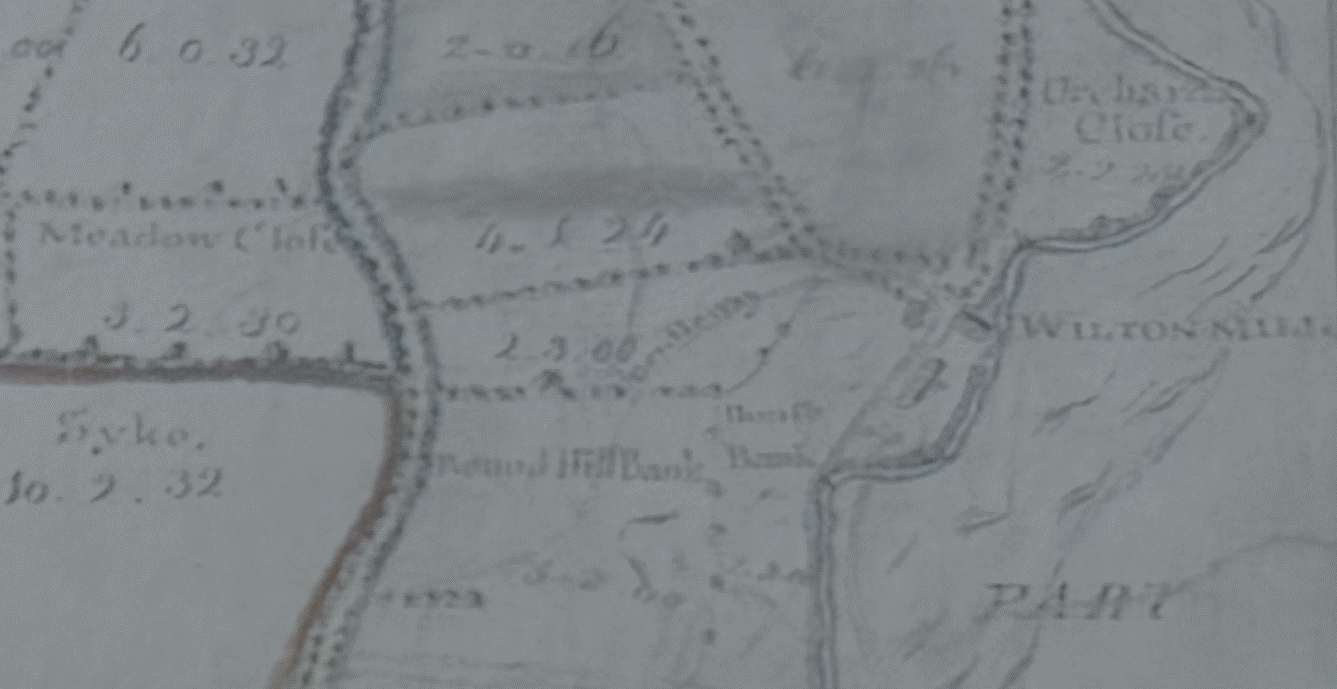
The 1767 map
shows a complex of at least three buildings, wrongly labelled as Wilton Mill.
The mill building is shown extending over the stream and the wheel may have
been contained within a housing. The complex changed little by 1845, but by
1856 it had grown with the addition of a courtyard farm.
A large nineteenth century mill with its outbuilding still stands
on Kilton beck and may occupy much the same location as its medieval
predecessor. It is no longer used for milling purposes. (Robert Daniels.
1990. Kilton: A Survey of Moorland Fringe Township in Medieval Rural
Settlement in North East England. Architectural
and Archaeological Society of Durham and Northumberland Research Report No 2,
edited by B E Vyner, page 55).
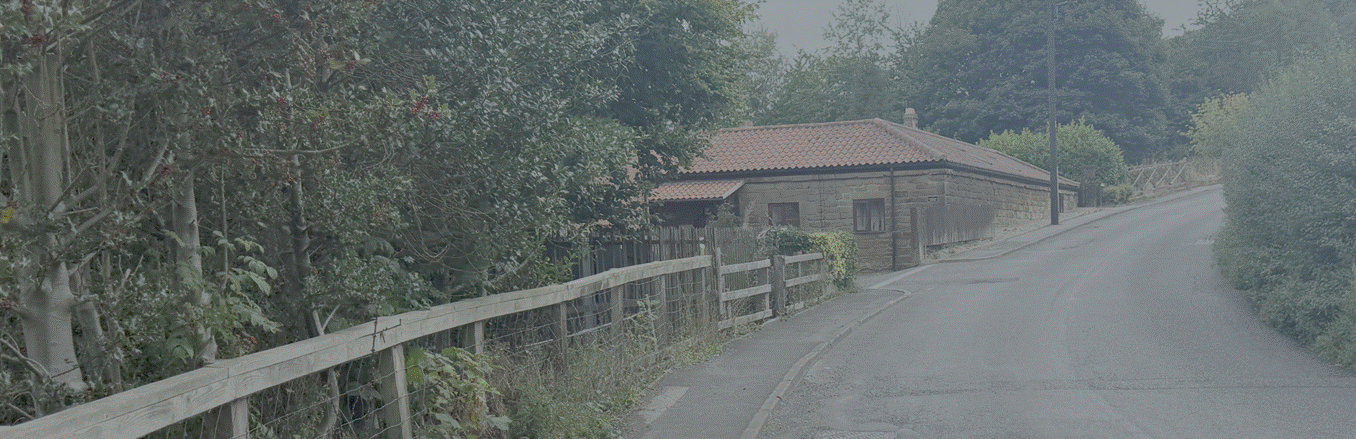
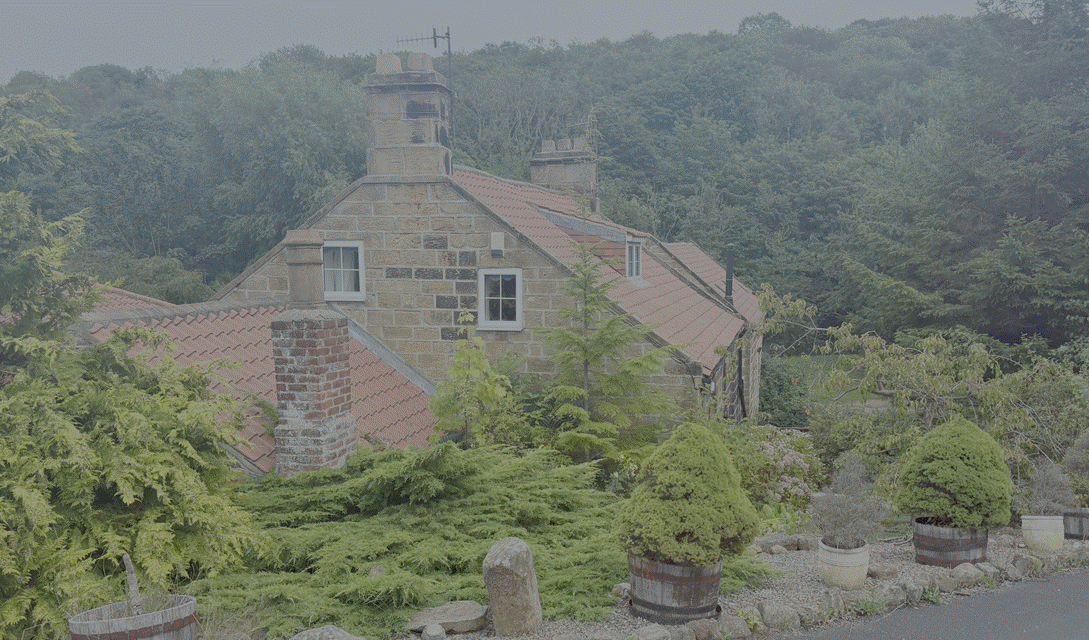
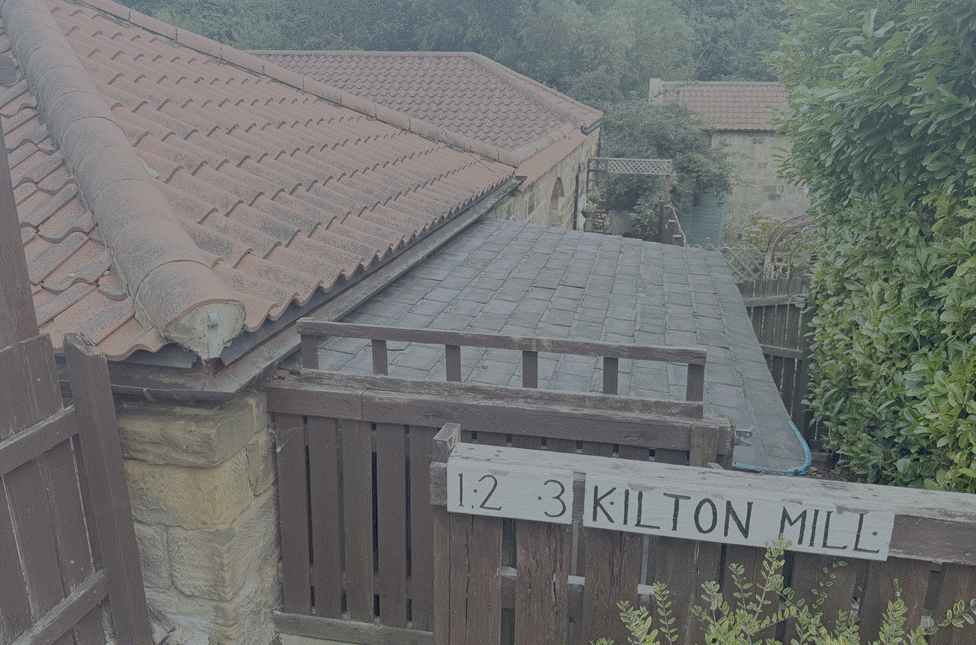
Kilton Mill (situated close to the Skinningrove Land of
Iron) in 2026