Wensleydale
Historical and geographical information
|
Return to the Home Page of the Farndale Family
Website |
The story of one family’s journey through two
thousand years of British History |
The 83 family lines into which the family is divided.
Meet the whole family and how the wider family is related |
Members of the historical family ordered by date of
birth |
Links to other pages with historical research and
related material |
The story of the Bakers of Highfields, the Chapmans,
and other related families |


Dates are in red.
Hyperlinks to
other pages are in dark
blue.
Headlines are in brown.
References and
citations are in turquoise.
Contextual
history is in purple.
This webpage
about the Wensleydale has the
following section headings:
·
Farndale
family history and Wensleydale
· Wensleydale
· The Metcalfes
· Bolton Castle
· Wensley
· Bibliography
The Farndales of
Wensleydale
The Wensleydale Line ae the
descendants of Alfred Farndale (FAR00683), 1897
to 1987
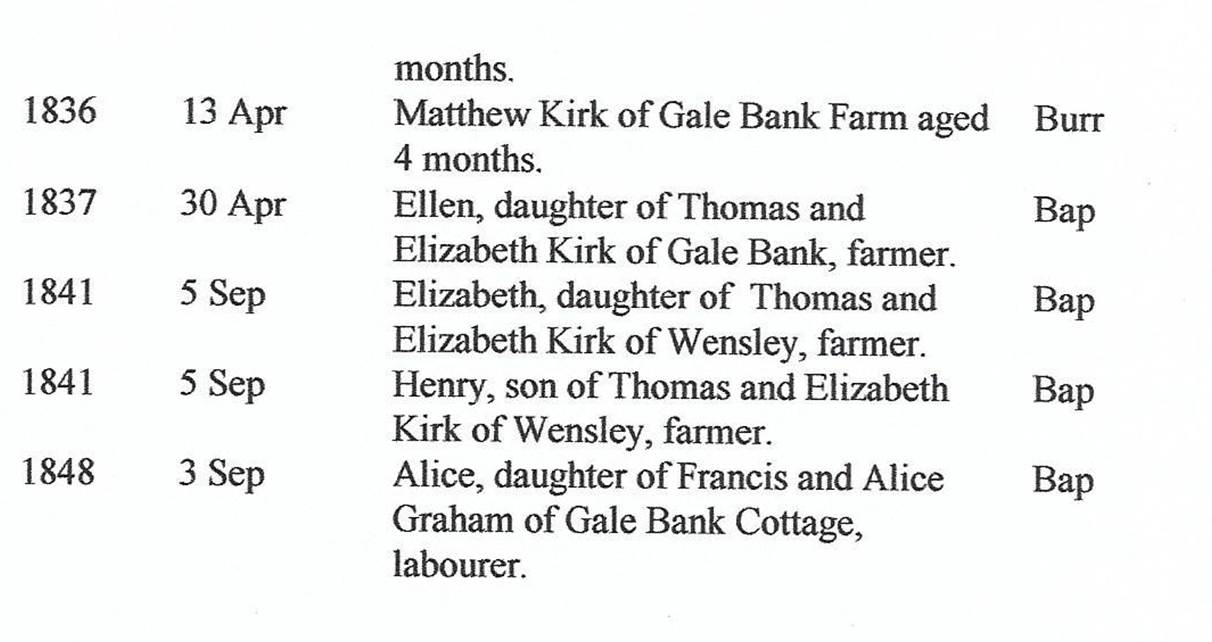
Gale Bank Farm was farmed by Alfred Farndale
(FAR00683),and
his son Geoff (FAR00922).
Wensleydale
Wensleydale is
the dale of the River Ure within the Yorkshire Dales.
Wensleydale
is one of only a few Yorkshire Dales not currently named after its principal
river, but the older name, Yoredale, can
still be seen on some maps and as the Yoredale
Series of geological strata. The dale takes its name from the village
of Wensley, once the market town for the dale. Wensley derives from Woden's ley, or meadow of the pagan god Woden.
The
valley is famous for its cheese, with the main commercial production
at Hawes. Most of the dale is within the Yorkshire Dales National
Park. Part of lower Wensleydale, below East Witton, is within
the Nidderdale Area of Outstanding Natural Beauty
The Metcalfes
Wensleydale
was the home of one of Yorkshire's most famous clans, the Metcalfes, after they emigrated from Dentdale. The Metcalfe Society hold records dating back to Metcalfes living in the area during the 14th century. They
were one of the most prominent families in Yorkshire for more than five
centuries. Sir James Metcalfe (1389–1472), who was born and lived in
Wensleydale, was a captain in the army which fought with King Henry
V in the battle of Agincourt in 1415. A fortified
manor, Nappa Hall near Askrigg was
built by his son Sir Thomas Metcalfe. Metcalfe is still one of the most
common surnames in Yorkshire.
Bolton Castle
Bolton
Castle in the village of Castle Bolton is a notable local
historic site. Building of the structure was begun by Richard le Scrope, Lord
Treasurer and Lord Chancellor to Richard II, in 1378. The building was
finally completed in c.1399; the total cost was approximately 18,000
marks. Mary, Queen of Scots, was imprisoned there for six months, ending
in January 1569, under head keeper Sir Francis Knollys, housed in the
apartment of Henry Scrope; she was allowed a retinue of 51, with 30 housed in
the castle. The story goes that she once escaped and made her way
towards Leyburn but was captured at a spot on "The Shawl"
called "Queen's Gap".
Wensley
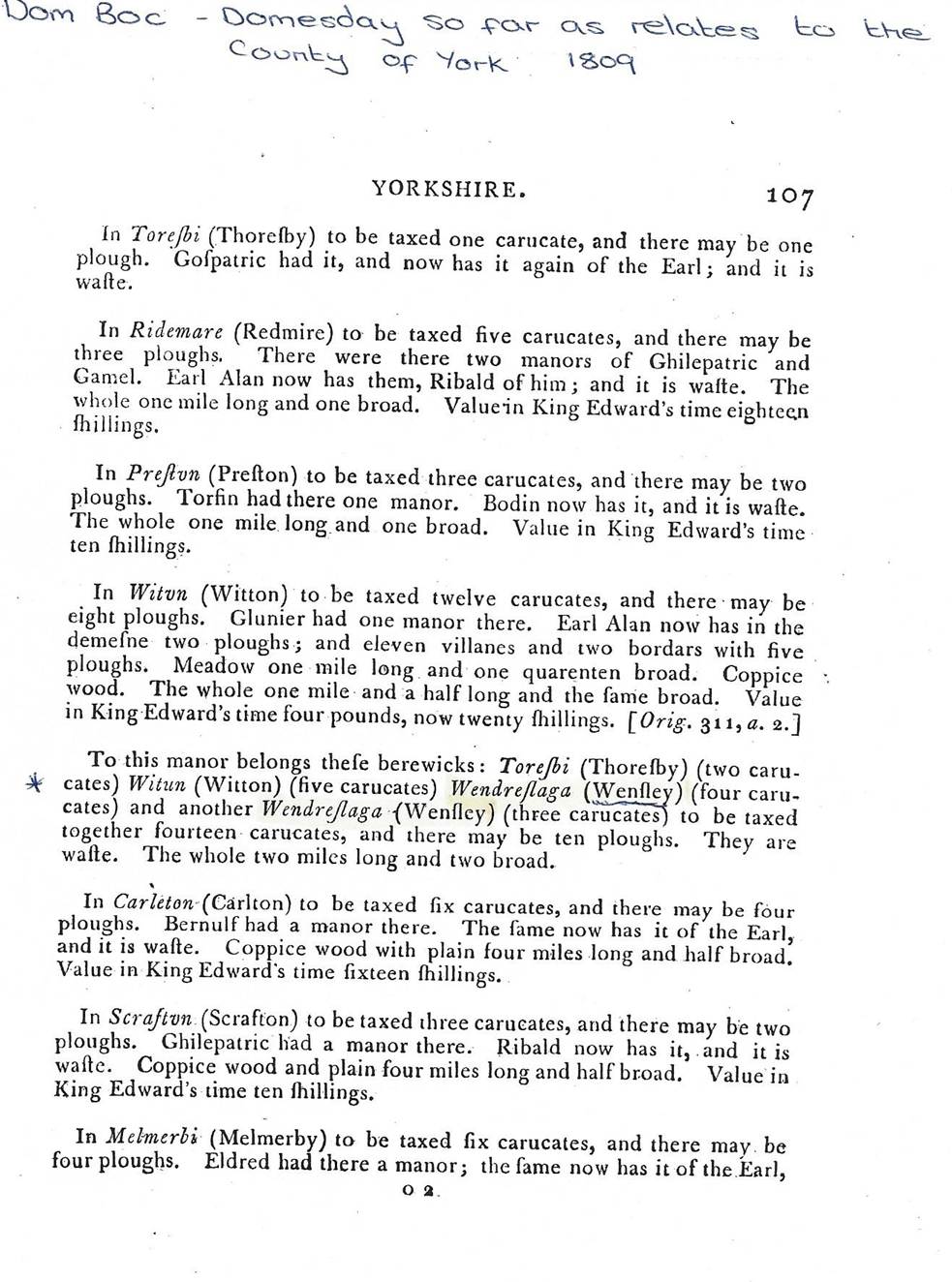
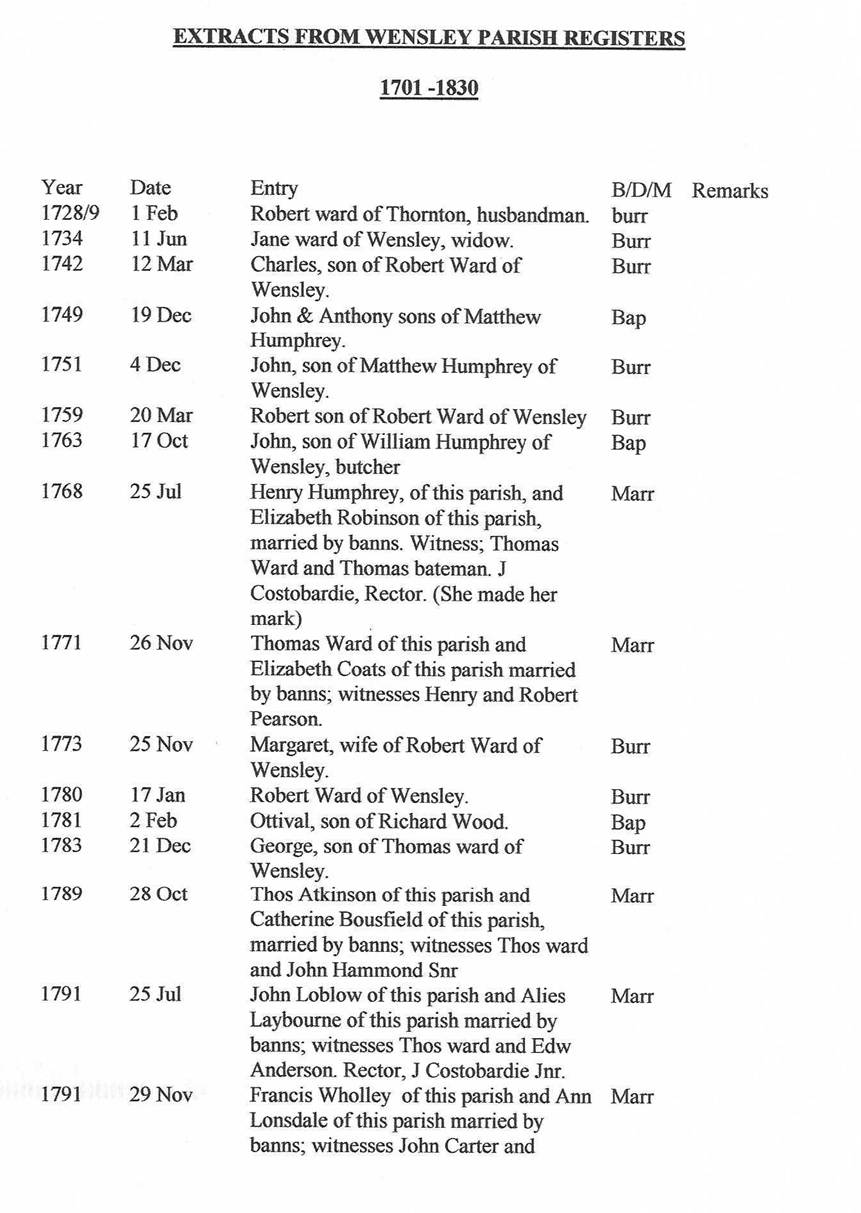
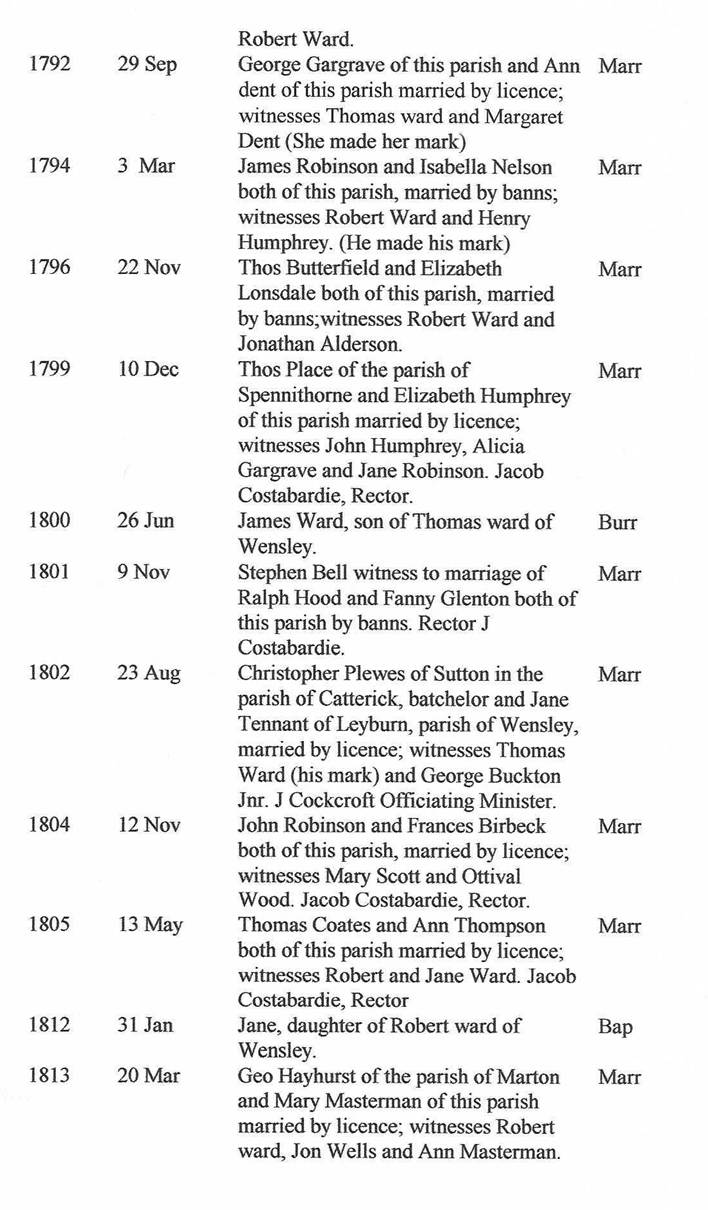
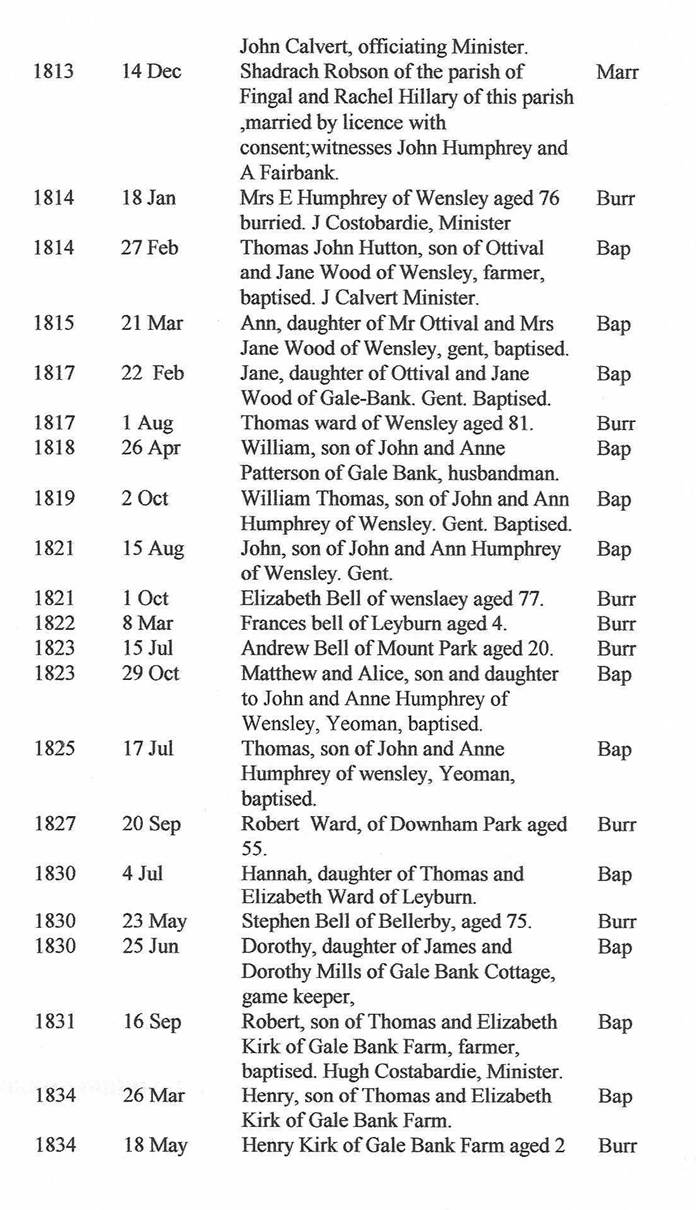
The Victoria County History –
Yorkshire, A History of the County of York North Riding: Volume 1 Parishes:
Wensley, 1914: This parish
contains the townships of Castle Bolton, Leyburn, Preston-under-Scar, Redmire and Wensley, and covers some 8 miles of the
northern slope of Wensleydale, and certain lands of the township of Wensley on
the south side of the river. Its level ranges between 1,800 ft. in the north
and about 350 ft. near the river. Its area is about 14,445 acres, over 7,000 of
these being permanent grass, nearly 825 wood and barely 273 arable land. The
chief crop is hay. A large portion of the parish consists of high moorland. The
subsoil is limestone and the soil various. Coal and lead were worked here in
the 16th and 17th centuries, and old smelting-mills, quarries and limekilns
abound; freestone and lime are still worked. Stations at Leyburn, Wensley and Redmire, on the Northallerton and Hawes branch of the North
Eastern railway, were opened in 1877.
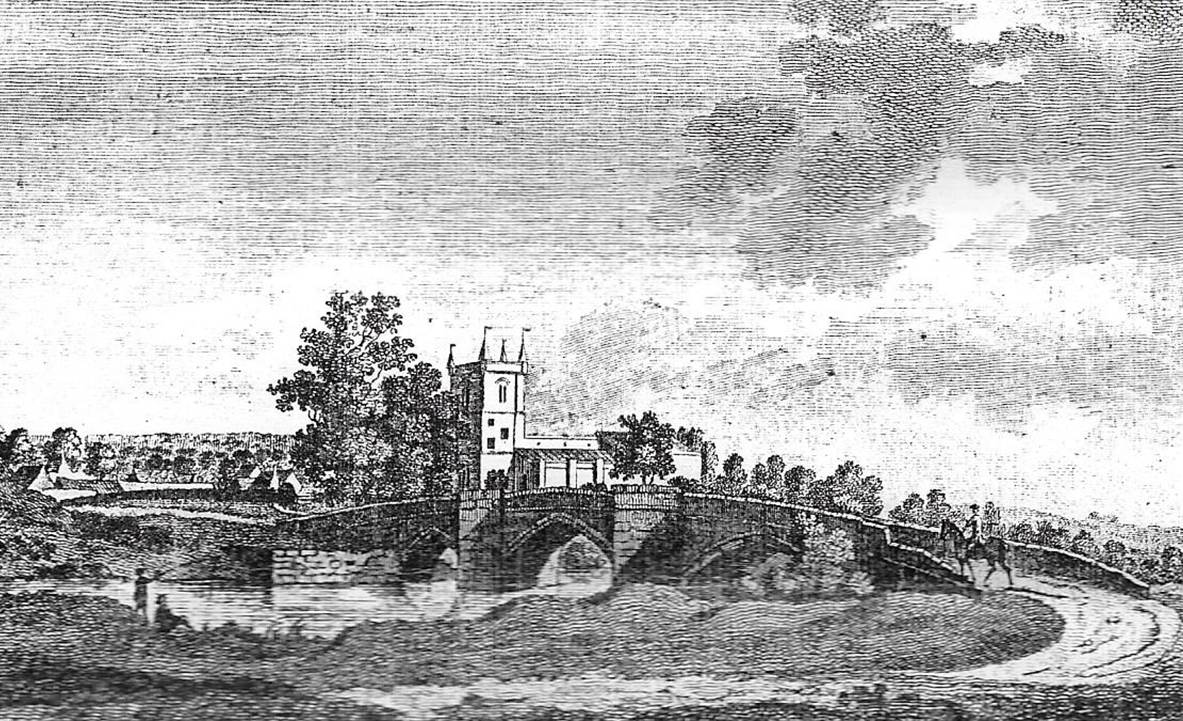
Wensley has been described as the prettiest
village in Wensleydale. It lies on the Ure, at the point where it is crossed by
a 15th-century bridge, probably built with £40 left by Richard first Lord Scrope for the repair of an earlier bridge. It was repaired
in the 17th century and was widened about 1812. The road from the bridge runs
through the village green, with its groups of picturesque cottages. This
probably represents a former market-place, for in 1202 Hugh Malebiche
gave King John a palfrey for having a market here on Thursdays. James de
Wensley in 1307 obtained a market on Wednesdays and an annual fair on the eve,
feast and morrow of the Holy Trinity, this grant being renewed in 1318. Leland
described Wensley as a 'litle, poore
market.' Both fair and market have been long disused. The church is at the
south end of the green and there is an elementary school in the village. On the
west side of the green is Wensley Hall, the residence of the Hon. William G. A.
Orde-Powlett, M.P., J.P.; Wensley House, the residence of Mr. E. T. Umpleby,
Lord Bolton's agent, is in Bolton Park. Between them and faced by a large elm
is the entrance to Bolton Park, whence an avenue leads to Bolton Hall, the seat
of Lord Bolton. The house has projecting wings on the east and west, with steps
leading to the main entrance in the centre. Though the park is mentioned in
1630, the building originally dated from about 1655. It was almost entirely
destroyed by fire in 1902 and has since then been rebuilt. Several highly
decorated lead water-pipes from the previous building dated 1678 are fixed on
the present walls. A mill at Wensley is mentioned in 1203 and 1672.