Richard Dod Baker
1784 to 12 August 1807
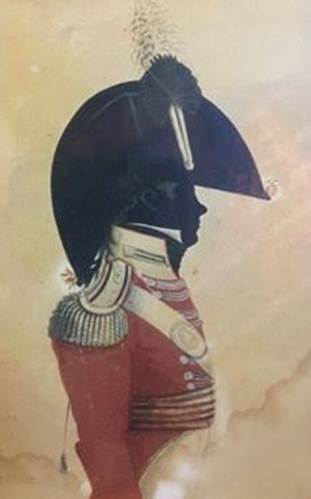
BAK00100
|
Return to the Home Page of the Bakers Family part of the website |
The Bakers of Highfields Story
The Story of the Dods and Bakers and of Highfields,
Fenton House and Hasfield Court. A journey through the history of Cheshire
and Staffordshire, an Anglo-Saxon nobleman who retained his lands after the
Conquest, pottery at Stoke on Trent, an encounter with Elgar, and the history
of an Elizabethan manor house at Audlem |
The family tree of the Bakers of Highfields |
The Family Tree of the Dods, predecessors to the
Bakers of Highfields |
The Bakers of Fenton House and Hasfield
Court
The Family Tree of the pottery Bakers of Stoke on Trent |
The Family Tree of the Bellyse Family |
The main part
of this website tells the story of the Farndale family from Yorkshire Descendants of Arthur Baker, the story of the
Farndale ancestry is told through the main part of this website You can also return to the Farndale
website home page |
The genealogy of the family of James Hall, linked to
the Baker family through marriage to Arthur Baker |
Headlines of
Richard Dod Baker’s life are in brown.
Dates are in red.
Hyperlinks to
other pages are in dark
blue.
References and
citations are in turquoise.
Context and local
history are in purple.
1784
Richard Dod Baker was the eldest
son of Richard Dod and Hannah (nee Hassall) Baker (FAR00083).
He was born in 1784.
Richard Dod, commn’d,
Royal Scots Fusiliers, 1803, transferred to Royal Leicestershire Regiment,
Lieutenant 1804, born 1784, educated Brasenose College, Oxford, died unmarried
1807 (Burke, John and Burke, Sir
Bernard (1836)(Eighteenth Edition, 1972), Bellyse
Baker of Highfields in Burke’s Landed Gentry, Volume 3, pages
35 to 38).
1801
Richard entered Brasenose College,
Oxford and matriculated in October 1801.
Baker, Richard Dod, son of
Richard, of Leominster, county Hereford, gentleman, Brasenose College,
matriculated 25 March 1801, aged 17 (Oxford University Alumni, Volume
1, 1715 to 1886)
Richard's eldest son, Richard Dod
Baker, went to Brasenose college, Oxford, from where he wrote a number of rather interesting letters to his cousins
Elizabeth and Arabella Thorley, of Chetwynd Rectory, Newport, daughters of his
father's younger sister Mary. On getting there in 1801 he said “After a very
pleasant journey we arrived at this celebrated seat of learning on Thursday
last, and although the college rules did not exact our attention till the 17th,
I found everything very comfortable. At Stafford we waited on Mr Whalley. He
showed us a grand piano, which my father purchased for 65 Guineas, it appeared
to me a good toned one, but when Bessy comes to finger it, we can form a better
judgement. On Friday my father introduced me to a Mrs. Smith, a lady of
considerable property in the neighbourhood, such an acquaintance will be very
pleasant, at least very different from the noisy riot of a college evening;
without company of some sort, Oxford, I assure you, would be quite intolerable,
and the man who pens himself up in his attice pouring
everlastingly over his books, can be compared to nothing better than “Owl in a Desert”.
Study, however, affords many an hour's rational amusement, but like anything
else there can be too much of it...” Not ideal academic material, the
reader may think. In his next letter dated 14th October 1801, he described his
rooms and life at Oxford; “I took possession of my rooms on Saturday, and I
assure you they are much more comfortable than I expected, my sitting room is
as large as, if not larger than, your little Parlour and to appearance, much
more comfortable a Bureau, 5 chairs and a table in it, my drawing room (for so
I please to call it) is smaller but neater, a glass door out of my sitting room
to it, with two chairs and two tables, my bedroom is a little larger than the
sitting room with a very comfortable bed, bureau etc, altogether, as if it were
our 3 Parlours at Highfields, but a door to each room out of my S.R. I have
been this morning with one of the tutors to buy myself a set of tea things,
candle sticks, silver teaspoons, sheets, towels etc, and though Oxford is the
most imposing place in the world could not, I think, offer us much in such
small articles. Figure to yourselves a venerable elderly man and myself with
our caps and gowns, choosing and buying the best China, good judges, I'm sure I
could not tell China from common ware.
We had a grand
illumination on Monday night last; High Street (the most beautiful in the
Kingdom) cut an elegant appearance and the different Emblems of Peace etc in
transparencies greatly aided add it to the splendour of it. At 7 o’clock in the
evening the Oxford Royal Volunteers attended by their band and two cannons
fired a Fene de Joye on the occasion. The people seem’d
mad, and even now cannons are firing. The Proctors (whose office I dare say you
have heard of) were very busy that night, most of the Oxonians went without
their caps and gowns, but I did not, though I was afraid of being
distinguished, that is, if any of the Mob discovered you to be an Oxonian or a
Collegian, they will often throw a squib into one’s Gown, which makes great fun
for them, and we are often insulted by some of them, I am told, though I have
never experienced any of it.”
In a letter dated 10th
December 1801, he talks of examinations; “I dare say, little as you know of
this seat of learning, you have heard that our examinations for degrees has
always hitherto being laughed at as trifling and a mere matter of form, but
they have now assumed a very serious aspect, and as your cousin is to take one,
you will not deem the following short account of the new examinations and which
I must undergo at all improper. There is now a large room fitted up for the
purpose, which will contain, I should imagine 300 persons. There are benches
for the vice chancellor, proctors, doctors, heads of colleges and halls etc,
who are all required to attend at this most solemn occasion and about 200
students (word missing?) there are perhaps 6 examined at a time, and
this occupies from 9 in the morning till 3 in the afternoon; so that whoever
thinks of taking the a degree must fag.”
(Baker, J Bellyse (1982), Highfields, Audlem: Sixteenth
Century Home of the Dod and Baker Families,
Audlem District History Society, page 19 to 23).
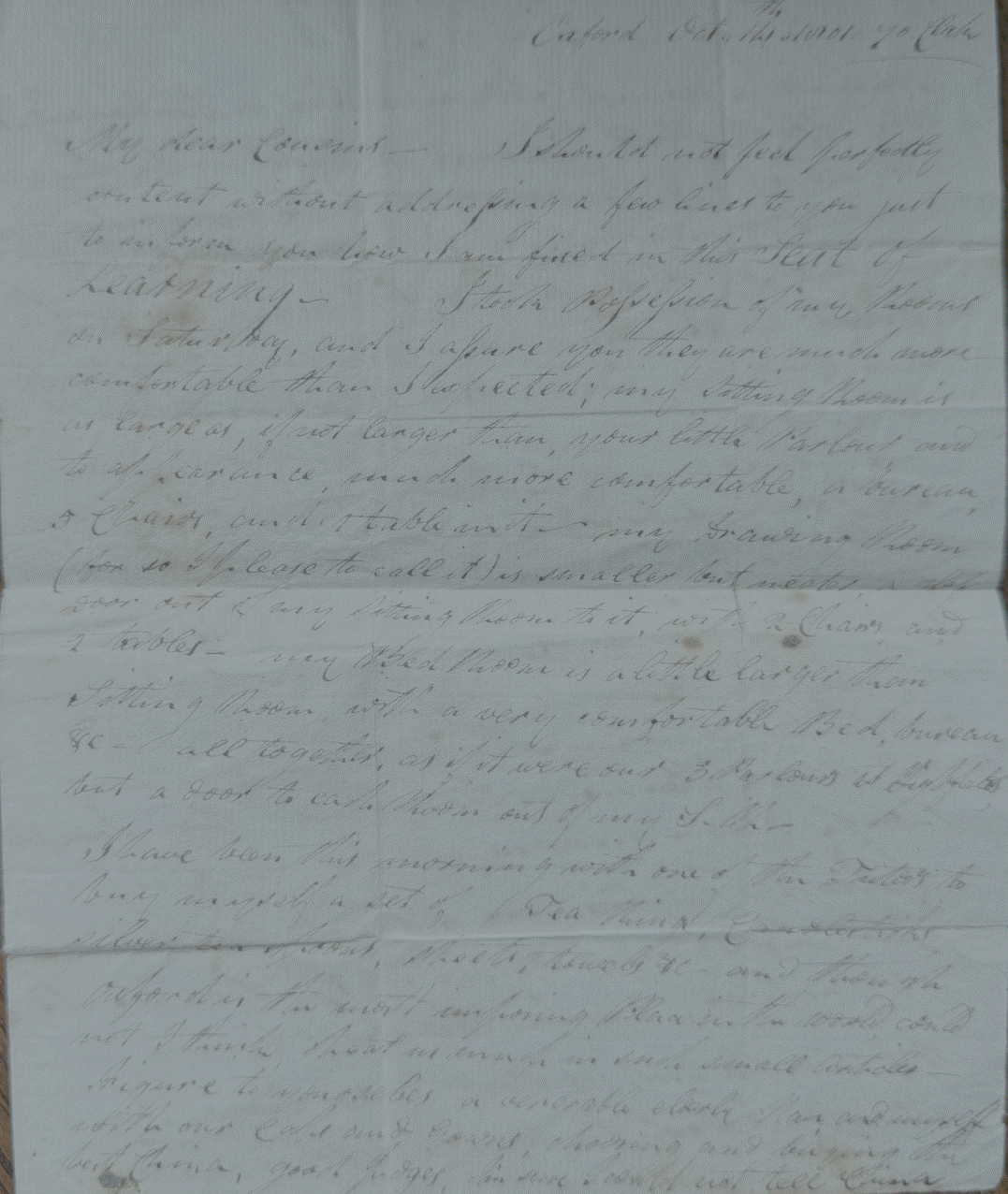
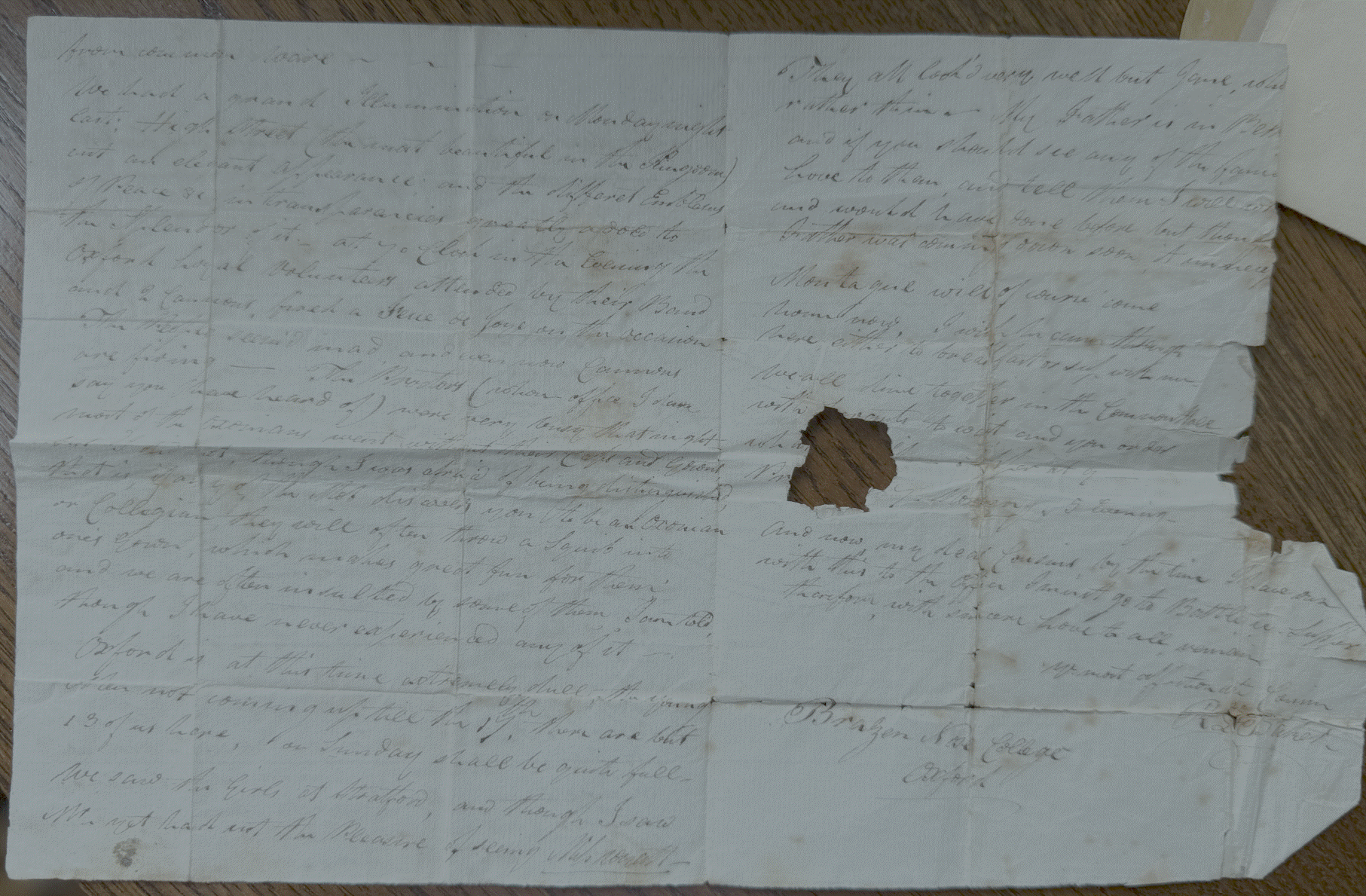
(Richard Dod Baker
to his cousins, the Misses Thorley, 14 October 1801, Baker Records, 44)
(Richard Dod Baker
to his cousin Miss Thorley undated 1801, Baker Records 43)
(Richard Dod Baker
to his cousin, Miss Thorley, 10 December 1801, Baker Records, 45)
Brasenose College (pronounced Braise-Nose)
is one of the colleges of the University of Oxford. The history of Brasenose
College, Oxford stretches back to 1509, when the college was founded on the
site of Brasenose Hall, a medieval academic hall whose name is first mentioned
in 1279. Its name is believed to derive from the name of a brass or bronze
knocker that adorned the hall's door. The library and chapel were added in the
mid-17th century. The college was associated with Lancashire and Cheshire, the
county origins of its two founders – Sir Richard Sutton and the Bishop of
Lincoln, William Smyth – a link which was maintained strongly until the latter
half of the twentieth century. After 1785 the college prospered under Principal
William Cleaver. The college began to be populated by gentlemen, its income
doubling between 1790 and 1810, and achieved considerable academic success.
In around 1801, Brasenose
College, Oxford was transitioning from a quiet, traditional institution into a
fashionable and prestigious college. Governed by bachelor fellows in holy
orders, it catered increasingly to wealthy gentlemen commoners, maintaining a
classic curriculum centred on classics, mathematics, and divinity just before
the sweeping nineteenth century academic and athletic shifts.
The college was strictly closed
to women and required conformity to the Church of England, run entirely by
resident fellows.
Around this period, Brasenose
began attracting a wealthier demographic of students, shifting away from poorer
scholars and gaining a notable waiting list alongside Christ Church and Oriel.
The educational routine relied heavily on traditional texts, Greek and Latin
classics, and theology, predating the introduction of modern competitive
honours exams and widespread sporting dominance.
The layout benefited immensely
from its prime position beside Radcliffe Square and the Radcliffe Camera,
anchoring its physical prominence in central Oxford.
Just prior to 1801, college
fellow Ralph Churton published a notable historical study in 1800 on the
original founders, Bishop William Smyth and Sir Richard Sutton.
1803
Richard was commissioned into the
Royal Scots Fusiliers in 1803.
1804
Richard transferred to the 17th
Leicestershire Regiment. He sailed with his Regiment for India in July 1804 on
board the Worcester. (Baker, J Bellyse (1982), Highfields,
Audlem: Sixteenth Century Home of the Dod and Baker Families, Audlem
District History Society, page 23).
In July 1804, the 17th Regiment of
Foot, later the Royal Leicestershire Regiment, embarked from England on a
transport journey to India. This voyage marked the beginning of an historic eighteen year deployment to the Indian subcontinent, setting
the stage for gruelling campaigns that eventually earned the unit its
prestigious Royal Tiger badge. The
Regiment sailed aboard ships like the East Indiaman or transport Worcester
toward Madras and Fort William, arriving by late 1804. Tropical disease and high sickness
rates struck the men hard shortly after their arrival in India through 1805.
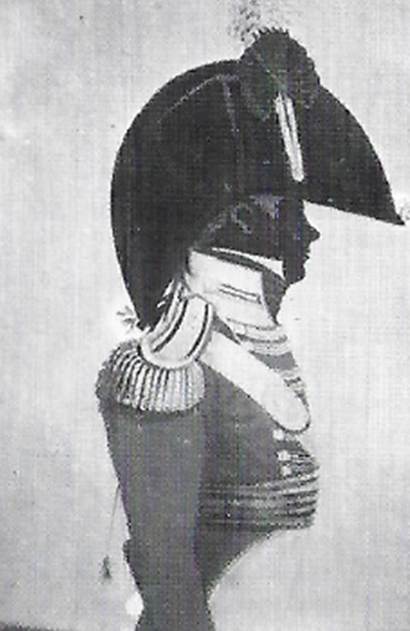
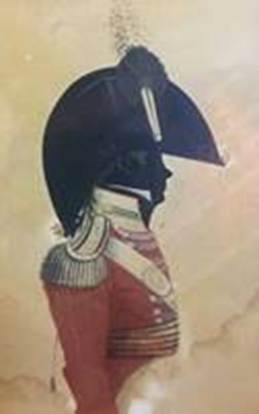
Coloured silhouette of Lt Richard
Dod Baker (1784-1806) by J Buncombe, who specialised in painting military and
naval officers before they went overseas to serve in the Napoleonic wars
(Richard Dod Baker
to his cousin, Miss Elizabeth Thorley, 7 January 1804, Baker Records, 46)
It was the year before Trafalgar.
He wrote again to his cousin;
“Highfields
Wednesday 18th Ap 1804
Dear Elizabeth
The necessity of joining the Regt.
immediately prevents me coming over to Chetwynd before my departure. I suppose
you have heard from Montague (her
brother, an officer in the same regiment) or will soon, to inform you of our
destination. I received a letter from him on Monday desiring me to hasten my
journey to Dublin in consequence of orders from England. He adds “When you take
leave off them at Chetwynd assured them all of the trust I ever have in the
protection of that Providence which has kindly watched over them and myself
through life and that I in nothing doubt a happy return among them.” For my own
part I think myself fortunate as I am in the surest road to promotion and all
my friends will, I trust, be reconciled to the present separation in the
prospect of my return to England hereafter with the consciousness of having
acquitted myself in the duties of my profession. As you may not have yet heard
from my good friend I must inform you the 17th has
received orders from England to hold men in immediate readiness to embark for the
East Indies, place of destination Bombay. For me to offer you any consolation
would be only an insult to your better sense which will tend to teach you how
necessary it is for our well being to acquiescence in
the will of an unerring Providence. I am happy to add my mother is much better
reconciled to it than I would have expected. Be assured it will be a very great
addition to my happiness to hear of your welfare. I am now going to Drayton and
on the evening shall place myself in the mail at Woore.
Being so hurried you will excuse this scroll. Give my best duty to my good
Aunts and love to all my Cousins when you write, and wishing you all the happiness in this world can
bestow believe me my dear Betsey.
Your affectionate friend and
cousin
Richard Dodd Baker
I hope to reach Dublin this week.
Adieu.”
(Richard Dod Baker
to his cousin, Miss Elizabeth Thorley, 18 April 1804, Baker Records, 47)
(Richard Dod Baker
to his brother, William Baker of Highfields, 10 June 1804, Baker Records 49)
They set sail for India in July,
when he wrote; “We embarked on board our respective ships last Wednesday and
it is the Admiral's intention should the wind be all favourable to sail this
Evening. I am just arrived on shore with Captain
Whittey and others in an open Boat thoroughly drenched and I lament my time
will not allow me to express my sentiments in the manner I would wish,” a
rather ambiguous observation! The names of the ships in the convoy were he tells us; “the Lord Hawkesbury, the Worcester (on
which I am on board), the Duke of Montrose and the Airey Castle under convoy of
the Culloden 74 guns Sir Edward Pellew Commander.”
Although this letter was written
from Portsmouth, the ship sailed from the Isle of Wight, where he sat for his
silhouette portrait, by the Newport artist, J Buncombe. The picture hangs at
Highfields with his dress sword. During the voyage he kept his own log book, a Journal of a Voyage to the East Indies 1804,
in which one can follow the day-to-day happenings on board, followed by the
course and the number of knots covered from noon to noon. The greatest distance
covered was 215 knots “strong breezes, cloudy with small rain”. 150 to
170 was more usual, about seven or eight knots an hour. Most of the days were
comparatively uneventful; however on September 8th we
read: “fresh breezes and pleasant. At 10 AM a strange sail seen to the
westward. Signal made by the Admiral for the United Kingdom and Alexander to chase
her. Suppose her an American. At 2 PM inquire for the Fleet to change their
course to east I/I South. At 5 PM the Lord Hawkesbury and Baring reprimanded by
the Commodore for not paying more attention to the signals.” The United
Kingdom, Alexander and Baring had joined the convoy at Cowes.
The voyage ended on Wednesday, December 12th. “At 10 AM anchored off Fort
William. At 2 PM disembarked with the detachment and marched into barracks at
Fort William.”
(Baker, J Bellyse (1982), Highfields, Audlem: Sixteenth
Century Home of the Dod and Baker Families,
Audlem District History Society, page 23 to 24).
This booklet also includes
fascinating extracts from old financial accounts, memoranda, and also letters
and journals, including those from the early 1800s written by Richard Dodd
Baker junior while an undergraduate at Oxford and later when en route to India with the 17th Leicestershire Regiment,
the year before Trafalgar (Evening Sentinel, 29 November
1982).
John Buncombe (c 1758 to 1837) was
a highly distinct British silhouette artist who spent much of his working life
at Pyle Street in Newport on the Isle of Wight. Flourishing between roughly
1795 and 1830, Buncombe carved out a highly successful and lucrative niche for
himself by capturing the profiles of British military personnel stationed at or
passing through the island. He would paint the face and hair of the subject in
solid, stark black, but meticulously illustrate their regimental dress, gold
and silver epaulettes, cross belts, and uniform button details in vivid, full
colour, especially bright scarlet and navy blue. (John Buncombe, Profiles of
the Past).
1806
Richard died on his way home from
India on 12 August 1806 (Baker, J Bellyse (1982), Highfields,
Audlem: Sixteenth Century Home of the Dod and Baker Families, Audlem
District History Society, page 25).
(Administration of the goods of Richard Dod Baker,
deceased, 1807, Baker Records 42).