Richard (“Dick”) Dod Baker
Alias Hassall while and architect and surveyor at Leominster
20 July 1743 (baptised) to 7 May 1803
Surveyor and Architect
BAK00083
|
Return to the Home Page of the Bakers Family part of the website |
The Bakers of Highfields Story
The Story of the Dods and Bakers and of Highfields, Fenton
House and Hasfield Court. A journey through the history of Cheshire and
Staffordshire, an Anglo-Saxon nobleman who retained his lands after the
Conquest, pottery at Stoke on Trent, an encounter with Elgar, and the history
of an Elizabethan manor house at Audlem |
The family tree of the Bakers of Highfields |
The Family Tree of the Dods, predecessors to the
Bakers of Highfields |
The Bakers of Fenton House and Hasfield
Court
The Family Tree of the pottery Bakers of Stoke on Trent |
The Family Tree of the Bellyse Family |
The main part
of this website tells the story of the Farndale family from Yorkshire Descendants of Arthur Baker, the story of the
Farndale ancestry is told through the main part of this website You can also return to the Farndale
website home page |
The genealogy of the family of James Hall, linked to
the Baker family through marriage to Arthur Baker |
Headlines of Dick
Baker’s life are in brown.
Dates are in red.
Hyperlinks to
other pages are in dark
blue.
References and citations
are in turquoise.
Context and local
history are in purple.
1743
Richard Dod Baker was the fourth
child and eldest son of William and Jane (nee Dod) Baker (FAR00068). Richard Baker was baptised at St Mary Magdelene, Bridgnorth on 20
July 1743.

1754
21 April
1754, Son Richard and daughter Mary were inoculated with Small
Pox. They both broke out about 9th May at night. Both did
well (Account Book).
Richard was educated at Repton School. His father William had designed
a house at Wood Eaton for the Rev William Astley, the headmaster of Repton
School. William sent his oldest son, Richard, to Repton and his fees and board
for the first two years were paid by deduction from what the headmaster owed
the architect.
Richard, who followed his father
in the profession of architect, was sent to school at Repton, where the
Reverend William Astley was then headmaster. A few months before eleven year old Dick was taken there for his first term, his
father had begun to build for Mr Astley a house at Wood Eaton, and the school
fees for the first two years (£15 12s 2d and £15 7s 7d) were paid by simple
subtraction from the sums which the headmaster owed his architect. Pocket money
for Dick is a recurring item and occasionally there was a present for the
headmaster's wife: “Paid ½ pound tea for Mrs Astley 9s”. See also Oswald, Arthur (1954), William
Baker of Audlem, Architect, in Collections for a History of
Staffordshire, The Staffordshire Record Society, page 111.
Richard Dod Baker, of Highfields,
Audlem, previously of Stratford-on-Avon and Leominster, born 1743, educated
Repton, married Hannah (died 1826), daughter of John Hassall, of Nantwich, and
died 7 May 1823 (sic, recte 1803), having had issue (Burke, John and Burke, Sir
Bernard (1836)(Eighteenth Edition, 1972), Bellyse
Baker of Highfields in Burke’s Landed Gentry, Volume 3, pages
35 to 38).
1771
Richard Baker (1743–1803), continued William Baker’s practice after his father's death in 1771. Richard seems to have practised mainly as a building surveyor, and there are few buildings that
he designed.
William Baker’s eldest son,
Richard Dod Baker (1743 to 1803), followed in his father’s profession as an
architect and it is likely that he was responsible for modernising the exterior
of the house in the late eighteenth century (Robinson, John Martin
(1991), Highfields, Audlem, Cheshire, Seat of John Bellyse Baker,
Country Life 31 January 1991, page 49).
Richard inherited Highfields but practised as an architect at
Stratford upon Avon where his children were born. It is thought that Richard
had the central doorway at the entrance front and the panelling in the hall
installed. Richard’s older sister,
Charity Baker (BAK00081), her husband having died young,
returned to Highfields and managed the estate for her father and later
for her brother while he was away. Charity had as reputation as a forceful lady
and later became known in Audlem as Madam Barrow.
Following the death of William in
1771, Highfields passed to his elder son, Richard Dod Baker. To his younger son
William, he left the estate and manor of Fenton Culvert, Staffordshire and a pottery
works at Fenton. (Baker, J Bellyse (1982), Highfields,
Audlem: Sixteenth Century Home of the Dod and Baker Families, Audlem
District History Society, page 14).
When William
Baker, his father died, Richard Dod Baker continued in practice until his
death, when his elder son, Richard Baker (1743-1803) was assisting him. Richard
is, by contrast with his father, a shadowy figure. He was educated at Repton
School but did not attend a University and became
assistant to his father in his architectural and surveying practice. After he
succeeded to the business in 1771, its architectural output more
or less ceased: he probably did not inherit his father's creative gifts and he certainly did not share his practical
experience of building. He seems to have spent some of his early years in
Leominster, and it may be that his wife came from that town, as he is said to
have used her maiden surname (Hassall) while living there. After his
mother died in 1783 he moved to Highfields, and he was
probably responsible for the modernisation of the house which took place around
that time. When he died at the relatively young of sixty in 1803 [this
seems to be wrong as he died in 1823 – see below?], he described himself in
his will as 'architect' rather than 'gentleman'. He had left marriage and
children rather late in life and his heir was a teenage son, William Baker
(1787-1863), who was a pupil at Shrewsbury School. He too seems to have used
his mother's maiden name from time to time, and when he was married in 1813 he was called William Baker alias Hassall. He is not
known to have followed his father and grandfather into architectural practice
or surveying, but one of his five sons, Thomas Dod Baker (1830-80) took up the
profession again and became Borough Architect of Kidderminster; several of the
others became lawyers. (Research by Nicholas
Kingsley).
The family lived at Leominster
until he inherited Highfields from
his father on 29 October 1771.
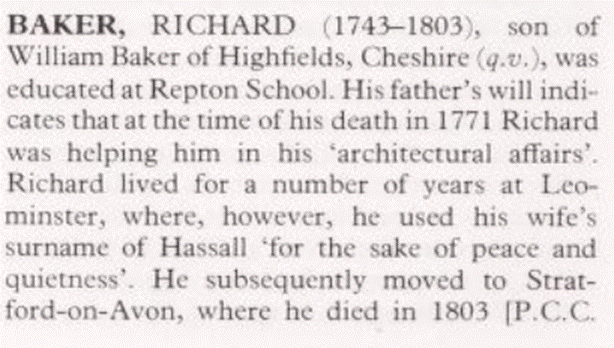
(Colvin, H A (1995). Biographical Dictionary of British
Architects 1600–1840, Yale University Press, 3rd edition London, page
82)
1777
According to the
Manchester Mercury of that time, on Sunday, 14th September 1777 the
worshippers at various churches and chapels in both Cheshire and Lancashire were
“disturbed from their devotions by the unwonted experience of a shock of an
earthquake”. Apparently, the vibration was sufficiently strong to set the bells
ringing at the parish church in Manchester. This did not happen at Audlem, but
the church records do include an entry in September that “when the People were
in church a great earthquake happened which should the Fabrick so that a large
stone fell out of one of the windows of the steeple.” (Latham, Frank (1997), Audlem: The History of a Cheshire
Parish and its seventeen townships, page 41).
1783
Richard Baker married Hannah Hassall (1758-1826?), daughter of John
Hassall of Nantwich, Cheshire.
Richard Dod Baker, born in 1743,
married Hannah, the daughter of John Hassall of Nantwich. He practised as an
architect at Stratford upon Avon where his children were, for some reason,
baptised in the name of Hassall. This was done, he explained in his will, “for
peace and quietness”. On the face of it, it would seem to have been an
excellent way of preventing it. His sister, Charity,
having married Lawrence Barrow, a banker who died young, returned to
Highfields. She managed the estate for her father and later brother, freeing
them for their architectural work. She was, in her later years, and she lived
to be seventy eight, an extremely forceful lady,
always known in Audlem as “Madam Barrow”. (Baker, J Bellyse
(1982), Highfields,
Audlem: Sixteenth Century Home of the Dod and Baker Families, Audlem
District History Society, page 19).
The Hassall family were prominent
medieval landowners who served as lords of the manor for Hankelow and the
neighbouring settlement of Hassall, both located in the Hundred
of Nantwich. The Hassalls established a long-running
family line centred in Hankelow starting as early as the fourteenth century,
with genealogical records tracking generations of Hassalls
of Hankelow (such as Robert, Hugh, and Richard Hassall) marrying into regional
gentry. (Latham F A, Editor
(1997), Audlem, The History of a Cheshire Parish and its five townships,
Local History Group, page 24).
They had six children
Richard was an architect and
surveyor at Leominster. While the family was a Leominster, Richard used his
wife's maiden maiden name, Hassal.
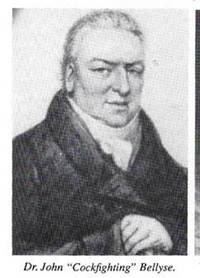
At about this time a new doctor
came to the village, Dr John Bellyse, better known as “Cockfighting Bellyse”. So
much has been written about this colourful, if rather questionable, character
that it will suffice to say that he was Cheshire 's most successful cockfighter
at a time when it was, along with horse racing and fox hunting, England’s
national sport. (Baker, J Bellyse
(1982), Highfields,
Audlem: Sixteenth Century Home of the Dod and Baker Families, Audlem
District History Society, page 19).
Richard Dod Baker, born in 1743,
married Hannah, the daughter of John Hassall of Nantwich. He practised as an architect
at Stratford upon Avon where his children were, for some reason, baptised in
the name of Hassall. This was done, he explained in his will, “for peace and
quietness”. On the face of it, it would seem to have been an excellent way
of preventing it. His sister, Charity, having
married Lawrence Barrow, a banker who died young, returned to Highfields. She
managed the estate for her father and later brother, freeing them for their architectural
work. She was, in her later years, and she lived to be seventy
eight, an extremely forceful lady, always known in Audlem as “Madam
Barrow”. (Highfields, Audlem, 16th century home of
the Dod and Baker families, John Bellyse Baker, 1982.)
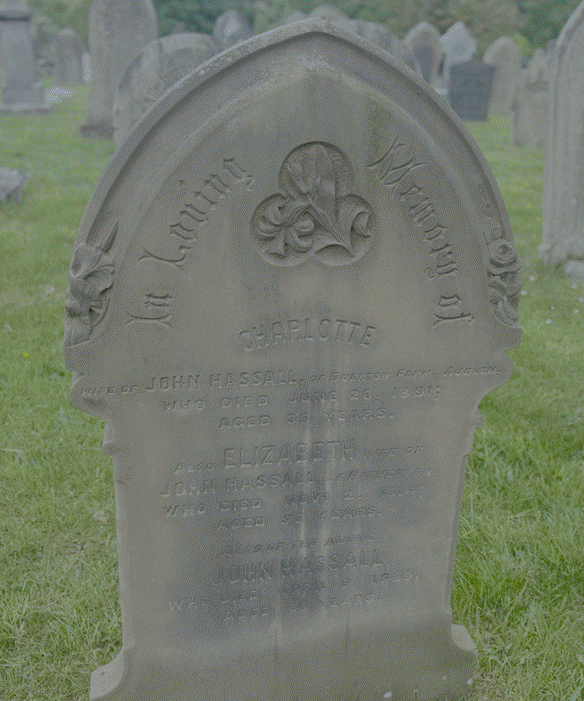
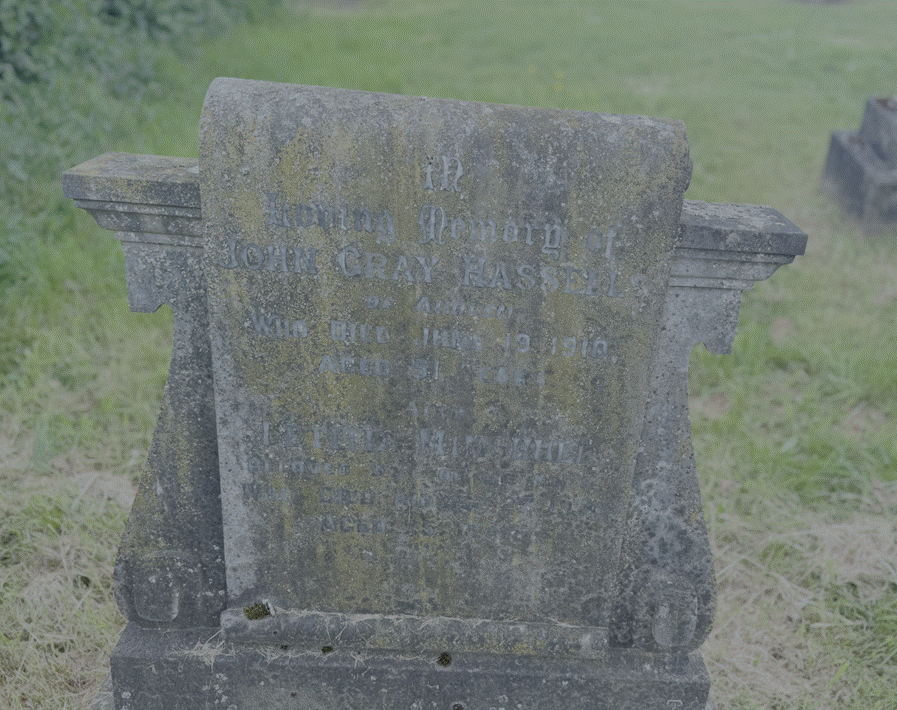
Members of the Hassall family
buried at Audlem cemetery
1784
Richard Dod Baker (1784 to 1807)(BAK00100)
was born in 1784.
Adam's Weekly Courant, 5 October
1784: Note: The Manor of
Basford (which is distant from Nantwich 5 miles, Sandbach 8, and Newcastle 10
miles) is bounded by a ring fence, and is very compact and extensive, and hath
great right of common, particularly Basford heath, which is very large and extensive,
and is situated in the healthy and fine sporting county, where there is plenty
of game, and the several buildings in this lot are in good repair. For further
particulars inquire of Messrs Kent and Darlington, attorneys, Clifford’s Inn, London;
Mr Richard Baker, of Highfields, near Audlem, Cheshire; or Mr Joseph Skerrett,
auctioneer, in Nantwich.
1785
Hannah Mary Baker (1785 to 1851)(BAK00101)
who later married Dr John Bellyse was born in 1785.
1787
William Baker (1787 to 1863)(BAK00102)
who later married Ann Hough was born in 1787.
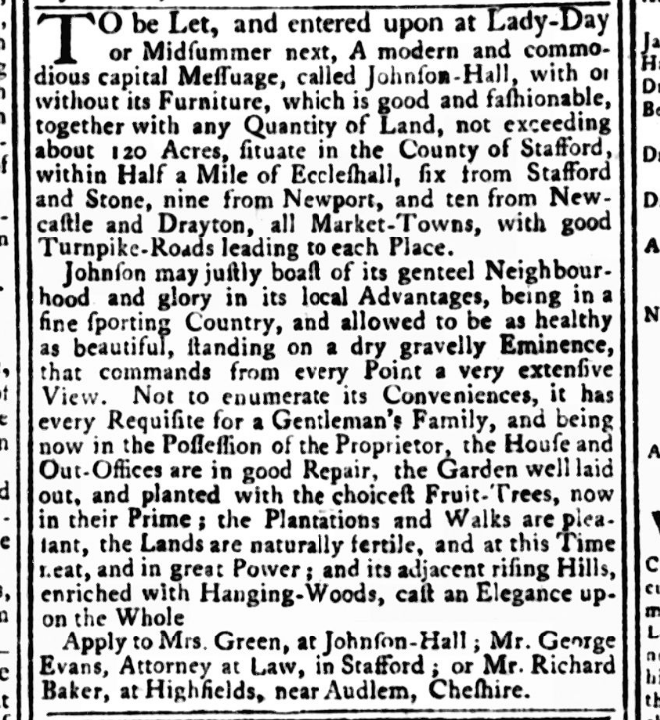
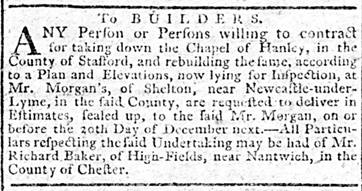
(Chester Courant, 26 March 1776)
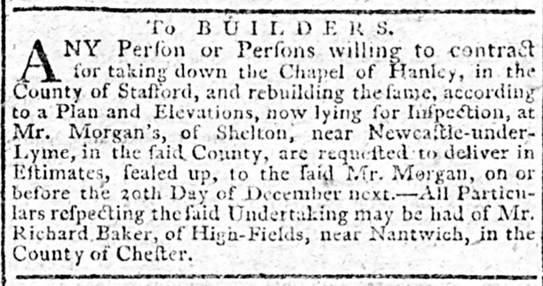
TO BUILDERS. Any person or persons
willing to contract for taking down the Chapel of Hanley, in the county of
Stafford, and rebuilding the same, according to a plan and elevations, now
lying for inspection, at Mr Morgan’s of Shelton, near Newcastle under Lyme, in
the said county, are requested to deliver in estimates, sealed up, to the said
Mr Morgan, on or before the 20th day of December next. All particulars
respecting the said undertaking may be had of Mr Richard Baker, of Highfields,
near Nantwich, in the county of Chester. (Aris's Birmingham Gazette, 22
October 1787).
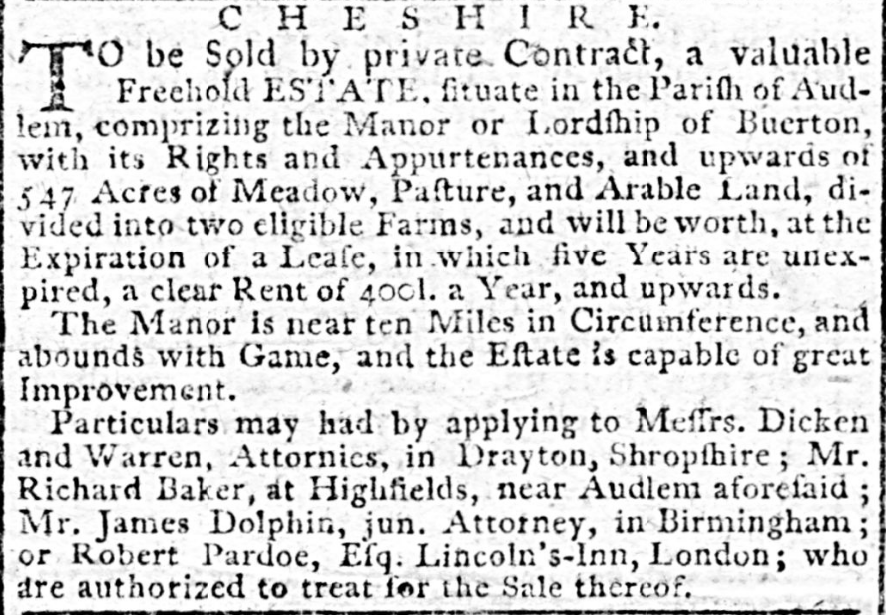
(Aris's Birmingham Gazette, 17 September and 8
October 1787).
1790
Jane Baker (1790 to 1849) (BAK00103) was
born in 1790.
1791
Mary Baker (b 1791)(BAK00104) was born in 1791.
1792
James Baker (1792 to 1818)(BAK00105) was born
in 1792.
1797
Chester Chronicle, 13 October
1797: CHESHIRE GAME DUTY.
Certificates signed from the 6th September,
to the 29th, both days inclusive … Baker, Richard, Highfields,. Parish of Audlem, Esq …
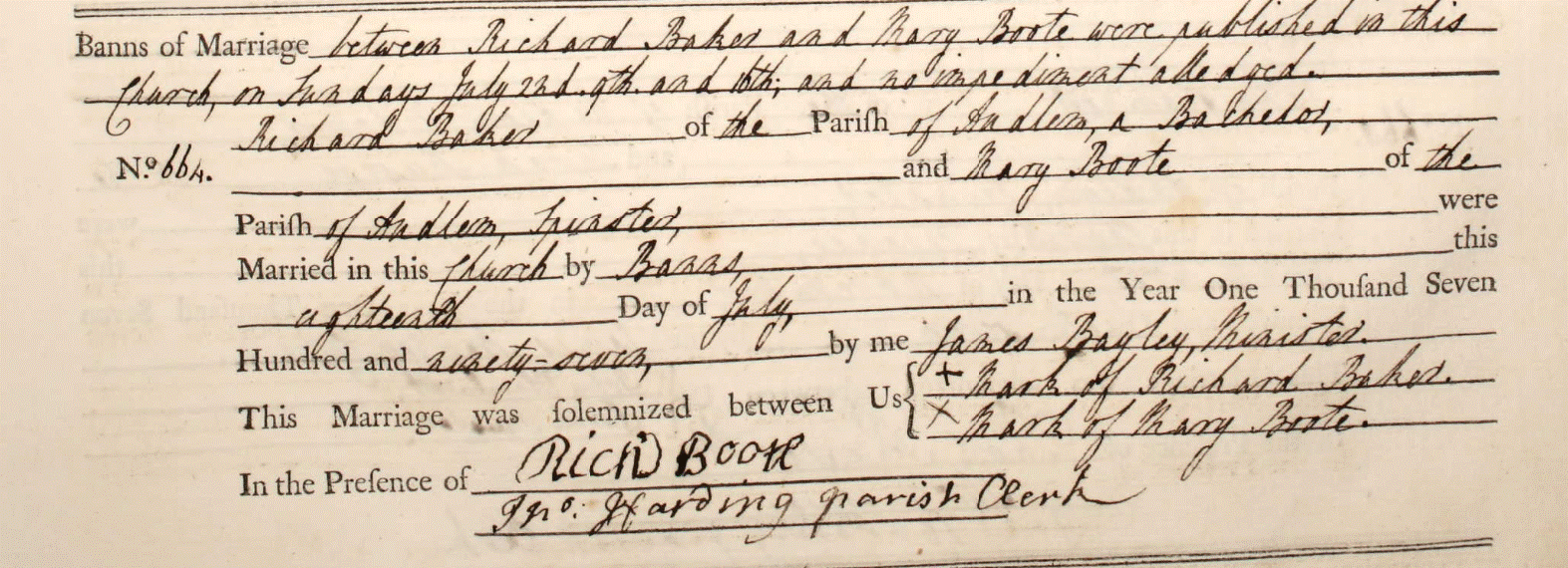
Who married Mary Boote at Audlem
on 18 July 1897 (Audlem Parish Records)? Hannah, Richard’s wife, lived
until 1826.
1801
In 1801 the Oxford University
Alumni showed he was a gentleman living at Leominster, Herefordshire.
He was also an architect and
surveyor and practised as an architect at Stratford upon Avon.
In his last years he was living at
Stratford-on-Avon, Warwickshire.
The oldest existing part of the church
of St Peter at Adderley (Historic England 1055290)
is the north transept, which was built in 1635–36 as a burial chapel for the
Needham family, the Viscounts Kilmorey of Shavington. The other remaining part of the older church is
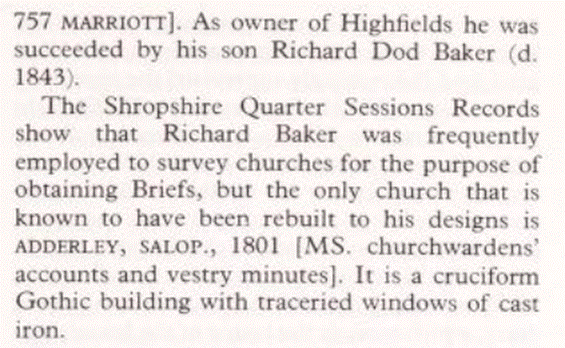
the tower, built in 1712. The rest of the church was built in 1801 by Richard
Baker; it is the only known work by this architect. In 1801 Richard Baker,
son of the better known William Baker of Audlem,
rebuilt Adderley church (Mercer, Eric (2003), English
Architecture to 1900: The Shropshire Experience,
page 300).
1803
Richard Baker was buried at Audlem on 9 July 1803. His will was proved in the
Prerogative Court of Canterbury on 30 September 1803. He is buried at
St George’s at Stratford upon Avon.


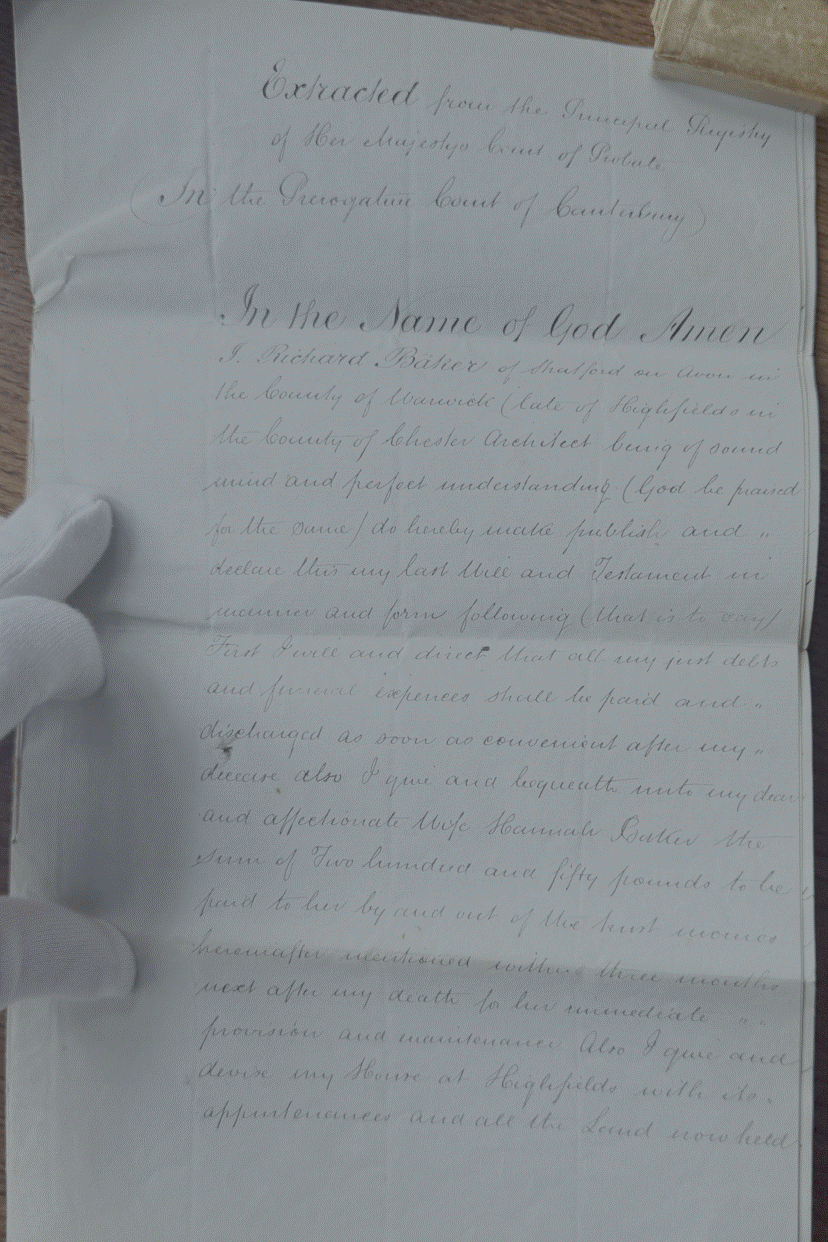
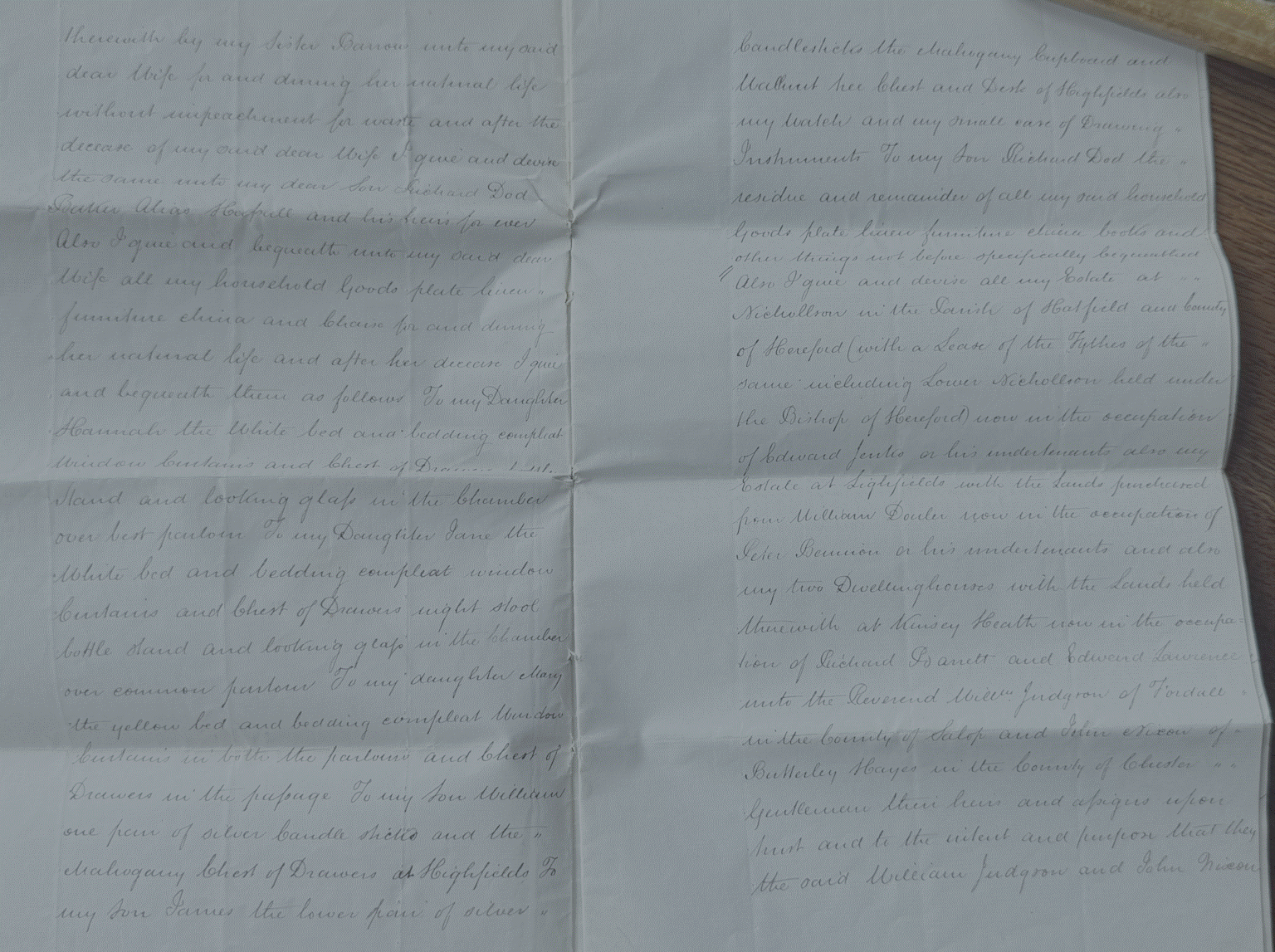
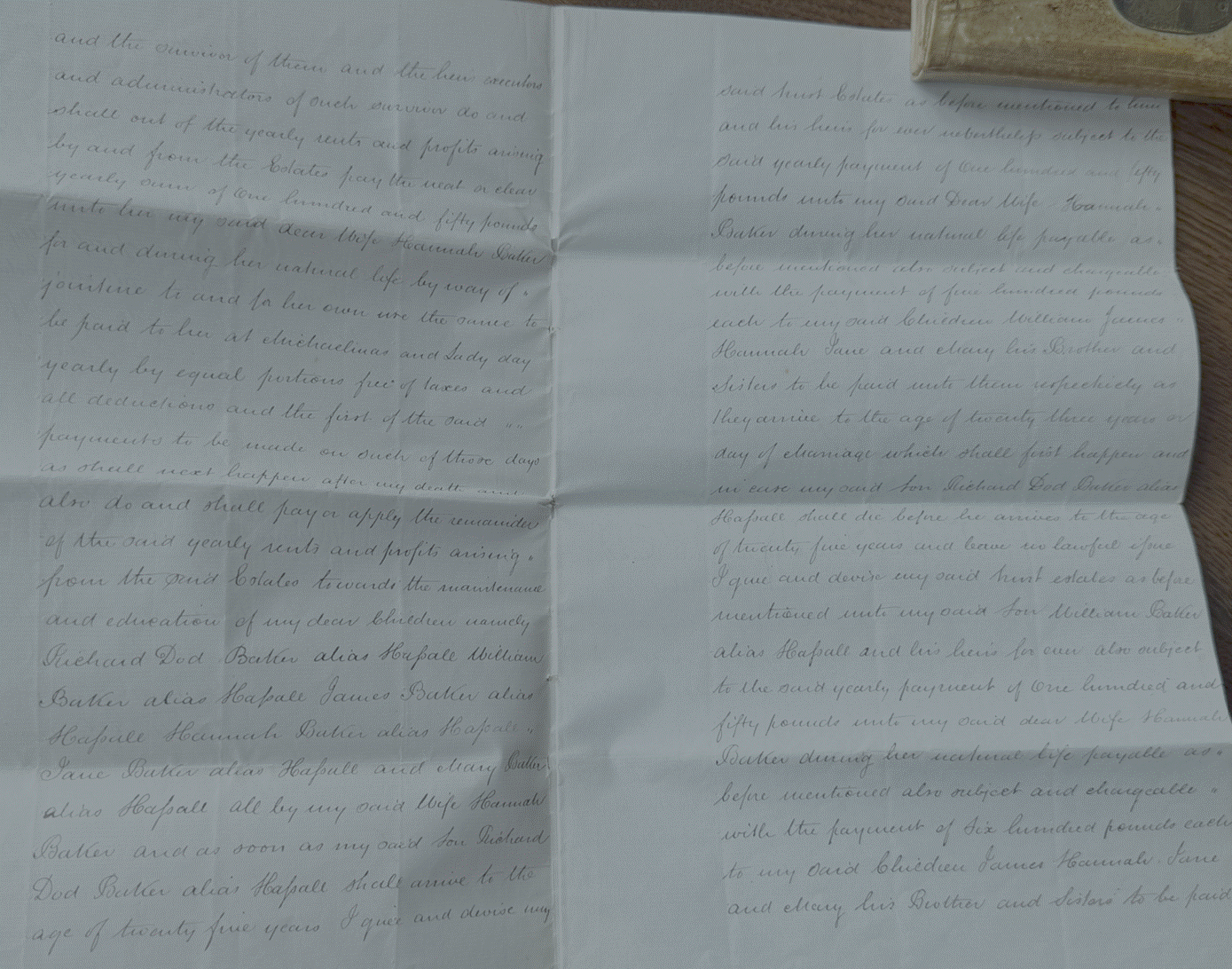
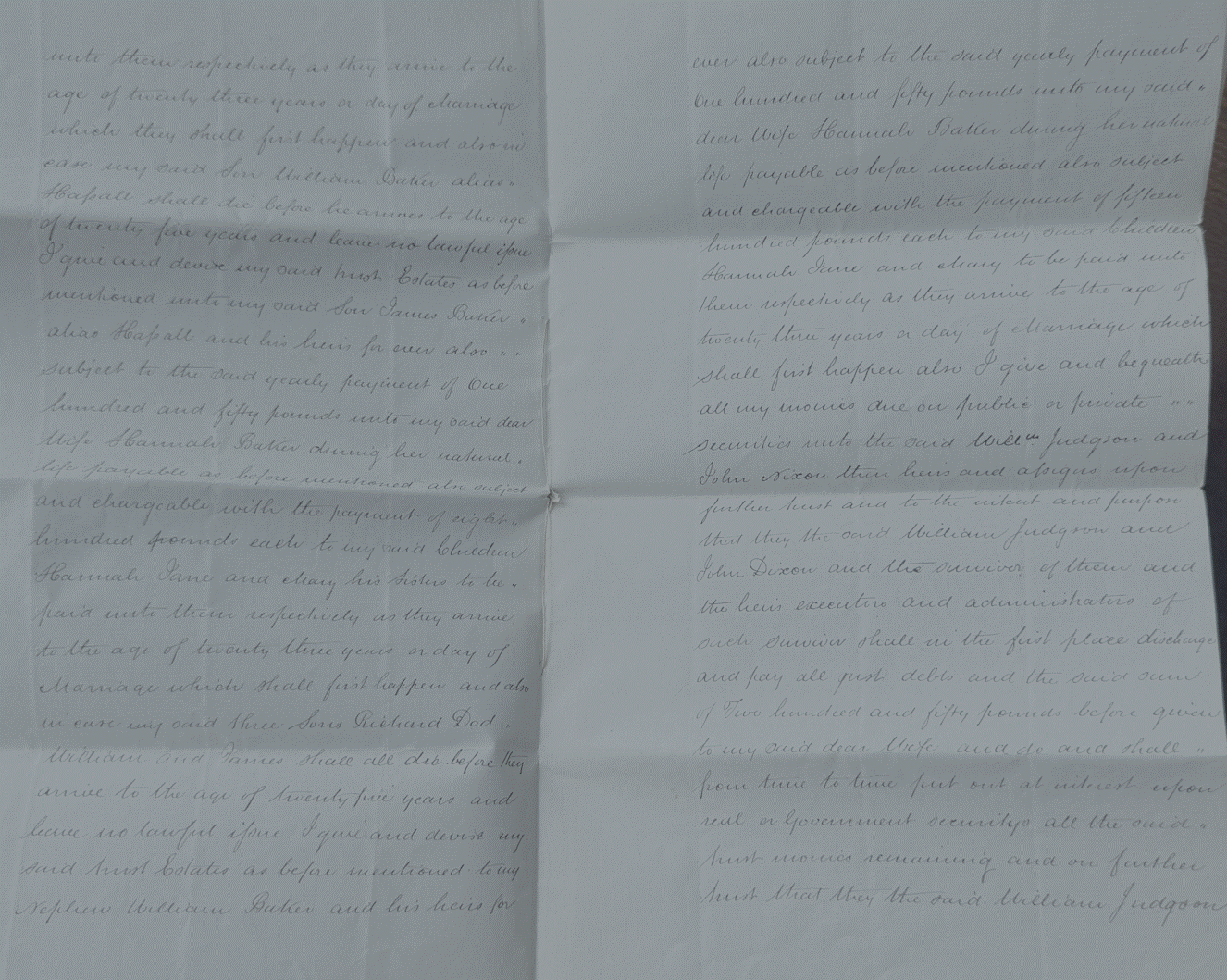
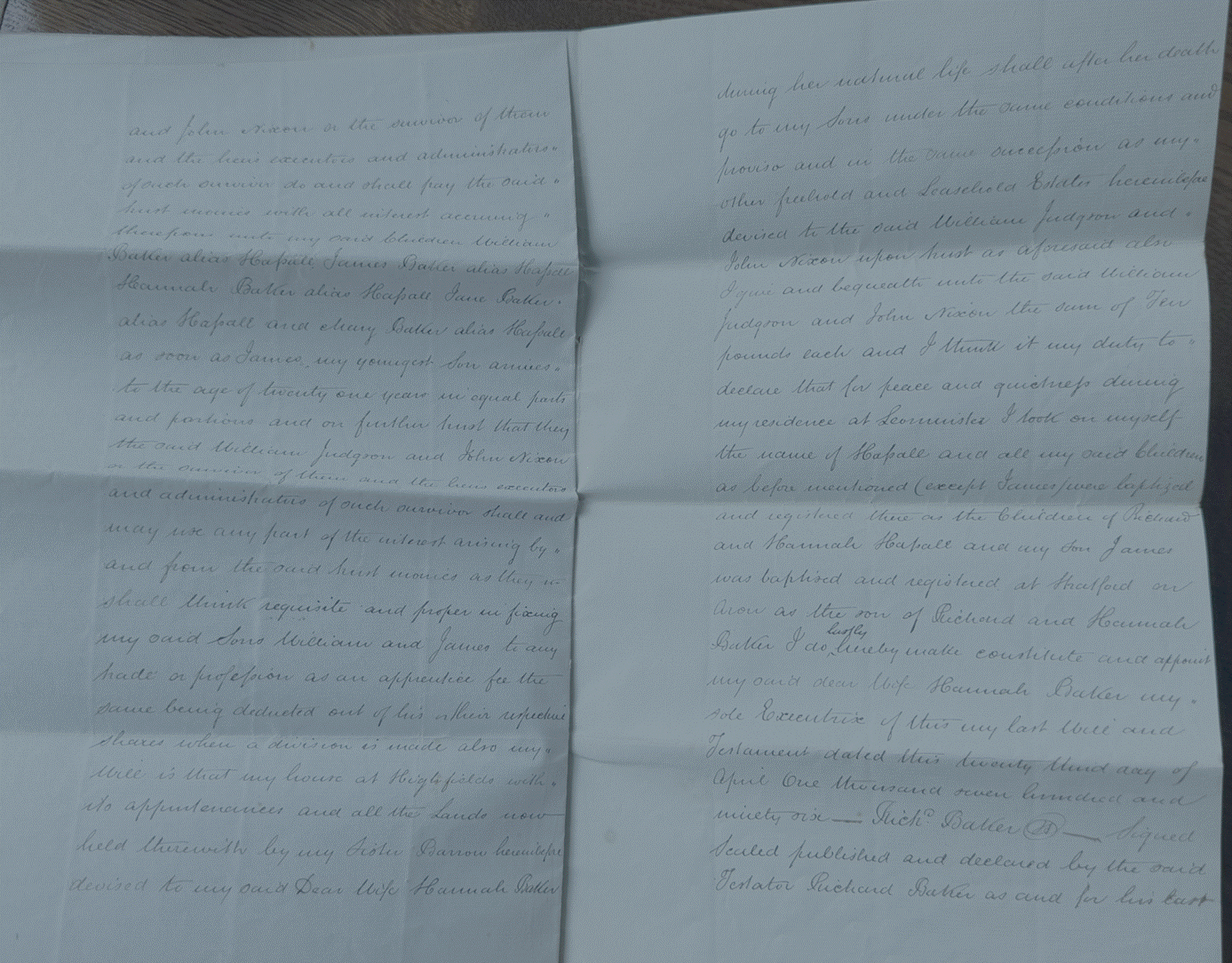
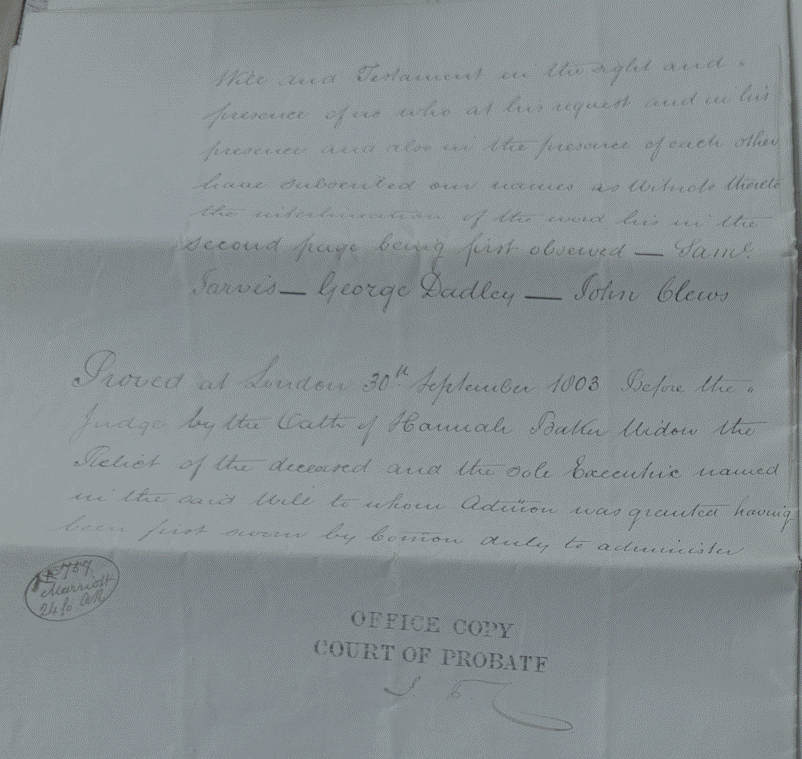
(Copy of the Will of Richard Baker of Highfields, 23 April
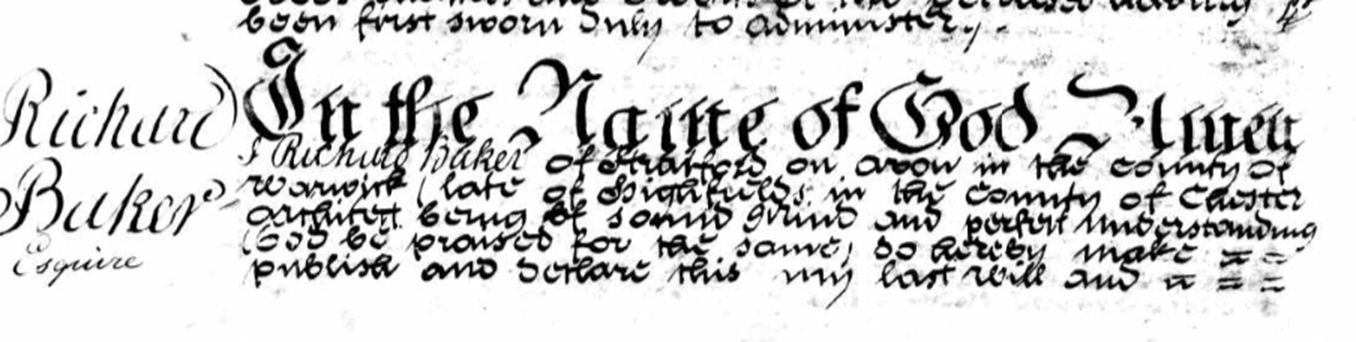
1796 (proved 30 September 1803), Baker Records, 28)
Richard Baker Esquire
In
the Name of God Amen
Richard Baker of Stratford on Avon
in the county of Warwick, late of Highfields in the county of Chester, being of
sound mind and perfect understanding, God be praised for the same, do hereby
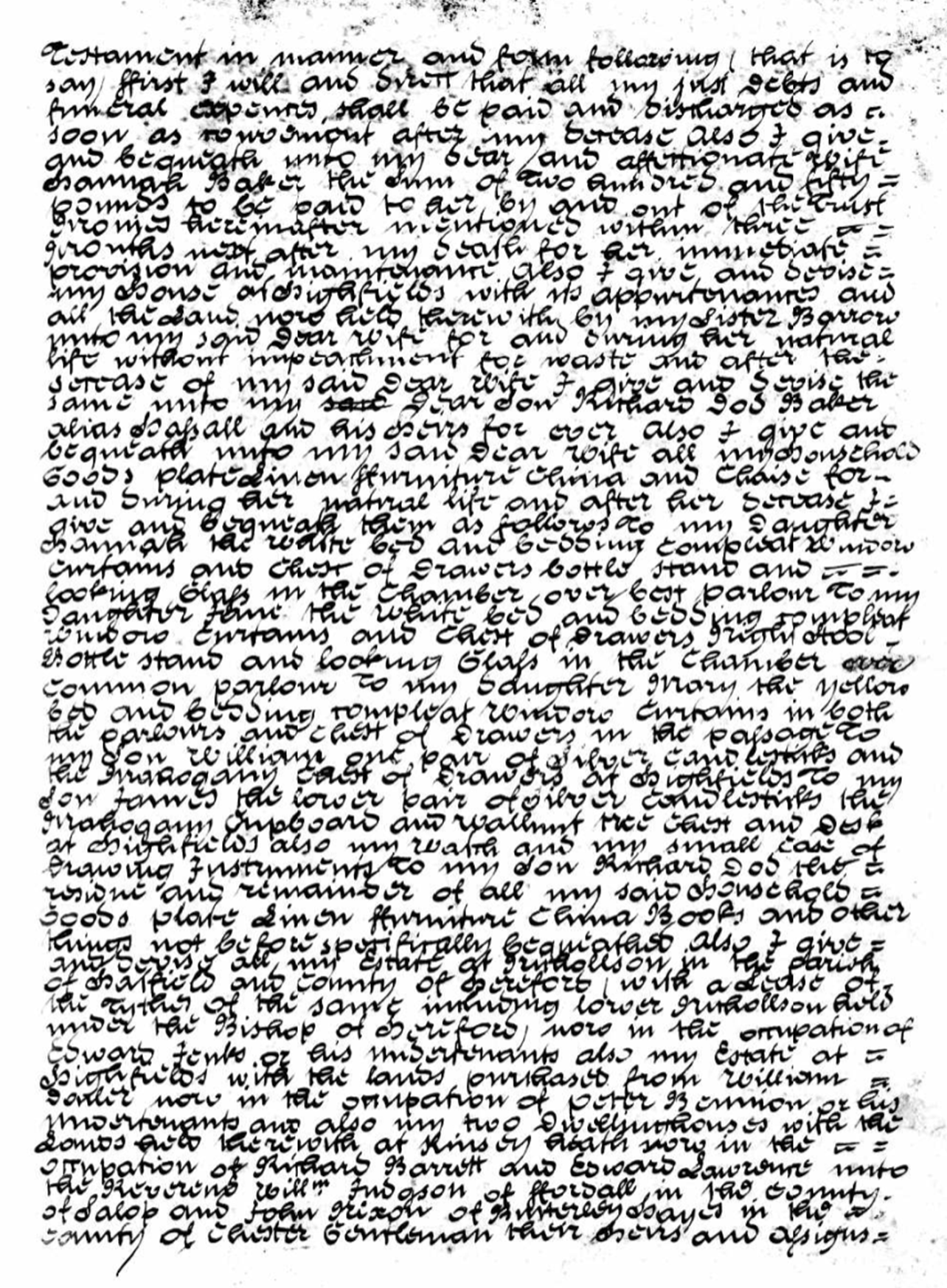
make, publish and declare this my last will and testament in manner and form
following that is to say first I will and spirit that all my just debts and funeral
expenses shall be paid and discharged as soon as to no ommit
after my decease also I give and bequeath unto my son and affectionate wife
Hannah Baker the sum of two hundred and fifty pounds to be paid to her by and
out of the trust premises hereinafter mentioned within two years next after my
decease for her immediate provision and maintenance also I give and devise my
goods or disposables with no appointments and all ledands
more bills therein with by my sister Barrow into my said dear wife for and
during her natural life without impairement for waste
and after her decease of my said dear wife I give and devise the same into my
dear son Richard Dod Baker alias Halsall and his heirs for ever also I give and
bequeath unto my said dear wife all my household goods plate, linen, furniture,
china and chais for and
during her natural life and after her decease I give and bequeath them as
follows to my daughter Hannah the worth bed and bedding compleat window
curtains and chest of drawers stand and looking glass in the chamber over best
parlour to my daughter Jane the worth bed and bedding compleat window curtains
and chest of drawers suit, stool, bottle stand and looking glass in the chamber
over common parlour to my daughter Mary the yellow bed and bedding compleat
window curtains in both the parlours and chest of drawers in the passage to my
son William one pair of silver candlesticks and the surrogany
chest of drawers, of disposables to my son James the lower pair of silver
candlesticks the surrogany cupboard and walnut recast
and desk at Christfield also my watch and my small
case of drawing instruments to my son Richard Dod also I reserue
any remainder of all my said disposables & goods plate, linen, furniture, china, books and other things not before specially
bequeathed also I give and devise all my estate in Stradslow
in the parish of Christfield and county of Cripford with a close of the tythes of the same including
lower Stradslow and under the Bishop of Cripford, now in the occupation of Edward Finks or his
assigns also my estate at Christfield, with the lands
purchased from William and Sold now in the occupation of John G Crinion &
his assigns and also my two dwellings so wife had domes and leaseholds at Rins
by death now in the occupation of Gritland Garrett
and Edward Lawrence into the guardians will? Judgeon
of Flordall in the county of Salop and John Grixon of
Shrewsbury in the county of Easter Gentleman their heirs and assigns.
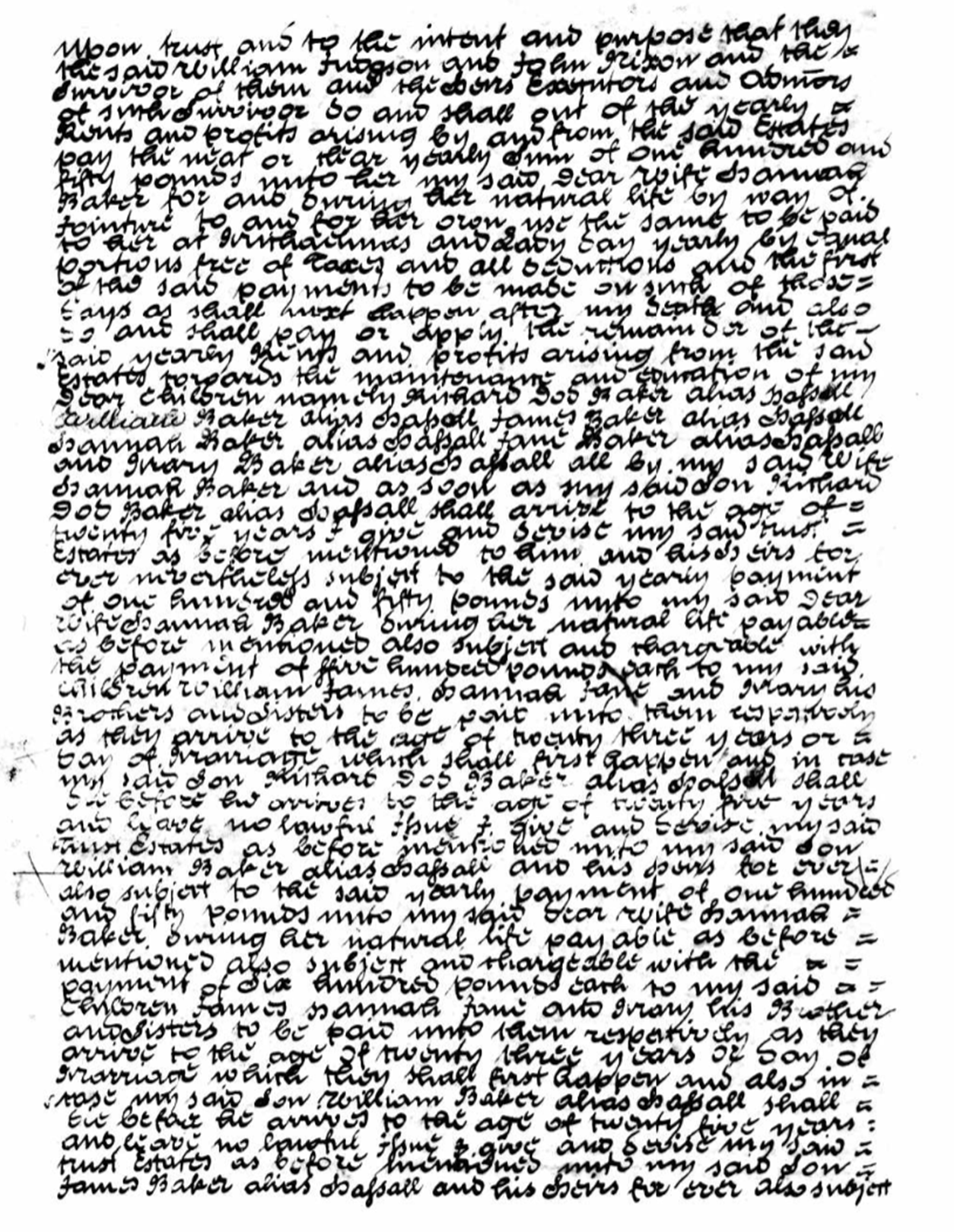
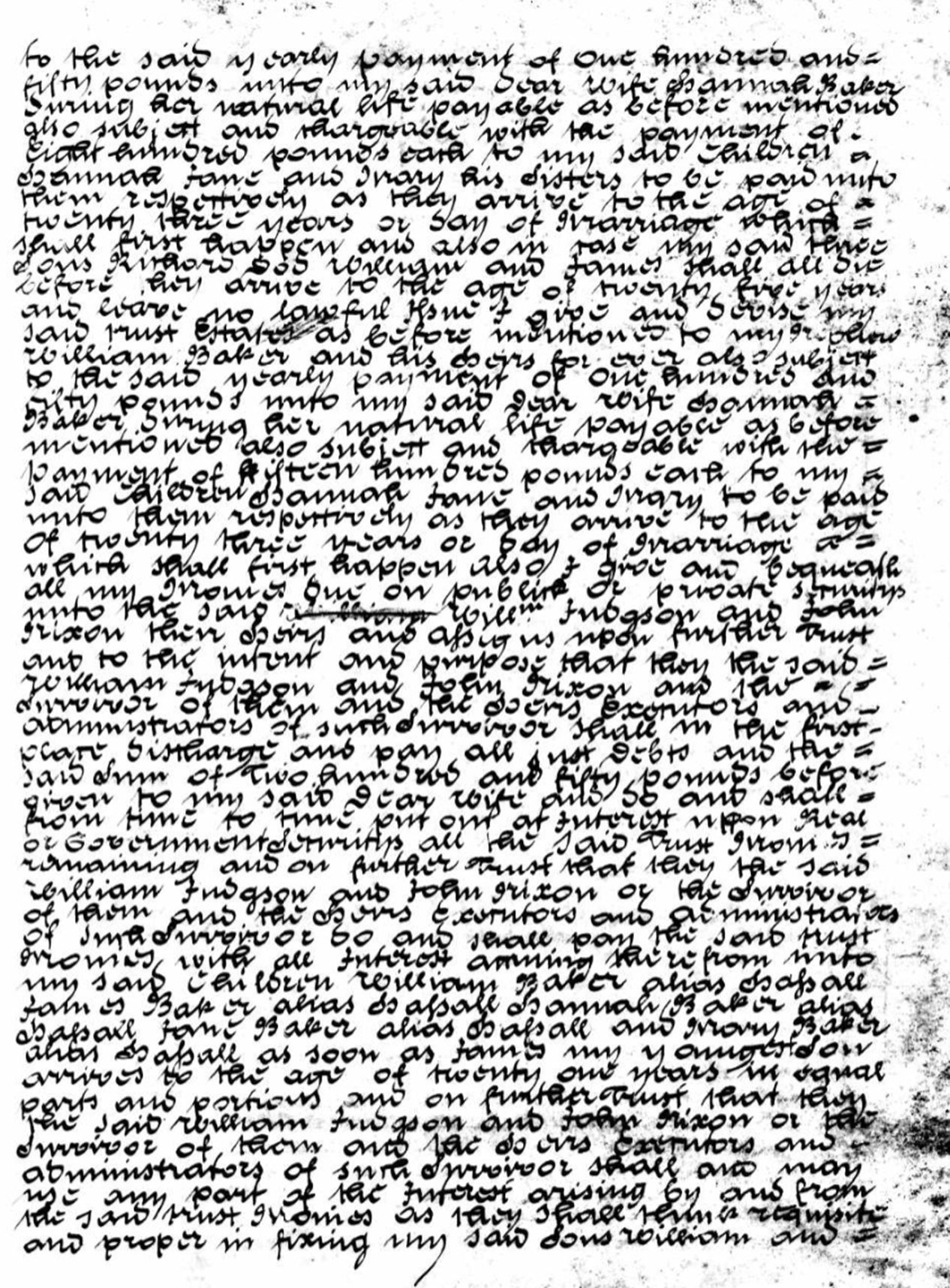
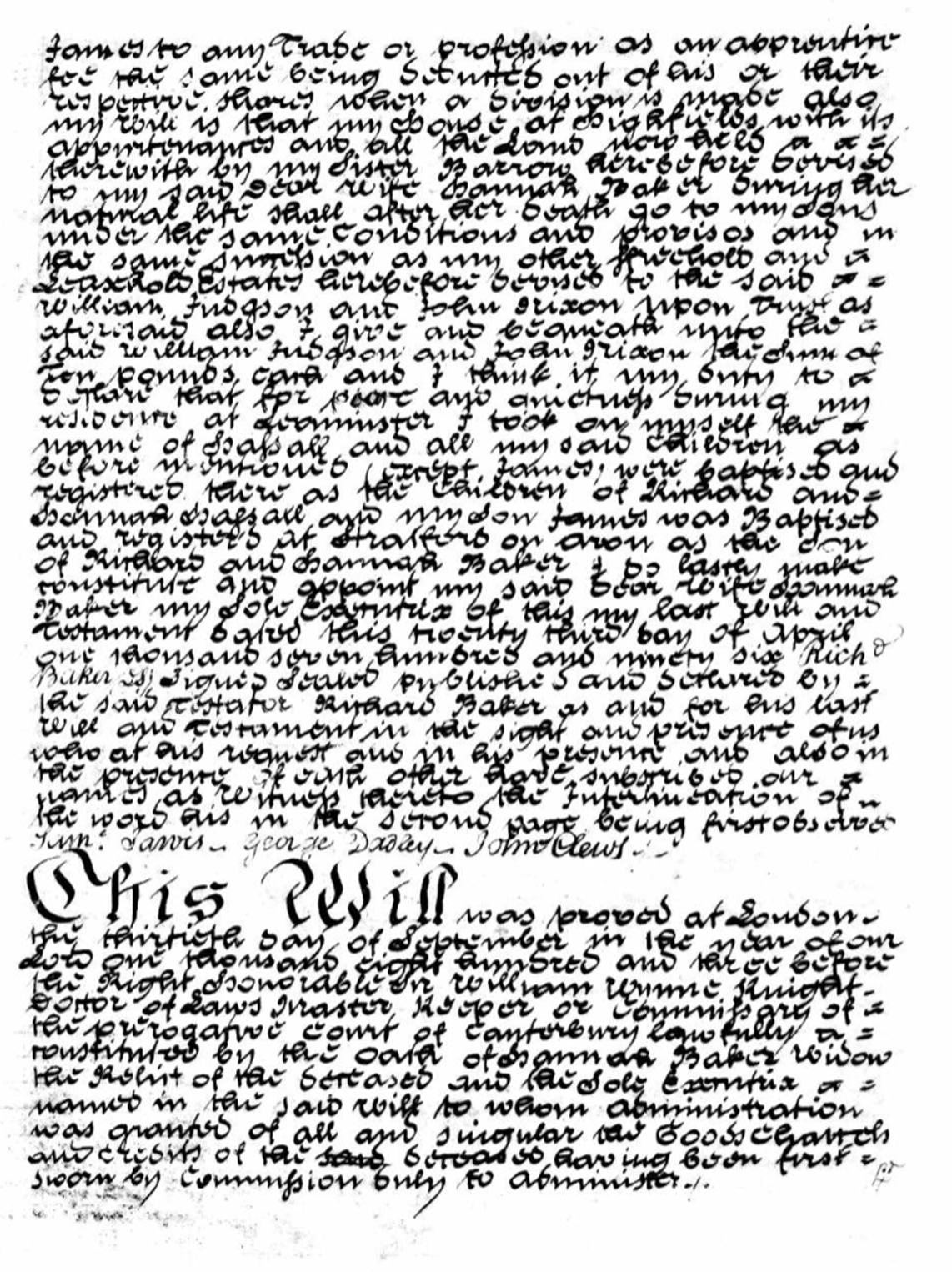
Whereas trust and to the intent and purpose that they hath said William Fudgeon and John Gibson and the survivors
of them and their heirs, executors and administrators of the said survivors do
and shall out of his yearly rents and profits arising by and from the said
estates pay the rent or clear yearly sum of one hundred and fifty pounds unto
the my said wife Hannah Baker for and during her natural life by way of
jointure to and for her own use the same to be paid to her at Christmas and
every day yearly by equal portions free of taxes and all deductions and the
first of the said payments to be made in …
1826
His wife Hannah is thought to have died in
1826.