Medieval Mills
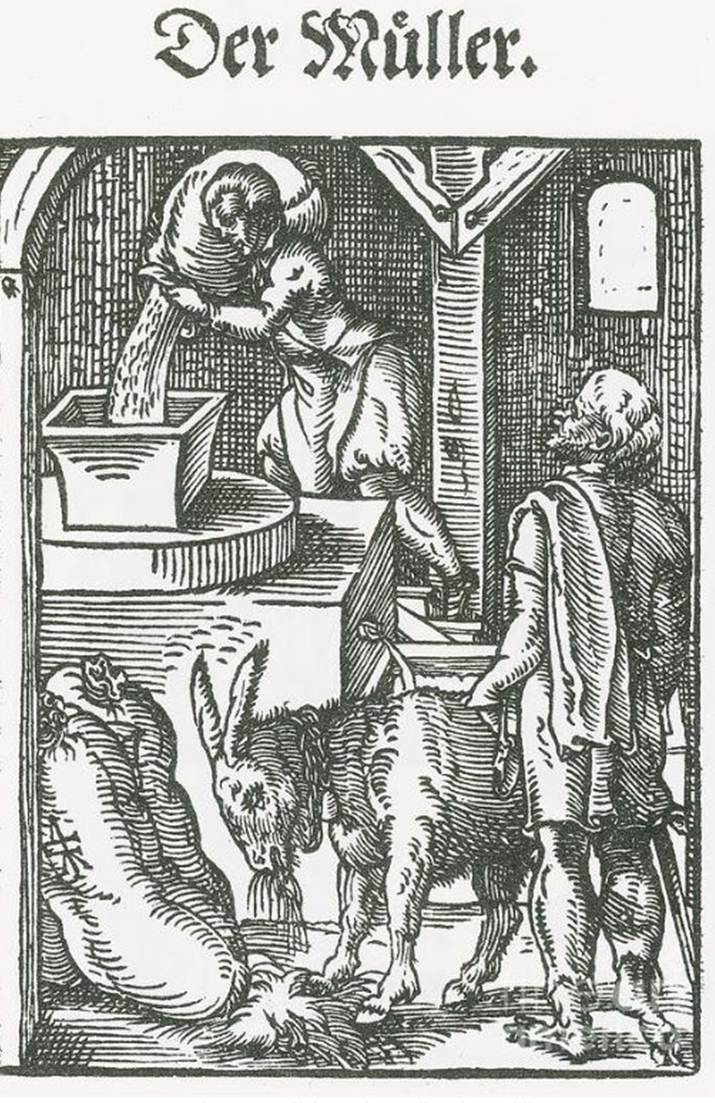
A German etching
FAR000021A
|
Return to the Home
Page of the Farndale Family Website |
The story of one
family’s journey through two thousand years of British History |
The 83 family lines
into which the family is divided. Meet the whole family and how the wider
family is related |
Members of the
historical family ordered by date of birth |
Links to other pages
with historical research and related material |
The story of the
Bakers of Highfields, the Chapmans, and other related families |
|
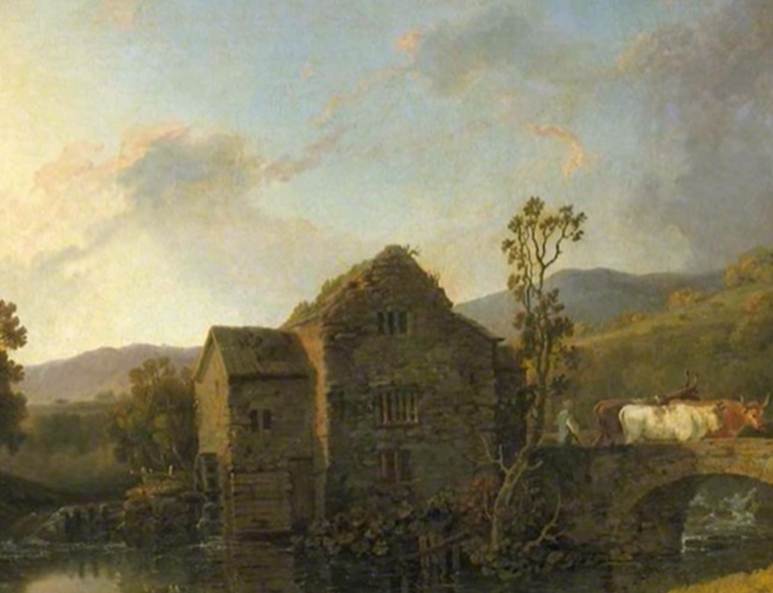
To set the scene you might
enjoy this compilation of British art depicting the watermill accompanied by
Ronald Binge’s The Watermill |
The Mills of Farndale
There is
an undated Yorkshire Deed from the mid thirteenth century: Grant by Nicholas
Devias, being in good health and lawful power (in mea bona sanitate et ligia
potestafe) to Alice his wife, for life, of an annual
rent of 10 li, which lady Joan de Stotevile gave him for his service, namely,
20s. from the land in Farndale, held of him by Adam de Ellerschae, and eleven
marcs from his two water-mills in Famedale,
and two and a half marcs from his water-mill in Brauncedale, payable half-yearly at Michaelmas and Easter.
Paying yearly at Christmas one silver penny for all service, etc. Witnesses,
Sir Richard Foliot, Sir Adam Newmarch [de Novo mercato),
Sir Henry Biset, Sir Thomas de Hetun, William de Pligt Peter de Giptun, Clement
de Nortun, Robert de Slucropt, Colin de Nortun and many others.
So there were two mills in Farndale by the mid thirteenth century, not
long after the dale was first cultivated for farming.
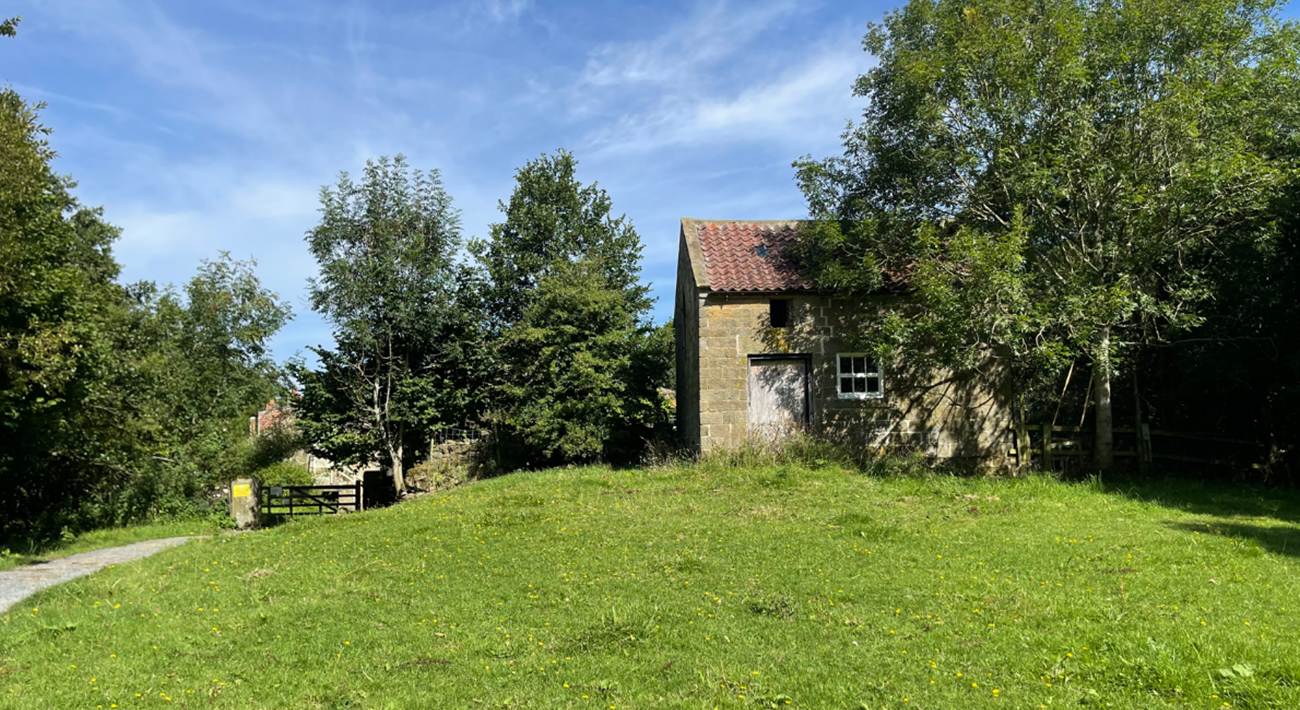
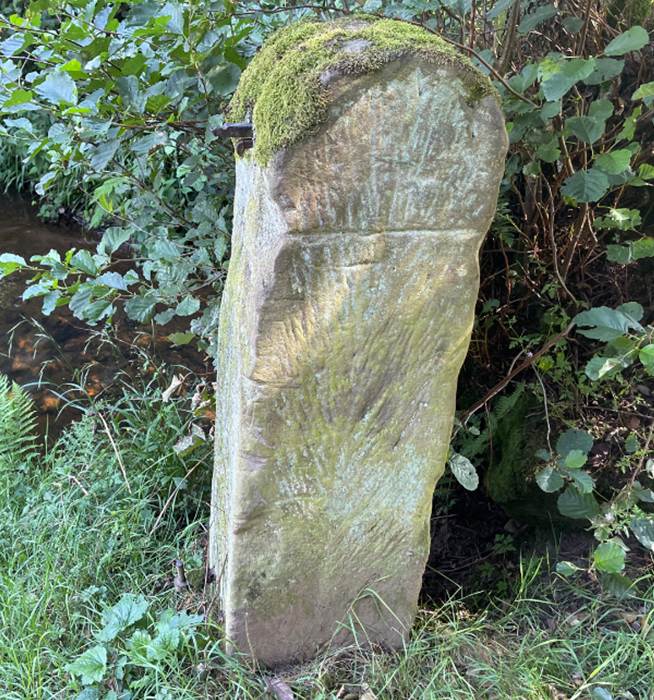
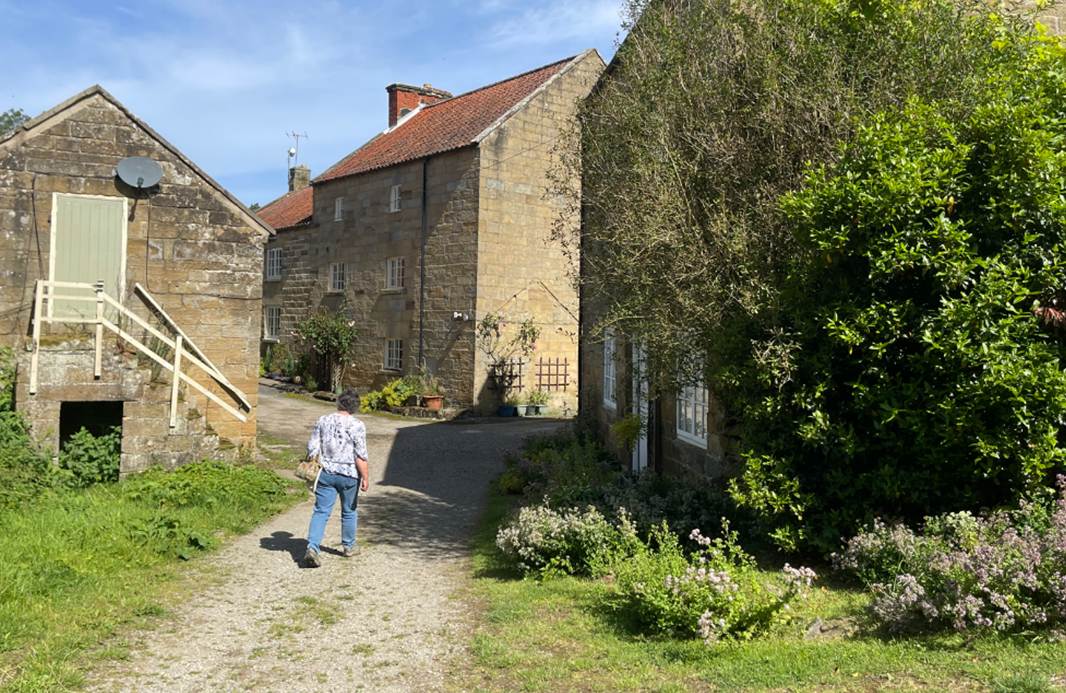
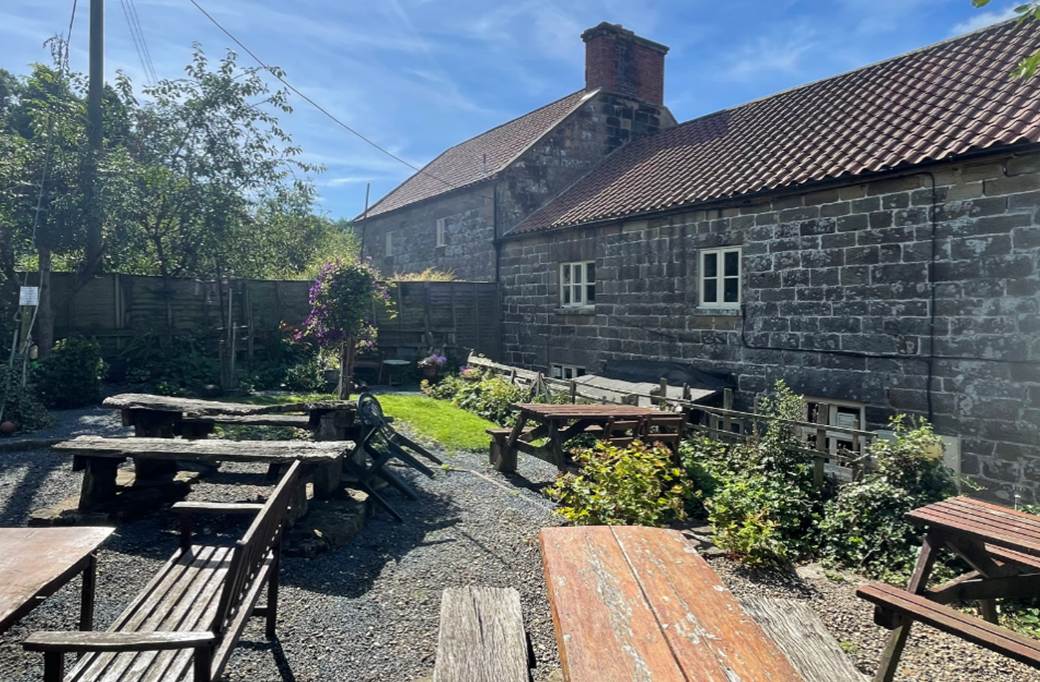
The location of the now disused High Mill, now known better for the Daffy
Café.
By the mid thirteenth century Farndale was a thriving community of two
watermills and we can meet Simon the Miller of Farndale, who was clearly a substantial
figure, with his servant and later partner, John the Miller of Farndale. We can also meet Nicholas de Farndale, who might be the first to have
adopted the name Farndale, and who must have been one of the earliest pioneers
of the dale. Roger Milne (miller) of Farndale might have been the miller at the
High Mill.
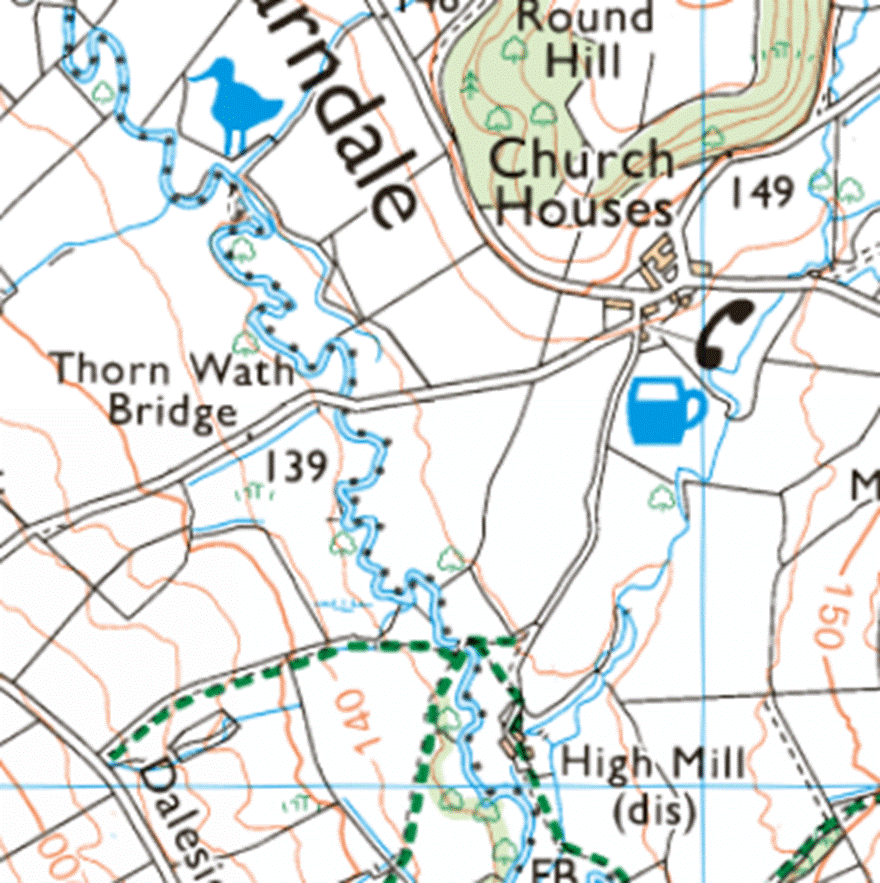
The River Dove and its feeder beck, the West Gill, would have provided an
optimal source of power for milling. There was a nineteenth century watermill at High Mill on Mill Lane
south of Church Houses, Farndale, which is almost certainly the site
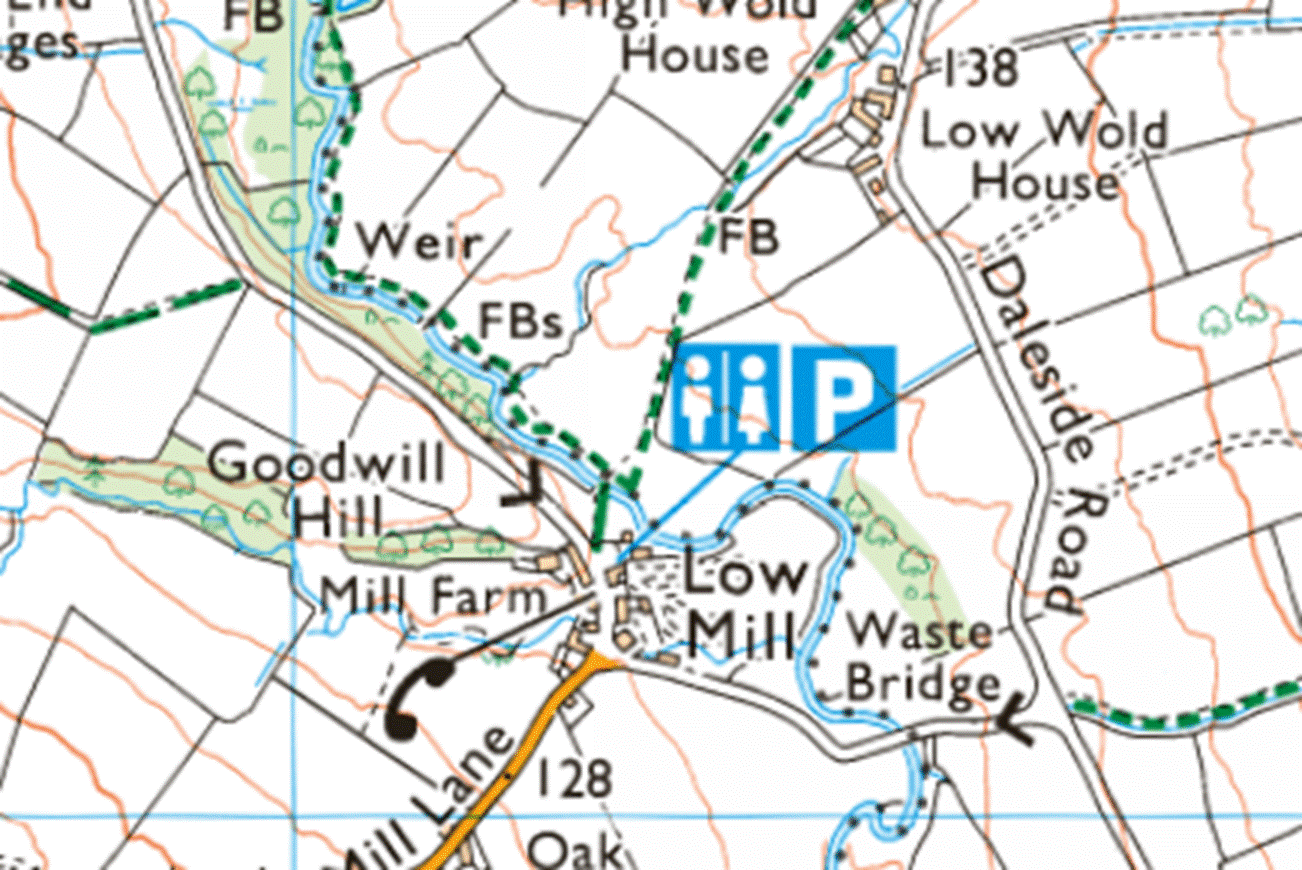
of one of the two earlier mills. The hamlet of Low Mill was also the site of an
earlier mill on the River Dove and is located where the fast flowing West Gill
Beck flows down from the high ground to meet the River Dove. In Low Mill there
were two mills, one the site of Mill House on the river Dove itself, and the
other in the site of the present Troutbeck Cottage on the West Gill Beck. It
seems most likely that the mill on the West Gill Beck at Troutbeck Cottage was the
original mill at Low Mill.
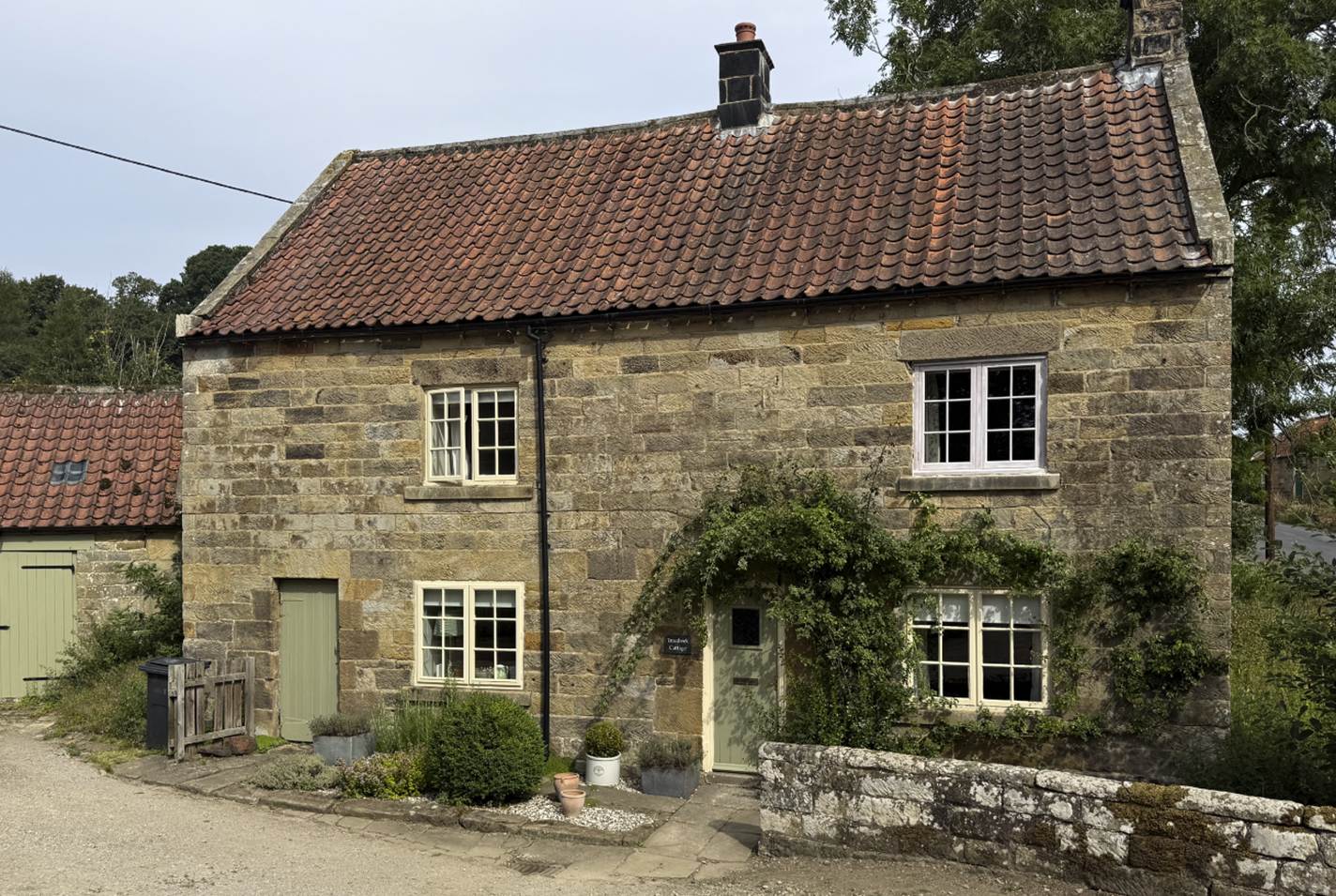
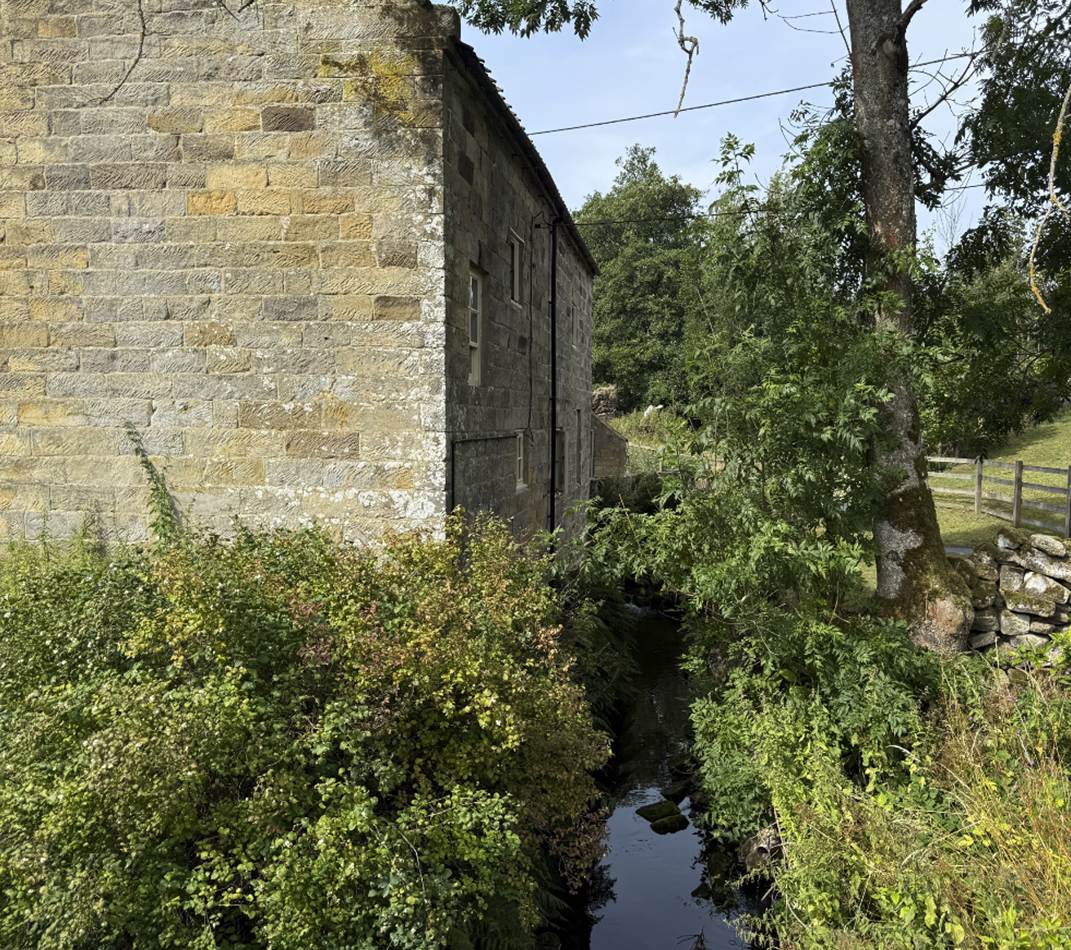
Troutbeck cottage on the West Gill Beck in Low Mill, probably the site of
the first medieval mill
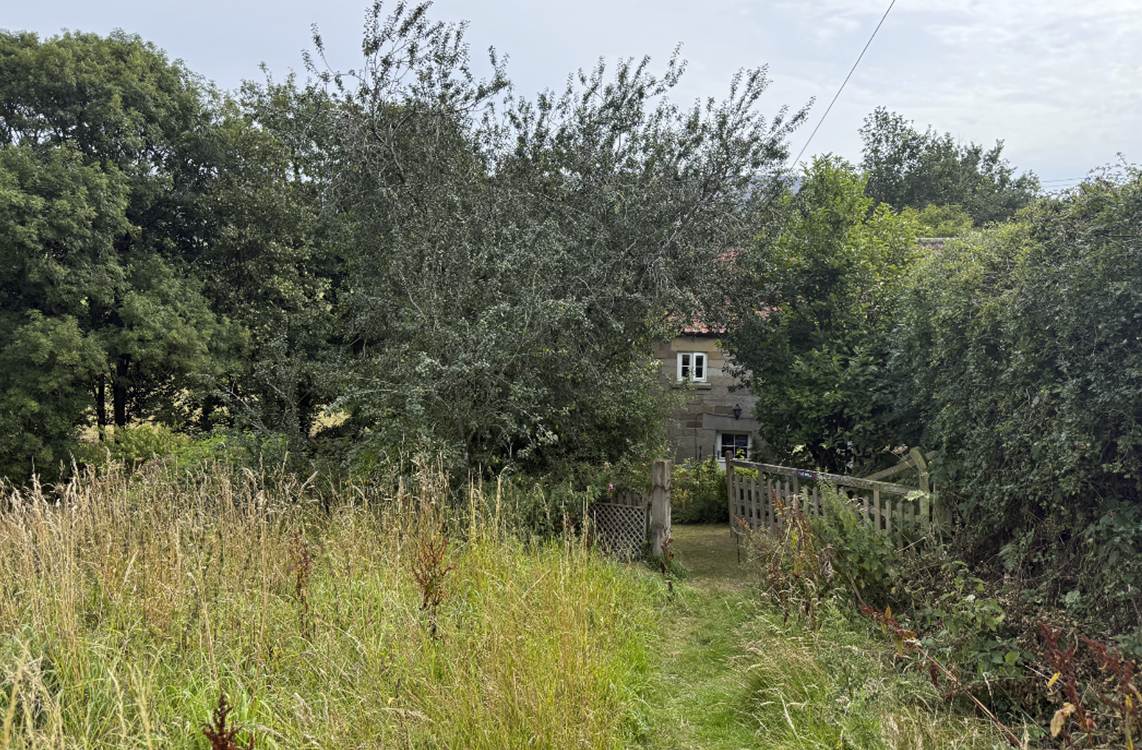
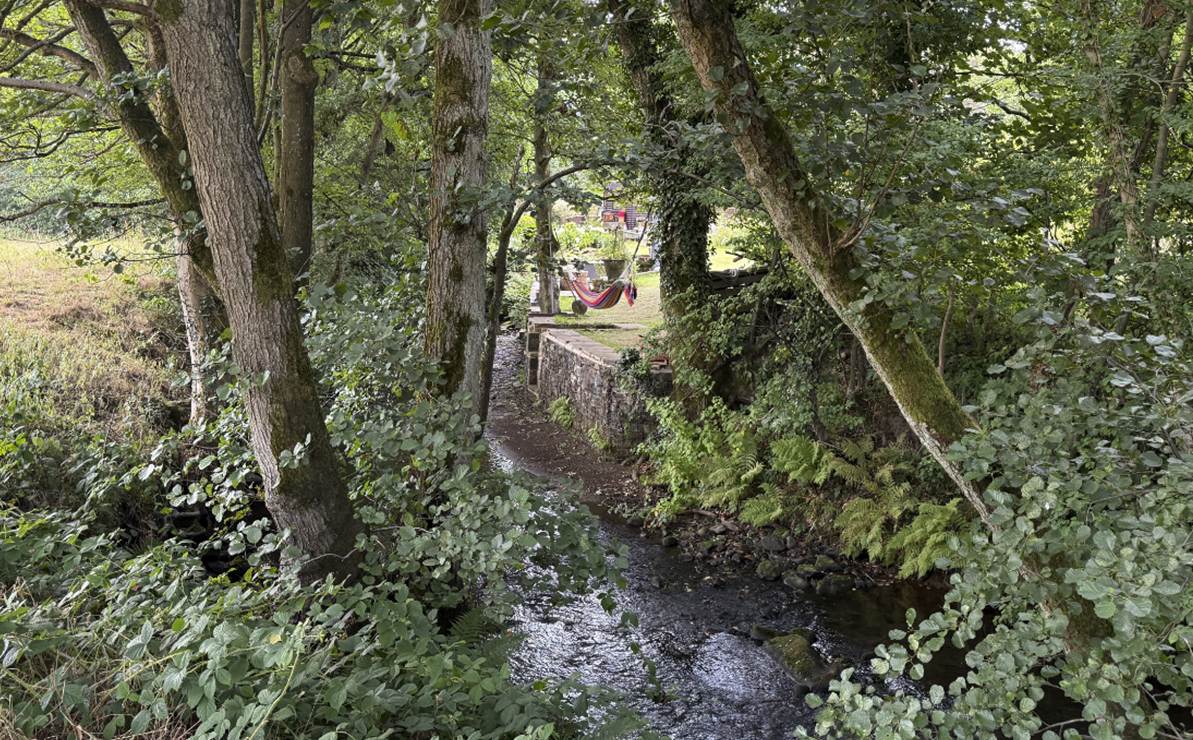
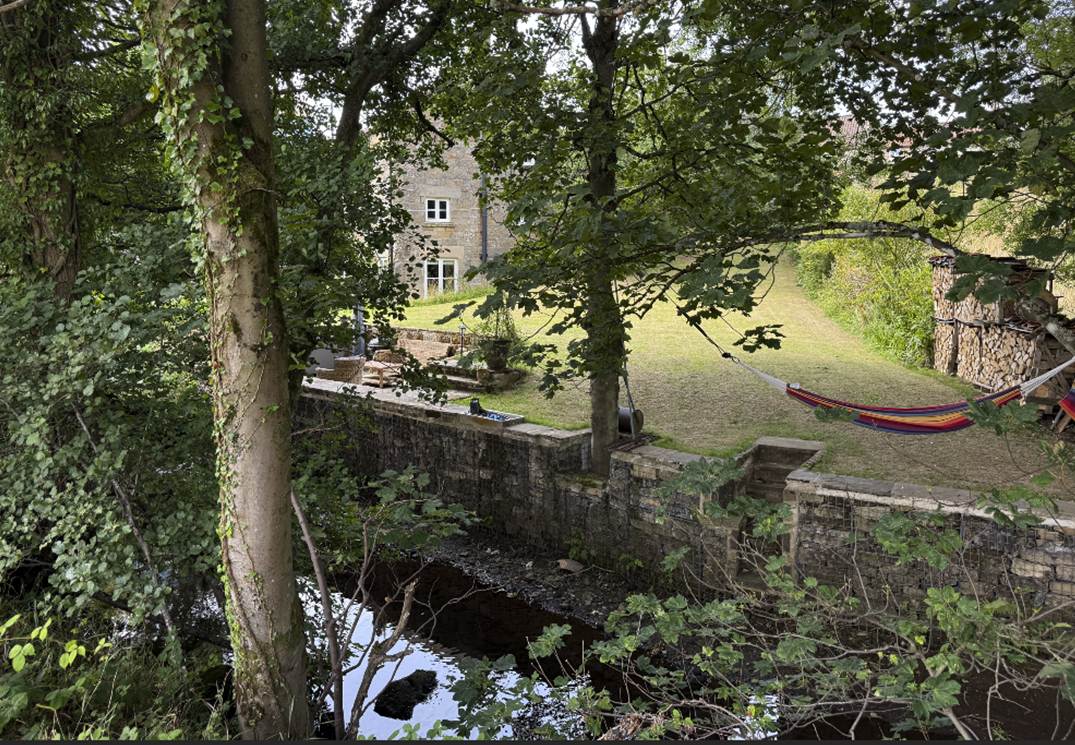
Mill House, the site of the second mill of Low Mill
All these mills were located centrally within the valley.
There are also remains of a watermill at Low Elm
House in neighbouring Bransdale.
The Inquisition Post Mortem taken in 1276 after the death of Joan de
Stuteville, the Lady of Liddell, reveals cultivation on a grand scale. In
Farndale, bonded tenants were paying a standard rent of 1s for each acre. This
produced total income of £27 5s, suggesting a cultivated acreage in Farndale of
545 acres (for those who like the maths, 27 x 20s in the pound plus 5s). There
were seven cottars or small scale farmers recorded, and one of the two
watermills we know to have existed by 1249.
By the 1301 Tax Subsidy, Simon the Miller of Farndale had a
wealth of about £5 16s 3d, perhaps about £4,500 in today’s money, the value of
about six horses or 12 cows. Simon the Miller’s tax payment of 7s 9d in 1301
was almost as much as that paid by all ten of the Bransdale contributors and
greatly in excess of what the majority of the individual inhabitants of Ryedale
paid.
It seems likely that the area of Farndale between Low Mill and Church
Houses, which is now the path favoured by those who admire the daffodils, was
the heart of the medieval community in Farndale, with its two mills, one at
each end along the River Dove.
Although the earliest reference to Farndale related to monastic granges
often places of pasture for sheep, and the early development of a wool industry
which in time would require fulling mills, the clearing of land for cultivation
in the thirteenth century in Farndale, suggests that the earliest mills were
most likely to have been corn mills.
In 1553 when John Wood made his will he wrote - "also I give
to the mendyng of the upper mylne bridge iiij pence and to the mending (sic) of the nether mylne bridge iiij pence" The 'upper mylne' is the present
site of High Mill, situated just below Church Houses, and the 'nether mylne' is, of course, the present Low Mill. Both these
mills operated well into this century. They were naturally watermills, built on
the banks of the Dove, but in 1560 there were also in the manor of Kirkby
Moorside six windmills (Feet of Fines,
Michaelmas Term 1560, 2 & 3 Elizabeth) and it would be
interesting to know if any of them were built in Farndale. Notes on the History of Farndale in the Middle Ages, Arthur H Whitaker, Ryedale Historian, Volume 2,
1966, page 60).
In 1553 John Wood gave “to the medyng
of the upper mylne bridge 8d and the same to the mendying of the nether mylne
bridge.” The upper mill is the one at Church Houses and the nether mill, not as
AHW stated, the present Low Mill, but the mill on West Gill Beck. (Raymond
Hayes, Farndale, 1961, unpublished, page 11).
There was a survey of local water mills conducted in the 1960s by
the Society for the Protection of Ancient Buildings (Lowna Mill, Gillamoor, John T Capron, Ryedale Historian, Volume 3, 1967,
page 42), which included the mill at Lowna, but
this was a much later mill. The Mills Archive
Trust includes reference to the corn mills at Low Mill, Gillamoor Mill, and Bransdale.
Millers were important members of
fourteenth century society. Everyone ate bread, and grain had to be ground into
flour. This could be done by hand, using a quern, but it was very time-consuming.
Mills powered by water or wind allowed grinding at scale. The quality of the
flour from a mill was also better, being more finely ground and containing less
grit.
Mills were expensive to build.
Watermills needed ponds, weirs and leats to provide
enough water moving quickly enough to turn the millstone. The millstone itself
had to be cut properly before it could be used. Generally the mill could only
be built by the lord of the manor. For the lord of a manor a mill provided a
source of income. His villein class had to pay to have their grain ground and
they were not allowed to grind it themselves. Many did so secretly, however,
using a domestic quern, which had to be well-hidden. If they were caught they
would be fined and the quern confiscated or destroyed. This monopoly was
resented by the peasants. During the Peasants’ Revolt in 1381 some men forced
their way into St Albans Abbey where confiscated millstones had been set into
the parlour floor. The millstones were dug up and broken into pieces.
Windmills were invented towards the
end of the twelfth century. They were used in flat areas where the water did
not move fast enough to turn a wheel.
Millers either rented the mill from
the lord of the manor or collected the tolls and payments for the lord if
employed by him. Some mills were by bridges and the miller would also collect
the tolls from those crossing the bridge.
Peasants had to pay a multure to have their grain ground. This was
sometimes a sixteenth of the grain or flour.
Freemen paid a smaller percentage. Despite the cost, freemen who did not
have to use the mill took their grain there and paid to do so. Not only did the
mill produce better quality flour, but it was also a more efficient use of
their time than grinding by hand, even though it was considered inconvenient to
take the grain to the mill.
Historic Environment Records of Farndale mills
The mill on the River Dove at Low Mill is Historic Environment
Record 1394 (North York Moors HER Records), Corn Mill (19th Century); Watermill (19th Century), Farndale Low
Mill was constructed in the early nineteenth century, replacing an earlier mill
on West Gill Beck. Constructed as a corn mill with three pairs of stones and
later a genrator was added, now converted to a
dwelling.
No. 1 and 2 The Square, Mill Lane, Low Mill Farndale West is Historic Environment Record 16017 (North York Moors HER
Records), a miller's house
with 1778 on a datestone, altered in the nineteenth century, now two dwellings,
to the south of Low Mill.
The mill at High mill is Historic Environment Record 1396 (North
York Moors HER Records), is a Corn Mill (13th Century Medieval); Watermill
(13th Century Medieval); Mill House (19th Century), an early nineteenth century
mill and slightly later mill house attached to the north-west, now one
dwelling. Built on the site of a medieval mill the mill has a wheel house and
wheel pit and the wheel shaft survives, but the wheel has been replaced by a
small iron wheel.
Water Mills
Quern stones had previously been imported from central Europe
until the Middle Saxon period, part of the trade routes that thrived at that
time. Quern stones were revolved by hand.
The earlier watermills were horizontal rather than vertical and usually smaller than later vertical
wheels. The mechanism of a horizontal mill is simpler and in some respects
more elegant, without the need to transfer power through a right angle, which
with wooden gearing is not always very efficient. The main disadvantage is that
the weight of the millstones has to be carried in a substantial structure above
the water. Plainly this limits their size. Examples of twelve Irish horizontal
water mills have been dated by tree rings to the three centuries AD 630 to 930.
Continental lava was used to make the smaller stones used in hosrizontal watermills. (Britain
in the Middle Ages, An Archaeological History, Francis Pryor, 2007, page 141).
One of the earliest English mills was found at Ebbsfleet in Kent.
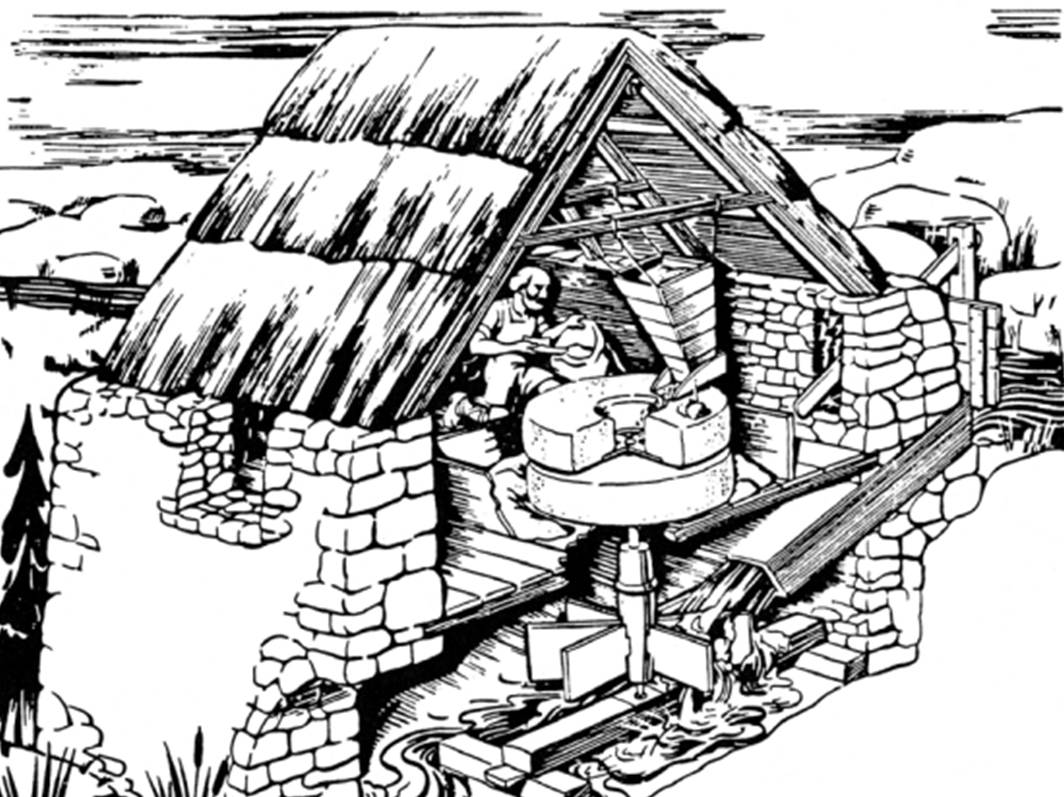
The machinery of Watermills were made of wood and there is rarely much left for archaeologists to
find.
The Milling Industry in Ryedale
Medieval mills were vital medieval technology for grinding grain
into flour and were powered by water or later, by wind. Water mills, the most
common, used a waterwheel driven by a stream or river. Windmills, particularly
post mills, appeared later and relied on sails to catch the wind. Mills played
a core role in medieval society, providing the essential resource of flour and
supporting rural agricultural industry.
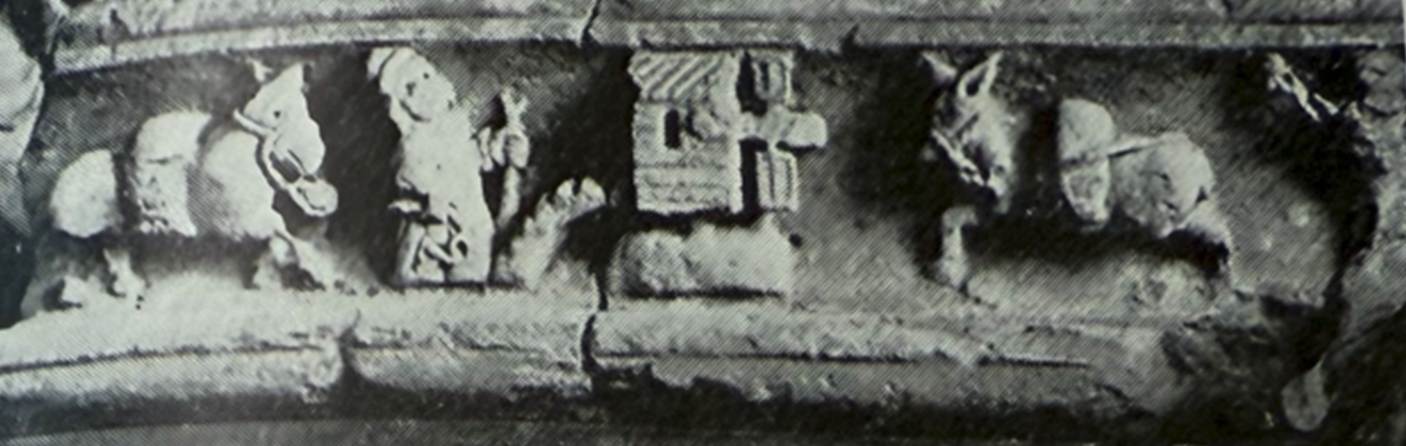
Stone carving of a wooden post mill and pannier ponies found at
Rievaulx Abbey, c 3th to 14th century (A wooden post mill is the
earliest type of European windmill, characterized by its entire body, which
houses the milling machinery, being mounted on a single, massive central wooden
post)
The newer windmills were built in the low flat lands where the
river flow was sluggish, as well as the waterless Wold
uplands (The History of Ryedale, John Rushton, 2003, 100).
Millers were some of the most important tradesmen in the Middle Ages.
Countryside specialisation was little developed but milling and
the extractive industries were necessarily rural. Manorial and monastic corn
mills enjoyed local monopoly rights of suit and soke and took payment in 'multure'. They were a main source of income and often used
as security for loans. Millers too could prosper and Simon, the Farndale miller
of 1301, could pay as much tax as a manor lord. Knights could put younger sons
to milling.
Mediaeval Ryedale Corn Mills:
River Dove - Kirkby Moorside; Edstone; High
and Low Salton; Gillamoor; Farndale; Hold Cauldron.
River Seven - Great Barugh; Sinnington; Appleton; Marton; Thornton
Riseborough.
Hodge Beck - Hoveton (on branch); Fadmoor; Bransdale.
(Life in Ryedale in the 14th century, J H Rushton, Ryedale Historian, Volume 8, 1976, page
25).
Horse Mills
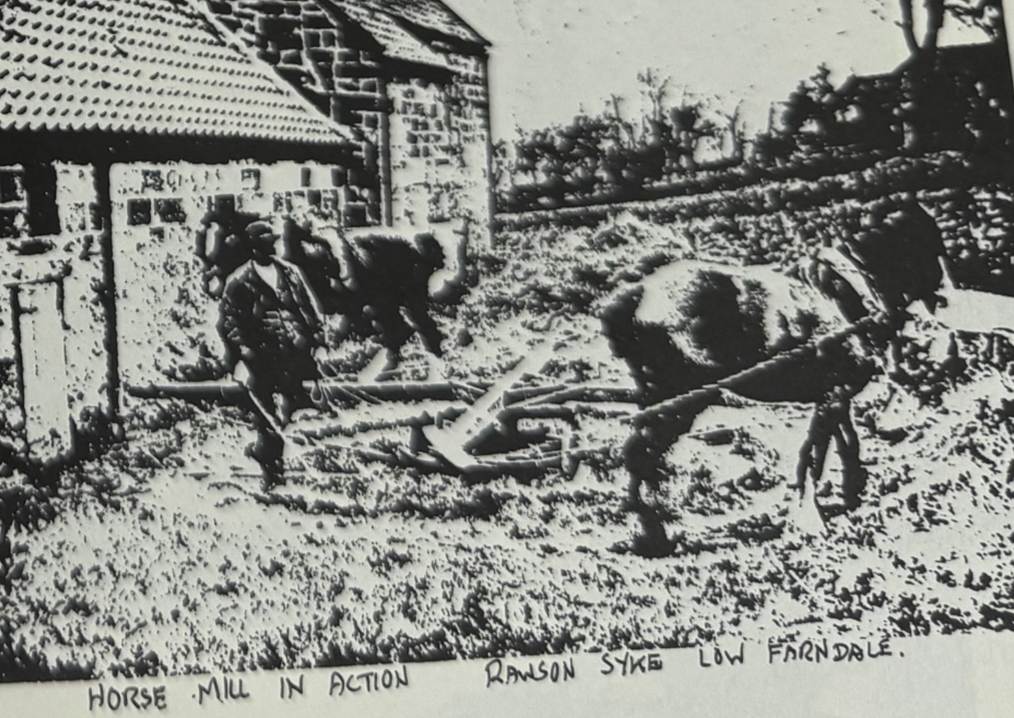
Horse Mill in action at Rawson Syke, Low Farndale, used until 1940
(Raymond
Hayes, Farndale, 1961, unpublished, page 51).
Corn Mills
Many specialised crafts were concentrated at York, or in the new
castles, monasteries and boroughs, but corn mills and river fisheries were
rural. The water mills mentioned in the 1086 Domesday Book were too few and too
distant to deal with the crops produced. There had probably been others. In
some cases the site rather than the mill itself was mentioned. With the
recovery of agriculture, manor lords and monasteries invested in more mills for
grinding grain, anxious to have the incomes generated, and equally keen not to
pay the mill charges of others. Hand mills or ‘querns’ were restricted, and
tenants were obliged to use manorial mills. They paid ‘multure’
to the miller at rates varying between an eleventh and a twentieth of the corn
ground.
Even such small places at Fryton (near Hovingham), Foulbridge, and
Sproxton (south of Helmsley) eventually gained their own corn mills, as
did quite small manors and monastery granges wherever there were suitable
streams. Fast flowing rivers had several mills along their course. Wintringham
had two water mills on the lower course of a stream near the distant river
Derwent. Yet even a diminutive stream with a good flow, could when dammed,
drive a mill sufficient to grind the corn of a modest manor. The millpond
served as a useful fishery. …
The water mill was a major investment in the medieval manor, and
charges on mills for rents and debts were as good a guarantee as you could
get., St Mary’s Abbey made a life lease of the Kirkby Misperton mill to two
clerks before 1145. The agreement provided that timber would be supplied from Spaunton Forest if the mill burned down. The rent was forty
shillings a year. Keldholm Priory received Little Edstone mill from Hugh del Tuit.
A rent on the Sinnington mill (east of
Kirkbymoorside) paid for oil for the St Mary altar in Little Marish priory.
The Cistercian Abbey of Rievaulx leased its Fryton
mill to Newbrough Priory but the Cistercian Abbey of Meux later had several
mills at Wharram le Street (southeast of Malton).
(The History of Ryedale, John Rushton,
2003, 64)
The corn mills belonged to the manors so they proliferated
wherever manors were subdivided, or where sokeland
was converted to manors, and at monastic granges. Payments made in the
thirteenth century from the townships of Middleton Parish in place of works on
the Pickering mill dames, suggest that new mills had been made within the sokeland on the river Costa. Millstones were made from the
rock at Cropton moor. A water corn mill required substantial investment but
provided a steady source of income, giving a good return. Robert de Ros had a Howsham mill worth sixty shillings comparable with seventy
right shillings and eightpence from Robert de Everingham’s Sherburn mills,
fifty six shillings and eight pence from Robert de Chaucey’s mill at Skirpenbeck, and telve pounds a
year from the two Helmsley mills.
(The History of Ryedale, John Rushton,
2003, 100)
Fulling Mills
From the medieval period, the fulling of cloth was often done in a
water mill, known as a fulling mill. They appear to have originated in the 9th
or 10th century in Europe. The earliest known reference to a fulling mill in
France, which dates from about 1086, was discovered in Normandy (J Gimpel, The Medieval Machine, 2nd ed, Pimlico, London
1992, 14). There was a fulling mill established at Temple Guiting,
Gloucestershire which was documented in the Domesday Book also in 1086.
Fulling mills appeared in Wales early in the reign of Edward II,
just at the time when fulling mills were being introduced into Lancashire (E A Lewis, The development of industry and commerce in
Wales during the Middle Ages, 1904, Transactions of the Royal Society, New
Series XVII, pages 121–173).
By the time of the Crusades in the late eleventh century, fulling
mills were active throughout the medieval world (Thomas
Woods, How the Catholic Church Built Western Civilization, 2005, How the Monks
Saved Civilization).
The mills beat the cloth with wooden hammers, known as fulling
stocks or fulling hammers. Fulling stocks were of two kinds, falling stocks
(operating vertically) that were used only for scouring, and driving or hanging
stocks. In both cases the machinery was operated by cams on the shaft of a
waterwheel or on a tappet wheel, which lifted the hammer.
Driving stocks were pivoted so that the foot (the head of the
hammer) struck the cloth almost horizontally. The stock had a tub holding the
liquor and cloth. This was somewhat rounded on the side away from the hammer,
so that the cloth gradually turned, ensuring that all parts of it were milled
evenly. However, the cloth was taken out about every two hours to undo plaits
and wrinkles. The 'foot' was approximately triangular in shape, with notches to
assist the turning of the cloth.
King Henry II restricted the dyeing of cloth to York, Beverley,
Thirsk, Malton, Scarborough and other demesne broughs, where weaving was early
established, but late in the twelfth century, a few water powered fulling mills
were introduced on countryside streams for shrinking, thickening and felting
the cloth (The History of Ryedale, John Rushton, 2003).
Village fulling mills were sited on streams at Allerston,
Ebberston, Harome,
Farndale, Lastingham and Thornton Dale (The History of Ryedale, John Rushton, 2003, 100).
.
The Miller’s Tale
The most
famous miller of the fourteenth century was the one in Chaucer’s Canterbury
Tales. He is described in the Prologue as being a brute. He was tall,
wide, and strong enough to break a door down with his head, and the winner of
every wrestling contest he entered. He had a hairy wart on the end of his nose.
He stole from his customers and overcharged them. His tale is lewd, and
humorous.
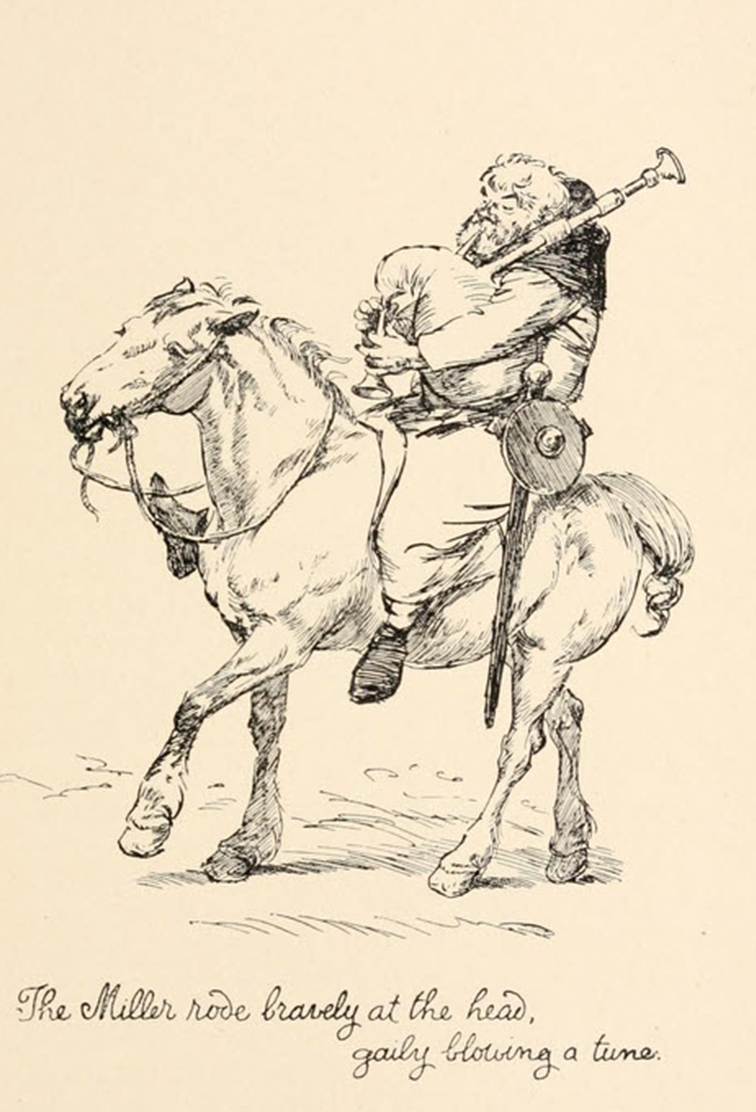
The Miller’s
Tale by Geoffrey Chaucer is the most bawdy of the Canterbury Tales (1380s),
told by a drunk miller called Robin.
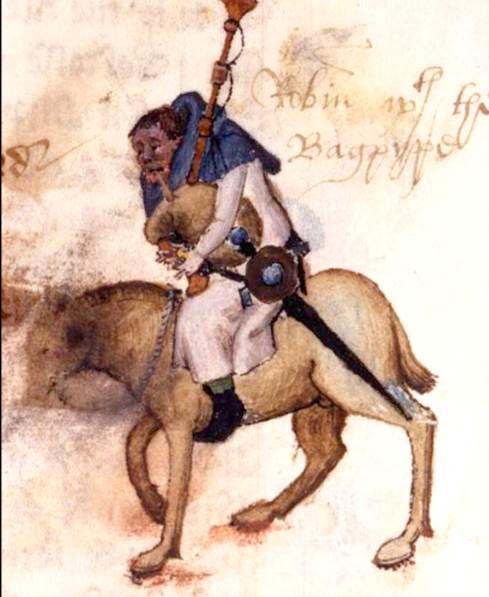
The Millere, that for dronken was al
pale, So that unnethe upon his hors he sat, He nolde avalen neither hood ne hat,
Ne abyde no man for his curteisie …
The Miller, who
for drunkenness was all pale, So that he hardly sat upon his horse, He would
not doff neither hood nor hat, Nor give preference to
any man out of courtesy …
The Millere is a cherl; ye knowe wel this.
The Miller is a
churl; you know this well.
"Now
herkneth," quod the Millere,
"alle and some!
("Now listen," said the Miller, "everyone!)
But first
I make a protestacioun (But first I make a protestation)
That I am
dronke; I knowe it by my soun (That I am drunk; I know it by my sound).
And therfore if that I mysspeke or seye, (And therefore if that I misspeak or say amiss)
Wyte it
the ale of Southwerk, I you
preye (Blame it on ale of Southwerk, I you pray).
For I wol telle a legende
and a lyf (For I will tell a legend and a life)
Bothe of
a carpenter and of his wyf, (Both of a carpenter and of his
wife)
How that
a clerk hath set the wrightes cappe." (How a clerk has set the
carpenter's cap (fooled him)).
What sholde I moore seyn, but this Millere (What more should I say, but this
Miller)
He nolde his wordes for no man forbere, (He would not refrain from speaking for any man)
But tolde his cherles tale in his manere (But told his churl's tale in his manner).
M'athynketh that I shal reherce
it here (I regret
that I must repeat it here).
And therfore every gentil wight I preye, (And therefore every respectable
person I pray)
For Goddes love, demeth nat that I seye (For God's love, think not that I
speak)
Of yvel entente, but for I moot reherce (Out of evil intention, but because
I must repeat)
Hir tales
alle, be they bettre or werse, (All their tales, be they better or
worse)
Or elles falsen som
of my mateere (Or else (I must) falsify some of my material).
(Geoffrey Chaucer, The
Miller’s Prologue and Tale, c1380)
Not all
millers were as uncouth as Chaucer’s miller, but he did represent a poor
contemporary view of millers. Most of what is known about millers comes from
court records, which include complaints about theft, dishonest weights and
overcharging. Millers had the opportunity to defraud those who brought their
grain for milling, but in any profession there were those who were honest and
dishonest.
Bibliography
Mills of Medieval England, Richard Holt,
1988.
The Mills Archive Trust.
Geoffrey Chaucer, The
Miller’s Prologue and Tale, c1380