Kirkdale Cave
A portal to a distant past and a
testimony to the Victorian discovery of modern scientific methodology
|
Return to the Home Page of the Farndale Family
Website |
The story of one family’s journey through two
thousand years of British History |
The 83 family lines into which the family is
divided. Meet the whole family and how the wider family is related |
Members of the historical family ordered by date
of birth |
Links to other pages with historical research
and related material |
The story of the Bakers of Highfields, the
Chapmans, and other related families |

Dates are in red.
Hyperlinks to other pages are in dark blue.
Headlines are in brown.
References and citations are in turquoise.
Context and local history are in purple.
The history of Kirkdale is told
across six webpages.
· The Kirkdale
Anglo Saxon artefacts
· Anglo-Saxon Scandinavian Kirkdale
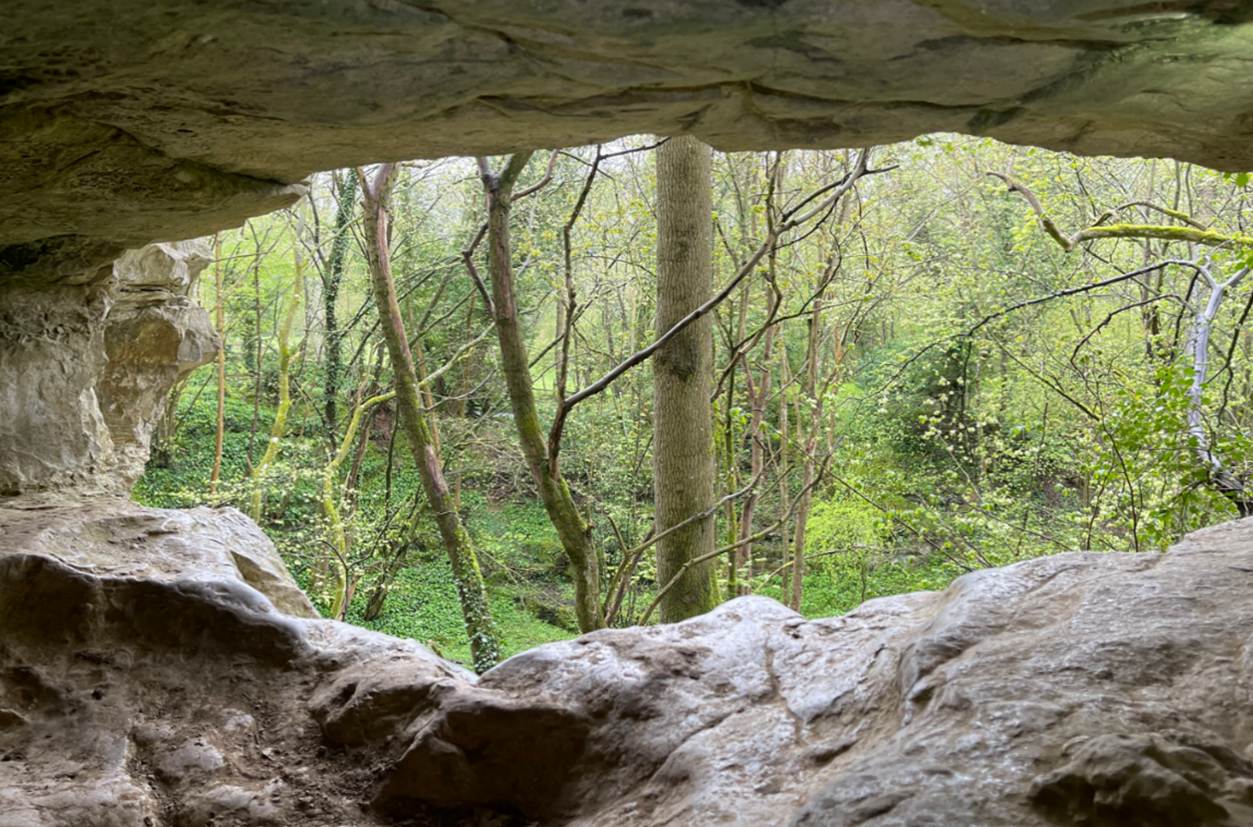
The Cave
About a mile
west of Kirkbymoorside, south of the North York Moors, there is a portal to a
distant era of geological time in the heart of the Farndale family’s ancestral
land. From the road towards Helmsley on the A170 and then on towards
Kirkbymoorside, there is a turn northwards at the Welburn junction (SE 679850)
on Kirkdale Lane. A right turn at the crossroads leads to a large carpark
beside the minster (SE 676857).
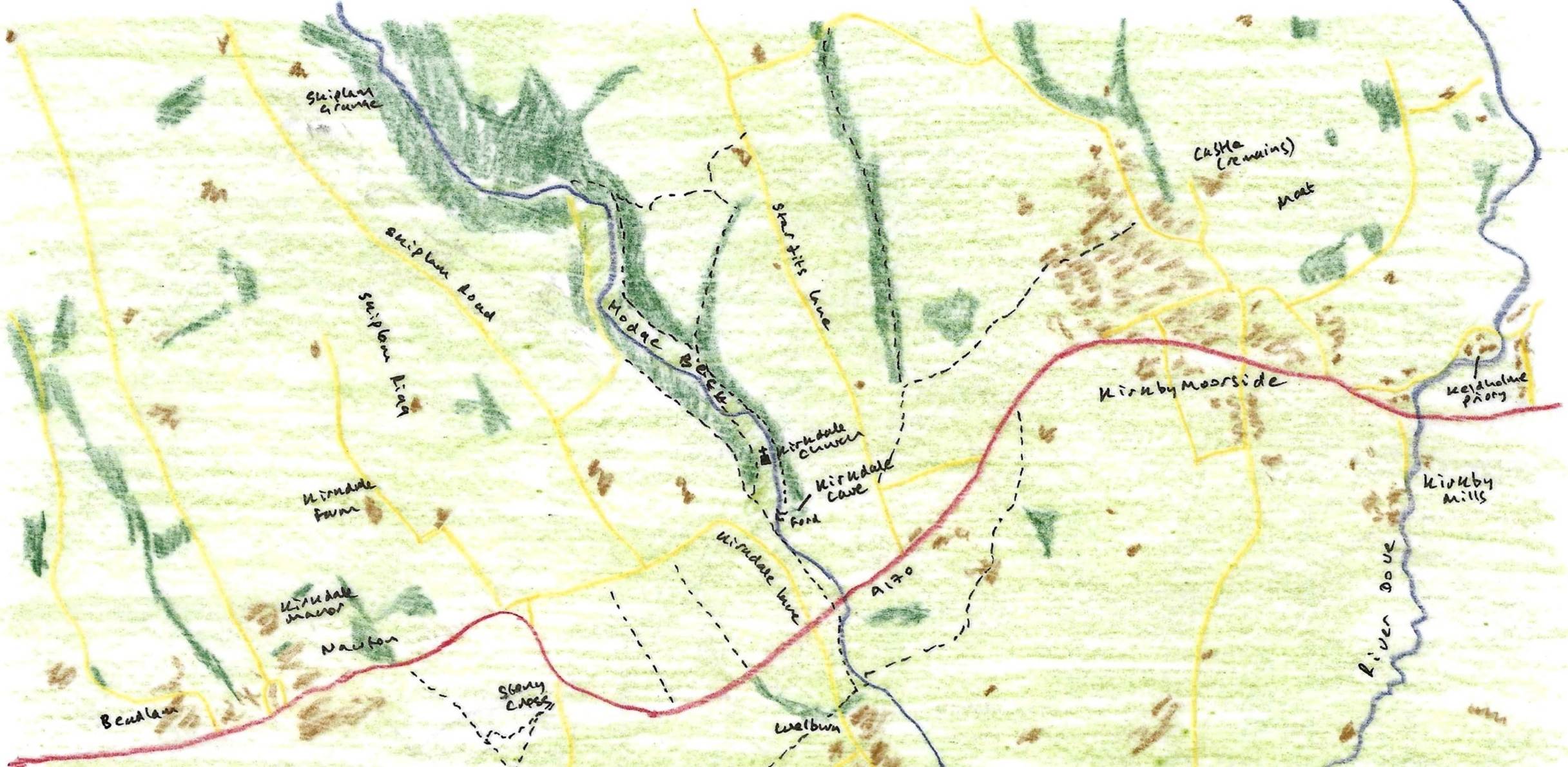
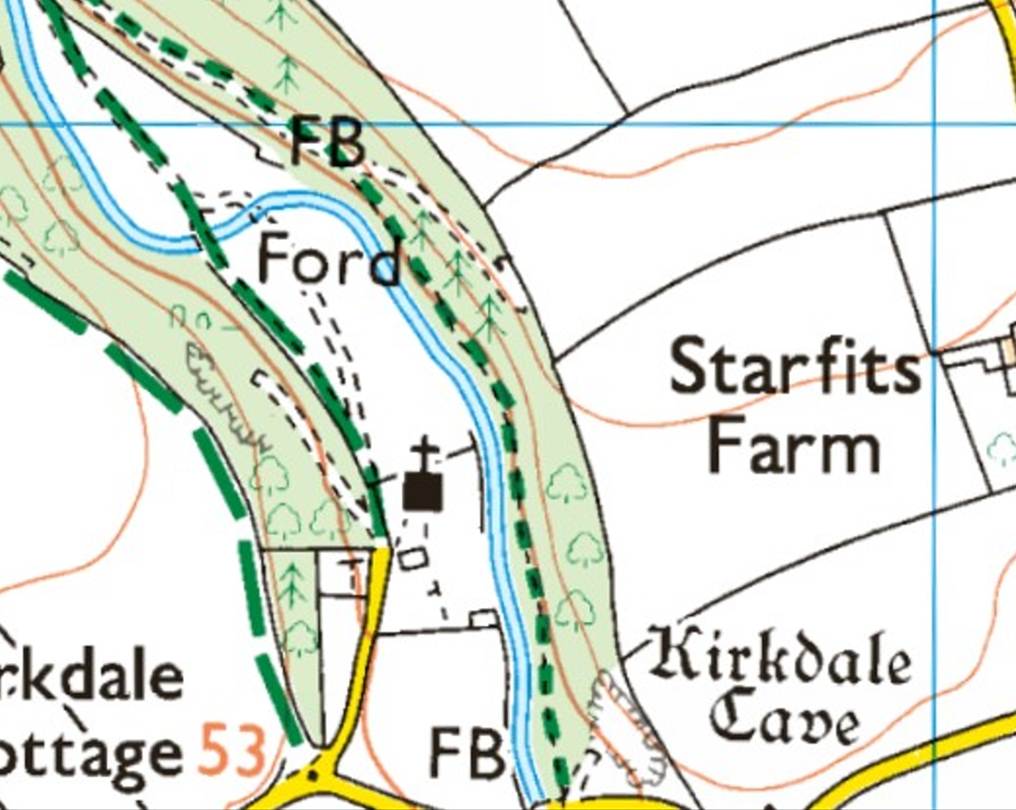
Before a
visit to the church,
there is a walk back down the road to the T junction and then a left turn. That
road leads to a ford across the Hodge Beck, but there is also a bridge (SE
677855) to keep your feet dry. Shortly after the crossing, there are a few
paths into the woods which lead to a clearing only twenty metres into the wood.
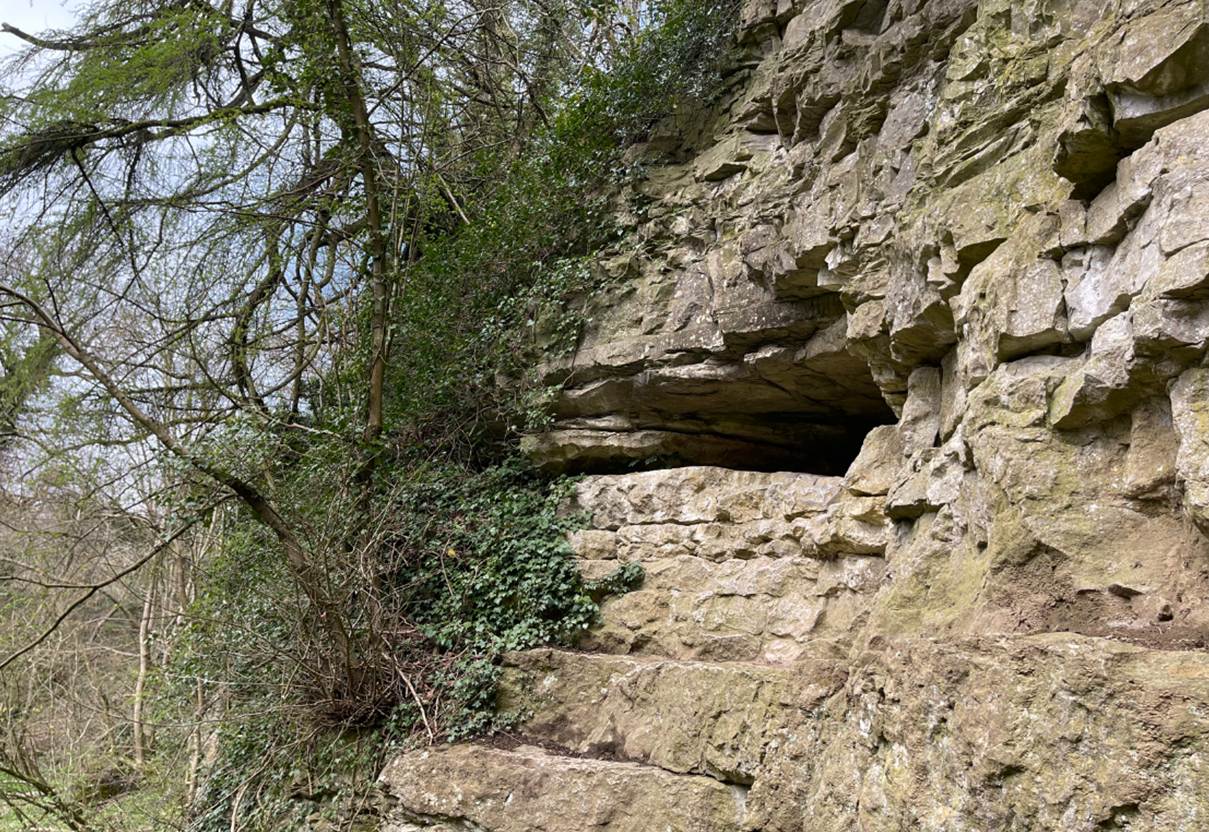
Across the clearing there is a rockface and about fifteen metres up from the
ground there is the entrance to a cave (SE 678856).
Please do not attempt to climb to the cave itself unless you have
the appropriate experience and equipment.
Kirkdale
Cave is a cave and fossil site located beside the Hodge Beck. It was discovered
by workmen in 1821 and found to contain the fossilised bones of a variety of
mammals no longer indigenous to Britain, including hippopotami (the farthest
north any such remains have been found), elephants and cave hyaenas. The
tropical animal remains date to the interglacial period, about 130,000 years
ago. This was later than the period of significant continental drift, so this
was a place at the same latitude as it is today, but the earth was sufficiently
warm that it was a place where animals now found in tropical lands once roamed.
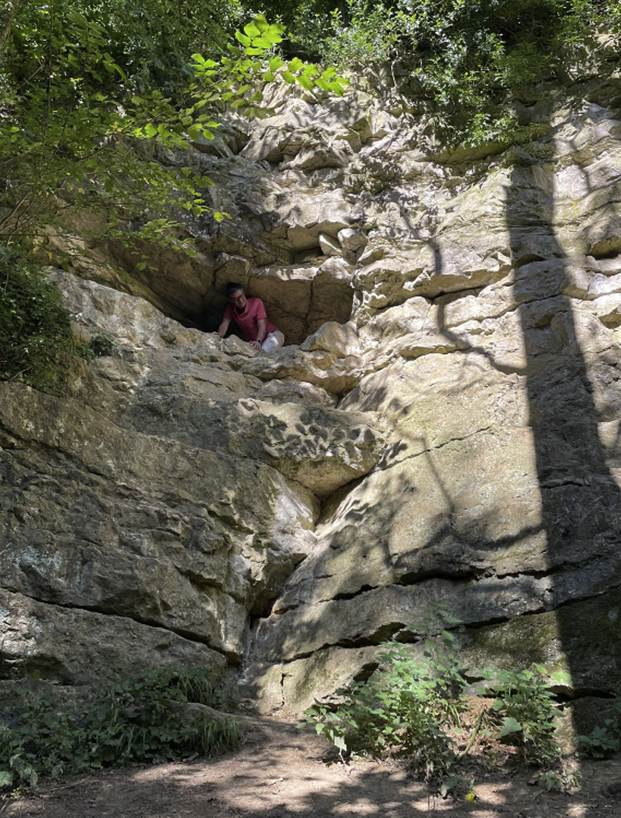
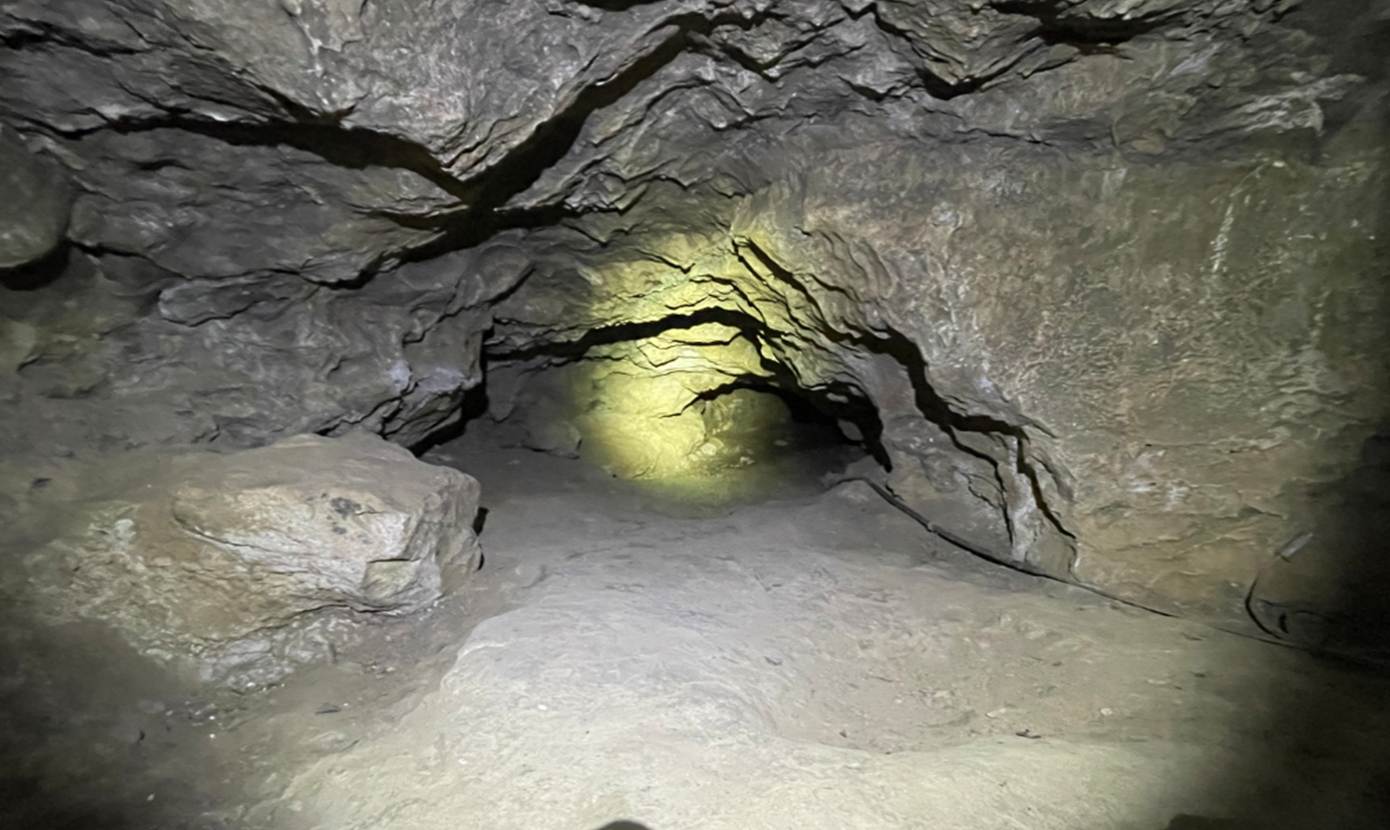
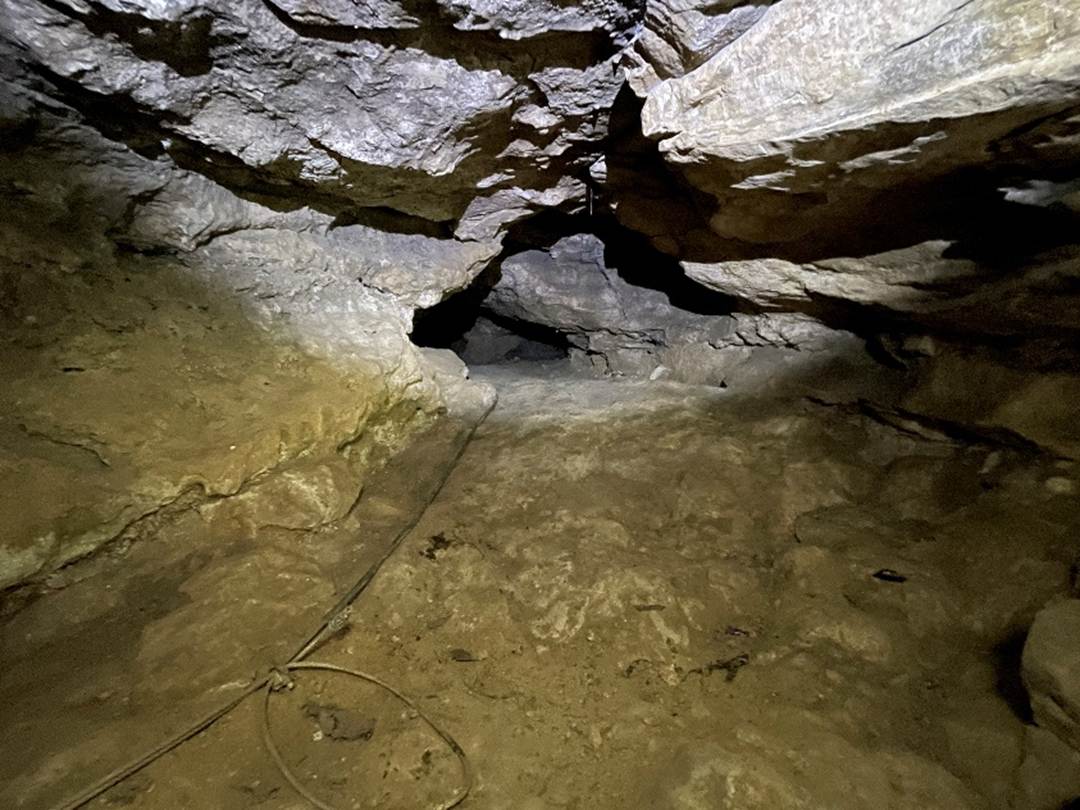
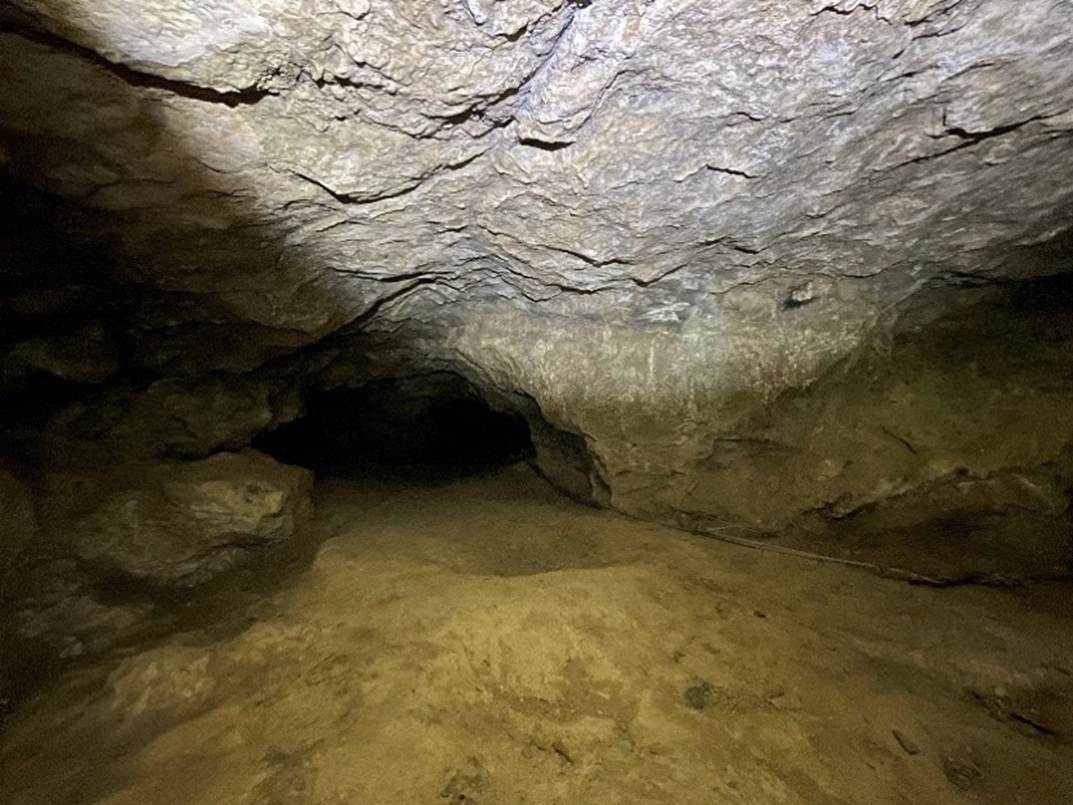
Even on a
cold, wet Yorkshire afternoon, you need to transport yourself in imagination to
the African plains.
The Palaeolithic record, 130,000 to 115,000 YBP
Geological formation
The
valley of Kirkdale and Bransdale is the result of wearing by the river, which
in former millennia cut down the land roughly to the level of the present flood
plain at Kirkdale. This flow would have been interrupted between c 18,000 to
13,000 BCE at the end of the last glaciation, when drainage from the Vale of
Pickering was impeded at the coast. This resulted in Lake Pickering, which
probably extended into tributary valleys such as Kirkdale. (St Gregory’s Minster, Kirkdale, North Yorkshire,
Archaeological Investigations and Historical Context, Philip Rahtz and Lorna Watts, 2021, 1).
The
Kirkdale cave however provides a portal much further back in time to an inter
glacial age when Yorkshire, though on the same latitude as today, was much
warmer.
The discovery of
Kirkdale Cave
In 1821, a quarry close to the Minster
was being worked for road stone. The quarry men cut through a cave entrance.
They spread stone chippings on the road, not noticing small bones. This cave
was later found to have been covered by many inches depth of animal bones
beneath a layer of dried mud. The local vicar later spotted the bones and
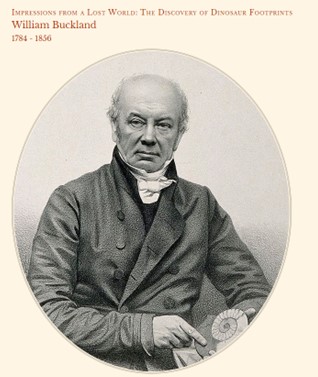
reported his find to the Reverend William Buckland, who was a professor of
minerology and geology at Oxford University. Buckland came to the site in 1822.
The discovery at Kirkdale occurred in the wake of new forms of stratigraphic
dating developed during the Enlightenment.
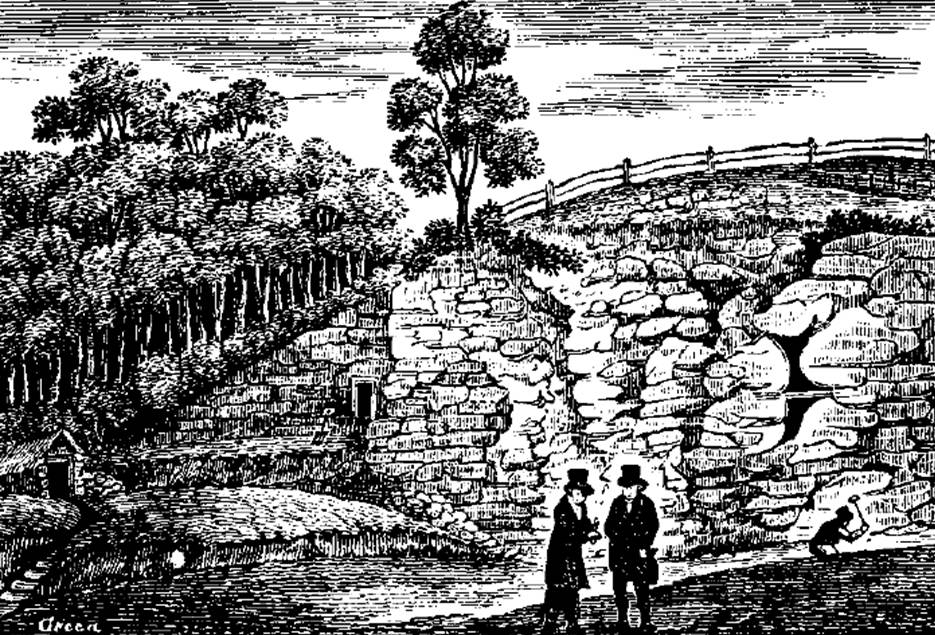
Kirkdale
Cave from Rev George Young DD, A Picture of Whitby and its
environs, 1840.
A selection
of the fossils were sent to William Clift, the curator of the museum of the
Royal College of Surgeons, who identified some of the bones as the remains of
hyaenas, though larger than any of the modern species. The analysis enabled
Buckland to report to the Royal Society in London the discovery of:
• Straight tusked elephant, rhinoceros,
hippopotamus, bison and giant bear finds from an earlier warmer period of the
earth’s history; and
• Mammoth, woolly rhinoceros, reindeer,
horse and sabre tooth tiger remains from the later cold spells.
It is
evident from the list of animals that two distinct assemblages were present;
one indicative of relatively ‘warm’ forest conditions and the other typical of
a cold steppe. In the first group can be placed the straight-tusked elephant,
Rhinoceros hemitoechus, Hippopotamus, bison and giant
deer, and in the second the mammoth, woolly rhinoceros, reindeer and horse.
Three species (straight-tusked elephant, Rhinoceros hemitoechus
and hippopotamus) of the ‘warm’ assemblage are unknown in English deposits later
than the Last Interglacial period. They are, however, characteristic of that
age, together with the hyaena, which at that time appears to have been
particularly abundant. Cave deposits allocated to the Last Interglacial in
Victoria Cave and Raygill Fissure in the West Riding
and in the Gower Peninsula of South Wales contain the same three species. (The
Animal Remains from Kirkdale Cave, J G
Rutter, reproduced in A History of Helmsley Rievaulx and District,
editor, J McDonnell, 1963, page 5).
Buckland had begun his investigation believing that
the fossils in the cave were diluvial, in other words that they had been
deposited there by a deluge that had washed them from far away, possibly the
Biblical flood. On further analysis Buckland concluded that
the bones were the remains of animals brought in by hyaenas who used it for a
den, and not a result of the Biblical flood floating corpses in from distant
lands, as he had first thought. His reconstruction of an ancient ecosystem from
detailed analysis of fossil evidence was admired at the time, and considered to
be an example of how geo-historical research should be done. The minute and
painstaking accuracy of his observation and description of the bones set new
standards of scientific method. The Kirkdale cave discoveries helped to inspire
a landmark in the development of geological study.
|
|
William Buckland and the Bone Caves
The
story of William Buckland’s amazing discovery, five hundred metres from our
ancestral home |
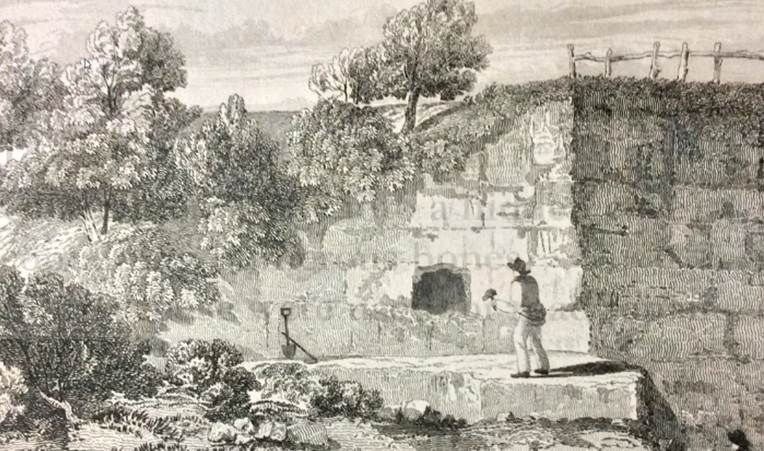
The discovery
of the Kirkdale fossils marked a moment of a transformation in human
understanding, an Enlightenment.
The hyaena
bones were abundant and evidenced that hyaena had dragged animal parts into the
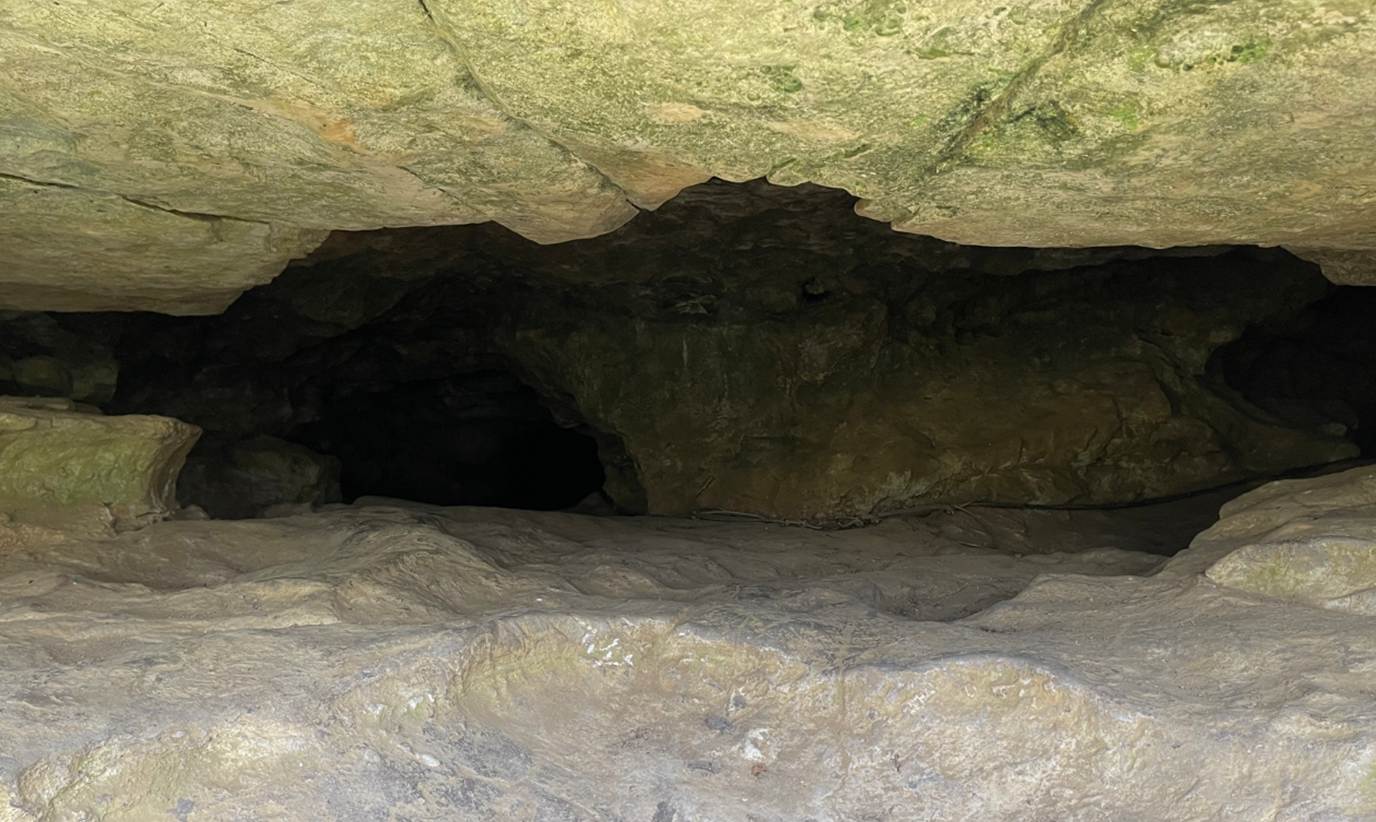
cave to eat them. The mouth of the cave is not larger than one metre in height,
so Buckland concluded that the varied animal remains were the prey of hyaena,
dragged into the cave. He came to realise that the cave had never been open to
the surface through its roof, and that the only entrance was too small for the
carcasses of animals as large as elephants or hippos to have floated in. He
began to suspect that the animals had lived in the local area, and that the
hyaenas had used the cave as a den and brought in remains of the various
animals they fed on. This hypothesis was supported by the fact that many of the
bones showed signs of having been gnawed prior to fossilisation, and by the
presence of objects which Buckland suspected to be fossilised hyaena dung.
Further analysis, including comparison with the dung of modern spotted hyenas
living in menageries, confirmed the identification of the fossilised dung.
His
reconstruction of an ancient ecosystem from detailed analysis of fossil
evidence was admired at the time, and considered to be an example of how
geo-historical research should be done. The minute and painstaking accuracy of
his observation and description of the bones set new standards of scientific
method. The Kirkdale cave discoveries helped to inspire a landmark in the
development of geological study.
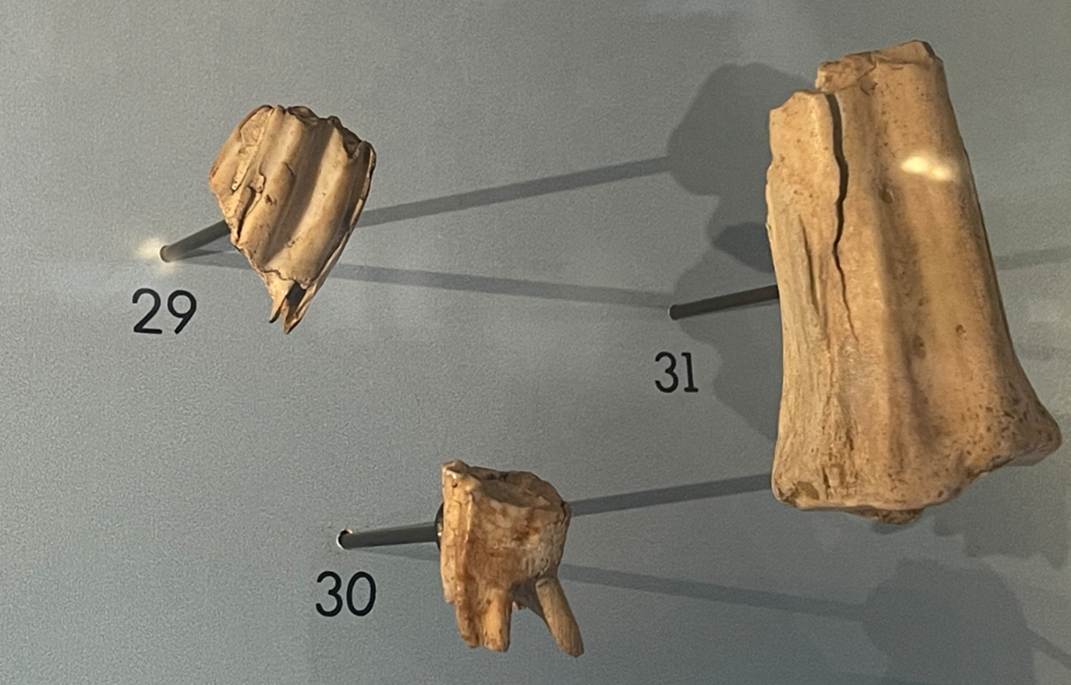
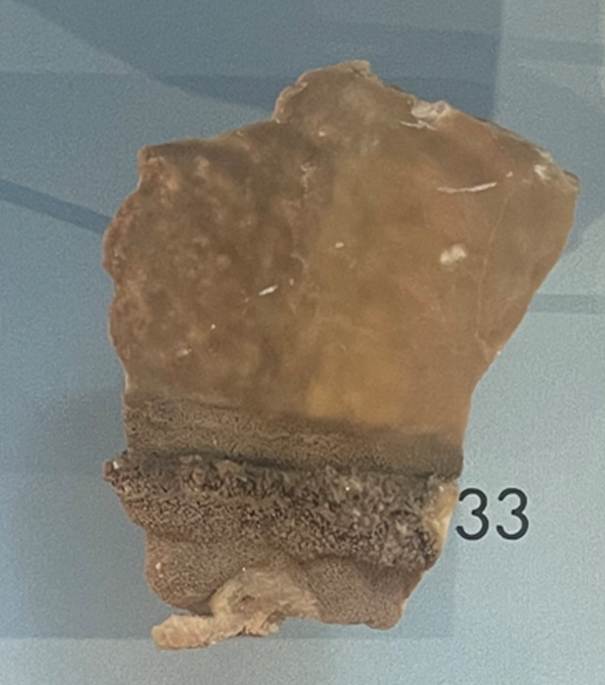
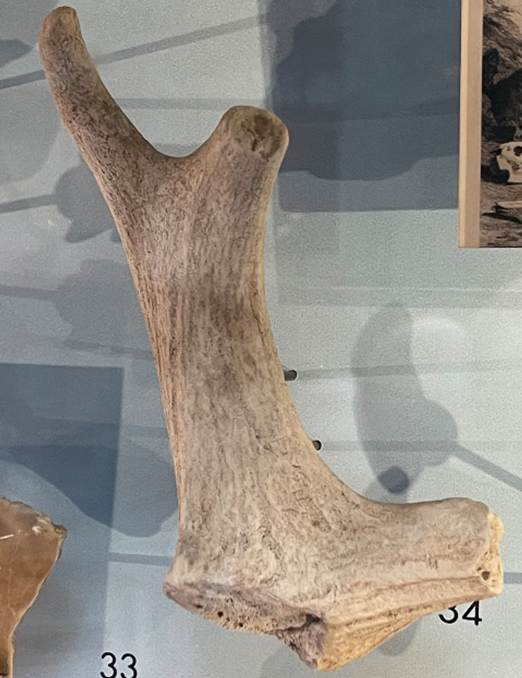
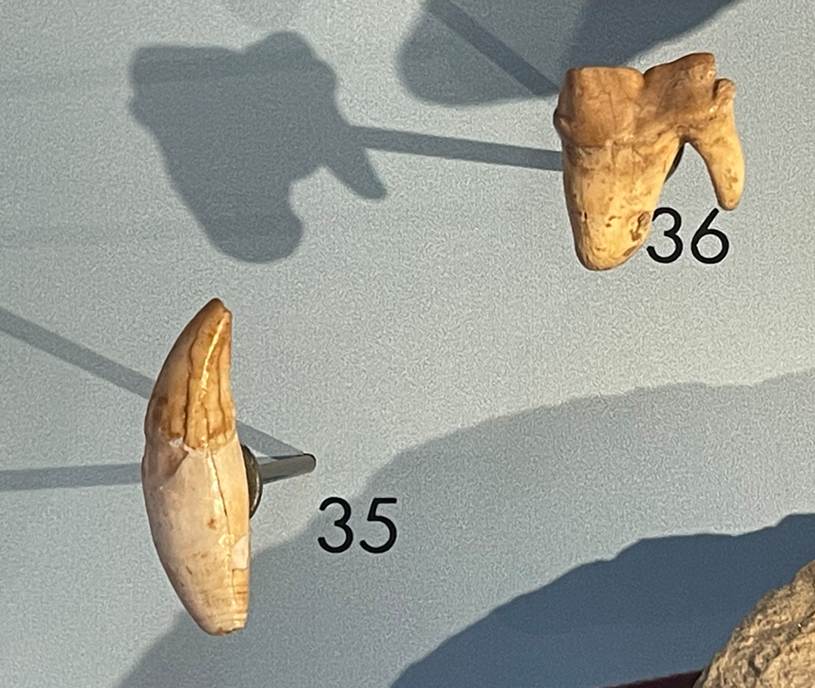
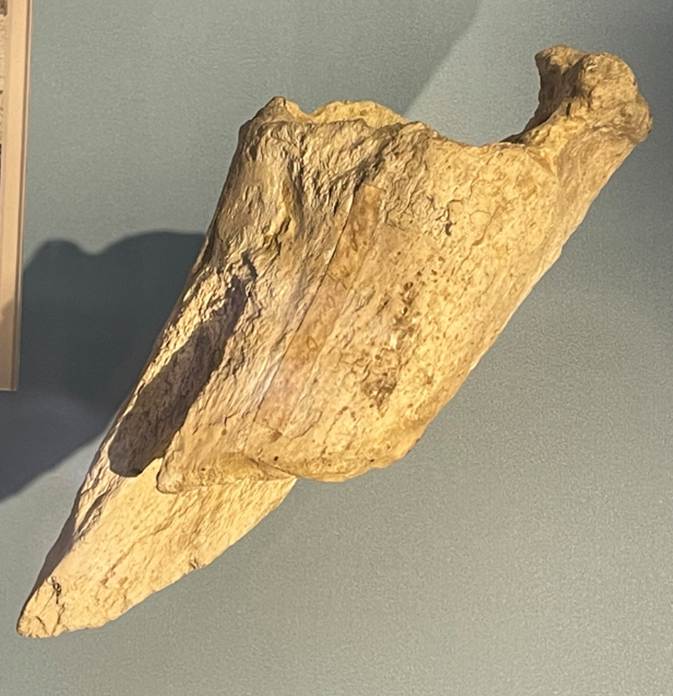
31 – Ox
tibia, Pleistocene, Kirkdale Cave
32 – Deer
tooth, Cervus sp, Pleistocene, Kirkdale Cave
33 – Cave
Earth, Pleistocene, Kirkdale Cave
34 – Red
deer antler, cervus elephus,
Pleistocene, Kirkdale Cave
35 –
Hyaena tooth, Pleistocene, Kirkdale Cave
36 –
Hyaena tooth, Pleistocene, Kirkdale Cave
37 - Bear
tibia, Ursus sp, Pleistocene, Kirkdale Cave
(Kirkdale
fossils displayed at the Scarborough Rotunda Museum)
All
the bones at Kirkdale were accumulated across the cave floor and later a
sediment of mud was introduced on a single occasion. This covered thousands of
bone remains. Perhaps this mud was carried in by a rush of water, perhaps from
glacial melt flooding through Newton Dale to lift Lake Pickering to a height of
250 metres. Thereafter a gradual reduction in the depth of Lake Pickering
followed over many years, as water escaped through Kirkham Gorge, to flow
towards the Humber Region.
Enlightenment
Realisation
A few days
before reading his formal paper about his Kirkdale conclusions, Buckland gave a
colourful account at a dinner held by the Geological Society: The hyaenas,
gentlemen, preferred the flesh of elephants, rhinoceros, deer, cows, horses,
etc, but sometimes, unable to procure these, and half starved, they used to
come out of the narrow entrance of their cave in the evening down to the
water's edge of a lake which must once have been there, and so helped
themselves to some of the innumerable water-rats in which the lake abounded.
It was in
the last inter-glacial period (the Eemian) of some
60,000 years duration, yet only one of several warm periods between successive
glacial recessions, that Kirkdale Cave became a den of hyaenas. Formerly a
river cave, like that which can still be seen at Held, or Spring Head, above
Keldholme, it was left high and dry after the ice had retreated backwards. Soon
after its occupation by animals its entrance became blocked and remained hidden
until found by quarrymen in 1821 (A History of Helmsley Rievaulx and District, editor, J McDonnell, 1963, page 4).
In 1823
Buckland published his well received findings in his
work Reliquiae Diluvianae, or Observations on the Organic Remains
contained in Caves, Fissures and Diluvial Gravel, and on other Geological
Phenomena, Attesting the Action of an Universal Deluge.
The
fossilised remains were embedded in a silty layer sandwiched between layers of
stalagmite. All the bones at Kirkdale were deposited across the cave floor.
Later, on a single occasion, a sediment of mud was introduced. This covered
thousands of bone remains. This mud was carried in by a rush of water, which
might have been part of the glacial melt flooding through Nawton
Dale which caused the ancient Lake Pickering to reach a depth of 250 metres.
Thereafter a gradual reduction in the depth of Lake Pickering followed over
many years, as water escaped through Kirkham Gorge, to flow towards the Humber
Region.
During the later Glacial Period in various hilly districts of
Britain, systems of lakes were impounded in the valleys by barriers of morainic
deposits and by the wall-like edges of the ice sheets. Such a phenomenon
occurred on a large scale in northeast Yorkshire. And the largest of these
glacial lakes was that which occupied the extensive Vale of Pickering. This
lake is estimated to have filled to a level of about 250 feet OD before
overflowing on its southern margin at a point ow marked by the Kirkham Gorge.
The Kirkdale Cave is about 175 feet OD and would therefore be subject to
flooding by the rising waters of Lake Pickering. A lake of this nature, largely
fed by glacial melt waters, which are normally charged with fine mud, is the
probable source of mud found within the cave. It is the generally accepted view
that Lake Pickering is to be associated with the last (Würm) Glaciation. The faunal remains from
Kirkdale are therefore probably of the Last Interglacial and Last Glaciation
date (The
Animal Remains from Kirkdale Cave, J G
Rutter, reproduced in A History of Helmsley Rievaulx and District, editor, J
McDonnell, 1963, page 5).
Calcite
deposits overlying the bone bearing sediments have been dated as 121,000 ± 4000
YBP using uranium thorium dating. This confirmed the dating the Kirkdale
material to the Ipswichian or Eemain
Interglacial era. This was an interglacial period which began about 130,000 YBP
at the end of the Penultimate Glacial Period and ended about 115,000 YBP at the
beginning of the Last Glacial Period. The climate then was warmer than it is
today, with a higher global sea level and smaller ice-sheets. During the Last
Inter Glacial, polar temperatures were about 3 to 5 °C higher than today. The
global sea level was at least 6.6 metres above present levels and the global
surface temperature was about 1 °C warmer compared to the pre-industrial era.
The
cave was extended from its original length of 175 metres (574 ft) to 436 metres
(1,430 ft) by Scarborough Caving Club in 1995. A survey was published in
Descent magazine.
Calcite
deposits overlying the bone-bearing sediments have been dated as 121,000 ± 4000
YBP using uranium-thorium dating, confirming that the material dates from the
Ipswichian interglacial.
The
specimens were an original part of the archaeology collection of the Yorkshire
Museum and the scientific interest aroused founded the Yorkshire
Philosophical Society.
While
criticised by some, William Buckland's analysis of Kirkland Cave and other bone
caves was widely seen as a model for how careful analysis could be used to
reconstruct the Earth's past, and the Royal Society awarded William Buckland
the Copley Medal in 1822 for his Kirkdale paper. At the presentation the
society's president, Humphry Davy, said: By these inquiries, a distinct
epoch has, as it were, been established in the history of the revolutions of
our globe, a point fixed from which our researches may be pursued through the
immensity of ages, and the records of animate nature, as it were, carried back
to the time of the creation.
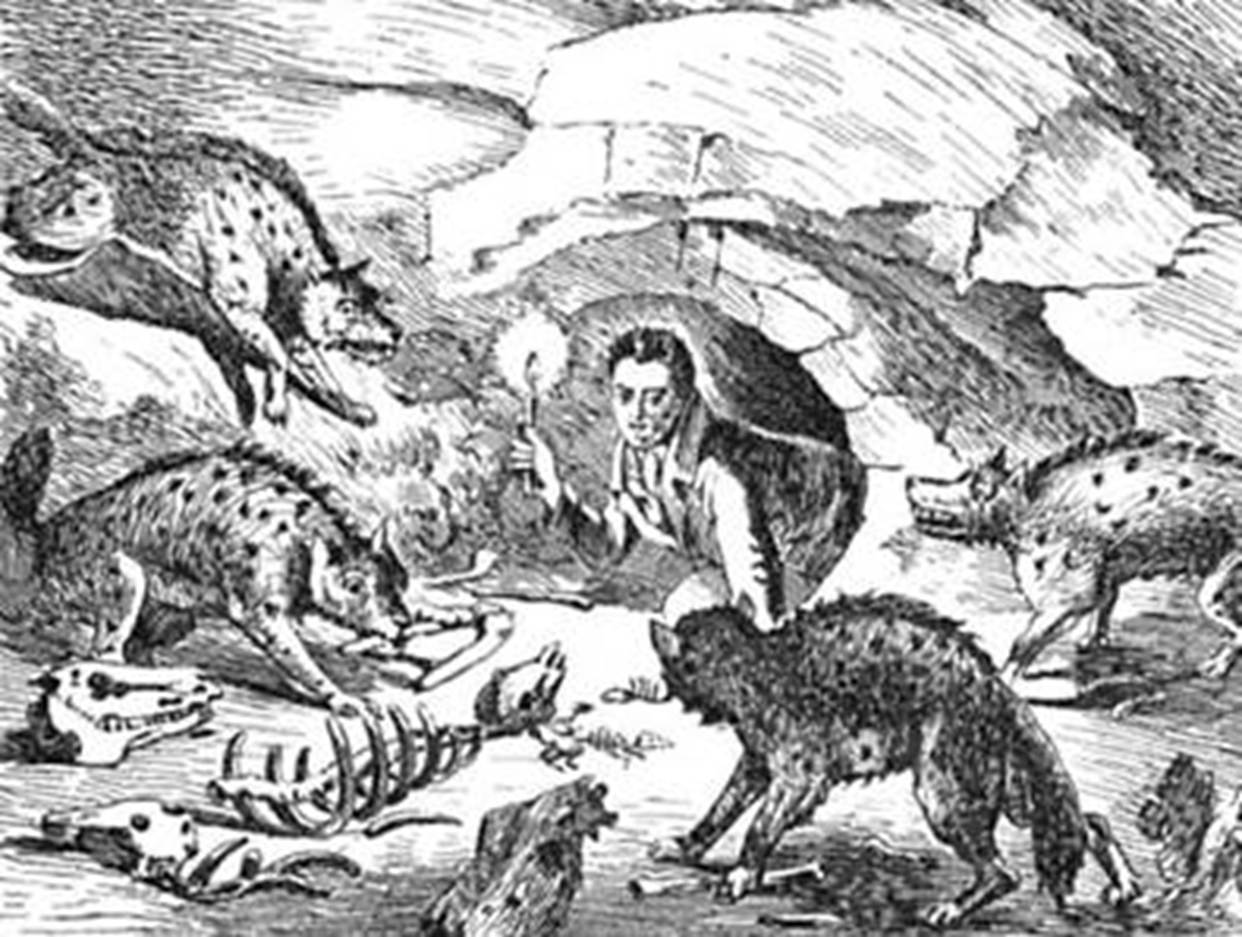
A humorous cartoon in 1822 depicting Buckland’s discovery
There
is no prehistoric evidence of human habitation from the Kirkdale excavations. (St Gregory’s Minster, Kirkdale, North Yorkshire,
Archaeological Investigations and Historical Context, Philip Rahtz and Lorna Watts, 2021, 284).
The first
that ever was scientifically explored in the county, the famous hyena's den of
Kirkdale, yielded to Dr. Buckland in 1821, the materials by which he was led to
the proof that the extinct animals found in Britain had undoubtedly once lived here, and had
not been carried into their resting places by a deluge (Macmillan’s Magazine, September 1871).
In 1995, the
cave was extended from its original length of 175 metres to 436 metres by
Scarborough Caving Club. A survey was published in Descent
magazine.
Later discoveries by
Buckland
The
discoveries in Kirkdale cave caused a sensation at the time. The energetic Buckland went on to explore twenty
further caves in the next two years, and even imported a hyaena to Oxford to
observe the habits of killing and dismembering its prey in order to test his
hypotheses.
Three years
after his Kirkdale discovery, William Buckland discovered the footprints of a
giant lizard which he called Megalosaurus, but which would later be
called dinosaurs.
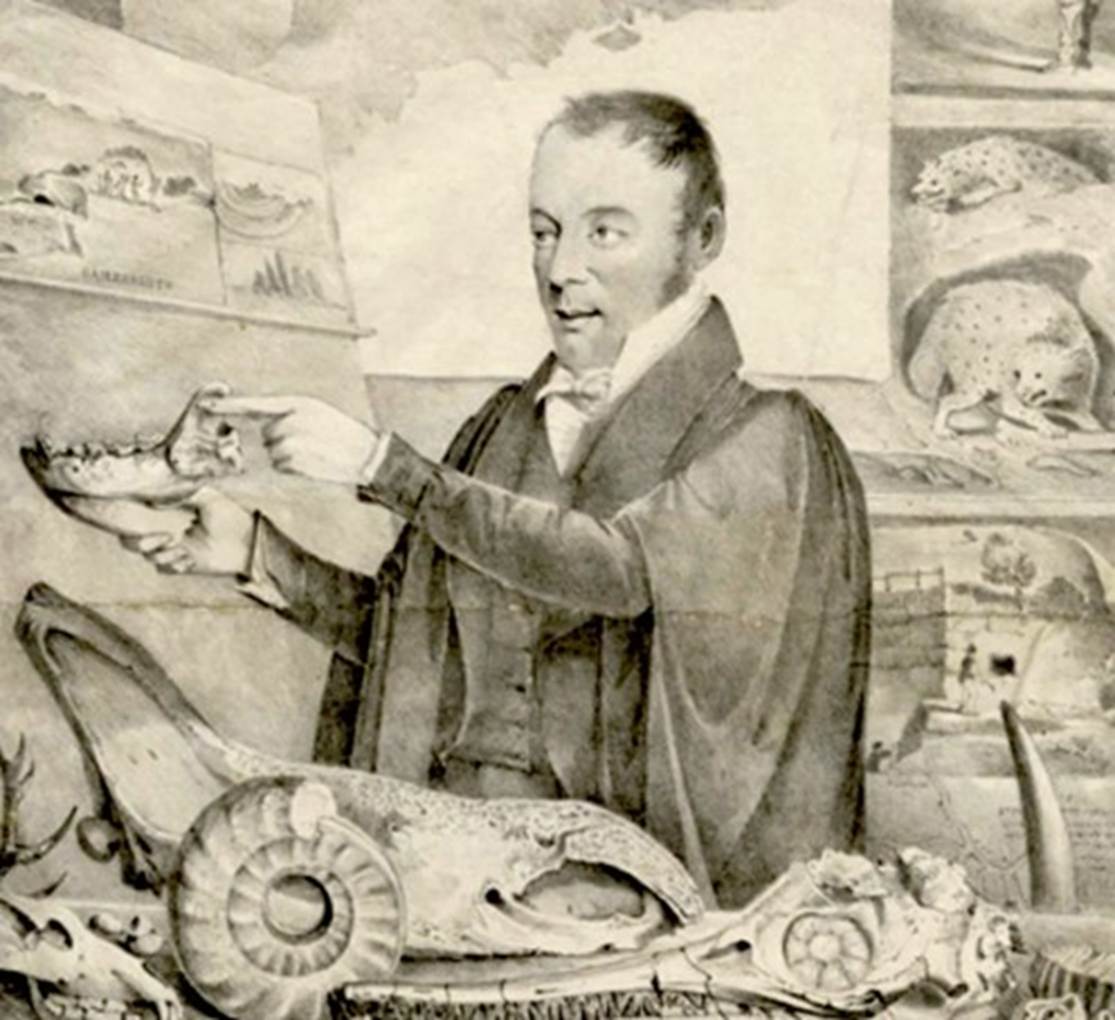
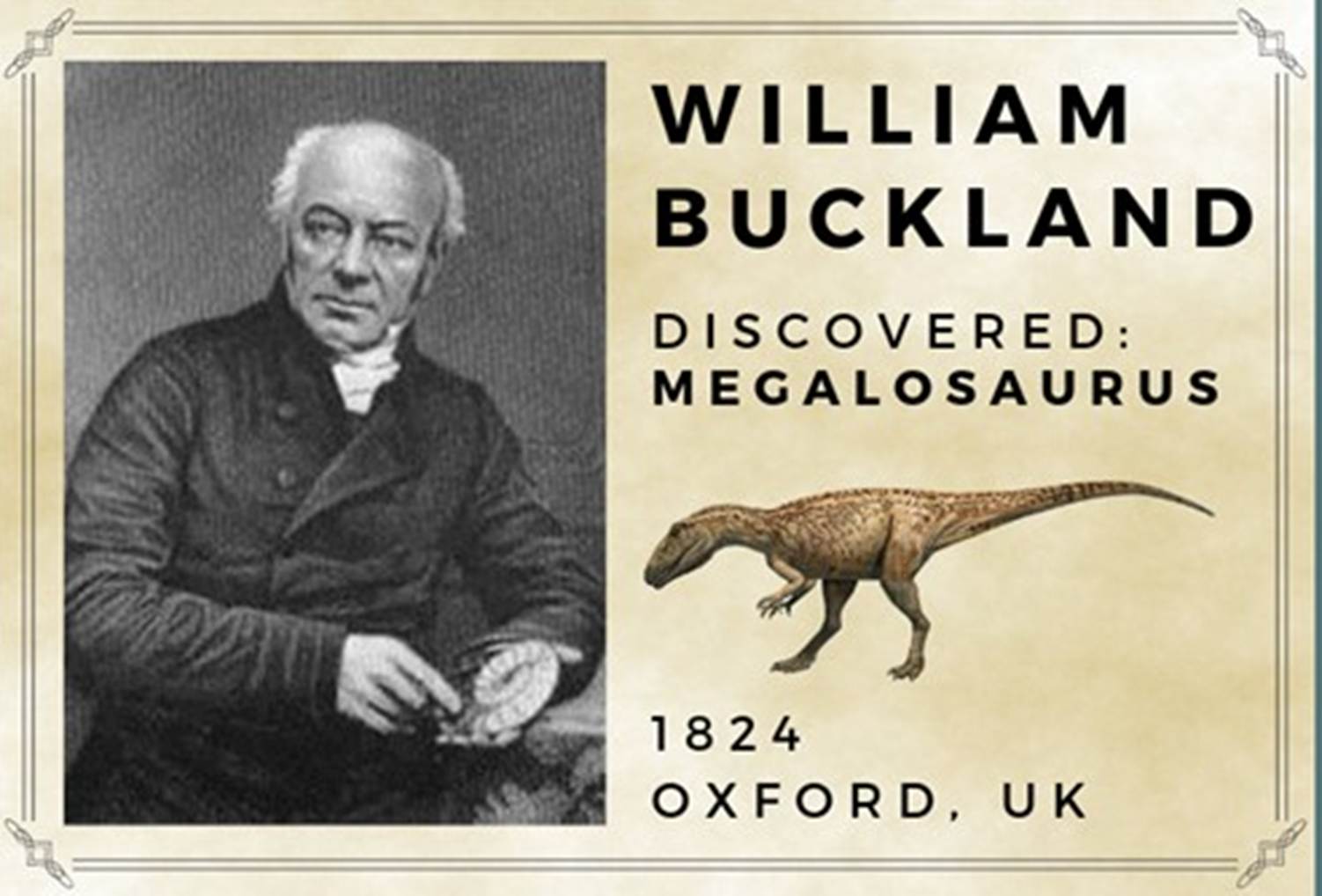
William
Buckland also explored and interpreted the Bronze Age Ryedale Windy Pits.
A time machine
The Kirkdale
Cave transports us to a time before the age of humans in Britian, but a place
of very deep antiquity, and the very place where our ancestors would later
live, in a different period of geological time.
A vast epoch
of time passed before the first human settlers in the region following the last
great Ice Age entered Britain across Doggerland, the
lowlands of what is now the North Sea, probably following animals such as
reindeer. The first humans arrived in the area of the North Yorks Moors about
10,000 years ago. They were hunters, hunting wild animals across the moors and
in the forests. Relics of this early hunting, gathering and fishing community
have been found as a widespread scattering of flint tools and the barbed flint
flakes used in arrows and spears.
18,000 YBP – The Devensian Period, the end of the last Ice Age
The Geography,
Geology, Landscape and Setting of Kirkdale
The valley
of Kirkdale and Bransdale is the result of wearing by the river, which in
former millennia shaped the land roughly to the level of the present flood
plain at Kirkdale. This flow would have been interrupted between c 18,000 to
13,000 BCE, during the Devensian Period at the end of the last glaciation, when
drainage from the Vale of Pickering was impeded at the coast. This resulted in
Lake Pickering, which probably extended into tributary valleys such as
Kirkdale.
The
Devensian ice sheets created the natural topography of Yorkshire and Ryedale,
which provided a suitable landscape for the dense network of religious
communities of the seventh and eight centuries. This was a landscape of
strategic corridors through which royal and aristocratic patrons later
competed. The geology of the upland areas directed the meltwaters through
rivers into the lowlands which provided water supplies and rich alluvial
deposits, creating four main regions of the Holderness peninsula, the Vale of
Pickering, the Vale of York and the Humber Levels.
The Hodge
Beck and the River Dove ran off into the Vale of Pickering to form Lake
Pickering, a pro glacial lake. In time Lake Pickering drained off into the
Derwent, leaving extensive marshland.
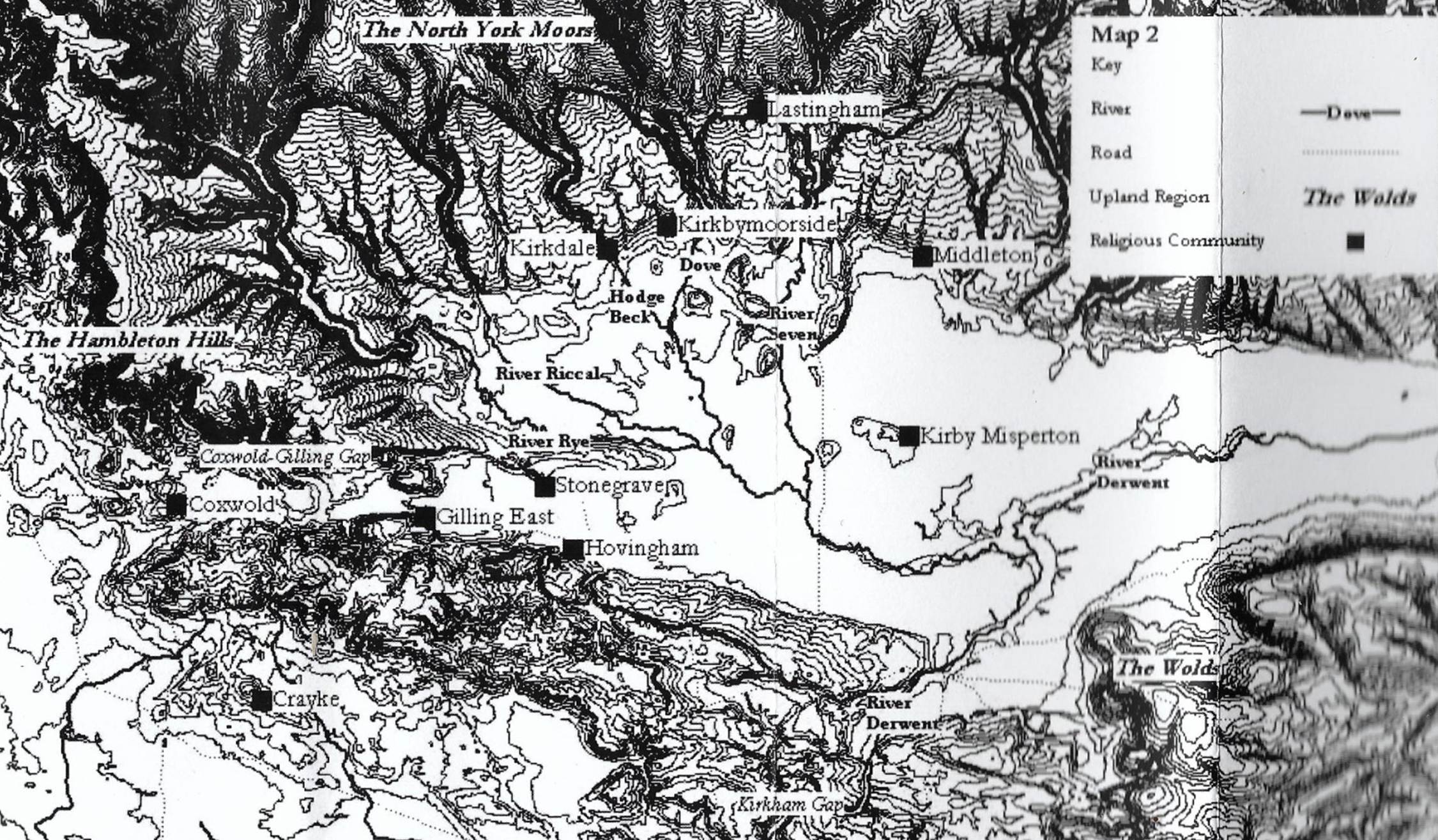
Ryedale was therefore destined to become an area of
key strategic importance. The passage of geological time left a natural
landscape fit for agriculture and human habitation and the Vale of York, the
Vale of Pickering and the Vale of Mowbray were well suited to pastoral farming.
(Power, Religious Patronage and
Pastoral Care, Religious communities, mother parishes and local churches in
Ryedale c650 to c1250, Thomas Pickles D Phil Oxon, Lecturer in Medieval
History, The Kirkdale Lecture 2009)
The
valley of Kirkdale, which extends from the larger dale of Bransdale, is one of
many north to south dales along the southern edge of the North York Moors,
before these valleys open out into the rich agricultural land of the Vale of
Pickering and the Vale of York. Kirkdale is the southern extension of
Bransdale, which follows the Hodge Beck. It lies west of the settlement of
Kirkbymoorside. To the south, the River Dove which flows from Farndale through
Kirkbymoorside and the Hodge Beck join at a confluence.
Kirkdale
is at the flood plain of the Hodge Beck, with a long history of downcutting,
braiding and terracing. The flood plain must always have been an attractive
focus for settlement, pasture and arable. The church and churchyard are
situated at a wide area before the dale narrows to pass through a steep valley
with a high cliff, to emerge further south into the Vale of Pickering. (Archaeology at Kirkdale, Supplement to the Ryedale
Historian No 18 (1996 to 1997), Lorna
Watts, Jane Grenville and Philip Rahtz, 2). (St
Gregory’s Minster, Kirkdale, North Yorkshire, Archaeological Investigations and
Historical Context, Philip Rahtz and
Lorna Watts, 2021, 1).
You can next read about Anglo-Saxon Kirkdale.
Bibliography
Reliquiae
Diluvianae, Observations
on the Organic Remains contained in Caves, Fissures and Diluvial Gravel, and on
other Geological Phenomena, Attesting the Action of an Universal Deluge
A History
of Helmsley Rievaulx and District, editor, J McDonnell, 1963, page 4.
The history
of Kirkdale is told across the following webpages.
· The Kirkdale Anglo Saxon
artefacts
· Anglo-Saxon Scandinavian
Kirkdale
There are
related webpages:
· Alcuin and the birth of modern
education
See also Exploring the Cave.