Rievaulx

Historical and geographical information
|
Return to the Home
Page of the Farndale Family Website |
The story of one
family’s journey through two thousand years of British History |
The 83 family lines
into which the family is divided. Meet the whole family and how the wider
family is related |
Members of the
historical family ordered by date of birth |
Links to other pages
with historical research and related material |
The story of the
Bakers of Highfields, the Chapmans, and other related families |


Dates are in red.
Hyperlinks to
other pages are in dark
blue.
Headlines are in brown.
References and
citations are in turquoise.
Contextual
history is in purple.
This webpage
about the Rievaulx has the
following section headings:
·
Farndale
family history and Rievaulx
· Rievaulx Abbey,
overview
· Timeline of
Rievaulx’s history
· The abbots of
Rievaulx
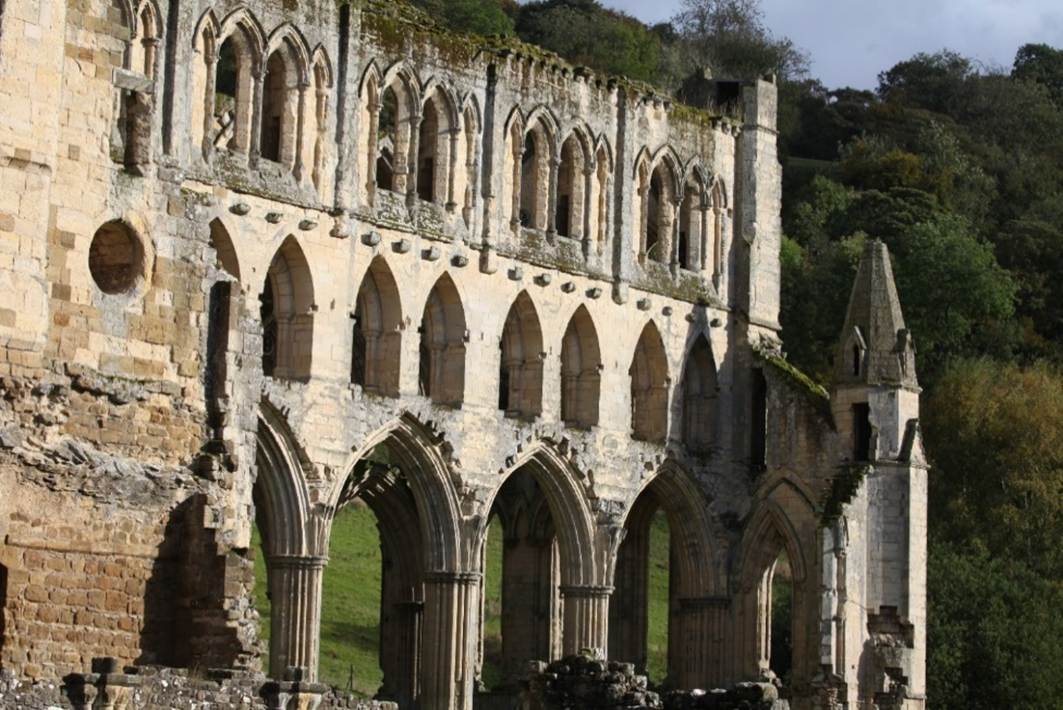
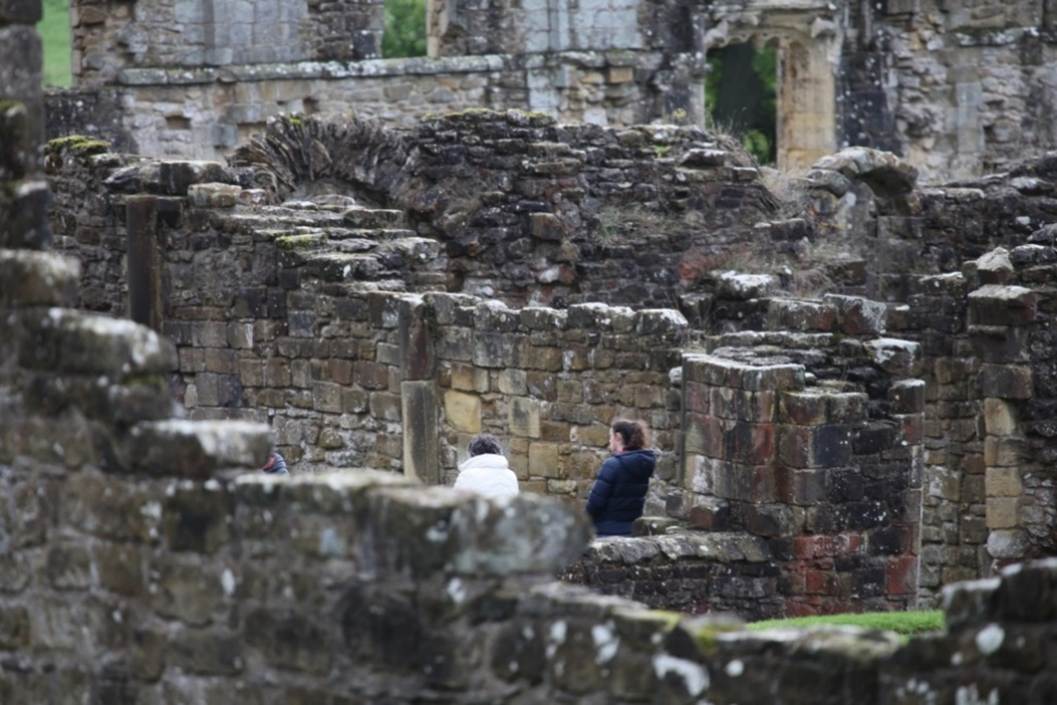
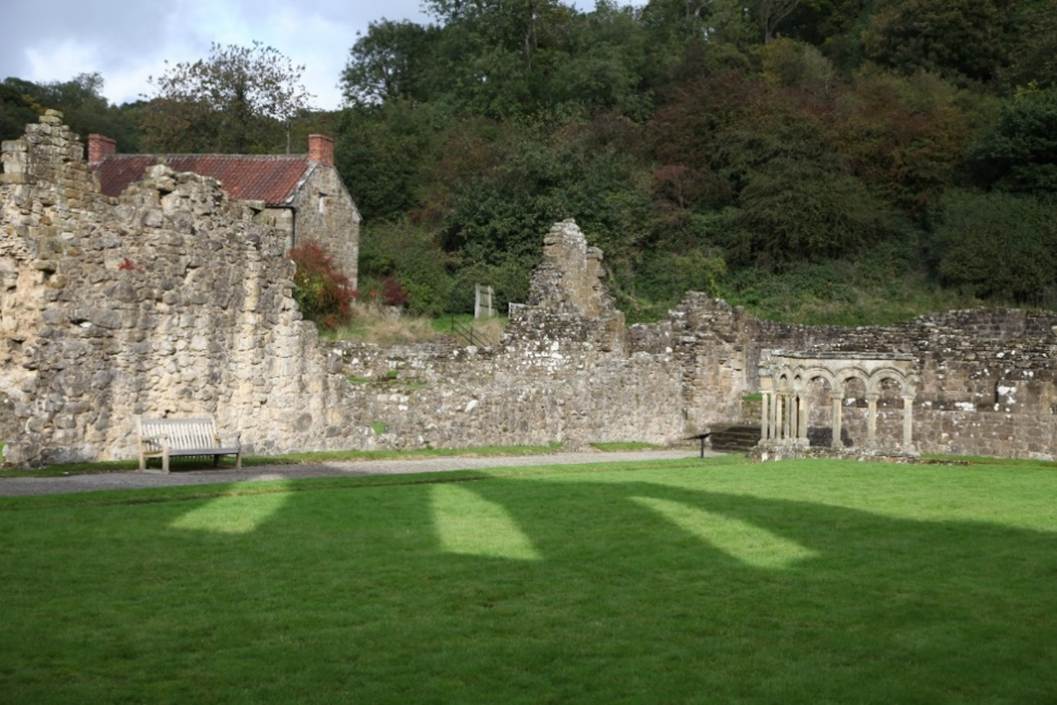
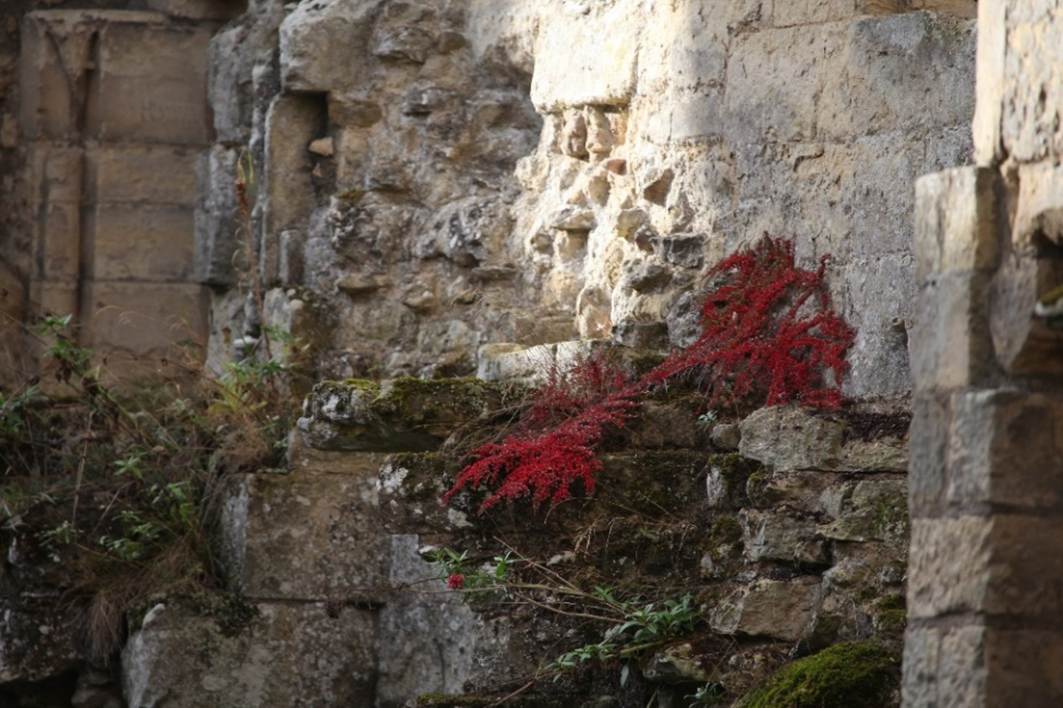
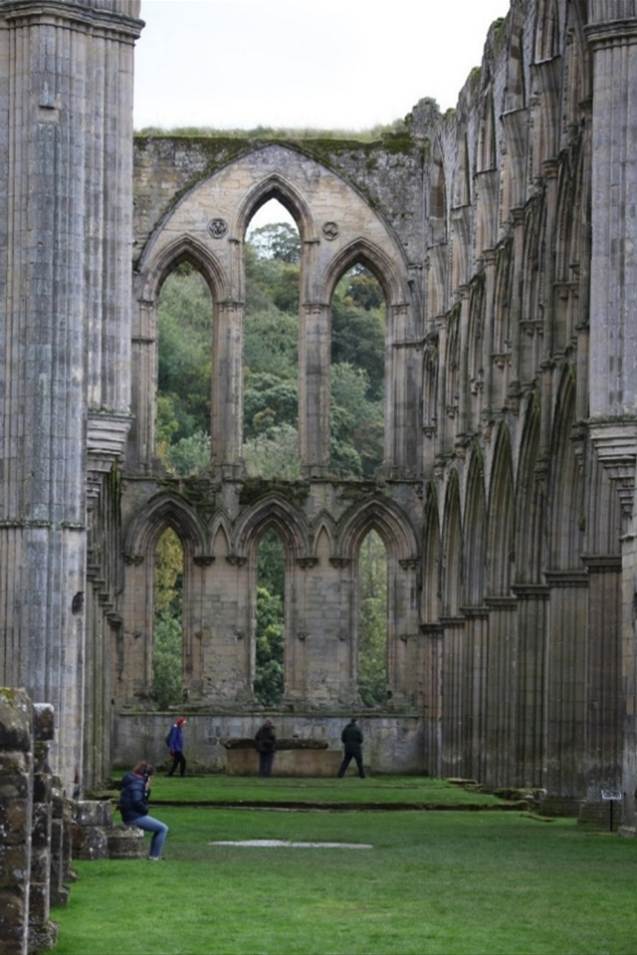
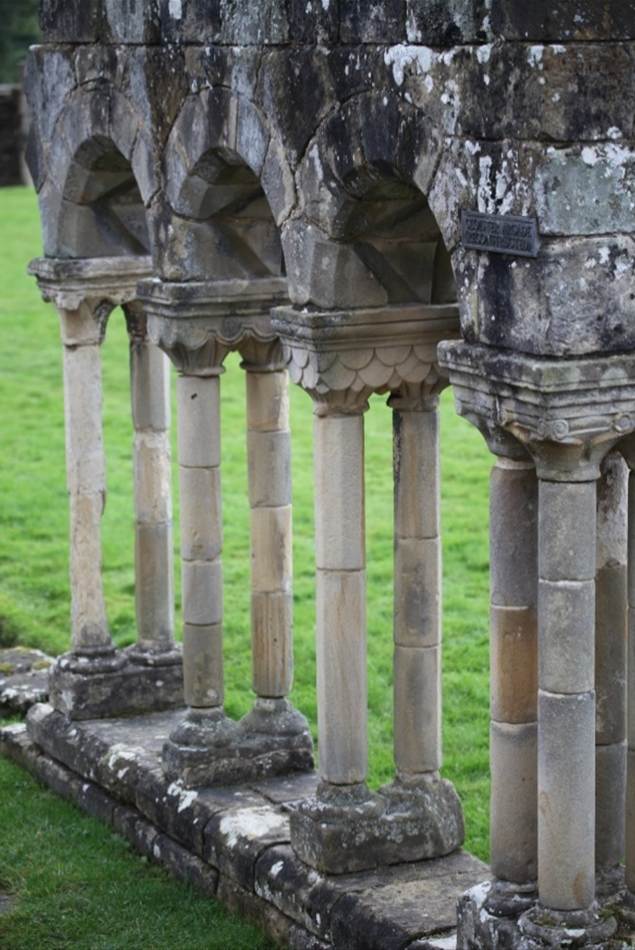
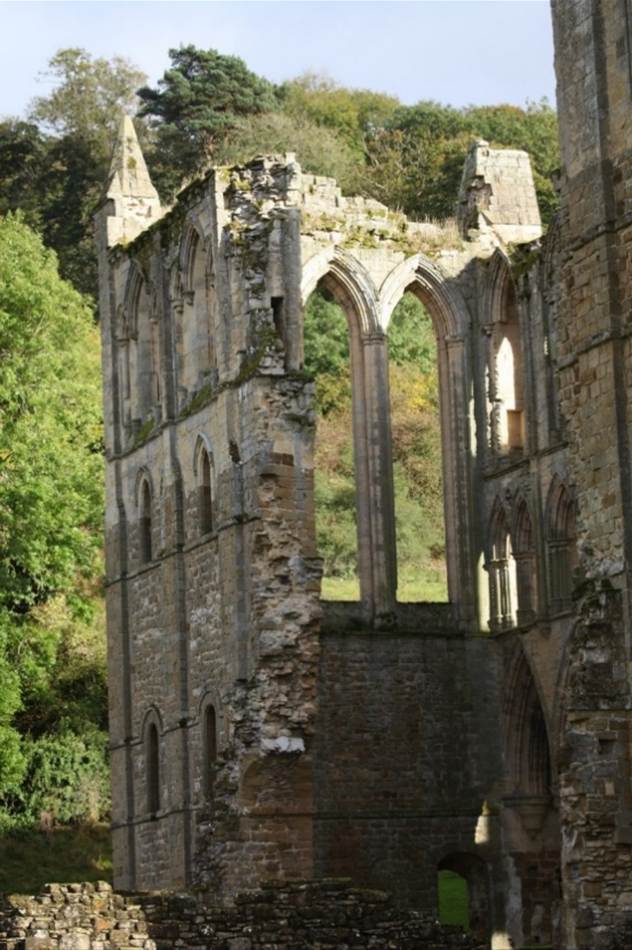
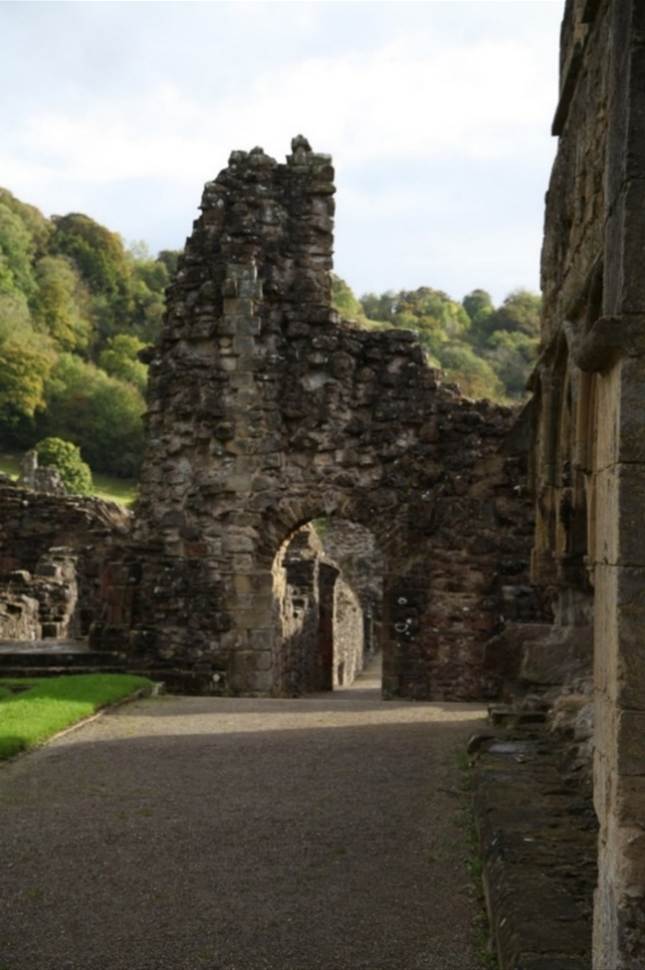
· Photographic
record
· Bibliography
Farndale family history and
Rievaulx
The name
Farndale, first occurs in history in the Rievaulx Abbey Chartulary. See FAR00002.
The relevant year for Farndale history is 1154 when a record appeared I the
Rievaulx Chartulary.
Gundreda, on behalf of
her guardian, Roger de Mowbray, gave land to Rievaulx abbey land which included
a place called Midelhovet, where Edmund the Hermit used to dwell, and
another called Duvanesthuat, together with the
common pasture within the valley of Farndale.
The name Farndale, first occurs in history in the Rievaulx
Abbey Chartulary in a Charter granted by Roger de Mowbray to the Abbot
and the monks of Rievaulx Abbey in 1154. By it Roger bestowed upon the
Monastery, ‘….Midelhovet, that clearing in Farndale where the hermit Edmund
used to dwell; and another clearing which is called ‘Duvanesthuat’
and common of pasture in the same valley of Farndale….’
Post Conquest Monasticism
in the area of the North York Moors
Whitby abbey,
founded c 1078, was the only house in the North Riding belonging to the
Benedictine order, the dominant form of monasticism in Western Christendom
until about 1100.
The first half of
the twelfth century saw the creation of three houses of Augustinian canons at
Guisborough, Newburgh and Marton. Not strictly monks, these canons regular,
although living under a rule, served parish churches appropriated to their
priories.
The Cistercians,
a much more severe order than the Benedictines, reached the area in 1132,
settling at Rievaulx, Byland and Jervaulx in quick
succession.
Between 1150 and
1200 Grandimontine monks, a contemplative order
devoted to extreme poverty and severity, established a very small priory at Grosmont, Gilbertine canons, who followed the Augustinian
rule, a house at Malton, and Premonstratensian canons, pledged to a stricter
observance than the canons regular, three priories at Easby, Coverham and Egglestone. The nine North Riding nunneries,
two Benedictine convents at Arden and Marrick, six Cistercian convents at Handale, Keldholme, Wykeham, Rosedale, Basedale
and Ellerton, and a single Augustinian convent at Moxby,
were all also in existence before 1200.
Then two
centuries later the Carthusians, an eremitical order which met together solely
for part of the divine office, set up their priory at Mount Grace in 1398.
(The end of medieval monasticism in the North Riding of
Yorkshire, Claire Cross, Yorkshire
Archaeological Journal, Volume 78, 2006, page 145).
Rievaulx Abbey
The Victoria County History – Yorkshire, A History of the
County of York: Volume 3 Houses of Cistercian monks: Rievaulx, 1974: The monastery of
Rievaulx, the earliest Cistercian house in the county, was founded by Walter
Espec in 1131. The abbey is situated at the head of a deep valley formed by a
bend of the River Rye below Old Byland. It stands on a plateau, partly of
natural and partly of artificial origin, through being cut into the bank behind
which slopes gently down from the famous terrace above. Opposite to the abbey
rise the wooded sides of Ashberry Hill, and the valley is narrowed in at its
lower end by another wooded bank.

Rievaulx,
1857
The History of this,
the first foundation of the Cistercian order, is happily involved in no
mystery, as we learn from the Monasticon how the
monks of St. Bernard, of Clareval, sent over to this
country, were received by Walter L'Espec and planted
in the valley of the " Rie " called Rieval. (Ryedale and North Yorkshire
antiquities, George Frank, 1888, page
105).
Timeline of Rievaulx’s
History
1098
Rievaulx was an
abbey of the Cistercian order, which was founded by St Bernard of Clairvaux at Cîteaux, near Dijon, France, in 1098. The Cistercian order
emerged in France in the late 11th century and spread rapidly across Europe.
The Cistercian
Order was founded at Cîteaux in France in 1098. Apart
from its consequences for the wastes of North Yorkshire a third of a century
later, this was a major event in the religious life of medieval Europe.
Essentially, it was one of those periodic reformist movements, like that of Cluny
earlier, or of the mendicant friars later, which came to purify and revitalise
monasticism, and thereby the medieval community as a whole. Each such movement,
Professor David Knowles points out, produced, at least for a time, a state of
fervour, when not only isolated individuals, but whole institutions, realise in
themselves something very near to the ideal at which they aim. Where and while
such a centre of sanctity exists, it is the most powerful of all magnets. Such
a magnet was Citeaux and such were Rievaulx and Fountains. (A History of Helmsley Rievaulx and District, editor, J McDonnell, 1963, page 102).
The Cistercian
Order was to become one of the most remarkable European monastic reform
movements of the 12th century, placing an emphasis on a return to an austere
life and literal observance of the rules set out for monastic life by St
Benedict in the 6th century.
A major regional
reason for the success of the Cistercians was the rigour of their religious
life. The order sought to live according to the purest possible interpretation
of the rule of Benedict. Their services were dignified but simple, allowing
more time for reading and manual work. The Order’s art and architecture was
austere.
The ’white monks’
based their rule on that of the long established Benedictine (black monk)
communities. These remarkable and enduring power houses of devotion, culture
and learning had in some ways relaxed the strict Rule of St Benedict; not so
much in such details as diet and personal comforts, as in the communal
ownership of great wealth and expanding the liturgical commitments of the choir
monks till no time remained for manual work, reading and private devotions.
English
Benedictine monasteries were grafted on to the feudal structure, holding manors
in fee as did the Norman barons, and generally living as it were in full play
of feudal society.
The original
Cistercians, led by Robert of Molsesme and Stephen
Harding, first prior of Citeaux, and shortly joined by Bernard of Clairvaux and
the future first Abbot of Rievaulx, carried out a counter revolution. They were
in a sense the Puritans of their day, enforcing strict observance of the Rule,
rigidly controlling endowments (no mills, no fairs or bakeries, and no use of
servile labour) and, most important of all for our present purposes,
endeavouring to detach themselves from the world by seeking land not in already
existing feudal communities, but in the great areas of uncultivated waste.
Hence when the first Cistercians established themselves in England, their
choice of depopulated regions like the Welsh marches and the parts of Yorkshire
devastated two generations earlier by William the Norman.
(A
History of Helmsley Rievaulx and District, editor, J McDonnell,
1963, page 102 to 103).
1128
The Cistercians
first appeared in England at Waverley, Surrey, in 1128.
In 1128 St
Bernard of Clairvaux sent some monks to Rievaulx. They “were honourably
received by both king and kingdom.” Archbishop Thurstan commended them to
Walter l’Espec, and he “about 1131, allotted to them
a solitary place in Blakemoor, near Helmsley,
surrounded by steep hills and covered with wood and bog.” Walter l’Espec was childless, and the grant he made was due to the
natural goodness of his heart and not, as has been stated, to a desire to raise
a memorial to his only sone who had been killed by a fall from his horse.
In ‘a place of
vast solitude and horror’, the monks built the Abbey of Rievaulx, which took
its name from the little River Rye on which it stood. Three dates are given for
the year of its foundation, but 1131, the date of l’Espec’s
original donation, is generally accepted in preference to 1132 and 1133, which
some authorities favour.
Rievaulx was the
first Cistercian House founded in Yorkshire, and its buildings conformed to the
type prescribed by the Charter of Charity. The Gothic style of architecture,
which the Cistercians did much to popularise, was generally adopted, and owing
to the nature of the site of the church was built north and south instead of
east and west as usual.
(The Early
History of the North Riding, William Edwards MA, 1924, page 137)
The Cistercian
Order of ‘white monks’ (as they came to be called, after their dress which
distinguished them from the black-clad Benedictines) was founded in Citeaux,
France, in 1098, upon the initiative of a number of dissident Benedictine
monks. These Benedictines had grown dissatisfied with the extent to which their
own ancient Order had gradually departed from the austere manner of living
which had characterised the earliest forms of monasticism based upon the Rule
of St Benedict. Like the Desert Fathers including John the Baptist the first
monks sought to associate spiritual devotion with a strict material asceticism;
and this was one of the ideals to which the Cistercian Order committed itself
to return. Alongside this, the Cistercians devoted
themselves to the ideal of taking on manual labour as part of their objective
of self-sufficiency.
They decided
to settle in a desert under the garb of the religious life, but their desert
was not to be that of Paul or Hilarion in the wastes of Libya or in the
trackless wilds of the Black Mountain. Instead they choose a proper
place to abide in, a place not uninhabitable but inhabited, clean, fertile,
responsive to tillage, receptive of crops, embowered in woods, bubbling with
springs, a very horn of plenty, a place outside the world in the heart of the
world, remote from men in the midst of men, as wishing not to know the world
yet to be known of it, as she who flies to the willows, hoping to be seen as
she flies'. (Walter Map, De Nugis Curialium, page
75).
Like other
Orders, they accepted gifts of land on which to build their monastery, farm
sheep for wool and grow food, or from which to extract minerals, quarry stone
and retrieve timber for building and repairs. However, initially at least, they
would accept only undeveloped land. Land on which rent-paying tenants were
already settled, mills which took tolls from tenants obliged by feudal laws to
use them, manors with feudal rights which generated income or which bound
tenants to give a certain number of unpaid working days to the lord, and
churches owning the right to exact tithes from their lands, all these they
(initially) declined to accept, partly on the grounds that such assets
conflicted with the ideology of self-sufficiency, partly because their management
would entail an inescapable engagement with the secular world and the risk of a
corrupting materialism which monastic isolation was designed to avoid.
Initially, then,
the Cistercian monastery might be distinguished by the sight of the white monks labouring in the fields, diverting streams
through monastic water-systems, hauling timber from the woodlands, and suchlike
physical, non-intellectual, non-scholarly activities, scheduled to alternate
with the appointed hours of formal religious devotions. But it was not long
before individual monasteries began to engage commercially with the secular
world beyond their boundaries.
The Lay Brother – a new
idea
If the revised
rule forbade the owning of serfs, then plainly the labour needed to build their
monastery and to carve fields and pastures out of the waste must be supplied in
another way. The choir monks’ liturgical commitments, the whole pattern and
intention of their daily routine, prevented them from contributing more than a
small share of the requisite manual labour. Sop a new, and almost unprecedented
type of monks was created, the conversus or lay brother.
It is presupposed
that the conversi are wholly illiterate and it is expressly forbidden that they
should posses books or learn anything save the Pater, Credo, Miserere and a few
other simple formularies that made up their daily vocal prayer. Their sleep was
somewhat longer than that of the choir monks; their food of the same quality
but slightly larger quantity. They visited the church for a short period before
beginning the day’s work, and again before retiring. They had short and simpler
prayers. They worked in silence save for the strictly necessary conversation
about the work in hand.
Working the land
It is probable
that many of the farm names ending variously Court or Cote, such as Lund Court
and Sproxton Cote, are a survival not of the English word meaning a pen or
shelter for beasts, but of the medieval Latin curtis,
meaning farm or farmyard from cohors, which was used
in early Cistercian documents instead of the more familiar grangia
to describe an outlying farmstead.
The grange or
court was a natural development from the Cistercian policy which adopted the
use of lay brothers. Where the earlier monastic orders lived, as did lay
landlords, on the rents of scattered manors worked by serfs, the white monks
carved out an originally single block of land from the wilderness to work
themselves for their own support. This single territory, having toon to support
over 600 men, quickly grew too large to be worked from one central farmhouse at
the Abbey. So granges were established on the periphery of the new domain.
The grange was
merely a collection of farm buildings with a small oratory and common dining
and sleeping accommodation, which served as a subcentre and depot for the
exploitation by lay brothers of land, too distant for the labourers to walk
each day to the scene of their work. The lay brothers there in residence,
besides being changed from time to time, returned to the mother house for great
festivals and at other fixed seasons.
The area of the
grange was usually in the region of 300 acres.
There is a tendency
to assume, in view of the Cistercian development of large scale sheep farming,
that all granges were sheep walks. In fact, a grange could specialise in
anything from farming to iron mining and salt panning. Some of the local
Rievaulx granges plainly were given over to sheep. However others
contained good arable land or had other uses. In general, then, the granges
and cotes of Rievaulx offer a picture of intensive, and by medieval standards
highly productive, mixed farming. Corn, sheep, perhaps cattle (for sale, not
home consumption), not to mention such more exotic bylines as viniculture and
ewe’s milk cheesemaking, all figured in the conversi’s duties.
(A
History of Helmsley Rievaulx and District, editor, J McDonnell, 1963, page 104 to 105).
Wool
Wool was a major
source of income for nearly every abbey in Yorkshire, and Rievaulx from its
early days was keenly interested in the product. At the time the monks arrived
two breeds of sheep were well known in Yorkshire, and both are still
represented in the county. A small black faced mountain sheep bearing a rather
course wool, such is now used chiefly for carpets, and a larger breed yielding
longer, finer wool, the ancestor of the We4nsleydale. It is likely that both
breeds were included in the Abbey’s flocks.
Besides yielding
wool the ewes were regularly milked, cheese made from ewe milk being an
important item in the monastery diet.
In a merchant’s
list dated 1275 of Yorkshire abbeys from which supplies of wool were to be
expected, it is stated that even of the larger houses would be likely to have
350 sacks between them for annual sale. Fountains might have 76 sacks, Rievaulx
60 and no other monastery more than 50. As a sack averaged 240 fleece, that
gives Rievaulx a total of more than 14,000 sheep.
Each monastery
had its own woolhouse, which might be some distance
from the monastery., where the wool was sorted and stored ready for the
merchants, most being Italian. There is no record of the site of any Rievaulx woolhouse, but the name of a farm half a mile to the north
of Laskill Bridge, Bilsdale, Woolhouse Croft (SE 563914), suggests
the vicinity.
(A
History of Helmsley Rievaulx and District, editor, J McDonnell, 1963, page 104 to 105).
Corn milling
While in the early days the monks may have done all
their grinding with hand querns, which were then and for centuries after in
common use,. It is likely that use was made of existing mills in the
district. A reference in the charter of
Espec’s second gift in 1145 mentioned that the men of Griff used to take their
mill to Sproxton mill, which lies on the far side of the Rye about a mile
downstream.
(A
History of Helmsley Rievaulx and District, editor, J McDonnell, 1963, page 117).
Iron
Most
of Rievaulx’s mining interests were in the Wakefield area. In every case the
Abbey took care to ensure the monopoly of mining rights, free passage to the
site, and an adequate supply of timber for charcoal. Most mining sites were
handy to a river which would be diverted if need be to bring water to the mine.
Some
evidence of iron working in Rievaulx’s home territories survives too. Ore was
smelted in considerable quantities below the Abbey, where the southern canal
joined the Rye, and these works may have been in operation over a long period.
The name Smiddersdale was current in Bilsdale in 1145
which indicates that ironstone was known to be available on the east side of
Bilsdale before the foundation of the Abbey.
(A
History of Helmsley Rievaulx and District, editor, J McDonnell,
1963, page 116).
1131
Walter
Espec encouraged the founding of the Cistercian abbey at Rievaulx in 1131. These
austere monks sought detachment from the world, in contrast to the Benedictines
and the Augustinians.
This Walter L'Espec was a Norman Baron,
high in the service of his monarch, who for eminent services at the Battle of
the Standard, received large grants of land here and elsewhere. By his wife
Adelina he had an only son, who was killed accidentally while taking horse exercise
; this loss of his son and heir led him to resolve that Christ should be made
heir to a portion of his estates, consequently in 1 122, he founded the
Monastery of Kirkham, of the order of St. Augustine, endowing it with the
churches of (Helmeslac) Helmsley, Kirkeby and Gaston,
as also the towns of Whitwell and Carr. It was some ten years later that he
received monks from Clareval, which fixes the date of
the foundation of Rievaulx as 1131 (Ryedale and North Yorkshire antiquities, George Frank,
1888, page 105).

Lands in the locality donated to Rievaulx (A
History of Helmsley Rievaulx and District, editor, J McDonnell, 1963).
Espec’s first grant in 1131 covered about 1,100 acres,
less than two square miles, including two hamlets. Some of the land was already
under cultivation, parts could be reclaimed, and parts were wooded. In 1145 he
enlarged the area to about 20 square miles. A few years later the Mowbrays, Gundreda and her son Roger, gave a rather larger area
adjoining on the east. Espec’s own successors added some adjoining patches and
before 1170 the estate contiguous to the abbey covered over 50 square miles. In
addition there were isolated gifts in Ryedale and considerable areas in
Cleveland.
So monks, lay brothers, agents of the Abbey and its
visitors rapidly became a common sight. Between 1131 and 1170 Bilsdale and
Upper Ryedale changed from being an isolated and largely depopulated and
unknown area, they became part of the larger world, and the inhabitants must
have realised it. Rievaulx was known from Scotland to Rome.
(A
History of Helmsley Rievaulx and District, editor, J McDonnell, 1963, page 112).
A breakaway group
from St Mary’s Abbey in York established Fountains Abbey and Kirkham Priory.
The abbey of
Rievaulx, the earliest Cistercian monastery in the county, was founded in 1131
by Walter Espec, who gave to certain of the monks sent to England about 1128 by
St. Bernard from Citeaux land near Helmsley, in the valley of the Rye, on the
north side of which the monastery was built. From its position it received the
name of Ryedale, or Rievaulx.
Although the
house was meagrely endowed by the founder, it speedily received other donations
of land of considerable extent and value, so that within probably half a
century from the foundation of the abbey it had acquired possession of no less
than 50 carucates of land besides other property; all are fully described in
alphabetical order by Burton.
… the number of
monks who first came to Rievaulx must have largely exceeded the number usually
sent to form a new convent, and it implies that Rievaulx was regarded as the
source from which other Cistercian monasteries might be peopled.
(The Victoria County History – Yorkshire, A History of the
County of York: Volume 3 Houses of Cistercian monks: Rievaulx, 1974).
In 1131, Walter
Espec brought the first Cistercians to Yorkshire, settling them 2 miles from
his castle at Rievaulx. With the coming of the Cistercians, the whole centre of
gravity of the area's communications shifted over to Ryedale, and thereafter
Helmsley grew in importance as a local market centre. However, it was
overshadowed by the abbey which rapidly became the centre of a new network of
routes linking it with its local granges, sheepstrays,
fisheries and out-lying properties, and in due course with the ports from which
its wool was shipped abroad. It was the monks who cut new canals near the Rye
and who built a second bridge over the Rye just downstream from the abbey.
Rievaulx became
so wealthy, and attracted so many land grants, that Helmsley was surrounded by
its properties. A truly successful caput embraces its religious foundations and
creates a situation where the latter relies upon the former for political support.
Helmsley had to compete rather than co-exist with Rievaulx. It is likely that
the dissolution of Rievaulx was a major contributory factor in the decline of
urban Helmsley; with the fall of the abbey the impetus for urban progress
simply melted away.
Walter Espec's
first grant to Rievaulx, in 1131, covered about 1,100 acres (less than 2 square
miles), including 2 hamlets; some of the land was already under cultivation,
parts could be reclaimed, and parts were wooded (Cartularium Abbathiae
de Rievalle, ed. Rev R C Atkinson, The Surtees
Society 83, 1887 pages 16 to 21). In 1145 he enlarged the area to
about 20 square miles (Cartularium Abbathiae de Rievalle, ed. Rev R C Atkinson, The Surtees Society 83,
1887 pages 16 to 21). This second grant is important because it
mentions 4 trackways on the moors which delineated the new territory; Sperragate (eastwest), Magna Via
(over Roppa Moor), Thurkilisti {Welburn-Bilsdale east
side),and a second Magna Via on Bilsdale west side. The Rievaulx territory was
clearly well placed to become an important factor in the economy of the area.
A few years later
Gundreda and Roger de Mowbray gave a rather larger
area adjoining on the east, and William Malebisse over 8 square miles on the
west (Mowbray Charters Nos. 236n 18
pages 162 to 164). Espec's own successors added further
connecting patches and, before 1170, the estate contiguous to the abbey covered
over 50 square miles. There were 6 main groups of Rievaulx properties; lands in
Cleveland and Teesside, fisheries on and near the Tees, lands on the eastern
fringe of the Vale of Mowbray, Bilsdale and Ryedale, the riggs of the Tabular
hills, the marshes of the Vale of Pickering and a group at the eastern end of
the Vale of Pickering not far from Scarborough.
(Family, Faith and Fortification:
Yorkshire 1066-1250,
Sarah Speight, 1993 page 70).
The Cistercians’
way of life was guided by the rule of St Benedict.
The choir monks’
day was structured around the celebration of eight daily services in the church
which were dedicated to the Virgin Mary. Reading was an important part of the
monastic day. Time was also set aside for manual work including copying manuscripts.
Lay brothers
formed part of the monastic community. Mostly literate, they had their own
daily routine of short church services and work on the Abbey estates. In the
later Middle Ages servants replaced the lay brothers.
The arrival of
the reform-minded Rievaulx community sent shockwaves through the older
Benedictine houses of the north. The foundation at Rievaulx was carefully
planned by Bernard of Clairvaux to spearhead the monastic colonisation of
northern Britain.
Walter Espec, the Brian
Blessed of twelfth century Ryedale
Walter Espec
(died 1154) was lord of nearby Helmsley and a royal justiciar. He was an active
supporter of ecclesiastical reform and had founded Kirkham Priory for the
reformist Augustinian canons in about 1121.
In the year 1088
Robert, Count of Mortain and half brother of the
Conqueror, who held manors in Helmsley as well as manors in Pockley and Harome, conspired to depose William Rufus in favour of
Robert of Normandy. As a punishment for this fruitless attempt his vast estates
were confiscated. Much of his property was restored to his son William, though
there is some doubt s to whether William actually
obtained his father’s Yorkshire estates. During this period Helmsley was
presumably administered by the Crown. In any case, William of Mortain in his
turn conspired against Henry I and was imprisoned for life in the Tower of
London. Sometime, however, before 1122 , for this is the year in which the
Priory of Kirkham was founded by Walter Espec, the Yorkshire estates were in
the hands of Espec, and his principal manors were Kirkham and Helmsley.
It has been
estimated that the Yorkshire lands comprising the Helmsley fee amounted to 189
carucates, that is nearly 23,000 acres, and in 1130 Espec was given a remission
of 21 s, a third of the total sum due, from the tax of Danegeld in Yorkshire.
Espec was one of
the most distinguished northern barons during the first half of the twelfth
century. The leading part which he took in the Battle of the Standard in 1138
is recorded by Aelred and he was also justice of the forests and justice
itinerant of the northern counties under Henry I. He founded the house of
Augustinian canons at Kirkham in or about 1122, the Cistercian Abbey of
Rievaulx in 1132, and, as a daughter house, Wardon Abbey in about 1135. We are
told that he had a son, William, who was killed when out riding.
Espec’s endowment
of Rievaulx was rather meagre, but succeeding lords of the manor added
considerably to its possessions.
There seems to
have been difficulty over Espec’s original grant, for in 1232 we find that the
matter had come to law. The lord of the manor at that time had been hindering
the monastery from feeding their cattle and obtaining wood in Helmsley and
Pockley. However he gave way.
It was at
Helmsley, after completing his visit to Walter Espec in or about 1134, that
Aelred decided to join the community at Rievaulx. Espec therefore lived at
Helmsley and was the probable founder of the castle, if it had not been founded
by his immediate predecessor. It is Saint Aelred too, the contemporary third
Abbot of Rievaulx, who gives us an impressive description of Espec. He was
“keen, wise and loyal, a staunch and generous friend of gigantic stature, with
a voice like a trumpet, jet black hair and a long beard, a broad open brow and
large, piercingly keen dark eyes.”
It has been
stated, though not in a very trustworthy source, that Walter Espec retired to
Rievaulx in about 1153, and was buried there, possibly before the door of the
Chapter House, on the 15th of March, 1154.
(A
History of Helmsley Rievaulx and District, editor, J McDonnell,
1963, page 83 to 85).
1132
William was the
founding Abbott from 1132 to 1145, with twelve monks. Rievaulx’s first abbot,
William, dispatched colonies to establish daughter houses at Warden in
Bedfordshire and Melrose in 1136, Dundrennan in 1142
and Revesby in 1143.
Of English birth,
(William) was sent by St. Bernard from Clairvaux, where he had acted as his
amanuensis as early as c. 1116-19, to be the first abbot of Rievaulx, founded
by Walter Espec on 5 March 1131-2. … He
took a prominent part in the York election after the death of archbishop
Thurstan, sending Ailred on his behalf to Rome in 1142, and proceeding there
himself in the following year. It was with his counsel that Henry Murdac was
elected abbot of Fountains. He was named in Walter Espec’s general charter to
Rievaulx, probably issued in 1145. He died in that year, and was buried in the
chapter-house. (Early
Abbots of the Yorkshire Cistercian Houses,
Yorkshire Archaeological Journal, Volume 38, 1955, page 31).
The first
buildings at Rievaulx were temporary wooden structures.
The monks lived
in rough wooden shelters while the nave and other portions of the building were
being constructed, but the work went apace, and they soon found better
quarters. The stone required was brought from two quarries in the immediate
neighbourhood, and carried in barges or on rafts along two canals dug for the
purpose. The Rye was dammed up to ensure sufficient depth of water, and a pool
of considerable extent was made close to the Abbey walls. The banks on the far
side of the stream were strengthened to hold the water.
Espec’s original
grant consisted of nine carucates, about a thousand acres, and to this he added
Bilsdale in 1145. His great nephew Everard de Ros gave the southern portion of
the township of Helmsley ‘for the safety of the soul of Walter l’Espec, the founder of the same church, and of Robert de
Ros, my father and Sibilla, my mother, and for the safety of my soul and the
souls of my wife and all my heirs and relatives.’ Roger de Mowbray of Thirsk
confirmed the grant of Farndale and Bransdale made by his mother Gundreda, and added thereto much land in Welburn. King
Jenry II gave a portion of wasteland in the royal domain of Pickering. The
names of members of most of the local families, such as the Bulmers,
Lascelles, Ingelrams of Ingleby Arncliffe and
Stutevilles appear in the liost of benefactyors. Within fifty years of its foundation the
Abbey had received about 6,000 acres.
(The Early History of the North Riding, William Edwards MA, 1924, page 138)
Quite early in
the history of the house a strange agreement was entered into between the monks
of Rievaulx and the canons of Kirkham, whereby the latter were to cede to
Rievaulx the whole of Kirkham, with its church and the canons' buildings,
gardens, and mills, as well as Whitwell and Westow, and 4 carucates of land in Thixendale, and of their stock a wagon and 100 sheep, on
condition that the patron would give them the whole of Linton and ' Hwersletorp.' Their prior and his assistants (sui auxilarii) were to build them a church and other monastic
offices. It seems that there must have been a proposal that Kirkham should
become Cistercian (a proposal which caused a division in that house), and that
it was intended that Rievaulx should take over Kirkham as a Cistercian
monastery, the dissentient canons having a new house built for them elsewhere.
It is clear that Walter Espec was living when the agreement was drawn up, and
his preference for the Cistercian order as evidenced by his entry as a monk at
Rievaulx, may have made him wish that his three foundations, Kirkham, Rievaulx,
and Warden should be of the Cistercian order; the agreement, however, fell
through.
(The Victoria County History – Yorkshire, A History of the
County of York: Volume 3 Houses of Cistercian monks: Rievaulx, 1974).
1134
In 1134 Aelred,
then a young man, became a monk at Rievaulx. He came to Rievaulx as a postulant
in 1134, rising quickly to be elected abbot in 1147. He enjoyed a reputation as
a brilliant writer and England’s most revered biblical scholar, Latin stylist and
pastoral master.

Tree in Helmsley Parish
Church showing the 15 daughter houses of Rievaulx
1138
In the late 1130s
Abbot William began the construction of stone buildings around the present
cloister. The northern part of his west range, which housed the abbey’s lay
brothers, still survives, as does a fragment of the south range.
Rievaulx received
grants of land totalling 6,000 acres. The Yorkshire
Archaeological Journal, Volume 40, Page 636: Although arable granges
would require access to pasture land this would be more important to pastoral
granges in which movement of animals, sometimes over great distances, was an
economic necessity. Most grants of common pasture to the monasteries were made
early. Rievaulx had common in Welburn (1138 to 1143); Wombleton (1145 to 1152); Farndale (pre 1155), for
example, and sometimes the privilege was purchased, eg
Arden Hesketh (pre 1159) 1 ½ marks,
Morton (1158 to 1160) 1 mark... Some specific grants of sheep pasture were very
large... and undoubtedly induced the monasteries to set up their granges nearby.
1143
The Victoria County History – Yorkshire, A History of the
County of York: Volume 3 Houses of Cistercian monks: Rievaulx, 1974: In
1143 Roger de Mowbray granted Old Byland to the convent of monks who had left
Calder, intending that they should build their monastery on the south side of
the River Rye, but the site was too near Rievaulx, and each house heard the
bells of the other.
1145
Maurice succeeded
abbot William in 1145; and resigned not later than November 1147 (Early Abbots of the Yorkshire Cistercian Houses, Yorkshire Archaeological Journal, Volume 38, 1955, page
31).
1146
Abbot William was
the first of the thirty-two abbots of Rievaulx ; he died in 1 146, and Maurice,
second Abbot, was elected in his stead ; on his resignation the monks bethought
them of Aelred, who had left them to found an abbey in Lincolnshire. This
Aelred was the Saxon youth who fled the Court and Palace of David King of
Scotland, and wandered to the gates of Rievaulx, where he was received, and
eventually, at the request of William, Earl of Lincoln, he went with twelve
monks to found the Abbey of Revesby, from which post he was re-called and
became third Abbot. (Ryedale and North Yorkshire
antiquities, George Frank, 1888, page
106).
1147
Aelred
was Abbot between 1147 and 1167. He was a Northumbrian of old English descent
raised at the court in Scotland.


Aelred (Stained
glass window at Helmsley Parish Church)
He wrote
extensively:
Our food is
scanty, our garments rough, or drink is from the stream and our sleep is often
upon our books. Under old tired limbs there is but a hard mat. When sleep is
sweetest, we must rise at the bell’s bidding. Self will
has no scope. There is no moment for idleness or dissipation. Everywhere
peace, everywhere serenity, and marvellous freedom from the tumult of the world.
To put all in brief, no perfection expressed in the words of the gospel or of
the apostles or in the writings of the fathers, or in the sayings of the monks
of old is wanting to our order and our way of life. (Speculum Caritatis (The Mirror
of Charity), Chapter 1, 17, St Aelfred
of Rievaulx).
The monk Daniel Walter
Daniel, a contemporary of Aelred, wrote a biography of his Abbot. This
describes how under Aelred’s compassionate leadership Rievaulx became “the
home of party and peace, the abode of perfect love of God and neighbour.”
Aelred’s vision of monasticism was founded on a spiritual love for his fellow
monks.
Our knowledge of
Ailred, “the Bernard of the north”, the greatest of the English Cistercians of
the twelfth century, of saintly character with a genius for friendship, an
administrator of wide influence, and author of the Speculum Caritatis,
inspired by St. Bernard, and of other works, has been greatly enhanced in
recent years by the writings of Sir Maurice Powicke and Professor Knowles, and
by the former’s edition of Walter Daniel’s Vita Ailredi. (Monastic Order in England, Knowles, pages 240
to 245, 257
to 266; Life
of Ailred of Rievaulx, or Vita Ailredi, Walter Daniel, translated F M Powicke, 1950).
Ailred was born
in 1110, the son of Eilaf the priest of Hexham, and after service in the court
of David king of Scotland, where he held the office of dispenser, he entered
Rievaulx abbey c 1134; he was novice-master there, 1142-43; the first abbot of
Revesby, a daughter-house of Rievaulx, 1143-47 ; and in 1147, certainly not
later than 30 November, he was elected abbot of Rievaulx at the age of
thirty-seven. He died on 12 January 1166 or 1167. (Early Abbots of the Yorkshire Cistercian Houses, Yorkshire Archaeological Journal, Volume 38, 1955, page
33).
At its height in
the mid twelfth century Rievaulx was home to 140 monks and 500 lay brothers and
servants. Cistercian monasticism evolved considerably during the Middle Ages.
The Abbey 's magnificent buildings provide evidence of these changes. Spiritually
and architecturally Rievaulx was the most important Cistercian Abbey in
England.
This increase in
numbers required much larger buildings. Many of the standing buildings today
date from Aelred’s rule. A monumental church was begun in the late 1140s, one
of the earliest great mid-12th-century Cistercian churches in Europe.
Rievaulx
attracted the support of important benefactors, many of whom were buried here.
They believed that burial at the Abbey and prayers of the monks would hasten
the passage of their souls through purgatory to heaven.
The abbey lies in
a wooded dale by the River Rye, sheltered by hills. The monks diverted part of
the river several yards to the west in order to have enough flat land to build
on. They altered the course of the river twice more during the 12th century. The
old course is visible in the grounds of the abbey. This is an illustration of
the technical ingenuity of the monks, who over time built up a profitable
business mining lead and iron ore, rearing sheep and selling wool to buyers
from all over Europe.
Rievaulx was the hub
of a trade network but extended as far as Italy. Fleeces from the Abbey’s
flocks were highly prized and Rievaulx became wealthy.

Abbot Aelred's
monastery at Rievaulx in the mid Twelfth Century.
Monastic Farming
The Cistercian
way of life was simple. The Cistercian abbots accepted donations of land but
generally avoided settled areas, or cleared them (as at Hoveton
and Welburn near Kirkbymoorside).
Significant land grants were given to
the monasteries. Rievaulx soon had a great swathe of properties,
throughout Ryedale and stretching to Teesmouth and
Filey. At its peak it had 140 monks and 400 lay brothers. They tended to site their granges away from villages.
Monastic farms were a separate economic force. The sheep grange was dominant in
Yorkshire with many examples, including at Farndale, of donations of rights to
pasture a fixed number of sheep.
An
interesting example relates to the market in wool. Traders in wool outside the
monasteries were interested in buying up any surpluses the monks produced from
their sheep-farming. Cistercian houses such as Byland Abbey (North Yorkshire)
began to deal in the market, and built ‘woolhouses’
where not only was wool stored but facilities were provided for merchants to
come and inspect the monks’ surplus produce and negotiate their price. Byland Abbey, distinguished for its wool
production, for a time maintained a woolhouse in
York, a city which had mercantile links by the Ouse and Humber rivers to
continental markets.
Likewise,
the Cistercian abbey of Rievaulx established ‘granges’ - farms they owned and
managed themselves - where they grew food and raised sheep, cattle and horses,
as well as producing various raw materials. Beyond supplying the monastic
community at the mother house with its needs, they were expected to produce a
surplus which could then be marketed to yield an income.
See
also the Monastic
Settlement of North East Yorkshire, Bryan Waites, Yorkshire Archaeological
Journal, Volume 40, page
478, especially page
488 and the Monastic Grange as a factor in the settlement of North
East Yorkshire, Bryan Waites, Yorkshire Archaeological Journal, Volume 40,
page
627.
The
monks had a larger area given to them at Skiplam by Gundreda
de Mowbray (1138-43). This allowed for expansion since the grant included
Farndale Head and Bransdale — about 18 square miles of dale pastureland.
It
must not be imagined that the monks were beginning colonisation in an area
entirely unused. Although the extent of settlement and cultivation was small it
had existed.
The
granges had easy access to two types of pasture — moorland and valeland. Skiplam, for instance, had extensive pasture in
the moorland dales only a few miles north. There was the rough pasture ( saltum
) of Farndale Head and common pasture in Farndale and Bransdale. It had, too,
the meadow of the clayland at its disposal. This was
even nearer, being no more than 3 miles to the south. The plough teams from
Skiplam could easily pasture at Welburn, where the monks had common pasture
rights, or at Rook Barugh, Muscoates, and several
other places, just as the animals from Griff went to Newton grange for
pasture.4 The limestone hills had then a great deal to recommend them to the
observant eyes of the monks.
1154
The Victoria County History – Yorkshire, A History of the
County of York: Volume 3 Houses of Cistercian monks: Rievaulx, 1974: … the monks of Byland moved further off, but the lands of
the two houses were coterminous, and to avoid possible disputes an agreement
was entered into between Aelred, Abbot of Rievaulx, and Roger, Abbot of Byland,
about 1154. This agreement began by a mutual engagement of masses and prayers
for deceased brothers of the two houses and a combined action against
oppression or misfortune by fire or otherwise, and then defined the relations
of the two houses as to their adjoining lands, both the homeland of the two
houses and their properties at a distance, where they adjoined each other. As
to the homelands, the Byland monks conceded to their brethren of Rievaulx that
they should have their bridge so constructed that it should hold back the wood
they conveyed by the River Rye, and also a road from the bridge through the
wood and field of Byland to a place called Hestelsceit, 18 ft. in width, which the monks of
Byland were to keep in repair. They were to have mutual rights on each others' banks of the river.
The founder, Walter L'Espec, was buried here, March 7th, 1154, at
the entrance of the Chapter House. (Ryedale and North Yorkshire antiquities, George Frank,
1888, page 107).
The
name Farndale, first occurs in
history in the Rievaulx Abbey Chartulary in a Charter granted by Roger de Mowbray to the Abbot and the
monks of Rievaulx Abbey in 1154. By it Roger bestowed upon the Monastery, ‘….Midelhovet,
that clearing in Farndale where the hermit Edmund used to dwell; and another
clearing which is called ‘Duvanesthuat’ and common of
pasture in the same valley of Farndale….’
1159
The Victoria County History – Yorkshire, A History of the
County of York: Volume 3 Houses of Cistercian monks: Rievaulx, 1974: Another incident in the early history of the house is also
difficult to understand. It is revealed in a rescript from Pope Alexander III
(1159-81) to the Bishop of Exeter, the Abbot of St. Mary, York, and the Dean of
York directing them to see that amends were made for the spoliation of the
property of the abbey of Rievaulx by certain persons named, and the strange
thing is that the offenders were some of the chief benefactors of the abbey.
Robert and William de Stuteville had been guilty of various acts of
depredation, and the pope ordered that within thirty days they were to make
restitution, under pain of excommunication. Seven other offenders are named,
including Roger de Mowbray and his son Nigel.
1160
By
1160 the Abbey was home to 640 men.
1167
1170
The Yorkshire Archaeological Journal, Vol 40, Page 481. The
Monastic Settlement of North East Yorkshire: … After
the foundation, sometimes a very large grant as at Guisborough and Whitby, or a
very niggardly ones as at Rievaulx, the accumulation of lands and rights was
rapid, alarmingly so. At Rievaulx, for example, the greater parts
of the lands were acquired and a very large number of granges established by
the end of the twelfth century. Even by 1170 the monks had required all
Bilsdale, Pickering Marshes, parts of Farndale and Bransdale, the Vills
of Griff, Tileson, Stainton, Welburn, Hoveton,
and the lands of Hummanby, Crosby, Morton, Wedbury, Allerston, Heslerton, Folkton, Willerby, Reighton... Some donors had apparently not bargained for
such a rapid increase in monastic possessions. It came as a shock to find that
the monks were not “all that was simple and submissive; No greed, no
self-interest …” The result was that men like Roger de Mowbray, Robert de
Stuteville, Everard de Ros and other great Lords, formerly great donors and
foundations, began unsuccessfully, to evict the monks from certain lands,
but monastic expansion continued...
The Yorkshire Archaeological Journal,
Vol 40, Page 636: … The monks had a larger area given to them at Skiplam
by Gundreda de Mowbray (1138 to 1143). This
allowed for expansion since the grant included Farndale Head and Bransdale,
about 18 square miles of dale pasture land. It must not be imagined that the
monks were beginning colonisation in an area entirely unused. Although the extent
of settlement and cultivation was small it had existed. Griff and Stiltons, for example, were vills
before 1069 but in 1086 were waste. Presumably the monks grant here was of land
which had gone out of cultivation. Their task would be one of
reestablishment rather than the colonisation of new land. It was a
decided advantage to have such a tried starting point. At Skiplam, too,
although the greater part of the area had never been settled for or tilled,
there is evidence to show that the monks began the efforts from land already
or recently cultivated. Gundreda’s
grant, for instance cover included “de culta
terra” (“of cultivated land”), as well as a grant “ubi culta
terra deficit versus aquilonem” (“where the
cultivated land declines towards the north”). Of course the subsequent work
of the monks in all these places did result in a very great extension of the
cultivated land. But it is worthwhile to point out that the Cistercians,
so-called solitaries, did in fact owe something to previous lay efforts. In
fact, it was largely the success or failure of lay farmers in a particular area
which helped the monks to see the potentialities it offered them. …. The
granges had easy access to two types of pasture - moorland and valeland. Skiplam, for instance, had extensive pasture in the
moorland dales, only a few miles north. There was the rough pasture (saltum) of
Farndale Head and common pasture in Farmdale and
Bransdale. It had, too, the meadow of the clayland at
its disposal. This was even nearer, being no more than three miles to the
south. The plough teams from Skiplam could easily pasture at Welburn, where the
monks had common pasture rights, or at Rook Barugh, Muscoates,
and several other places, just as the animals from Griff went to Newton grange
for pasture. The limestone hills had then a great deal to recommend them for
the observant eyes of the monks.
1220
In the early 13th century Rievaulx’s library contained 225 books
mainly theological and monastic texts.
1256
In 1256 there were 30 canons and 35 lay brothers, but
in Ryedale alone, in 1244,they employed 16 hired workers at Malton, 29 at
Swinton, 9 at Kirkby Misperton and 9 at Sinnington. Keldholme held a Prioress
and 12 nuns, besides corrodians, lay brothers and
servants. Late in 1347, Thomas Lord Wake settled friars from York in a house
and chapel at Farndale.
The local houses had probably completed their major
church building works by the late 13th century but construction was still under
way at Kirkham and St. Mary's on a large scale. Later work at Rievaulx adapted
the nave as the lay brothers left, buttressed the church, partitioned the
infirmary and built chantry chapels. Malton's Church with three great towers
overlooked a 102 foot square cloister ringed by buildings of unknown date, with
a gatehouse by the road and infirmary block and brewhouse near the river. Here
too, chantry chapels were inserted but the nave served also as the parish
church. Smaller numbers of inmates must have found both buildings huge. As at
Keldholme Priory, maintenance was becoming the major problem.
To support these houses and their communities in the
somewhat easier manner of the time, and to maintain their continuous petition
of prayer, vast economic empires had been formed from complexes of property,
both given and bought, which stood apart from the manorial system of the
villages. Compact estates near the mother house, or manageable from a dependent
Grange, were worked directly, but isolated and distant properties might be let
off for money rents. The old Cistercian method was to farm through granges,
while Benedictines more typically let whole manors for rents which became
indistinguishable from those of other lords. Yet, just as other orders had
emulated the Cistercian Grange system, so they in their turn in the 14th.
century, by leasing off lands would, approximate to the Benedictine way.
The great days of land-giving to monasteries were over
and indeed could hardly have continued if any secular society were to remain.
After the 1279 Statute of Mortmain, a Crown licence was needed for any
donation. Purchase and leasing went on longer. Malton Priory spent £478 14s 5d
buying land and £197 17s hiring meadows between about 1244 to 1257. Rievaulx
Abbey leased Beadlam in about 1316, only surrendering
the unexpired lease when the Black Death struck. Malton had a licence in 1316
to obtain 16 houses at Wykeham and Howe near the Priory from Cecily de Well and
others. In 1387, they secured one messuage, 14 tofts, 13 oxgangs and 46 acres
at those places, with a house, 2 tofts, 3 acres of land and 1 acre of meadow at
Old Malton. As late as 1389, Rievaulx, having received houses at Bowforth from James de Bulford, arranged with Stephen de
Harlethorpe, John de Cleveland , William Butterwick and William Petch to
acquire more.

Monastic impact on villages in which they were
interested was greatest at the monastery site.
Rievaulx offered little to the stranger and its early
grange sites were cleared of tenantry.
Landscape change was greatest where Cistercian monks
had outright ownership, with stream diversions, "friar's drainage"
dykes, new stone sheepcotes and roads.
Granges in manorial villages, or granges where the
monastery was overlord but let a manor to a layman, made less visible impact
but could be influential as a channel for wool sales, church influence and
careers or retention of customs like labour services.
Heads of houses were princely figures and the Abbot of
Rievauix was head of his Order in England.
Many nuns and at least some monks were drawn from the
knightly and lordly classes. The Keldholme nuns, Beatrice de Roston, Annabel de
Lockton, Emma de Newcastle, Emma de York, Hawise de Scarborough, Ordmannia de Newton, Isabella de Langtoft, Maria de Holme
and Lady Joan de Stuteville, Emma de Stapleton and Joan de Roselles, can in
almost every case, be placed in families of manor lord status. It is
unsurprising that in 1314 they were bending the rule to wear laced shoes, keep
private property, and take lapdogs into church and cloister.
(Life in Ryedale in the 14th century, J
H Rushton, Ryedale Historian, Volume 9, 1978, page 35).
1270
Monastic Grants
It is clear from the Rievaulx Chartulary that the monks took care
bot to lose the rights granted to them. Many of the earlier gifts had been made
in very general terms, and two generations later it was often difficult to be
sure of details, so that many disputes arose. The matter was frequently taken
to court to get a legal verdict and such court rulings fill page after page of
the Chartulary. (A History of Helmsley Rievaulx and District, editor, J McDonnell, 1963, page 117).
… After the foundation, sometimes a very large grant as at
Guisborough and Whitby, or a very niggardly ones as at Rievaulx, the accumulation
of lands and rights was rapid, alarmingly so. At Rievaulx, for
example, the greater parts of the lands were acquired and a very large
number of granges established by the end of the twelfth century. Even by
1170 the monks had acquired all Bilsdale, Pickering Marshes, parts of
Farndale and Bransdale, the Vills of Griff, Tileson,
Stainton, Welburn, Hoveton, and the lands of Hummanby, Crosby, Morton, Wedbury,
Allerston, Heslerton, Folkton, Willerby, Reighton...
Some donors had apparently not bargained for such a rapid increase in monastic
possessions. It came as a shock to find that the monks were not “all that was
simple and submissive; No greed, no self-interest …” The result was that men
like Roger de Mowbray, Robert de Stuteville, Everard de Ros and other great
Lords, formerly great donors and foundations, began unsuccessfully, to evict
the monks from certain lands, but monastic expansion continued... (Yorkshire Archaeological Journal, Vol 40, Page 481. The
Monastic Settlement of North East Yorkshire)
The Cistercian Abbey of Rievaulx held a considerable amount of
land within the forest. We have already seen how they were bound to repair a
road and bridge. King Henry II had granted to them the whole of the waste below
Pickering, and the Abbot also had land in Allerston
and Thornton (Rievaulx Cartulary, Surtees Society,
Vol. LXXXIII). From the same source it appears that the waste was not
entirely valueless, but that several persons claimed or exercised rights over
it, of which it became necessary for the Abbot to obtain a release. The tract
of land in question lies to the south of Pickering, roughly speaking, bounded
to the south by the Derwent and to the west by the Costa.
We find that in general a Religious House holding land within the
forest was entitled to special exemptions. This was especially the case with
the Monks of Rievaulx ; they enjoyed rights of fishery in the Costa, Rye and
Derwent (pp. 8 and 139), as the Canons of
Malton did in the two latter (p. 161). They
could assart land, build houses and sheepfolds, and agist at will ; they were exempt from lawing of their dogs
and of all assizes of the forest except those relating to game, regards and
hare-hunting.
(The Duchy of Lancaster Records, from
the North Riding Record Society, The
Honour and Forest of Pickering, Edited by Robert Bell Turton, Volume III,
1896, pages xi to xxvii)
Monasteries were more than retreats. They were an integral part of
local communities, providers of charity and landlords of urban and rural
property. They often had close interaction with parishes and parish churches.
When the Normans arrived in Yorkshire in the late eleventh
century, the Anglo Saxon monastic communities had long disappeared. Within
three years of the conquest in 1066 a Benedictine House was established at
Selby, followed shortly afterwards by foundations at Whitby and St Mary, York.
By the 1120s the monastic fashion switched from the Benedictines
to the Rule of St Augustine.
In the 1130s, the Cistercians arrived, an international movement
spreading out from Burgundy in France.
Thus in a small area are to be found:
· The great
Benedictine house of St Mary’s York with landholdings at Lastingham and
Kirkbymoorside.
· The Augustinian
house of Newburgh and the Augustinian priory at Kirkham and Marton.
· The Cistercian
abbeys of Rievaulx and Byland.
Janet Burton identified
four important trends in the history of these monastic orders over parishes in
the Norman period.
1. The granting of
parish churches to monasteries.
In the 1070s or 1080s, William granted to the Benedictine monks of
Whitby, the parish church at Lastingham. There followed a brief period of
Benedictine occupancy of Lastingham until they moved to York by 1086 where they
founded the abbey dedicated to St Mary. Augustinian canons too became involved
with the development of parishes. However the Cistercians from the 1130s
initially rejected acceptance of parish churches and monastic income, rejecting
outside influence or reliance on the work of others.
So when Roger de Mowbray offered Abbot Roger of Byland the
churches at Thirsk, Kirkbymoorside and Hovingham, they were rejected, saying
Roger had given them quite enough already.
However by contrast Walter Espec, an influential noble of Henry
I’s court in the north, granted Kirkham church to the Augustinians and this was
accepted and formed the nucleus of a new foundation. This adoption of a parish
into a monastic order would have impacted on parochial arrangements. This
created tensions between local parishioners and the monastic community as
questions arose regarding use of places of worship and costs of upkeep.
Roger de Mowbray first settled Cistercian monks at Hood near
Sutton Bank in 1138 and this was almost certainly the place of an existing
church, which also became the nucleus for the monastic community.
In 1142, Roger de Mowbray moved the Cistercians to Old Byland near
Rievaulx.
Over the following years Roger added further churches to the
Augustinian Newburgh’s portfolio including St Gregory’s Minster at Kirkdale, described as
Welburn.
It is clear that Roger de Mowbray was engaged in the wholesale
transfer of the churches within his demesne to the monastic order in a
systematic way. So the lay founders must have seen advantage in the transfer of
churches into the hands of the religious orders.
From the mid eleventh century, there was an increased movement,
promoted by the pope, to minimise lay intervention. The pope sought to reduce
his influence from emperors and kings and at parish level there was an attempt
to limit secular intervention in the church. The Council of Westminster in 1102
had required monks only to accept churches from bishops, in order to reduce the
influence of lay people. This came with a growing recognition of limitations of
rights of the laity in parish churches.
2. The influence
over parish churches through patronage.
Parish churches had a pastoral (the cure of souls) and temporal
(material property) aspect. A monastery receiving the grant of a parish church
would expect to exercise a right of patronage and the choice of the bishop,
with influence in the ecclesiastical affairs of the community.
The grant of a parish church might bring financial award through a
pension or as a general means of income.
When Henry de Neville granted the church of Sheriff Hutton to St Mary’s York, he provided for the parson of the church to
make payment of a yearly sum of 20 marks (£13 6s 8d), providing a source of
revenue for the monastic house.
3. The involvement
of monastic houses in pastoral care through parish churches.
Monasteries might also seek rights to appropriate a church in proprios usus, or to its own uses. This gave complete
control to a monastery over church affairs. So while Abbot Roger of Byland did
not wish to accept the offer of churches, in the 1400s attitudes changed when
it became possible to appropriate full rights. Monasteries could expect
financial benefits, though these came with responsibilities to provide for the
cure of souls. In that regard monasteries had a number of choices:
·
It could delegate one of its monks to perform these duties, but
this would involve the removal of an individual from the discipline of communal
monastic life.
·
It could appoint a stipendiary chaplain, though there was then no
control over the size of the emolument.
· The usually
preferred course was therefore to present a vicar to serve on its behalf, and
for the vicar to be paid from a portion of the church revenues.
4. Difficulties
which arose from monastic influence in parishes.
The significant numbers of monastic foundations in the twelfth
century could lead to conflict. The main source of income for a parish church
was the tithe, one tenth of the produce of the land intended to sustain the
parish priest. Where churches were appropriated to monasteries, these funds
came to the monasteries.
In the first fifteen years after the foundation of Rievaulx, it
obtained modest grants of land, generally waste land, meadow and common
pasture, within twelve miles of the abbey. Roger de Mowbray, via his mother Gundreda of Gournay gave lands at Welburn (Kirkdale) as
well as Skiplam, Farndale and Bransdale. At about the
same time as the Farndale grant, Roger granted the whole of the vil of Welburn with six bovates of land (but
excepting the Church of Kirkdale) to Rievaulx. This land had
been in the possession of the Augustinian priory of Newburgh.
Another source of
conflict arose when the Cistercians obtained papal freedom from payment of
tithes on land which they cultivated themselves
(Monasteries
and Parishes in Medieval Yorkshire, Janet Burton FSA FR Hist S, Professor of History,
University of Wales, 2010 Kirkdale Lecture)
1279
The Victoria County History – Yorkshire, A History of the
County of York: Volume 3 Houses of Cistercian monks: Rievaulx, 1974: Rievaulx
being a Cistercian abbey and so exempt from episcopal visitation, very little
is known of its internal affairs or history. One incident of interest is
recorded in 1279. William de Aketon, a monk of Rievaulx, evidently wishing to
abandon monastic life, came to the prior, Nicholas of York, and said that he
was a leper and could no longer dwell with the brethren, and therefore begged
leave to depart.
1300

(Medieval Colonisation in Ryedale,
R I Hodgson, Ryedale Historian, Volume 10, 1980, page 47).
1322
The Victoria County History –
Yorkshire, A History of the County of York: Volume 3 Houses of Cistercian
monks: Rievaulx, 1974: What is generally known as the battle of
Byland took place in October 1322, and must have greatly affected the two
abbeys of Rievaulx and Byland, but nothing certainly is known as to what
happened to Rievaulx in consequence of it. The encounter between the English
and the Scots took place on the high ground between the two houses and near
Byland, but according to the most trustworthy accounts the English king was at
Rievaulx and not Byland Abbey when he received news of the defeat of his army.
He fled at once to York for safety, leaving, according to the chronicler of Lanercost, his silver plate and a great treasure behind him
at Rievaulx. This fell into the hands of the Scots, and we are left to realize
the sinister significance of the words et monasterium
spoliaverunt without being told any details of the
spoliation.
The Rievaulx
Abbey Woolhouse (Ryedale Historian, 1988, Vol 14)


1348
The
Black Death in the middle of the 14th century also took a heavy toll.
1380
In 1380 there were only 15 monks and 3 lay brothers at Rievaulx.
1406
The Victoria County History – Yorkshire, A History of the
County of York: Volume 3 Houses of Cistercian monks: Rievaulx, 1974: In 1406 a glimpse
of the inside life of the abbey is afforded, with one of those little touches
which give life to a picture, by a mandate of Pope Innocent VII, which states
that each monk in priest's orders was bound in turn for a week at a time to
sing mass solemnly (alta voce ad notam) at the high
altar, and to say the invitatory, such monks being called ebdomadarii,
but that Thomas Beverley had an impediment of tongue, on account of which he
could not do this becomingly, so he was granted a dispensation from performing
the office.
1533
The Victoria County History –
Yorkshire, A History of the County of York: Volume 3 Houses of Cistercian
monks: Rievaulx, 1974: The concluding years of Rievaulx were stormy,
and it is clear that the abbot, Edward Kirkby, was ill affected towards the
impending religious charges. It was desirable, therefore, to get him out of the
way. On 1 September 1533 (fn. 20) the king's commissioners complained that
Abbot Kirkby had written a letter ' to the slaundare
of the kinges heygnes, and
after the kynges lettars receivyed, dyd imprison and otharways punyche divers of hys brethren whyche ware ayenst him and hys dissolute liwing; also dyd take from one of
the same, being a very agyd man, all hys money.' Further they complained that 'all the cuntre makythe exclamations of
this Abbot of Rywax, uppon hys abhomynable liwing and extortions by hym commyttyd, also many wronges to
divers myserable persens
don, whyche evidently duthe
apere by bylles corroboratt to be trwe with ther othes corporal, in the presens of the commissionars and
the said abbott takyn, and opon the same xvi witnessys examynyd, affermyng ther exclamations to be trwe.'
The commissioners concluded by stating that they had ' remowyed
hym from the rewlle of hys abbacie and admynistration of the same.'
1538
Rievaulx was closed during the suppression of the monasteries in
1538 leaving only shattered remains. Rievaulx Abbey was shut down on 3 December
1538, as part of the Suppression of the Monasteries that took place under Henry
VIII in 1536–40. By this time Rievaulx’s community had shrunk to just 23 monks.
It was sold to Thomas Manners (d.1543), 1st Earl of Rutland, who was closely
associated with the royal court.
Rutland dismantled the buildings, reserving the roof leads and the
bells for the king. His steward at nearby Helmsley, Ralf Bawde, recorded the
process of dismantling, leaving remarkably detailed accounts of the process and
the form and contents of individual buildings.
1545
One of the buildings within the abbey precinct was called ‘the Yron Smiths’. Abbey records show that this was a
water-powered forge used for making the many objects of iron required by a
monastery, from nails to tools and cutlery.
Under Rutland the ironworks grew in scale. By 1545 enough iron ore
was being smelted to keep four furnaces busy. The vaulted undercroft
of the refectory was used as a dry place to store the charcoal used to heat up
the ore to the temperature required to extract molten iron.
1577
The ironworks continued to grow throughout the later 16th century,
with the addition of a blast furnace in 1577, possibly the first in the north
of England.
1600
A new forge was built at the south end of the old monastic
precinct, which was re-equipped between 1600 and 1612.
1640
By the 1640s, local supplies of timber for charcoal were all but
exhausted, and the ironworks was closed.
The Abbots of Rievaulx
|
William I,
1131, died 1145 Maurice, 1145 Waltheof Aelred, 1147,
1160, 1164, died 1167 Sylvanus,
occurs 1170 Ernald, 1192,
resigned 1199 |
William
Punchard, occurs 1201-2, died 1203 Geoffrey (or
perhaps Godfrey), 1204 Warin, occurs
1208, died 1211 Helyas, resigned 1215
(Abbot of Melrose 1216) Henry, 1215,
died 1216 William III,
1216, died 1223 Roger, 1224 to
1235, resigned 1239 Leonias, 1239, died
1240 Adam de Tilletai, 1240-60. Thomas
Stangrief, occurs 1268 William IV (de
Ellerbeck), 1268-75 William Daneby,
1275-85 Thomas I,
1286-91 |
Henry II, 1301 Robert, 1303 Peter, 1307 Henry, occurs
1307 Thomas II, 1315 Richard, occurs
3 June 1317 William VI,
1318 William de
Inggleby, occurs 1322 John I, 1327 William VIII (de Langton), 1332-4 Richard, 1349 John II, occurs
1363 William IX,
1369-80 John III,
occurs 1380 |
William X, 1409 John IV, occurs
1417 William (XI)
Brymley, 1419 Henry (III)
Burton, 1423-29 William (XII)
Spenser, 1436-49 John (V) Inkeley, 1449 William (XIII)
Spenser, 1471, 1487 John (VI)
Burton, 1489-1510 |
William (XIV)
Helmesley, 1513-28 Edward Kirkby,
1530-1533 Rowland Blyton
1533-8 |
|
(The Victoria County History – Yorkshire, A History of the
County of York: Volume 3 Houses of Cistercian monks: Rievaulx, 1974)


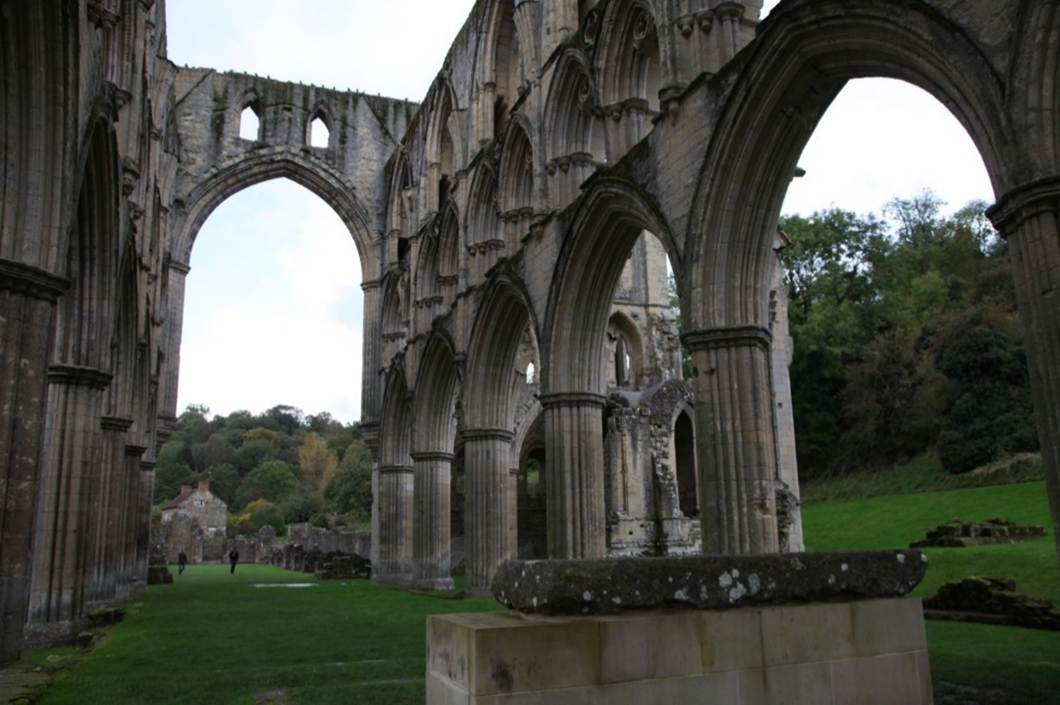
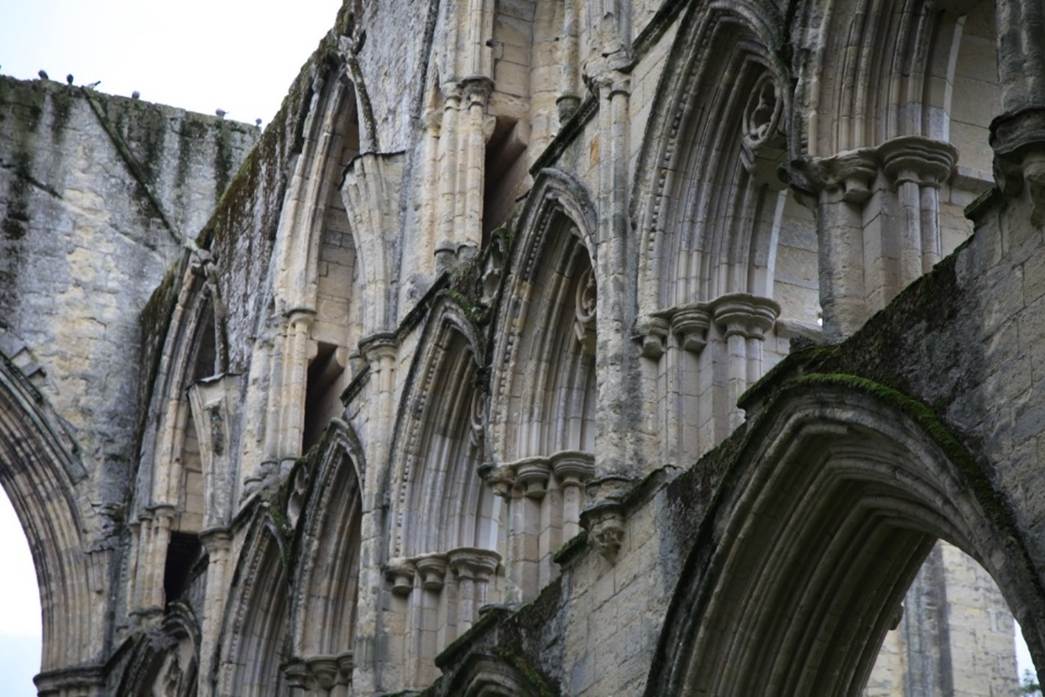
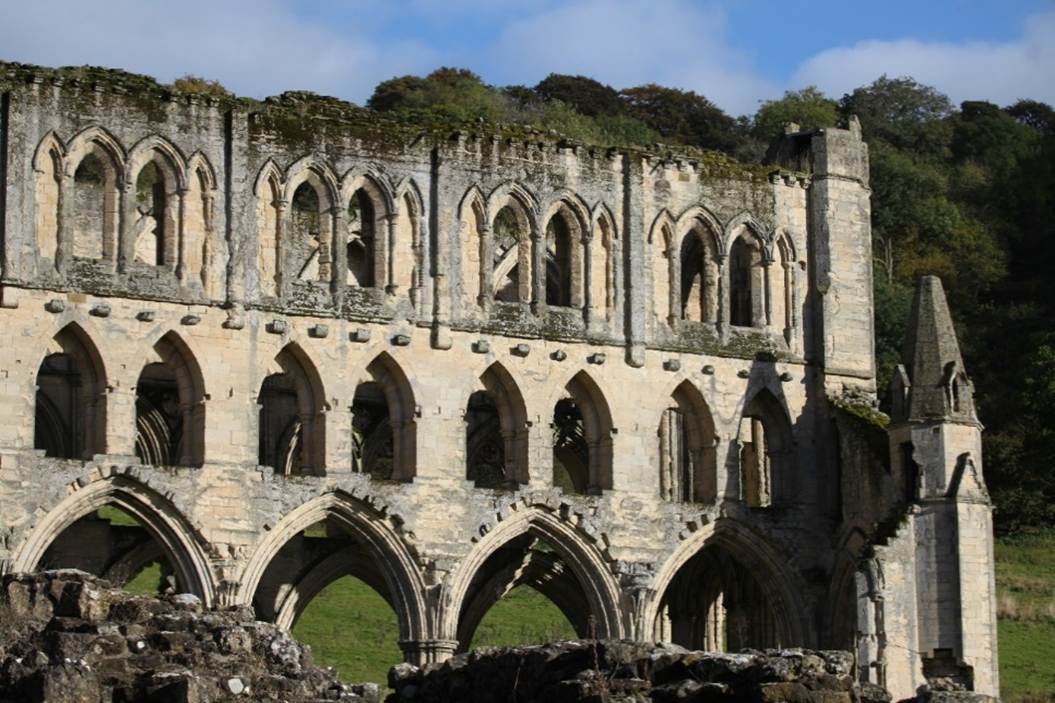
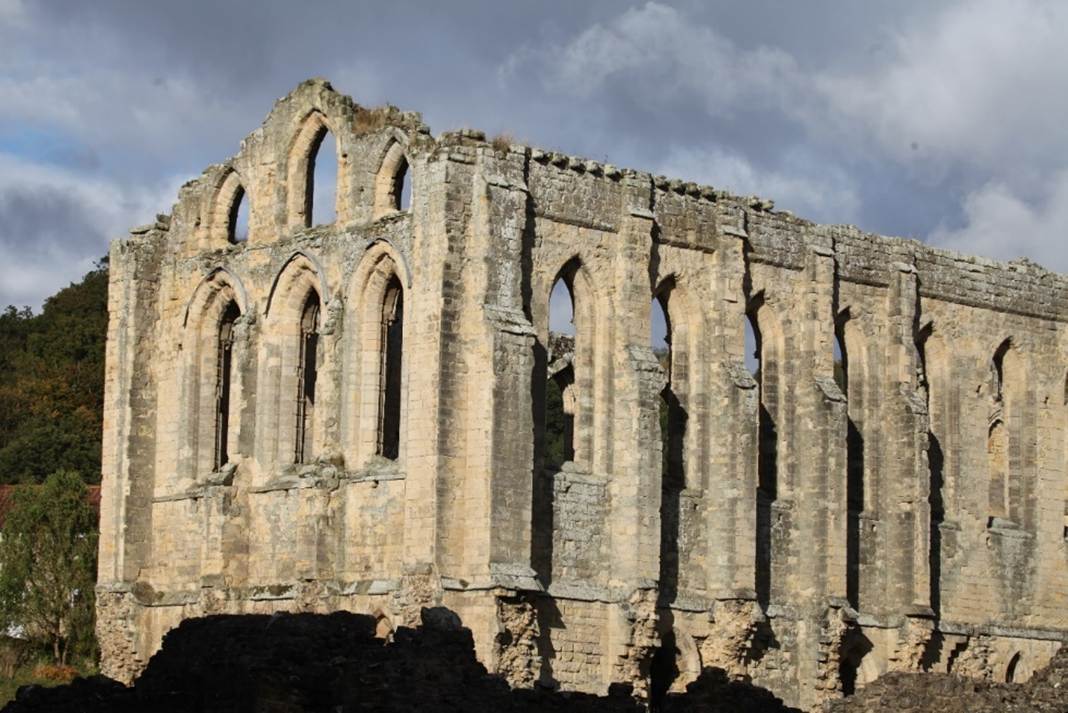
Bibliography
Houses
of Cistercian monks: Rievaulx, Victoria County History: Yorkshire, A
History of the County of York, Volume 3, 1974, pages 149 to
153.
Cartularium Abbathiae de Rievalle, ed. Rev R
C Atkinson, The Surtees Society, Volume
83, 1887.
Mowbray
Charters Nos. 236n 18 pages 162 to 164.
Charters of the Honour of Mowbray 1107-1191, Diana E Greenway, Records of
Social and Economic History, 1972.
Rievaulx Abbey, English
Heritage.
Monastic Settlement of North East Yorkshire, Bryan Waites, Yorkshire Archaeological Journal, Volume 40, page 478, especially page 488.
Monastic
Grange as a factor in the settlement of North East Yorkshire, Bryan Waites,
Yorkshire Archaeological Journal, Volume 40, page
627.
The
Cistercian Order, J T Mickelthwaite,
Yorkshire Archaeological Journal, Volume 15, 1900, page 245 to 268.
Family,
Faith and Fortification: Yorkshire 1066-1250,
Sarah Speight, 1993 page 70.
Ryedale
and North Yorkshire antiquities, George Frank, 1888, page
105.
The Early History of the North Riding, William Edwards MA, 1924, page 137.
Life in Ryedale in the 14th century, J H Rushton, Ryedale Historian, Volume 9, 1978, page 35.
Medieval Colonisation in Ryedale, R I Hodgson, Ryedale Historian, Volume 10, 1980, page 47.
Knowles, Monastic
Order in England, pages 240
to 245, 257
to 266.
Life
of Ailred of Rievaulx, Walter Daniel, 1950.
Early Abbots of
the Yorkshire Cistercian Houses, Yorkshire Archaeological Journal, Volume 38,
1955, page
31.