William Dod of Highfields
1577
to 1655
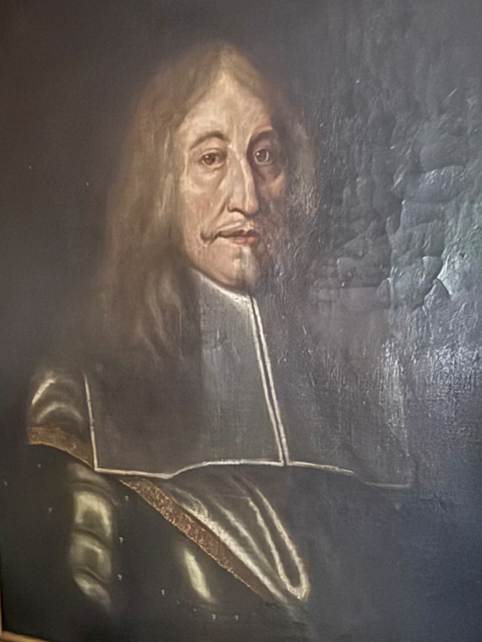
DOD00081
|
Return to the Home Page of the Bakers Family part of the website |
The Bakers of Highfields Story
The Story of the Dods and Bakers and of Highfields,
Fenton House and Hasfield Court. A journey through the history of Cheshire
and Staffordshire, an Anglo-Saxon nobleman who retained his lands after the
Conquest, pottery at Stoke on Trent, an encounter with Elgar, and the history
of an Elizabethan manor house at Audlem |
The family tree of the Bakers of Highfields |
The Family Tree of the Dods, predecessors to the
Bakers of Highfields |
The Bakers of Fenton House and Hasfield
Court
The Family Tree of the pottery Bakers of Stoke on Trent |
The Family Tree of the Bellyse Family |
The main part
of this website tells the story of the Farndale family from Yorkshire Descendants of Arthur Baker, the story of the
Farndale ancestry is told through the main part of this website You can also return to the Farndale
website home page |
The genealogy of the family of James Hall, linked to
the Baker family through marriage to Arthur Baker |
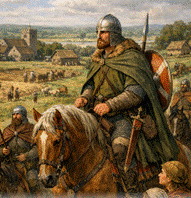
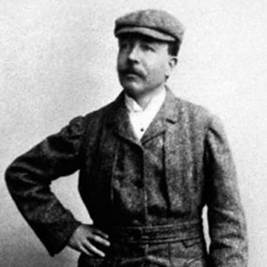
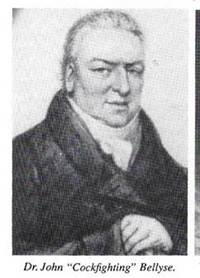
Headlines of are
in brown.
Dates are in red.
Hyperlinks to
other pages are in dark
blue.
References and
citations are in turquoise.
Context and local
history are in purple.
1577
William Dod was the son of William
and Catherine Dod (DOD00080) and may have been born in about
1577 and baptised on 26 February 1577 in Audlem (St James, Audlem Parish Records).

William Dod, of Highfields Hall
(which he re-built 1615, at the same time planting the lime avenue), born c
1577, married 1598, Eleanor, eldest daughter and heiress in her issue of John
Gamul, of Buerton, Nantwich, Cheshire (great uncle of General Sir Francis Gamul
of Buerton, the Royalist Commander at Chester, who died dsp 1654)(see Herald’s Vision
of Cheshire 1613), and died 1647 (this
doesn’t seem right), leaving issue (Burke,
John and Burke, Sir Bernard (1836)(Eighteenth Edition, 1972), Bellyse Baker
of Highfields in Burke’s Landed Gentry, Volume 3, pages
35 to 38).
1598
William Dod of Highfields married
Eleanor, eldest daughter and heiress, daughter of John Gamul of Buerton Hall on
19 February 1598 (Audlem Parish Records).

1599
The young couple settled at
Highfields.
Certainly their elder son [there may have been an older son
George who died young], William, was baptised at Audlem and, in 1598,
married Eleanor, the daughter of John Gamul, of Buerton Hall, Lord of that
manor. The following year William’s father died and
the young couple settled at Highfields. (Baker, J Bellyse (1982), Highfields, Audlem: Sixteenth
Century Home of the Dod and Baker Families,
Audlem District History Society, page 7).
1600
Thomas Dod (DOD00090) was born in about 1600.
1602
George Dod (DOD00091) was born in about 1602.
1604
William Dod (DOD00092) was born in about 1604.
They also had four daughters.
1615
It is suggested that William
re-built Highfields in 1615, and at the same time planted the lime avenue.
They added the oak panelling in
the best parlour and the very fine carved fireplace, with the initials and
date, WD 1615. (Baker, J Bellyse
(1982), Highfields,
Audlem: Sixteenth Century Home of the Dod and Baker Families, Audlem
District History Society, page 7).
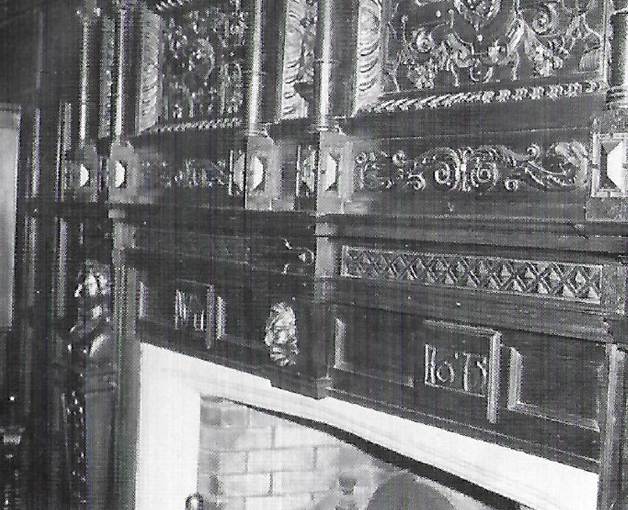
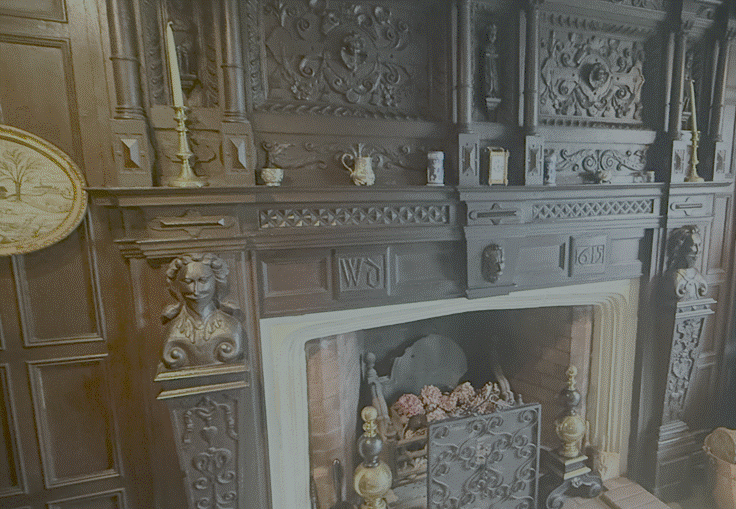
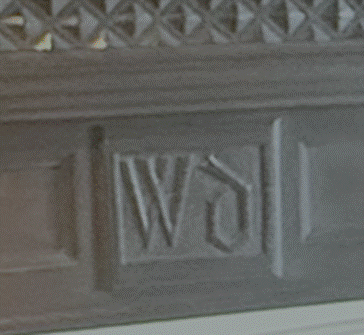
Part of the carved oak mantelpiece
in the oak room, bearing William Dod’s initials and the year 1615
Indeed it is possible that it was not
until about 1615, during the reign of James I, that the main building work to
construct Highfields, began.
The exact date when the present
house was built is not known for certain, but the chimney place in the parlour
bears the inscription “WD 1615”, and there seems little reason to doubt that
this is the approximate date of construction of the whole building. The
initials were those of William Dod (1577 to 1655), grandson of the original
William Dod and Ann Chester. He married in 1598 Eleanor, daughter and heiress
of John Gamul of Buerton Hall, close by. His father died the following year, and
the young couple settled at Highfields soon after. For, though the house has a
medieval H-plan with a central hall and flanking family and service wings, the
old fashions lingered on in the north and west of England longer than in most
places, and it would not have been at all unusual for a half
timbered house of the Highfields type to have been erected in the reign
of James I. (Robinson, John Martin (1991), Highfields,
Audlem, Cheshire, Seat of John Bellyse Baker, Country Life 31 January 1991,
page 48).
Yet, the suggestion that the young
couple settled at Highfields after William’s father’s death in 1599, suggests
that there was something there for them to move into.
1640
(Letter from Thomas Gamul (brother-in-law of William
Dod of Highfields) regarding bequest of £500 for building Audlem Grammar
School, 1640, Baker Records 85)
1641
The coming of the civil war
brought great tragedy in the district. In 1641, William, now over 60, was one of
the principal collectors of a subsidy for the use of King Charles I. Persons
whose land or goods exceeded £1 in value were assessed at 8s in the £. (Baker, J Bellyse (1982), Highfields, Audlem: Sixteenth
Century Home of the Dod and Baker Families,
Audlem District History Society, page 7).
William Dod (mentioned above) was in
residence at the house during the Civil War and was appointed one of the
principal collectors of a subsidy for the use of King Charles I. Persons whose land
or goods exceeded £1 in value were assessed at 8/- in the pound. In May 1642
Prince Rupert is said to have spent the night at Highfields. A more damning
indictment against the Dods, however, was the fact that William Dod's wife had
been Eleanor Gamul of Buerton Hall, first cousin of Sir Francis Gamul, Royalist
mayor of Chester, who had entertained King Charles I at his home, Gamul House,
which still stands in Bridge Street. (Latham, Frank (1997), Audlem:
The History of a Cheshire Parish and its seventeen townships, page 123).
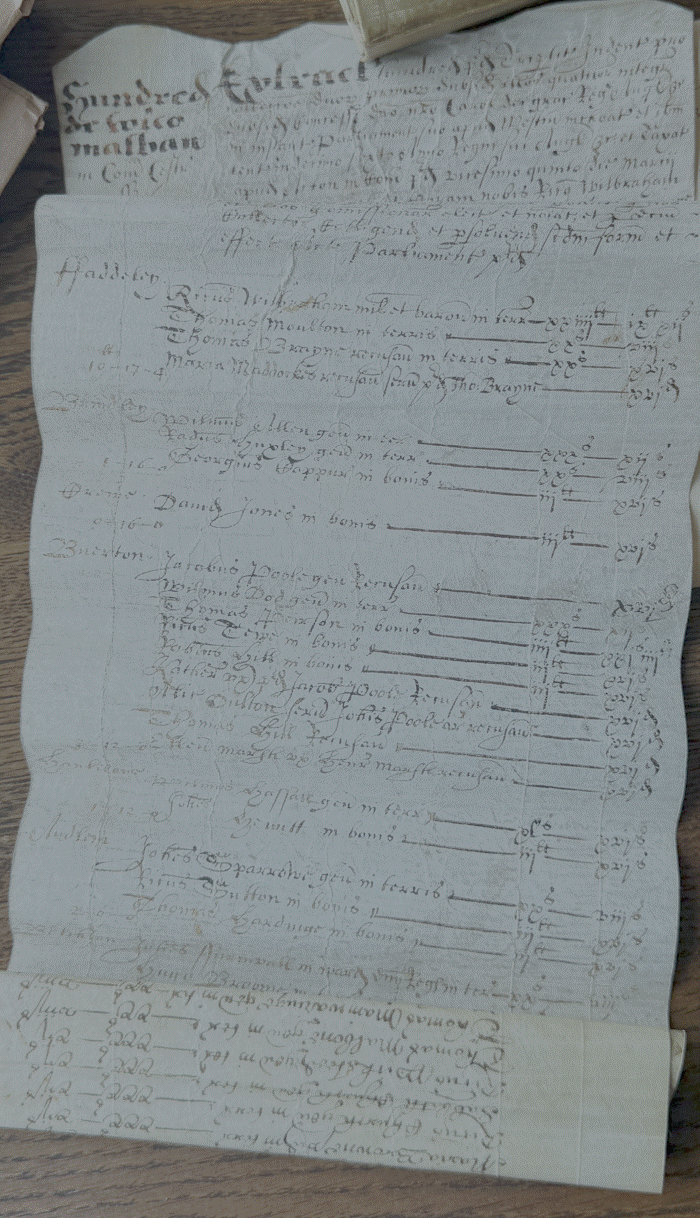
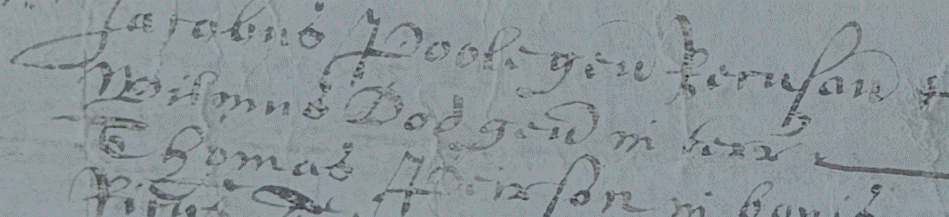
(Account of subsidy collected from the inhabitants of the Hundred
of Nantwich authorising Parliament for the King’s men that one of the principal
collectors responsible for preparing the account was William Dod of Highfields,
Hundred of Wich Malban (Nantwich), 1641)
He served as a principal tax or
subsidy collector for Charles I, a role that involved evaluating local wealth
and property values to raise funds for the crown.
1642
During the English Civil War
(August 1642 to September 1651), support was divided, but the Dod family of
Highfields appear to have sided with the Royalists.
There was a lease of land at
Buerton from William Dod to his son George in 1642 (William Dod of Highfields, to
his son, George Dod of Highfields, Lease of Messuages and land in Buerton, 19
January 1642 or 1643, Baker records, 7).
1644
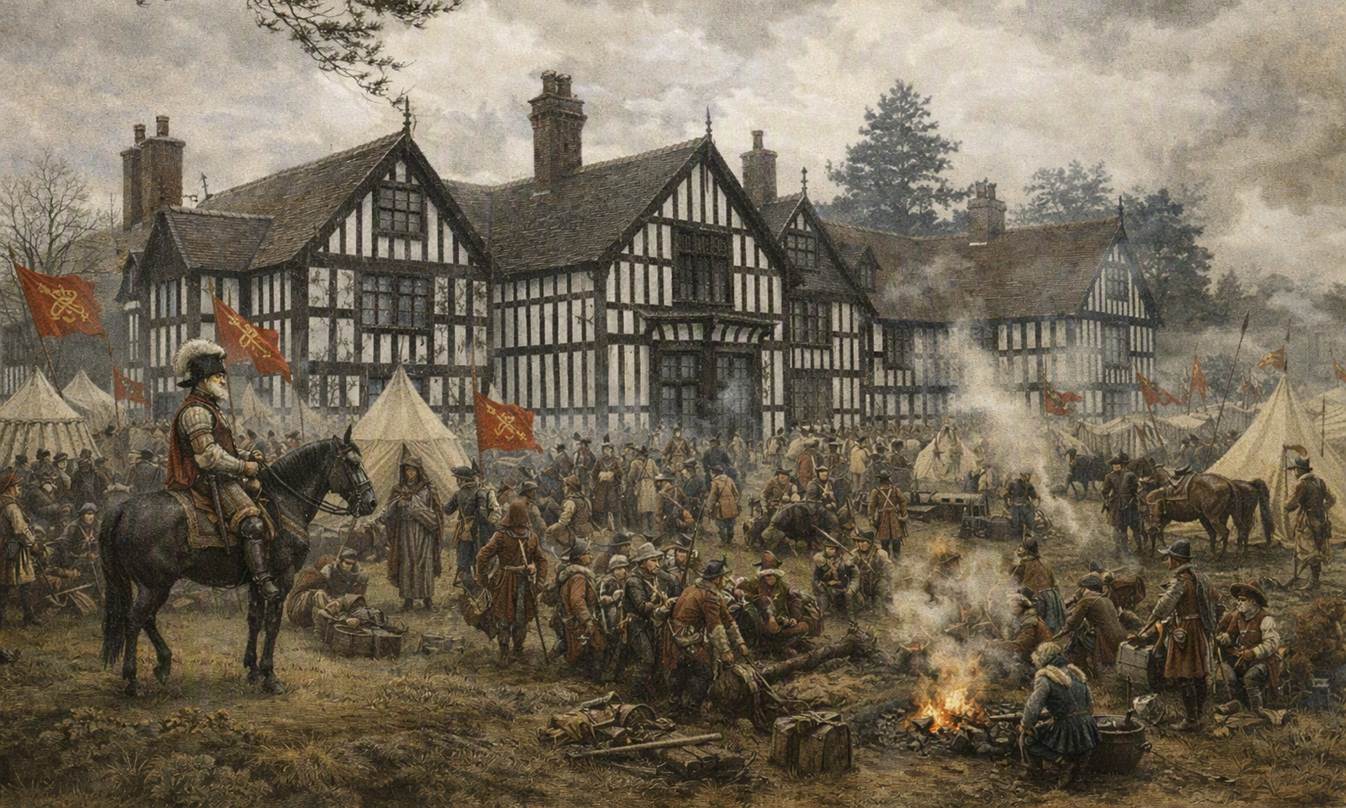
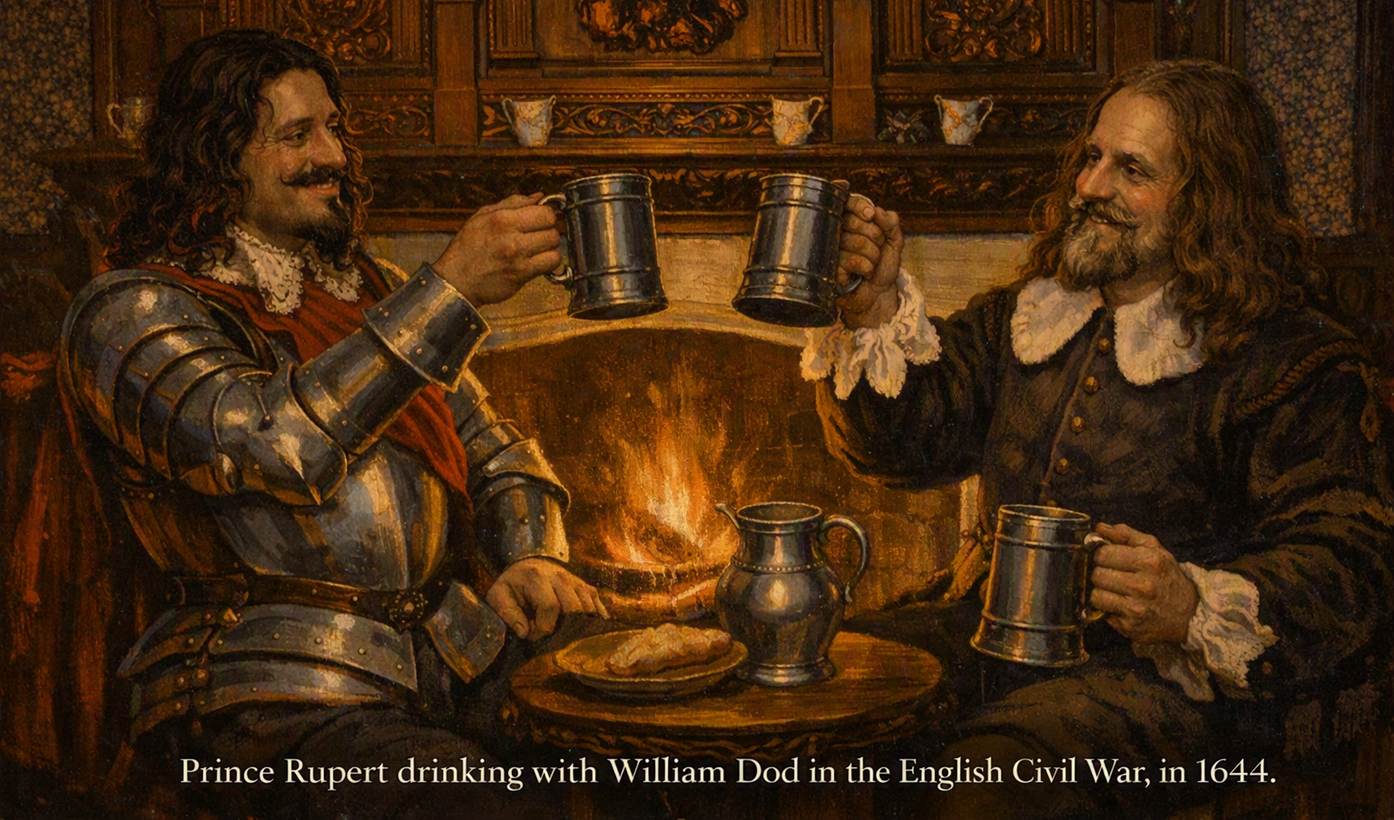
Reimagined through Artificial
Intelligence
Local tradition and family
histories claim that Prince Rupert of the Rhine stayed the night at Highfields
during troop movements in the English Civil War. His army camped in the
surrounding fields, and several fellow officers were billeted nearby. The event
is associated with a march through Cheshire and Shropshire as Royalist forces
moved through the region. The Dod family who owned Highfields at the time
generally supported the Royalist cause, making the house a logical and safe
stop for high-ranking commanders. Local records note that while military
activity in Audlem itself was mostly confined to troop passage, surrounding
properties like Bellaport Hall and Highfields hosted
senior commanders and their men.
This may have been during the
opening days of Prince Rupert’s famous York March. Rupert and his army
officially marched north from their headquarters in Shrewsbury on 16 May 1644.
Given that Audlem and Buerton sit roughly 25 miles north of Shrewsbury along
the route into Cheshire, the encampment at Highfields may have occurred during
the transit toward the storming of Stockport, which his forces reached on 25
May 1644. This places his stay at the manor house in the window of 17 to 20 May
1644.
Prince Rupert’s York March in 1644
was a Royalist military campaign to relieve the Siege of York during the
English Civil War. Marching from the Welsh Marches through Lancashire, Rupert
captured strongholds like Bolton and Liverpool, crossed the Pennines, and
successfully lifted the parliamentary siege on 1 July 1644, before facing a
crushing defeat the next day at Marston Moor.
There is a separate local record
of Prince Rupert's army plundering the broader Buerton area earlier in the war
during late 1643 on their way to Nantwich, but the specific tradition of Rupert
staying overnight at Highfields corresponds to the massive troop movement of
May 1644 just before the Battle of Marston Moor.
Audlem, then as now, is situated
on a crossroads roughly equidistant from Market Drayton to the south, Nantwich
to the north, Whitchurch to the west, and Madeley to the east. Even though Audlem
crossroads could be considered an important location, the village itself was
too small to have strategic value unlike larger Nantwich
which was for the Parliament, and the much larger Royalist base at Shrewsbury.
The Civil War activity in and near Audlem was therefore largely confined to
military passage through the village. Fortuitously opposing forces did not want
to pass through simultaneously.
In May 1642 (sic, recte
1644?) Prince Rupert, Charles the first nephew,
the third son of Frederick V of Bohemia, and Elizabeth daughter of James I,
marched with his army from Shrewsbury to relieve Stockport, just before the
Battle of Marston Moor (fought on 2 July 1644). The army camped
between Market Drayton and Buerton and a number of his
offices were billeted in local houses notably at Bellaport
Hall. It is claimed that Prince Rupert himself spent the night at Highfields,
and his army camped in the fields thereabouts.
(Latham F A, Editor (1997), Audlem, The History of
a Cheshire Parish and its five townships, Local History Group, page 33).
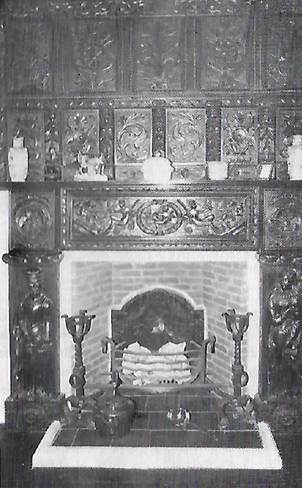
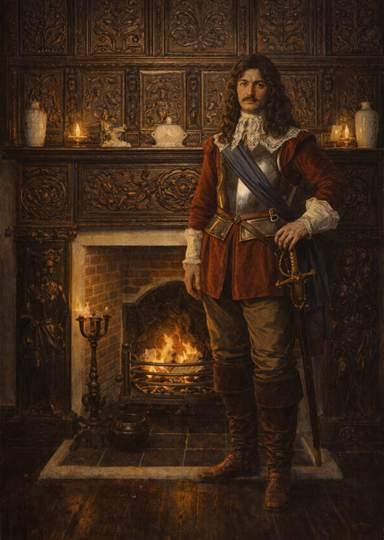
Fireplace in the main bedroom, in
which Prince Rupert is reputed to have slept Prince Rupert standing beside the
fireplace, reimagined by artificial intelligence
1645
There was an assignment of the
lease of land at Buerton from William Dod to his son George in 1645 (William Dod of Highfields, to
his son, George Dod of Highfields, Assignment of Lease of Messuages and land in
Buerton, 1645, Baker records, 8).
1648
During the Civil War, the grammar
school was established at Audlem. William Dod’s brother in
law, Thomas Gamul, a citizen and grocer of London entrusted £500 to
William for the erection of Audlem Grammar School.
The year before Thomas Gamul died;
citizen and grocer of London, brother of William Gamul of Buerton Hall and
brother-in-law of William Dod. In his will he
entrusted £500 to William Dod, with his neighbours, Captain William Massie of
Moss Hall and Hugh Hassall, both of Audlem, “where” says Thomas Gamul “I was
born”. The money was to be used to build “a convenient schoolhouse and a
dwelling house for a schoolmaster in the town of Audlem.” This was to be Audlem
Grammar School. The executives of the
will were Randle Wilbraham, of Nantwich and Francis (later Sir Francis) Gamul,
the Royalist commander at Chester and nephew of the late Thomas. His home,
Gamul House in Watergate, has been restored in recent years. (Baker, J Bellyse
(1982), Highfields,
Audlem: Sixteenth Century Home of the Dod and Baker Families, Audlem
District History Society, page 8).
In 1648 William Dod was appointed
overseer for the building at the school and a plot of land was marked out of
the Barn Croft, adjoining Audlem Green near Vicarage Bank. However, perhaps
because of the difficulties of collecting Gamal's legacy, work stopped for four
years, to be resumed in the summer of 1652. (Baker, J Bellyse (1982), Highfields,
Audlem: Sixteenth Century Home of the Dod and Baker Families, Audlem
District History Society, page 9).
1652
The year following the proving of
the will a petition was presented to the House of Commons by the children of
William Dod: Thomas, George, William junior and sister Alice, all beneficiaries
under the will, stating that Randle Wilbraham, one of Thomas Gamul’s two
executives had died and that his (Randle’s) executors, Richard Wilbraham,
Gregory Markham and Ralph Bolton, refused to deal with Gamul’s estate
(presumably on account of his nephew’s Royalist activities). The petitioners
had exhibited a bill of complaint in Chancery for the recovery of Gamul’s bequests, but were hindered by the fact that Francis Gamul
still survived as executive. They sought remedy, pleading that they “have been
imprisoned and suffered very much in their liberties and estates for adhering
to the Parliament.” The House granted their request. This is a quite
extraordinary document, considering that their father, two years earlier, had
been a principal collector for money for the use of Charles I! Subsequently,
after the Restoration in 1660, George Dodd, mentioned in the petition and now
of Highfields, was Head Constable of Nantwich, collecting a subsidy for Charles
II. The Dods of this period appear to have displayed many of the
characteristics of the Vicar of Bray! (Baker, J Bellyse
(1982), Highfields, Audlem:
Sixteenth Century Home of the Dod and Baker Families, Audlem
District History Society, page 9).
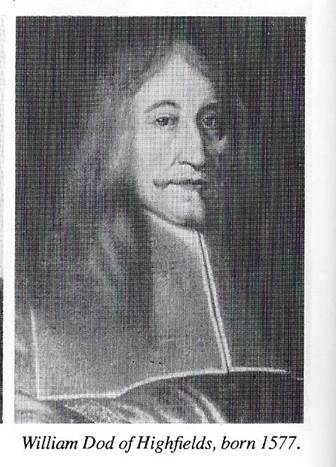
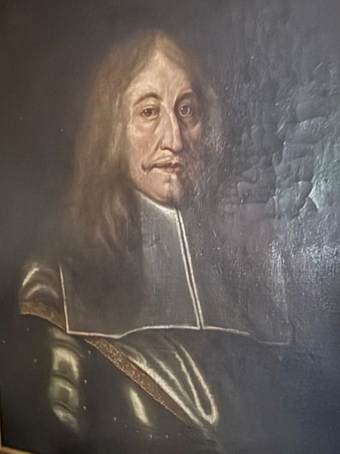
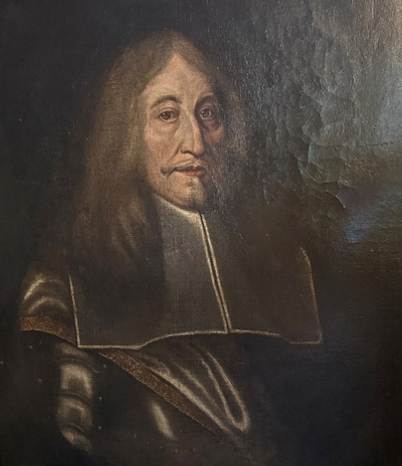
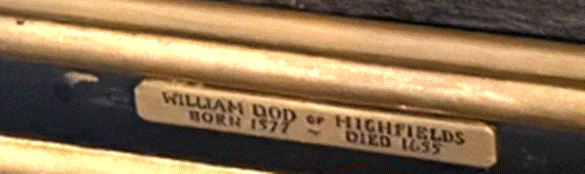
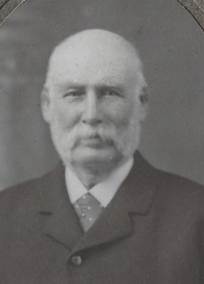
Portrait of
William Dod (Highfields)
1654
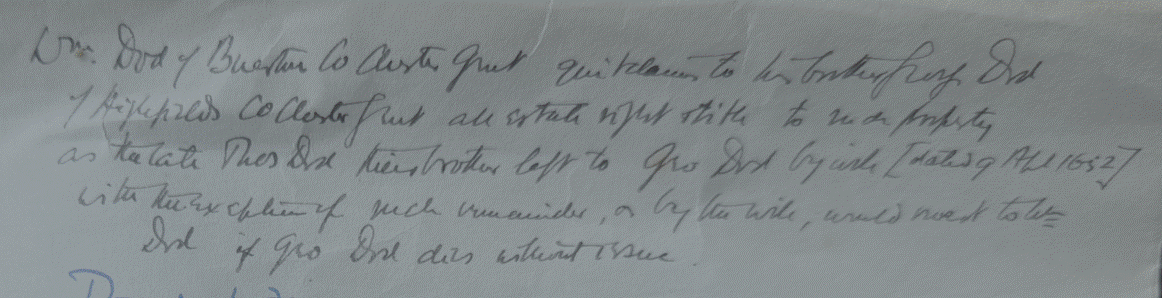
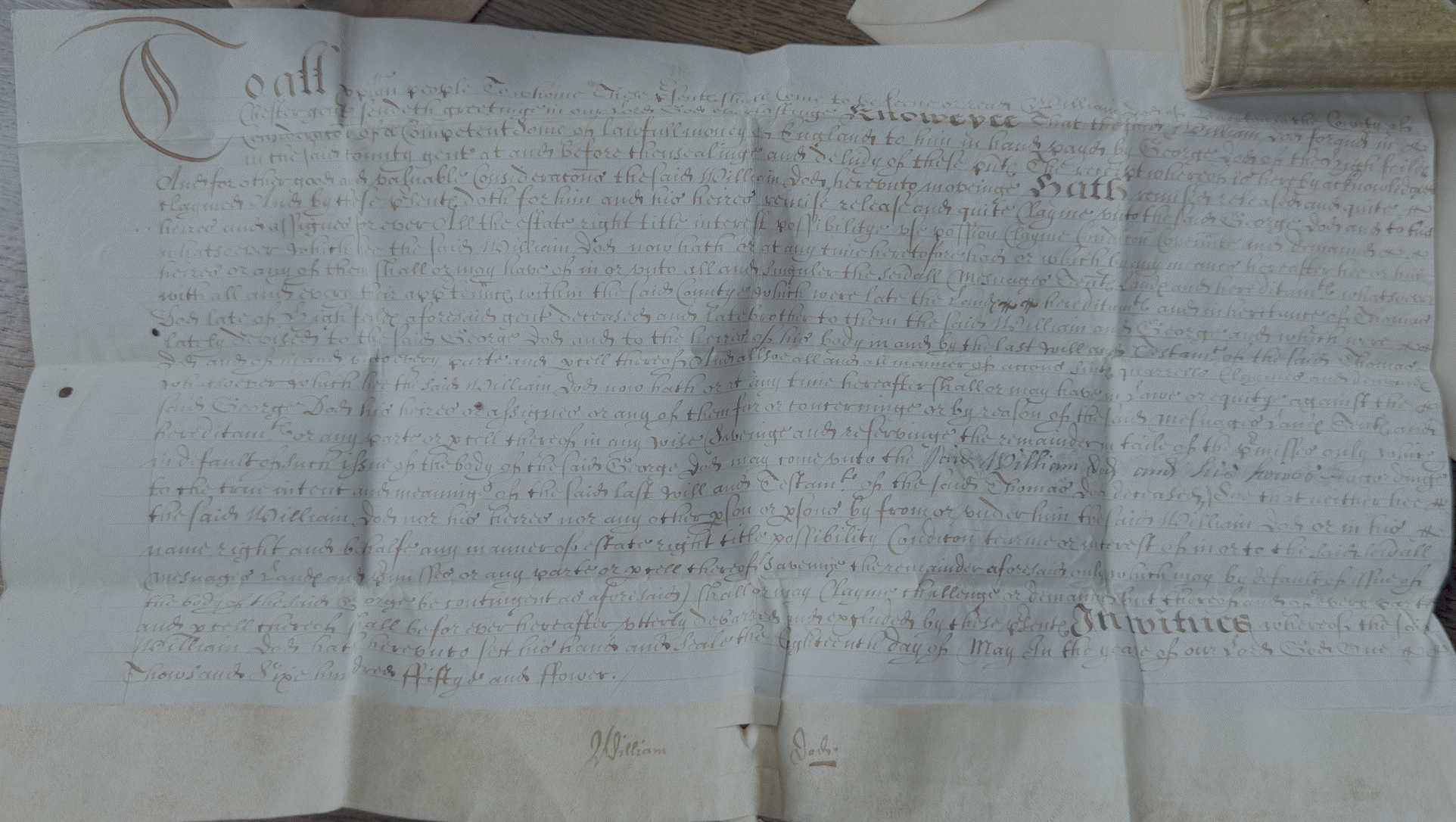
(Deed between George Dod of Highfields and William
Dod 10 May 1654, Baker records 10).
1655
William Dod died in 1655.
The school was not ready for
occupation until the end of 1655 when the final accounts are drawn up by
William Massey and George Dod, acting for his father, for Gamal 's legacy, now
worth £802. There is also mention of a legacy of £30 from his late brother,
Thomas Dod. George did not outlive his father; the estate passed to his only
son, also George, who was to own Highfields for the next 67 years. George
matriculated from Brasenose, Oxford in 1670, aged 17. He was admitted to the
Middle Temple, June 26, 1672 and called to the bar,
May 30, 1679. During this time Highfields appears to have been managed by his
cousin, William Dod, son of his father's younger brother who, in a document
dated 1662, dealing with the estate of his late father, is referred to as “now
resident at Highfields.” (Baker, J Bellyse
(1982), Highfields,
Audlem: Sixteenth Century Home of the Dod and Baker Families, Audlem
District History Society, page 9).
1660
Half panelled in oak, the hall has
a very fine carved fireplace thought to date from about 1660. (Baker, J Bellyse (1982), Highfields, Audlem: Sixteenth
Century Home of the Dod and Baker Families, Audlem
District History Society, page 31).