Richard of Gloucester’s Northern
Interests
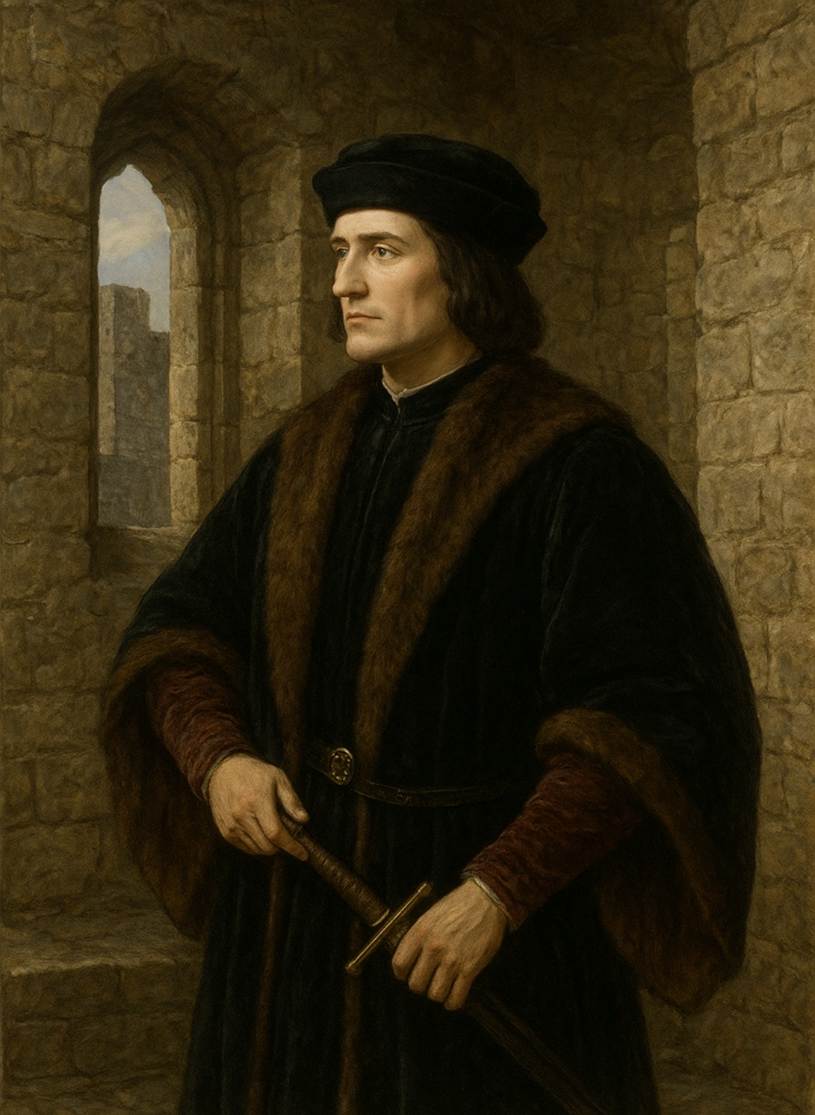
The future
Richard III’s interests in Yorkshire and northern Britain
|
Return to the Home Page of the Farndale Family
Website |
The story of one family’s journey through two
thousand years of British History |
The 83 family lines into which the family is divided.
Meet the whole family and how the wider family is related |
Members of the historical family ordered by date of
birth |
Links to other pages with historical research and
related material |
The story of the Bakers of Highfields, the Chapmans,
and other related families |
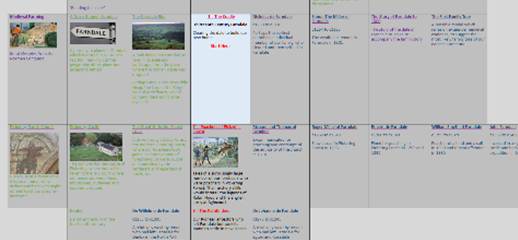
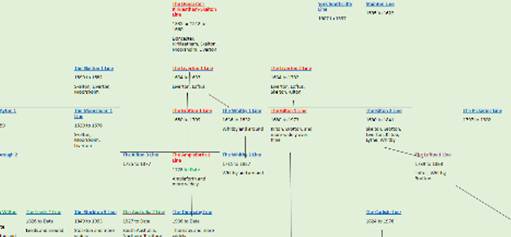
Headlines are in brown.
Dates are in red.
Hyperlinks to
other pages are in dark
blue.
References and
citations are in turquoise.
Context and local
history are in purple.
Geographical
context is in green.
Although Richard III was not by
birth a northerner, he is, remarkably, the only English medieval king to be
closely associated with the region. He spent the greater part of his adult life
‘north of Trent’, and if he had not ascended the throne in 1483 he would
certainly have lived out his days among the northern castles, abbeys,
cathedrals and towns with which he was so familiar. (Richard’s Relationship with the
North, Dr David Johnson, Richard
III Society Website).
Richard III is unique among
medieval English kings in the extent of his connections with the north of
England (Richard III,
Charles Ross, 1999, page 44).
Formative Years
1452
Richard
Plantagenet, the son of the great magnate, Richard Plantagenet, the third Duke
of York; and Cecily Neville, the daughter of Ralph Neville, the first Earl of
Westmorland, was born on 2 October 1452 at Fotheringhay Castle in
Northamptonshire. He was their seventh, though fourth surviving, child.
1455
On 22 May 1455
Richard’s father, the Duke of York attacked the royal army at the First
Battle of St Albans, killed the Dukes of Somerset and Northumberland and
took the King. Having the King in their hands gave power to the Yorkist cause.
Whilst the battle was ostensibly directed at Henry IV’s advisers, this led to a
period of dominance by the House of York in English politics.
Following the Yorkist defeat at the skirmish of Ludford Bridge on
12 October 1459, Richard of York and his second son, Edmund, Earl of Rutland,
fled hastily to the Welsh coast and sailed to Ireland. His eldest son, Edward,
Earl of March, and the Neville earls (Salisbury and Warwick) escaped to Calais,
which Warwick controlled. Their estates were confiscated. The location of
Cecily and her younger sons is not known.
1460
Until September
1460, the fighting had been about whom Henry VI should have as his councillors,
but then the Duke of York had claimed the throne, arguing he had the senior
descent in the female line from Edward III, making his ancestor, Roger
Mortimer, Richard II's rightful heir, and the House of Lancaster usurpers. (Tudor, the Family Story, Leanda de Lisle, 2014, page 24).
The Yorkists
defeated the Lancastrians at the Battle
of Northampton on 10 July 1460. It was a decisive Yorkist victory. Henry VI
was captured. Lord Grey of Ruthin treacherously surrendered his Lancastrian
forces, allowing the Yorkist army under the Earl of Warwick to easily penetrate
the Lancastrian camp. The battle was short and bloody. Many Lancastrian leaders
were killed, including the Duke of Buckingham.
However on 30
December 1460 the Battle
of Wakefield was a decisive Lancastrian victory. Richard, Duke of York, and
his second son, Edmund, were killed. Recent evidence suggests
there was no battle, but rather an ambush outside Wakefield. Richard and Edmund
were killed in an ambush rather than died in battle. Their heads were taken to
York and spiked on Micklegate bar in York. There is a possibility that this
was at Pontefract. This was a huge setback for house of York and the 8 year old
Richard.
Richard and his
older brothers, Edmund, and George fled to the continent after their father was
killed in the battle. They were refugees in Utrecht. The brothers returned in
1461 to help their eldest brother, Edward, take the throne.
1461
The Battle
of Mortimer's Cross was a decisive Yorkist victory on 2 February 1461.
Richard’s brother Edward, Earl of March (later Edward IV), defeated a
Lancastrian army led by Owen and Jasper Tudor.
On 17 February
1461 the Second
Battle of St Albans was a decisive Lancastrian victory, where Queen
Margaret's forces outflanked the Yorkist army led by the Earl of Warwick. The
Lancastrians won the battle, rescued King Henry VI from Warwick's captivity,
and looted the town, but their failure to press their advantage by capturing
London ultimately led to the Yorkist triumph a month later.
Edward IV was
proclaimed king in London on 4 March 1461 and for twenty five days there were
two kings of England, until a decisive blow at Towton in Yorkshire. Edward,
Earl of March and the new Duke of York, 18 years old, having claimed the
throne, marched north.
Edward IV was
victorious at the
Battle of Towton, near York, on 29 March 1461. The Yorkist victory secured
the throne for Edward IV and was one of the largest and bloodiest battles ever
fought on English soil, with a ten-hour duration and thousands of casualties,
possibly as many as 28,000, when the national population was perhaps only 3
million.
Richard, younger brother
of Edward of York, was made Duke of Gloucester on 1 November 1461. Comparatively
little is known of Richard of Gloucester's upbringing, or even of his
whereabouts, in the years of his adolescence. Contrary to the belief of P M
Kendall, it is unlikely that he entered the household of his mighty cousin, the
Earl of Warwick, at Middleham Castle in Yorkshire as early as the closing
months of 1461. (Richard III, Charles Ross, 1999, page 6).
Richard owed a
lot to his older brother. He seems to have adored him and may have seen him as
a substitute father perhaps. He showed total loyalty.
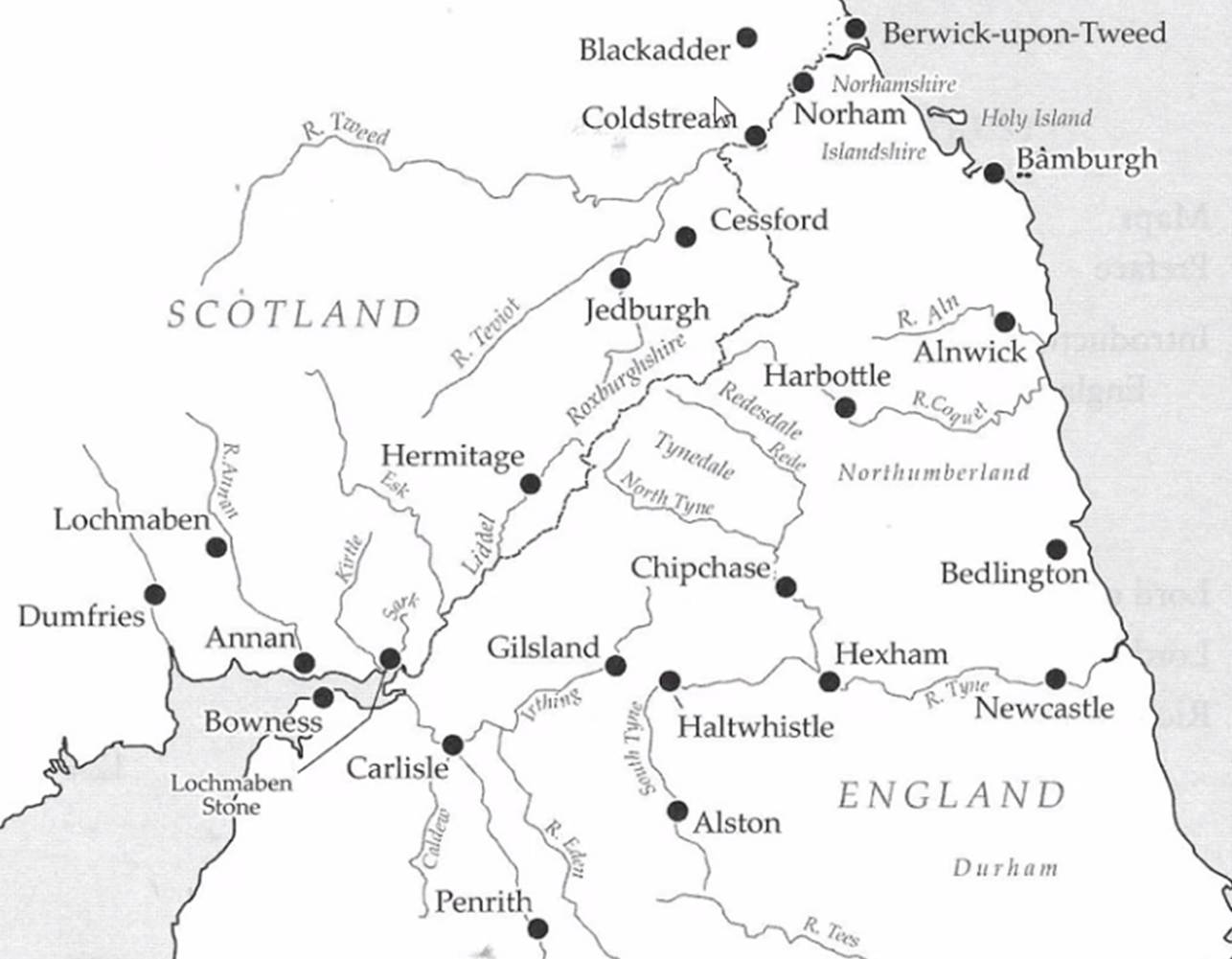
He was made Duke
of Gloucester with regional authority as warden of the West March, the western
side of Scottish Border, based on Carlisle. This was a responsible role, from
which Richard gained significant experience.
1462
Richard of
Gloucester was granted the lordship of Richmond
on 12 August 1462, part of a larger award of significant estates in northern
England and Wales given to him by his brother, Edward IV, following Richard's
creation as Duke of Gloucester. This made the young Richard one of the
wealthiest and most powerful nobles in England and established the foundation
for his strong power base in the North. However Richmond was later taken from
him and given to his brother Gloucester instead, replaced with estates in
Berkshire and Wiltshire.
1464
The Yorkist ally,
Richard Neville, the
Kingmaker, was Richard of Gloucester’s first cousin. Richard was the son of
Cecily Neville, who was the sister of Richard Neville's father. Richard Neville
became de facto guardian of the Richard of Gloucester during the young
boy's time in Middleham and Sheriff Hutton Castles.
Richard Neville,
Earl of Warwick, the Kingmaker, four years older than Edward, had been
planning Edward’s marriage to the daughter of Louis XI of France, as a
strategic balance to the influences of Burgundy and Brittany. Richard’s
marriage to a commoner, Elizabeth Woodville, scuppered his plans. Edward also
prevented the marriage of Warwick’s daughter Isabel Neville to his brother
George, Duke of Clarence, through which Neville had planned a Neville interest
in the royal succession. Warwick grew increasingly resentful of Edward’s
growing independence.
1465
Richard, Duke of
Gloucester, by then 13, was placed into the custody of Richard Neville, Earl of
Warwick at Middleham and Sheriff Hutton. Warwick was by
then by far the mightiest magnate in England. From his paternal Nevill
forebears he had inherited great estates in the north of England, particularly
in Yorkshire, with their administrative centres in the two great strongholds of
Middleham in the North Riding and Sheriff Hutton a few miles north of
York. Warwick’s castles of Middleham
and Sheriff Hutton were centres
of patronage, influence and aristocratic social life. (Richard III,
Charles Ross, 1999, page 7). Richard would have met his future wife,
Anne Neville and a large circle of northern noblemen and gentry including the Scropes, FitzHughs, Greystokes and Dacres. Richard began his knightly training.
By 1465, the Percy
family's position was severely diminished. Their earldom and lands had been
forfeited for supporting the deposed Lancastrian Henry VI, and their leadership
killed in battle. The Neville family, as staunch Yorkist supporters, had
usurped the Percys' dominant position in Northern England, with John Neville
specifically being granted the Percy title and estates.
The Nevilles were
aligned with other Yorkshire families.
· Richard, Lord FitzHugh, with his principal base at Ravensworth
near Middleham, was a cousin of Richard of Gloucester and daughter of Alice
Neville.
· John, Lord Scrope of Bolton was linked by marriage to the Fitzhughs. The House Scrope had
two main branches, the Scropes of Bolton and the Scropes of Masham
· The Greystokes held significant estates in Yorkshire, centered at Nunburnholme and Grimthorpe, near Pocklington. The Greystokes had complex allegiances. Ralph married Elizabeth
FitzHugh, formalising a long-standing alliance. Their
extended family, the Percys and the Greys of Ruthin, were often deeply involved
and suffered casualties fighting for the Lancastrian side (including at the
Battle of Towton in 1461), but Ralph Greystoke was a key protagonist in the
northern conflicts, generally aligning with the Yorkist faction or maintaining
a precarious neutrality to preserve his family's estates.
· The Barons
Dacre of the North or Gilsland held the Dacre family's northern
seats including Naworth Castle in Cumberland and
lands in North Yorkshire. Ralph Dacre became the Lord Dacre of the North and a prominent
Lancastrian supporter. He was killed at the Battle of Towton in Yorkshire in
1461 and was buried at All Saints' Church, Saxton. There is a legendary story
he was shot by a boy in a tree. Humphrey Dacre, Ranulph's brother, also fought
for the Lancastrian side at Towton. He was initially attainted for treason but
was pardoned in 1468 and 1471 and later summoned to Parliament as Lord Dacre
(of Gilsland) in 1482, continuing the northern line.
It is a sign of
Richard’s early independence of character that his close association with his
overweening and overwhelming cousin of Warwick did not persuade him to follow
his brother Clarence’s example of supporting Warwick’s factious opposition to
Edward IV (Richard III,
Charles Ross, 1999, page 9).
During his adolescence
Richard developed scoliosis, a sideways curvature of the spine. In 2014,
after the discovery of Richard's remains, the osteoarchaeologist Dr Jo Appleby, of Leicester University's School of
Archaeology and Ancient History concluded that though the spinal
scoliosis looked dramatic, it probably did not cause any major physical
deformity that could not be disguised by clothing. It was perhaps noticed after
his naked body was dragged from the field at Bosworth, and his reputation as a
hunchback may have followed. He was an accomplished horseman and it has been
suggested that a medieval saddle would have been supportive and comfortable, so
that his dismounting at Bosworth may have bene a particular problem for him.
1469
Richard of
Gloucester first began to play an independent role in English politics in the
summer 1469, when the hostility between Edward IV and the Earl of Warwick
finally exploded into violence (Richard III, Charles Ross, 1999, page 11).
In early 1469, at
the age of sixteen, Richard left Warwick’s household and rejoined his elder
brother, Edward IV. Over the next two years the rebellion of Warwick and
Richard’s next brother, George, Duke of Clarence, forced Edward and Richard
into exile, but once Edward regained the throne, and Warwick was slain, Richard
was rewarded for his loyalty with major gains in the north. (Richard’s Relationship with the
North, Dr David Johnson, Richard
III Society Website).
The Battle
of Edgecote Moor on 26 July 1469 was fought
between forces loyal to the Earl of Warwick and those loyal to Edward IV.
Although the King's army, led by William Herbert, Earls of Pembroke and
Humphrey Stafford, Earl of Devon, initially had the upper hand, a rebel victory
was secured after an attack by rebel archers, the arrival of reinforcements,
and the royal army's panic after seeing Warwick's livery. The battle
temporarily put Warwick in control of the kingdom. Deserted by his men, Edward
IV was sent as a prisoner first to Warwick Castle and then to Middleham. The
Earl of Warwick, himself at Middleham, attempted to rule the kingdom in the
name of the captive king, but was unable to establish his authority. He was
forced to release the king who appeared at York on about 10 September and
arrived in state in London in mid October. (Richard III,
Charles Ross, 1999, page 15).
Richard’s brother
George, Duke of Clarence married Isabel Neville in Calais against the wishes of
his brother, Edward IV. The controversial marriage was arranged by Isabel's
father, the Earl of Warwick, and required both papal and royal dispensation,
which George secretly secured after the king had refused permission. This union
fuelled political turmoil, with George and Warwick joining forces with the
Lancastrians to challenge the King's authority.
As tensions grew
between Edward and Richard Neville, Richard Duke of Gloucester kept aloof and
emerged as one of Edward IV’s closest and most loyal supporters (Richard III,
Charles Ross, 1999, page 15). On 17 October 1469 Richard of Gloucester
was made Constable of England. He became heavily involved in Wales, and so
played little part in the events which followed.
1470
The Earl of
Warwick, the Kingmaker, formally defected to the Lancastrians in a deal
with Queen Margaret brokered by the king of France, after a falling out with
Edward IV, after political and personal disagreements, particularly regarding
Edward's marriage and growing power. Warwick and Edward's brother, Clarence,
allied with the Lancastrians and briefly restored Henry VI to the throne.
In March 1470,
Edward personally led his forces to defeat the Lincolnshire Rebellion at the
Battle of Lose-Cote Field. The captured rebel leader, Sir Robert Welles,
confessed that the uprising was instigated by the Earl of Warwick, and Edward's own brother,
George, Duke of Clarence. They were declared as traitors and fled to France.
In exile, Warwick
allied with his former enemy, Margaret of Anjou, the wife of the deposed
Lancastrian Henry VI, with military backing from Louis XI of France. Sensing
the imminent invasion, Edward issued commissions of array to muster troops
across England in late October, in an attempt to fortify his position.
Warwick landed in
England in September 1470 with an army. Edward, taken by surprise and facing
widespread defection, including that of John Neville, Marquess of Montagu, who
had been tasked with defending the north, was unable to gather sufficient
support.
With a dramatic
collapse of his authority Edward, along with Richard and other supporters fled
across Lincolnshire and the Wash to King’s Lynn and on 2 October 1470, they
sailed for the Low Countries. They sought refuge and aid from their
brother-in-law, Charles the Bold, Duke of Burgundy.
With Edward in
exile, Henry VI, passive and uncomprehending, was restored to the throne in the
Readeption on 3 October 1470. However his
years in the Tower had exacerbated his mental condition further.
Henry’s son Edward
of Lancaster was promised in marriage to Anne Neville, the heir.
In November 1470,
Edward returned to England with an army subsidised by Philip the Bold. In the
next six weeks, Edward IV undertook the swift and vigorous campaign which
finally secured his position on the throne (Richard
III, Charles Ross, 1999, page 15).
1471
Clarence
reconciled with his brother Edward before the Battle of Barnet.
The Battle of Barnet
was a decisive Yorkist victory fought on Easter Sunday, 14 April 1471. Edward
IV's army defeated the Lancastrian forces led by the Earl of Warwick, the
Kingmaker. Warwick and his brother were killed, and Edward IV secured a
significant victory. Thick fog which led to a friendly fire incident on the
Lancastrian side as Lancastrian archers fired into their own sides, met with
shouts of Treason!
The Battle
of Tewkesbury on 4 May 1471, was another decisive victory for the Yorkist
forces led by Edward IV over Queen Margaret’s Lancastrian army. The battle
resulted in the complete defeat of the Lancastrian army, the death of their
heir, Edward of Lancaster, Prince of Wales, and the eventual death of the
Lancastrian King Henry VI. The Yorkist victory ended the second phase of the
war and brought a period of peace to England.
Richard of
Gloucester may have been Edward’s principal lieutenant in these engagements.
Edward IV
returned to London and Henry VI was returned to the Tower, a man amazed and
utterly dulled with the troubles and adversity. He was murdered there on 21
May 1471. Margaret of Anjou was ransomed and returned to France, where she died
a pauper in 1482.
The House
Lancaster was extinct, save for a more distant line through the Beaufort line.
A Yorkist commented that no one from that stock remained who could claim the
crown. The only remaining threat to the Yorkist line of succession was
Henry and Jasper Tudor, sons of Margaret Beaufort, who fled to France via
Tenby. Their mother, the 28 year old widow Margaret Beaufort married the new
steward of the King’s household, Thomas, Lord Stanley, hoping to rebuild the
King’s favour for her sons.
Now is the winter
of our discontent Made glorious summer by this son of York, And all the clouds
that loured upon our house In the deep bosom of the ocean buried. Now are our
brows bound with victorious wreaths, Our bruisèd arms
hung up for monuments, Our stern alarums changed to merry meetings, Our
dreadful marches to delightful measures. Grim-visaged war hath smoothed his
wrinkled front; And now, instead of mounting barbèd
steeds To fright the souls of fearful adversaries, He capers nimbly in a lady’s
chamber To the lascivious pleasing of a lute. (Richard
III, Act 1, Scene 1, William Shakespeare).
Magnate of the North
Richard was the principal beneficiary from the political
resettlement which followed Edward’s restoration to the throne (Richard III, Charles Ross, 1999, page 24). When Warwick
'the Kingmaker' fell at Barnet in April 1471, in the same year Edward IV
included it in a grant to his brother Richard of Gloucester, which was renewed
after the duke's marriage with Warwick's younger daughter Anne . (History of the County of York North Riding, Sheriff
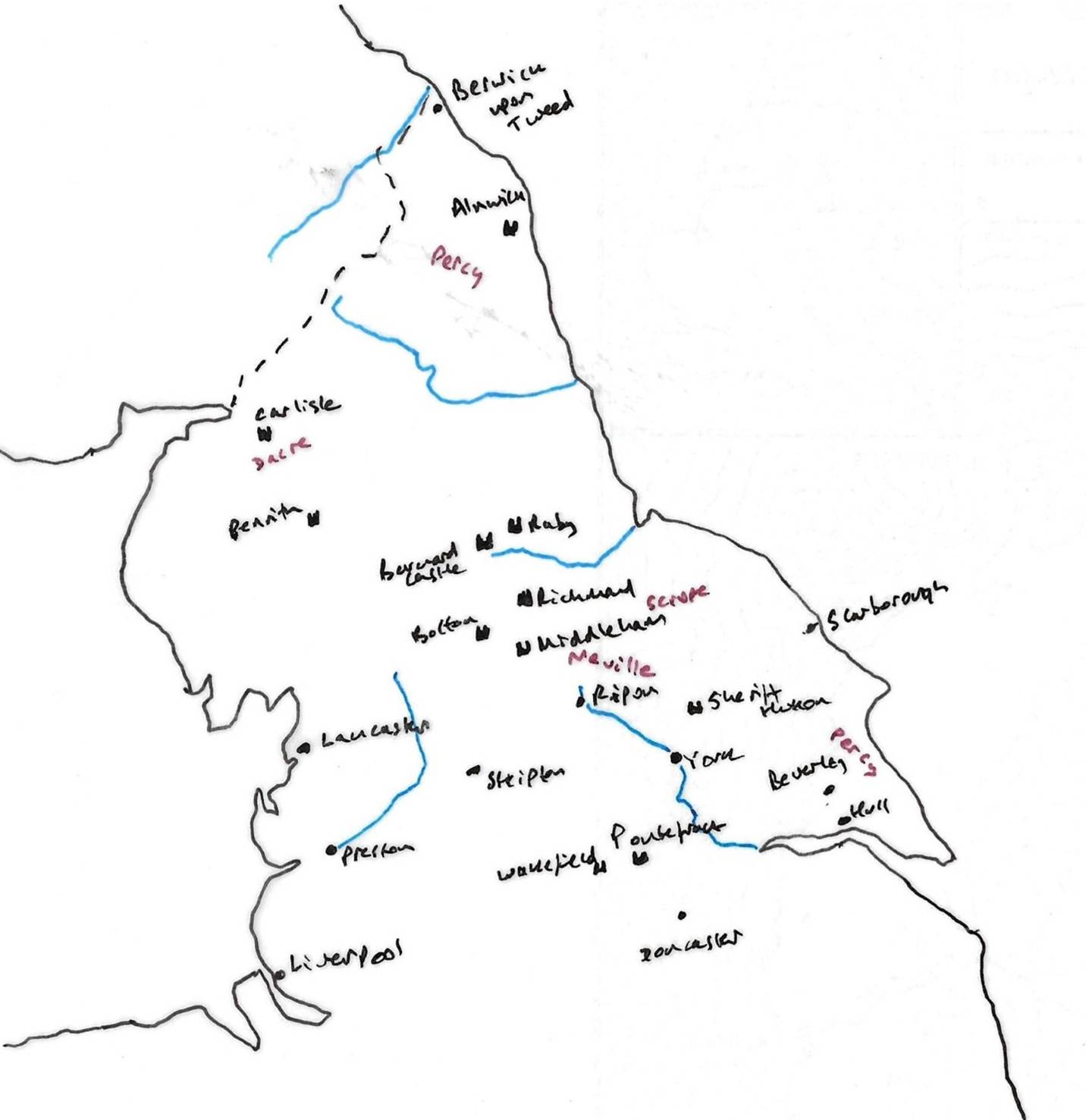
Hutton, 1923, Volume 2). He was granted earldoms across Yorkshire and Cumberland,
including Middleham Castle, Sheriff Hutton Castle and Penrith. Richard
effectively stepped into Warwick’s shoes, becoming the pre-eminent nobleman in
the north of England (Richard’s Relationship
with the North, Dr David Johnson, Richard III Society Website). As he acquired more estates
over the following years, Richard of Gloucester became more powerful even that
Richard Neville had been.
By 1483, he had come to know the region and its people
more thoroughly than any of his predecessors. He is also entirely exceptional
in the degree to which his power base was very largely north country. Some of
his formative years had been spent in the north at Middleham Castle. His wife
and future queen, Anne Neville, was heiress to the great northern connections
of her father, stretching back for more than a century, and her marriage was an
important factor in winning for her husband the loyalty of the men of her
native region. Further, Edward IV had made Richard heir to the Neville affinity
through the systematic grants to him of land and office formerly held by
Warwick. By 1483 he had become the dominant figure in England north of Trent.
His pre-eminence is especially reflected in the fact that he was to become
England's principal commander in the wars with Scotland which marked the later
years of Edward IV. (Richard III, Charles Ross, 1999, page 44).
Richard of Gloucester's acquisition of
the lands and offices held in the north of England by the Earl of Warwick, and
before him his father Richard Neville, Earl of Salisbury, and his grand father, Ralph Neville, Earl of Westmoreland, combined
with his marriage to Warwick's daughter, were to prove of supreme importance in
gaining him admission to the fiercely independent and clannish landed society
of the northern counties. With some exception for Yorkshire, the shires north
of Trent were neither populous nor wealthy. Nevertheless, they were, and had
been over a century or more, significant as a great reservoir of armed men, a
role they were to retain during Richard's own usurpation and subsequent reign.
Their loyalties, however, we're not lightly given to an outsider, as both Henry
VII and Henry VIII were to discover. Richard's position as heir to the Neville
interest gave him a powerful lien on their support, which his familiarity with
the north and the very powerful patronage he could dispense merely served to
strengthen. (Richard III,
Charles Ross, 1999, page 47).
In Shakespeare’s Tudor
coloured eyes, this was the blossoming of a scheming tyrant. But I, that am not
shaped for sportive tricks, Nor made to court an amorous looking glass; I, that
am rudely stamped and want love’s majesty To strut before a wanton ambling
nymph; I, that am curtailed of this fair proportion, Cheated of feature by
dissembling nature, Deformed, unfinished, sent before my time Into this
breathing world scarce half made up, And that so lamely and unfashionable That
dogs bark at me as I halt by them— Why, I, in this weak piping time of peace,
Have no delight to pass away the time, Unless to see my shadow in the sun And
descant on mine own deformity. And therefore, since I cannot prove a lover To
entertain these fair well-spoken days, I am determinèd
to prove a villain And hate the idle pleasures of these days. Plots have I
laid, inductions dangerous, By drunken prophecies, libels, and dreams, To set
my brother Clarence and the King In deadly hate, the one against the other; And
if King Edward be as true and just As I am subtle, false, and treacherous, This
day should Clarence closely be mewed up About a prophecy which says that “G” Of
Edward’s heirs the murderer shall be. Dive, thoughts, down to my soul. (Richard III, Act 1, Scene 1, William Shakespeare).
A historian with a fresh perspective from the twenty first
century, should at least treat Shakespeare’s depiction of Richard of Gloucester
with a querying eye.
There are examples of Richard’s support for the legal cases of
ordinary folk. There was a case when a fish wear was constructed across the
Ouse and the folk downstream claimed it impacted on their supply of water and
fish. Richard’s judgement apparently favoured the downstream folk.
1472
A quarrel between
Richard and his brother the Duke of Clarence over Anne Neville, daughter of the
late Earl of Warwick, and widow of the late Henry VI’s son Edward of Lancaster,
became a matter of public knowledge in 1472. Clarence had initially kept Anne
at his London residence, Coldharbour House, but moved her when Richard's
intentions to marry her became clear. Clarence’s principal concern, married
against his brothers’ wishes to Anne’s sister Isabel, was the lands and power
that his younger brother might acquire through the union. Anne Neville probably
willingly agreed to her abduction by Richard. Anne was taken to the sanctuary
of the church of St Martin's le Grand in London by Richard of Gloucester, after
he found her in hiding. There is a story that George, Duke of Clarence, had
hidden her, disguised as a kitchen maid in a London cookshop, to prevent his
brother from marrying her and claiming half of the valuable Neville
inheritance. From sanctuary at St Martin’s she was probably taken to Middleham
Castle.
In about Easter
1472 Richard married Anne Neville, having secured a papal dispensation. Richard
gained support of the powerful Neville family’s northern retainers and Anne
gained security in an uncertain world.
Shakespeare
depicted a more sinister angle on the marriage.
Anne
(to the bearers of Edward’s coffin): Set down, set down your honourable load,
If honour may be shrouded in a hearse, Whilst I awhile obsequiously lament Th’
untimely fall of virtuous Lancaster. O, cursèd be
the hand that made these holes; Cursèd the heart that
had the heart to do it; Cursèd the blood that let
this blood from hence.
When Richard Duke
of Gloucester appeared, Shakespeare portrayed him unfavourably.
Anne:
What black magician conjures up this fiend To stop devoted charitable deeds?
Richard: I did
not kill your husband.
Anne:
Why then, he is alive.
Richard:
Nay, he is dead, and slain by Edward’s hands.
Anne: Never hung poison on a fouler toad. Out of my
sight! Thou dost infect mine eyes.
(Anne Neville mourning the death of her husband in William Shakespeare, Richard III, Act 1, Scene 2).
The Croyland Chronicle records that Richard agreed to a
prenuptial contract in the following terms: "The marriage of the Duke
of Gloucester with Anne before-named was to take place, and he was to have such
and so much of the earl's lands as should be agreed upon between them through
the mediation of arbitrators; while all the rest were to remain in the possession
of the Duke of Clarence". Richard retained Neville's forfeit estates
he had already been granted in the summer of 1471: Penrith, Sheriff Hutton and
Middleham, where he later established his marital household.
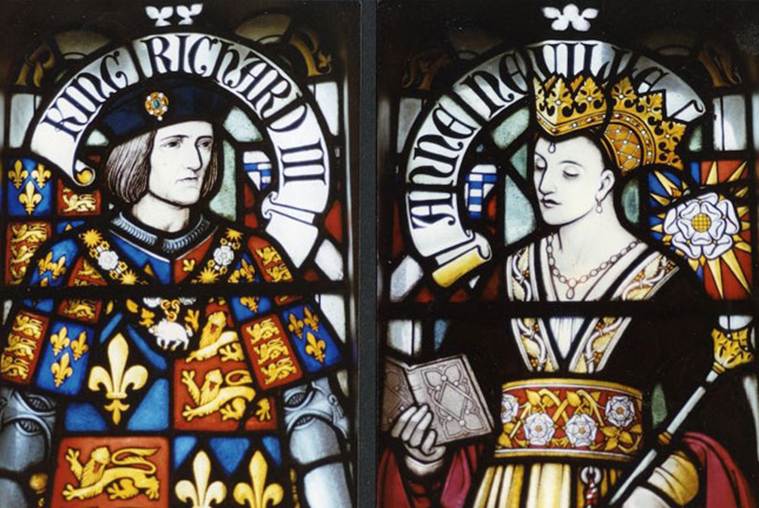
Richard and Anne in stained glass, Cardiff Castle
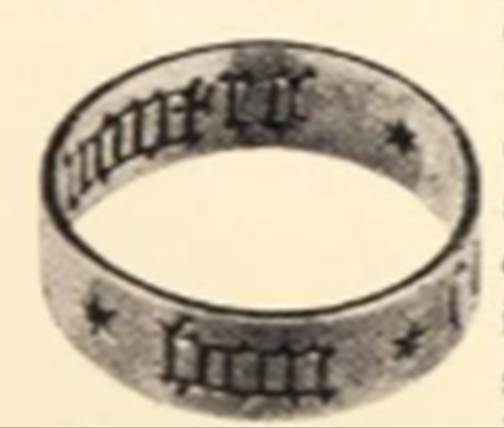
The Sheriff Hutton
Posy Ring was found between the moats at Sheriff Hutton Castle in the early
twentieth century. It is a plain circular band of rather yellow gold, and has
love mottoes or posies engraved both outside and inside in Old French.
The outside reads bon core de core
and the inside reads le tout voutre (“All
Yours”). The rings dates to the time of Richard III and Anne Neville, and
Elizabeth of York. Posy rings were in great favour from the middle of the
sixteenth to the close of the seventeenth century, and are mentioned much
earlier in Chaucer’s Troilus and Criseyde, Book 3, c1368. (Yorkshire Archaeological Journal, Volume 29, 1929, page 352).
Richard of
Gloucester was granted Scarborough Castle
and its associated lordship, rents, and port in 1472. Richard used
Scarborough Castle as a base for naval preparations, particularly against the
Scots, and was the last monarch to reside there during visits in the summer of
1484.
On 18 May 1472
Richard was made keeper of all the royal forests north of the Trent, a role
taken from Henry Percy, Earl of Northumberland. The position was one of several
key grants, including the stewardship of the Duchy of Lancaster lands north of
the Trent and the Wardenship of the West March, that allowed Richard to build a
powerful regional base.
1473
As a highly
respected Lord Protector and High Constable, Richard soon established himself
as a champion of justice and equality before the law, admired by rich and poor
alike as a good and fair ruler. As Lord of Scarborough,
he ordered building of the borough walls and harbour improvements, encouraging
trade from Whitby, Scarborough and Hull.
As well as
alliances with the northern nobility, he took former Neville servants into his
entourage including Sir John Conyers of Hornby castle and northern Yorkists
such as Sir John Saville. Richard also drew new connections to his service
including Thomas Gower, a member of a relatively obscure family with an estate
at Sheriff Hutton and Stittenham.
For a decade from
1473 to 1483, Richard, Duke of Gloucester, governed the north of England.
Richard gained a positive reputation and was well respected, even loved. He was
a champion of law and equity and by reputation protected the ordinary man
against the excesses of the elite classes. He gained a reputation as a good
medieval nobleman. Richard of Gloucester began to concentrate his land holdings
in Yorkshire and used the castles at Middleham and Sheriff Hutton as his power
base.
Richard and his wife
Anne were members of the Corpus Christi Guild in York.
Richard Duke of
Gloucester would have stayed regularly at Sheriff Hutton and Middleham. After Richard
married Anne Neville in 1473, Middleham was his principal home for the
following 10 years.
1474
Richard became
Lord of Barnard Castle in 1474.
1475
Richard gained
possession of Skipton Castle and its associated barony and estates including
the lands of Marton in Craven in Pennine west Yorkshire in 1475 from Sir
William Stanley, exchanged for Richard's interest in Chirk Castle in the Welsh
Marches. Richard consciously exchanged his southern interests to expand and
consolidate his northern possessions. Having been granted the Honour of
Skipton, he paid for major improvements to the Parish Church.
1476
Richard and
Anne’s only child, Edward, was born in 1476 at Middleham Castle, which had
become their primary residence. Edward was sickly and stayed at the protection
of Middleham Castle. Richard had two illegitimate children from before his
marriage to Anne (John of Gloucester (also known as John of Pontefract) and
Katherine, Countess of Pembroke), but Edward was his only true heir.
1477
Richard wrote to
the aldermen of York that his forthcoming visit was his next homecoming.
1478
In 1478 in
exchange for southern lands, Richard took ownership of the castle of Richmond which included reversion of the
castle and lordship of Helmsley and two
dependent manors.
The false,
fleeting, perjur’d (Shakespeare)
George, Duke of Clarence had previously defected to the Lancastrian side with
the Earl of Warwick, an act of open rebellion. After his wife Isabel Neville's
death in 1476, George, convinced she was poisoned, summarily arrested and
executed one of her ladies-in-waiting, Ankarette Twynho, without the king's
authority or a proper trial. He was accused of spreading rumours that the King
used sorcery and intended to poison his subjects. He was executed for high
treason on 18 February 1478, in the Tower. It was said that he was drowned in a
vat of Malmsey wine.
1480
Richard, Duke of
Gloucester, was appointed King’s Lieutenant of the North in May 1480 by Edward
IV to solve the problem of the North and the threat of the Scots. He gained
a reputation for his administration. Richard and Anne worked well together from
their base in the Neville lands.
With the symbol
of a white wild boar, in effect he was the Governor, on behalf of the English
Crown, of most of the North of England as the King’s loyal Lieutenant.
The boar was the only
game animal in England that would turn to attack its pursuers. The root Ebor-
in the Roman name for York, Eboracum, was later reinterpreted by
Anglo-Saxons to mean wild boar. Richard had a unique relationship with the
north of England.
1482
Edward III
planned a major campaign to Scotland, to replace James III with the Duke of
Albany and command was given to Richard of Gloucester. Richard captured Berwick
on Tweed and occupied Edinburgh. Had Edward not died in 1483 the war with the
Scots would have become an intensive campaign.
1483
Princes in the Tower
Edward IV died on
9 April 1483, aged 40. The day after the King's death, Stanley and Edward
IV's other councillors acknowledged his 12 year old elder son as Edward V. The
new king was at Ludlow with his maternal uncle, Anthony Woodville, Lord Rivers,
when he received the news and learned he would be crowned on 4 May. Since
Edward V was a minor, some had expected a Protector would rule England in the
King's name until he reached his majority. However he would rule in his own
name and the Woodville family would be influential in selecting his
councillors. (Tudor, the Family Story, Leanda de Lisle, 2014, page 43).
On Edward’s death
the Crown passed to the Yorkist Prince of Wales, Edward V. He was only 12. A
senior prince would therefore become his Protector. That was Richard, Duke of Gloucester,
by then High Constable, High Admiral and Lieutenant General of England, with
supreme military and judicial authority. There was no incentive to give up his
comfortable life in northern England for the tense politics of London. There
was no suggestion that he wanted the crown, but possibly accepted it as his
duty. There was a power vacuum after Edward IV’s death and Richard III was not
immediately told. The Woodvilles were consolidating
their root to government. They arranged for the date of the coronation to be 4
May, without summoning parliament,. The Woodvilles
took control of the Tower, the royal fleet and the Treasury. It might be seen
as a coup d'etat, a power grab. Richard was probably in Carlisle strengthening
the defences when he probably heard of death on about 14 April. He was given no
chance to attend the funeral of his brother and late king was buried on 18
April. This must have had an emotional impact. He didn’t immediately ride to
London, but wrote to the queen expressing condolences and loyalty to young
King. On or about 17 April Richard summoned all northern nobles to great
requiem mass at York where all swore oaths of loyalty to the new King Edward V.
Richard then rode south with a 250 strong delegation and as high constable
arrested he some of Woodvilles and entered London
with the boy King on 4 May. (Graham Mitchell,
University of Leeds, Secretary of Yorkshire Richard III Society, Lecture to
Yorkshire Archaeological and Historical Society, Medieval Section, 13 December
2025).
Edward’s
surviving brother, Richard, Duke of Gloucester, was a pious man who had
always been loyal to the late king and he swore an oath of loyalty to
his nephew promptly at York. He also agreed to meet Edward V on his
journey to London and accompany him on his formal entrance into the city.
Richard was already expected therefore, when he arrived at the meeting point at
Stony Stratford on 30 April, his horse still sweating from the gallop. (Tudor, the Family Story, Leanda de Lisle, 2014, page 44). Richard, with the Duke of
Buckingham, greeted the king and advised him of corrupt advisers who had
ignored Edward’s will which had named Richard as Protector. The young Edward
brushed aside their fears, but Richard seized control of Edward and Lord Rivers
was arrested for treason. Edward V was escorted to the bishop’s palace at St
Paul’s. Elizabeth Woodville took sanctuary in Westminster Abbey.
A power struggle
between the royal council and the Woodvilles followed.
Richard was seen by the nobility as the solution to the crisis. He was made
Defender and Protector of the realm.. Edward V began issuing edicts and summons
to his Coronation. (Graham Mitchell, University of
Leeds, Secretary of Yorkshire Richard III Society, Lecture to Yorkshire
Archaeological and Historical Society, Medieval Section, 13 December 2025).
A Constitutional
Crisis followed when Bishop Robin Stillington
revealed that Edward IV had a living wife when he had married Elizabeth
Woodville. The first marriage was to Eleanor Talboit (1436 to 1468) in 1461,
and they had no children. However on this evidence, Edward IV’s marriage to
Elizabeth Woodville in 1464 was invalid under canon law, and their children
illegitimate under common law. On that hypothesis, Richard of Gloucester was
the legitimate heir. The Royal Succession Act
1484, Titulus Regius, later confirmed Richard III as the legitimate
and rightfully appointed King. Henry VII, the first Tudor King, later ordered the
Act to be void, annulled, repealed, cancelled and of no effect or force. And it
be ordained that the said Act be taken and removed from the Roll and record of
Parliament and burnt and entirely destroyed so that things said and rehearsed
in the said Act may be for ever out of memory and forgotten. The Tudors
wanted no trace of the claim. (Graham Mitchell,
University of Leeds, Secretary of Yorkshire Richard III Society, Lecture to
Yorkshire Archaeological and Historical Society, Medieval Section, 13 December
2025).
Richard
rescheduled Edward’s coronation to 22 June. He now faced the vengeance of the Woodvilles and the threat of Edward V coming of age. On 10
June 1483, he wrote a secret letter to the city of York, summoning his
supporters. A meeting was called in the Tower on Friday 13 June 1483, which
descended into violence. Lord Hastings was taken outside and beheaded. Lord
Stanley returned home to Margaret Beaufort.
Richard demanded
that the new King’s brother, Richard the Duke of York, be brought to Richard of
Gloucester, so that he could take part in his brother’s coronation. The two
brothers were lodged in royal apartments in the Tower, a royal palace as well
as a prison and fortress.
The Princes in
the Tower, King Edward V and his younger brother Richard of Shrewsbury, Duke of
York, were last seen in public engaged in archery practice on 16 June 1483.
According to the Great Chronicle, they were observed shooting
arrows and playing in the garden of the Tower sundry times on that date.
Shortly after this last confirmed sighting, they were moved into the inner
apartments of the Tower and were seen less frequently before disappearing
altogether by the end of the summer of 1483. Their ultimate fate remains one of
history's enduring mystery.
Noone in
Woodville family ever accused Richard of murder, nor requested an inquiry.
Henry Tudor authorised a full search but There was much and diligent search
for their bodies in the Tower. And all these places were opened and digged where it was said their bodies were laid. But they
could never be found by any search (The
History of King Richard III, 1619, Sir
George Buc, Master of the Revels to James I and VI). Henry Tudor did
find one royal child, Edward Earl of Warwick (George’s son) in Sheriff Hutton
Castle, who was imprisoned in tower for 14 years and beheaded in 1499.
The evidence is
explored in detail in The Princes in the Tower, Philippa Langley, 2025.
There was no
coronation on 22 June and on 25 June Lord Rivers and his half
brother Richard Grey were executed.
On 26 June 1483 a
petition of lords urged Richard to accept the throne. The Bishop of Bath gave
evidence that Edward IV’s marriage to Elizabeth Woodville was bigamous and his
children were dismissed as Illegitimate. Richard’s older late brother George’s son,
Edward Plantagenet was excluded by his brother’s treason. The young Edward was like
a victim prepared for sacrifice, wrote his doctor.
A new coronation
was arranged to take place on 6 July 1483. Margaret Beaufort carried the train
of Richard’s queen, Anne Neville, widow of Edward of Lancaster, still hoping
for a route back from exile for her sons. Richard however could have no reason
to raise the fortunes of the remaining remnant of the House Lancaster.
Richard made his
bid for power in 1483 as the leader of an exceptionally large and powerful
northern affinity (Richard III, Charles Ross, 1999, page 55).
Richard III seized
the throne in July 1483 amidst violence and factionalism. There was an
underlying anger over Richard’s usurpation. He lasted two years.
Richard’s tarnished
reputation
The famous
mystery of the disappearance of the princes in the tower in 1483, which turned
Henry Tudor from a helpless exile into Richard III’s rival overnight, becomes
less mysterious when it is considered in the light of the culture and beliefs
of the fifteenth century (Tudor,
the Family Story, Leanda de Lisle, 2014,
page 2).
An account in the
early sixteenth century suggested that Richard decided the princes had to die
at Gloucester on 2 August 1483. Over the summer they vanished.
The story of the
princes in the tower emerged under the pen of Sir Thomas More in the reign of
Henry VIII and the story was picked up by Shakespeare, probably embellished by
retelling in the period in between. Shakespeare might have written his play as
a veiled parody of the hunchback Robert Cecil. Richard III had scoliosis but
this would not have given him the hunched back with which he has been maligned.
Richard himself
is the traditional prime suspect, reinforced by Shakespeare’s dramatisation.
Any suggestion of foul play would have made Richard’s position more vulnerable
and the disappearance of the princes avoided the evolution of the cult around
the dead heirs although Richard would need Elizabeth Woodville and the wider
community, to know that the princes were dead, to avoid plots raised in their
name.
If Richard’s
intention was to have usurped the throne he would more likely have displayed
the bodies of the young children to prove they had died and secure the throne,
claiming natural causes or blaming someone else. There were other suspects,
including Margaret Beaufort, who sought the coronation of her son Henry Tudor.
Richard was 30 by this stage, and his past history, including his governance of
northern England, do not suggest a villainous man. There is no reason to
suppose he would have so quickly decided to betray his brother Edward IV to
whom he had shown every loyalty. The death of the princes made the House York
vulnerable, with Richard III the last adult male.
There are
suggestions that the princes were put to death at the hand of Henry Stafford, 2nd
Duke of Buckingham, either on the orders of Richard at Gloucester, or perhaps
more likely in a plot to revive the Lancastrian cause as kingmaker for Henry
Tudor, or even for Buckingham himself, a descendant of Thomas of Woodstock, to
take the throne. The death of the princes made possible a Lancastrian uprising.
Buckingham was
married to Katherine Woodville, sister of Elizabeth Woodville the dowager
queen. He was in London from 28 August 1483 as commissioner takes to
investigate treason in London.
If the princes
were indeed dead, Margaret Beaufort had an opportunity for the revival of the
fortunes of her exiled son Henry Tudor, and perhaps a new opportunity for her
son to negotiate with Elizabeth Woodville for Henry Tudor’s marriage to her
remaining child, Elizabeth of York, though only if Elizabeth were convinced her
sons were dead.
Elizabeth
Woodville wept at the news of her sons’ deaths with lamentable shrieks that
made the house ring, she struck her breast, tore and cut her hair. She
called for vengeance and expressed her willingness to Margaret for the marriage
of Elizabth of York and Henry Tudor. Margaret advised her son to raise an army
to sail to Wales and that he would be supported by Buckingham.
Continued interests in the
north as King
Richard
III granted many annuities to his servants from the issues of the manor of Sheriff
Hutton (History of the County of York North
Riding, Sheriff Hutton, 1923, Volume
2).
In the late summer
of 1483, the newly crowned Richard III celebrated his special relationship with
the city of York during a joyous three-week state visit. The king was
accompanied by three earls, six barons, and six bishops. He stayed in the
archbishop’s palace where, in a magnificent ceremony on 8th September 1483, he
invested his son, Edward, as Prince of Wales. Polydore Vergil, Henry VII’s
court historian, recorded that King Richard, Queen Anne and the young Prince of
Wales processed through the streets, crowns upon their heads, while the
citizens ‘in show of rejoicing extolled King Richard above the skies.’ Indeed,
such were the splendours of the royal visit that one southern chronicler
believed the king had held a second coronation in the city. (Richard and the City of York, Dr David Johnson, Richard
III Society Website)
As King he also
became a huge benefactor of York Minster, ordering a new
chantry and paying for new altars and living accommodation for priests.
To the southern
establishment, the north was backwater. As king Richard introduced legal
reforms from his northern domain and introduced officials from there. This may
have led to dissatisfaction in Westminster. (Graham
Mitchell, University of Leeds, Secretary of Yorkshire Richard III Society,
Lecture to Yorkshire Archaeological and Historical Society, Medieval Section,
13 December 2025).
It seems that
Richard intended to be buried at York minster. He founded a Chantry Colleges at
Middleham and other places.
1484
In 1484 Richard
III established a royal household at Sheriff Hutton for the young Edward
Plantagenet, 17th Earl of Warwick, son of the wine-drowned George,
Duke of Clarence and John, Earl of Lincoln.
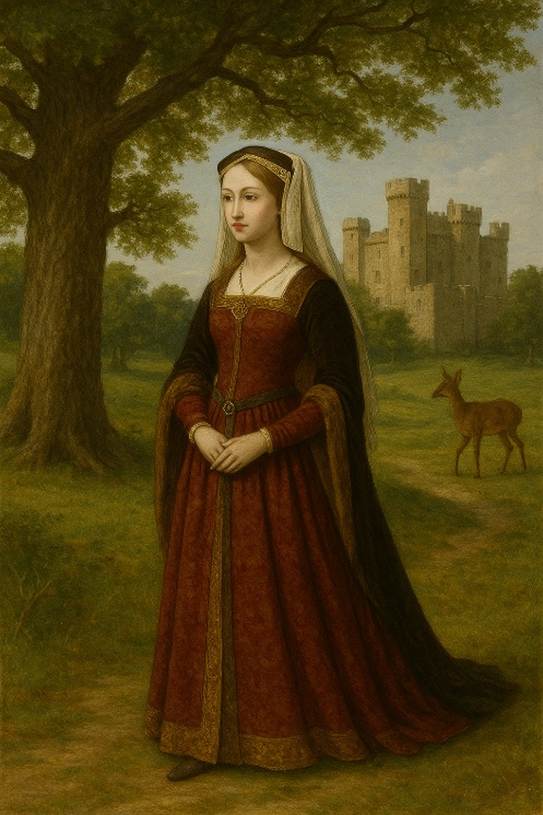
Richard III sent
his niece, Elizabeth of York (sister of the brothers in the tower) and
other prominent members of the royal household, to Sheriff Hutton. Elizabeth was
believed to have taken walks at the Neville Oak, a prominent tree in the deer
park, within sight of the castle.
Edward, Earl of
Warwick, the son of Richard III and Lady Ann Neville died aged 11 at Middleham
in 1484. Richard and Anne met the young boy’s body at Sheriff Hutton. His
alabaster tomb effigy is in the Neville Chantry Chapel of the Parish Church of
St Helen and the Holy Cross at Sheriff Hutton, though he is not buried there.
Although Richard
himself preferred to live in Middleham, in July 1484 he made the castle at
Sheriff Hutton one of the two centres that housed the Council of the
North, although it has also been argued that there is no evidence that
it was ever based, as is sometimes claimed, at Sheriff Hutton (Richard III,
Charles Ross, 1999, page 182). The principal base was at Sandal, near
Wakefield, another property of the House of York. The sessions of the
council were, however, to be held at York, which makes it seem likely that it's
authority was intended to be exercised primarily in Yorkshire (Richard III,
Charles Ross, 1999, page 182).
The Council of
the North was a form of early devolution.
The functions of
the council were well defined by Regulations issued in July 1484. The main
goals were to keep the king's peace, punish lawbreakers, and ensure impartial
administration of the law in the northern counties, which were remote from
Westminster and faced issues like lawlessness and potential conflict with
Scotland.
This Council was
the administrative structure that Richard established to govern the north
following his accession as King of England. As an administrative entity, it
survived into the seventeenth century until it was dissolved in 1641. As his
son Edward had died in April 1484 the Council was presided over by this nephew,
John de la Pole. The Council continued to operate.
The Council acted
as a court of pleas and was a form of devolved government. Members of the
Council included the Earls of Lincoln, Warwick and Northumberland and Miles
Metcalf, the Recorder of York. It continued to operate for over 150 years, in
the manner it had been set up by Richard.
1485
Richard III
visited the chapel at Sheriff Hutton and authorised payment of £5 to William
Sympson chauntry prest
of our Lady Chapelle beside the church of Shiriefhotone
to content him for his over due half year’s
stipend and £10 a year as his salary.
Bibliography
Richard III, Charles Ross,
2011.
Richard III and
the Princes in the Tower, Alison Weir, 2014.
Good King Richard?, Jeremy Potter.
Richard III, the
Maligned King, Annette Carson.
Richard III,
Loyalty Binds me, Matthew Lewis.
The Search for
Richard III,
Philippa Langley and Michael Jones.
Richard, Duke of
York,
Matthew Lewis.
The Secret Queen, John
Ashdown-Hill.
Perkin, Anne Wroe.
The survival of
the Princes in the Tower, Matthew Lewis.
The Princes tin
the Tower, How History’s Greatest Cold Case was solved, Philippa
Langley, 2025.
Historical Novels
The Daughter of
Time,
Josephine Tey.
The Sunne in
Splendour,
Sharon Penman.
Richard Liveth
Yet, Joanne
Larner.
Cecily and the
King’s Mother, Anie Garthwaite.