The context of the Palaeolithic Period or the Old Stone Age
(before about 10,000 BCE)
A global perspective to
the story of a dale in Yorkshire
FAR00001B
|
Return to the Home Page of the Farndale Family
Website |
The story of one family’s journey through two
thousand years of British History |
The 83 family lines into which the family is divided.
Meet the whole family and how the wider family is related |
Members of the historical family ordered by date of
birth |
Links to other pages with historical research and
related material |
The story of the Bakers of Highfields, the Chapmans,
and other related families |
Dates are in red.
Hyperlinks to other pages are in dark blue.
Headlines are in brown.
References and citations are in turquoise.
Context and local history are in purple.
BCE - Before the common or current era. The contemporary equivalent of
BC.
CE - Common or current era. The
contemporary equivalent of AD.
kya – abbreviation for a thousand years
YBP – Years before present
See also the Geology of Farndale.
3,300,000 YBP
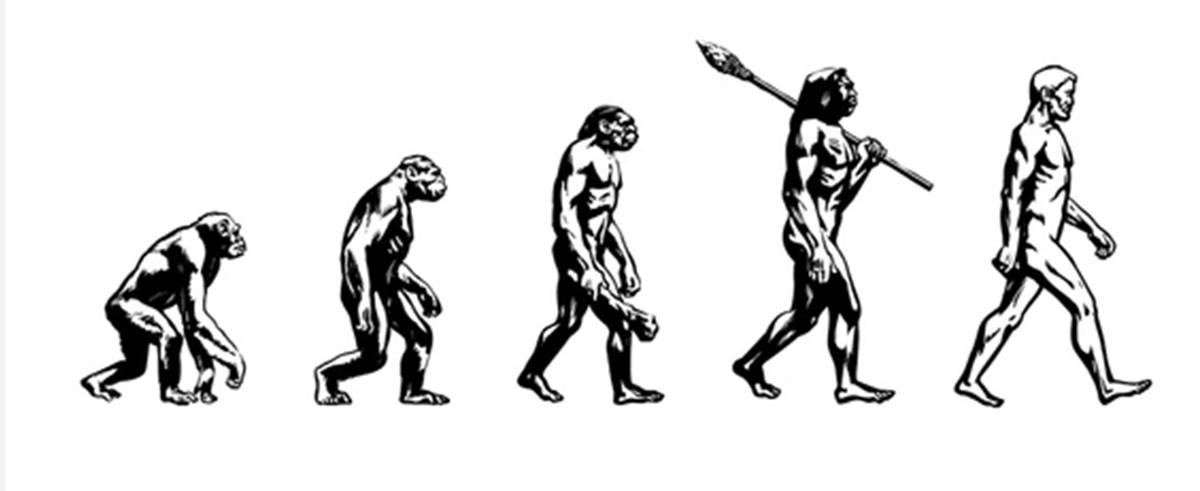
Human evolution and
spread
The Palaeolithic Period, also known as the Old Stone Age, is a period
in human prehistory distinguished by the original development of stone tools.
This period extends from the earliest known use of stone tools by hominids in
Africa about 3.3 million years ago, to the end of the Pleistocene.
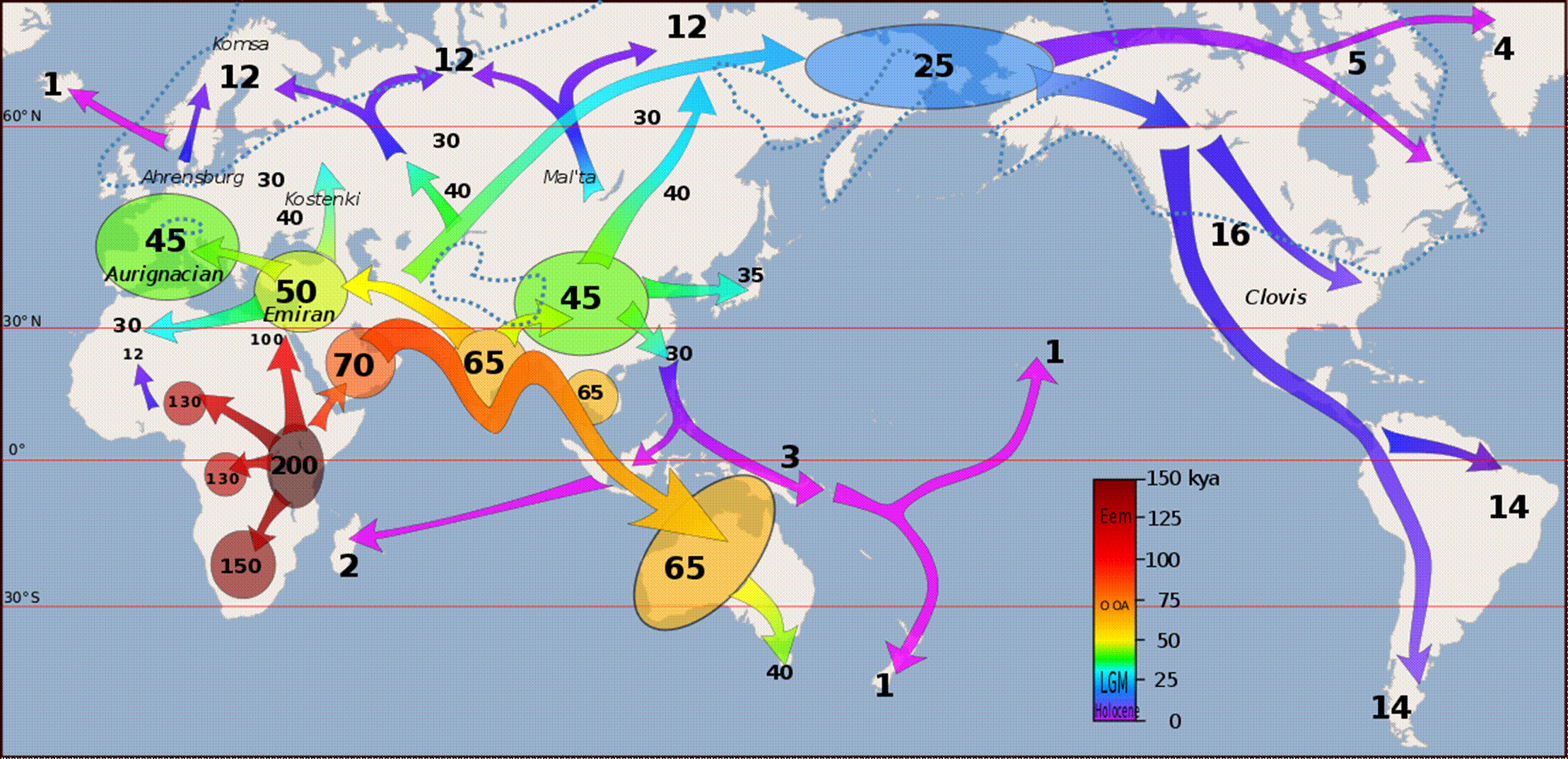
An approximate timescale of the spread of home sapiens and their
hominid ancestors
900,000 YBP
Earliest hominids in
Britain
Although there is evidence of early hominid activity at Happisburgh in Norfolk dating to
about 900,000 YBP, humans had not reached the area of modern Yorkshire until
about 9,000 to 10,000 BCE. The Happisburgh footprints
were a set of fossilized hominid footprints that date to the end of the Early
Pleistocene, around 850,000 to 950,000 YBP. They are the oldest known hominid
footprints outside Africa. They were the footprints of a different species of
human, perhaps Homo antecessor, an early human species known to be present in Europe at that time.
500,000 YBP
Boxgrove Man, West Sussex
In a gravel pit at Boxgrove, just outside
Chichester, human remains were discovered, half a million years old. They
comprise a shin bone and two teeth. He (or she) is estimated as about 1.2 metres in height. They are the oldest fossils
of the genus homo found in Britain and may have been Neanderthal.
400,000 YBP
Swanscombe Skull
The skull of a woman,
400,000 years old was discovered at Swanscombe, Kent. She was probably
a member of the Neanderthal line of evolution. Large numbers of large crude
flint handaxes were associated with the site. The early humans in Britain all
seem to have been part of this slow evolution of the Neanderthal line, well
before Homo Sapiens migrated from Africa.
Firemaking
In late 2025
archaeologists identified the earliest known instance of human created fire, near the village of Barnham
in eastern England, dating to 400,000 YBP. Having something that could give
you instant fire when you need it, where you need it, was crucial for people
moving into places like Britain 400,000 years ago – it made them more
adaptable, enlarged the range of environments they could survive in, and helped
catalyse the evolution of social complexity, brain growth and probably even
language itself (Professor Chris Stringer of
the Natural History Museum). This was a Neanderthal site where burnt
soil was found along with fire-cracked flint handaxes and two fragments of iron
pyrite, used to strike sparks with flint.
115,000 YBP
Interglacial Period
and Ryedale
Between about 115,000 to 11,000 years ago, there were warm and cold
fluctuations. The warm periods lasted long enough to explain the presence of sub tropical animals in Kirkdale cave, five hundred metres from St Gregory’s Minster at Kirkdale, the home of the
Farndale ancestors before they occupied the dale. In the cave hippopotamus and
hyaena remains were discovered in the nineteenth century, fauna of the land
long before there were humans there.
Hyaena continued to use the den into the following cold spell, until
the land became more like the steppes of Russia today, where mammoth and sabre
tooth tigers roamed. At that time ice filled the North Sea and dammed up the
drainage of the vale to the east.
40,000 YBP
The first homo sapiens
arrived in France. There were several human species living across the planet.
33,000 YBP
The Red Lady of Paviland
In 1823, William
Buckland, who had interpreted the Kirkdale Cave near Farndale in 1821,
abseiled down a cliff on the Gower Peninsula in Wales to investigate
a cave where it was thought that ancient elephant bones lay. He mapped the cave
in his Reliquiae Diluvianae, including a human
skeleton, which he concluded was not a prehistoric find, but the skeleton of a
Roman prostitute who came to be known as the Red Lady of Paviland.
In 2008, radiocarbon-dating techniques conclusively showed these bones belonged
to a male, aged 25–30, who stood about 173 cm in height buried around 33,000
years ago, when Britain was part of a larger peninsula attached to continental
Europe. The elephant bones were mammoth bones, perhaps dispatched by a hunting
party on the tundra during which the ‘Red Lady’ lost his life. It’s possible
that the remains in the cave are those of an early ritual burial of a hunter
who lost his life during his pursuit of prey.
The last Ice Age
There is an In Our
Time podcast, The Ice Ages.
22,000 YBP
13,000 YBP
While the Ice Age still
made Britain a harsh place to live, a few bands of hardy hunters did return to
Britain in about 13,000 YBP. The Robin Hood Cave Horse (previously known as the
Ochre Horse) is a fragment of a horse rib engraved with a horse's head,
discovered in 1876, in the Robin Hood Cave in Creswell Crags, Derbyshire. It is the
only piece of Upper Palaeolithic portable art showing an animal to have been
found in Britain. It is now in the British Museum. The image was carefully
prepared and depicted as alive and dynamic. These were Ice Age hunters during a
brief lull in the arctic conditions.
The Big Freeze followed
and life was extinguished again.
11,600 YBP
As the ice melted the
shape of the British Isles took shape, apart from the land bridge to the
southeast, known as Doggerland.
Go forward to Mesolithic
Yorkshire.
Bibliography
Yorkshire Archaeological
and Historical Society – Palaeolithic Yorkshire.
There is an In
Our Time podcast on the Ice Ages.