Alum
The alum industry in Cleveland
|
Return to the Home
Page of the Farndale Family Website |
The story of one
family’s journey through two thousand years of British History |
The 84 family lines
into which the family is divided. Meet the whole family and how the wider
family is related |
Members of the
historical family ordered by date of birth |
Links to other pages
with historical research and related material |
The story of the
Bakers of Highfields, the Chapmans, and other related families |
The Time Traveller’s
Journey through North Yorkshire
The History of the North York Moors, Ryedale, York,
Cleveland and beyond |

Dates are in red.
Hyperlinks to
other pages are in dark
blue.
Headlines of the
history of Brotton are in brown.
References and
citations are in turquoise.
Contextual
history is in purple.
The Alum Industry
The Jurassic
shales and sandstone of Cliff Ridge overlooking Great Ayton and Gribdale on the northern slopes of the moors contain bands
of ironstone, jet and alum, as well as whinstone.
The oldest of
these industries was alum.
Alum has
been used since ancient times for many purposes including medicinal. It has
variously been used as cure for haemorrhages, nits and dandruff, and other
ailments. From the Middle Ages it began to be used to increase the suppleness
and durability of leather and in the textile industry as a mordant to make
vegetable dyes fast.
Until the
middle of the fifteenth century the supply of alum primarily came from Turkey.
There was a flourishing trade between Asia Minor and Italy. The Italians used
alum for their dyeing establishments. After the capture of Constantinople by
the Turks in 1453, they looked for alternatives to Muslim sources. John di
Castro, who had been a dyer of cloth in Constantinople and had watched the
manufacture of alum, discovered an alum rock at Tolfa, a commune of Rome and
part of the papal states, and an industry began there which still exists. There
was soon a papal monopoly in alum.
The economy
of England, prior to the Industrial Revolution, centred around wool and linen.
This was very much a legacy of the monasteries. They had established the
rearing of sheep, in very large numbers, from which to produce the wool, and
the cultivation of flax, from which to produce the linen. The elite classes of
Tudor England liked to wear bright, rich colours. The only dyes available at
that time were derived from plants and minerals. These were not colour fast
during washing. To fix these natural dyes to the natural fibres of the wool and
linen cloth, it was necessary to soak the cloth in a mordant before putting it
through the dye bath. Alum could be used as a mordant.
Until the
reign of Henry VIII, alum had been sourced from the Italian sources which
remained under the tight control of the Pope. When Henry VIII seized domestic
control of religion from the Pope, it became imperative to find a domestic
source of alum. After some fifty years of prospecting and experimenting, a
viable process evolved for manufacturing alum from a rock stratum that was
particularly abundant in north east Yorkshire.
The earliest
prospecting for alum, towards the end of Henry VIII’s reign, took place in
Ireland, around Wexford. During the reign of Elizabeth I, further prospecting
continued on Lambay Island, off the Irish east coast.
In England, the earliest attempts to make alum were on the Isle of Wight and in
Hampshire.
Although German
miners had settled in England long before the reign of Queen Elizabeth, the
queen encouraged home industries and in order to escape the payment of tribute
to the Pope, she invited to Britain certain foreign chymistes
and mineral masters. Among them was Cornelius Devoz, to whom was granted
the privilege of mining and digging in our realm of England for allom and copperas. After that there is a gap in our
knowledge of the alum industry, but the Belham Bank works near Guisborough seem
to have been opened in 1595. According to A
Anderson the first alum works in England were constructed at Guisborough
in 1608. The person responsible was either Sir Thomas Chaloner, who according
to T Pennant suspected the presence of alum
because the trees in the district were of a weak colour, and according to G Young because of the taste of the water issuing
from the shales; or Sir J Bouchier, who is said to have improved upon the
method of manufacture. At any rate, Chaloner apparently induced Italians to
leave the papal works at Tolfa and come to Yorkshire, for which he was
excommunicated and heavily cursed by the Roman Church.
The Farndales and the alum
industry
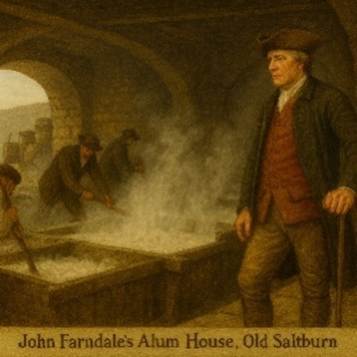
John Farndale
wrote that Johnny
Farndale, who was a Kiltonian,
employed many men at his alum house, and
many a merry tale have I heard him tell of smugglers and their
daring adventures and hair breadth escapes.
He also
recalled in his works of about 1870
Lofthouse, and their long famed alum
works, which has been the support of Lofthouse for ages gone, but now
discontinued. How well I remember my school days when we faced all weather
through Kilton Woods, and how I respected my masters – the Rev Wm Barrick, Mr
Wm King, the great navigator, and Captain Napper, steward to the works. The
popular Midsummer Lofthouse fair was the only fair we children were allowed to
attend.
|
1724 to 1807
Old Farndale of Kilton, the patriarch of
the Kilton Farndales, regaler of smuggler tales, alum merchant and farmer, of
whom the Squire once said “When you are gone, there will never be such
another Johnny Farndale”
|

The Process
Alum
was extracted from quarried shales through a large scale and complicated
process which took months to complete. The process involved extracting then
burning huge piles of shale for 9 months, before transferring it to leaching
pits to extract an aluminium sulphate liquor. This was sent along channels to
the alum works where human urine was added.
Alum a
colourless crystal, is a double sulphate of aluminium and one other element,
usually either potassium or ammonium. The manufacturing process was very slow.
From first quarrying the alum shale, to shipping the first cargo of alum
crystal, could take twelve months or more.
Alum was
extracted from quarried shales through a large scale and complicated process
which took months to complete. The process involved extracting then burning
huge piles of shale for nine months, before transferring it to leaching pits to
extract an aluminium sulphate liquor. This was sent along channels to the alum
works where human urine was added.
The first
part of the production process took place outdoors in a quarry. The quarry was
known as the Alum Works, which included all its associated fittings such
as bared rock, a burning place, steeping pits and storage cisterns.
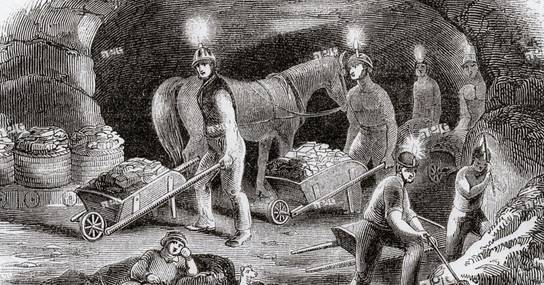
Here workers
would use pickaxes to excavate the rock from the quarry face, and then use
mauls to break the pieces down to a more usable size. Shovels would be used to
load the broken rock into wooden wheelbarrows, in which it was transported
along wooden planks, later iron plates, to the burning place. Here the rock
would be calcined in heaps known as clamps.
The clamps
were created by laying down a base of brushwood, about five metres across and a
metre high. Around and on top of this, the rock was added until the pile was
two metres high. At this point the brushwood was lit and the burning started.
More rock was added to the heap and around its sides, until the clamp was
perhaps fifty metres in diameter and twenty metres high. The clamp was then
left to burn, in a controlled manner. The skilled eye of the heap controller
would gauge when the burn had progressed to a suitable state.
At that
point, the burnt rock, now called mine by the alum workers, was removed
and placed in an empty steeping pit. Spring water and collected rainwater was
used to leach the soluble salts out of the mine, resulting a solution
called the liquor. The steeping process was a complicated affair, involving
pumping of the liquor from one pit to another in a carefully regulated
sequence. Eventually, the liquor arrived at the strength desired. It was then
pumped into a holding cistern, to await being sent to the alum house. When it
was required at the alum house, it would be transported there along wooden
troughs or stone conduits.
The Alum
house was the
collection of buildings in which the liquor from the steeping pits was
processed through to the finished product, the alum crystals.
On arrival
at the alum house, the liquor was run into cisterns and left to stand
overnight. This allowed debris and detritus to fall to the bottom or float on
the surface. Either way, the clarified liquor could then be used in the alum
house. It would first be run into large evaporating pans set over open coal
fired furnaces. The pans were made of lead and were around three metres long,
two metres wide and one metre deep. They were set on iron plates which, in
turn, were set on iron bars, with the coal fires below them. The liquor was
brought to the boil and kept there until the desired strength was arrived at.
When it
arrived at the appropriate strength, the liquor was run off into settlers where
an alkali was added. The effect of the alkali was twofold. First, it brought
about reactions whereby unwanted chemicals were precipitated out. Second, it
reduced the acidity to the point at which the alum crystals could form. Once
the waste products had precipitated, the liquor was run off into coolers which
were large wooden casks with numerous wooden frames suspended in them. Here the
alum crystals had large numbers of surfaces on which they could form and grow.
Next the
mixture was transferred to small coolers to crystallize. The resulting crystals
of alum were then further boiled and condensed to get rid of impurities.
It was
recorded that the workers suffered terrible conditions. The heaps of shale gave
off poisonous sulphurous fumes. Their wages of 6d a day were often withheld or
they were given in half rotten meat and corn. The alum workers were
described as poor snakes, tattered and naked, ready to starve for want of
food and clothes.
During the
final part of the process the crystals were scraped off the frames and the
sides of the coolers and washed with fresh spring water, to remove any
remaining surface impurities. The crystals were transferred to a roaching pan,
smaller than the evaporating pans but made of lead. Just enough hot water was
then added to dissolve the crystals. The liquor, after a final check on its
strength, was transferred to the roaching casks. Here it would cool for about
10 days. The outer cask would then be dismantled, revealing a column of solid
alum crystal. This would be left for another ten to fifteen days to allow the
liquor within the column to have a chance to crystalize further. At the end of
that period, the column would be broken into. The saleable alum was finally
bagged, ready for transport.
Alum and North Yorkshire
Alum Shale is
found in beds immediately beneath the sandstone of the North York Moors.
Alum mining has
been a North Yorkshire industry since alum was first discovered in the hills
around Guisborough by Sir Thomas Chaloner the younger in the 1590s. At the end
of the 16th century Thomas Chaloner visited alum works in the Papal States
where he observed that the rock being processed was similar to that under his
Guisborough estate. At that time alum was important for medicinal uses, in
curing leather and for fixing dyed cloths and the Papal States and Spain
maintained monopolies on its production and sale. Chaloner secretly brought
workmen to develop the industry in Yorkshire, and alum was produced near
Sandsend Ness 5 km from Whitby in the reign of James I. Once the industry was
established, imports were banned and although the methods in its production
were laborious, England became self-sufficient. Whitby grew significantly as a
port as a result of the alum trade and by importing coal from the Durham
coalfield to process it.
The first
alum works in Cleveland started at Belman Bank in Guisborough
Woods at the turn of the seventeenth century by Sir Thomas Chaloner the
Younger, who suspected the presence of alum because the trees in the district
were of a weak colour. He had visited alum works in the Papal States where he
observed that the rock being processed was similar to that under his
Guisborough estate. He seems to have induced Italians to leave the papal works
at Tolfa and come to Yorkshire, for which he was personally excommunicated.
Thomas Chaloner of Guisborough is reputed to have sold his own urine for one
penny a firkin, which was about nine gallons. There were many odd names for imperial measures
including pecks and gills and a firkin a
fortnight for urine.
Alum was
produced near Sandsend Ness five kilometres from Whitby in the reign of James
I.
This was a local
industry from the early 17th century until the mid 18th
centuries. Pack horses and wagons were used and some mines had rail tracks.
Alum was used for fulling, dyeing and tanning.
The process began in Greek and Roman times but appears to have been lost until
the 16th century when Italian alum working employed 800 men. The monopoly was
held by the Pope, who forbade Christians to buy it from any other source.
Tradition credits
Sir Thomas Challoner of Guisborough with the discovery of Yorkshire alum. He
noticed the rock and vegetation of the Italian sites were similar to that near
Guisborough. He smuggled papal workmen in England, one story says in barrels,
and after several trials succeeded in extracting alum. The Pope put a potent
curse on him, but by 1609 to 1612, there were four mines at Slapewath,
Belman, and West Bank, all near Guisborough and also at Sandsend, employing
hundreds of workmen. Other early mines were at Grosmont,
Goathland, Eskdaleside, Stoup Brow (1752 to 1817), Saltwick,
Nab and Mulgrave Woods.
Coal had to be
brought from Durham or West Yorkshire at great expense and the mines suffered
from corrosion and the action at the sea on the cliffs.
Alum is a double
salt, a combination of aluminium sulphite with either potassium sulphate or
ammonium sulphate. Processing it was complicated, worked by rule of thumb
methods. A layer of brushwood or gorse was piled on the ground. On this alum
shale in lumps was placed to a height of two to three feet. This was lighted
and caused the bituminous shale to burn. Further shale was added to a
considerable height, and much care taken in keeping the internal temperature
even. In windy weather, the sides were plastered with slurry, burnt shale mixed
with water, but if the fire was slow, the interior of the heap was poked with
rods. It seldom took less than a year to burn out one of the heaps, so several
heaps were burning at the same time.
At Boulby and elsewhere, they managed to set fire by accident
to jet shales which burnt for years.
When the burning
process was ended, the heap was allowed to cool slowly until it was mellow.
Then it was steeped in water in tanks or lead pans. The spent shell was thrown
into the sea, and the liquor concentrated to a specific gravity, determined
according to tradition by floating an egg on it. The alum workers’ secret was
knowing the exact point at which to stop and to separate the impurities from
the solution.
Two methods of
manufacture were used locally. Potash alum was made from burning seaweed,
centred on staves. Ammonium alum was produced by the substitution of urine for
kelp. This was, like the former method, finally recrystallized in wooden
caskets, the staves of which could be loosened by knocking away the supporting
hoops.
The peak of the
alum industry came by the mid 18th century. In 1764,
3,200 tons at £22 per ton was recorded, but a new process patented in
Lancashire in 1860 put an end to the Cleveland industry. Loftus had finished by
1830, Eskdaleside and Peak had almost finished by 1860 and Sandsend about 1870.
Remains can be seen at Boulby, excavated by Keith
Chapman of Brotton, and at Kettleness, Sandsend’s
remains have almost gone.
(Old Roads and Pannierways in
North East Yorkshire, Raymond H Hayes
MBE, FSA, 1988, page 66).
In the Skelton area alum production
began from about 1603. The first profitable site in Yorkshire was opened in
1603 at Spring Bank, Slapewath, which was then part
of Skelton. This was the project of John Atherton, joint owner by marriage of a
third part of the Skelton Estate. Robert Bell wrote There was a house at
Spring Bank, near Mygrave (Margrove
Park) erected, but not completed for the manufacture of Alum. On the 15th
November 1603 an agreement was made between John Atherton and Katherine his
wife of the one part and Mr Leycolt of the other,
under which the Athertons were, at their own cost, to
complete the house and furnish it with the necessary appliances, namely, four
Furnaces and four pans of lead and iron for boiling Alum, Coolers of lead for
congealing , and convenient Cisterns of lead for keeping and saving the
"mothers" or strong liquors of alum and Copperas (green vitriol
or Iron Sulphate). They were also to set up a lead-finer with furnace, a balnium for trial of the earth for alum and copperas, pits,
pipes, vessels for draining the earth and making liquors and all other
necessary implements.
Once the
industry was established, imports were banned. Britain gradually became
self-sufficient. Whitby grew significantly
as a port as a result of the alum trade and by importing coal from the Durham
coalfield to process it. In 1610 James I made alum production a monopoly of the
Crown.
In 1616 alum
production began at Coombe Bank, Boosbeck and Selby Hagg between Skelton and Brotton, located to the east of Hagg Farm and would seem
to have had three distinct periods of operation.
It is said
that ships anchored off Saltburn
to transport the finished product. They brought with them casks of urine, which
was mixed with the liquid that had been obtained from the calcined shale. We
don’t know where this process was carried out initially, but it was later done
in an Alum House sited near Cat Nab in Saltburn. The shale liquid ran from
Selby Hagg by gravity down a trough that followed the course of Millholme Beck.
Nevertheless
after 1630, alum works sprang up all around the northern escarpment of the
North York Moors and along the coastal cliffs from Loftus to Ravenscar.
Competitor works started to emerge at Pleasington in
Lancashire, at Hurlet and Campsie in Scotland, and at
Neath in South Wales.
From the
early seventeenth century until the 1860s it was extensively mined at Guisborough and along the East Cleveland coast. The
actual extraction of alum from shale was a long and expensive process and it
took an average of fifty tons of shale to produce one ton of alum.
The early
works consistently struggled to make alum. There was little chemical knowledge
to turn to. Everything was done by trial and error. Large sums of money were
spent in trying to perfect the process. Something like £150,000 pounds or more
had been spent between 1550 and 1630. At least half a dozen prospectors were
bankrupted.
The
Alum Works, peculiar to this part of the country, owed their institution to Sir
Thomas, who, while on a visit to Rome, was struck with the resemblance of its
mineral deposit to that of Guisbrough, and determined to introduce the industry
into his native country. In order to carry out this project, it was necessary
to obtain the assistance of some of the Pope's labourers, and tradition has it
that, at the risk of his anathemas, workmen from Rome were shipped to England
as merchandise! This of course requires confirmation, but as these important
works have vanished, and we no longer compete with his Holiness, we can afford
to leave the question in its obscurity. (Ryedale and North
Yorkshire antiquities, George Frank, 1888, page
235).
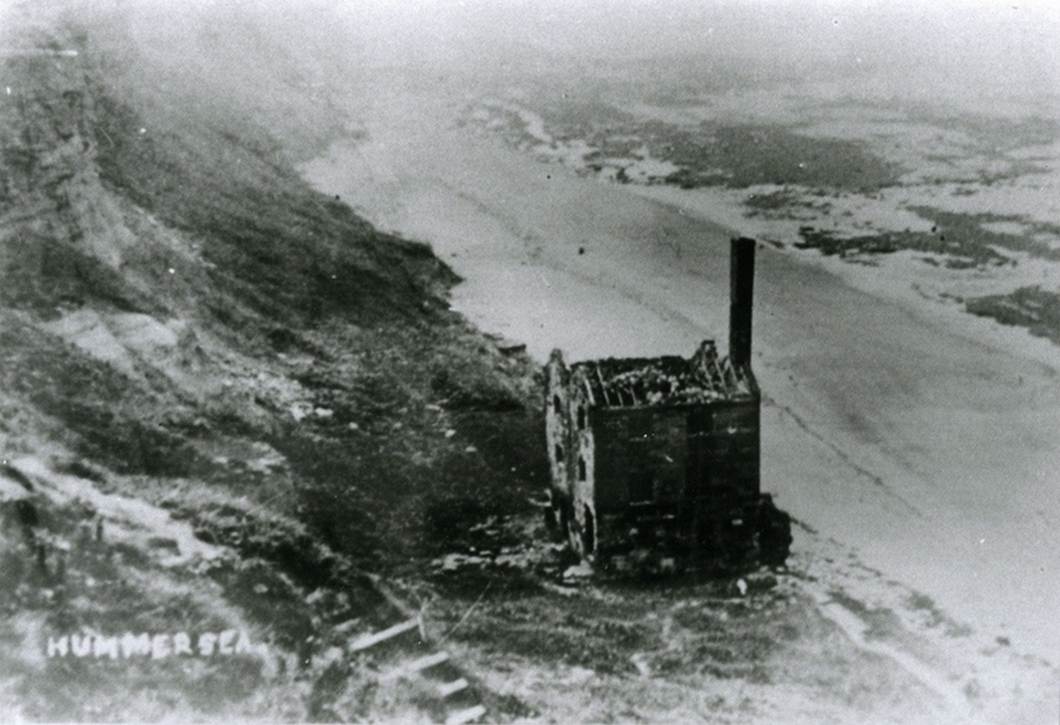
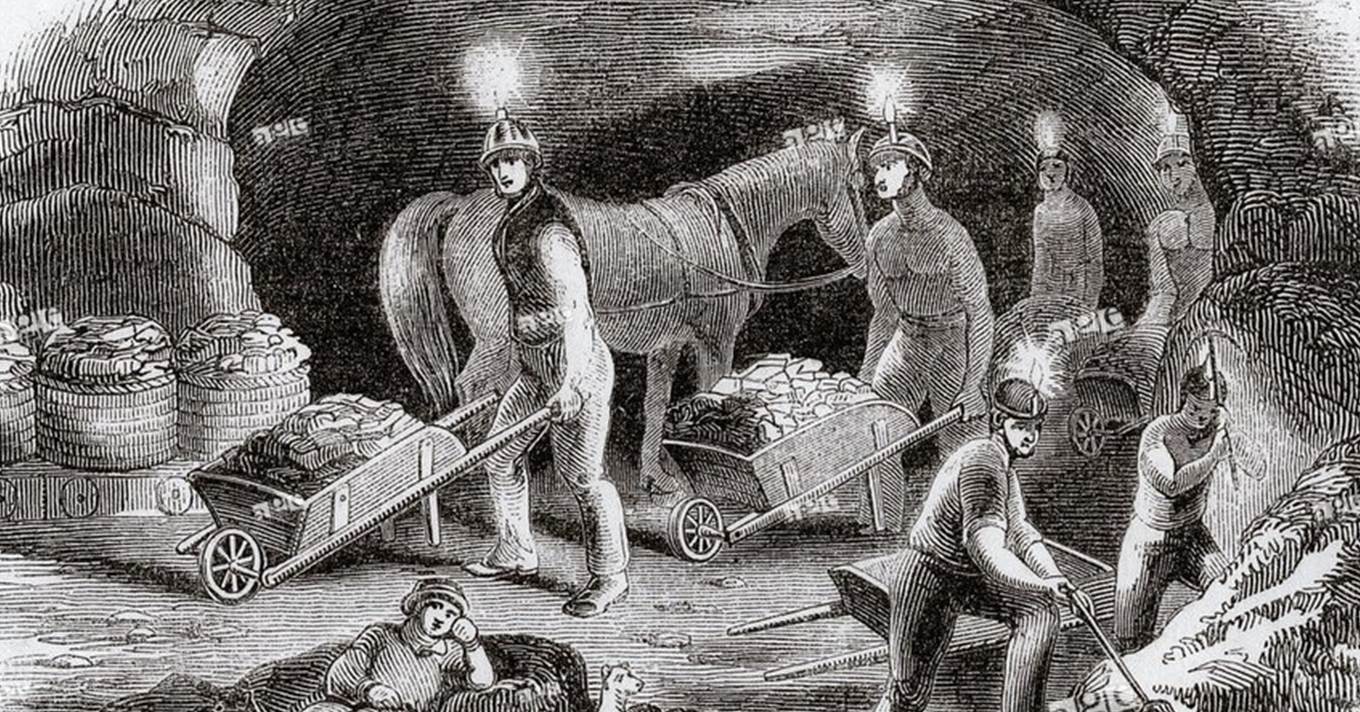
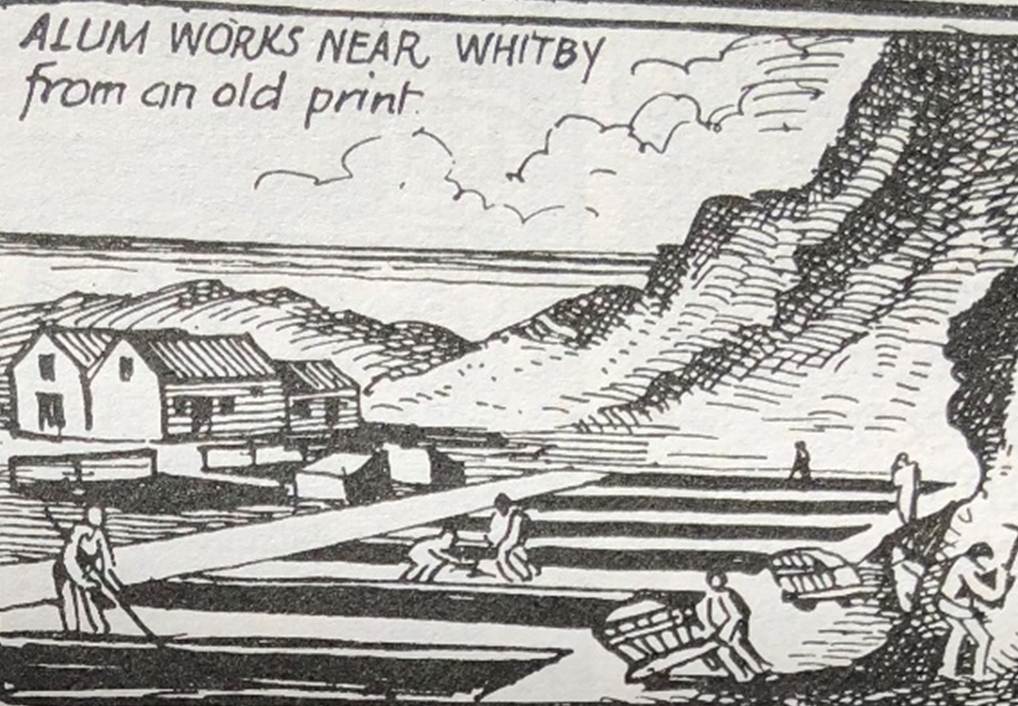
The Alum
workings at Hummersea, Loftus
were worked well into the 19th Century Alum mine, Cleveland
Cockshaw Alum Works at Gribdale quarried
and processed the shale to produce alum crystals in the eighteenth century.
At the peak
of alum production the industry required two hundred tonnes of urine every
year, equivalent to the produce of 1,000 people. The demand was such that it
was imported from London and Newcastle. Buckets were left on street corners for
collection and public toilets were built in Hull in order to supply the alum
works. This unsavoury liquid was left until the alum crystals settled out,
ready to be removed. An intriguing method was used to judge when the optimum
amount of alum had been extracted from the liquor by testing whether an egg
could be floated in the solution.
By the mid nineteenth
century, an industrial process for making alum was patented by Peter Spence.
His works at Pendleton, Lancashire and Goole, Yorkshire were each capable of
producing more alum in one month than the entire Yorkshire alum shale works
ever produced in a year.
By 1871 the
last two alum works in northeast Yorkshire had ceased operation. They were
driven out of business by more efficient production processes and the arrival
on the market of synthetic dyes that did not require a mordant to make the
colour fast.
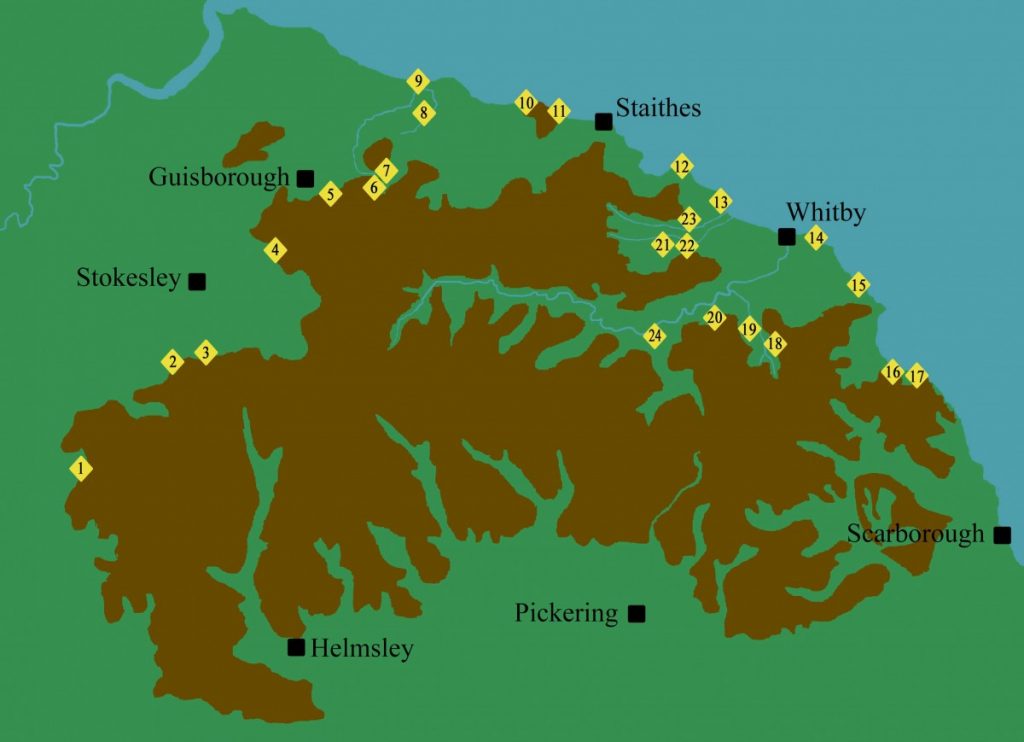
5 –
Belman Bank; 8 – Selby Hagg; 9 – Saltburn (the alum house for Selby Hagg); 10 –
Loftus; 11 – Boulby; 12 – Kettleness;
13 – Sandsend; 20 – Eskdaleside
There
are many sites along the Yorkshire Coast which bear evidence of the alum
industry. These include Loftus Alum Quarries where the
cliff profile is drastically changed by extraction and huge shale tips remain.
Further South are the Ravenscar Alum Works, which are well preserved and enable
visitors to visualise the processes which took place
Alum and Skelton
In the Skelton area Alum production began from about 1603. The
first profitable site in Yorkshire was opened in 1603 at Spring Bank, Slapewath, which was then part of Skelton. This was the
project of John Atherton, joint owner by marriage of a third part of the
Skelton Estate.
Rich rewards
seemed to beckon those who could create a home industry. The process was
complex. The alum bearing rock was quarried, broken up and calcined or
built into large clamps with alternating layers of wood and these piles would
be ignited and a controlled burning would last for weeks. It needed many tons
of shale to produce 1 ton of alum. The burnt, calcined, shale was then
steeped in water-filled stone troughs until a certain specific gravity had been
reached (tested for, the story goes, by floating an egg in the liquid). The
liquid was then run off and boiled in large pans heated by coal for 24 hours
and mixed with an alkali, obtained from urine or seaweed.
Thomas Chaloner
of Guisborough is reputed to have sold his personal urine for one penny a
Firkin, which was about 8 gallons. How often he earned or spent a penny or
earned one is not recorded. History shows that we have had many odd names for
imperial measures, pecks and gills etc. A Firkin a Fortnight for pee.
Other Alum mines
were eventually opened by the Skelton Estate, notably at Coombe Bank, Boosbeck
and Selby Hagg between Skelton and Brotton and were worked on and off during
the next two centuries. The Selby Hagg works were located to the east of Hagg
Farm, near Skelton-in-Cleveland, and would seem to have had three distinct
periods of operation.
During the first
of these, from about 1617 to 1643, the Alum house may have been located within
the quarry.
The second phase
ran from 1670 to 1685, and the third from 1765 to 1775. The alum houses for
these latter two phases were located at Saltburn.
Most successful
were the ones on the coast which did not have the cost of transporting fuel and
the finished product for shipment.
The Alum workings
at Hummersea, Loftus were worked well into the 19th
Century.
Major
Robert Bell Turton of Kildale Hall, N Yorks The Alum Farm, 1937: There was a
house at Spring Bank, near Mygrave [now Margrove Park] erected, but not completed for the
manufacture of Alum. On the 15th November 1603 an agreement was made between
John Atherton and Katherine his wife of the one part and Mr Leycolt
of the other, under which the Athertons were, at
their own cost, to complete the house and furnish it with the necessary
appliances, namely, four Furnaces and four pans of lead and iron for boiling
Alum, Coolers of lead for congealing , and convenient Cisterns of lead for
keeping and saving the "mothers" or strong liquors of alum and
Copperas [green vitriol or Iron Sulphate]. They were also to set up a
lead-finer with furnace, a balnium for trial of the
earth for alum and copperas, pits, pipes, vessels for draining the earth and
making liquors and all other necessary implements.
Bibliography
The Alum
Folk, Peter Appleton, 2023
The
Alum Industry of North-East Yorkshire, Chris Twigg, 17 January 2018
A Brief
History of the Alum Industry in North Yorkshire 1600-1875, Roger L Pickles, The Cleveland
Industrial Archaeologist Issue no.2, 1975
Boulby Alum: The Works Diary
of George Dodds 1772-1788, K Quinn, Cleveland Industrial
Archaeology Society Research Report No 9, 2010
The Alum Farm, Major Robert Bell Turton Whitby,
Horne & Sons, 1938