Doncaster Parish Church to the time of William
Farndale
An
early History of St George’s Church at Doncaster
|
Return to the Home Page of the Farndale Family
Website |
The story of one family’s journey through two
thousand years of British History |
The 83 family lines into which the family is divided.
Meet the whole family and how the wider family is related |
Members of the historical family ordered by date of
birth |
Links to other pages with historical research and
related material |
The story of the Bakers of Highfields, the Chapmans,
and other related families |
Hyperlinks to other pages are in dark blue.
Headlines of the history of the Doncaster are in brown.
References and citations are in turquoise.
Contextual history is in purple.
Doncaster had two medieval churches. St.
Mary’s was in the market place. It was the original church, and very likely the
market started as an extension to the churchyard. However, no urban
institutions are recorded in Domesday Book (unless the mention of 40 sokemen in
Domesday Book conceals burgesses) or until the twelfth century. The second
church, St. George’s, was apparently built from scratch on the site of the
Norman motte after its removal, probably succeeding a twelfth century castle
chapel. Doncaster must therefore be deleted from the list of Roman forts
containing early churches suggestive of continuity of settlement from the Roman
period. It is not clear if the location at St. Mary’s church was related to
that of the Roman civil settlement. Some
Notes on the pre-Norman History of Doncaster,
M S Parker, Yorkshire Archaeological Journal, Volume 59, 1987, page 39).
The original medieval parish church of St George burnt down on the
last day of February 1853. This fire resulted in the loss of the medieval
library which was above the south porch. The current Doncaster Minster is
therefore an impressive Victorian structure built after 1853.
In order to enter the world of William Farndale (FAR00038),
Chaplain of Doncaster Parish Church by 1355 and Vicar of Doncaster Parish
Church from 8 January 1396 to 31 August 1403, we need to understand the earlier
church of St George’s.
First century CE
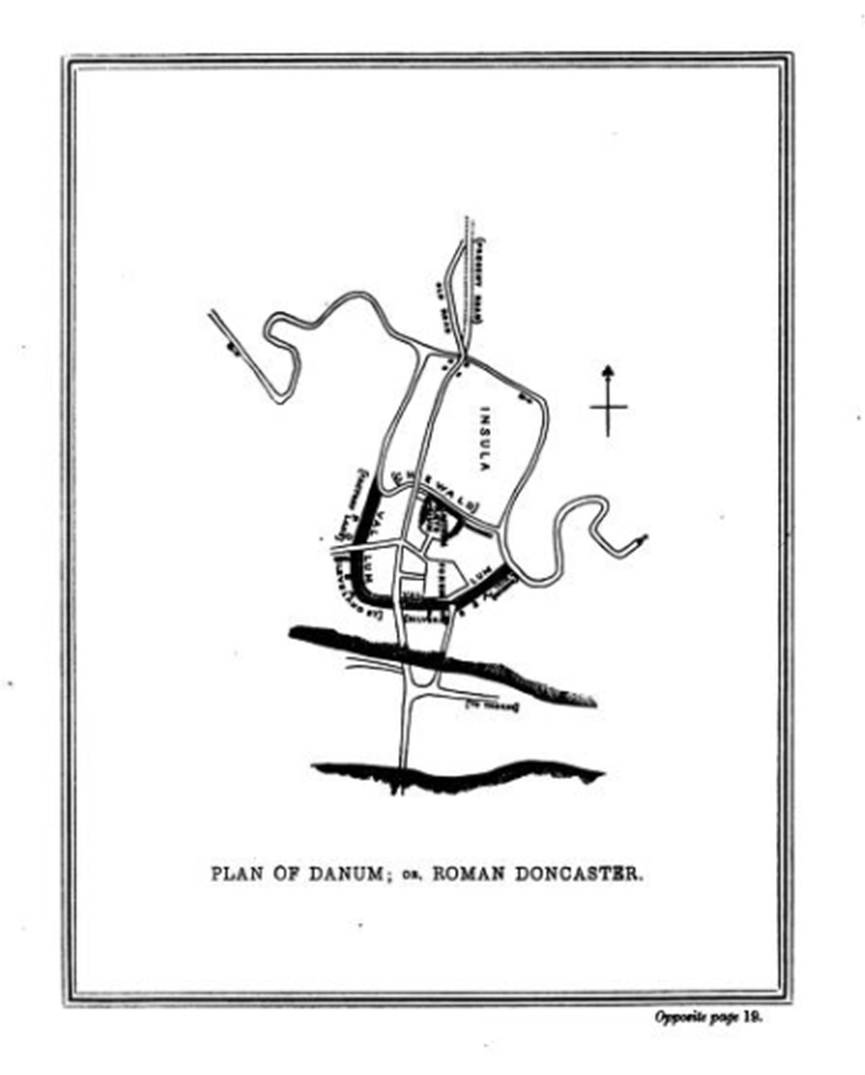
In
Roman Doncaster, the present market-place was in all probability used then for
the same purpose that it is now. It would also contain, as most Roman
market-places did, the public Temple. At all events, on whatever other site
such Temple may have stood, it could hardly have been on that of the Church of
St. George; for, in the times of which we are speaking, that site was
unquestionably the true Castrum, or Pretorian Camp, a military fortress, or
barrack, enclosed within special defences of its own
After
the Romans had abandoned Britain, this Castrum, or military enclosure, became
at a later period the site of a castle belonging for some centuries to the
feudal lords of Doncaster. By whom it was built, or when it was destroyed,
there is not a fragment of evidence to show; but that such castle did stand
here, we have the positive testimony both of Camden and Leland. The latter, 300
years ago, about a.p. 1538, visited the town, and saw
part of the outworks of the Castle still remaining. “‘ The church,” he says, ‘‘
stands in the very area where ons (once) the castelle of the towne stood, long
since clene decayed, the dikes partly yet to be seen,
and foundation of part of the walles. There is
likelihood,”’ he adds, ‘‘ that when this church” (the Perpendicular St.
George’s) ‘‘ was erected, much of the ruines of the castelle was taken for the foundation, and filling up of
the waullis of it.” In Pryme’s
MS. Diary, it is stated that part of the walls were in existence so late as a.p. 1694. Though, therefore, we have really no account
whatever of the Castle of Doncaster, either as to the time of its being built
or destroyed, and though it is impossible to say what Leland might have
understood by ‘‘long since clene decayed,” still, we
have his ocular testimony and the tradition which was then reported to him, in
proof of the fact that the castle did stand here, and that, moreover, it
comprised within its area and special defences, the ground now occupied by St.
George’s Church and churchyard.
If,
in the early days of Doncaster, this ground was occupied by a castle and castleyard, specially defended by walls, could it
conveniently have contained, at one and the same time, a Parish Church and
churchyard? The two uses are very incompatible. A Parish Church, being required
for public daily or hourly use, ought to be within daily and hourly access,
without the risk of interruption. The same with the cemetery. But the public
cemetery and church of the parishioners would hardly have been open to such uninterrupted
access, and ready for use at any moment, if, between the people without and the
cemetery and church within, there was constant risk of ‘Veto’ from portcullis
or sentinel. No place, again, would have been so wholly inappropriate to the
tranquillity proper for holy offices and services as the noisy precincts of a
barrack-yard.
That
Doncaster Castle may have had, as almost all castles had, its own chapel within
its own walls, is likely enough. But that, so long as it was the chief military
and feudal garrison of the town, it should have contained within its enclosure
the Parish Church and Parish cemetery, when there was room for them elsewhere,
appears, at all events, very unlikely.
Those,
therefore, who think that on the site of St. George’s have stood all the Parish
Churches of Doncaster, in succession, from that of Paulinus downwards, have to
meet this choice of difficulties. They must either insist on what is
improbable, viz., that the earlier Parish Churches of the town were imprisoned
within the walls of its fortress ; or they must get rid of the fortress before
the time of Paulinus, a.p. 633. But this would be to
annihilate Doncaster Castle before that very period of history when such
strongholds were most abundant and most needed. In short, to destroy it so
early, would be to allow it scarcely any existence at all.
If
however there should have been, all this while, another site in Doncaster free
from this difficulty of contested occupation ; one in the very heart of the
town, open and accessible at all times ; and if it could be shown that on that
site there had existed an ecclesiastical building, not only of great antiquity,
but of antiquity greater, so far as we can at present judge, than any portion
of St. George’s ; if, beside such other church, there should also have been,
surrounding it, a cemetery of considerable extent; is there not, in these
circumstances, and considering the comparatively smaller size of the ancient
town which would hardly require two cemeteries, fair reason for conjecturing
that this, after all, may have been the site of the original Parish Church?
(from
Rev Jackson, History of the ruined church of Mary
Magdalene, 1853)
627 CE
Edwin of Northumbria (586 to 633) was baptised in York about 15 years after the death of Augustine.
When Augustine came to Britain, he does not appear to have
attempted to bring his mission to Northumbria. However Edwin, King of
Northumbria, married the daughter of Ethelbert, the converted king of Kent and
it was agreed that she should freely exercise her religion. She was accompanied
by a zealous pupil of Augustine, Paulinus, and this provided the basis for
Edwin’s conversion. From that time, Paulinus was increasingly employed in
conversion across the region of Northumbria. One of the areas of Paulinus’ conversion
was on the banks of the Gleni and the Swale and at Campodonum
(South Yorkshire, the History and Topography of the
Deanery of Doncaster in the Diocese and County of York by Rev Joseph Hunter,
1828, page xiv, Bede’s Ecclesiastical
History, Chapter 9, 14).
Bede describes the catechizing and baptising of Paulinus
during times when he instructed crowds in Bernicia and in Deira. He often
followed river courses and baptised along the river Swale, where it flows
beside the town of Catterick and in Cambodonum,
where there was also a royal dwelling, he built a church which was
afterwards burnt down, together with the whole of the buildings, by the heathen
who slew Edwin [this was when Penda defeated Edwin at Hatfield in 633 CE].
In its place later kings built a dwelling for themselves in the region known as
Loidis. This altar escaped from the fire because it
was of stone, and is still preserved in the monastery of the most reverend
abbot and priest Thrythwulf, which is in the forest
of Elmet. (Bede’s Ecclesiastical History,
Chapter 14). Loidis is modern Leeds. Cambodonum has been interpreted as various locations
in the West Riding, but it probably derives from “Field of the Don” and is more
likely a reference to Doncaster.
So, it is likely that a church was erected in the place of modern
Doncaster at this time. If this is correct, then Paulinus also tells us that
Edwin had a royal residence (villa regia) at Campodonum.
The praetorium of the Roman Castrum might have been an ideal site for an
occasional royal residence. This would suggest that the church at Doncaster was
burnt down by Penda after the Battle of Hatfield Chase in 633 CE. So no sooner
was the first church built, that it was destroyed and the progress of
Christianity in Doncaster was interrupted.
Bede’s work also suggests that a second Christian church, after
the church at York in 627 CE, was built in Doncaster under Paulinus’
supervision.
(South Yorkshire, the History and
Topography of the Deanery of Doncaster in the Diocese and County of York by Rev
Joseph Hunter, 1828, page 4 to 5, 34)
633 CE
Edwin was killed by the pagan Penda at the heath field on Hatfield
Chase, 10km northeast of Doncaster. It appears that Penda immediately attacked
Doncaster and destroyed the church, and probably the royal residence, as we
don’t hear of Northumbrian kings returning. However the altar was preserved in
a monastery in the wood at Elmet,
around modern Leeds.
However the church was rebuilt, the monastery at the mouth of the
river referred to by Alfred of Beverly. The early churches were more like
monasteries than early parish churches (see Kirkdale).
Early religious men lived around these places and made ecursions
into the countyryside, before the time of parish
churches.
764 CE
In
764 the chronicler Symeon of Durham in his Historia Regum groups York with
London, Doncaster, and other places, repentino igne vastatae (destroyed by a
sudden fire). (A History of the County of York: the
City of York. Originally published by Victoria County History, London, 1961).
Multae urbes, monsteriaque, atque villae, per diversa loca necnon et regna, repentino igne vastatae sunt; verbi gratia, Stirburgwenta civitas, Homunic, Lundonia civitas, Eboraca
civitas, Donacester, aliaque
multa loca illa plaga concepit.
Many cities,
towns, and villages, in different places, as well as kingdoms, were destroyed
by a sudden fire; for example, the city of Stirburgwent,
Homunich, the city of London, the city of York,
Doncaster, and many other places were conceived by that plague.
There is evidence
of fire in the area of the Roman castrum, but these marks may have been the
result of the devastation by Penda.
This was a time
when Alcuin of York, in the
Kingdom of Charlemagne, was despairing of the fate of his homeland.
813 CE
Alfred of Beverly
recorded the destruction of the monastery at the mouth of the Don by Danes,
which may have been a reference to Doncaster – Monasterium
ad ostium Doni amnis precaverunt,
sed non impune; “They
prayed to the monastery at the mouth of the river Don, but not with impunity”.
1061
Joseph
Hunter in 1828 first claimed Doncaster to have been a ‘considerable place’, at least
relative to the ‘insignificant’ one that was Hexthorpe, in 1085-6. To support
this claim, he advanced the apposite analogy of
Chesterfield. Like Doncaster, this town of Roman origin was noticed in Domesday
not on its own account but under Newbold, by the time of his writing ‘but a
village in the vicinity’, but in 1085-6, like Hexthorpe, the location of the
house of the Saxon lord. Doncaster, however, had been noticed in Domesday in a
wholly summary manner as merely one of the places in the soke that pertained to
the manor of Hexthorpe. According to Hunter, whilst the house of the manorial
lord was located at Hexthorpe, the two mills which produced an income equal to
a twelfth of the value of the entire manor, the church and priest that ‘had an
endowment beyond the ordinary provision for the parish churches’ and the forty
sokemen (freemen) enumerated, were all most likely to be found in Doncaster.
Hunter’s
contention has proved persuasive to subsequent writers on Doncaster down to the
present, yet in 1892 this Society in its record series had published a
document, unknown to the pioneering Hunter, which made two of the bases of his
claim disputable. This is the inquisition post mortem of 1279 on the death of
Peter de Mauley the second, lord of the manor of Doncaster and other estates in
Yorkshire. According to this, there were five mills worth forty marks listed
under Doncaster but whilst four were at Doncaster, one was at Hexthorpe. It
seems less likely that the latter had been built since the Domesday survey and
more likely that it had been one of the two mills in the manor of Hexthorpe
allocated to Doncaster alone by Hunter. Likewise, the inquisition itemises the
rents paid by the freemen of Hexthorpe and Balby and those of the freemen of Wheadey, but lists no such item under Doncaster, suggesting
that in 1085-6 the freemen were not to be found there as Hunter had supposed.
What
is of interest about the church, the third of Hunter’s indicators of
Doncaster’s early urbanity, is not its location (as no one, including the
present writer, doubts that it was located in Doncaster) , but which church is
being referred to in Domesday and, of more significance here, the date of its
foundation. It is now generally agreed, although the available evidence is
unable entirely to resolve the matter, that the church dedicated to St Mary
Magdalene (which was subsequently reduced in status to a chapel and dissolved
with all other chantries in 1547) and not the later church of St George was
probably the original church of the ancient parish of Doncaster. In a thorough
review of the evidence, T. R. Slater persuasively argued that St George’s church,
originating as the chapel of the castle, became the parish church in place of
St Mary Magdalene in 1320.
There is a suggestion that St George’s Church was first founded in
1061 (for instance in articles on St George in F.
L. Cross and E. A. Livingstone (eds), The Oxford Dictionary of the Christian
Church, 2nd edition, 1974, page
557 and 3rd edition, 1997, pages
664 to 665).
However Brian
Barner considered evidence for dating the foundation of the church of St
George, that is the church of the ancient parish, to before the Conquest and
specifically to 1061. His conclusion is that the date of 1061 asserted
for the foundation of Doncaster, St George rests entirely on error; and that
the emergence of Doncaster as a significant settlement can most convincingly be
dated to the post-Conquest period.
(Doncaster and the church of St George in the eleventh
century, Brian Barber, Yorkshire
Archaeological Journal, Volume 79, 2007, page
326 to 328).
1086
Shortly after the Norman Conquest, Nigel Fossard
refortified the town and built Conisbrough Castle. By
the time of Domesday Book, Hexthorpe in the wapentake of Strafforth
was said to have a church and two mills. The historian David Hey says these
facilities represent the settlement at Doncaster. He also suggests that the
street name Frenchgate indicates that Fossard invited fellow Normans to trade in the town.
Doncaster was ceded to Scotland in the Treaty of Durham and never formally
returned to England!
Rev Jackson’s book (see below) tells us: “At the Conquest there
was a Church and a single Priest , whose nomination lay with the Fossards, feudal Lords of the town. In the reign of William
Rufus, Nigel Fossard , leaning with the special favour of those times towards
the establishment of monastic houses, made to the newly founded Abbey of St.
Mary's, near the walls of York, a donation which is thus described in his
charter.”
There was significant building of monasteries and parish churches
during this period. The building of churches was attractive since this allowed
the lords to extract tithes from distant churches to which it had been paid and
settle it on churches of their choosing, perhaps closer to their own residence.
During this period churches were built at places including Coningsborough,
Campsall, and Doncaster. Joseph Hunter lists 60 places where Churches were
built. Most of these churches had one officiating minister at their foundation,
the persona or rector. The churches were often placed under the
patronage of monastic institutions. The church at Doncaster was distinguished
from others by being given the title of dean. Certain of these churches were
parish churches in form, but were also referred to as chapels, which meant that
they were given rights of baptism, nuptial benediction and of sepulture, but were not able to participate in tithes from
the lands around them. These churches included St Mary Magdalene at Doncaster
and the chapel at Loversall.
(South Yorkshire, the History and
Topography of the Deanery of Doncaster in the Diocese and County of York by Rev
Joseph Hunter, 1828, page xvi to xx).
1088
Early in the reign of William II (William Rufus), Nigel Fossard
was amongst the benefactors who founded the abbey of St Mary in York. Fossard gave the church of
Doncaster to the new abbey as well as lands in the area.
Twelfth century
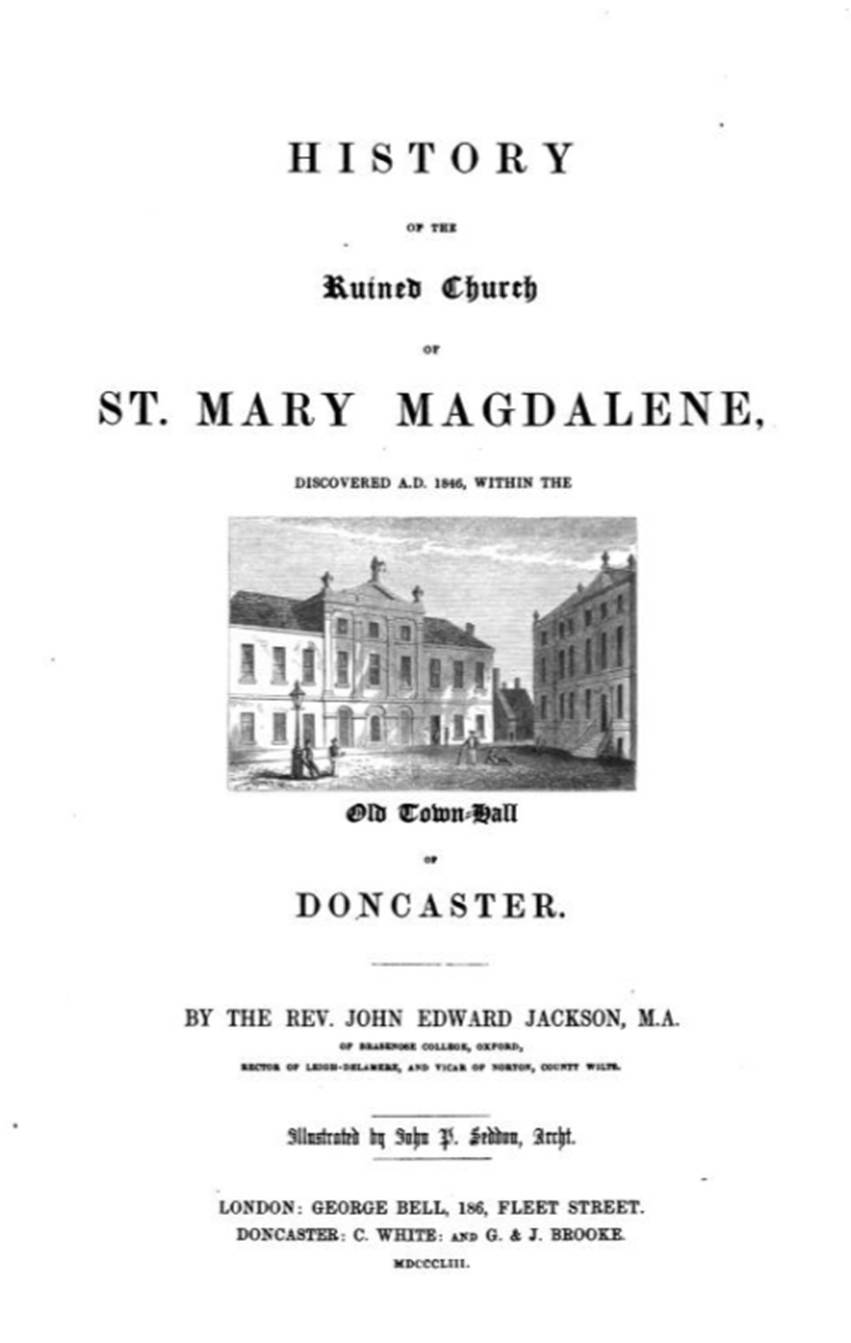
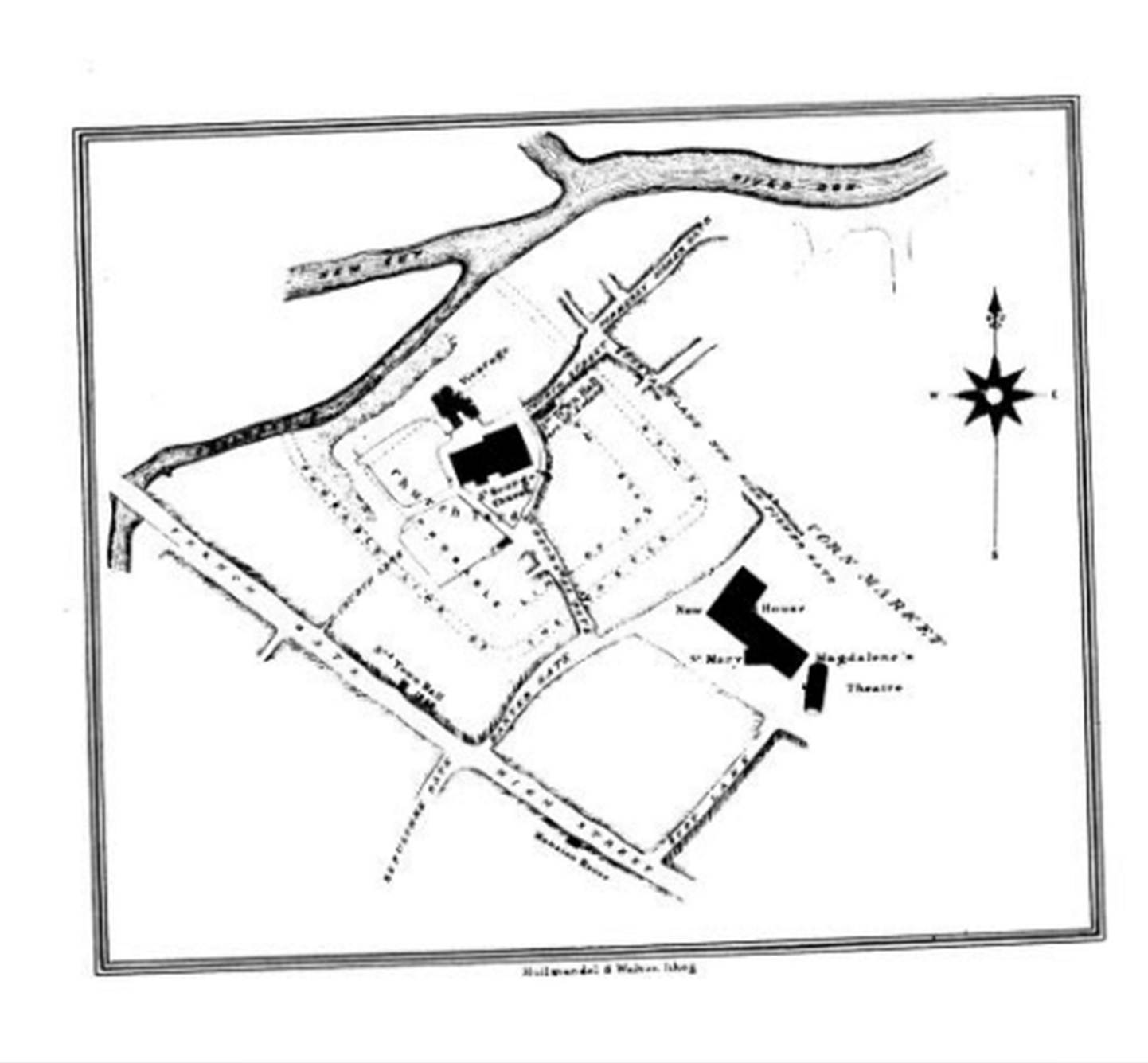
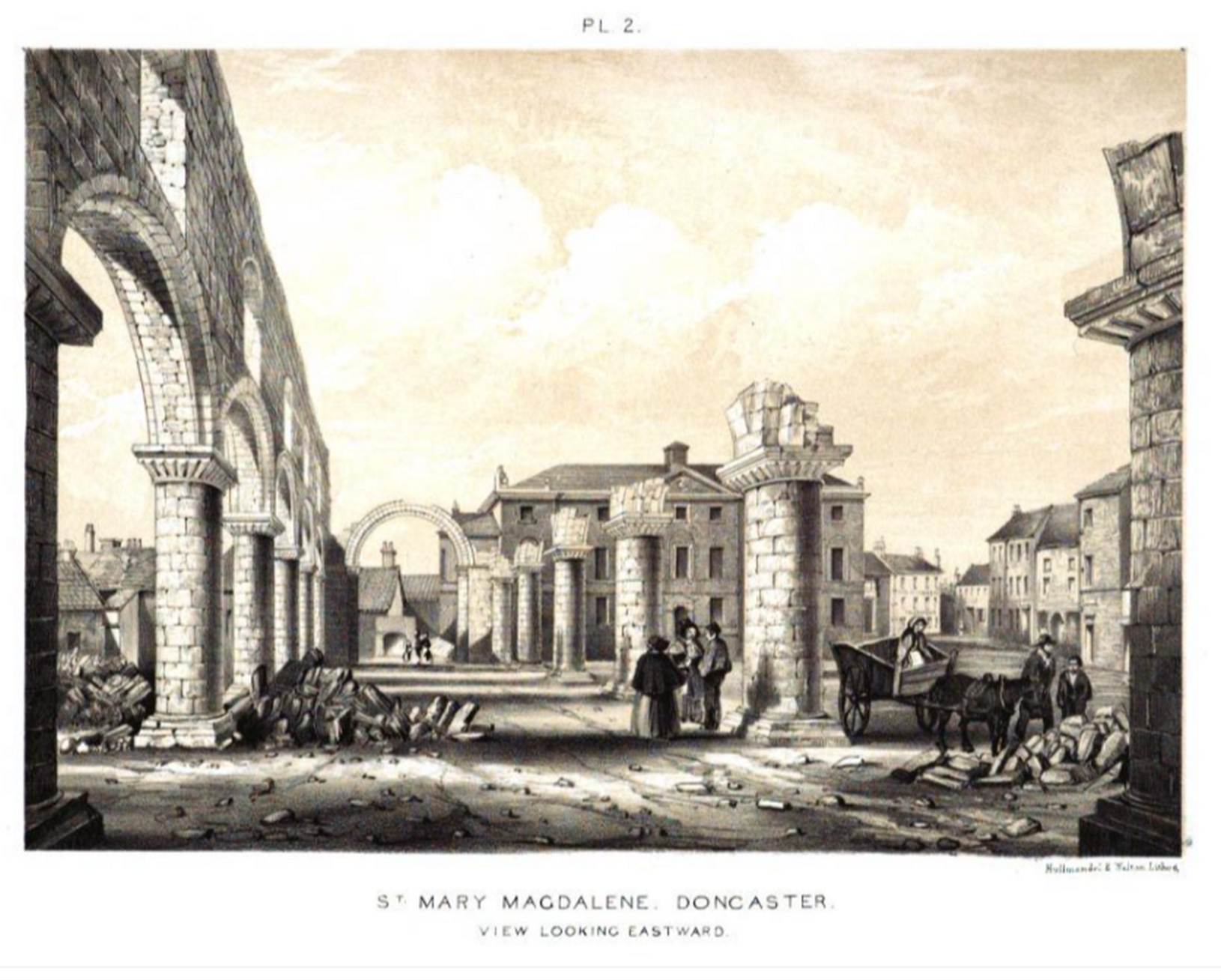
The church of St Mary Magdalene stood in the market place and may
have been the early parish church of Doncaster, but it soon served as a chapel.
By the reign of Henry II (1154 to 1189), it was a chapel.
By 1248, a charter was granted for Doncaster Market to be held in
the area surrounding the Church of St Mary Magdalene.
(See also South Yorkshire, the History
and Topography of the Deanery of Doncaster in the Diocese and County of York by
Rev Joseph Hunter, 1828, page 20).
c1200
Robert
de Turnham tried to recover the rights in the church which Nigel Fossard
had given to St Mary’s Abbey, York, but had to acknowledge the continued rights
of the abbey, but was given a right to the chapels at Loversall
and Rossington, which were part of the parish of Doncaster.
1204
There was a disastrous fire in 1204 which appears to have completely
destroyed the town, from which the town slowly recovered.
At some stage during the reign of King John, there were two
rectors of the parish church, called Hugo and John.
1291
The ecclesiastica taxatio listed the parish churches of England and
Wales in 1291 to 1292 and listed St George’s at Doncaster, whose patronage was
to the Benedictine St Mary’s Abbey at York, assessed for tax at £93 6s 8d.
The main source for St George’s Parish Church is the History of St George’s Church, Doncaster, Destroyed by
Fire, February 28, 1853, by the Rev J E
Jackson.
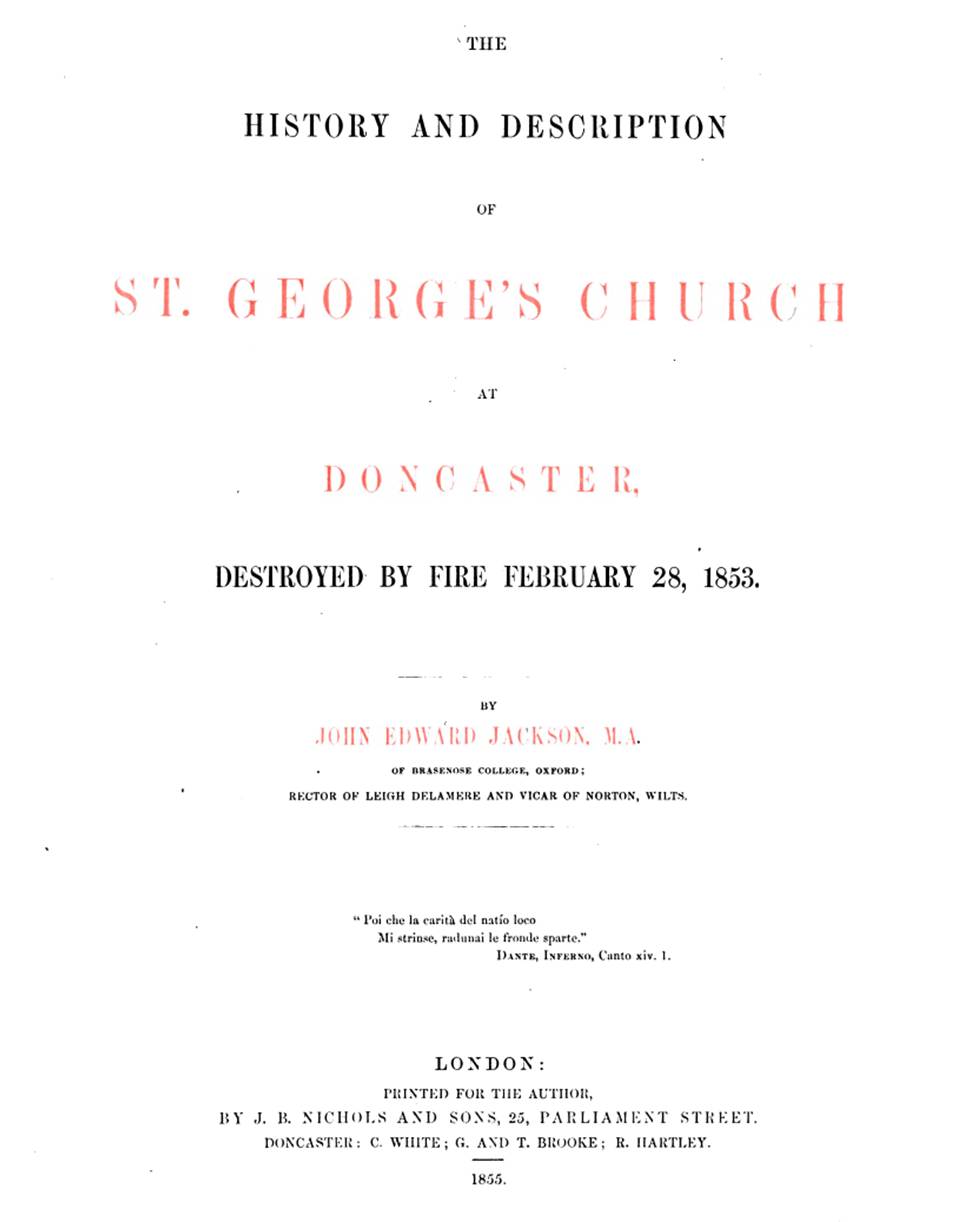
Rev Jackson suggested “according to Leland, an
eye-witness about A.D. 1510, the late Parish Church stood upon area and within
the walls (some of their foundations then remaining) of the ancient Castle of
Doncaster. Whether the Castle, whilst used as such, had contained any spot of
consecrated ground ; whether that ground had been occupied by a parish church
or only a chapel; at what time the whole area of the Castle became consecrated
and parochial ; and in what style any first churches may have been built, are
points that will receive from this Volume little or no aid to solution.”
From excavations after the fire in 1853, Jackson concluded that if
the church had been of Norman origin, it would have lasted scarcely a hundred
years as the fire of Easter 1204 consumed the town of Doncaster so if it had
existed it must have been destroyed.
Rev Jackson suggested that the original church “had
been in its previous (we dare not say original) state, essentially and
throughout of the order known as “ First Pointed ," or Early- English. The
period usually allowed for that style is about 118 years, from 1 Richard I to
35 Edward I.” So this suggests the origin of the parish church to have been
1189 to 1307.
He then says “we are not wholly without grounds for suggesting
the names of one or two principal promoters”:
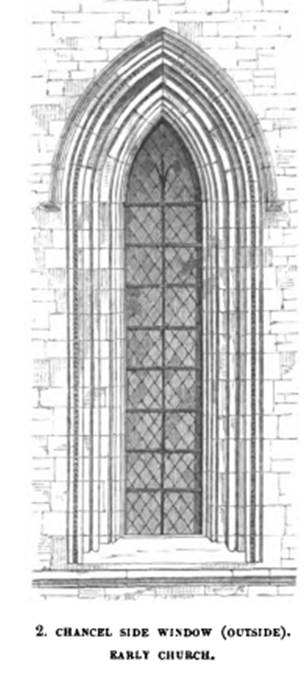
· “The
cost of the chancel would be provided by the owners of the Rectorial
property, then the Abbot and Convent of St. Mary's at York. Under such
influence, that part might be expected to correspond (as from the pattern
remaining in the old side -windows appears to have been the case) with the more
enriched variety of this style, of which that Abbey was itself an exquisite
specimen”. Note the connection of the Stutevilles to the Convent of St Mary
at York in the
early history of Farndale.
· “Amongst
contributors to the rest of the Church, without ranging vaguely beyond the
bounds of reasonable conjecture, one may perhaps be identified in the person of
Robert de Turnham , a Crusader under Richard I., distinguished by
special notice in metrical chronicles of the day.” “He was, in fact ( by
marriage with the heiress of the Fossards) , Lord of
Doncaster, and actual owner of the estates now possessed by the Corporation.”
“he was contemporary with, and must have been a sufferer in property by, the
Fire of A.D. 1204, is certain ; for he did not die until six years after it, in
A.D. 1210.”
1300
As to a description of the church of William Farndale’s day:
· “the
width of the Nave (50 feet)”
· “The
form , that of the Latin Cross, having Nave and Chancel; with Transepts (North
and South ), to each of which was appended on their eastern side a small aisle
or chapel.”
· “At
the west end … it is not unlikely that there may once have been a Norman Door.”
· “The
nave was formed by two large arcades, each consisting of five obtusely -
pointed arches rising upon massive octangular pillars. The capitals and
mouldings were without ornament, and of the earliest period of this order of
architecture, dating probably from about A.D. 1190 to A.D. 1200.”
· “Above
these large arches (between them and the roof) there was originally a range of
low windows (forming the Clerestory)”
· “Behind
them, and within the thickness of the Church wall, ran a narrow gallery known
as the “ Triforium ” passage”
· “Four
massive piers at the cross were ready to support some kind of steeple”
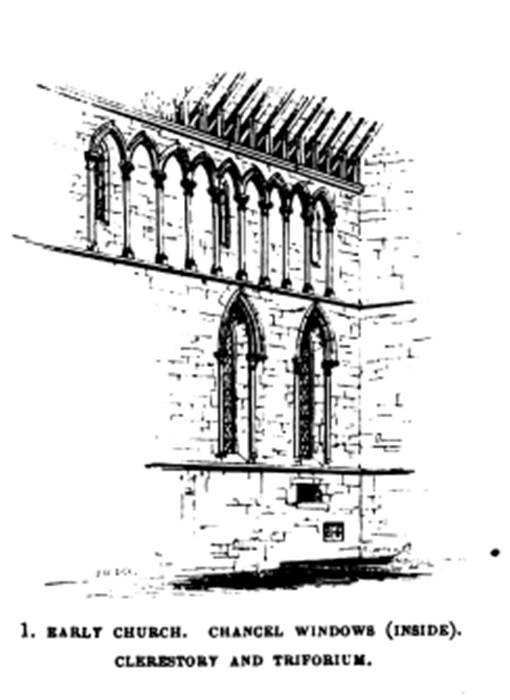
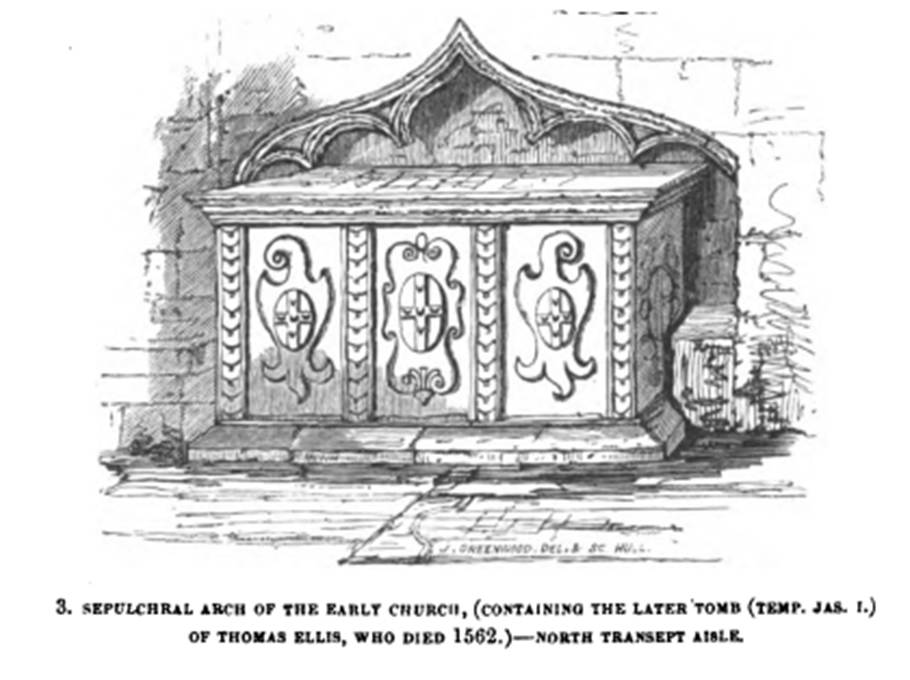
This is his ground plan for the older church:
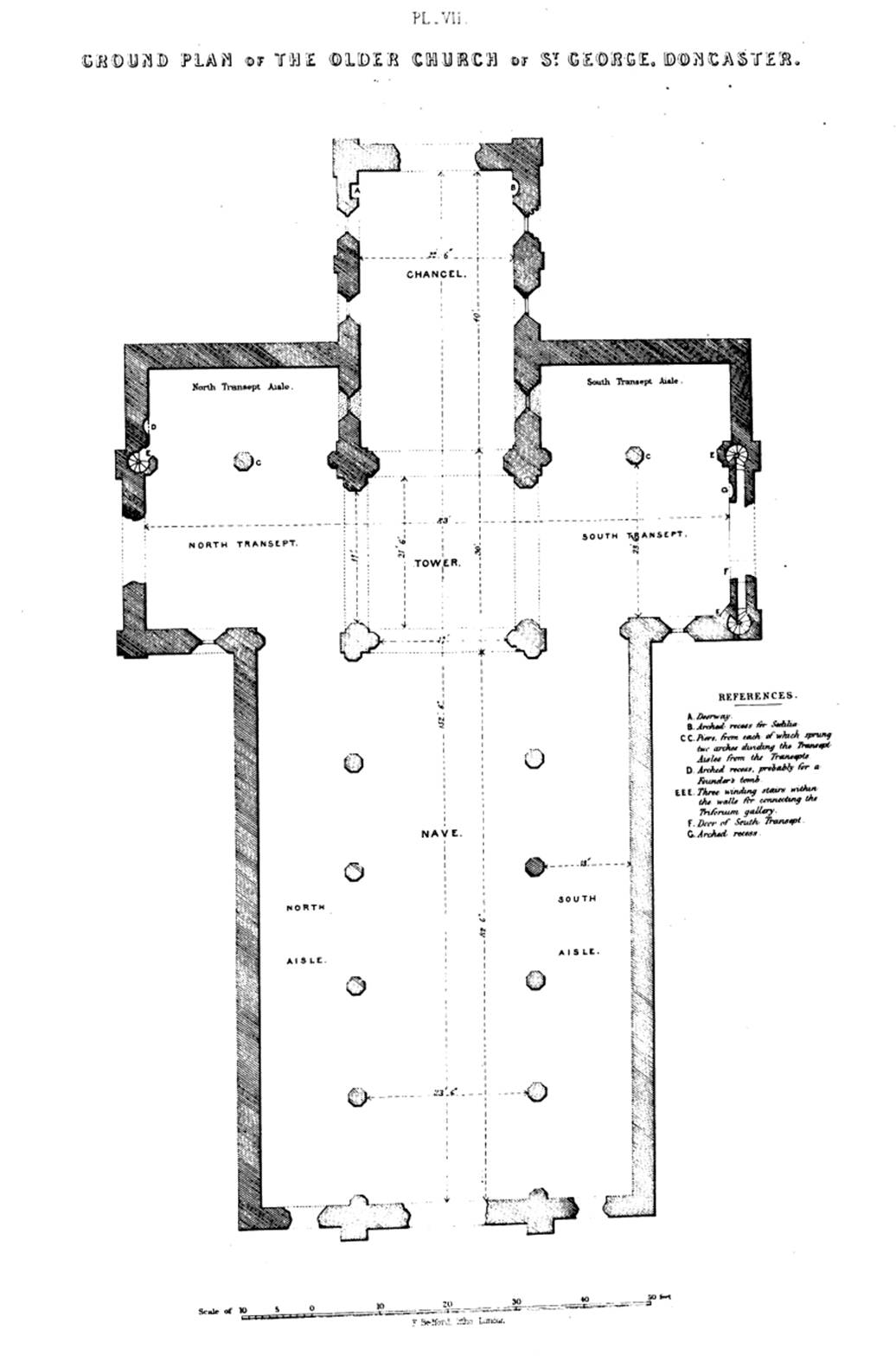
“Of the exterior, an outline, to a certain extent conjectural,
but representing what the Church is most likely to have been about the year
1300, is given below:”
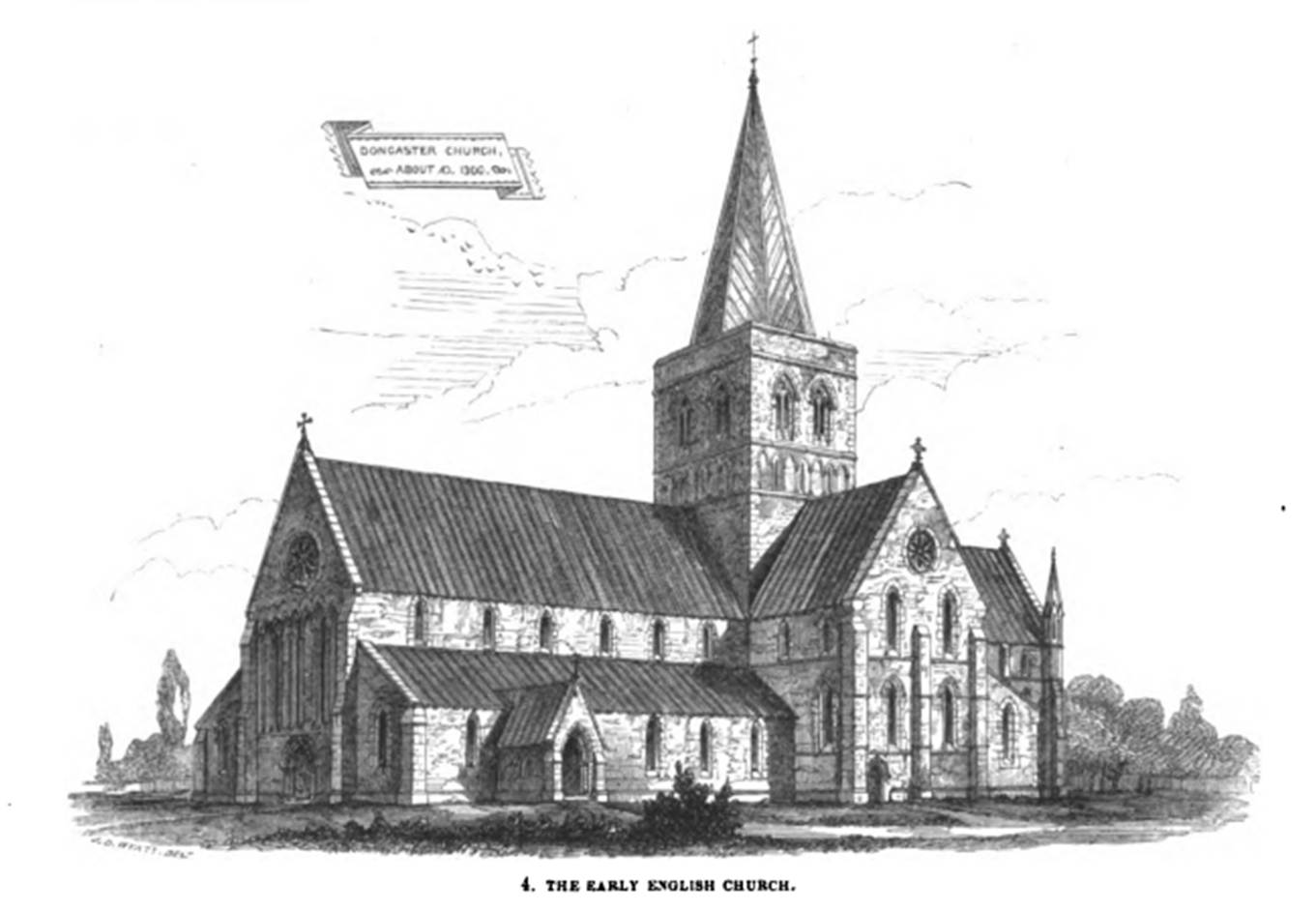
So this seems to be the best representation of the church in the
time of William Farndale.
Rev Jackson went on to explain that “yet, within
little more than two centuries, we shall find that almost every other part of
it had been once more renewed”. He ponders why it was necessary to carry
out such extensive renovation so soon. However this would seem to take us
beyond the time of William Farndale. There are however some observations which
help:
· “The
first and almost the only monument of any quality or consequence in Doncaster
Church was of the year 1465.” (ie after William
Farndale)
· However
“the cross slabs discovered (chiefly ) about the Foundation of the South
Transept, besides those above mentioned in the roof of the Crypt, are indeed of
the thirteenth century” (ie before William
Farndale)
· And “some
of the ' inscriptions copied by De la Pryme (as will
be seen on referring to them in a later page) bear dates between A.D. 1330-1413”
(ie during William Farndale’s time.
· “These
would have been in or belonging to the Church before it was altered : but no
memorial of any kind better than a simple gravestone appears until the Church
had been made almost new again.”
1303
As the size of the church grew it was felt that the pension was
not sufficient to maintain two rectors and an appeal was made to Archbishop
Corbridge. A perpetual vicarage was ordained and the vicar was to have 50 marks
sterling for his support paid quarterly by the abbot and the convent, with a
penny paid for every funeral. The vicar was also exempted from tithe payments
for his cattle and the general tithe rate for the church lands was reduced to a
quarter (South Yorkshire, the History and
Topography of the Deanery of Doncaster in the Diocese and County of York by Rev
Joseph Hunter, 1828, page 34).
Jackson wrote: “in A.D. 1303 , the Monks
of St. Mary's … discovered that for two Rectors to divide the profits between
them , leaving only a small pension to the Abbey, could never have been the
meaning of Nigel Fossard. So having succeeded in convincing Archbishop Corbridge,
and the other ecclesiastical authorities in such cases appealed to, that the
Latin of Fossard's charter ought to be differently
translated, they obtained leave to appropriate the Rectory to themselves. The
act of appropriation does not appear to have taken effect for about 17 years ;
as the institution of Rectors continued to 1318 , and it was not until 1320-1
that the Royal Patent was granted, and that Archbishop Melton confirmed the
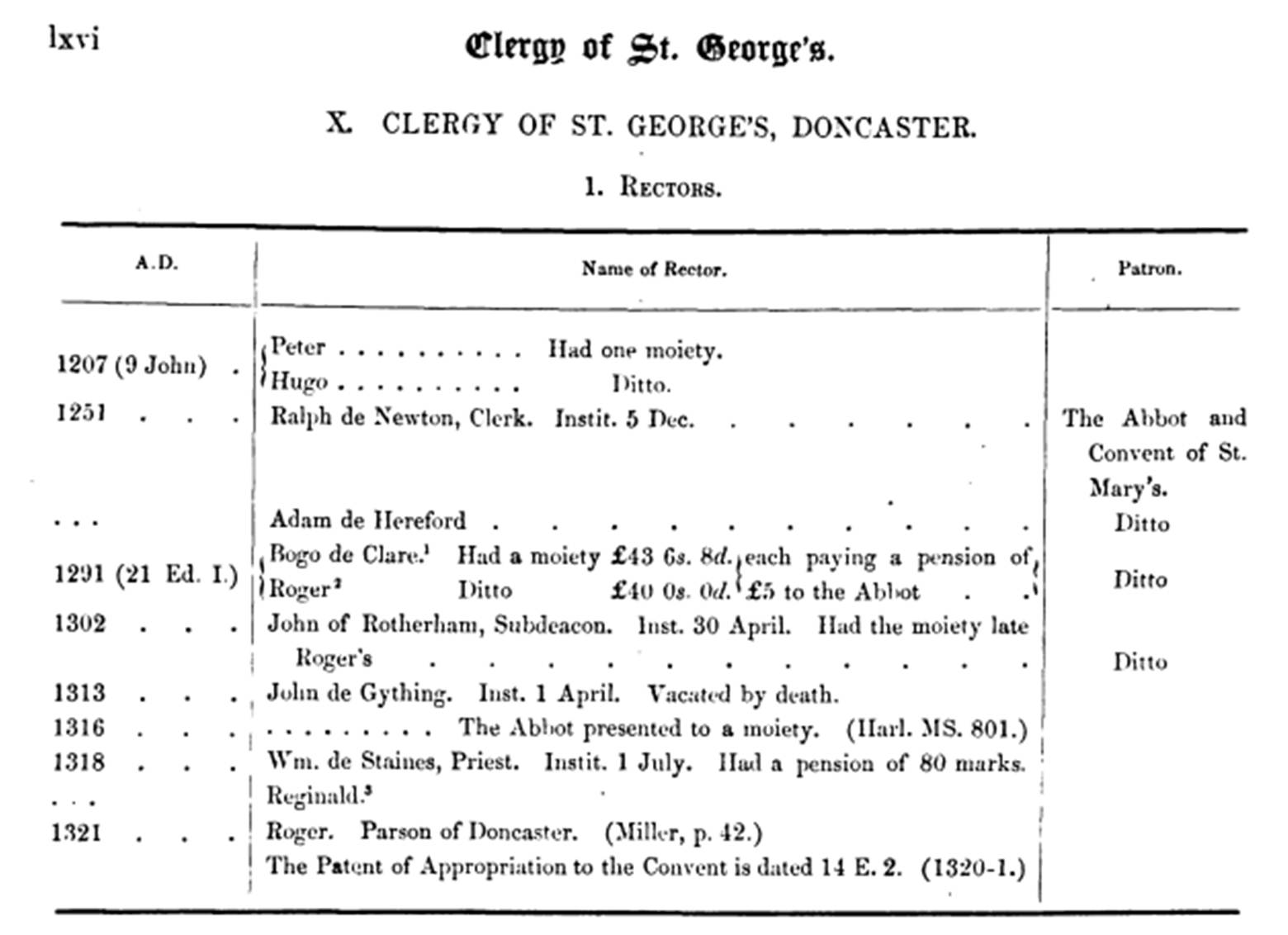
proceedings. The two Rectors at that time were Roger and William de Staines.
The former probably died about that time; as we find only the latter pensioned
off, with the liberal allowance of 80 marks per annum for his life. From this
time all the tithe, both great and small (“ totam ”
in Fossard's charter) flowed to the treasury of St.
Mary's at York ; and one clergyman, under the title of Perpetual Vicar, was
appointed to be the resident guardian of parochial duties. One of the two
Rectory houses, “ with the whole place,” was assigned to the Vicar, with the
annual stipend of 50 marks (331. 6s. 8d . ), to be paid him by the Abbey. With
the amount of this provision, considering the times, no fault was to be found ;
nor would his successors in the Vicarage have had any reason to complain, if
the stipend had been proportionately increased according to the change in the
value of money : but in this material point the endowment was neglected. Whilst
the Abbey and all succeeding owners of the Tithe altered the amount of their
receipts, no change was for a very long time made in the original figures of
the Vicar's stipend. Besides this money payment, the Ordination awarded to him
, “ his vigils for his labour, with the penny offered at funerals and the penny
at the Church door for marriages : " in other words , certain perquisites
resembling modern " surplice fees. ” He was to be exempt from payment of
tithe upon his own cattle , but was burdened with one - fourth part of the
charges upon the Rectory. Archbishop Melton, in giving his sanction to this
arrangement, stipulated with the Monks for two pensions out of the Rectorial tithes: one of 10l. a-year to himself and his
successors in the see of York ,' the other of five marks a-year (31. 6s. 8d .),
to be distributed amongst the poor ” of Doncaster for ever.” The period of the
Rectors continued until 1320 when Walter de Thornton was appointed as the first
Priest/Vicar.
1320
The arrangement was confirmed in 1320 when it was also ordered
that the religious community should distribute ten marks to the poor of
Doncaster, or corn to that value.
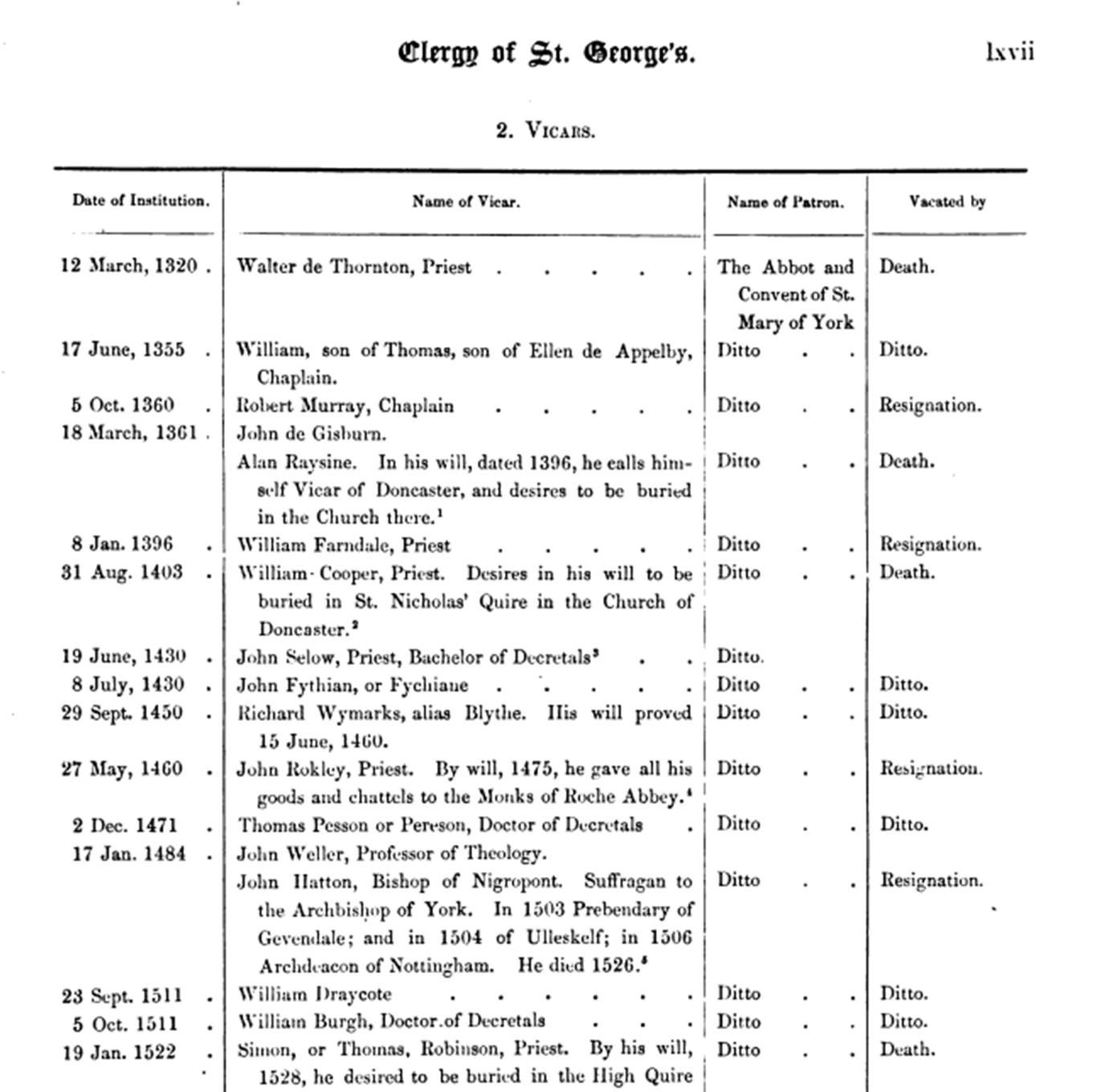
Walter de Thornton became the first Vicar of Doncaster on 12 March
1320.
1323
Hunter refers to a chantry of St Nicholas founded by the chaplain
Thomas de Fledburgh, in 1323. He says this was done with consent of the rector
and confirmed by Archbishop Melton on 15 February 1329 (South Yorkshire, the History and Topography of the Deanery of
Doncaster in the Diocese and County of York by Rev Joseph Hunter, 1828, page 40).
Regarding the Chantry of St Nicholas at Doncaster, Thomas de
Fledburgh, chaplain, had licence by royal letters patent,1 1 Nov. 1318, to
assign a messuage, 26 acres of land and 40s. rent in Doncaster to two chaplains
in the church of Doncaster. A similar licence was granted by Peter de Mauley,
lord of Mulgrave, at Doncaster, 24 April 1324, and a licence was obtained from
the abbot and convent of St Mary's, York, for a single chaplain. The founder's
deed, dated 23 Apr. 1323, was witnessed by sir John de Donecastre
and sir Hugh de Eland, kts, Walter de Thorneton, vicar of Doncaster, Thomas
Frere, John de Eland, and others.
The chantry was ordained 18 Jan. 1329-30 for
one chaplain to celebrate daily for the souls of the founder, Roger his father,
Margaret his mother, Peter de Fledburgh and all
faithful departed. The endowment consisted of a messuage in Fishergate between
that of Robert de Messingham and the King's highway, 12 acres of land in the
fields of Doncaster, and a yearly rent of 30s. in Doncaster. The presentation,
reserved to the founder in his lifetime, was to pass after his death to the
commonalty of the town of Doncaster.
(Fasti
Parochiales, Volume 2, Part 2, page 124)
The Chantry of St Nicholas in Doncaster refers to St Nicholas'
Church, located in the town of Thorne, which is part of the Doncaster area.
1343
Westminster. Quindene
of Hilary, 17 Ed. HI, 1343. Quindene of Michaelmas,
17 Ed. HI, 1343. Hugh Ravenyld, quer., Geoffrey de
Pykenham and Maude his wife, def., of 2 acres of meadow in Bentelay
near Donecastre : To hold (subject to the term of 8
years which Walter, vicar of the church of Donecastre,
has in one acre and two thirds of the other acre, and to the life estate which
Cicely Wyne holds in dower in one third of an acre) to Hugh and his heirs.
Warranty by the deforciants for them¬ selves and the heirs of Maude. (YAS Record Seies Vol 42, Feet
of Fines, 1327 to 1347, page 160).
1349
John de Mekesborough became the chantry
priest or cantorist on 31 July 1349 on the death of John
Plumer. He was succeeded on his death by William de Hexthorpe on 21 December
1369 (South Yorkshire, the History and Topography
of the Deanery of Doncaster in the Diocese and County of York by Rev Joseph
Hunter, 1828, page 40).
1355
Jackson listed the chaplains, which include William
Farndale for 1369 to 1370, but he concedes in the notes that his list is no
doubt capable of additions, and we have other evidence of William’s chaplaincy
in 1355 so he was presumably chaplain for a longer period than shown below.
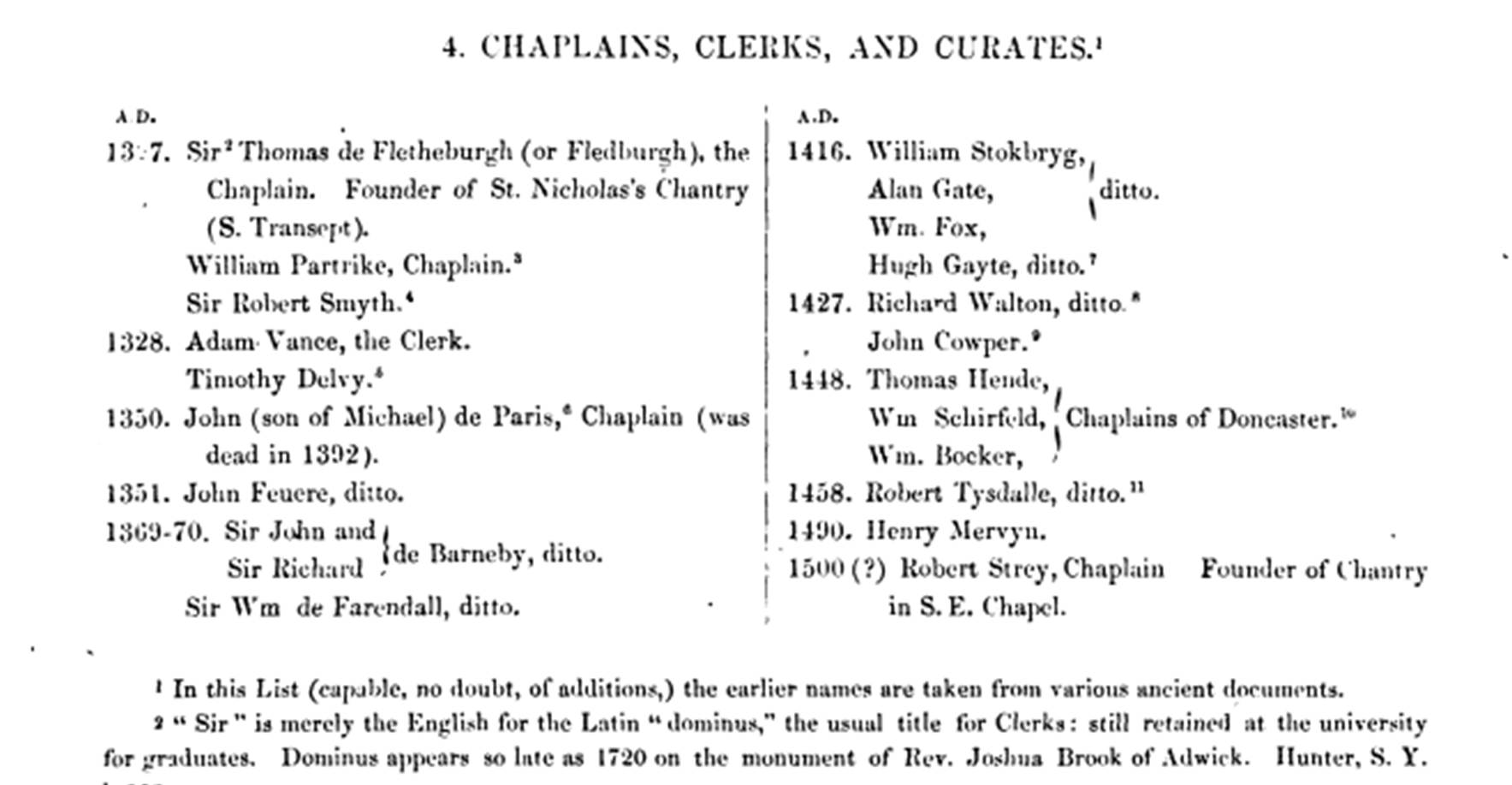
William, son of Thomas, son of Ellen de Apelby
became Vicar of Doncaster on 17 June 1355 and continued until he died.
1360
Robert Murray became Vicar of Doncaster on 5 October 1360 and
continued until he resigned the following year.
1361
John de Gisburn became the Vicar on 18 March 1361.
At some point Alan Raysine became the Vicar and continued until he
died. He directed in his will that he be buried in the Doncaster church.
1392
Jackson surmised there may have been another
fire at some point.
He thinks that “About A.D. 1392, the large Perpendicular window
was inserted in the West Front. That this was done, the rest of the Church
being still Early, is clear from an arrangement made for continuing the
Triforium Gallery across the new window by a double row of mullions in the
lower tier, between which it was conducted . The date of this insertion is
supplied by the will of one Robert Usher, of East Retford, who, in this year,
bequeathed “ 5 marks towards the construction of a window at the western end of
the Church of St. George, at Doncaster.” I At this period, therefore, the Nave
would be lighted by the large window at the end and the small narrow lights of
the clerestory at the sides.” So this was four years before William became
the Vicar, while he was presumably still the chaplain.
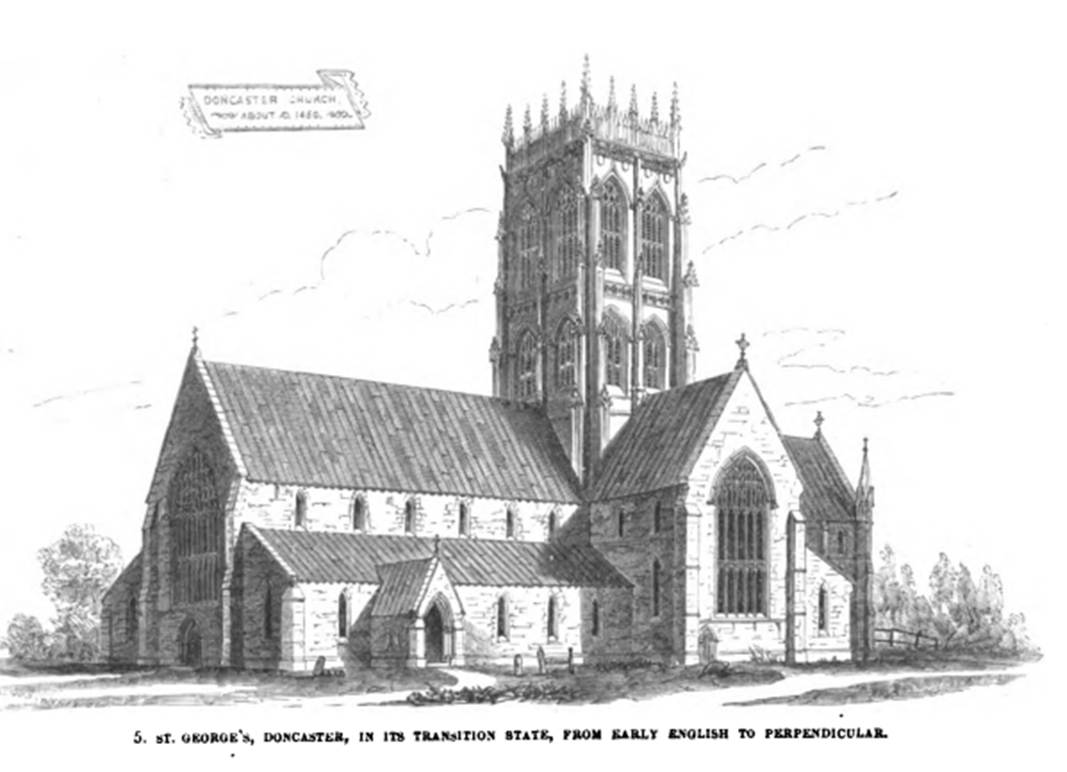
Jackson thought the renovated Church might
have ended up looking something like this, but this would have been after
William’s time, unless the surmised fire or some of the reconstruction had
started when William was the vicar. It was probably a bit later though.
The Rectory of Doncaster
1396
Jackson listed the clergy of St George’s
including William
Farndale who was vicar from 8 January 1396 to 31 August 1403 when he
resigned.
Hunter descries various burials which occurred during the time of
William Farndale including that of William Jone in 1403 (“O dere frends hafe
pyte for my soule as I hafe form many done, yet I may come to bliss”); and
Johan and Alicia Rastal in 1392 and 1398; John Savyl
of Doncaster; Robert Ellius Esq, Alderman of Doncaster in 1402 and Catharine
the wife of William Smith in 1402 (South Yorkshire,
the History and Topography of the Deanery of Doncaster in the Diocese and
County of York by Rev Joseph Hunter, 1828, page 41 to 42).
Loversall
There is also a bit about Lovershall (where William Farndale purchased land) in Jackson’s book:
CHAPELRY OF LOVERSAL
By the Chapelry of Loversal , so
constantly mentioned, is meant, in fact, the tithes of the parish of Loversal ( a township of Doncaster ). For the ministerial
duty the Vicar of Doncaster is responsible. Upon the subject of the small
endowment of this Chapelry there is in Archbishop Sharp's MSS the following
memorandum:
The Chapel of Loversal is parochial. The
Curate thereof (who is at present Mr. Pegge, Vicar of Wadworth) is paid 41. by
the Vicar of D. And Sir John Worsman " (Wolstenholme, the last of his
family who was owner of Loversal, and who died 1716) useth to give 4l This is all the profits, except Church
yard and Surplice Fees.
1403
William Cooper became Vicar of the Church on 31 August 1403 and
continued until he died. He directed that he be buried in St Nicholas Quire in
the Doncaster Church. He described it as a beautifiul
specimen of a church of about the time of Edward III (1327 to 1377).
1434
On 15 October 1434 there was an agreement with John Fichiane, then
vicar of the parish, regarding repairs to the chancel, which the vicar was
bound to undertake.
1539
The abbey of St Mary at York was surrendered during the
dissolution of the monasteries and the rectory was included in the great
exchange on 6 February 1539.
1828
Writing in 1828, Rev Joseph Hunter described the church as it was
before the fire of 1853, with narrow loop hole windows, but an extreme richness
of detail in the ornamental parts. He referred to the font being dated 1061,
but was unsure whether it was that old. He refers to the sixteenth century
Leland’s account that it was likely that when the church was erected, the ruins
of the old castle were taken as its foundation and for the building of the
walls. Hunter described a lofty tower rich with crockets and pinnacles. He felt
that Doncaster church was more opulent than others since it was owned by St
Mary’s Abbey in York. Hunter was particularly impressed by the belfry.
(South Yorkshire, the History and
Topography of the Deanery of Doncaster in the Diocese and County of York by Rev
Joseph Hunter, 1828, page 37).
1853
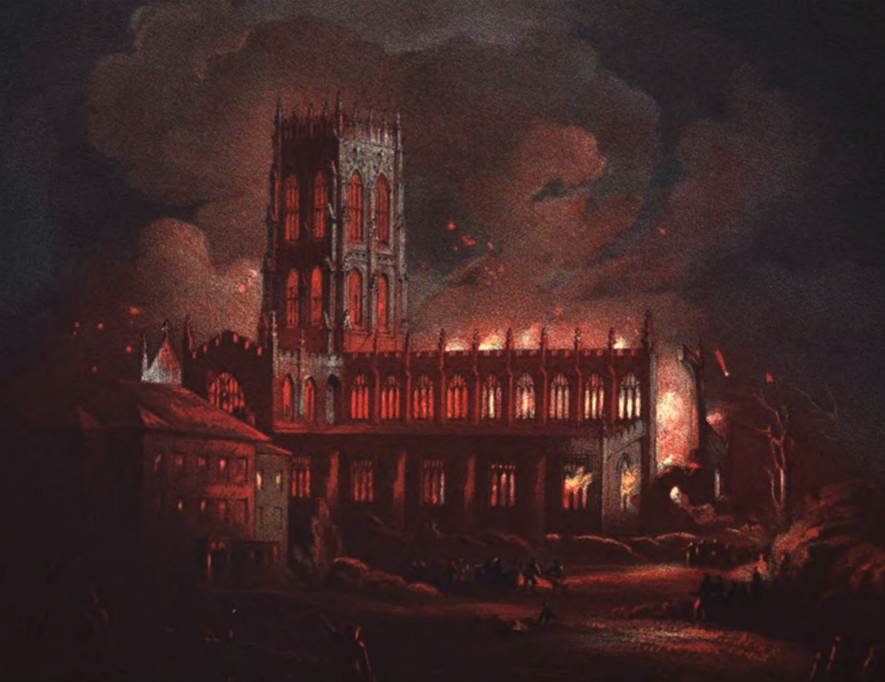
The destruction of the medieval church by fire on the night of 28
February 1853 was a great calamity. Nevertheless, within seven days, a
rebuilding committee had been formed and raised over £11,000. The new building, to the designs of George
Gilbert Scott, took four year’s to build. Great
celebrations accompanied the consecration of the building by the Archbishop of
York on 14 October 1858.
2004
In 2004 the church was designated as the Minster and Parish Church
of St George by the Bishop of Sheffield.
http://www.doncasterminster.co.uk/
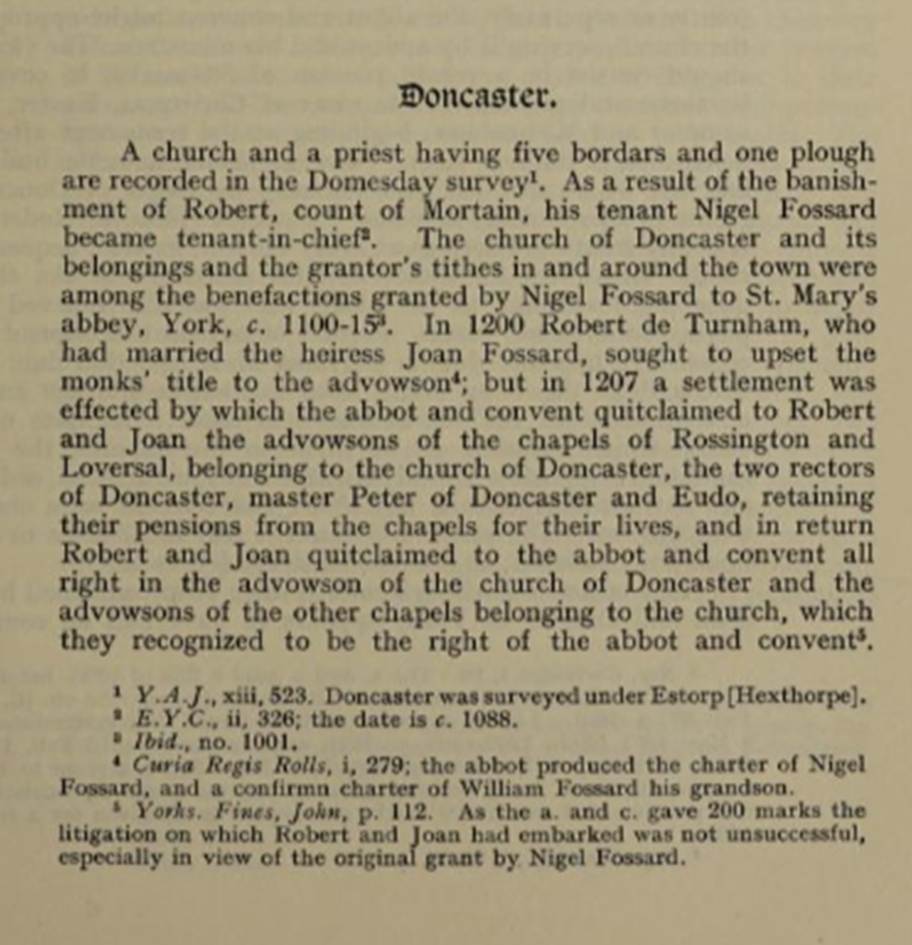
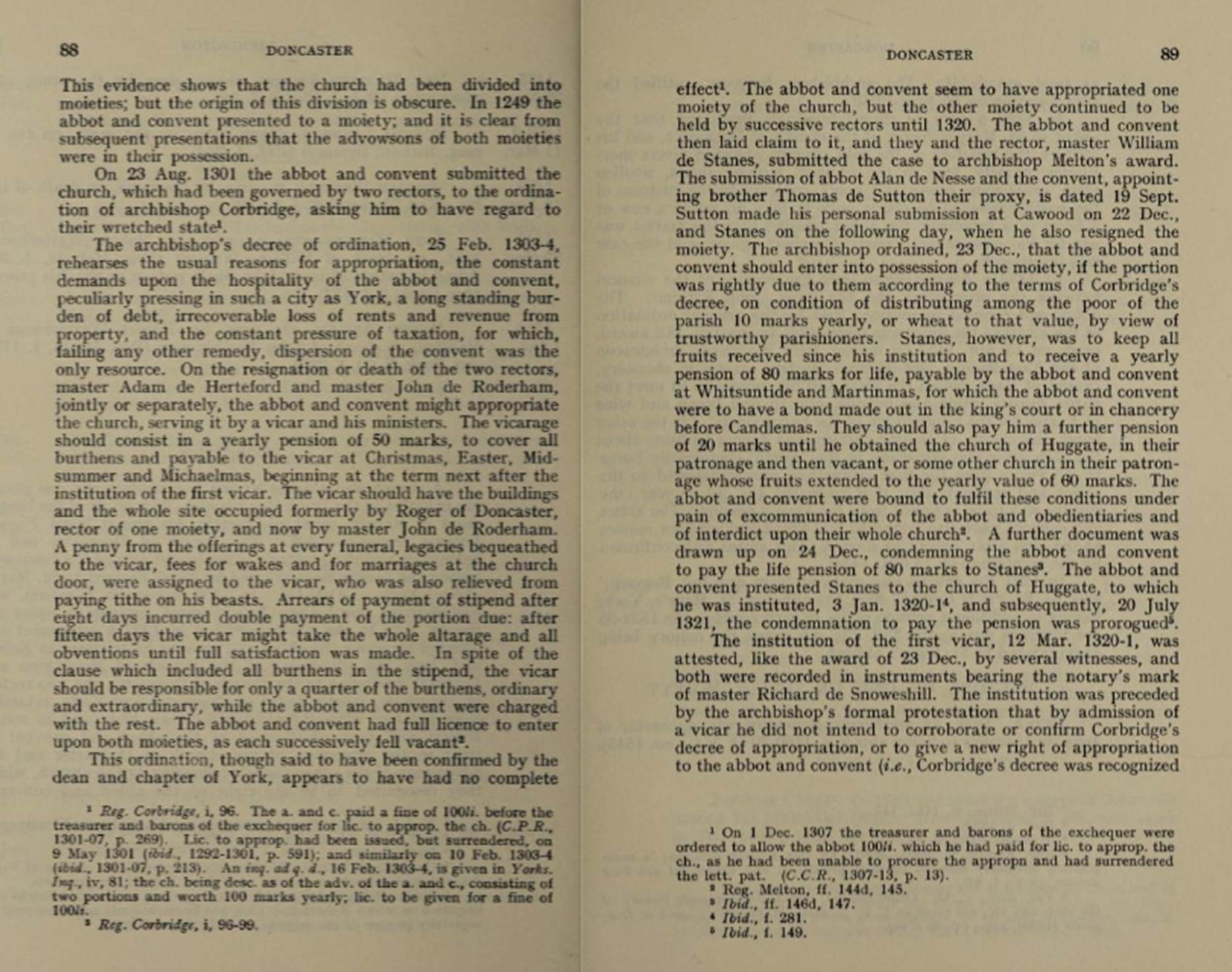
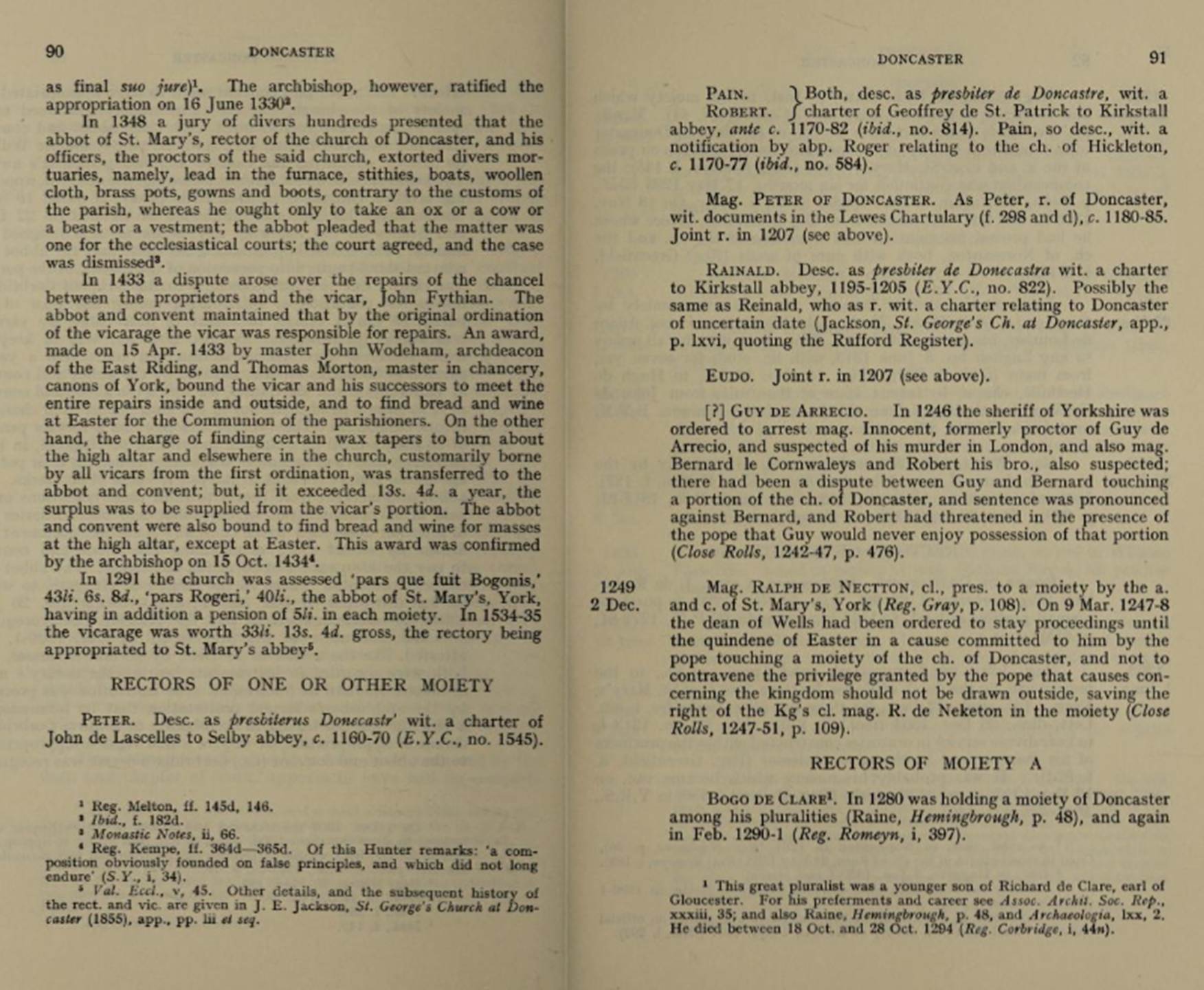
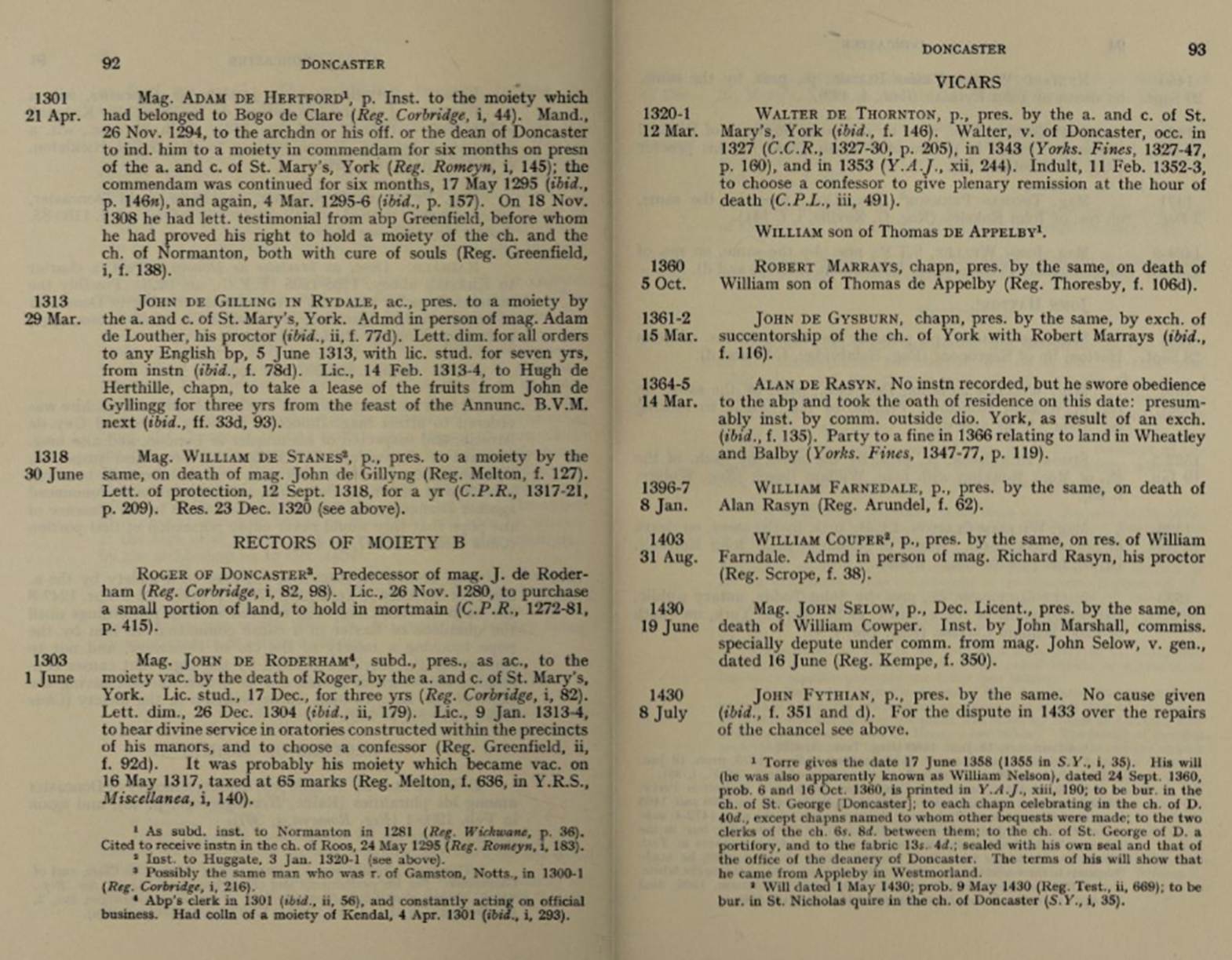
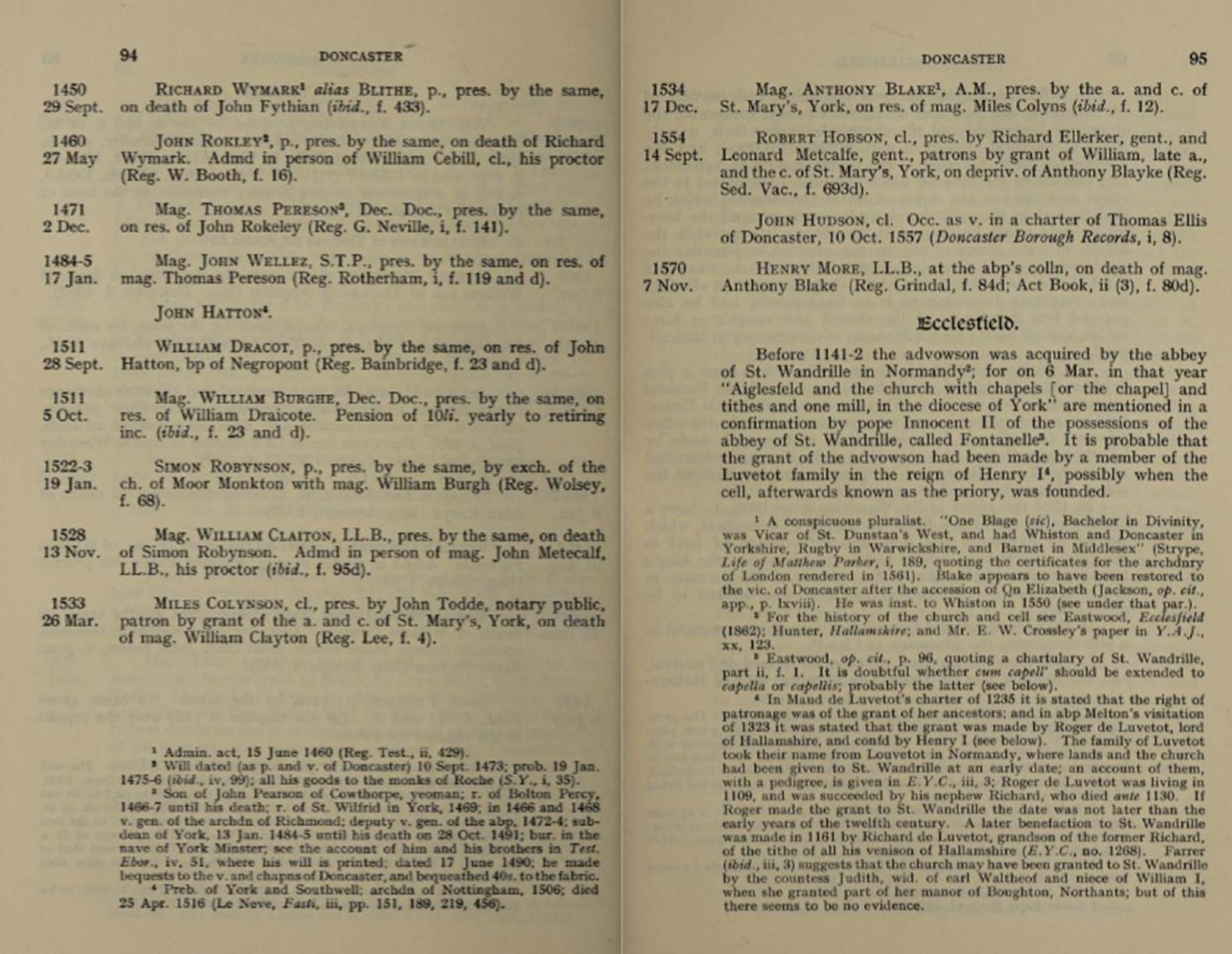
(Fasti Parochiales Volume 1 (Yorkshire Archaeological Journal Volume 85), page 86, Doncaster)