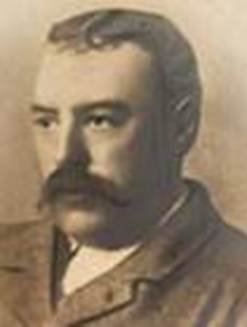
Arthur Baker
12 February 1860 (baptised) to 29 April 1916
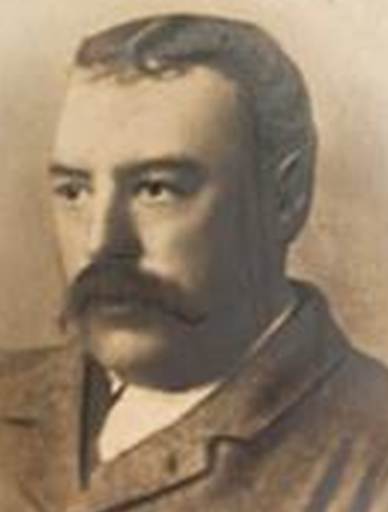
BAK00155
|
Return to the Home Page of the Bakers Family part of the website |
The Bakers of Highfields Story
The Story of the Dods and Bakers and of Highfields,
Fenton House and Hasfield Court. A journey through the history of Cheshire
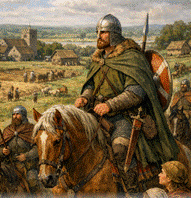
and Staffordshire, an Anglo-Saxon nobleman who retained his lands after the
Conquest, pottery at Stoke on Trent, an encounter with Elgar, and the history
of an Elizabethan manor house at Audlem |
The family tree of the Bakers of Highfields |
The Family Tree of the Dods, predecessors to the
Bakers of Highfields |
The Bakers of Fenton House and Hasfield
Court
The Family Tree of the pottery Bakers of Stoke on Trent |
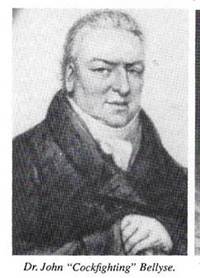
The Family Tree of the Bellyse Family |
The main part
of this website tells the story of the Farndale family from Yorkshire Descendants of Arthur Baker, the story of the
Farndale ancestry is told through the main part of this website You can also return to the Farndale
website home page |
The genealogy of the family of James Hall, linked to
the Baker family through marriage to Arthur Baker |
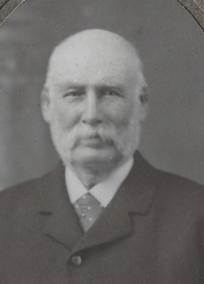
Headlines of
Arthur Baker’s life are in brown.
Dates are in red.
Hyperlinks to
other pages are in dark
blue.
References and
citations are in turquoise.
Context and local
history are in purple.
Audlem,
Cheshire
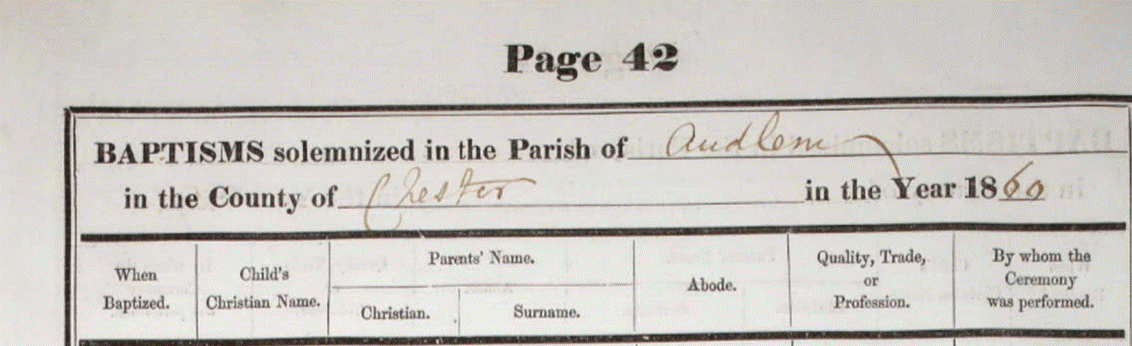
1860
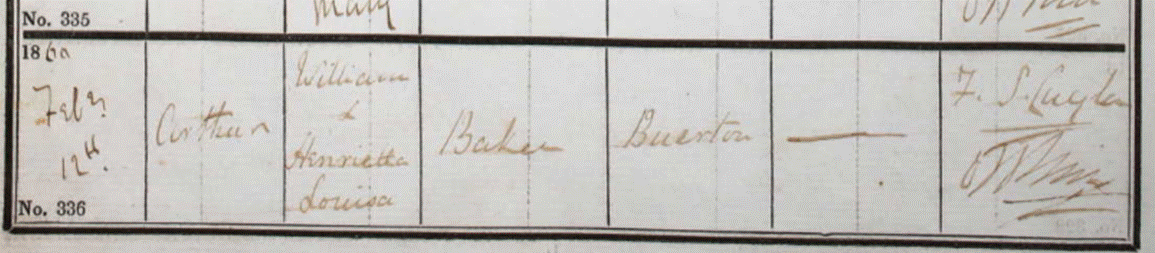
Arthur Baker was the son of
William and Henrietta Louisa (nee Bellyse) Baker (BAK00121).
He was baptised at
Audlem on 12 February 1860.
1861 census – 13
Midway Heath, Buerton, Audlem, Cheshire
William Baker, 43, head, landed proprietor
Henrietta Baker, his wife 36
John B Baker, 10
Arthur Baker, 1
Elizabeth Daniels, 18, unmarried, governess
Three servants
1871
1871 census – High Fields,
Buerton, Audlem, Cheshire
William Baker, 54, head, land owner
Henrietta Baker, his wife 46
Henrietta Baker, 22
John Bellyse Baker, 20
Richard D Baker, 14
Arthur Baker, 11
Charity Baker, 8
Charlotte L Baker, 4
Emily J Baker, 2
Two visitors, including John Percy, their agent
Three servants
Buenos Aires, Argentina
1879
Jack and Arthur Baker travelled to South America, where they spent
a year between March 1879 and March 1880. They had initially departed intending
to emigrate to engage in farming pursuits.
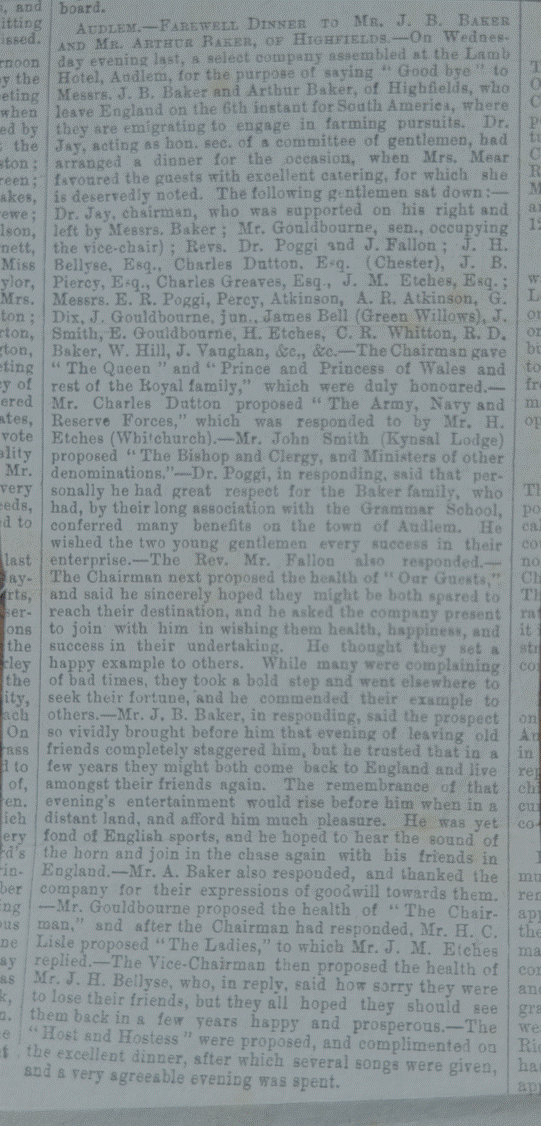
(Newspaper Cutting, Farewell Dinner to
Mr J B Baker and Mr Arthur Baker of Highfields, 1879)
Their sister Chatty Baker wrote in her diary on Sunday 23 March
1879 that Jack and Arthur are to South
America in May we shall miss them very much, it will
perhaps be more than three years before we shall see them again. I shall try to
write as often as possible. On Wednesday 23 April 1879 she
wrote that Jack and Arthur are really going to Buenos Aires in May so they have not long to be at home. On Sunday 2 November
1879 she wrote that since I last wrote Jack and Arthur have gone to America.
On Thursday 4 March 1880, after their mother’s illness, she wrote that
last Sunday Mamma was very ill indeed but she rallied a little
before night, during Monday she was better but last night she was much worse
again, it was shock yesterday since she began with the sharp pain feeling. Jack
and Arthur came home from South America a week tonight we were very glad to see
them again. They are changed very little indeed during the seven months they
were away.
Their sister Tottie Baker
wrote in her diary on Monday 24 February 1879 that Jack and Arthur are
thinking of going to South America to a sheep farm, I am sure we shall miss
them very much if they do go, for we shall be very quiet without them. They are
thinking of going in May, with a friend of Mr. Ashe, who has a very large farm
there and on Tuesday 1 April 1879, I think Jack and Arthur are soon going
to Buenos Aires, how we shall miss them, we shall be very, very sad without
them, who would have thought three years ago they would have gone. On 18
May she wrote Jack & Arthur are not going to Buenos Aires till the 5th August. It was 3 years last Friday since Papa died.
Then in November she recorded that Jack and Arthur have gone to Buenos
Aires, they left home Aug. 5th & sailed the 6th. We have heard from them
twice, once a few days after they went, and once again from Buenos Aires, which
arrived here on Oct. 17th.
In January 1880, she wrote
that Another Christmas has passed away & the New Year has begun, it
seems strange for Jack & Attie to be away, we have heard from them again,
they are not getting on very well.
Then in February 1880, she
wrote We heard from Jack yesterday they say that they have not had anything
to do for the last fortnight & that unless they could get anything to do
before the 26th of last January (they wrote on the 20th of January) that they
should return home in the Cotapaxi, which I think
sailed from Buenos Aires on the 26th of January & if they did not come by
her they said they would write & tell us so that we should know whether
they had started with her or not, so that perhaps they may come any day now,
how I should like to see them both. Dick was to look in the newspapers today,
to see if he could hear/find out anything about the Cotapaxi,
but he has not returned yet. Miss Evans has been helping Poppy with the ironing
today. Aunt Sarah has been up today. Mamma has been in bed all day again. The
Pacific Steam Navigation Company (PSNC) steamship Cotopaxi was a
prominent ocean liner and cargo ship based out of Liverpool. From 1877 to 1879,
the Pacific Steam Navigation Company operated a highly active transatlantic
route connecting Liverpool to Bordeaux and Buenos Aires. The Cotopaxi was a
mainstay on this line, shuffling European cargo, mail, and immigrants to South
America, and returning to Liverpool with agricultural goods. On 15 May 1889, while
navigating the treacherous Straits of Magellan on a voyage from Liverpool to
Valparaiso, the Cotopaxi collided with the German steamer Olympia.
Though she was temporarily refloated, she struck a reef and sank. Fortunately,
a passing German vessel saved all passengers and crew on board.
In late February 1880, Mr.
Field sent word today that the Cotopaxi will be at Liverpool at midnight
tonight, so that if Jack and Attie are still coming by her they will likely be here
before tomorrow. Mr. Field has been here today. I think the ship was at sea on
the Bay of Biscay either Sunday & Monday, or yesterday.
On 4 March Tottie
confirmed that Jack & Attie have come home again. They
came last Thursday. Iris knew Attie again & was very pleased to see him.
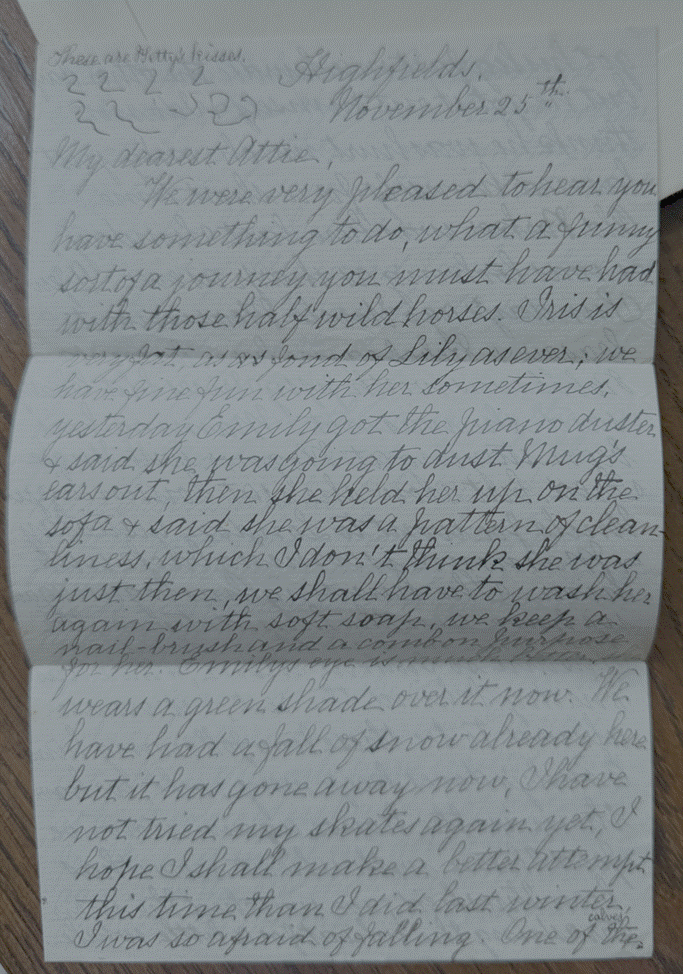
Highfields,
November 25th
These are Tottie’s kisses,
xxxx
My dearest Attie,
We were very pleased to
hear you have something to do, what a jolly sort of a journey you must have had
with those half wild horses. Iris is very fat, as fond of Lily as ever, we have
fine fun with her sometimes. Yesterday Emily got the piano duster & said
she was going to dust Mug’s ears out. Then she held her up on the sofa &
said she was a pattern of clean lines, which I don’t think she was just then.
We shall have to wash her again with soft soap. We keep a nail brush and a comb
in the cupboard for her. Emily says she wears a green shade over it now. We
have had a fall of snow already here but it has gone
away now. I have not tried my skates again yet, I hope I shall make a better
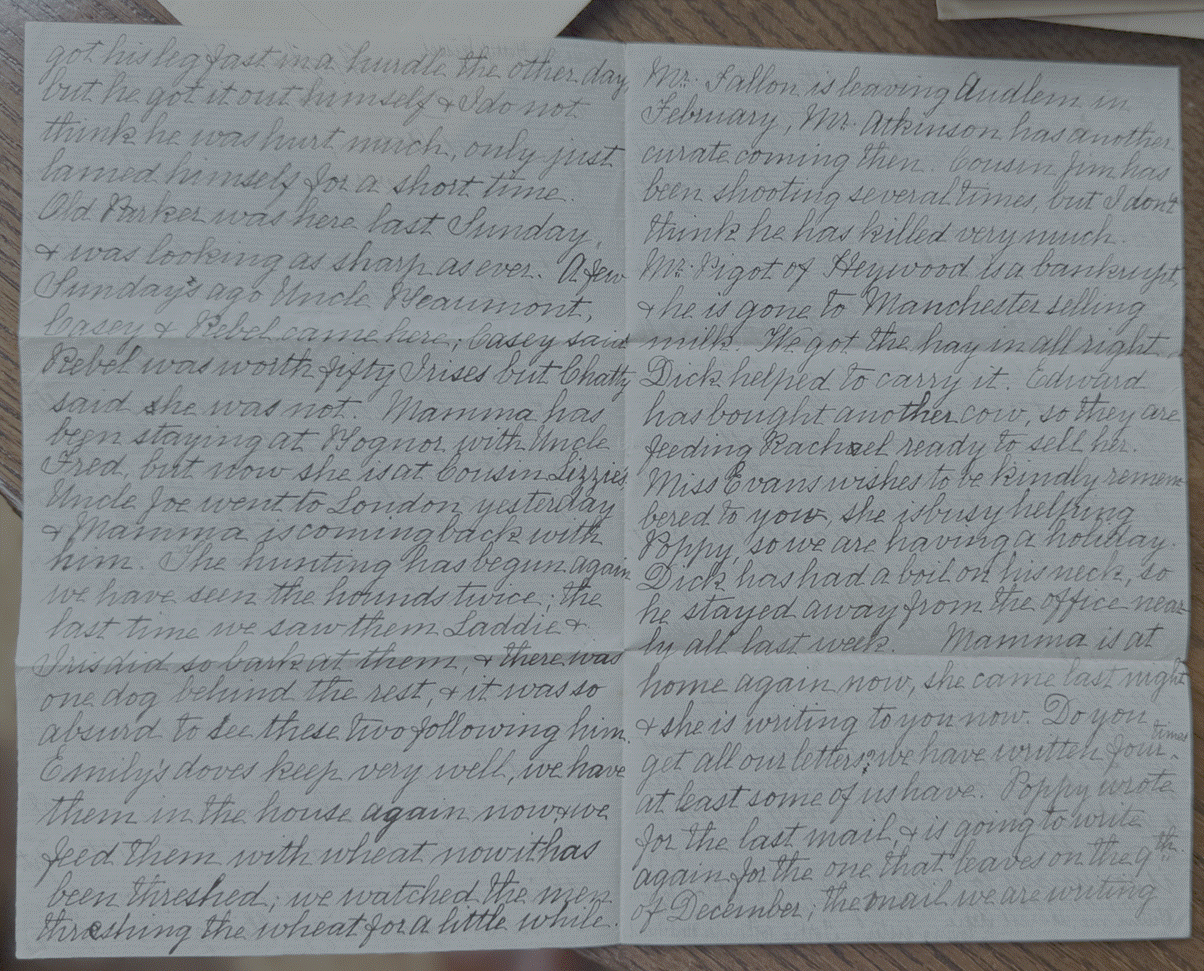
attempt this time than I did last winter. I was so afraid of falling. One of
the calves got his leg fast in a hurdle the other day, but he got it out
himself & I do not think he was hurt much, only just lamed himself for a
short time. Old Parker was here last Sunday & was looking as sharp as ever.
A few Sundays ago, Uncle Beaumont, Casey and Rebel came here. Casey said Rebel was
worth fifty Irises but Chatty said she was not. Mamma has been staying at
Bognor with Uncle Fred, but now she is at Cousin Lizzie’s. Uncle Joe went to
London yesterday & Mamma is coming back with him. The Hounds have been again, we have seen the Hounds twice. The first time we saw
them Laddie & Iris did so barked at them &
there was one dog behind the rest & it was so absurd to see these two
following him. Emily’s doves keep very well, we have them in the house again
now & we feed them with wheat now it has been threshed, we watched the men
threshing the wheat for a little while.
Mr. Fallon is leaving
Audlem in February. Mr. Atkinson has another curate coming then. Cousin Jim has
been shooting several times, but I don’t think he has killed very much. Mr.
Pigott of Heywood is a teacher & he is gone to Manchester selling milk. We
got the hay in all right. Dick helped to carry it. Edward has bought another
cow sp they are feeding Rachael ready to sell. Miss Craven
wishes to be kindly remembered to you. She is busy helping Poppy, so we are
having a holiday. Dick has had a boil on his neck, so he stayed away from the
Chapel nearly all last week. Mamma is at home again now,
she came last night & she is writing to you now. Do you get all our
letters, we have written four times, at least some of us have. Poppy wrote in
the last mail & is going to write again for the one that leaves on the 4th
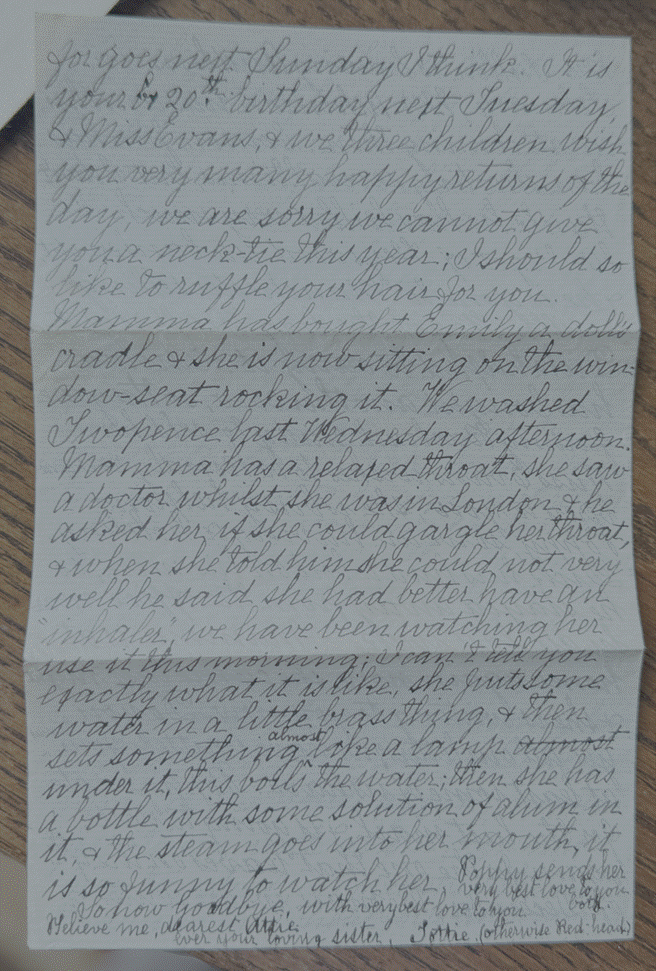
of December, the mail we are writing for goes next Sunday
I think. It is your 20th birthday next Tuesday & Miss Evans & we three
children wish you very many happy returns of the day. We are sorry we cannot
give you a neck‑tie this year. I should so
like to ruffle your hair for you. Mamma has bought Emily a dolls cradle &
she is now sitting on the window‑seat rocking it. We washed
twopence last Wednesday afternoon. Mamma has a relaxed throat, she saw a doctor
whilst she was in London & he asked her if she could gargle her throat
& when she told him she could not very well he said she had better have an
inhaler, we have been watching her use it this morning. I can’t tell you exactly what it
is like, she puts some water in a little glass thing & then sets something
(almost like a lamp) alight under it, this boils the water; then she has a
bottle with some solution of alum in it & the steam goes into her mouth, it
is so funny to watch her.
Poppy sends her very best
love to you.
So now goodbye, with very best
love to you, believe me, dearest Attie,
Ever your loving sister,
Lottie (otherwise Red‑head)
(Letter from Charlotte
Louisa Baker to her brother, Arthur Baker (in South America), 25 November 1879,
Baker Records, 64)
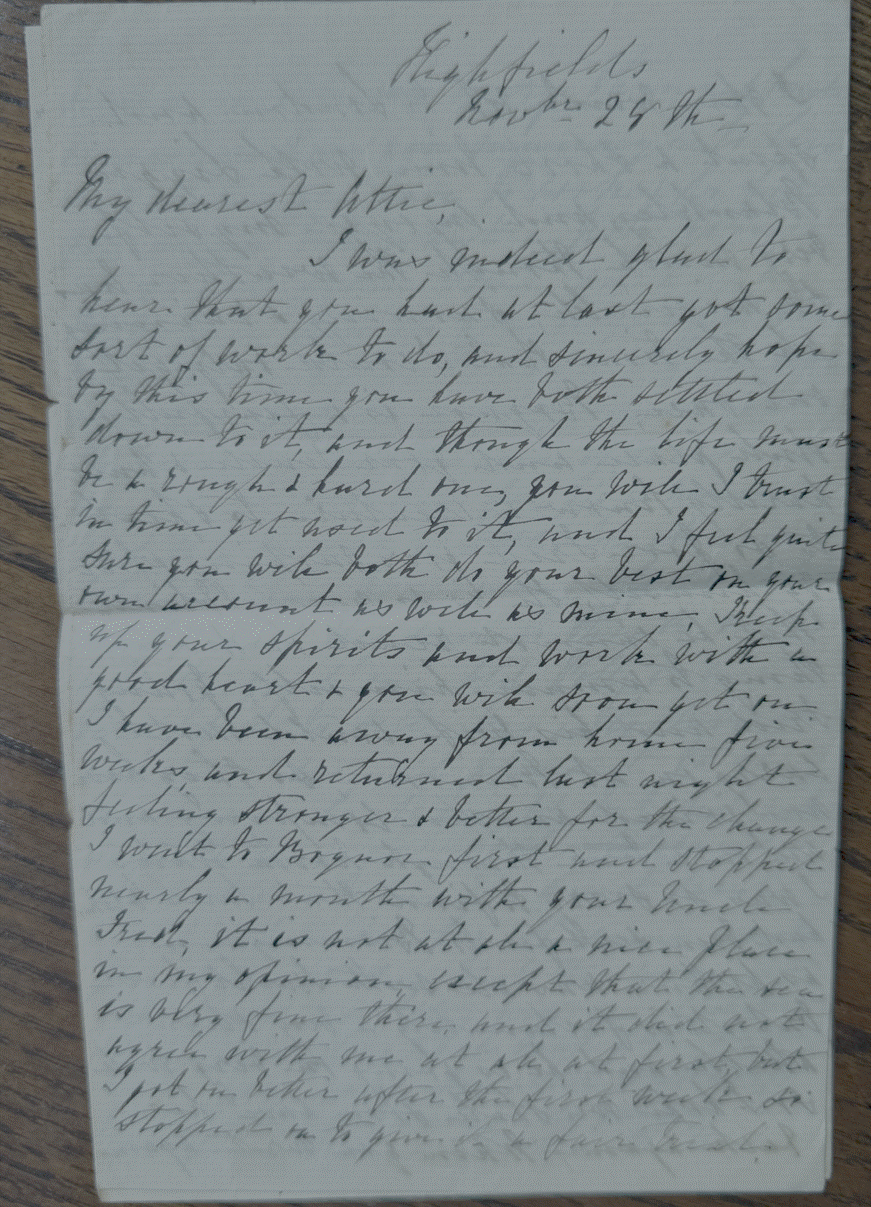
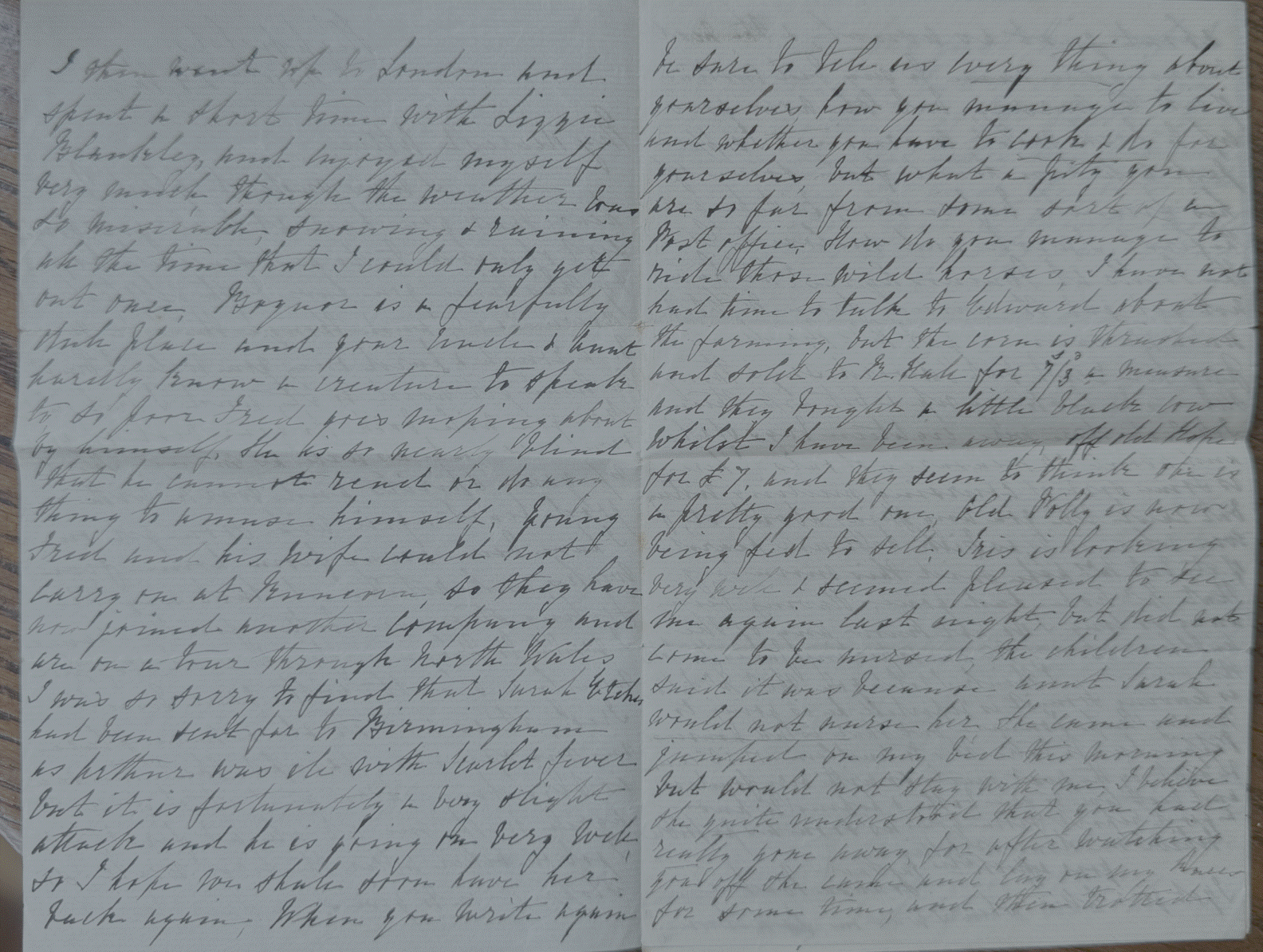
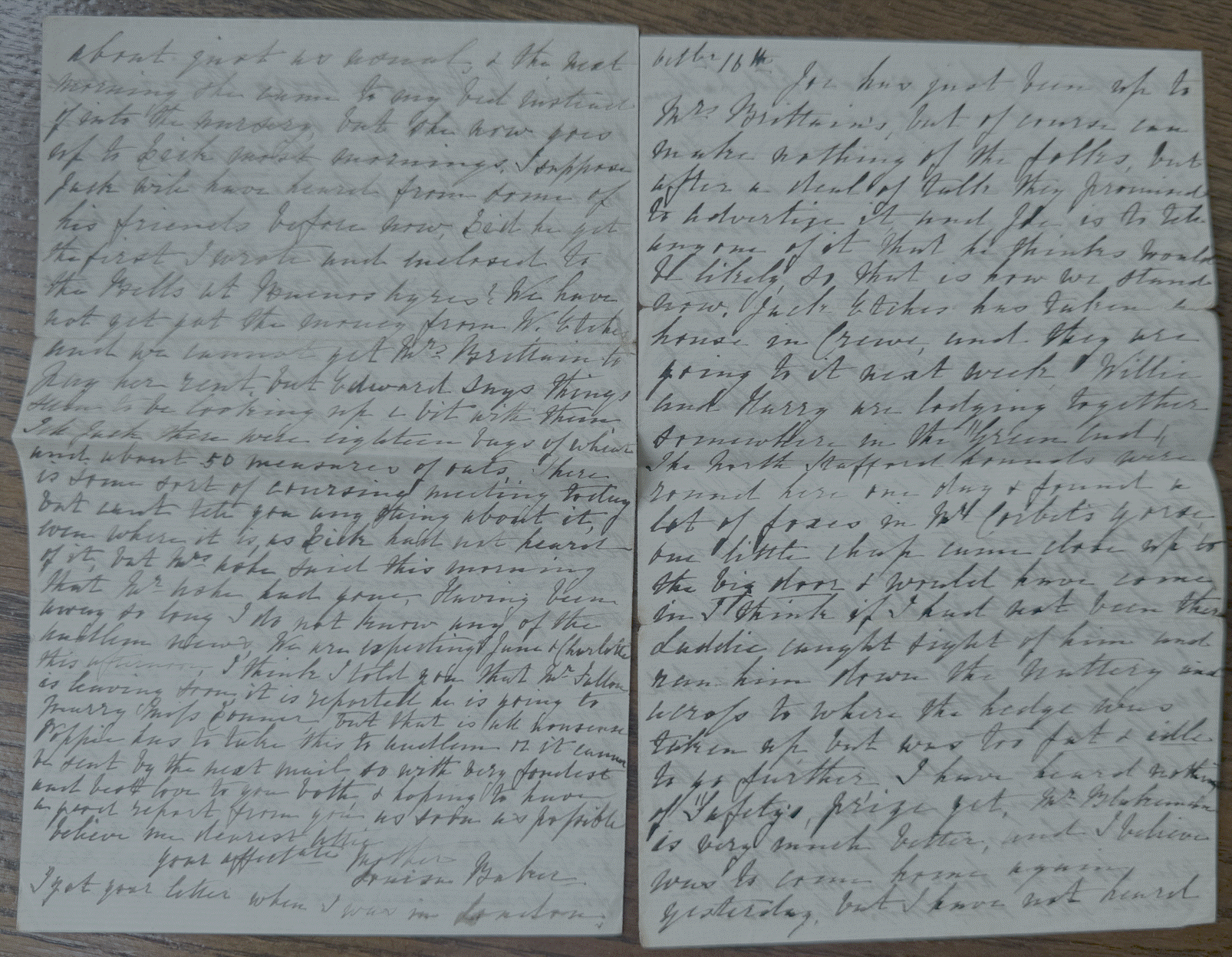
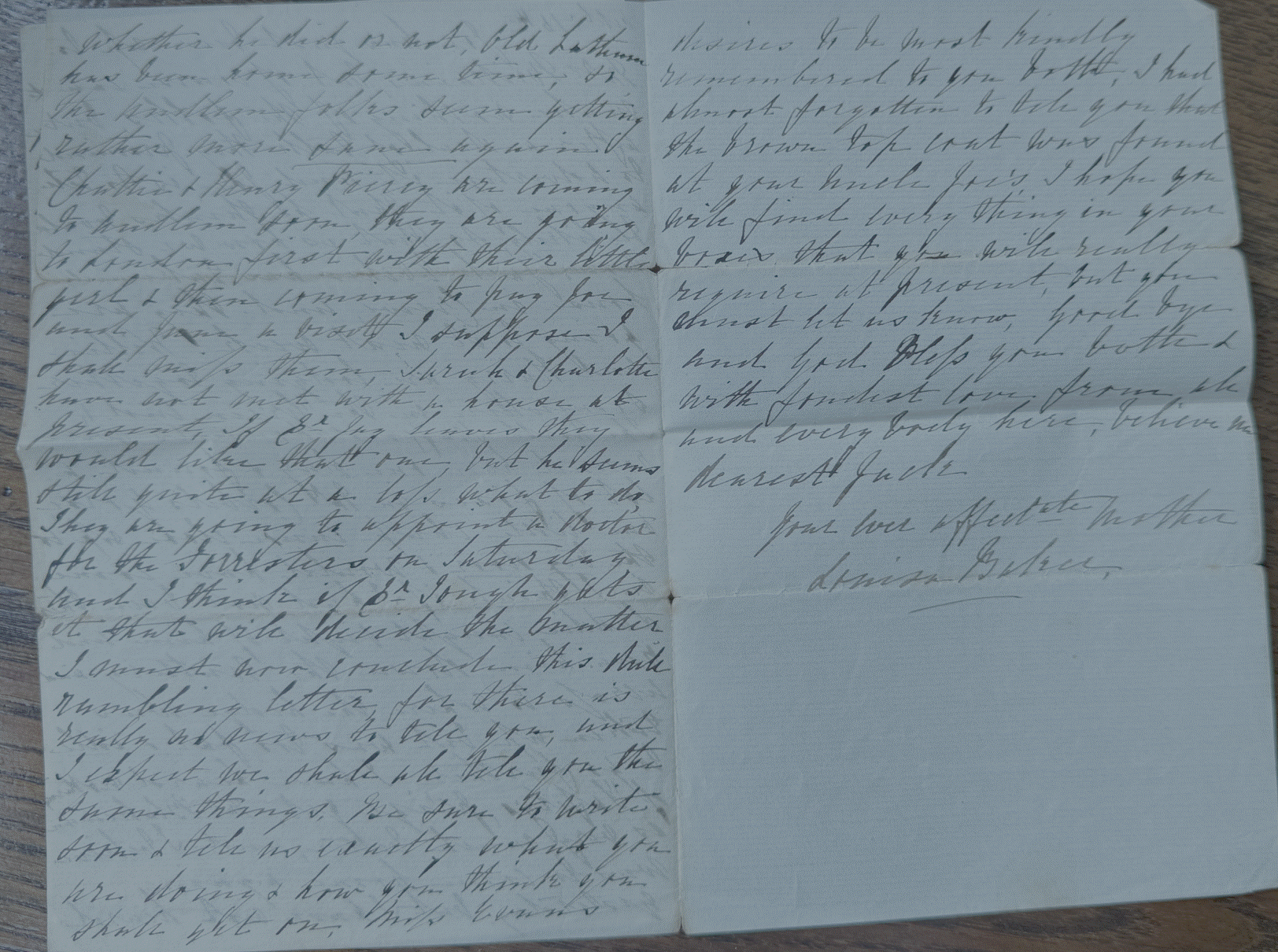
Highfields
Novbr 29th
My dearest Attie,
I was indeed glad to hear
that you had at last got some sort of work to do, and sincerely hope by this
time you have both settled down to it, and though the life must be a rough
& hard one, you will I trust in time get used to it, and I feel quite sure
you will both do your best in your new element as well as anyone. Keep up your
spirits and work with a good heart.
I have been away from home
four weeks and between that and I am feeling stronger & better for the
change. I went to Bognor first and stopped nearly a month with your Uncle Jack,
it is not at all a nice place in my opinion except that the sea is fine. It did
not agree with me at all at first but I got better after
the first week. I then went up to London and spent a short time with Lizzie
Blankeley, much enjoyed myself very much after the weather had got so miserable
the morning & rain came on at the time that I could only get out once.
Lizzie was so fearfully white I dare make your uncle & aunt really know a
creature to speak to by from Fred for anything that
happened she has so much I think that he cannot be read or he was then to a man
himself. Young Fred and his wife could not carry on at *, so they have joined
another company and are on a tour through the north gate.
I was so sorry to find
that Sarah Etches had been sent far to Birmingham as Heather was ill with Scarlet fever but it is fortunate for being a slight attack.
When you write again be sure to tell us every
thing about yourselves how you manage to live and whether you have to look to the farm produce but what a pity you are so
far.
How do you manage in the
village while it rains you have not much time to talk to Edward about the
farming but the corn is threshed and sold to E. Eade for 7/3 a measure and they
bought a little black cow which I have seen the other day and they seem to
think she a pretty good one. Old Polly is now being fed to sell. This is
bothering very fast it seems pleasant to see them again last night. I had not
time to be much the children said it was dinner so went back would not winter
her the summer and so sufficient for each that it is.
The bullock is getting
better and I believe really gone now so after Christmas will be some time. I
have not been to London since.
(transcription is
worked in progress)
(Letter from Louisa Baker
of Highfields to her son Arthur Baker (in south America), 28 November 1879,
Baker Records 60)
(Letter from Charity
Baker to her brothers, John Bellyse Baker and Arthur Baker (in South America),
undated 1879, Baker Records, 65)
(Letter from Louisa Baker
of Highfields to her son, John Bellyse Baker (in South America), 27 December
1879, Baker Records, 61)
1880
(Letter from Charlotte
Louisa Baker to her brother, John Bellyse Baker (in South America), 22 January
1880, Baker Records, 66)
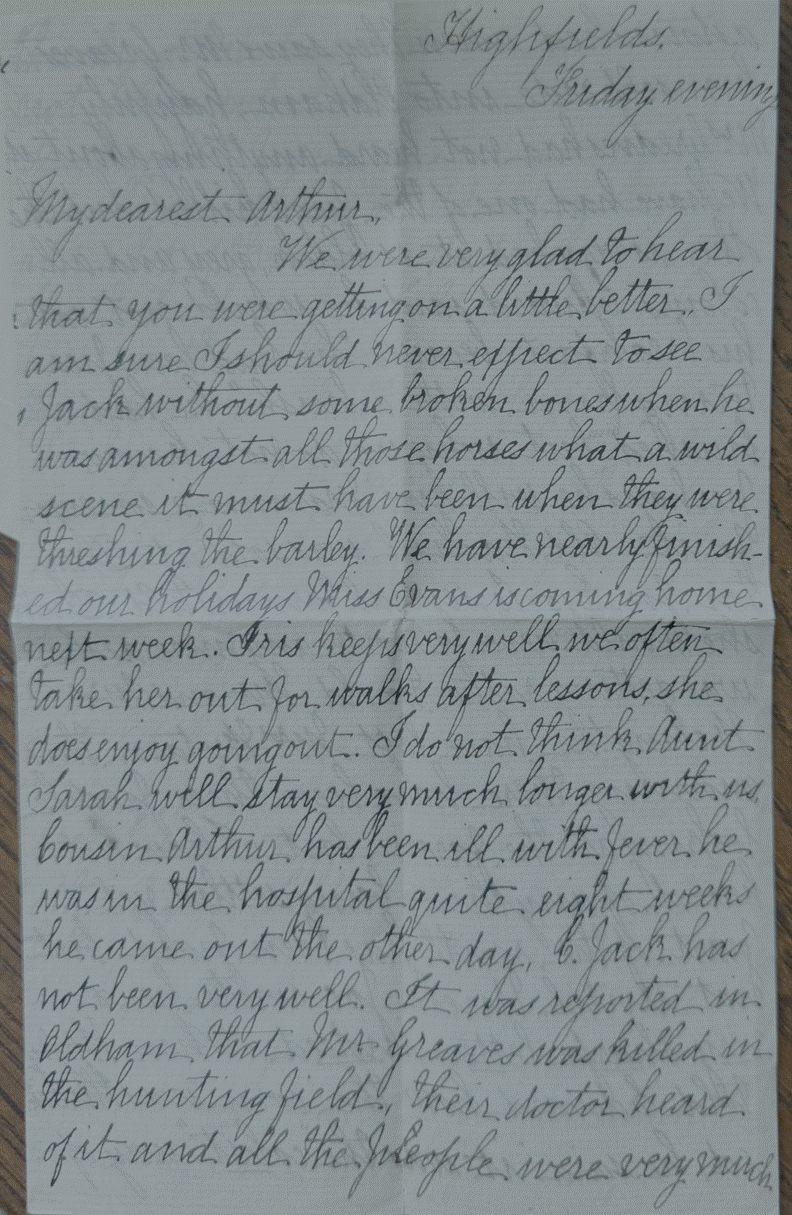
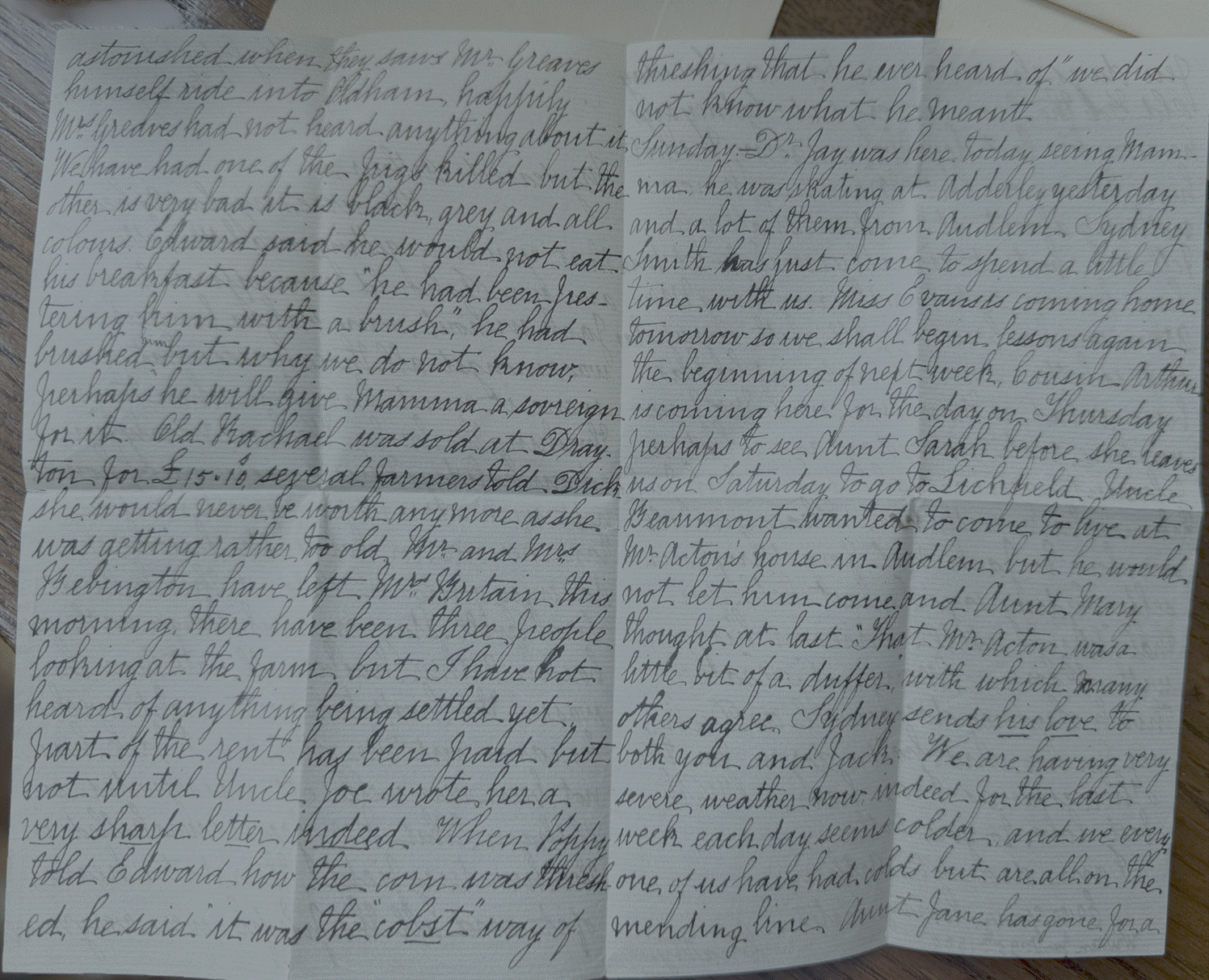
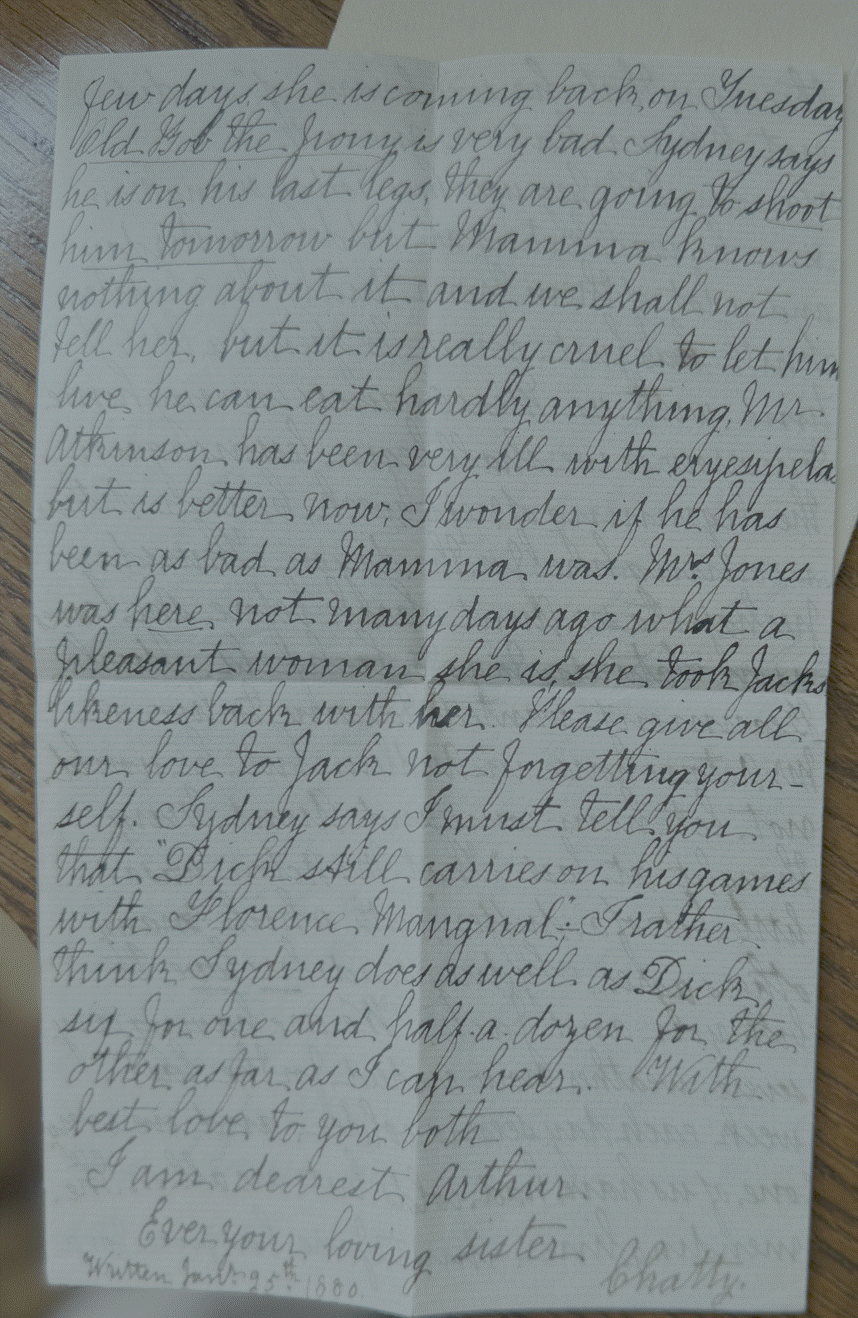
(Letter from Charity
Baker to her brother, Arthur Baker (in South America), 25 January 1880, Baker
Records, 63)
1880
Chatty Baker wrote in
April 1880, Jack and Arthur are still without
anything settled to do yet. I wish they could. I think it is troubling Mamma
and keeping her from getting well.
Audlem,
Cheshire
1881
Census 1881, Highfields, Buerton, Nantwich,
Cheshire:
John Bellyse Baker, head, single,
born 1851, aged 30, gentleman
Henrietta Baker, single, born
1849, his sister, aged 32, no occupation
Richard Dod Baker, single, born
1857, aged 24, solicitor’s general clerk
Arthur Baker, single, born 1860, aged 21, no
occupation
Charlotte L Baker, single , 14, scholar
Emily Jane Baker, single, aged 12,
scholar
Mary Dobson, a visitor, aged 33
Martha A Egerton, single, 19,
servant
From the
diaries of Arthur’s three younger sisters: The girls’ three brothers,
Jack (1850 to 1932), Dick (1856 to 1902) and Arthur (1858 to 1916), were older
and would have been in their 20s when the diaries were written. From the
entries it is clear that they lived outdoor lives and
enjoyed the traditional country sports. There are many references to their days
spent hunting and shooting. July visits to the races at Market Drayton, cricket
in the summer and skating in the winter, usually at Adderley and Shevington.
For them, oyster suppers seemed to have been popular.
1891
1891 Census, 13 Hog Lane, Field Bank, Nethington, Didsbury:
Arthur Baker, 30, a salesman and
lodger, was living with the Cureton family.
1898
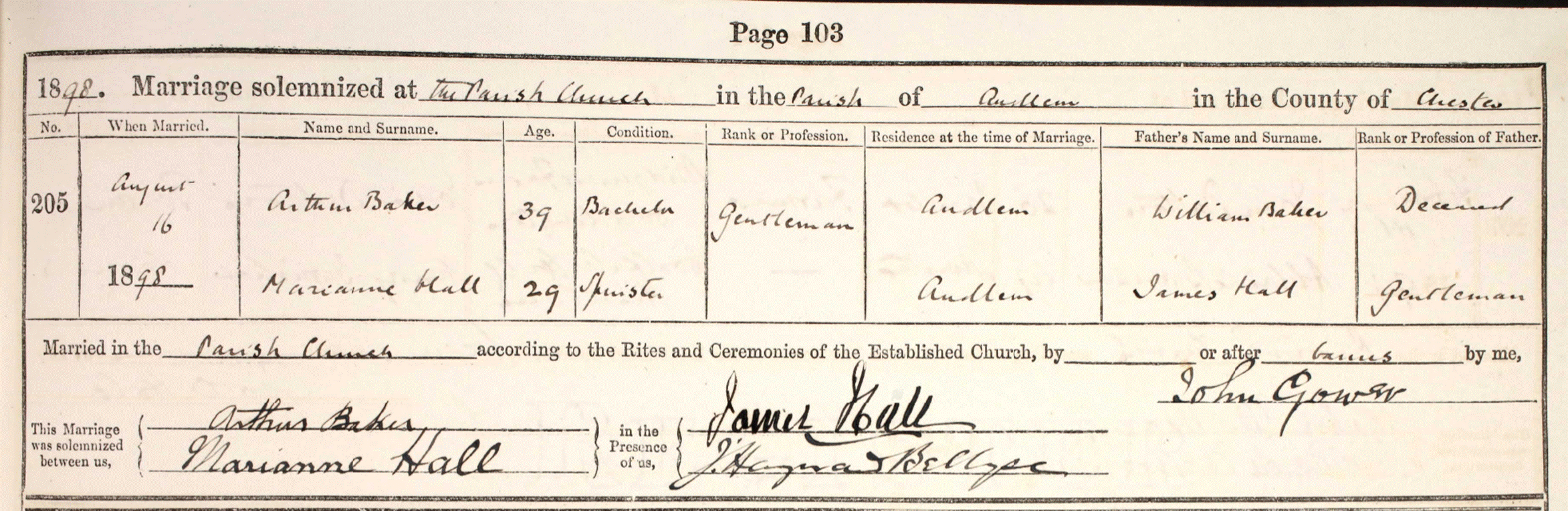
Arthur married Marianne
Hall (HAL00103),
the daughter of James Hall (HAL00093)
of Kynsal Lodge, Audlem at Audlem on 16 August 1898.
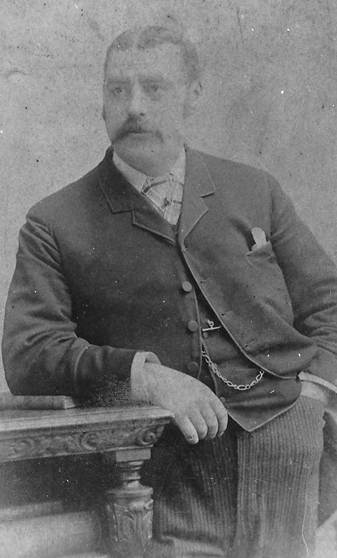
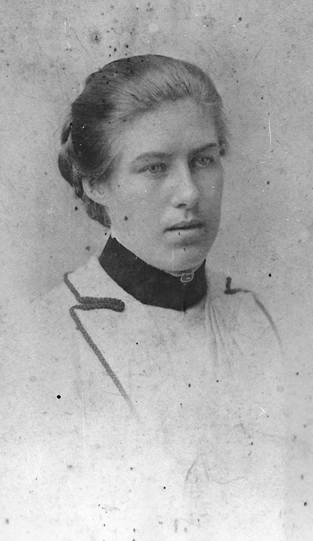
Arthur Baker Marianne
Hall
About 1898
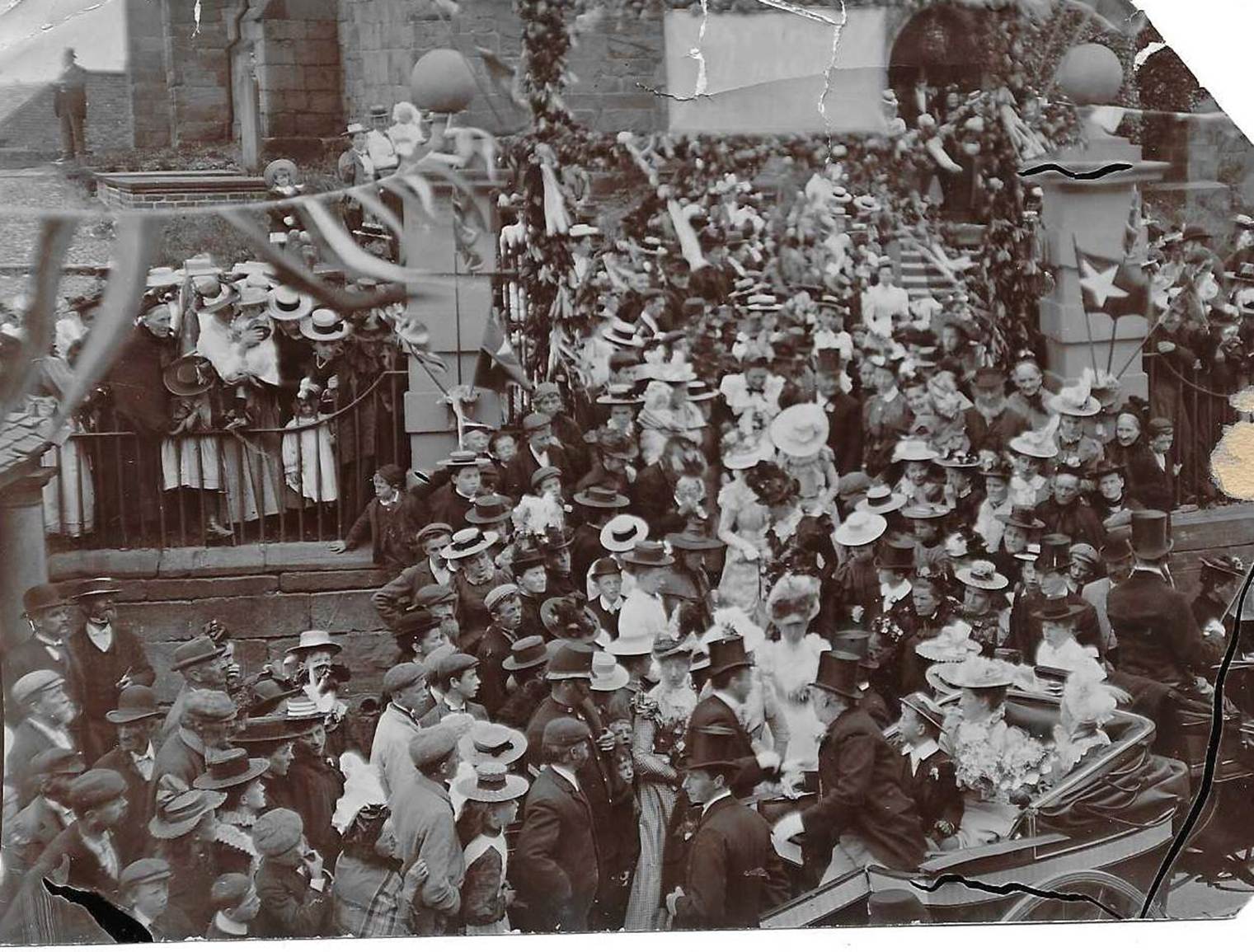
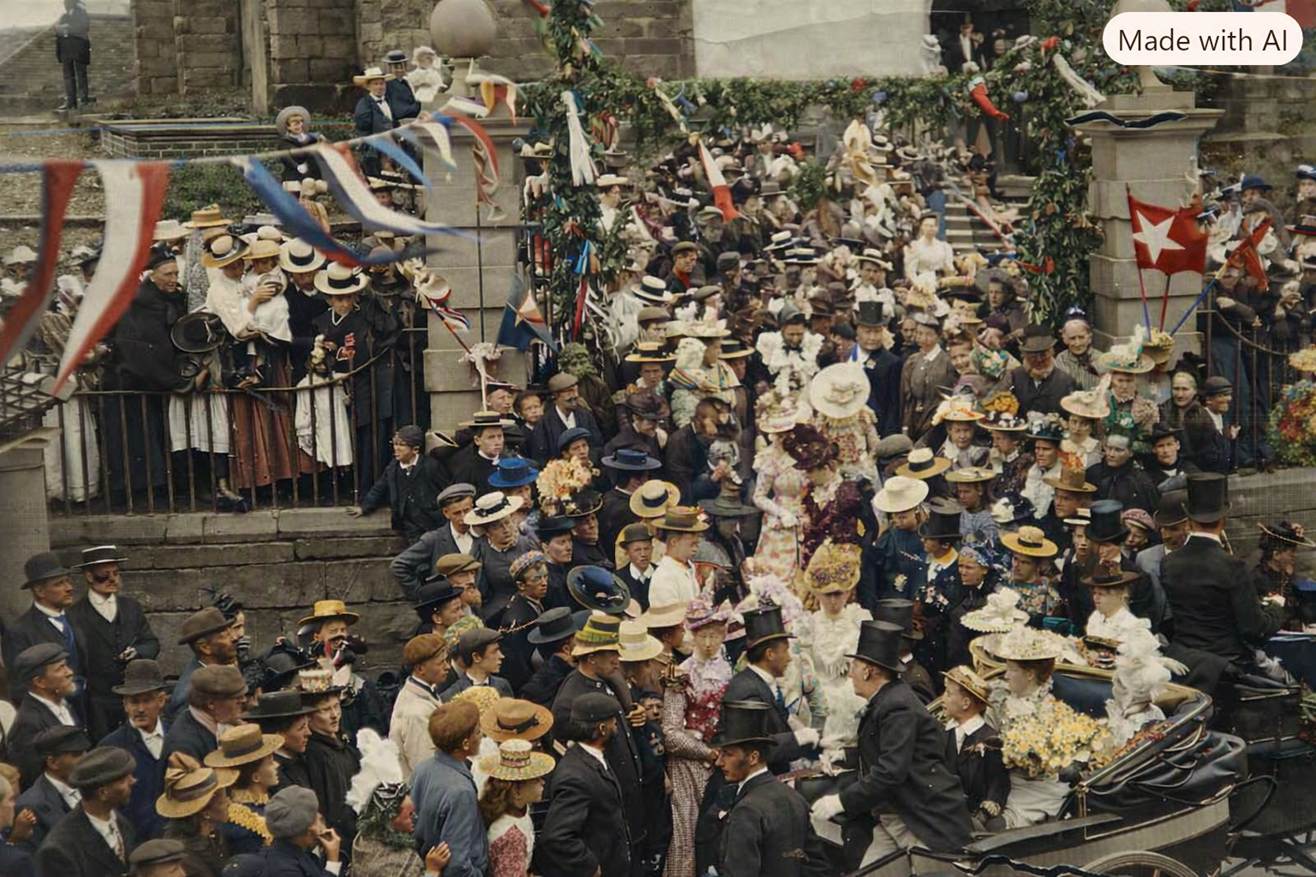
The wedding of
Arthur Baker and Marianne Hall on 16 August 1898
Reimagined in colour by artificial intelligence
LOCAL WEDDINGS. BAKER-HALL. The
marriage of Mr Arthur Baker, third son of the late Mr William Baker, of
Highfields, Audlem, to Miss Marianne Hall, younger daughter of Mr James Hall of
Kynsal lodge, Aiudlem, was solemnised at the parish
church, Audlem, on Tuesday. The bride and bridegroom were well known and highly
respected and the event aroused considerable interest in the district. The
village, with its numerous triumphal arches, streamers and flags, presented
quite a festive appearance. Over the gateway to the church, through which the
bridal party passed, a triumphal arch of evergreens had been erected, in the
centre of which was an appropriate motto. The church was crowded. Before the
service commenced the organist Mr Blakeman, played as voluntaries, “con moto
moderato” by Smart, “allegretto cantabile” by GH Westbury and the “March of the
priests” by Mendelssohn. A hymn, “The voice that breathed our Eden” with sung
as a processional. The Rev John Gower, rector of Trefriw,
North Wales, uncle of the bride, assisted by the Rev J Stapleton Cotton, vicar
of Audlem performed the ceremony, and the at the conclusion the hymn “How
welcome was the call” was sung. The bride was given away by her father. She was
attended by Miss Ravenshaw, cousin of the bride; Miss C L Baker, sister of the
bridegroom; Miss K Lynam; Miss M Hall, niece of the bride; and Miss Dorothy
Baker, niece of the bridegroom. Mr R D Baker, brother of the bridegroom, acted
as best man. There were a large number of relatives of
both the bride and bridegroom present. As the bridal party left the church,
amid a shower of rice and confetti, the organist played Mendelssohn’s “Wedding
March.” The bride wore a dress of ivory satin trimmed chiffon, tulle veil and
coronet of orange blossoms, and carried a bouquet of white roses. The elder bridesmaids,
Miss Ravenshaw and Miss CL Baker, were attired in pale green bengaline silk,
trimmed with white silk and chiffon hats to match. They carried bouquets of red
carnations. The younger bridesmaids were gowned in white silk and carried
pretty bouquets. The chancel of the church was tastefully decorated with
flowers and plants. A reception was held at Kynsal Lodge, during the afternoon
at which there were a large number of guests present.
The presents were numerous, and included a handsomely
chased silver tea and coffee service. On the tray was the following
inscription: “Presented to Miss Marianne Hall, on the
occasion of her marriage, August 16th 1898. A
Goodwin, J Ellwood, H Hocknell, tenants of James Hall Esquire.” A black marble
timepiece bore the following: “Presented to Mr Arthur Baker, by his fellow
employees at Mrs E Harrison and Co, as a mark of esteem. Manchester, August
5th, 1898.” The honeymoon is being spent at the lakes, and in Scotland.
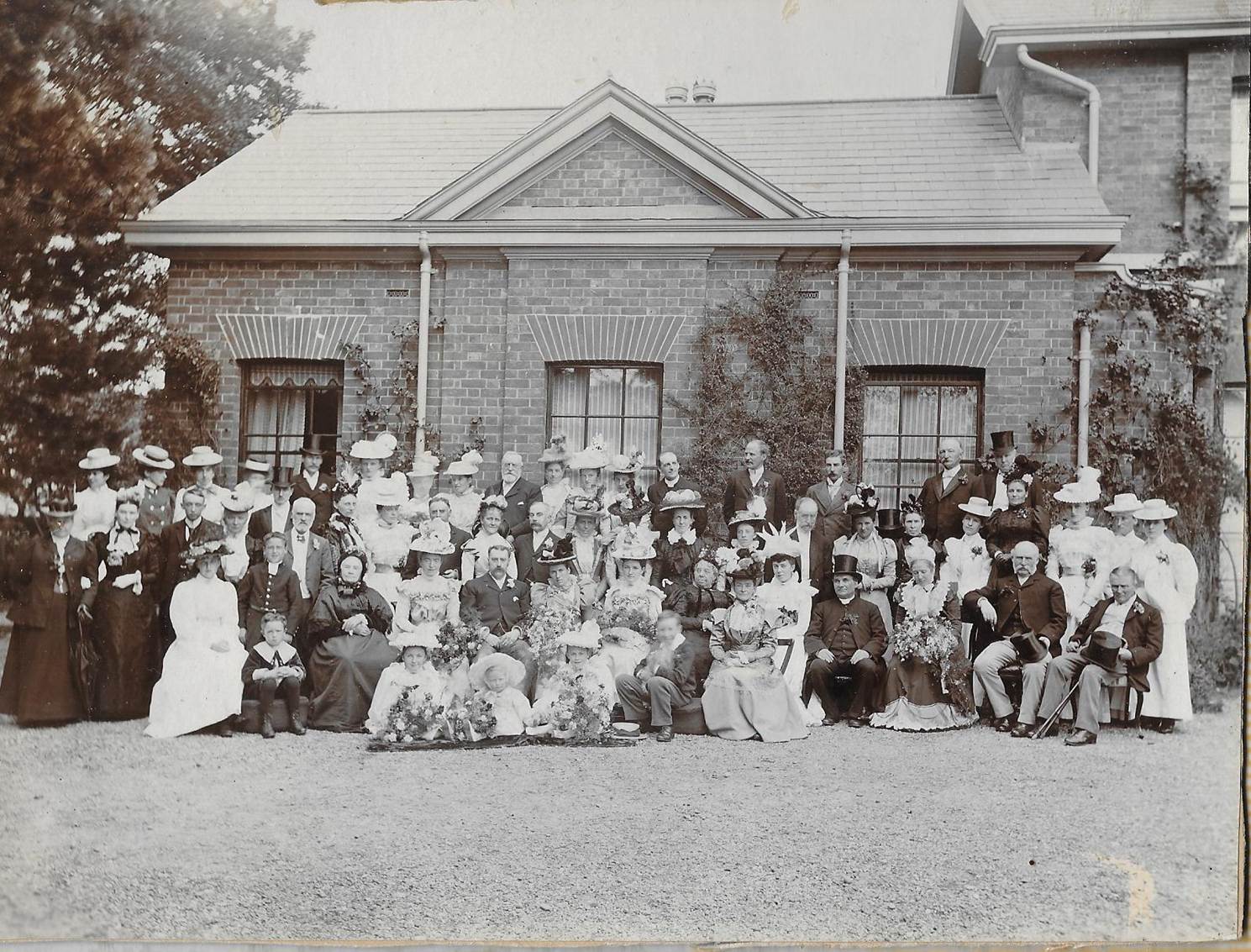
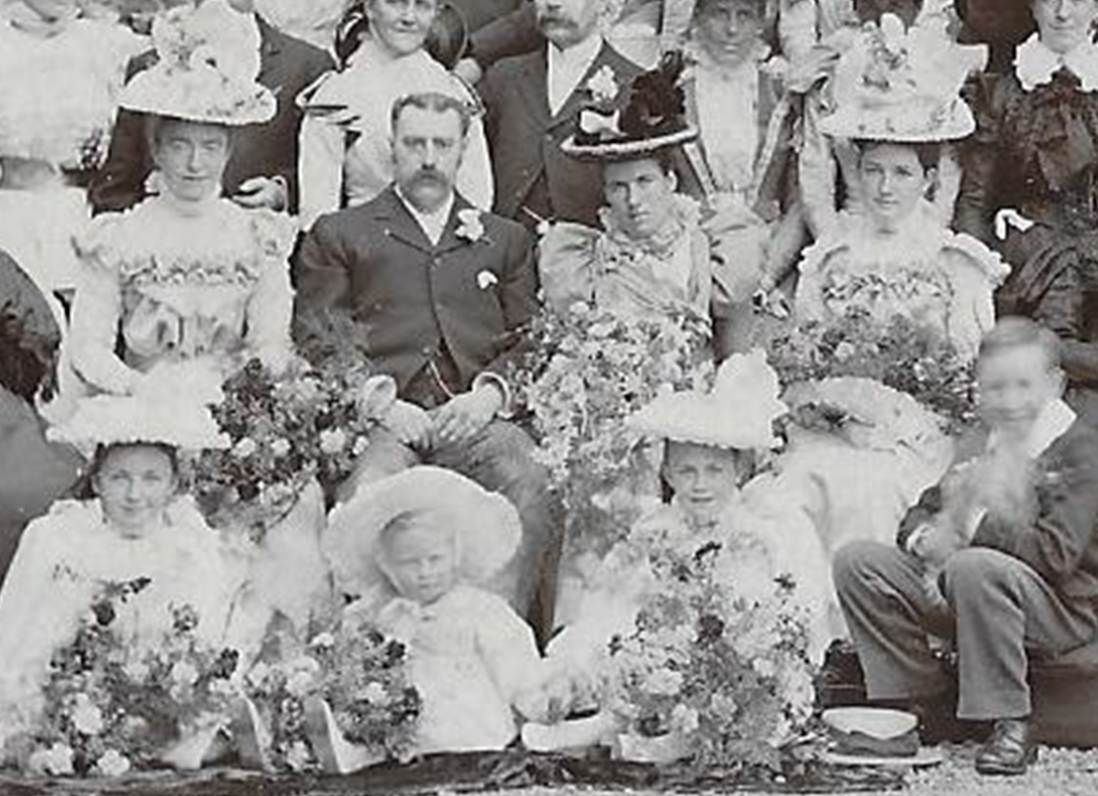
The wedding of Arthur Baker and
Marianne Hall
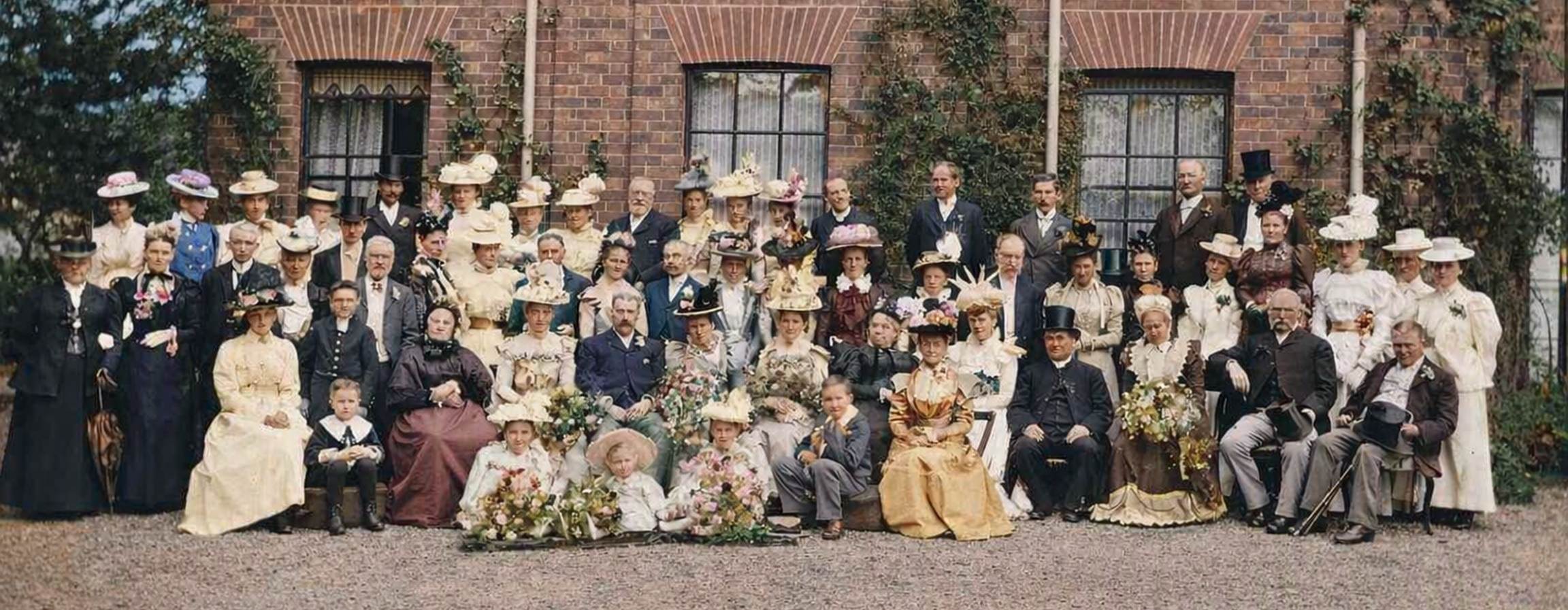
Reimagined in colour by artificial
intelligence
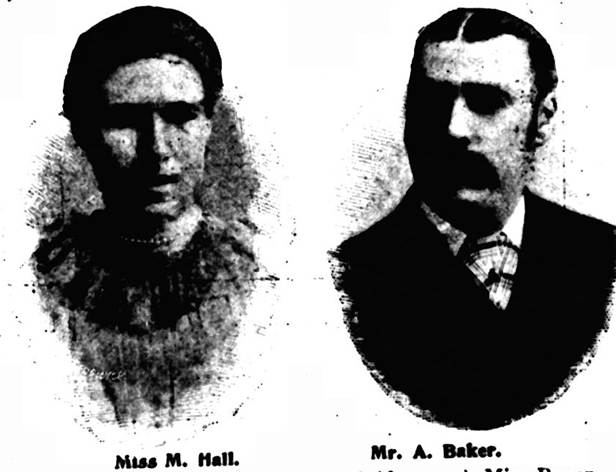
Miss M Hall to Mr. A Baker. On the
16th alt, at Audlem church, Miss Marianne Hall, daughter of Mr. James Hall,
Kynsal lodge, Audlem, Cheshire, was married to Mr Arthur Baker, of the Cedars,
Audlem, son of the late Mr William Baker, of Highfields, Audlem. The church was
decorated, and the service was fully choral. The Rev Stapleton Cotton, assisted
by the Rev John Gower, rector of Trefriw, North Wales,
officiated. The bride was given away by her father. She wore an ivory satin
gown trimmed with white chiffon, tulle veil, surmounted with orange blossoms.
She carried a shower bouquet of light exotics which, with a pearl brooch, with
a gift of the bridegroom. Her bridesmaids were Miss CL Baker, sister of the
bridegroom, Miss Ravenshaw, cousin of the bride, who wore eau de nil bengaline
silk, trimmed with white chiffon and white satin sashes, white chip hats with
green and white chiffon and white poppies. Also miss Dorothy Baker, niece of
the bridegroom, Miss K Lynam, and Miss Mary Hall, nieces of the bride. They
wore white silk with hats to match; They all carried shower bouquets of pink
and red carnations, which with gold bangles and brooches, were gifts of the
bridegroom. Mr Richard Baker was best man. A reception was held afterwards at
Kynsal lodge, and later the happy couple started for the lakes and Edinburgh. The
presents were numerous and costly. Mrs W&C Buzzard of 191 Oxford streets,
W, supplied to the wedding cake. (Gentlewoman, London, 3 September
1898).
MR BAKER AND MISS HALL. A wedding,
both pretty and interesting in its character, was that which was on Tuesday
solemnised at the parish church, order, the contracting parties being Mr Arthur
Baker, third son of the late Mr William Baker of Highfields, Audlem and Miss
Marianne Hall, youngest daughter of Mr. James Hall of Kynsal lodge. The
ceremony was performed by the Rev J Gower, rector of Trefriw,
North Wales, uncle of the bride, assisted by the vicar of Audlem, the Rev J
Stapleton Cotton. As the bride entered the church, leaning on the arm of her
father, she looked charming. She was attired in a dress of ivory satin and
white chiffon, with tulle veil and orange blossoms. She was accompanied by Miss
C L Baker, sister of the bridegroom, Miss J Ravenshaw, her cousin, Miss Dorothy
Baker, cousin of the bridegroom, and Miss M Hall and Miss K Lynam, her nieces,
who acted as bridesmaids. These young ladies were all tastefully garbed. Mr R D
Baker, brother of the bridegroom, officiated as best man, and the bride was
given away by her father. The service was fully choral and the organist, Mr
Ryland Blakeman, in addition to playing the usual wedding hymns gave a perfect
rendition of the following: “Wedding March”, “allegretto cantibile”,
“March of the priests,” and “con motto modarate“ by Smart. The psalm was chanted to Barnaby’s setting in E
flat. Along the entire route from the church to the home of the bride, arches
effectively arranged and bearing appropriate mottos were erected at short
distances, while in the town itself was displayed a host of bunting and pretty
decorations. After the reception the happy couple left for the Lake District,
where it is intended to spend the honeymoon. Amongst the numerous choice and
costly presents received by both the bride and bridegroom, were a silver tea
and coffee service from the tenants of the bride's father, and a marble clock
from the fellow employees of the bridegroom at Messrs Harrison and co,
Manchester.
LOCAL WEDDINGS. BAKER-HALL. The article gave the same
details as above (The Wellington Journal, 20
August 1898).
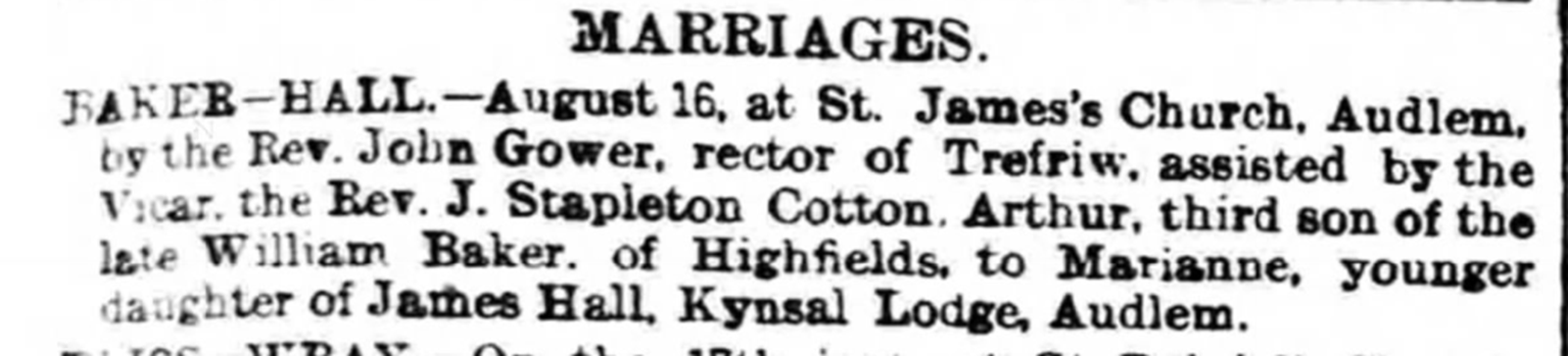
(The Standard, 20 August 1898)
Arthur and Marianne had three
children.
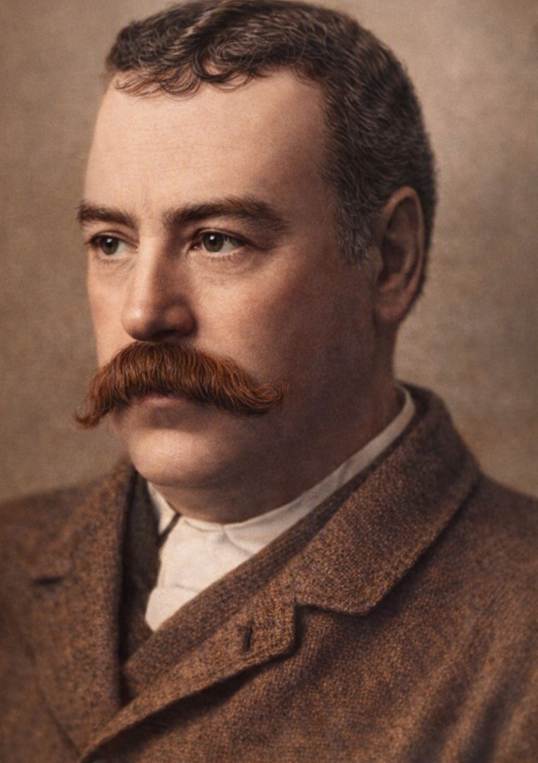
Arthur Baker reimagined from original
black and white photograph in colour by artificial intelligence
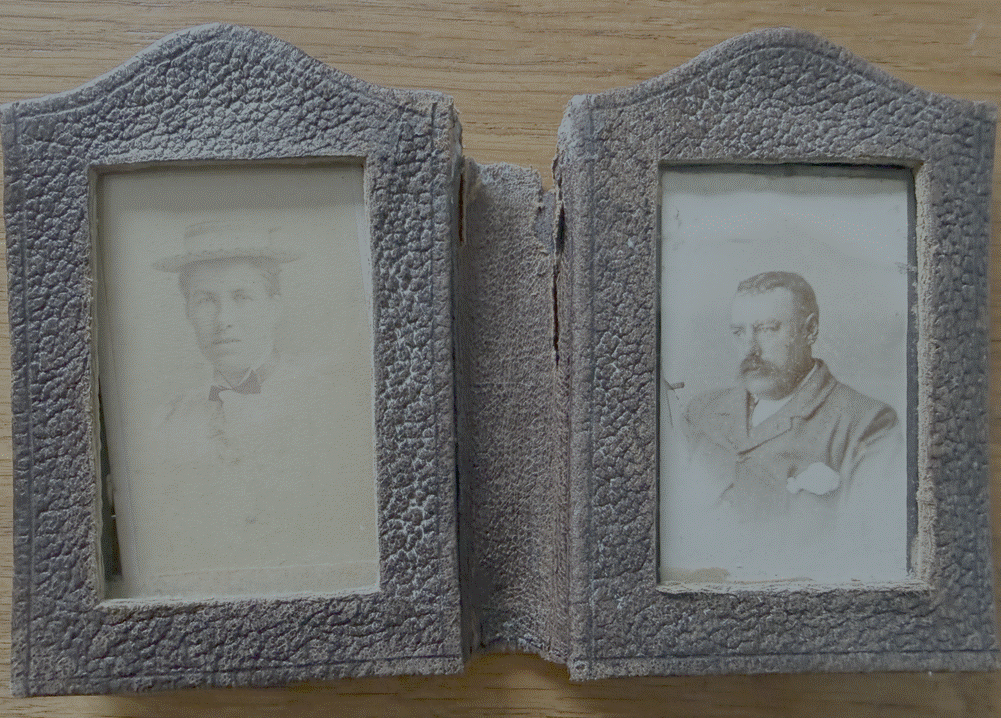
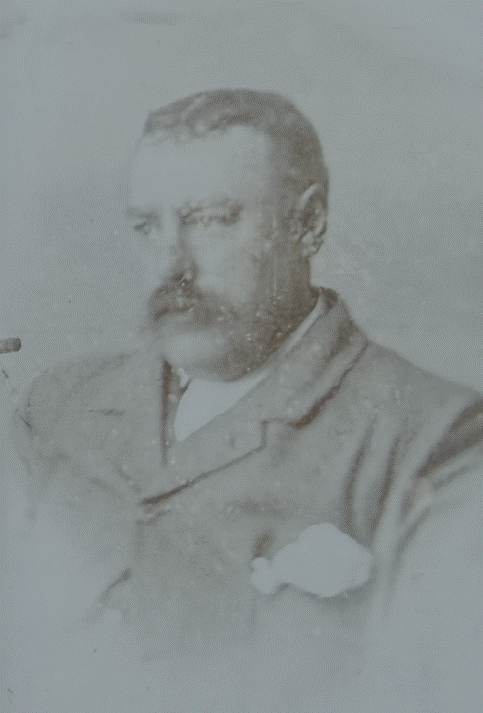
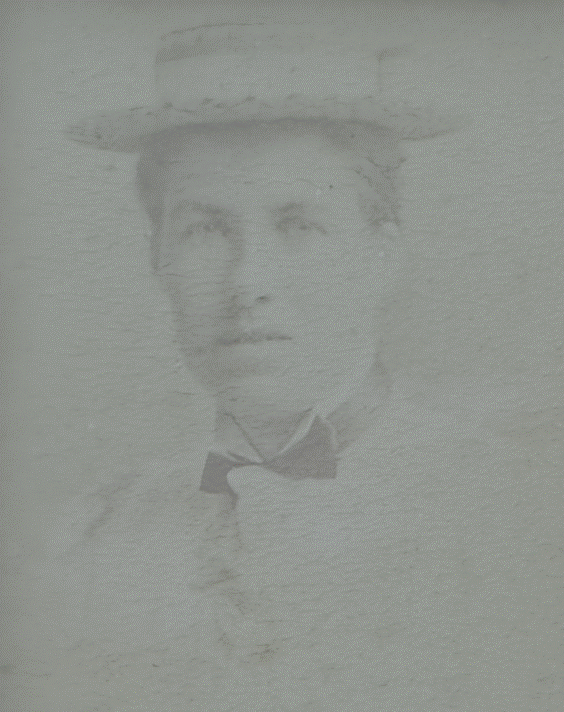
Arthur Baker and Marianne Hall (from Anne Shepherd)
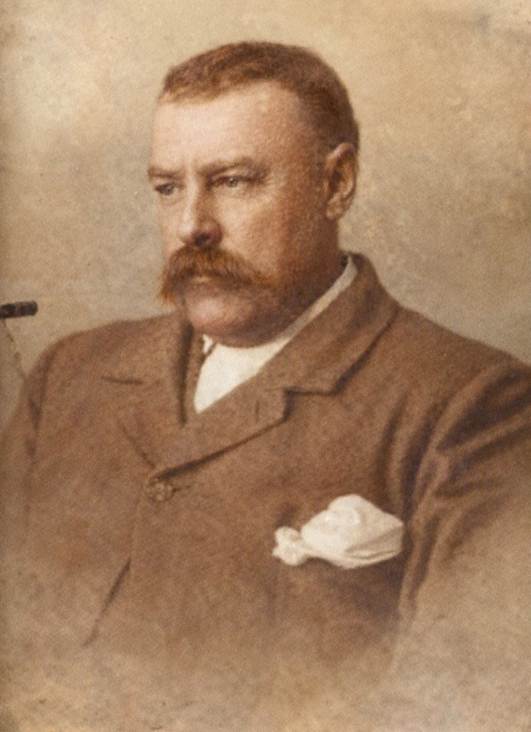
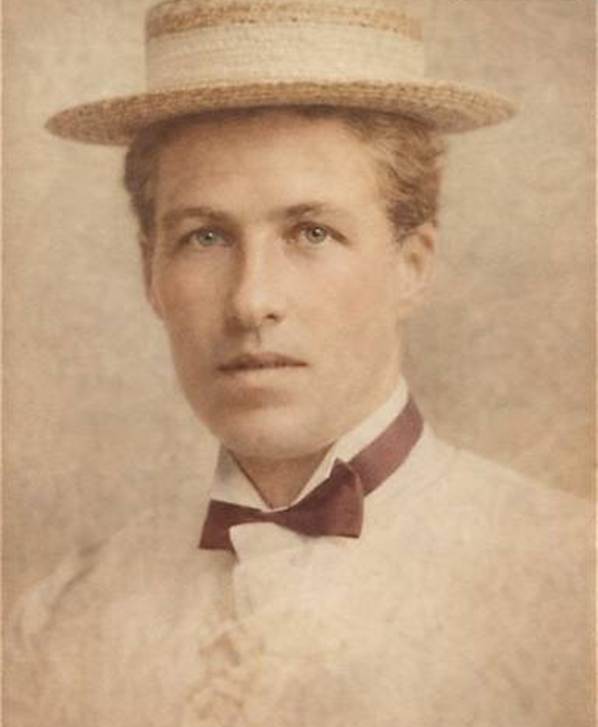
Colourised using artificial
intelligence
1899
Hilda Marianne Baker (1899 to 1979)(BAK00170)
was born in 1899. Hilda never married.
The Wellington Journal, 14 January 1899: TRAP
ACCIDENT. On Tuesday afternoon, as Mrs Thurman of “The Stores” and Mrs Custis
of the Lamb Hotel, Audlem, were driving along Green Lane, the horse, from some
cause, ran the trap up the side of the fence and eventually overturned the
vehicle, the occupants being thrown to the ground. A youth who was riding
behind had sufficient presence of mind to jump out on seeing the danger, and succeeded in holding the animal while the
unfortunate ladies were extricated from their perilous position underneath the
conveyance. Happily neither of them sustained serious
injury, although considerably shaken. After receiving every care at the
house of Mr Arthur Baker, Swanbach Villa, where
they were taken, both were removed home in a wagonette.
1901
Margaret (“Peggy”) Louisa Baker
(1901 to 1996)(BAK00002)
who later married Alfred Farndale (FAR00683) was
born in 1901.
1901
census – Swanbach Villa, Audlem
Arthur Baker, 41, living on
own means
Marianne Baker,
31, his wife
Hilda Marian
Baker, 1
Margaret Louisa
Baker, 1 month
Maude Whiston,
their servant
1903
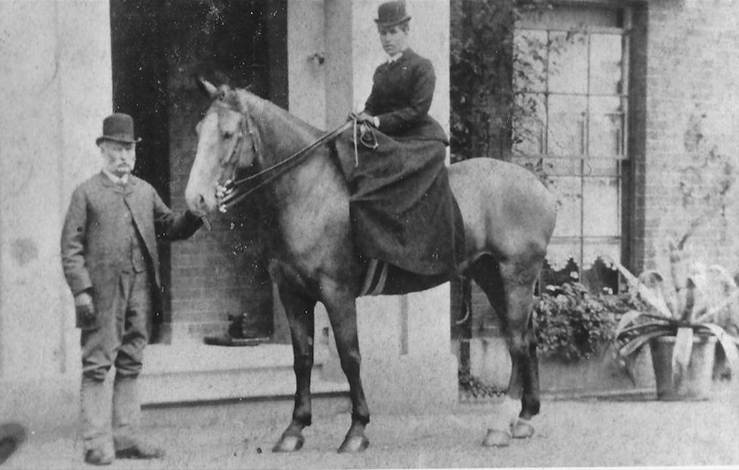
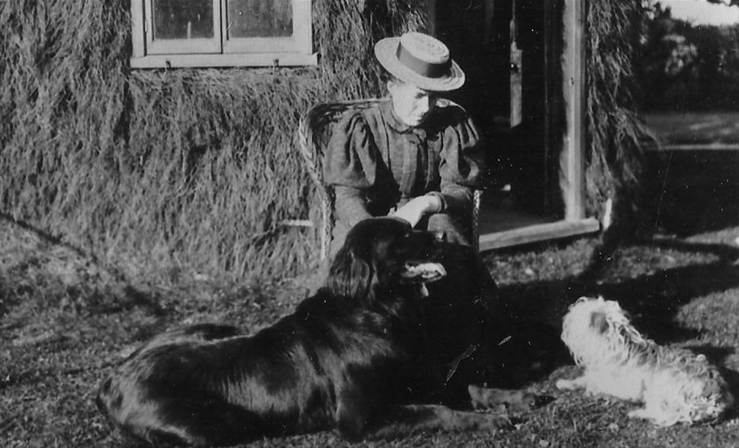
Marianne Baker,
perhaps at Swanbach Villa
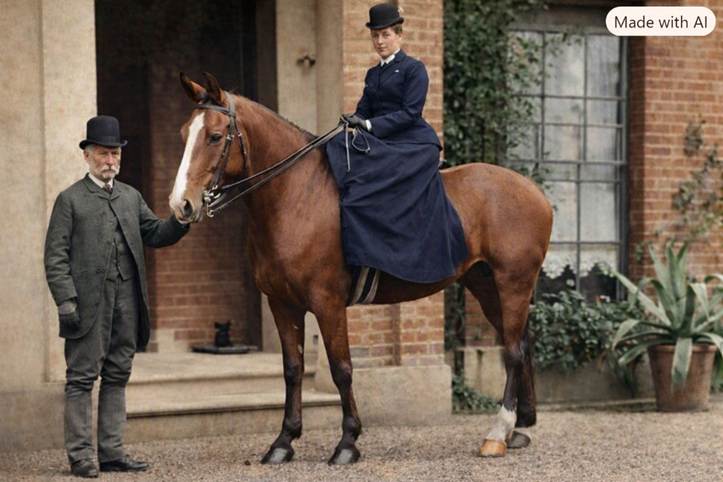
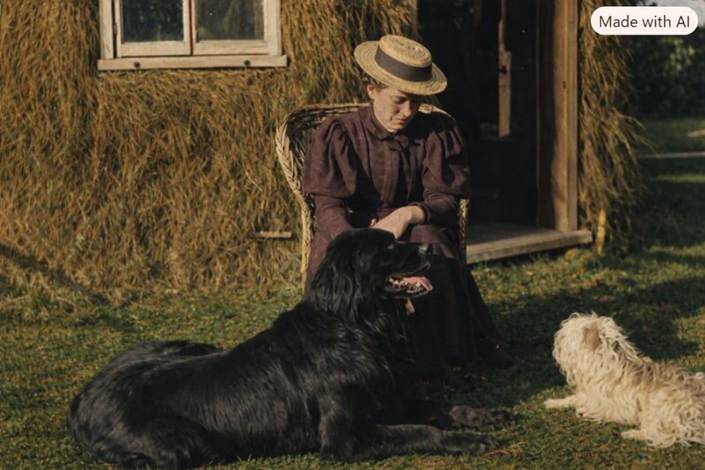
Reimagined in
colour by artificial intelligence
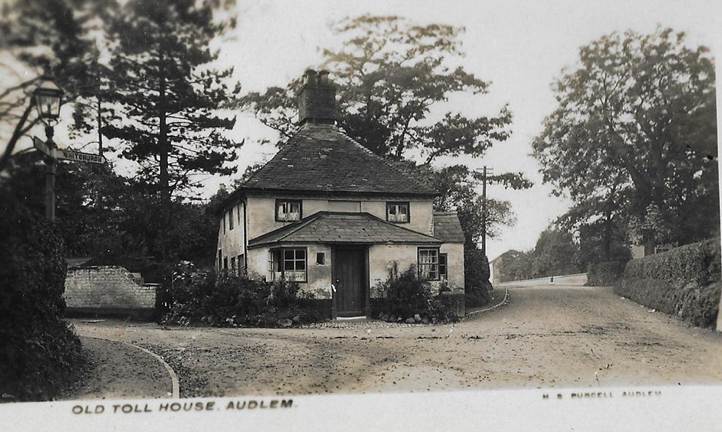
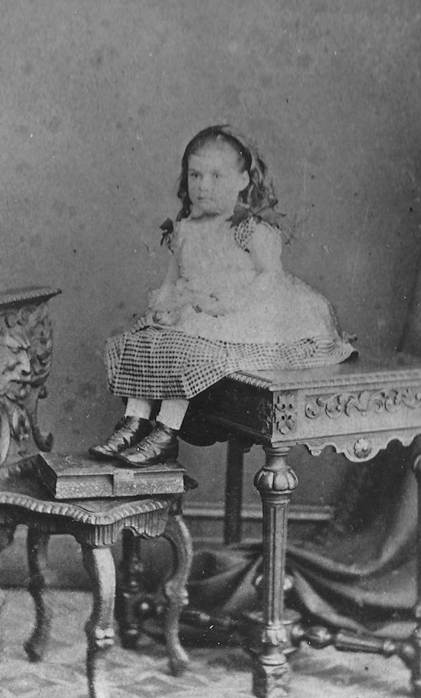
Hilda Baker perhaps about 1903
1904
Geoffrey Richard Baker (1904 to 1974)(BAK00172)
who later married Joyce Wright was born in 1904.
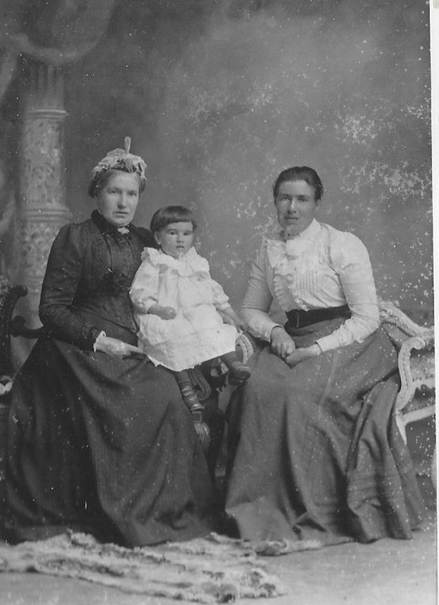
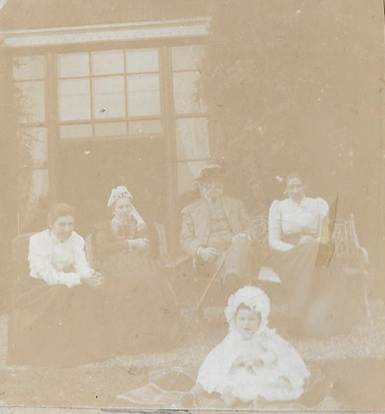
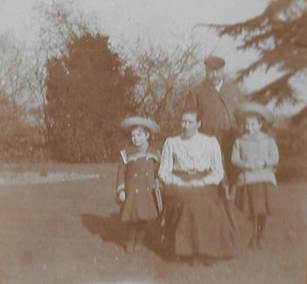
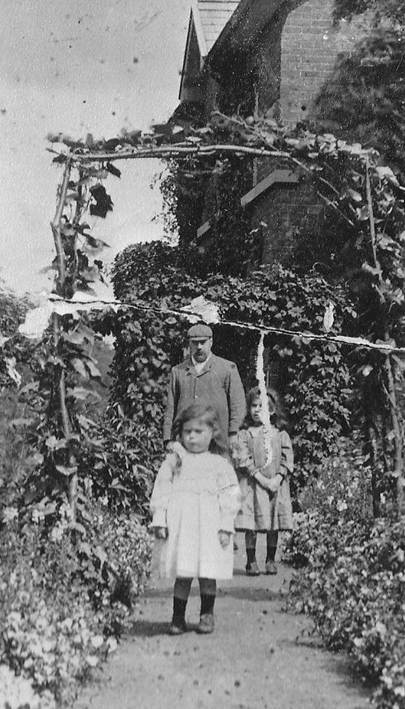
Marianne Baker
with Geoffrey perhaps
Arthur and Marianne Baker with Margaret and Hilda about 1906 Arthur Baker
with Hilda and Margaret in about 1905
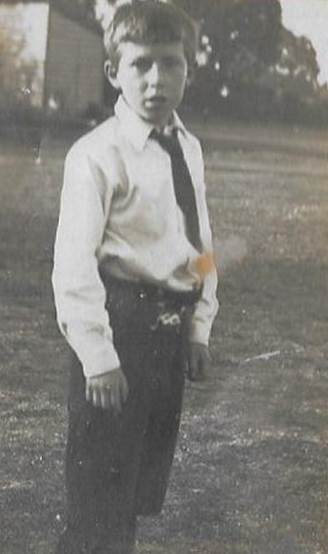
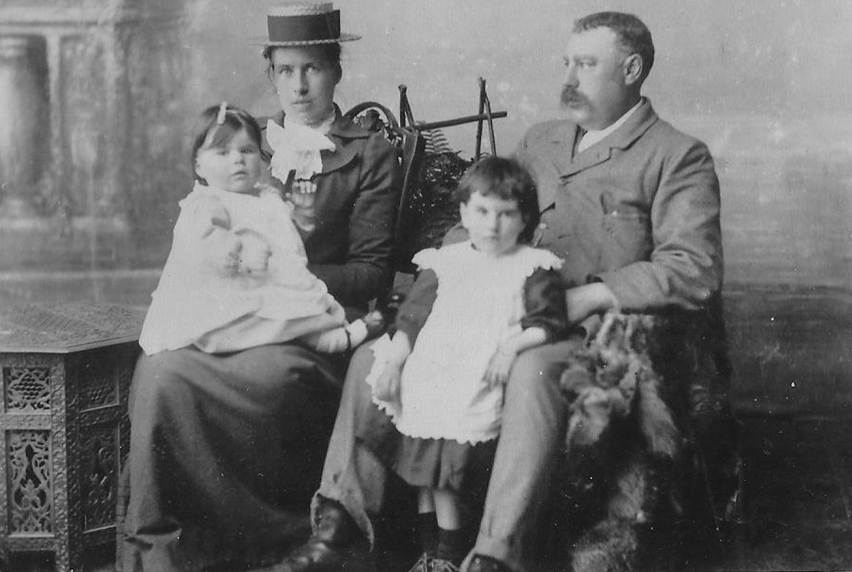
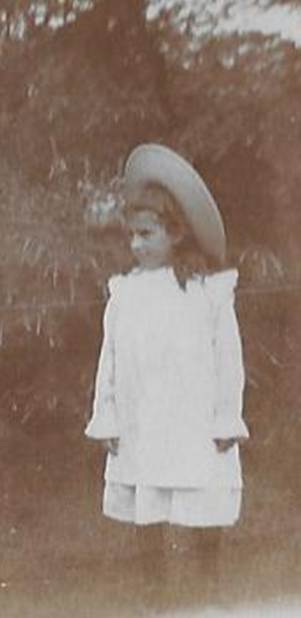
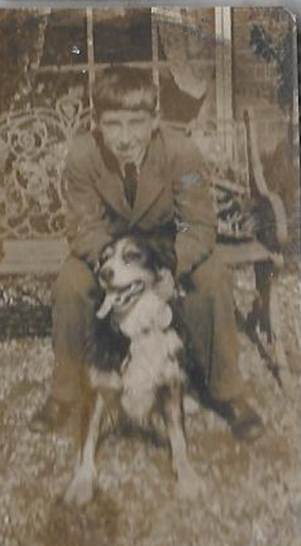
Geoffrey Baker
about 1910 Arthur and Marianne Baker with Margaret and Hilda about
1902 Margaret Baker perhaps
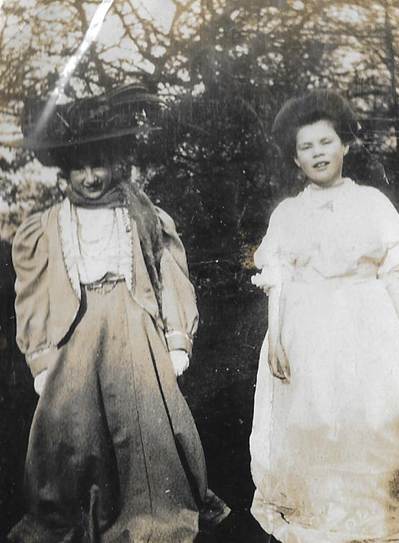
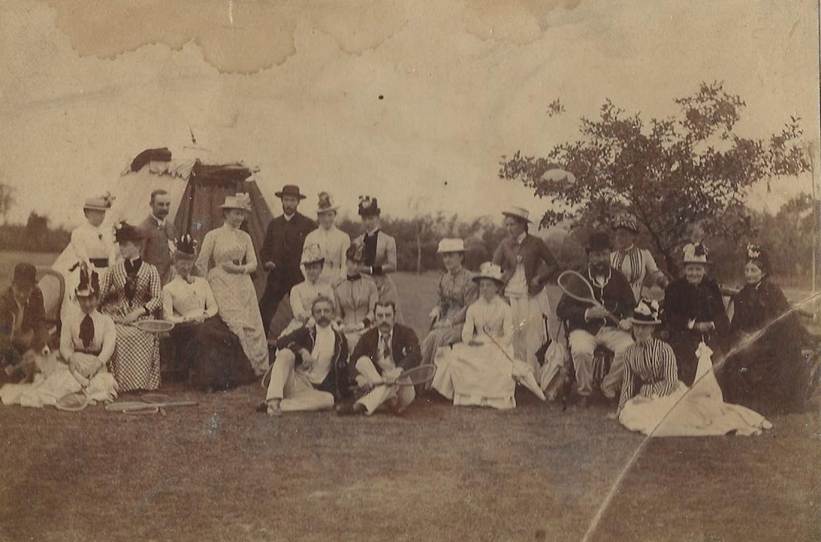
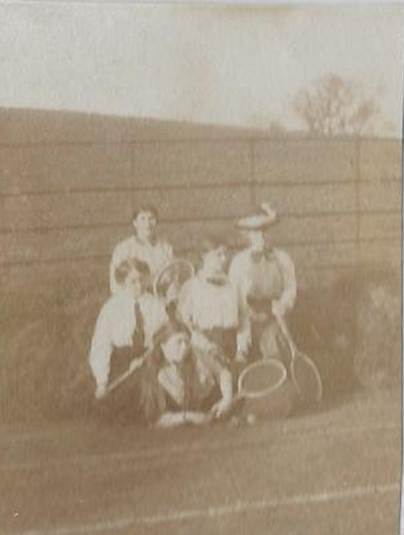
“Heaps of tennis”
Swanbach?
Geoffrey Baker
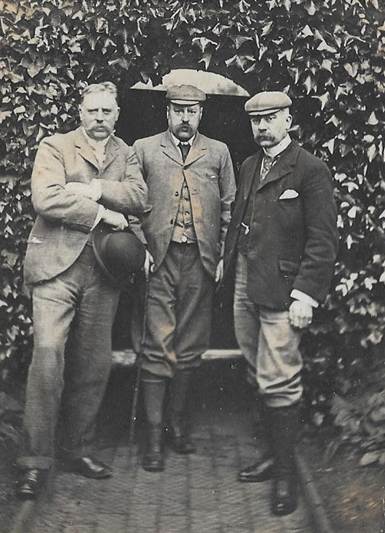
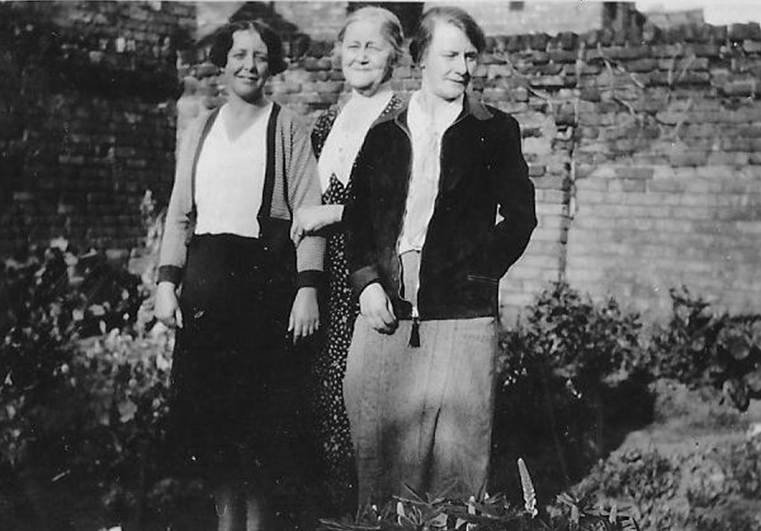
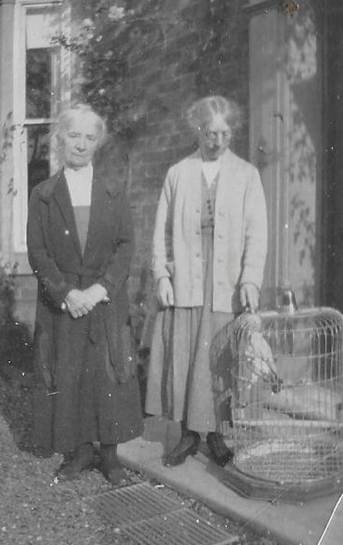
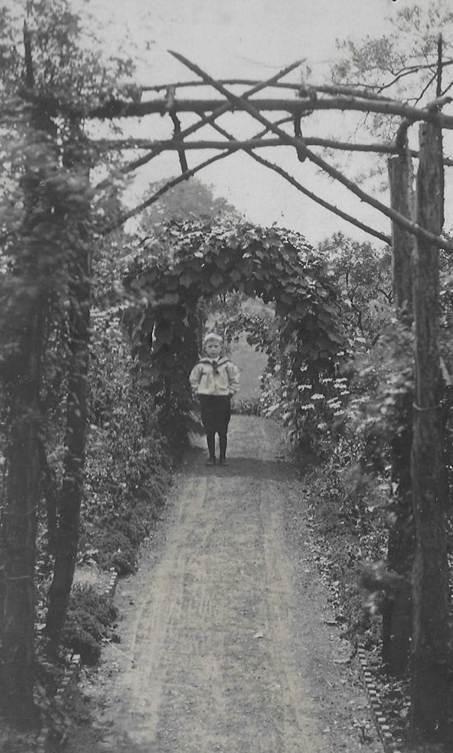
Arthur centre
with Jack Baker and Richard Baker perhaps 1900 Perhaps Henrietta
(“Poppy”), Tottie, Emily Baker?
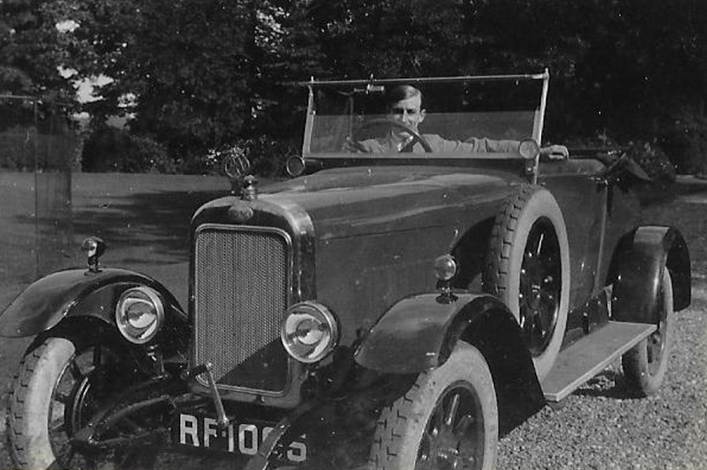
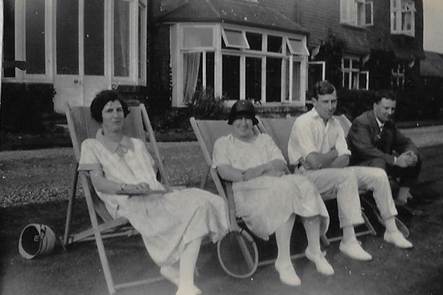
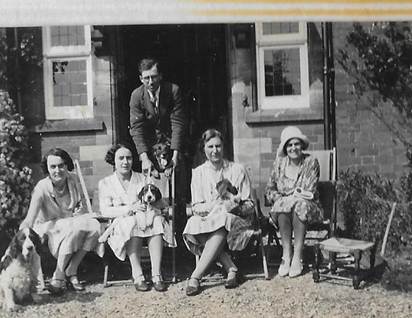
1908
Marianne Baker (nee Hall) died on
16 May 1908 at Swanbach Villa, Audlem.
We record with very deep regrets
the death of Mrs Arthur Baker, so well known in the
parish as a kind friend to the second needy, and for many years a teacher at
the Cox bank church Sunday school, which sent wreaths, from the teachers and scholars,
as a token of affection and esteem. The funeral service was held in the parish
church. Very deep sympathy is felt for the relatives of the deceased lady, the
great number of rigs testifying to the love which many have for her.
1910
Audlem cricket
had its hour of glory. At the end of the last century Market Drayton held an
Annual Cricket Week, when a number of Lancaster County
men stayed with their then captain, AN Hornby, and played for the town, matches
being arranged with the local towns and villages, including Audlem
The captain of
Audlem at this time was Arthur Baker of Hillside, youngest son of William Baker
of Highfields. Some idea of the quality of the Audlem side may be gathered from
the fact that the captain’s 13 years old nephew Bellyse, on holiday from school,
was brought in to complete the team. Indeed, the main purpose of the game, a
single innings match, was to allow the spectators to watch the great Lancashire
stars in action. Audlem, however, possessed a fast bowler. He was one of the
Shuker brothers, the local blacksmiths, whose cannon ball deliveries were only
exceeded in speed by their usual inaccuracy.
Audlem went in
first and were dismissed, with little difficulty, for 13 runs. The spectators
settled down to watch the great men perform. Shuker opened the bowling, and
with his lighting delivery removed the batsman’s middle stump. This success
inspired him to hitherto unknown heights, and helped
no doubt by the un-Old Trafford like ground, he dismissed Market Drayton for 11
runs.
The captain then
came over to Arthur Baker and said, “Well, Arthur, it’s been great fun. I
suppose we’d better make it a two innings match?”
“We’ll both go in
again by all means,” was the reply, “but as far as the match is concerned, it’s
all over and we’ve won.”
“If that’s
Audlem’s idea of good sportsmanship”, said their captain, “Market Drayton will
never play them again.” And for all I know to the contrary they never did until
the middle of the 1960s, when the club revised after a lapse of twenty five years.
(Burton, Marjorie (1973), Nineteenth Century
Audlem, Audlem District Amenities Society, Johnson & Son Nantwich
Limited page 21).
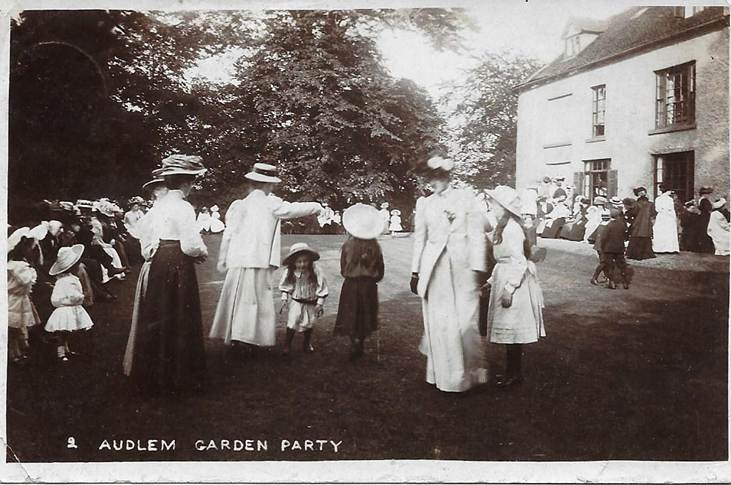
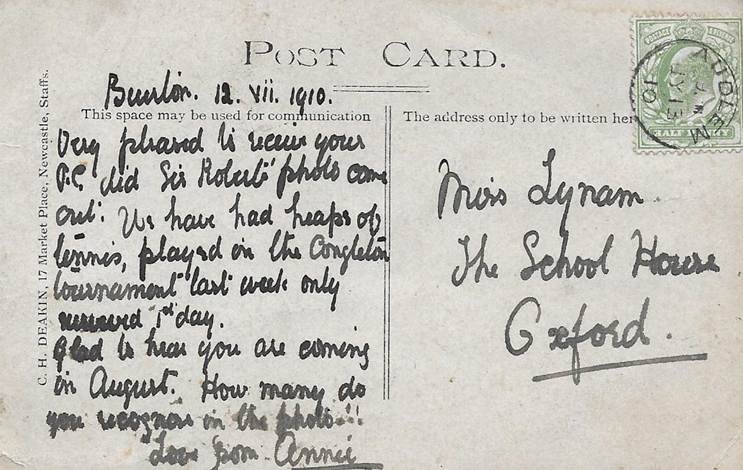
Audlem Garden
Party in 1910 with the message on the back of the postcard. I am still to
identify who Annie is. Miss Lynham must be Kit Lynham (LYN00002)
the daughter of Skipper Lynham (Charles Cotterill Lynam)(LYN00001),
Founder headmaster of the Dragon School, at Oxford and Catherine Alice Hall (HAL00100).
Buerton 12 July 1910.
Very pleased to receive your PC. Did Sir Robert’s photo come out? We have had
heaps of tennis, played on the Congleton tournament last week only reserved 1st
day. Glad to hear you are coming in august. How may do you recognise in the
photo!! Love from Annie.
This was kept in
Marianne Baker’s photo album.
1911
1911
Census – Swanbach Villa, Audlem, Cheshire
Arthur Baker, 51, private
means
Marianne Baker,
38
Hilda Marian
Baker, 11
Margaret Louisa
Baker, 10
Geoffrey Richard
Baker, 6
Mary Alice Baker,
38, housekeeper
Two servants
Arthur Baker was a Justice of the Peace for Cheshire.
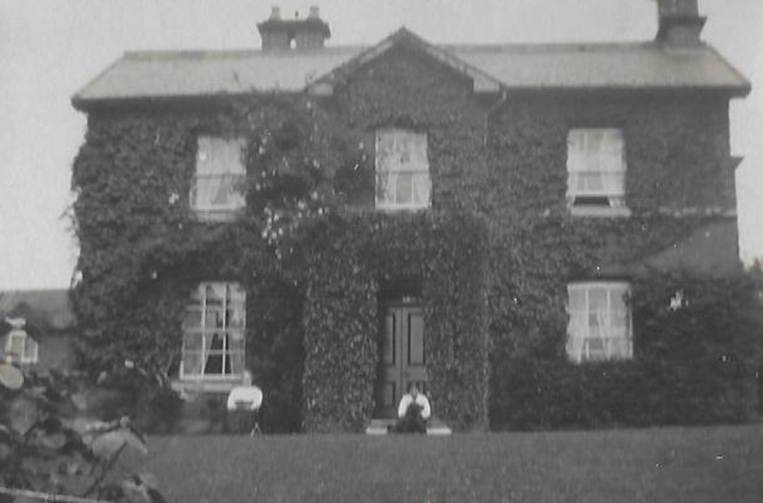
The family lived at
Hillside, Audlem. Thomas Baker (BAK00128),
the third and last of the Baker architects, built a number of country houses in
the area, including Hillside, Green Lane (later the home of Arthur Baker (BAK00155) and his
family) and the Cedars (later the home of the three rather eccentric sisters,
Poppy (BAK00150),
Totty (BAK00157)
and Emily (BAK00158)
and the bachelor Richard Dod Baker (BAK00154).
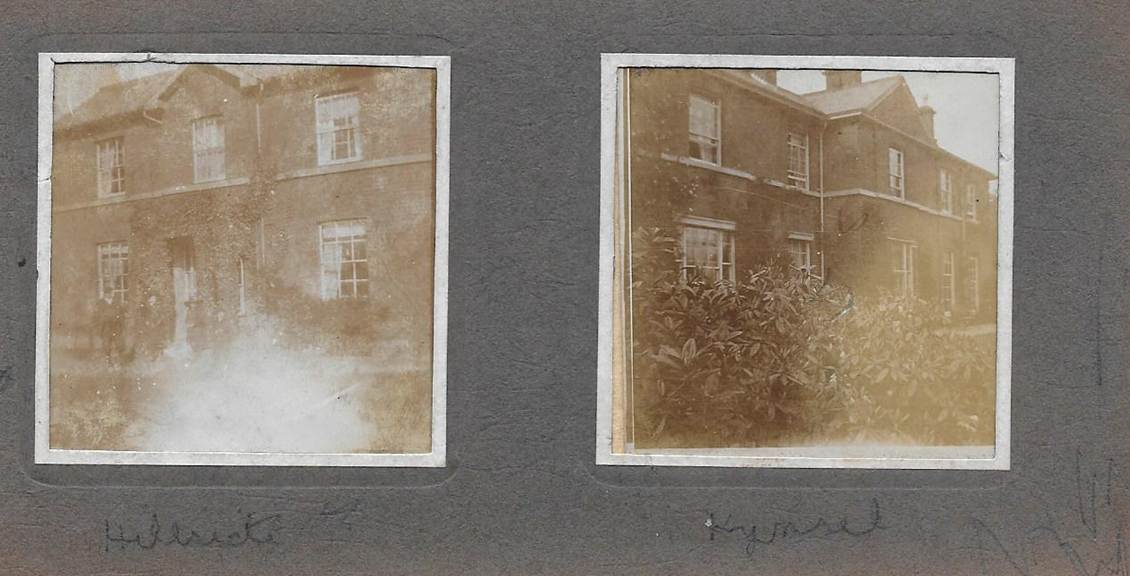
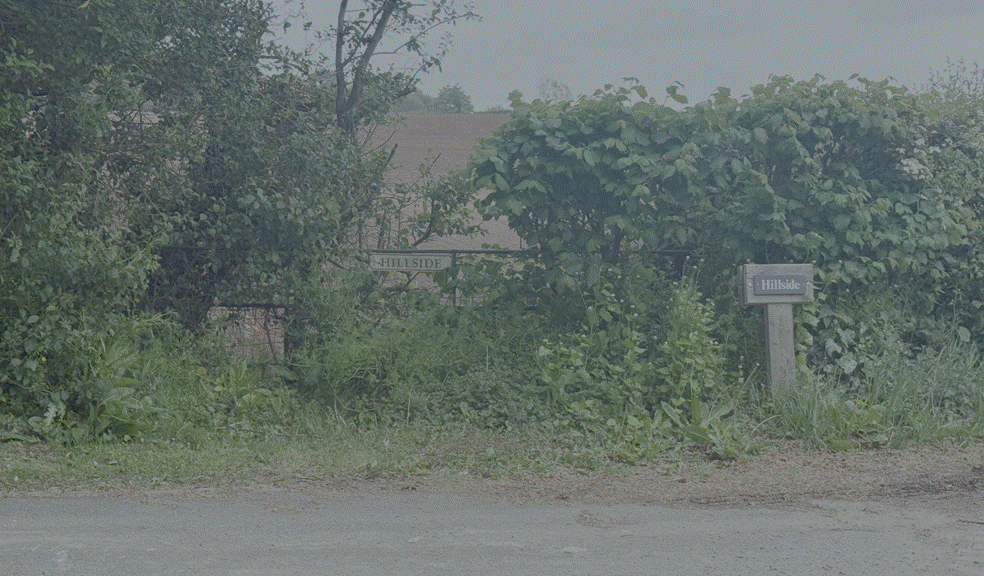
Hillside and Kynsal (from Marianne Baker’s
photo album)
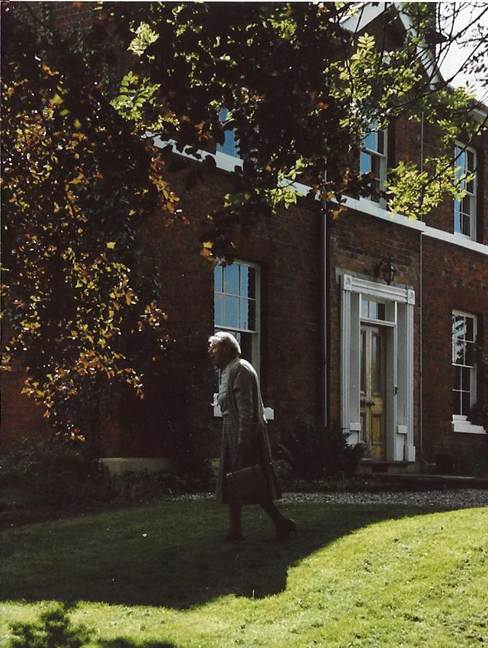
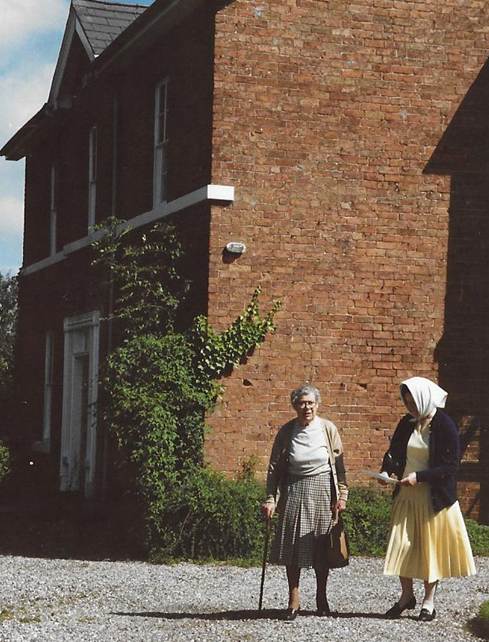
Hillside in about
1990
Properties not
yet identified (from Marianne Baker’s photo album)
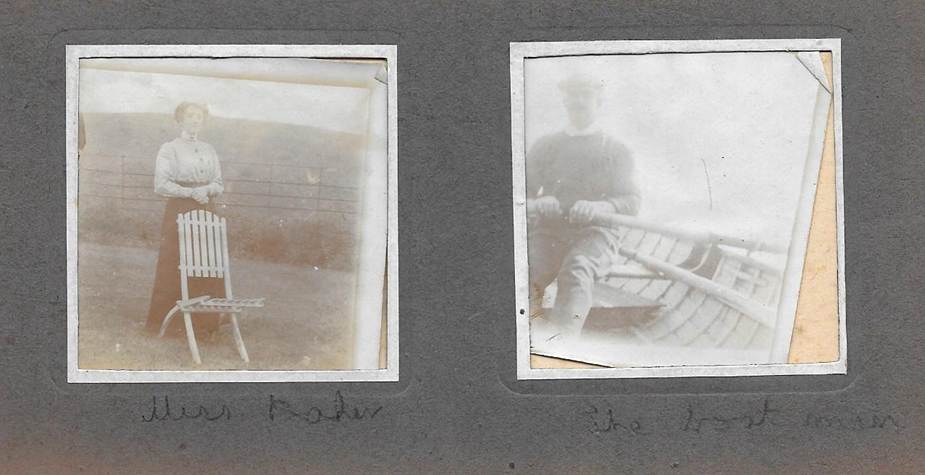
Miss Baker (I’ve
not worked out who this is) and the Boatman (from Marianne Baker’s photo album)
Before the First
World War there was a modest shoot on the Hankelow estate, organised by James
Greaves of the Court and Arthur Baker of Hillside. As head keeper they employed
West Timmis, a member of a family with long Audlem connections and a keen
naturalist. A frequent guest at shooting parties was Dr Stain, the local medic
who, although popular in the district, had a reputation for claiming any game
as his if more than one gun fired. On one occasion Jack, Arthur Baker’s
brother, quietly took a hare that had already been shot and ‘legged’, and set
it up in a realistic position on the far side of the hill. As the guests
breasted the mount the hare appeared. The doctor fired, as did someone else who
was in the know. “My hare, I think”, said the doctor as the animal dropped.
“Great Scott,” said Jack, as he retrieved the corpse. “He’s not only shot it
this time, he’s legged it as well.” (Latham,
Frank (1997), Audlem: The History of a Cheshire Parish and its seventeen
townships, page 111).
1915
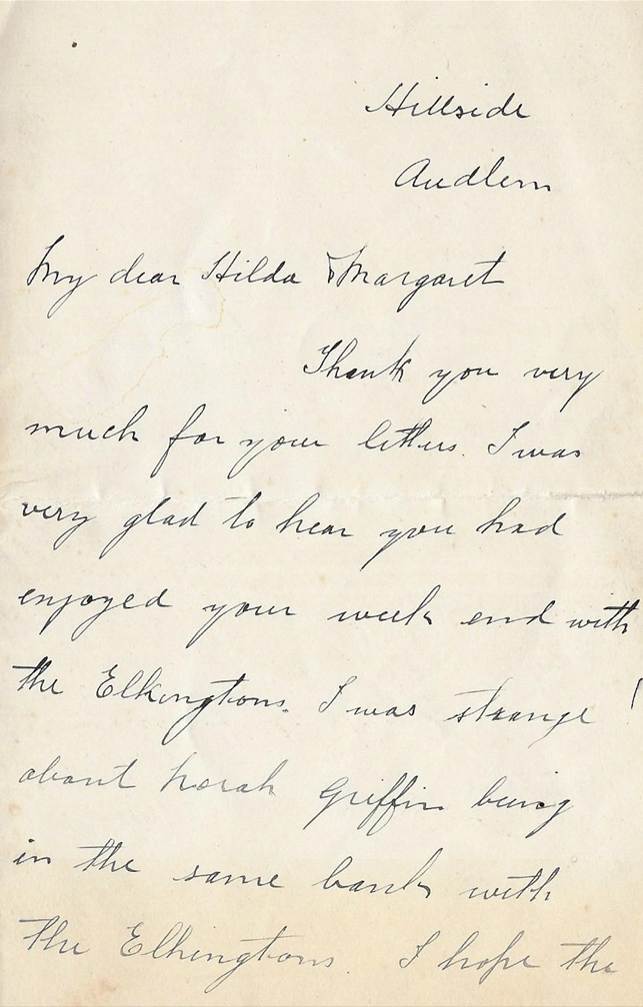
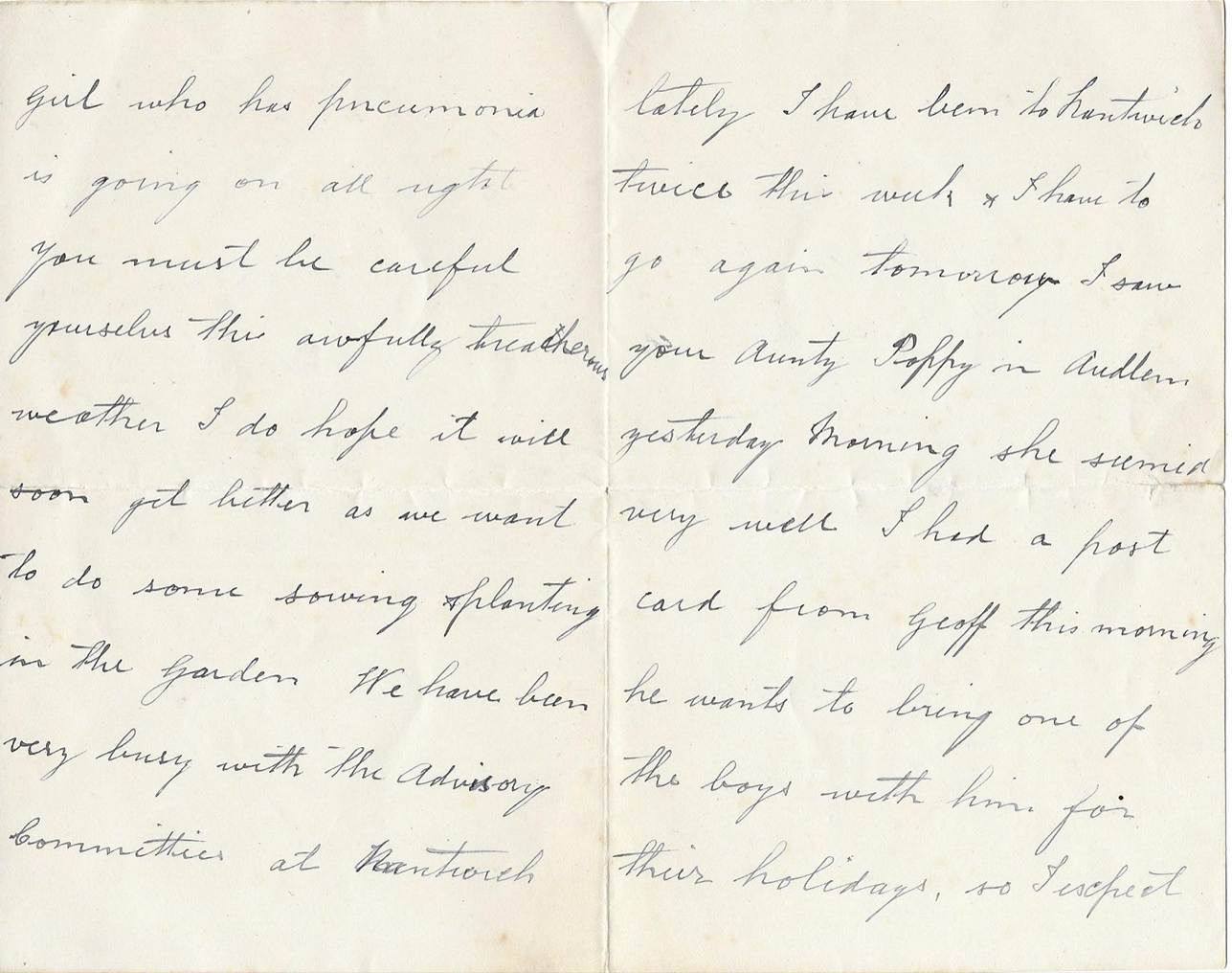
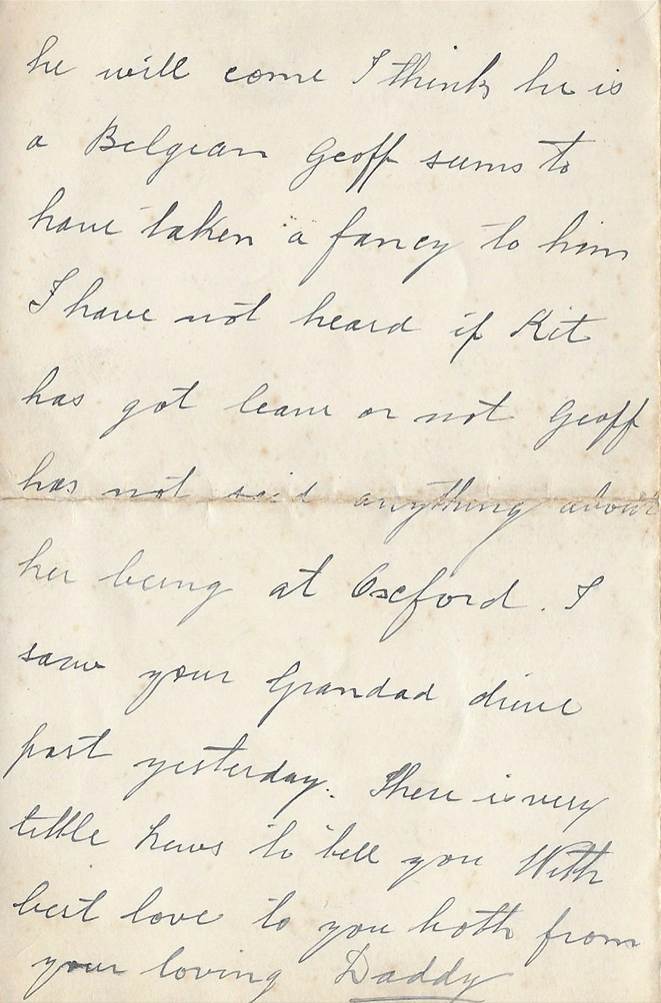
We have a letter from Arthur Baker to his daughters, Hilda and
Margaret in perhaps about 1915:
1916
Arthur Baker died on 29 April
1916. His will was proved on 25 May 1916: Baker Arthur, of Hillside Audlem
Cheshire gentleman died 29 Aril 1916 Probate Chester 25 May to Arthur John Hall
esquire a lieutenant colonel in His Majesty’s Army. Effects £10587 15s 3d (Probate Index).
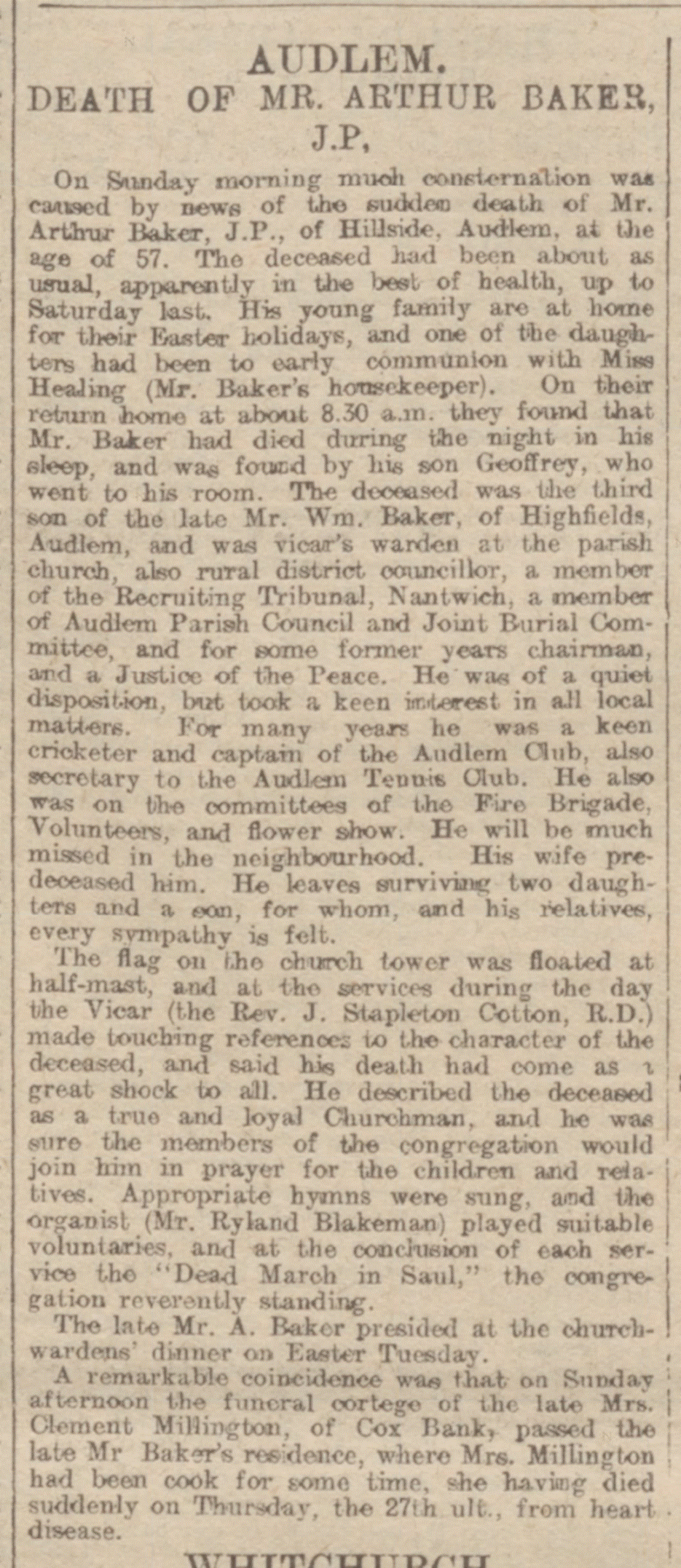
Mr A Baker, JP, Audlem.
Death of a Prominent Churchman and
Public Worker.
Much surprise and very
considerable regret was felt in Audlem on Sunday morning on the sudden death occurring
of Mr Arthur Baker, JP, of Hillside, Audlem, as he had been about as usual
apparently in the best of health on Saturday and presided at the churchwardens dinner on the previous Tuesday. His young
family were at home for the Easter holidays, and one of the daughters had been
to early communion at the church with Miss healing, Mr Baker's housekeeper, and
on their return, about 8:30, they found that Mr Baker had died in his sleep during
the night. The discovery was made by his little son Geoffrey, who had gone into
his room.
The deceased who was 57 years of
age was the third son of the late Mr William Baker, of Highfields, Audlem, and
was vicar’s warden at the parish church, a rural district councillor, a member
of the Audlem parish church, formerly chairman, of the joint burial committee,
a member of the unionist association, a member of the recruiting tribunal, and a
justice of the peace. He was of a quiet disposition but took a keen interest in
all local matters for many years. Mr. Baker was a keen cricketer, was captain
of the Audlem XI, and secretary of the Audlem Tennis Club. He was also on the
committee of the local fire brigade, volunteers and Flower Show. He will be
greatly missed in the district. Mrs Baker predeceased him by about eight years.
Much sympathy is expressed for the
children, two daughters and a son. The flag on the church tower was flown at half
mast, and at the service on Sunday the Rev J Stapleton Cotton, vicar, made
touching reference to the character of the deceased, and said his death had
come as a great shock to all. He described Mr. Baker as a most true and loyal
churchman, and he was sure the members of the congregation would join him in
prayer for his children and relatives. Appropriate hymns were sung, and Mr
Ryland Blakeman, played as voluntaries “O rest in the Lord”, Mendelsohn, “Blessed
are the departed” Spore, “In memoriam”, Lyon, and the Dead March from “Saul”,
Handel, the congregation reverently standing. A coincidence was that on Sunday
afternoon the funeral cortege of Mrs Clement Millington, of Cox bank, Audlem,
passed the late Mr Baker's residence, where Mrs Millington had been cooked for
some time. She had also died suddenly on Thursday morning from heart disease.
The Funeral
The funeral took place on Wednesday
afternoon, the service being choral, and impressively conducted by the Rev J
Stapleton Cotton, RD, vicar. A large number of Audlem
inhabitants and friends of deceased joined the procession to the church, where
the first portion of the burial service was held. The vicar and choir met the
cortege at the lych gates. The church was full, and
as the friends were assembling Mr Ryland Blakeman, organist played “Lift thine
eyes”, Mendelssohn, “Blessed are the Departed”, Spore, and as the funeral procession
entered the building, “So rest in the Lord”, Mendelssohn. The 90th Psalm was
chanted to a single setting by Barnby, and the hymns were “on the resurrection
morning” and “Holy Father, cheer our way.” the Dead March from “Saul,”, Handel
was played in at the conclusion of the service in the church. The procession,
headed by PS Aleman and PC Skilbeck, local volunteers and fire brigade, wended
its way to the cemetery where the last portion of the burial service was held.
The remains were laid to rest in a brick grave, lined with evergreens and
spring flowers, with Mr Baker's late wife.
The body was enclosed in a shell,
the outer coffin being of unpolished oak, with massive brass furniture, and the
inscription on the brass shield was: “Arthur Baker, JP, died April 29th, 1916,
aged 57 years.”
The bearers were messes H
Hocknell, J Yarwood, Jas Furnivall, AP Farrington, J Cliff, W Dale, J Dutton
and W Almond.
Amongst the mourners were the Misses
Hilda and Margaret Baker, daughters, Master Geoffrey Baker, son, Mr and Mrs J B
Baker, brother and sister-in-law, Mr. James Hall, father-in-law, Mrs Lynam,
sister-in-law, Mr Robert Hall, brother-in-law, Mr E R Bellyse and Mr J Etches,
cousins, the Misses Dorothy and Charity Baker, nieces, and Mr. J Hall, nephew.
Amongst others present were Mr Jackson, churchwarden, Mrs Jackson, Miss
Healing, Dr Corbet Stain, Mrs George Baker, Messrs B E Williamson, J Moseley, TL
Kendall, HJ Thomas, H Hocknell, TW Bentley and H Russell, sidesman of the
Audlem parish church, John Nunnerley, T W Nunnerley, C Griffiths, John Wood, W
Smith, W Eric Smith, Thomas Trefler, John Lee, W Austin, B Bourne, James Hill,
Chas Basford, Jos Potts, Fred Shuker, Geo Tindy, H Gibson, E Gibson, G Walker,
TW Middleton, representing Mr CE Speakman, clerk to the justices of the peace,
Geo Lines, H Fisher and others.
A muffled peal was rung on the
bells during the afternoon, and the flag was flown at half
mast on the tower. Blinds were lowered all along the route and
throughout the town beautiful floral tributes were sent by the following: “With
love to daddy, from Hilda, Margaret and Geoffrey”; “from Geoff to my darling
daddy”; James Hall; “Poppy, Totty and Emily”; “Jack and Richmead
and family”; Mr and Mrs C C Lynam; Miss Healing; The
Rev E W and Mrs Powell; Sidesmen at Audlem parish church; “Mira and family”;
Mrs George Baker, Annie and Nelly; Mr and Mrs SB Jackson; Mr and Mrs Greaves; Mr
and Mrs John Nunnerley, Dr and Mrs Stain; Dr and Mrs Loney; Members of the Cox
bank mission church; Mr G Bebington and family “Sissy and Alice”, maids at
hillside; Mrs James Hankey; J Furnivall and G Walker; Mr and Mrs J Potts; and
the Allman family.
(Chester Chronicle and Cheshire and North Wales
General Advertiser, 6 May 1916)