John
Farndale (Johannis de Farnedale, De Johanne
de Farndale)
c 1278 to c 1370
The Medieval
Inhabitants of Farndale
A saddler who was
made a freeman of York
FAR00030
|
Return to the Home Page of the Farndale Family
Website |
The story of one family’s journey through two
thousand years of British History |
The 83 family lines into which the family is divided.
Meet the whole family and how the wider family is related |
Members of the historical family ordered by date of
birth |
Links to other pages with historical research and
related material |
The story of the Bakers of Highfields, the Chapmans,
and other related families |
Dates are in red.
Hyperlinks to other pages are in dark blue.
Headlines are in brown.
References and citations are in turquoise.
Context and local history are in purple.
Geographical locations are in green.
Low Mill, Farndale
1278
John might have been born in about 1278. He was the son of Simon
the Miller of Farndale (FAR00021),
and probably born in
the mill at Low Mill in the heart of Farndale.
Egton
At
about the turn of the fourteenth century, John Farndale, who was almost
certainly on the direct line of the modern Farndale family, left Farndale for the
last time and travelled north to settle first at Egton. As he climbed out of
the dale with his young wife, although he didn’t know it, he took the name of
the dale for his descendants, but the family were never to return.
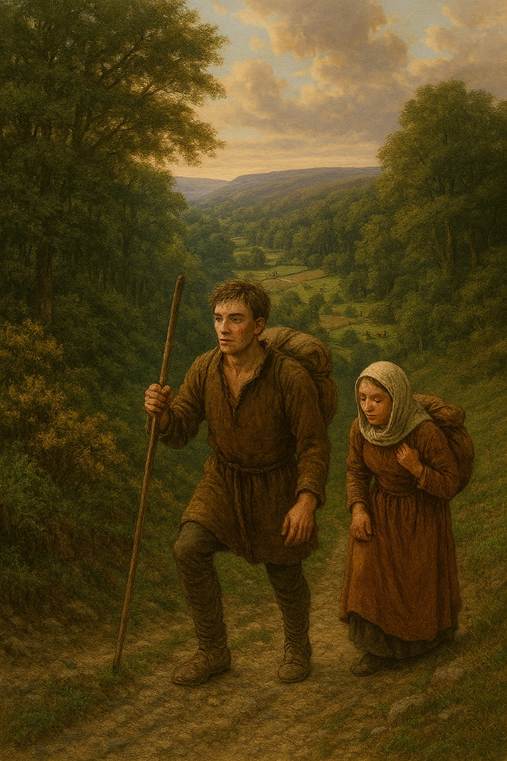
The pioneer left Farndale for Egton
1301
By the time of the 1301 Subsidy, John
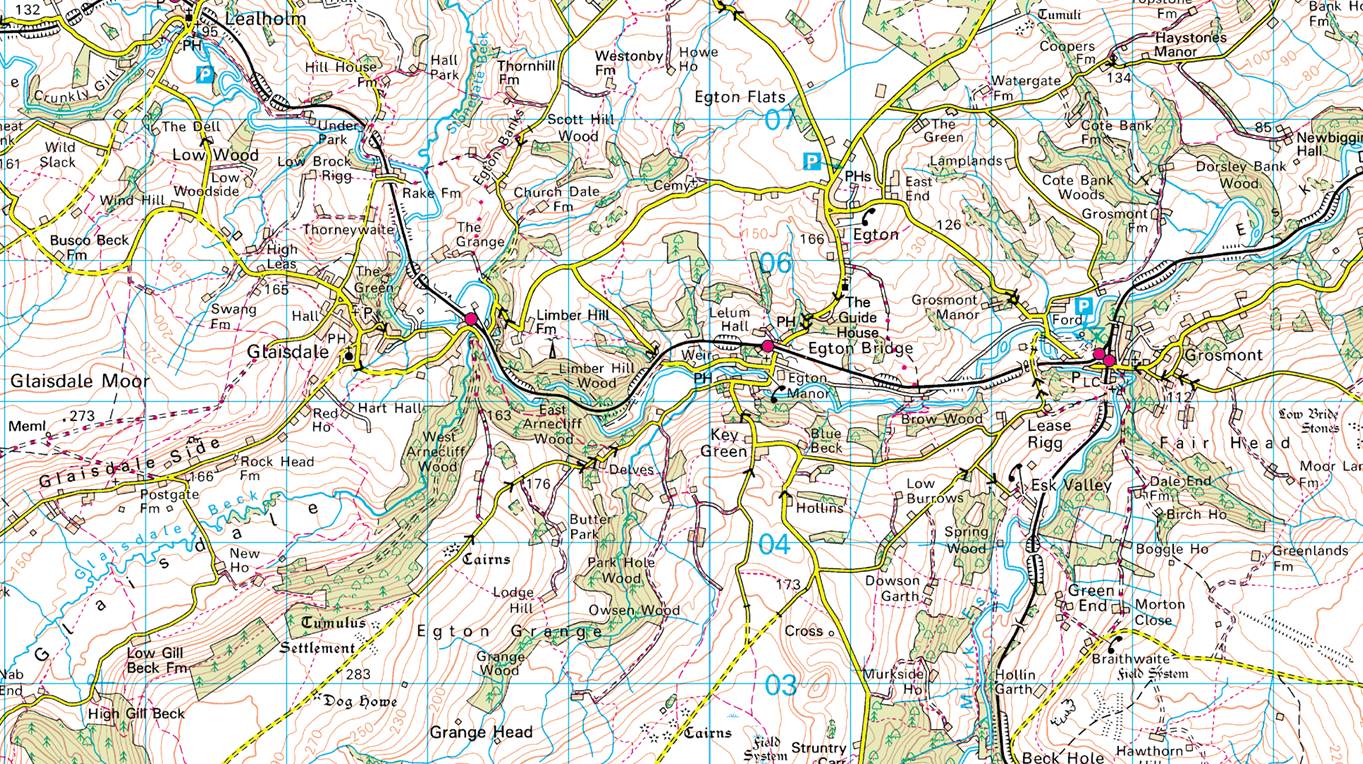
was in Egton, to the north of the North York
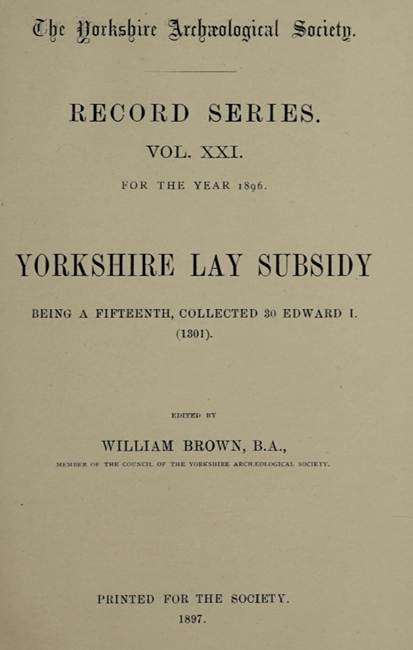
Moors. He paid 22d tax at Eggeton’ cum Lecerigge et Westingby et Cokewalde in the Wapentake of Langburgh,
in the levy known as the Yorkshire Lay Subsidy, to fund Edward I’s Scottish wars (the Subsidy: Wapentake of Langbaurgh,
Yorkshire Lay Subsidy 30 Ed. I (1301). Originally published by Yorkshire Archeological Society, 1897. 'The Subsidy: Wapentake of
Langbaurgh', in Yorkshire Lay Subsidy 30 Ed. I (1301), ed. William Brown 1897),
page 28, also British History Online).
See further details at FAR00029.. The reference is to Egton, Lease Rigg (at Grosmont),
Westonby (north of Egton) and Cucket
Nook. 22d or 1s 10d, was equivalent to perhaps £70 today. The levy was a
fifteenth of wealth, so this suggests John’s overall wealth was in the region
of £1 7s 6d. He paid less tax than many others of his community.
Eggeton cum Lacerigge et Westingby et Cokewalde are Egton, Lees Rigg, Westonby and Cucket Nook all still in the Parish of Egton).
As late as 1410 a villein moving
into Farndale was obliged to return to his place of origin by its manor court.
Freeholders could move, and a lively land market had developed in their
properties. Many were of that broad class, often of knightly descent from which
the knights were drawn. Many a minor manor lord never saw knighthood, while some
freeholders already had taxable wealth comparable with those who did. All
lived on a grain diet, with ale as their drink. Peas and beans made puddings
and pigs were widely kept. Hens and geese occur and nuts were valued. Meat was
scarce, though more was eaten as time passed, but fish was relatively cheap.
The prob!em was to survive
the winter and the all too frequent pestilences. (Life in Ryedale in the 14th century, J H Rushton, Ryedale Historian,
Volume 8, 1976, page 19).
John must have therefore been of
freeholder, not villein status, to have moved from Farndale to Egton, which
might further support the model that his father was the more
wealthy Simon the Miller.
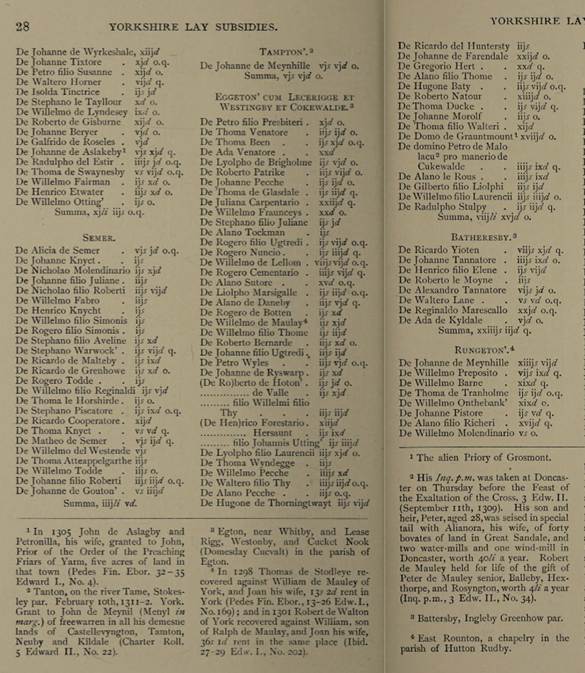

This was the full list of the taxpayers of Egton and the young
John, perhaps in his early twenties, was yet to establish himself.
De Willelmo de Lellom paid 8s 7d
De Willelmo Pecche paid 4s 10d
De domino Retro de Malo lacu
pro maneriode Cukewalde paid 4s 9d
De Alano le Rous paid
4s 9d
De Rogero Cementario paid 4s 7d
De Waltero filio
Thy paid 4s 3d
De Lyolpho filio
Laurencii paid 3s 11d
De Roberto Bernarde paid 3s 10d
De Roberto Patrike paid 3s 7d
De Hugone de Thorningtwayt
paid 3s 7d
De Hugone Baty paid 3s 7d
De Alano de Daneby paid 3s 6d
De Petro Wyles paid 3s 6d
De Willelmo filio
Laurencii paid 3s 4d
De Roberto filio Willelmi filio Thy paid 3s 3d
De Thoma Venatore
paid 3s 2d
De Johanne filio Ugtredi
paid 3s 2d
De Gilberto filio Liolphi
paid 3s 2d
De Thoma Wyndegge paid 3s
De Alano Pecche paid 3s
De Ricardo del Huntersty paid 3s
De Johanne Morolf paid 3s
De Thoma Been paid 2s 11d
De Willelmo de Maulay paid 2s 11d
De Roberto de Hoton
paid 2s 11d
De Roberto de Valle
paid 2s 11d
De Rogero de Botten
paid 2s 10d
De Johanne de Ryswarp paid 2s 10d
De Henrico Hersaunt paid 2s 9d
De Rogero filio Ugtredi paid
2s 7d
De Thoma Ducke paid 2s 7d
De Lyolpho de Brigholme paid 2s 6d
De Rogero Nuncio paid
2s 4d
De Henrico filio Johannis Utting paid 2s
4d
De Thoma de Glasdale paid 2s 3d
De Liolpho Marsigalle paid 2s 3d
De Willelmo filio
Thome paid 2s
3d
De Radulpho Stulpy paid 2s 3d
De Johanne Pecche paid 2s 2d
De Alano filio Thome paid 2s 2d
De Stephano filio Juliane paid 2s 1d
De Alano Tockman paid 2s
De Juliana Carpentario paid 23d
De Johanne de Farendale paid 22d
De Gregorio Hert paid 20d
De Ada Venatore paid 20d
De Willelmo Fraunceys
paid 20d
De Domo de Grauntmoun paid 17d
De Alano Sutore paid 15d
De Roberto Natour paid 14d
De Henrico Forestario paid 13d
De Thoma filio
Walter paid 12d
De Petro filio
Presbiteri paid 11d
Farndale and Pickering Forest
1310
A number of local folk had taken draught beasts into Pickering Forest in the
reign of Edward III in 1310 or 1311, where the draught animals were forbidden
to wander. Some pasturages were reserved for the use of the King where there
was no right in common and here, cattle were agisted
at a fixed price, to be paid to the bailiff. These sums were collected by the
agisters, of whom there were two in each ward, men of substance it seems by
their assessments in the Lay Subsidies.
Not the least of the profits derived from the possession of a
forest was that arising from the agistment of cattle in waste grounds. (The Duchy of
Lancaster Records, from the North Riding Record Society, The Honour and
Forest of Pickering, Edited by Robert Bell Turton, Volume IV, 1897, page
xxvii).
There was a lengthy list of those individuals from Farndale found by the agisters in about
1310 with their cattle in the forests. Thomas Wake, the Lord of Liddell,
whose tenants they were, said the price had already been paid and the tenants
should be discharged of the matter. Amongst those fined were John (FAR00030), son
of Simon of Farndale (FAR00021)
had 3 oxen, worth 12s agisted (North
Riding Records Yorks Volume III, The Honour and Forest of Pickering, 1894, Edited
Robert Bell Turton, page 61, The Great Cowcher of the Duchy of Lancaster,
The National Archives, DL42/1 Folio 273, 273v, DL 42/1/23/U64 folios 273 to 274v).
Perhaps John was back in Farndale, pasturing
the family oxen, either temporarily or permanently.
Hartoft in Rosedale, near Cropton
1314
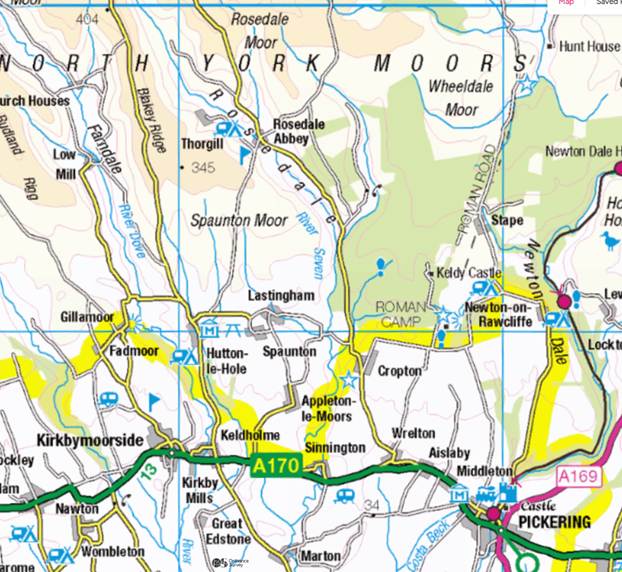
By 1314, John de Farndale (FAR00030) was a sub tenant of Thomas Wake in
1314, who in turn held the land of the King in Rosedale, the dale adjacent to
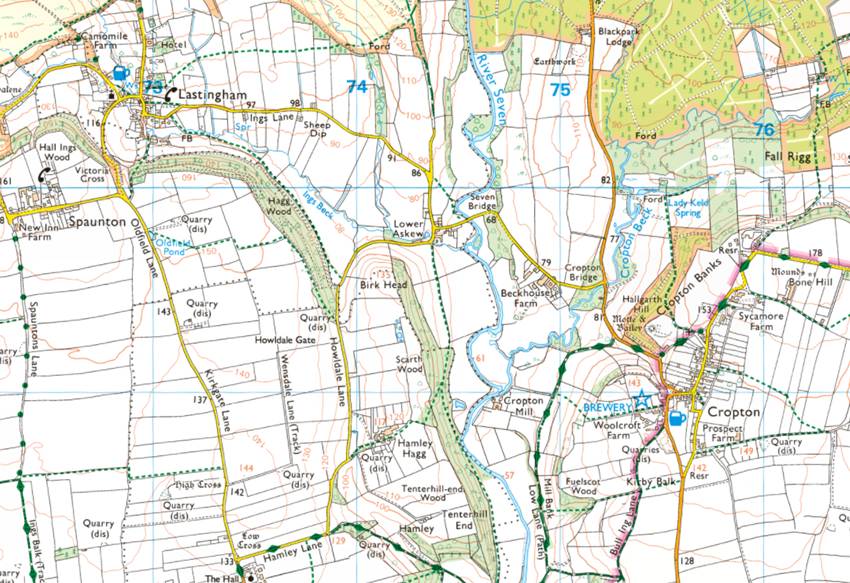
Farndale. John held 6 acres of land near the vill of Cropton.
He grew 5 acres with oats, which had been grown every year between about 1314
and 1334 and 1 acre was wasteland. It is not clear for how long John Farndale
continued to sub lease the land from Thomas Wake and whether he still held it
in 1334 (The Great Cowcher of the Duchy of
Lancaster, The National Archives, DL42/1 Folio 248).
Cropton is at the head of Rosedale, but from
later records, it is apparent that John’s land may have been at Hartoft, near
Rosedale Abbey today, or near the vill of Cropton.
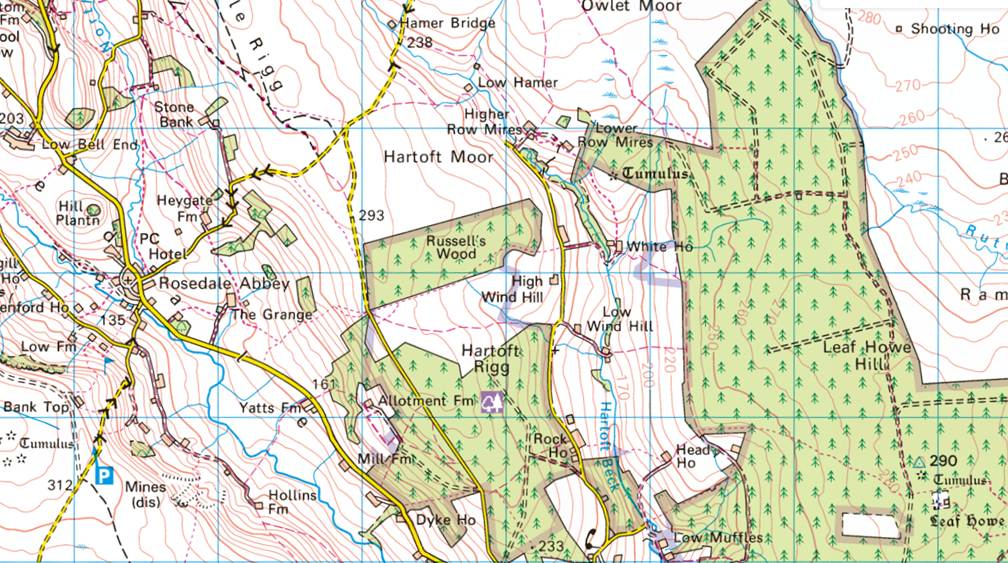
The isolated valley of Hartoft has a very different feel to most
other dales in the North York Moors. Most of the area's valleys resemble the
flat bottomed, steep sided dales of the central moors (of which nearby Rosedale
is a Upper Hartoftgood
example). In contrast Hartoft has gentle slopes with the steepest sections
close to the beck. This sort of valley is not uncommon on the moors, but most
are either heather-clad or shrouded in timber. In contrast Hartoft is a
pastoral valley, split into slices by stone walls. The valley probably never contained many more houses than at
present. It had a population of 168 in 1848, and the 1914 ordnance survey shows
roughly the same twenty houses at today. The name is probably most familiar to
visitors because of the pub at Hartoft End, on the main road into Rosedale.
John wasn’t of course listed in the taxable
tenants of Rosedale in 1301 (De Johanne filio Galfridi
is an unlikely fit), as we know he was in Egton then, so presumably John de
Farndale moved from Farndale to Egton, then, perhaps via Farndale again, to
Rosedale before 1314.
In the County of Yorkshire, Pleas of the forest of Henry, Earl of
Lancaster, of Pikeryng
[Pickering], were held at Pickering before Richard de Wylughby (Willoughby),
Robert de Hungerford and John de Hambury, justices
itinerant on this occasion assigned to take pleas of the said forest in
Yorkshire. The record
of 1334 suggested that twenty years before, in about 1314, John de Farndale had
an interest in six acres of land at the vill of
Cropton in Rosedale, of which five acres grew oats and the sixth acre was
wasteland. This is almost certainly a reference to Cropton at the entrance to
Rosedale a short distance from Lastingham (The National Archive, DL
42/1/23/U44, 25 January 1334 to 24 January 1335, Folios: 248 to 249v).
Adam
del Tunge: Adam made one close in Haretoft [Hartoft] outside
the lordship in the fee of Thomas Wake, and it contains in itself three acres
of land, and it pertains to the vill of Cropton,
whereof he enclosed two acres 22 years ago, and the other was enclosed two
years ago, and does not and did not grow crops, but two acres are mown 10
times, the price of a crop of each acre 10d a year, and for the time when they
are not mown each acre is worth 4d a year, and the third acre is worth 4d a year.
Sum total 25s 4d. for which William Lambe, who is now
the tenant, will answer, and the land is to be taken into the hands, etc, and
William is in mercy, etc.
John
de Farndale: Twenty years ago, John made a certain close in Roscedale
[Rosedale] in the fee of Thomas Wake, and contains in itself six acres of land,
and it pertains to the vill of Cropton, whereof 5
acres grow crops of oats 20 times, the price of each acre 12d a year, and the sixth
acre is waste and worth 4d a year. Sum total £5 6s 8d.
For which Thomas Wake and Roger del Wyrkheued, now
the tenants of the same, will answer, and the land is to be taken into the
hands, etc, and Thomas and Roger are in mercy, etc.
William
Stacy of Haretoft [Hartoft]: Sixteen years ago, William made a certain close in
Haretoft [Hartoft] outside the lordship in the fee of Thomas Wake, and it
contains in itself four acres of land, and it pertains to the vill of Cropton, and they do not and did not grow crops,
but three acres thereof are mown seven times, the price of a crop of each acre
10d a year, and the fourth acre and similarly the three acres at the time, when
they are not mown, are worth each acre 4d a year. Sum total
31s 6d. For which William Erwart, who is now the tenant, will answer and th land is to be taken into the hands, etc, and William is
in mercy, etc.
Alan
Erwart: Twenty years ago, Alan made a certain close in Haretoft [Hartoft] outside
the lordship in the fee of Thomas Wake, and it contains in itself one acre of
land, and it pertains to the vill of Cropton, and
grows summer crops eight times, the price [of each] 12d a year, and at the time
when it is does not grow crops it is worth 4d. Sum total 12s 6d. For which
Alan, who is now the tenant of the same, will answer, and the land is to be
taken into the hands, etc, and Alan is in mercy, etc.
John
son of Elias: Fifteen years ago, John made a certain close in Haretoft [Hartoft]
outside the lordship in the fee of Thomas Wake, and it contains in itself two
acres of land, and it pertains to the vill of
Cropton, and it does not and did not grow crops, but three roods thereof are
mown ten times, the price of a crop 7d a year, and 5 roods, the rest, and
similarly those three at the time, when they are not mown, are worth each acre
2d a year. Sum total 13s 1d. For which John de Clif,
who is now the tenant of the same, will answer, and the third is to be taken
into the hands, etc, and John is in mercy, etc.
Henry
del Tunge: Twenty-two years ago, Henry made a certain
close at Haretoft [Hartoft], and it contains in itself one acre and a half of
land, whereof one rood grows crops of oats 14 times, worth 6d a year, and one
acre of the rest is mown 12 times, the price of a crop 12d a year, and at the
time when they do not grow crops or are mown an acre is worth 4d a year. Sum total 24s 10d. For which Henry, now the tenant of the
same, will answer, and the land is to be taken into the hands, etc, and Henry
is in mercy, etc.
Henry
del Tunge: Ten years ago, Henry made a certain close
at Haretoft [Hartoft] outside the lordship in the fee of Thomas Wake, and it
contains in itself four acres of land, and it pertains to the vill of Cropton, and does not and did not grow crops, but
one acre thereof is mown five times, the price of a crop of an acre 12d a year,
and the other three acres and, similarly, that acre at the time when they are
not mown each acre is worth 4d a year. Sum total 16s
6d. For which Henry, now tenant of the same, will answer, and the land is to be
taken into the hands of the lord, etc. and Henry is in mercy, etc.
John
Stirkhirde: Twenty-two years ago, John made a certain close at Haretoft
[Hartoft] outside the lordship in the fee of Thomas Wake, and it contains in
itself two acres of land, and it pertains to the vill
of Cropton, and does not grow crops, but one acre thereof is mown 8 times, the
price of a crop 10d a year, and another acre and similarly that acre at the
time when they are not mown each acre is worth 4d a year. Sum
total 18s. For which John, now the tenant, will answer, and the land is
taken in the hands, etc, and John is in mercy, etc.
John
Stirkhird: Ten years ago, John made a certain close at Haretoft [Hartoft]
outside the lordship in the fee of Thomas Wake, and it contains in itself one rood and it pertains to the vill of Cropton, and does not grow crops, but is worth 1d a
year. Sum total 10d. For which John, now tenant, will
answer and the land is to be taken into the hands, etc, and John is in mercy,
etc.
John
Forester: Twenty-two years ago, John made a certain close at Haretoft [Hartoft]
outside the lordship in the fee of Thomas Wake, and it contains in itself two
acres of land, and it pertains to the vill of Cropton,
and does not grow crops, but half an acre thereof is mown seven times, the
price of a crop 5d a year, and the other acre and a half and, similarly, that
half acre at the time when they are not mown each acre is worth 6d a year. Sum total 16s 5d. For which Thomas, now the tenant, will
answer, and the land is taken into the hands, etc. And Thomas is in mercy, etc.
Peter
Gervaus: Twenty-two years ago, Peter made a certain close at Haretoft [Hartoft]
outside the lordship in the fee of Thomas Wake, and it contains in itself half
an acre, and it pertains to the vill of Cropton, and
does not grow crops, but is mown 7 times, the price of a crop 5d a year, and at
the time when it is not mown it is worth 2d a year. Sum total
5s 5d. For which Peter, now the tenant of the same, will answer, and the land
is to be taken into the hands of the lord, etc, and Peter is in mercy, etc.
Held
on: Monday next after Michaelmas 8 Edw III
John
de Farndale, signed a surety 23 Feb 1325 (Patent Rolls).
1327
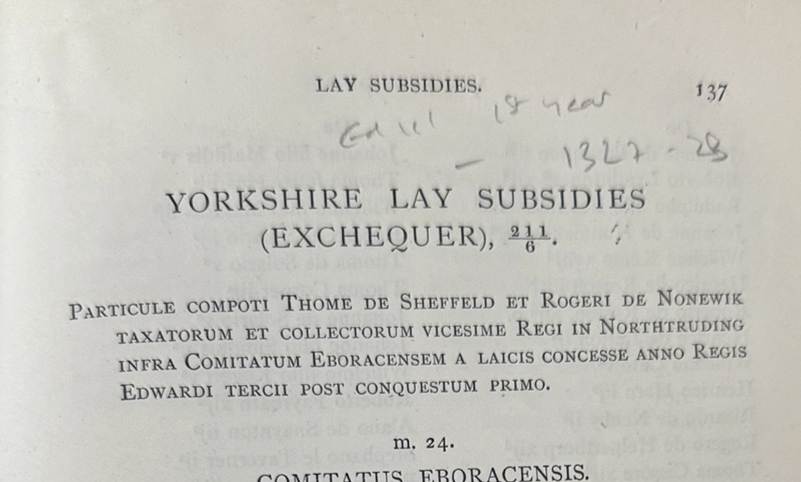
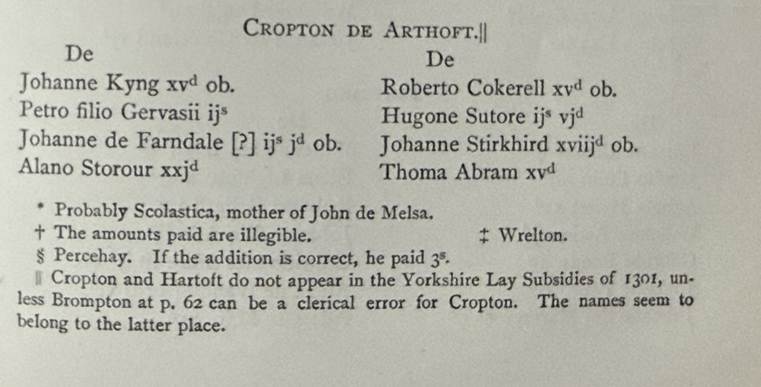
Johanne
de Farndale, paid taxes at Cropton de Arthoft of 2s 1d in the Lay Subsidy of 1327 (The Duchy of Lancaster Records, from the North Riding
Record Society, The Honour and Forest of Pickering, Edited by Robert
Bell Turton, Volume IV, 1897, page 143).
.
The 1327 Lay Subsidy
In late 1326 a popular rebellion
led by Roger Mortimer, 1st Earl of March resulted in King Edward II being deposed
and imprisoned. The King’s closest supporter Hugh le Despenser the elder, who
was lord of the manor of Fairford at that time, was captured and executed. The
King’s son was crowned as Edward III on 25 January 1327 and his father died,
probably murdered, while imprisoned in Berkeley Castle in September of that
year. However, as the new king was only 14 years of age at that time England
was in effect ruled by Mortimer and his lover Queen Isabella, Edward III’s
mother. One of the earliest pieces of legislation of the new reign was passed
in September to order a Lay Subsidy, a nationwide tax of the laity intended to
raise money to renew hostilities against Scotland which Edward II had pursued
unsuccessfully for some years.
The Lay Subsidy of 1327 was a
flat rate tax of one twentieth of the value of each person’s moveable goods,
hence the tax is also known as the Twentieth. The majority of
moveable goods were cattle, sheep and crops and therefore the tax fell harder
on the rural population than it did on those in the major towns. Two prominent
local men in each county were appointed as Chief Taxers, those for
Gloucestershire being Sir William Tracy and Robert de Aston. They then
appointed other local men, known as Subtaxers, to
conduct the assessment and collect the money from people. Those who were taxed
included everyone from the lord of the manor down to his peasant tenants (both
freemen and serfs), traders and craftsmen as long as
they had moveable possessions worth at least 10 shillings. The list of names,
the Roll, was drawn up and sent to the Exchequer in Westminster for approval.
The assessment took some time to complete and it was
not until between February and June of 1328 that the money was actually collected.
John
de Farndale, witnessed a Deed 27 Jun 1327 (Yorkshire Deeds).
1330
His
eldest son may have been William Farndale (FAR00038), who later became the vicar of Doncaster,
perhaps born in about 1330.
1332
Nicholas
de Farndale (FAR00038A) may
also have been his son, born in about 1332 and who later also lived in
Doncaster where he paid the 1377 Poll Tax which led to the Peasants’ Revolt.
1333
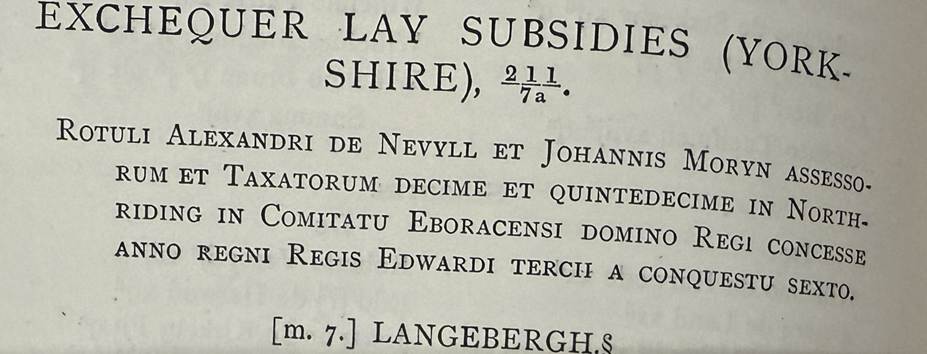
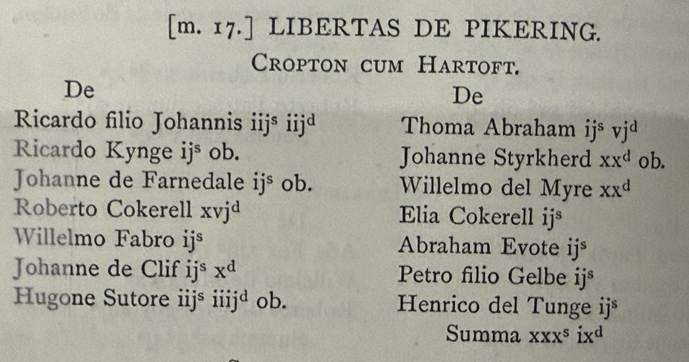
Johanne
de Farndale, paid taxes of 2s at Cropton cum Hartoft in the 1333 Lay Subsidy
(The Duchy of Lancaster Records, from the North
Riding Record Society, The Honour and Forest of Pickering, Edited by
Robert Bell Turton, Volume IV, 1897, page 154).
1334
Johannes de Farndall (FAR00035),
his son, was born in about 1334. He later became a freeman of York through the
patrimony of his father’s freemanship.
Hovingham
1336
John de Farndale of Hovingham in the Wapentake of Ryedale was a debtor
to Thomas de Wrelton, a chaplain of Yorkshire in the sum of £8 and the
transaction was recorded by Henry de Belton, Mayor of York and William Gra, Clerk taken on 16 April
1336. The first term of the loan was to last until 19 May 1336. The writ was
sent by Nicholas Fouke, Mayor of York; and John de Arnold, Clerk, with
endorsement by Ebor' Coram Justic' de Banco. (The
National Archives C 241/115/94).
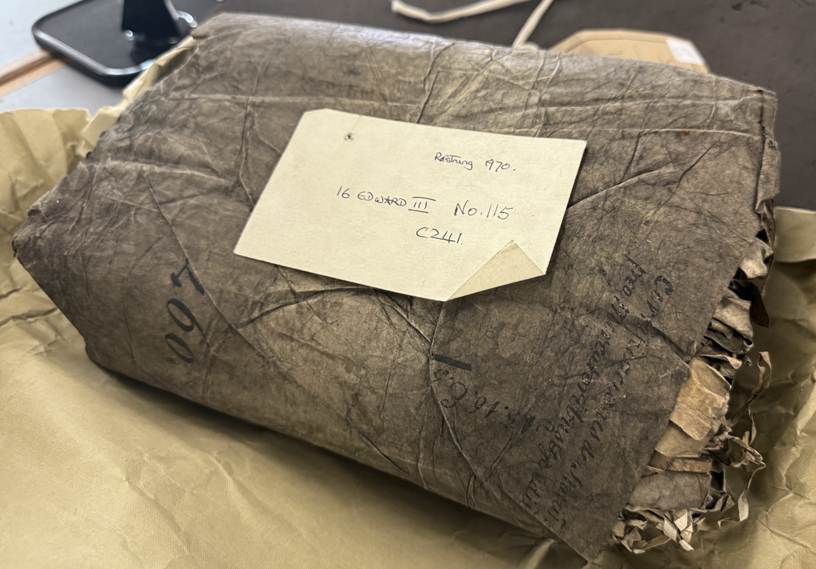
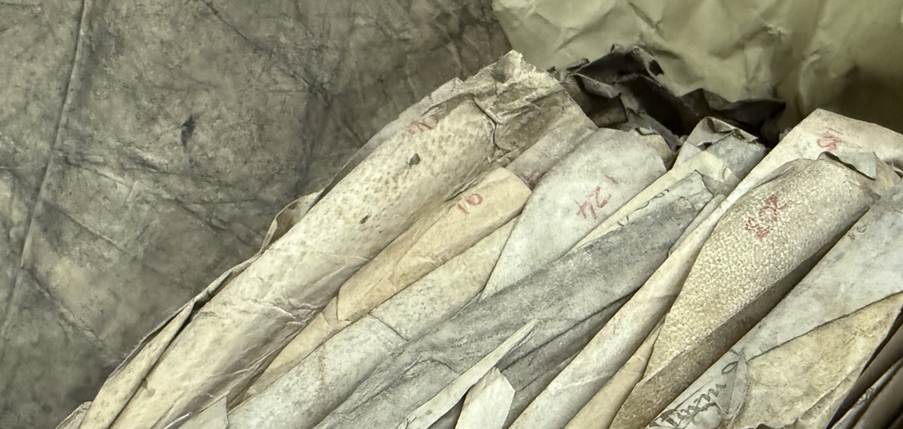
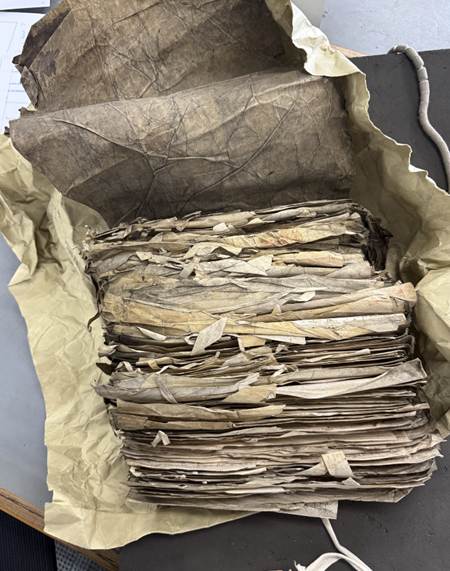
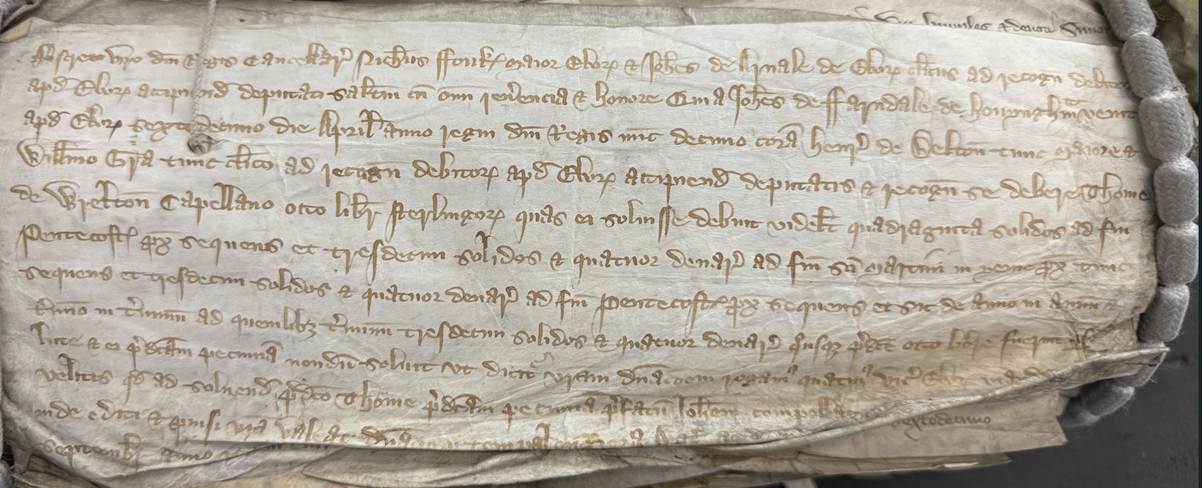
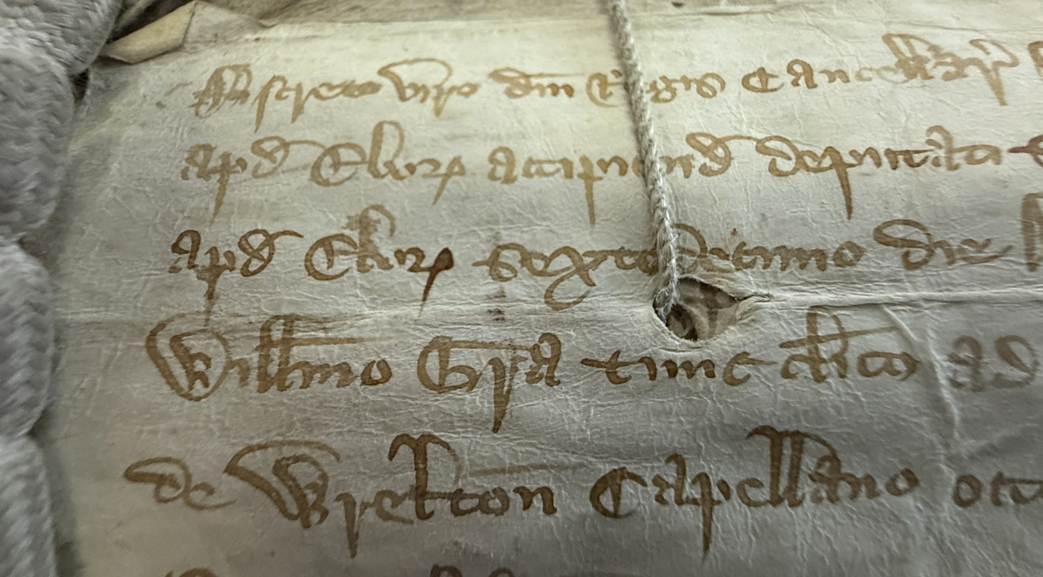
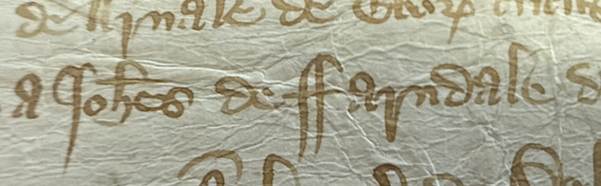
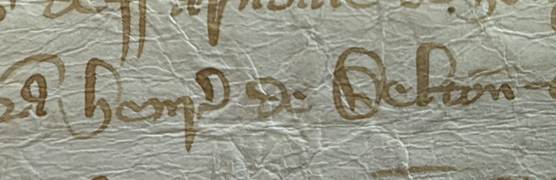
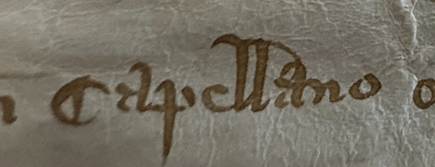
Debtor: John de Farndale of Hovingham (Ryedale Wapentake, North
Riding of Yorkshire); Creditor: Thomas de Wrelton, chaplain (of Yorkshire);
Amount: £8 taken on 16 April 1336 before Henry de Belton, Mayor of York;
William Gra, Clerk. The first term from 19 May 1336 (National
Archives Reference: 241/115/94, in Latin)
York
1338
John de
Farndale, signed a surety 23 Aug 1338 (Lay Subsidy).
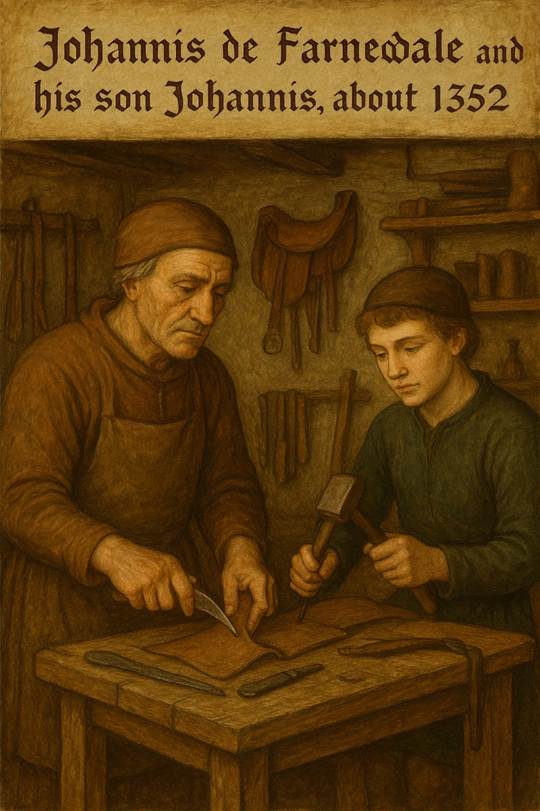
Perhaps by about 1338, having taken a loan when living at Hovingham,
Johannis set up a business as a saddler in York.
1363
At some point after this, John became
a saddler in York. In 1363, after he had presumably established himself in that trade,
since he became a freeman of the City of York.
|
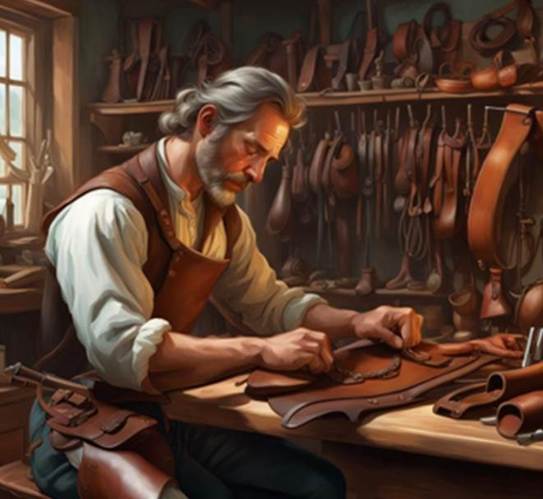
How to make a
medieval saddle. |
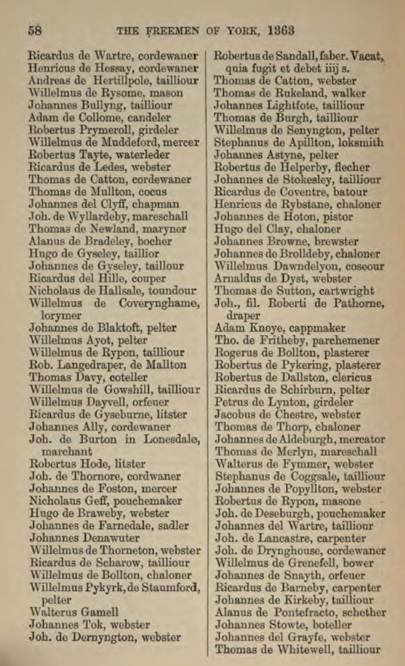
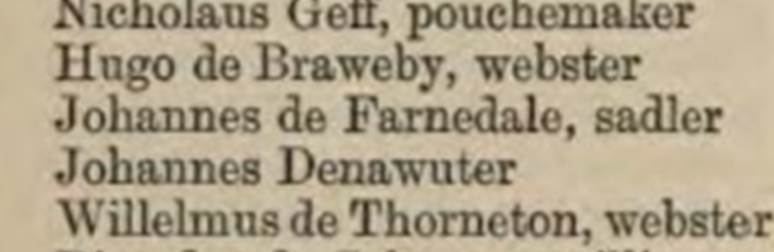
Johannis de Farnedale, a saddler, was made a Freeman of York in
1363 (Roll of Freemen,
York).
There were
two types of medieval guilds. Trade guilds regulated the activities of a
particular trade or craft, while religious guilds were for the spiritual
benefit of their members. In York the weavers were first recorded trade guild
in 1163, paying the King £10 a year for the privilege. By 1180 glovers, saddlers and hosiers had
grouped together, and butchers, drapers and vintners had their own guilds at the
end of the 13th century.
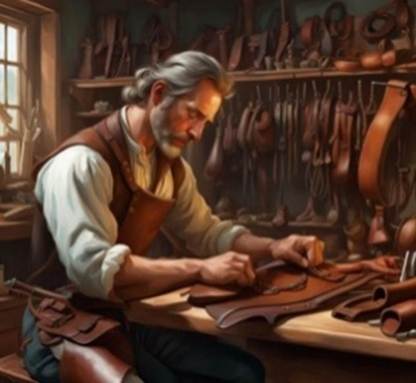
Medieval
saddles, built from leather thick and resistant, were often richly decorated
and designed to offer comfort and safety to riders. Saddlery craftsmen in the Middle Ages
used specific methods to manufacture saddles and saddlery accessories. Making
leather required skills such as precise cutting of pieces, strong stitching
with linen or silk threads, and the use of specialized tools such as awls,
punches and dies to embellish the leather. Knights attached great importance to their saddles
(equestrian leather) and equipment, often regarding them as valuable objects
handed down from generation to generation.
His son was Johannes de
Farndall, who also became a freeman of York.
Johannes de Farnedale, 1363, Saddler, Admission Register of
Freemen of the City of York
Johannes de Farnedale, sadler.
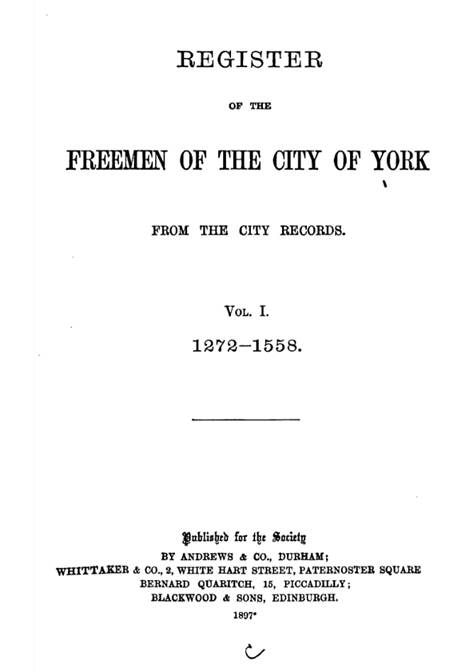
https://archive.org/details/registerfreemen01collgoog/page/n82/mode/2up
A considerable hide and
skin trade centred on York but rural tanners were at Oswaldkirk-Ampleforth, Helmsley, Rievaulx, Bilsdale and
Keldholme. Tanners enrolling as York freemen in King Edward II's time included
Richard of Rievaulx, Hugh of Oswaldkirk and Robert of
Ampleforth. Leather was used to make clothes, pitchers, gloves and saddlery. A
lorimer made bridles at Helmsley and shoe-making was
an early rural craft.
(Life in Ryedale in
the 14th century, J H Rushton, Ryedale Historian, Volume 8,
1976, page 19).
It appears that he was
later a tailor.

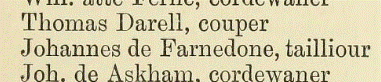
(Surtees
Society. 1897. Register of the Freemen of the City of York, Volume
1, 1272 to 1558 pages 58,
59).
1365
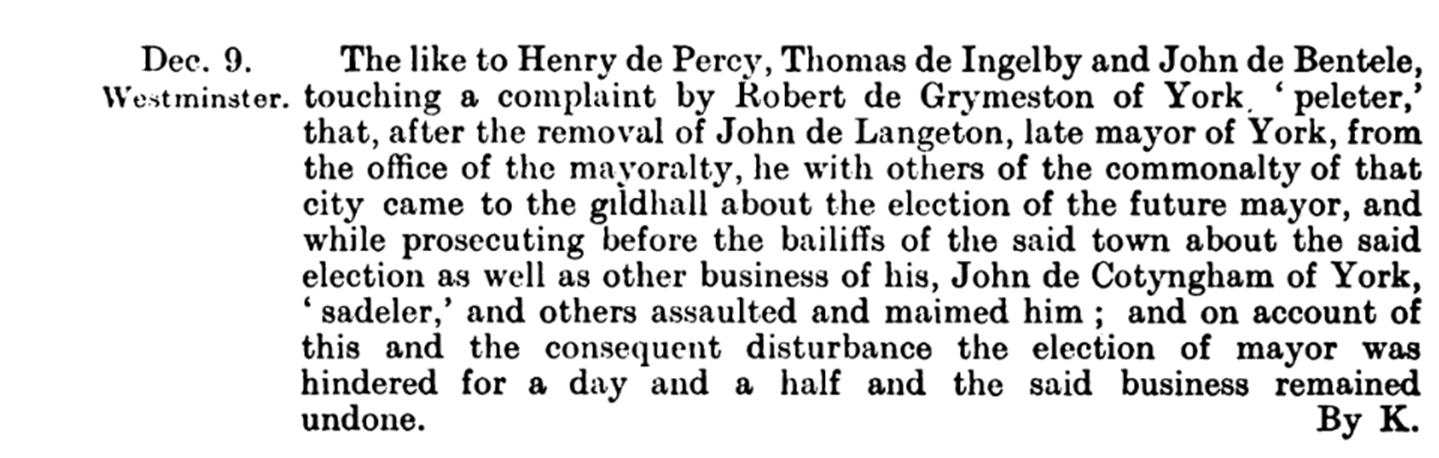
In 1365 a fellow
saddler of York, John de Cotyngham and others, was accused of assaulting a peleter (fur merchant) at the Guildhall on the occasion of the election of the future mayor (Patent Rolls of
the reign of Edward III, 1364 to 1367, page 208).
This could have been John, though Cottingham is on the outskirts of modern
Hull. Could John have been involved?
There
was a John de Farndale whose will was proved at York on 27 September 1372 (Register York Wills, this needs more
research). If this was John, he would have been in his nineties.
1389
There was a John
de Bulmer, saddler of York, pardoned for murder in 1389.

(Patent Rolls of the reign of Richard II,
1388 to 1392, page 41)
|
How does De Johanne de Farndale relate
to the modern family? It is not possible to be accurate about the early family tree,
before the recording of births, marriages and deaths in parish records, but we
do have a lot of medieval material including important clues on relationships
between individuals. The matrix of the family before about 1550 is the most
probable model based on the available evidence. If it is accurate, De Johanne de Farndale, was
related to the thirteenth century ancestors of the modern Farndale family,
and it seems likely that his descendants were the York Line and the individuals
who settled in Doncaster from whom the modern Farndales
probably descend. |