Stokesley
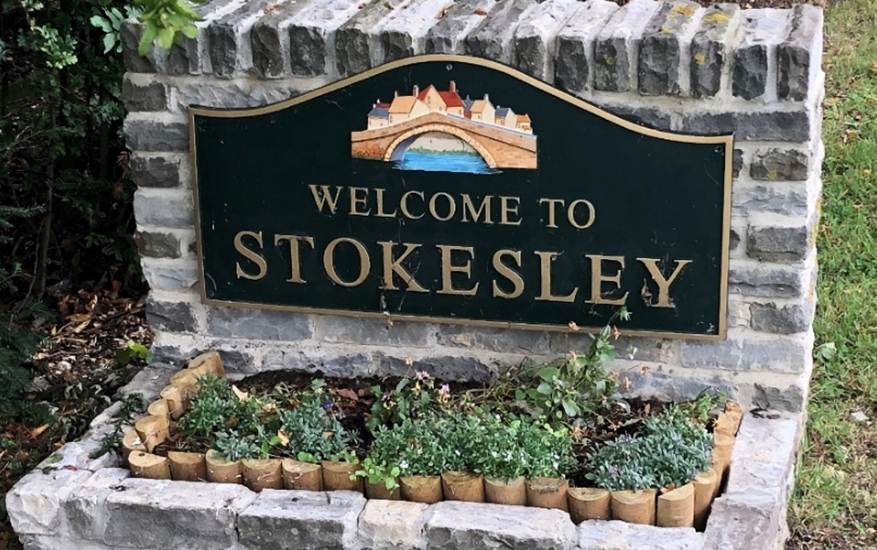
Historical and geographical information
|
Return to the Home Page of the Farndale Family
Website |
The story of one family’s journey through two
thousand years of British History |
The 83 family lines into which the family is divided.
Meet the whole family and how the wider family is related |
Members of the historical family ordered by date of
birth |
Links to other pages with historical research and
related material |
The story of the Bakers of Highfields, the Chapmans,
and other related families |


Dates are in red.
Hyperlinks to
other pages are in dark
blue.
Headlines are in brown.
References and
citations are in turquoise.
Contextual
history is in purple.
This webpage
about the Stokesley has the
following section headings:
·
Farndale
family history and Stokesley
· Stokesley,
overview
· Timeline of
Stokesley history
· Bibliography
The Farndales of Stokesley:
The following
Farndales were associated with Stokesley: Henry Farndale (FAR00229);
William Farndale (FAR00283);
Richard Farndale (FAR00288);
William Farndale (FAR00309);
Jane Farndale (FAR00322);
Anne Farndale (FAR00331);
Jane Farndale (FAR00332);
Mary Elizabeth Farndale (FAR00436);
Annie Paver Farndale (FAR00519);
Margaret Ann Farndale (FAR00541);
Emily Farndale (FAR00547);
Mary Farndale (FAR00558);
William Henry Farndale (FAR00563);
Eva Elizabeth Farndale (FAR00569);
John Joseph Farndale (FAR00581);
William Barnes Farndale (FAR00621);
William Farndale (FAR00639);
Thomas Farndale (FAR00641);
William Farndale (FAR00651);
Lily Farndale (FAR00718);
William Farndale (FAR00744);
and Hilda Farndale (FAR00756).
Stokesley
Stokesley is
a small market town and civil parish in
the Hambleton district of North
Yorkshire. Historically part of the North Riding of Yorkshire,
it lies on the River Leven.
Stokesley is
located
between Middlesbrough, Guisborough and Northallerton, in a
farming area. Stokesley is located about two miles south of the boundary of the
borough of Middlesbrough and ten miles south of Middlesbrough town
centre.

Stokesley Timeline
1086
In the 11th
century Stokesley was a 'manor' of considerable importance, with soke in Skutterskelfe, Thoralby, Ingleby
Greenhow, Little Broughton, Tanton, Kirkby, Dromonby
and Great and Little Busby. Hawart had held the manor
and 6 carucates before the Conquest; in 1086 the tenant was Uctred, the king's
thegn.
The Domesday Book
recorded "a church and priest" in Stokesley.
The Mill Wheel is
thought to be sited at the place where a mill was recorded in the Domesday
Book.
1223
Stokesley was
first granted a charter to hold fairs in 1223 by Henry III.
Seventeenth
century
The Pack Horse
Bridge, crossing the River Leven from the riverside walk, dates from the 17th
century. Renowned for its large range of building types, the latter
construction within Stokesley of sundry fine Georgian architecture is
thought to have contributed much to its later character.
1777
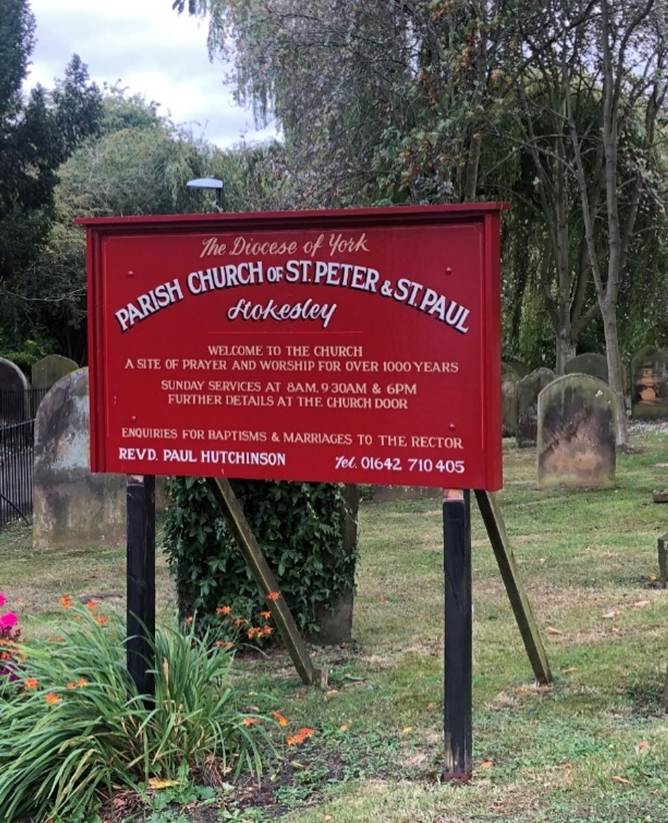
The present
Church of St Peter and St Paul, the oldest building in the town, has a later
medieval tower and chancel, with a Georgian nave built around 1777. It has
colourful twentieth-century stained glass and some woodwork carved by the Mouseman of Kilburn.
The
Victoria
County History – Yorkshire, A History of the County of York North Riding:
Volume 2 Parishes: Stokesley, 1923: The church of St
Peter stands at the east end of the town, and consists of chancel 22 ft. 6 in.
by 15 ft. with south vestry, aisleless nave 62 ft. by 45 ft. and west tower 11
ft. square, all these measurements being internal. There is also a porch on the
north side of the tower in the angle formed by the nave. The only ancient work
remaining is in the chancel and tower, which are apparently of 15th-century
date, the nave having been rebuilt in 1771 in the plain classic style of the
time with tall roundheaded windows on each side and
walls of ashlar, with quoins at the angles, terminating in a cornice and
straight parapet. The building was restored in 1875.

The Black Swan, Stokesley
1823
The Victoria
County History – Yorkshire, A History of the County of York North Riding:
Volume 2 Parishes: Stokesley, 1923: In the early 19th century an unsuccessful
attempt was made to introduce the linen industry into Stokesley; a large mill
erected in 1823 was demolished before 1849. Stokesley is now only the typical
centre of an agricultural district.
1857
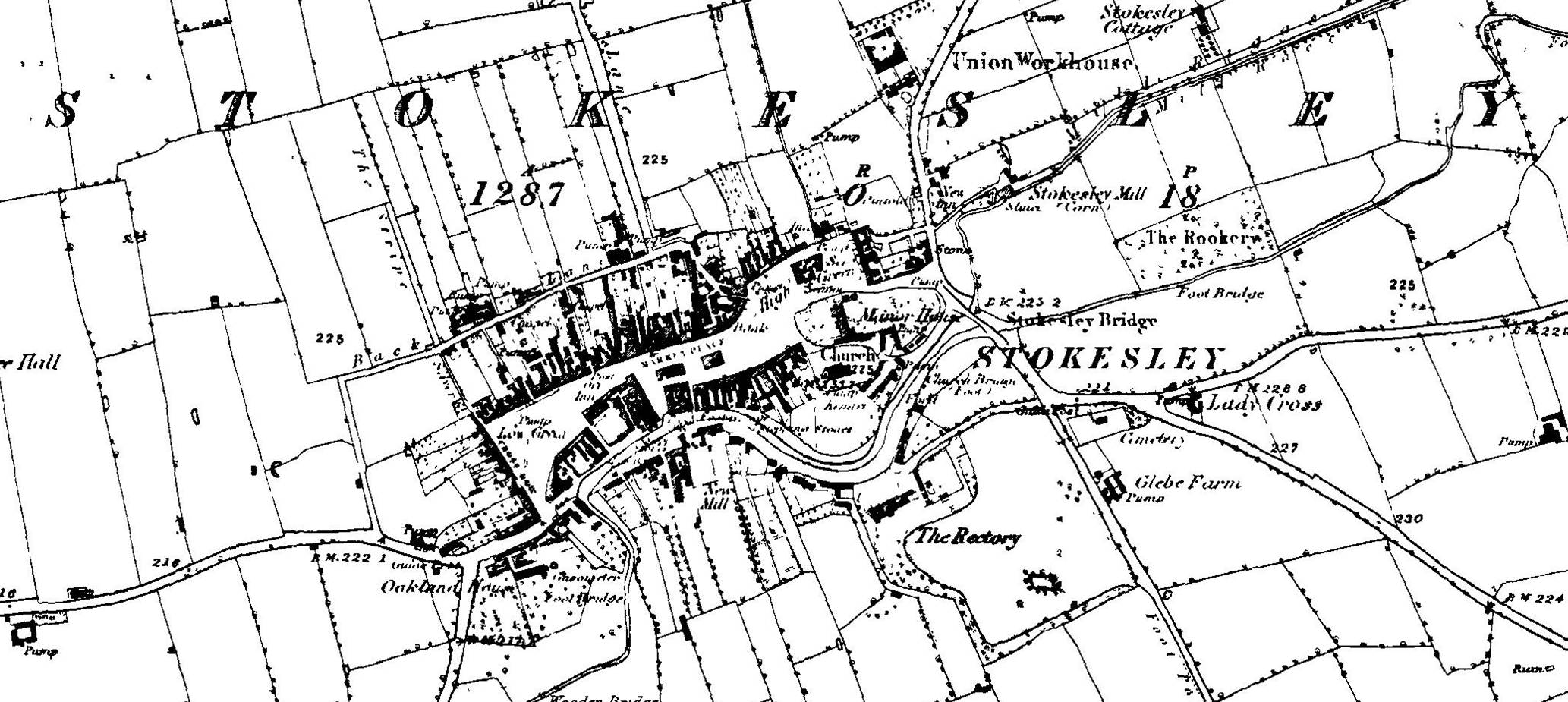
1859
The inaugural
meeting of the Stokesley Agricultural Society was held at the Golden
Lion Hotel, now Chapters Hotel, in 1859.
This boutique
hotel was also used as the local law courts for the area being ideally placed
between Middlesbrough and Northallerton.
Stokesley
Agricultural Show, first held in 1859, is held every year on the third Saturday
in September. It is one of the largest one day shows in the north of England.
1923
The Victoria County History –
Yorkshire, A History of the County of York North Riding: Volume 2 Parishes:
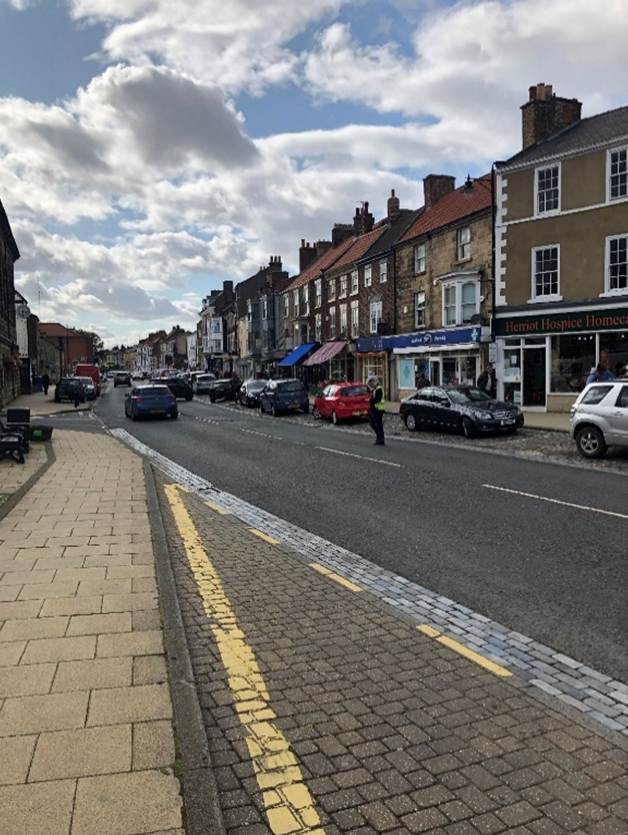
Stokesley, 1923: Stokesley is a market town
consisting of one wide street, running east and west, on the north bank of the
Leven. The general aspect of the town has probably remained unchanged for
centuries, though most of the buildings are now modern. The old toll-booth,
where at the beginning of the 18th century the lord of the manor held his
courts and kept the market measure, and which in 1808 Graves described as
'ancient and unsightly,' has given place to a town hall, erected in 1853 by Mr.
Robert Hildyard. The shambles which stood in the centre of the street have
disappeared. … The roads of Cleveland all meet at Stokesley. That
running east from the town to Whitby comes after about 4 miles to the little
village of Easby.
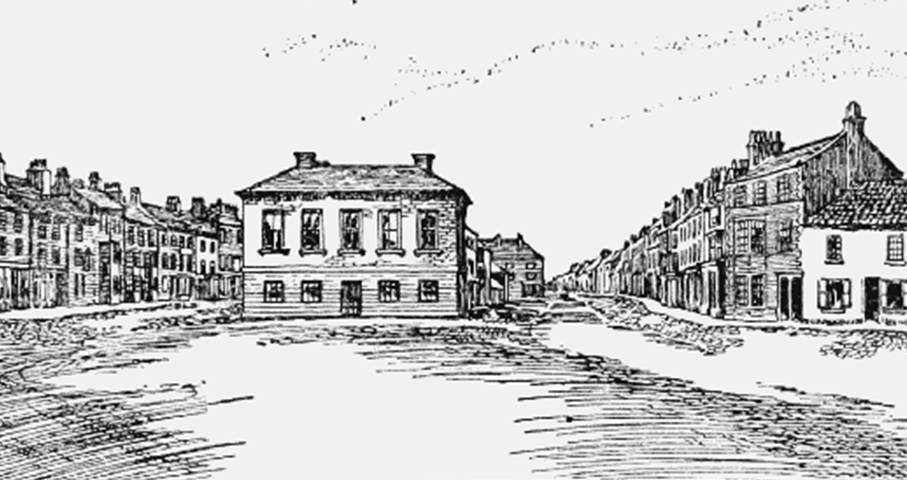
The market place at Stokesley
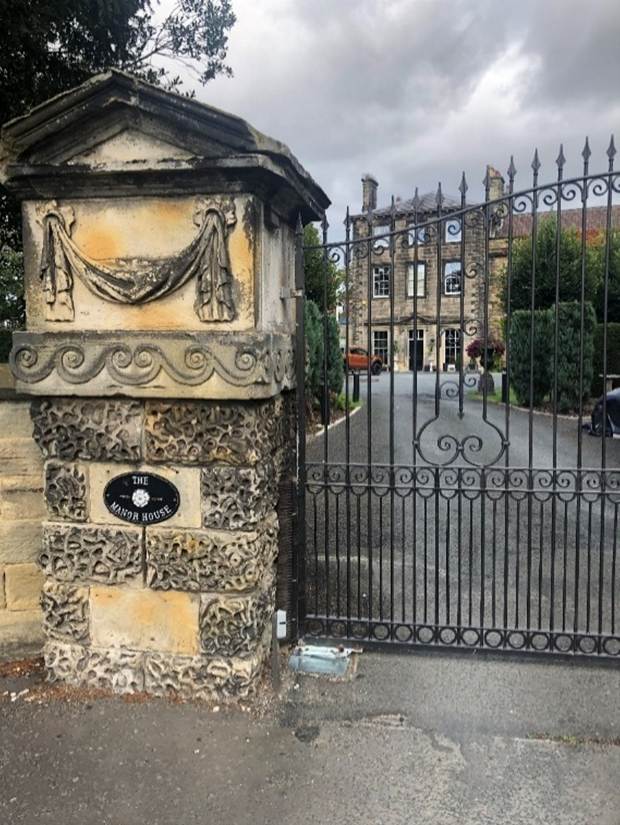
2016
Bibliography