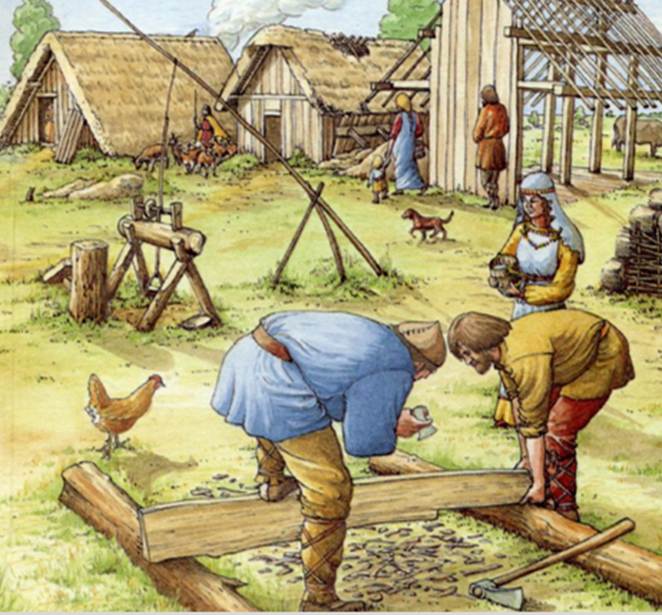
Some thoughts on our lineage beyond the known
individuals of the thirteenth century
FAR00006A
|
Return to the Home
Page of the Farndale Family Website |
The story of one
family’s journey through two thousand years of British History |
The 83 family lines
into which the family is divided. Meet the whole family and how the wider
family is related |
Members of the
historical family ordered by date of birth |
Links to other pages
with historical research and related material |
The story of the
Bakers of Highfields, the Chapmans, and other related families |
The context of the
settlement of Farndale
The name Farndale
first appeared in the records in 1154 when it was referred to in the Rievaulx
Cartulary (FAR00002). Rievaulx was
established in 1132 and from the mid twelfth century, the heavily forested Farndale (lately the
wandering place of a lonely hermit called Edmund) started to be cleared by the
Cistercian monks for timber collection, pasture for their sheep, and the
establishment of small granges.
At the same time,
the forest of Farndale came to be recognised as a distinct royal forest, an
adjunct to the more substantial Pickering Forest, and a triumvirate of royal
forested lands with Galtres Forest, all protected by
draconian Forest Laws (FAR00004).
From about 1220
the landlords of the estate of Chirchebi, later Kirkby Moresheved, and eventually Kirkbymoorside (by then the Stuteville
family) began an organised campaign to clear
the dales which fell within their larger estates, for agricultural use. Until
then the vast estates of these Norman barons comprised areas of ancient
agricultural use, particularly in the vale lands south of the dales, but also
vast acreages of dense forest, dale and moorland which was largely uncultivated
wilderness. These non agricultural lands had been of
limited use to their landowners, except as hunting grounds, and as sources for
relatively painless gifts of land to the monasteries, in return for which they
could reassure themselves of a fruitful afterlife.
From the early
thirteenth century, a process of assarting or clearing the dale lands of
their dense forest began. This would lead to the establishment of cultivated
land, which could be leased to the villein classes, who already dwelt on the
Stuteville lands, in return for rent at the highest rates they could get away
with.
The first
individuals who bore the name Farndale were individuals who first arrived in
the dale, such as Gilbert de Farndale (FAR00018, perhaps about
1235 to about 1300) and Simon the Miller of Farndale (FAR00021, perhaps about 1255 to 1334). We know
of eight individuals (Gilbert,
Nicholas, Adam, Simon, John, Robert, Hugh and Alfred) who were not so different
in age, who might perceivably have been brothers or part of the same family.
Alternatively they may have been unrelated, but were simply those who took the
name of the dale as they started to live there. However we interpret their
relationships, they were of the same community who first claimed
the working dale from ancient forest.
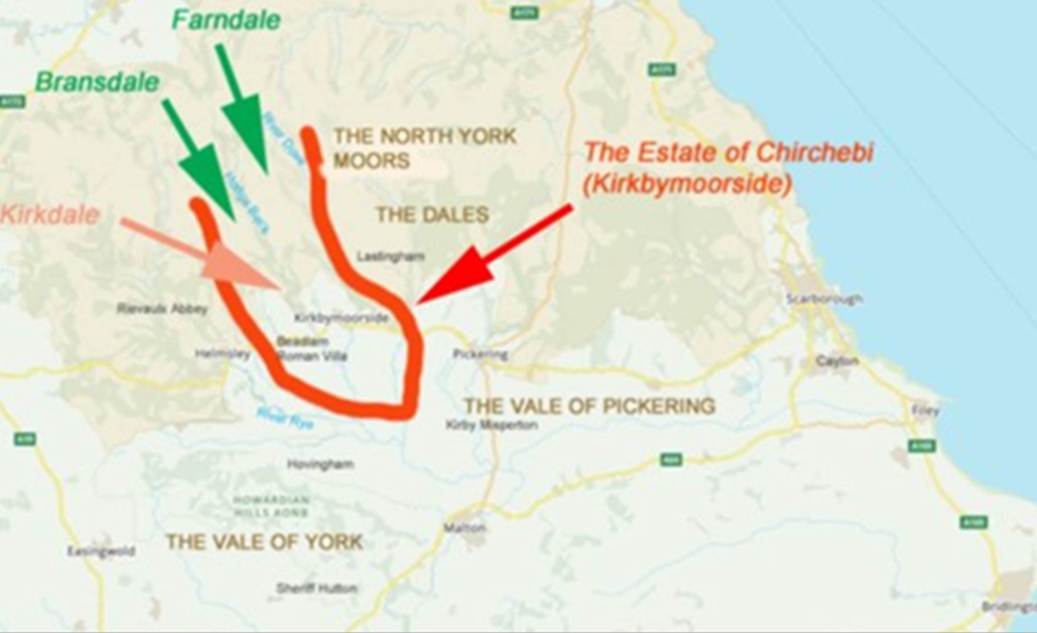
The Estate of
Kirkbymoorside
The particular
estate which the Stutevilles and before them the Mowbrays held, of which
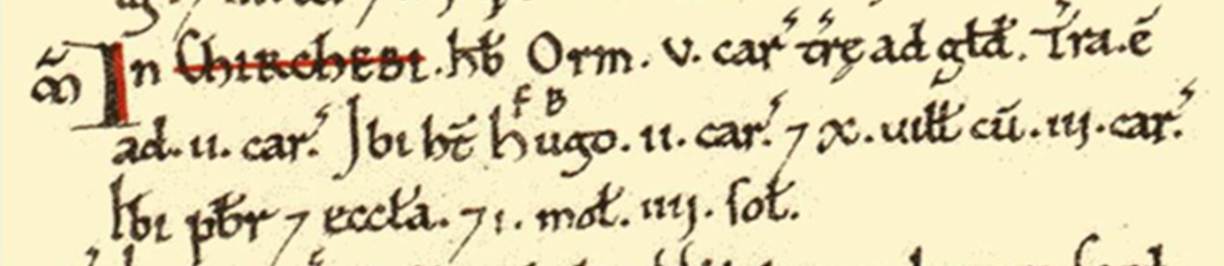
Farndale was a part, was therefore the estate known as Kirkbymoorside. In Domesday Book it was referred to
as Chirchebi. Spelt either way it was the settlement with a church. The
ending -by is a Scandinavian word meaning settlement or village, or
originally farmstead. The estate was listed in Domesday Book and before the
Conquest the same estate belonged to Orm Gamalson.
Whilst the estate
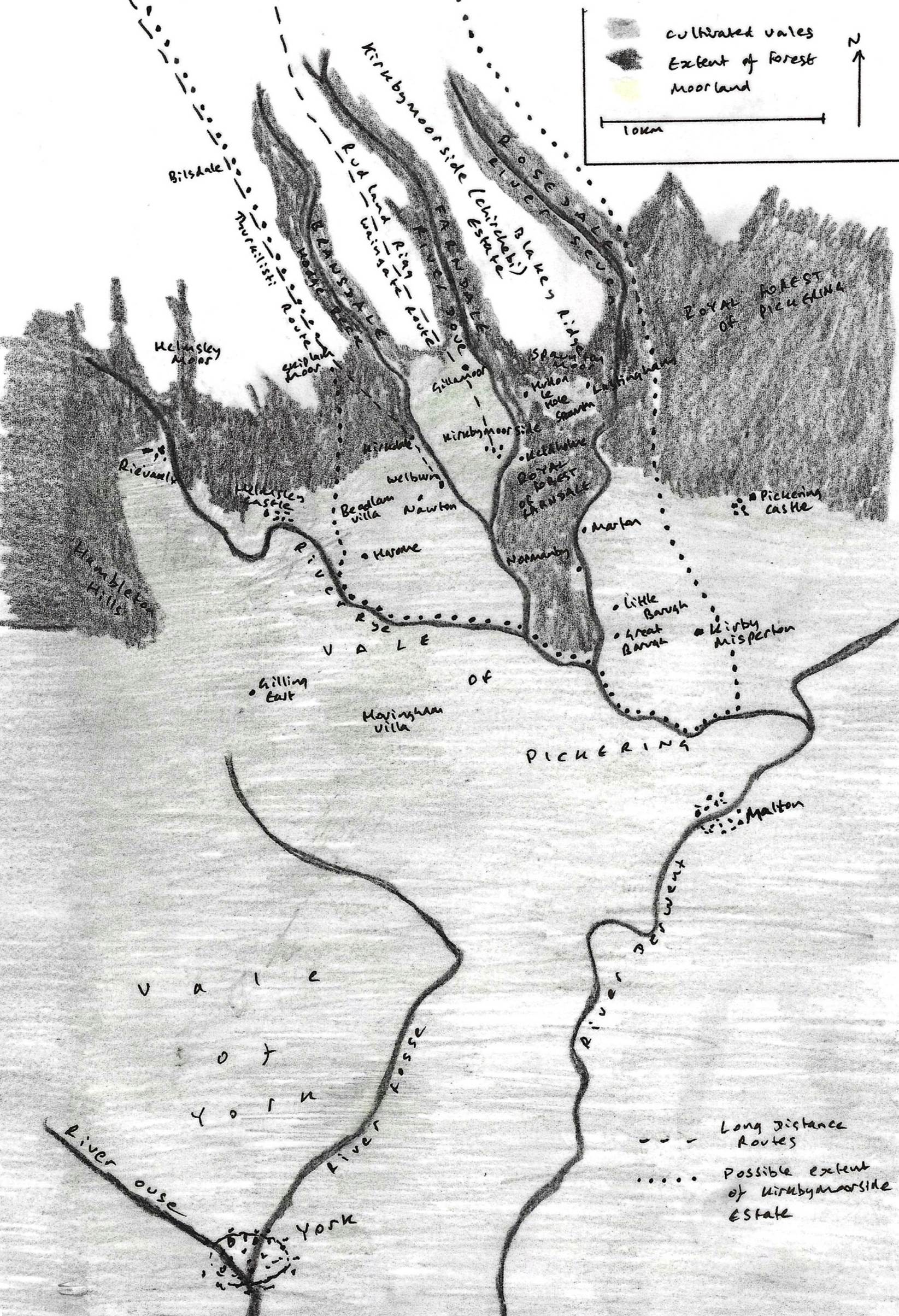
comprised a significant acreage, including an area stretching to 12 leagues
(about 42 miles) by 2 leagues (about 7 miles wide), it seems to have consisted
of a relatively small area of agricultural land with two centres at the tiny
hamlet of Kirkbymoorside and the church
at Kirkdale.
Prior to the
occupation of Farndale and until the thirteenth century, the agricultural
community appears to have been focused on the Minster of St Gregory at Kirkdale
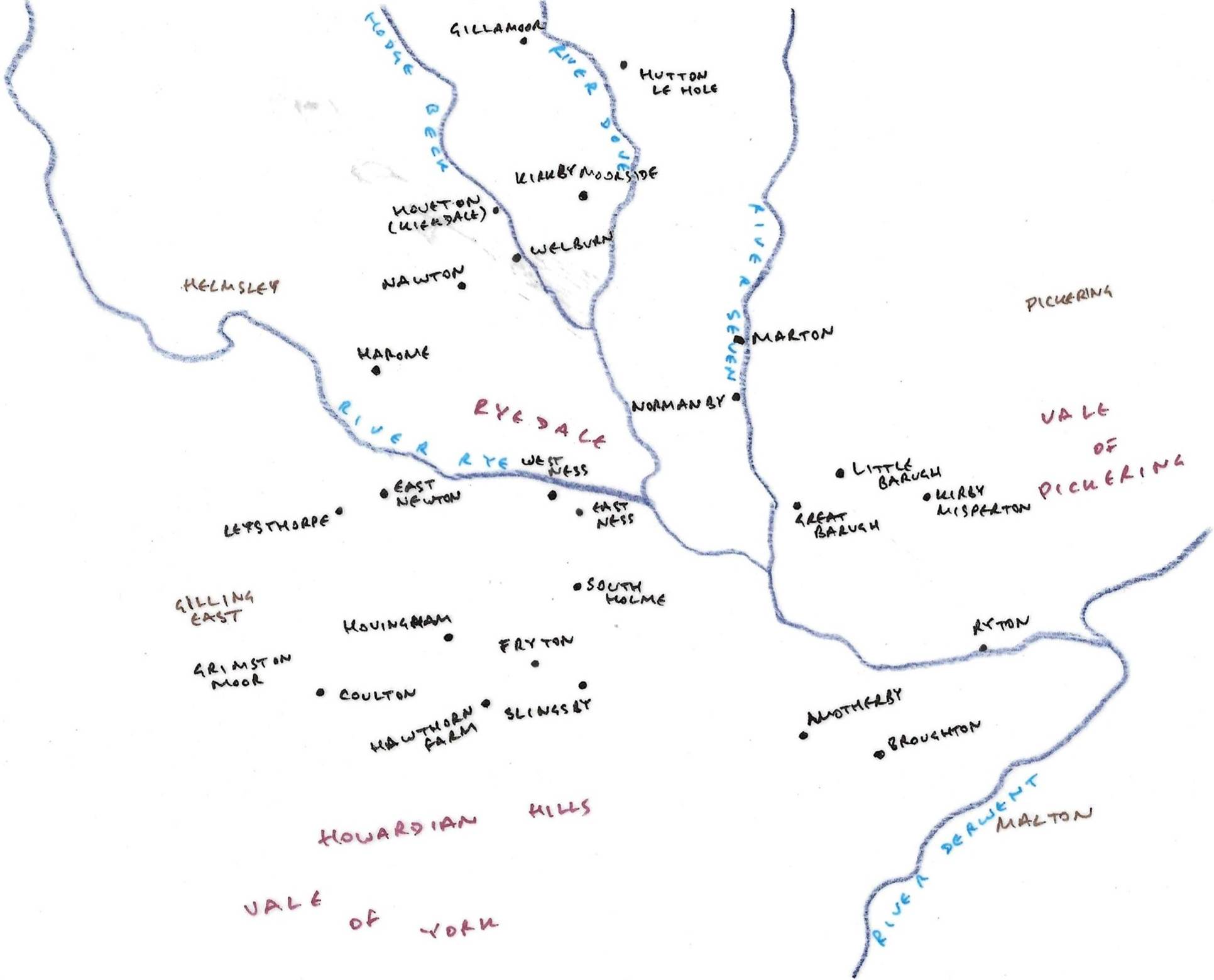
and stretched across the northwest tip of the Vale of Pickering with small
settlements at Welburn, Harome, Nawton,
Great Barugh, Normanby, Kirkby Misperton and Marton, all of which are name
checked in the Domesday record as places of ancient community. The larger
acreage of land was pretty much unusable and included the dales which were
thickly forested up to the moorlands above. There seem to have been some modest
inroads into the dales, to Fadmore, and the area of Spaunton, near Lastingham, has evidence of agricultural use
back to Roman times (Excavation Report:
A Romano-British site near Hutton le Hole, Raymond Hayes, The Ryedale Historian, Volume 2,
1966, page 12). Lastingham was an antique
monastery founded in 653 CE, by Cedd the brother of Chad at the edge of
civilisation. When Bede later described
the lands which bounded the site of Lastingham, looking north
towards Spaunton Moor, Farndale and Rosedale, he
described it as a place of beasts and men who live like wild beasts.
The Roman Villas
of Beadlam (Beadlam Roman Villa: Assessment
of the Landscape Setting. Aerial Investigation and Mapping Project,
David Knight and Andrew J Roberts, 2022; Excavations on the Roman Villa at Beadlam, Yorkshire, David S Neal, Yorkshire Archaeological Report No 2) and Hovingham (Ryedale and North Yorkshire antiquities, George Frank, 1888, page 82) are both within
the bounds of these agricultural lands, dating to the third century CE. These
were likely to have been the heart of their own estates, perhaps feeding the
hungry Roman legions of Eboracum. This would
suggest that the estate of Kirkbymoorside had ancient roots, perhaps back to
these Roman estates.
After the lands
of eastern England were ravaged by the Anglo-Saxon-Jute invasions following
Roman collapse in the early fifth century, they were consolidated around
warlords and the lands of North Yorkshire were subsumed into the kingdoms of the Deira, and later
Northumbria. In turn those kingdoms were subjected to the Scandinavian
invasions which followed the raid on Lindisfarne in 793 CE. Roman Eboracum, Deiran Eoforwic, and
Scandinavian Jorvik, only thirty or
so miles to the south, was variously ravaged and subsumed into these new
political units. Immediately before the Conquest in 1066, Harold defeated
Hardrada and his treacherous brother Tostig at Stamford Bridge near York, and
after Harold’s defeat, the vicious William, unimpressed with northern
resistance to his new reign, punished these lands with a Harrying of the North.
Yet despite its
proximity to such violence, and perhaps because of it, the agricultural lands
of the Kirkbymoorside estate, nestled as they were at the far corner of the
vale lands and into the edges of the dales, were a place where stability had a
chance to endure over generations. Whilst an integral part of the momentous
events occurring only a few miles away, these were lands which could likely
avoid the bloodshed and even flourish, at the edge of the drama. Indeed the
richness of the archaeological evidence suggests exactly that.
In other words
the estate of Kirkbymoorside was a place of relative stability and successful
agriculture, which stretched back through Norman, Scandinavian, Anglo-Saxon
Deiran, and Roman times with a relatively consistency. It may have had its
roots in the Brigantian period which preceded
the Roman, and perhaps to the Beaker folk whose remains
still lie within its territory, including the mysterious Ryedale Windy Pits (The Discovery and Exploration of the North Yorkshire Windypits, Roger G
Cooper, the Ryedale Historian, No 9, 1978, page 11).
Whilst we cannot
know the ancestors of the first agriculturalists to set foot in Farndale, it
seems inevitable that they were folk of the Kirkbymoorside lands. The family
DNA is likely to have passed through generations who lived in these lands.
The occupation of
Farndale from the early thirteenth century was a continuation of this process,
and the first folk of Farndale brought their own rich cultural and historic
identity, and no doubt a deep rooted agricultural experience.
Kirkdale
The heart of the
agricultural community of Kirkbymoorside is the exquisite church at Kirkdale.
Its origins were Anglo Saxon
after its founding in about 685 CE. It adopted the name of the Roman Pope
Gregory who established Christianity in England, at the same time Celtic
Christianity was spreading through these same lands (including nearby Lastingham), a
tension resolved at the Synod
of nearby Whitby in 664 CE. It thrived during the
Scandinavian period, rebuilt after a fire by Orm Gamalson
in about 1055. When he rebuilt the church, he placed a remarkable sundial
above the doorway, which remains in its place today. Walk under the sundial,
and you will likely tread in the same place where the ancestors of the folk of
Farndale walked a thousand years ago, fearing the period around the turn of a
millennium perceived to be a time at the end of days.
Around the church
the ridge and farrow marks of medieval ploughing can still be seen. Five
hundred metres from the church is the Kirkdale
Cave, a portal into the interglacial age, well before there were humans
there.
The Farndale Story
The early folk of
Farndale, and the family who took its name from Farndale, were thus part of a
community whose story we can explore for another millennium, back to Roman
times. We can’t meet individuals then, but we can explore the story of those
communities. The
Farndale Story is the portal through which to explore the deeper past.