The Military Farndales
Exploring the Farndales who served in the armed forces
|
Return to the Home Page of the Farndale Family
Website |
The story of one family’s journey through two
thousand years of British History |
The 83 family lines into which the family is divided.
Meet the whole family and how the wider family is related |
Members of the historical family ordered by date of
birth |
Links to other pages with historical research and
related material |
The story of the Bakers of Highfields, the Chapmans,
and other related families |
Introduction
Dates are in red.
Hyperlinks to
other pages are in dark
blue.
Headlines of the
history of the Middleham are in brown.
References and
citations are in turquoise.
Contextual
history is in purple.
Those members of our family
who gave their lives in service for their country
The Royal Navy
in 1741
Able Seaman Giles Farndale (FAR00137) was a
press ganged sailor in the Caribbean, who served on HMS Experiment, and
was buried:
At Sea, at Port Royal, West Indies on 9 May 1741.
The First
World War
3758 & 201065
Private Richard Farndale (FAR00681)
died in France either from wounds, enemy shelling or sickness, on Monday 26th
February 1917 aged 19 while serving with 150th Infantry Brigade of the 50th
Northumbrian Division. He was buried at La Neuville Communal Cemetery, Corbie,
Somme. His name is on a War Memorial at Coatham.
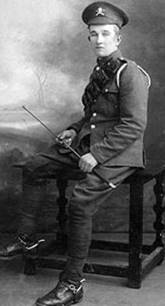
15/319 Private (later Lance Corporal) George Farndale (FAR00617)
was killed in Action at the Battle of Arras, on Thursday 3rd May 1917.
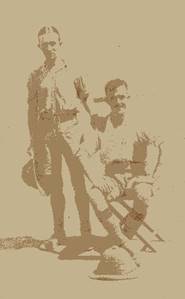
333852 Private George Farndale (FAR00646) was
killed in Action at the Battle of Arras on the 27th May 1917.
Name
Rank No Unit Year Vol Page
Index to War
Deaths 1914-1921 – Army (Other Ranks)
William Farndale
(FAR00647) was
wounded in action at Vimy Ridge
on 13 December 1916 while serving with the 28th Battalion. He had a gunshot
wound in the right forearm and was in hospital in Epsom, England. He was
discharged from the Army at Calgary on 18 February 1918. He was awarded the
British War Medal and the Victory Medal. After his return to Regina, despite
his weakness from his wounds, he used his car to evacuate the sick during the
great ‘flu epidemic of 1918. He caught the ‘flu while still weak from his wound
and died at Earl Grey, Saskatchewan, Canada, aged 25 years on 23 November 1918.
The Second
World War
4460826 Private
James Farndale (FAR00833) aged 24 of the West Yorkshire Regiment died of
wounds on 16th March 1941 in Keren Eritrea. His memorial is 3.A.3 at Keren War
Cemetery in Eritrea.
1824896 Sergeant Bernard Farndale
(FAR00783)
115th Squadron RAF, was killed in action over Denmark on 30 August
1944 during a bombing raid.
521789 Corporal
Henry Stewart Farndale (FAR00832)
died on 11 May 1945 aged 28. He was a pilot under training whose aircraft
crashed. His memorial is at section V Grave 265, Leeds (Lawns Wood) Cemetery.
For the Fallen
Poem by Robert
Laurence Binyon (1869-1943)
|
With proud
thanksgiving, a mother for her children, Solemn the
drums thrill: Death august and royal |
There is music
in the midst of desolation They went with
songs to the battle, they were young, |
They shall grow
not old, as we that are left grow old: They mingle not
with their laughing comrades again; |
But where our
desires are and our hopes profound, As the stars
that shall be bright when we are dust, |
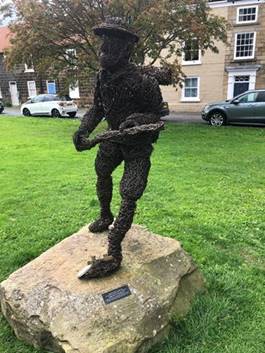
The memorial at
Great Ayton |
“I see the lives for which I lay down my life,
peaceful, useful, prosperous and happy, in that England which I shall see no
more. It is a far, far better thing that I do, than I have ever done; it is a
far, far better rest that I go to than I have ever known.”.
A Tale of Two
Cities,
Charles Dickens
Medieval Farndale Soldiers
Given the
multiplicity of spellings of surnames in medieval times, a table has been compiled to
explore possible medieval soldiers who may have been part of the family.
It seems likely
that John Farendon was John de Farendale (FAR00035A)
of the York Line, who probably
served as an archer with expeditionary forces to Scotland in 1383 to 1389,
later joined by his probable brothers Henry Farendon (FAR00035B) and
William Faryndon (FAR00035C).
Richard Farendale
of Sherifhoton (FAR00044)
may have served in the Hundred Years War in Brittany in 1380; an expeditionary
force to Scotland in 1400; and may have served with Henry V in the Agincourt
campaign or afterwards, with records in 1417 and 1421 possibly placing him at
Harfleur and the Siege of Mantes. When he died he left an impressive catalogue
of military equipment including a horse, saddle and reins, and armour,
comprising a bascinet (medieval combat helmet), a breast plate, a pair of vembraces (armoured forearm guards) and a pair of rerebraces (armour designed to protect the upper arms) with
leg harness.
Naval service in the
Caribbean
1740
Able Seaman Giles Farndale (FAR00137) served
with the Royal Navy from 29 June 1740 until he died at sea in the Caribbean on
9 May 1741. It seems very likely that he was press-ganged at Whitby, when he would have been 27 years old. The Muster
Book for HMS Experiment, a brig with a compliment of 130, shows
Giles Farndell as No 101 Able Seaman, impressed on 29 June 1740.
He is present at every muster until 9 May 1741 when he is marked ‘DD’
(“Discharged Dead”). No circumstances are recorded which probably means that he
died of sickness on 9 May 1741.
He almost certainly took part in the
War of Jenkins’ Ear in the Spanish Main under Admiral Vernon and was
probably involved in the Battle
of Cartagena de Indias in March 1741.
The ‘Experiment’ was commissioned under
Captain Hughes at Deptford between Mar and Jun 1740. On 29 June 1740 the
‘Experiment’ was at The Nore where Giles Farndell (or
Farndale; he is listed under both names in different Muster Books), came on
complement. From there she sailed for Port Royal, Jamaica where she
arrived on 15 Sep 1740. From there until June 1741 the ship was either in Port
Royal, at sea, or in Cartagena (Adm 36/1081
& 1082).
Since Giles was not recorded as ‘from…another ship’ he probably had not served
on another.
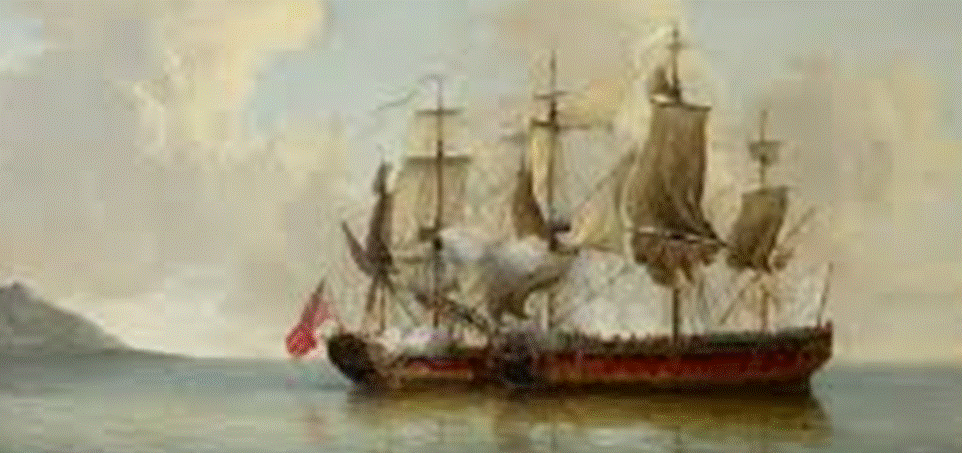
HMS Experiment
taking the Telemaque, 8 July 1757
The Crimean War
Private John
George Farndale (FAR00337)
saw service between 1853 and 1856 possibly first with the Coldstream Guards and
then with the 28th of Foot.
He served in the Crimean War in 1854 and 1855.
There is a full record of his service on his webpage.
His letters home included the following
records:
We then started for Sebastopol, and
reached it after eight or nine days’ march; we had to go a great way round. As
soon as we got in front and settled, we commenced throwing up batteries and
breast works, under fire of the enemy. We finished them after about five days
and nights’ hard working, and opened fire on them on the 17th of last month,
and have been battering away ever since, and are likely to continue doing so
for some time to come. We have greater opposition than we expected. There was a
faint attack made on our rear army a few days ago, which cut up our cavalry
fearfully, but were defeated in the end. Our loss is not so great, considering
all the circumstances of the case. I have escaped as yet, thank God! I have had
a narrow escape: one morning, as we were relieving guard, two privates and a
sergeant were shot close by me with one ball.
I have been laid up in my tent with
frost bitten feet nearly all this month, but I am better again and fit for
duty.
The siege is progressing very slowly
but I think we will soon open a new siege. Things begin to look a little
better. We have received the winter clothing and are getting provisions a
little better. We want the wooden houses next, although I think as we have done
so long without, we could manage without them altogether. However I hope that
before you get this, Sebastopol will be ours and then we will be thinking about
returning to old England again.
If I live to see it over and get back
to old England again, which by the blessing of God I hope to do, I will tell
you tales that will make your hair stand on end!
The Period of the Franco
Prussian War and the British Expedition to Abyssinia
There was a John Farndale, who was
discharged from the Grenadier Guards on 25 July 1872. He received £10
compensation. He served for 3 years and 323 days (Chelsea
Pensioners Discharge Documents). This was most likely to have been John
Farndale of Clerkenwell London (FAR00379).
The Boer War
N Farndale, served during
the Second Boer War 1899 to 1902, Regimental Number 4505, Second Battalion The
Buffs East Kent.
The Second
Battalion, the Buffs. Roll of Individuals entitled to the South Africa Medal
and Clasp under Army Order Granting the medal, issued 1st April
1901. … 4805, Pte, Farndale N.
The Mid Sussex Times, 22 August 1899: The local
team’s opponents on Thursday were the Buffs, who, batting first, knocked up 151
… The Buffs … Private Farndale, caught Allen, bowled G A Hammond, 6 runs.
The
2nd Battalion, 3rd Battalion, 1st Volunteer (Militia) Battalion and 2nd
Volunteer (Weald of Kent) Battalion all saw action during the Second Boer War
with Captain Naunton Henry Vertue of the 2nd Battalion serving as brigade major
to the 11th Infantry Brigade under Major General Edward Woodgate at the Battle
of Spion Kop where he was mortally wounded in January
1900.
The
phrase ‘Steady the Buffs!’ was popularised by Rudyard Kipling in his 1888 novel
‘Soldiers Three’. The origins of this
phrase come from Adjutant John Cotter during garrison duties in Malta, who
encouraged the men of the 2nd Battalion with ‘Steady the Buffs! The Fusiliers
are watching you’ as he did not want to be shown up in front of his former
Regiment The 21st Royal Fusiliers.
Following
the end of the war in South Africa in June 1902, 540 officers and men of the
2nd battalion returned to the United Kingdom on the SS St. Andrew leaving Cape
Town in early October, and the battalion was subsequently stationed at Dover.
Sergeant William
Leng Farndale (FAR00539)
was a Sergeant in the Northumberland Hussars in 1902. They had served in the
Second Boer War, so he may have served there.
There was an F
A Farndale-Williams who was a second lieutenant with the Moulmein Volunteer
Rifles on 30 March 1907 who appeared under Indian Army Orders (Homeward Mail from India, China and the East, 3 June 1907).
The First World War
If any question
why we died,
Tell them,
because our fathers lied.
Rudyard Kipling,
after the death f his son at the Battle of Loos
Wilfred Owen
denounced Horace’s patriotic maxim, “Dulce
et decorum est pro patria mori,”
(“It is sweet and fitting to die for one's country”) as “the old Lie”.
The Great War
haunts the British memory. 750,000 lives (one in three of all British males
aged 19 to 22 in 1914) were lost and 9M soldiers in Europe died.
It was seen as a
struggle for freedom, HG Wells’ the War that would end all wars.
The
causes
Tensions between
France, Russia, Britain and Germany had been increasing since the turn of the
century.
Britain had been
most concerned by French rivalry in Africa and Russian rivalry in Persia.
Things grew
complicated though when Germany started to increase its navy from 1900. Lord
Selbourne, first lord of the Admiralty, saw this as a direct threat to Britain,
though in reality it was probably an attempt by Germany to force Britain out of
any war by threat.
The ententes with
France in 1904 and Russia in 1907 were aimed at curbing German military build
ups and in 1909 Britain had pledged to outbuild Germany in its navy, with Lloyd
George’s People’s Budget enabling it to build more Dreadnaughts.
From 1908
Germany, France and Russia all started to build up gold reserves in case of
war.
In 1908, the
German general staff developed the Schlieffen Plan in secret. Its strategy was
to launch a devastating attack through Belgium to defeat France within a month
before turning to Russia before it had time to mobilise. Speed and surprise
were of the essence. An attack on the Belgium city of Liege was scheduled for
Day 3.
There was still
the possibility of war with France and Russia, but Germany continued to
increase its battleship programme from 1912. The British ambassador in Vienna
predicted the coming crisis with significant accuracy.
The Admiralty
responded with a naval treaty with France, so that France would focus on
defending the Mediterranean and Britain the North Sea.
Yet Germany and
Britain remained the biggest trading partners. Admiral von Tirpitz, head of the
German navy sent his daughters to Cheltenham Ladies College, and German naval
officers bought their dress uniforms in Saville Row. By 1913 relations with
Germany were improving.
The Balkans had
become the arena of tension and a growing antagonism between Austria-Hungary
and Russia. Slav nationalism threatened multinational Austria-Hungary.
By 1914, German
confidence was ebbing. Helmut von Moltke felt the French and Russians would be
too strong by 1917 and it was now or never. If an ultimatum to Serbia could
intimidate Russia and France into backing down, all would be fine.
Britain still
regarded Germany as leading the way in the arts and sciences. It was more
concerned about Ireland. However it was worried about making an enemy of Russia
if it failed them now and a desperate French ambassador threatened that if
Britain let France down, it would watch the future ruin of the British empire.
The
events that led to war
On 28 June 1914 the open topped car carrying Archduke
Franz Ferdinand, heir to the Austro-Hungarian throne, took a wrong turning in
Sarajevo, Bosnia and reversed, allowing a Bosnian Serb student, trained by the
Serbians, to kill him with two bullets.
On 23 July 1914 Austria-Hungary delivered its ultimatum
to Serbia to formally and publicly condemn the "dangerous propaganda"
against Austria-Hungary; to accept an Austro-Hungarian inquiry into the
assassination; and to take steps to root out and eliminate terrorist
organisations within its borders including the Black Hand believed to have
helped the assassin.
On 24 July 1914, Asquith and Grey mentioned the Serbian
crisis in the first discussion of foreign affairs for a month. The Liberals and
its Labour allies were overwhelmingly opposed to war. Bankers and businessmen
were aghast at the thought. So Grey invited Germany, France and Italy to a
conference in London.
On 28 July 1914 Austria-Hungary declared war on Serbia
and bombarded Belgrade.
On 1 August 1914, George V on foreign office advice urged
Russia to stop its mobilisation in a letter addressed to Dear Nicky,
from Georgie.
On 2 August 1914 Asquith made a statement to the Commons
asserting that to stay neutral would sacrifice Britain’s reputation. This
changed public opinion in favour of intervention.
On 4 August 1914 Germany attacked Belgium. The British
Empire declared war on Germany at midnight.
Was
there any alternative?
The Russians had
assumed that Britain would join the war, and war with Britain caused no
significant hesitation in Berlin.
There was
certainly a misunderstanding of the consequences of decisions in 1914,
anticipating a likely duration of 3 to 8 months.
Germany would
probably have been victorious if not for British intervention. An optimistic
view might have foreseen German victory leading to an European Union eight
decades ahead of schedule. Germany did not have war aims when war broke out.
However Belgium would likely have become a vassal state and German bases would
directly have threatened Britain. Holland might have become dependent and
Germany would likely have established a continuous central African colonial
empire and the vast territories of Russia would have been thrust back as far as
possible, German rulers were likely intending to establish authoritarian rule
rather than struggle for democracy, What German soldiers did in massacring over
6,000 civilians in France and Germany might give some indication of the threat.
War was not taken
lightly in Britain. The myths of a thrill for the fight was in reality more
marked by foreboding and alarm. The New York Times reported
that there was no flag waving; once war began civilians rallied to send
off their troops, which is often depicted in photographs. A quick and easy
victory was not really expected, the all over by Christmas phrase
appearing only in 1917.
The
Start of the War
On 6 August 1914, the British Expeditionary Force (“BEF”)
comprising all UK based regular troops supplemented by reservists, totalling
11,000 men of whom 75,000 were combat troops, was sent to northern France using
1,800 special trains, 240 requisitioned ships and 165,000 horses, even with
some London buses.
By then there
were 1.7M German and 2.4M French troops on the battlefield.
It was expected
that 75% would be killed or wounded, which was to prove an underestimate.
The BEF came in
the path of 580,000 Germans advancing through Belgium.
On 23 August 1914, the BEF fought a defensive battle at Mons.
On 26 August 1914, they fought another defensive battle
at Le
Cateau.
They inflicted
heavy casualties on a tightly packed German force.
In October 1914 the first of four bloody battles was
fought at Ypres.
These were the
deadliest battles of the war. By the end of 1914, the French had lost 528,000;
the Germans 800,000 and the BEF were generally wiped out, having lost 90,000.
On the Eastern Front the Russian steamroller had also been halted, by a smaller
German force.
Mobilisation
Kitchener
realised this was to be a long haul. He appealed for volunteers. However time
was now needed to train them, so there could be no significant reinforcement
from volunteers until late spring 1915. Britain would continue to rely on
volunteers until 1916 as conscription was unpopular, and there was no system in
place for it.
By the end of
1915, 2,466,000 men had volunteered, about a third of those eligible.
Industrial workers including miners and railwaymen formed more than half the
army. Agricultural workers joined in lesser numbers, partly as the land still
had to be tilled, but partly because they tended to be older due to the prewar
rundown of agriculture. There was a significant response from the upper and
middle classes, from public schools, the peerage, and bankers. Asquith lost a
son as did the Irish Nationalist leader John Redmond.
A volunteer
force, whilst less efficient at fast mobilisation, provided a force of high
morale, motivated and enthusiastic. There was a degree of choice allowing more
time to adjust, and giving more control over the nature of service. Their
discipline was often founded on friendship. Pals Battalions drew on
neighbourhoods, churches and political identities. Scotland provided
particularly high numbers and the empire supplies millions more. There was
considerable moral pressure to join.
Class
distinctions were maintained in the ranks, but officers felt a gentlemanly duty
to their subordinates and an obligation of courage and leadership. By the end
of the war, a third of officers were from the lower middle and working classes,
all expected to emulate traditional standards.
Conscription
started in 1916. By then it had popular support, with growing hostility to
‘shirkers’.
The first units
of Kitchener’s New Army sailed in summer 1915, and by summer 1916, there were
30 divisions in the field. They included men like Siegfried Sasson, Robert
Graves, Rupert Brooke, Wilfred Owen, Harold Macmillan and J R R Tolkien, who found some of the inspiration for Lord of
the Rings.
It took time to
convert the experience of colonial campaigns to the realities of industrial
warfare.
In 1914, the BEF
had only 24 heavy guns, by 1918, it had 2,000. By 1916 fifty times the prewar
annual output of TNT was used each day.
Few generals
believed in a quick breakthrough, the exception being the commander in chief,
General Sir Douglas Haig.
Eastern
theatres of operation
A group emerged,
the ‘Easterners’, hoping to avoid the horrors of France, by opening an
alternative front. The biggest idea was pressed for by the First Lord of the
Admiralty, Winton Churchill, to send a fleet to Constantinople and force the
Turks to surrender.
On 18 March 1915, an Anglo French fleet sailed into the
Dardanelles and in the face of mines and shore batteries, British, French
Australian and New Zealand (“ANZAC”) troops were forced to land on the Gallipoli peninsula, where
they were fought to a standstill. They were finally evacuated in December 1915
and January 1916. Allied casualties were some 390,000. The determination and
ability of the Turks had been underestimated.
After Gallipoli
the Turks forced the whole British-Indian army in Mesopotamia to
surrender. A British and Indian army marched from Basra to Baghdad in 1915, but
was forced to surrender after the Siege
of Kut in 1916.
In 1916 support
was given to an Arab revolt against the Turks, involving the young Oxford
archaeologist, T E Lawrence, the only romantic hero of the war.
British, Indian
and ANZAC troops eventually took Jerusalem, Damascus and Baghdad in 1917.
The Balfour Declaration in November 1917 committed Britain to a National Home for the
Jewish people in Palestine. It seemed a clever plan, and would please a
Jewish population influential in America. In time this would lead to an
intractable and damaging problem.
The
Western Front
The French,
Russians, British and Serbians agreed to simultaneous offensives in summer
1916. The biggest effort was a Franco attack along the Somme.
The Germans
struck first and aimed to ‘bleed the French army to death’ in the killing
ground of Verdun.
The Easter
Uprising in Ireland was in April 1916.
On 4 June 1916 the Russians launched a long and costly
offensive and the Italians followed on 15 June 1916.
The British
prepared for the attack at the
Somme. General Charteris worried that the casualty list would be long – Wars
cannot be won without casualties. I hope people at home realise this.
On 1 July 1916 the British army began one of the
bloodiest battles in its history. At 7.30am after an artillery bombardment of
12,000 tons of shells, 55,000 British and French soldiers advanced out of their
trenches, with 100,0000 to follow. In places the advance seemed to go well;
Siegfried Sassoon noted that men were cheering as in a football match. However
the artillery bombardment had failed to destroy the barbed wire and the attack
soon became nightmarish, with soldiers mown down. By the end of the first day,
there were 19,240 dead and 37,646 wounded, including 75% of the officers.
The Battle of the
Somme continued over a for an a half month campaign. More attacks between 3 and
13 July resulted in a further 25,000 casualties. But, gradually, the British
tactics improved.
The Germans soon
felt the strain. The Germans lost heavily and their army would never be the
same again. Strategically the French army was preserved after the Verdun
disaster. Total casualties were 420,000 British, 200,000 French and 465,000
German.
The Russian army
and state fell apart in 1916 to 1917.
There were mass
surrenders and desertions in the Austrian army.
The British army
was largely amateur and there was some resistance to free discussion of ideas,
and no system for learning and applying lessons, but similar issues arose in
other armies, including the German high command. Some senior officers,
including Haig, were ill equipped for the challenge, but there were new younger
generals and brigadiers emerging.
The Allies agreed
to another offensive in 1917.
In March 1917, the French army launched an offensive in
Champagne in which they lost 130,000 casualties.
The Battle
of Arras (also known as the Second Battle of Arras) was a British offensive
on the Western Front during the First World War. From 9
April to 16 May 1917, British troops attacked German defences near the
French city of Arras on the Western Front. The British achieved the longest
advance since trench warfare had begun, surpassing the record set by the French
Sixth Army on 1 July 1916. The British advance slowed in the next few days and
the German defence recovered. The battle became a costly stalemate for both
sides and by the end of the battle, the British Third Army and the First Army
had suffered about 160,000 casualties and the German 6th Army about 125,000.
In July 1917 the British began the Third Battle of Ypres
(Passchendaele), with Haig convinced that this was a critical moment in the
war. Unseasonable August rain slowed progress and soon the advancing force
found itself bogged down and sinking, with soldiers crawling for shell holes
and sinking in the mud. The British lost about 275,000 and the Germans 200,000.
In October 1917 the Italian army collapsed at the Battle
of Caporetto.
The German army
was starting to show signs of disintegration.
The
British army
Soldiers were not
permanently in the trenches. They generally spent about 15 months on the
Western Front, with perhaps a third of the time, in short periods, on the line.
They relieved stress with superstitions, religion, folklore, letters and sport.
A black humour developed and satirical newspapers like the Wipers Times. However
trench warfare was a drudgery. The British army remained remarkably cohesive.
It kept the soldiers busy. On the dark side, the British executed more of its
own men, about 400, 75% for desertion, than the Germans. However the junior
officers supported by chaplains generally instilled loyalty and strong
motivation. There was reasonable food, regular leave and rest, and means to let
off steam. There was also a general acceptance of the rightness of the cause.
War
at Sea
The War at sea
saw early action when the Australian ship HMAS
Sydney was sunk by a German cruiser and a German squadron was destroyed
near the Falklands.
German cruisers
attacked British shipping from the start of the war. Most were caught and sunk.
Britain used its
commercial and naval power.
There were two
opposing fleets in the North Sea – the German High Seas Fleet and the British
Grand Fleet at Scapa Flow and Rosyth, with 28 dreadnaughts and 9
battlecruisers.
The Germans had
some success with bombardments on Scarborough and
Hartlepool. But German naval commanders were no
match for the British fleet, at best ambushing smaller units.
On 31 May 1916 a
German fleet stumbled across the whole British fleet commanded by Admiral Sir
John Jellicoe. The Battle of
Jutland involved 250 ships and was the biggest concentrated naval battle in
history. It only lasted about 2 hours. The German fleet escaped and inflicted
higher casualties on the British fleet, sinking 3 battlecruisers. However in
practice the differences were small, and whilst proving the vulnerability of
British battlecruisers, from a strategic perspective, the battered German fleet
fled back to port and never risked action again,. An American newspaper
explained that the German fleet had attacked its gaoler, but remained in gaol.
Between August
1914 and October 1916, trade with the US quadrupled. Britain subsidised its
allies, advancing them £1.6B, mainly to Russia and France, most of which was
never repaid.
However Britain’s
blockade of Germany was not decisive and as it continued to trade with states
like Holland and Scandinavia, it could not significantly degrade German
commerce without impacting on its own financial institutions.
An Order of
Council on 7 July 1916 procured the buying of neutral goods to deprive Germany.
Meat consumption in Germany fell and its economy came under increasing
pressure, sinking by 30%, with a spread of disease in the population.
The Germans
retaliated with its U boat campaign and to work it required to torpedo shipping
without warning, which was seen internationally as a war crime. After the
Lustitania sank in Mau 1915, American anger caused a temporary suspension of
the attacks, but by January 1917, when US involvement became inevitably, the
attacks resumed. By early 1917, the Admiralty and government were alarmed as
the scale of large scale sinkings.
One of the
motives for Passchendaele was to seize submarine bases on Belgium.
US
entry into the war
After uncovering
a German plot that Mexico would attack to recover Texas and Arizona if the US
entered the war, USA declared war in April 1917, with a series of peace
initiatives at first.
The
last German offensive
In March 1918 war
in the east ended with the Treaty of Brest-Litovsk, when the Bolsheviks sought
peace.
German troops now
concentrated on the western front and aimed at a decisive victory before US
troops could swing the balance. Field Marshall von Hindenburg and the Kaiser
planned the offensive. The main blow would be against the BEF at a chosen weak
point where the British and French armies met.
The German
attack, Operation Michael, started on 21 March 1918.
After a barrage of 3M shells, 59 German divisions led by storm troopers with
flame throwers and machine guns, cloaked by fog, attacked 26 British divisions.
The British were outnumbered 8 to 1. Gaps opened in the British lines and
between 23 to 26 March 1918, the British were
forced to retreat. The Germans advanced about 40 mile4s on a front of 50 miles
and the German fleet was ordered to disrupt a likely British evacuation from
Dunkirk.
By 28 March 1918, the British reinforced by the French,
started to stop the German advance. In the face of air attacks from the British
and devasted ground, the Germans grew exhausted. Having committed 90 divisions
to the attack, they lost 240,000. They had not taken their key objective, the
key railway hub at Amiens. By April 1918, they
were bogged down and stuck.
Another German
offensive further north also became bogged down.
Still, at this
stage, the German idea of an acceptable peace was unrealistic.
The Germans
shifted their attacks to the French lines and began a devastating surprise
attack at Chemin des Dames, 70 miles north east of Paris on 27 May 1918. Despite local successors, they did not
achieve strategic success.
The
Allied counter offensives
A French counter
offensive on 18 July 1918, involving British,
American and Italian troops, showed the German army was out of steam.
On 8 August 1918, the Germans were completely surprised
by a counter offensive near Amiens
by 552 British tanks leading Canadian, Australian, British and French infantry.
The massing of tanks allowed the Allies to push forward 8 miles, one of the
longest one day advances of the war.
The most decisive
campaign was fought in Autumn 1918. The Germans were dug in to the Hindenburg
line, six layers deep. On 29 September 1918 the 46th (North Midland)
Division stormed across the deep Saint
Quentin canal, where it was assumed to be impossible to cross, and the
Germans started to fall back from a continuous British attack.
The
end
Few expected the
end when it came. The British were anticipating that the war might continue to
1920 by this stage. However the German army, state and society were collapsing.
On 5 October 1918
the Germans asked President Woodrow Wilson for an armistice, based on his
‘Fourteen points’ proposed in January 1918, with a withdrawal from occupied
territory, but with continued German self government,
and no punishment for Germany. The Allies didn’t relish invading and governing
Germany.
On 11 November
1918 at 11 o’clock, the fighting stopped. The BEF, now 1,859,000 men, half of
then teenagers, halted just north of Mons, where it had all begun.
The
memory
The memory of the
Great War is uniquely poignant. It came to occupy a place in the national
culture. The war had involved the whole nation, one household in three suffered
a casualty, one in nine a death.
The emphasis in
commemoration was not on victory but on the deaths. Kipling called the
dignified Cenotaph ‘the place of grieving’. The memory was marked by the Tomb
of the Unknown Soldier at Westminster, by vast war cemeteries continuously
maintained by the Commonwealth War Graves
Commission, and by Armistice Day, a time of collective mourning of
sacrifice and incomparable loss, and the two minute silence.
The
incomprehension at the memory left no narrative of idealism, as against Fascism
in the Second World War.
Disillusion
continued to grow after the Treaty of Versailles failed to match the idealised
hopes for aftermath.
By the 1920s the
League of Nations seemed to have hopes of success. By the 1930s, the population
had been left with urgent reasons to reject war, which might have led to wrong
choices made then.
The horrors of
the war were remembered in R C Sheriff’s Journey’s End (1928),
the memoires of Robert Graves, Goodbye to
All That (1929) and Siegfried Sassoon, Memoirs
of an Infantry Officer (1930) and the German Erich Maria Remarque’s
novel All
Quiet on the Western Front (1929).
The First World
War had not ended war. By the 1960s it was remembered with mockery and pathos
as in Joan Littlewood’s Oh
what a lovely war.
(Robert Tombs, The English and their History, 2023, 582,
597 to 644).
Perhaps though
the situation was very different to opposing Hitler’s threat in 1939, and the
First World War arose out of mutual misunderstanding and mistrust, and might
have been avoided by dialogue beginning in sufficient time to have unwound the
spring. Mediation and dialogue might have had a place in avoiding the
catastrophe in 1914, whilst appeasement had no place in retrospect in opposing
a maniac in 1939.
Farndales
in the First World War
The Battle of Arras, where two Farndales gave
their lives
There is a Table showing the details of
all Farndales who served during World War 1.
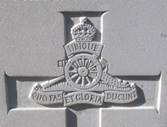
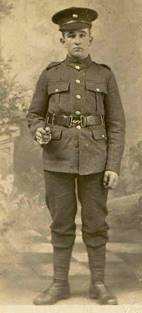
104633 Gunner Albert Edward Farndale (FAR00667)
served with the Royal Garrison Artillery. He was
awarded the Victory Medal and the British War Medal. He died in Northallerton on 17 April 1971.
83795 Private Alfred Farndale (FAR00683) served
with the Machine Gun Corps after initially joining the East Yorkshire Regiment.
My grandfather, he was born 5th July 1897, joined in 1916 and served in France
and Mesopotamia. He was discharged in 1920. He was awarded the Victory Medal,
the British War Medal, and the Police Medal WW2. He died in May 1989 and is
buried in Wensley, Yorkshire.
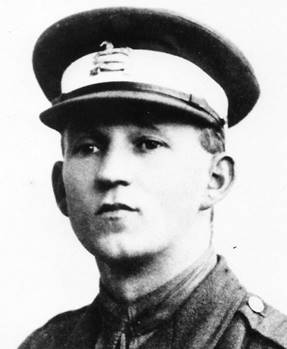
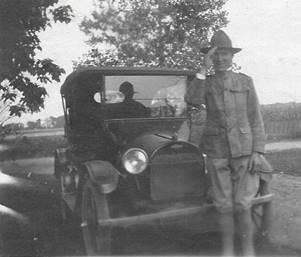
Alfred Farndale,
East Yorks, 1914 Alfred Mesopotamia
See also Pilgrimage
to Passchendaele, a killing field haunted by family memories.
2216 Private
Alfred Farndale, 9th Lancers (FAR00690) served
with the 9th Lancers. He was awarded the British War Medal, Victory
Medal and 14 Star.
2483 Private Charles E Farndale (probably FAR00656, born
1893) served with the Hertfordshire Regiment
and was awarded the 15 Star with Clasp.
Charles Farndale
served with the 8th/18th Hussars.
3/28913 Private Charles Farndale (FAR00629)
served with the Leicestershire Regiment & 19th London Regiment and
was awarded the Victory Medal. He was born in Knaresborough in 1888 and died at
Ripon on 16 February 1941.
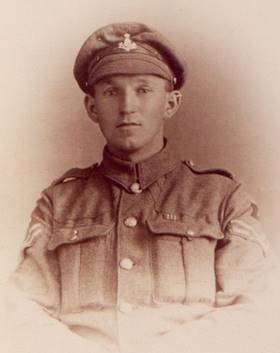
15/319 Private (later Lance Corporal) George
Farndale (FAR00617)
served with 15th Battalion The West Yorkshire
Regiment (Prince of Wales’s Own) and was awarded the Victory Medal, British war
Medal, 15 Star. He was born in Guisborough in
1888; arrived in Egypt on 22 December 1915 but was Killed in Action at Arras on
Thursday 3rd May 1917. He is buried and commemorated at the Arras Memorial, Pas
de Calais, France.
333852 Private George Farndale (FAR00646) served with the Highland Light Infantry (“HLI”).
Born about 1891 in Egton, youngest son of John Farndale
(a Deputy in an ironstone mine, born about 1851 in Egton, Yorkshire) and
Susannah nee Smith (born 1853 in Cropton, Yorkshire, a resident of Loftus, he enlisted at Whitby
probably into the Green Howards and was then transferred to the HLI. He was
killed in action on 27th May 1917 aged 26 while serving with the 1st/9th
(Territorial Glasgow Highlanders) Battalion of the Highland Light Infantry in
100th Infantry Brigade of 33rd Infantry Division in operations against the
Hindenburg Line. George Farndale was killed in action on the 27th of May 1917,
during the Battle of Arras, barely one month after arriving in France. He was
awarded the Victory Medal and the British War Medal.
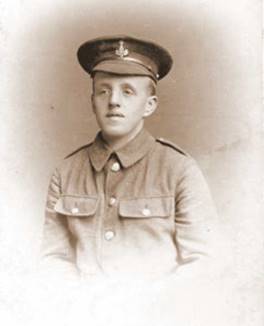
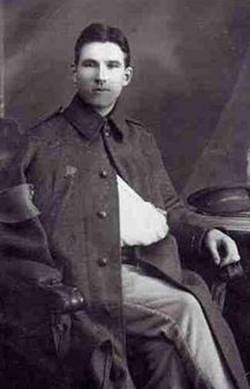
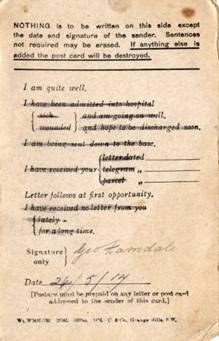
Sunday 8/4/17,
Dear Sister
Just a line to tell you that I arrived at
Folkestone at 7 o clock this morning and I am in a rest camp now waiting of a
ship. It is quiet a fine place here. I think we shall leave here at 10.45 am
for the ship which I think will take us to Boulogne where we will stay over night. I got a very descent breakfast here and had an
extra tea before we left Catterick. They also gave us 20 packet of cigarettes
each. Well tat-ta for the present will write you
again as soon as possible. With Love Geo
19/4/17
Dear Sister
Received latter on Tuesday last and parcel today.
I must say the parcel was extra. The cake is excellent, also must say that you
could not have sent a more suitable parcel. Well I must send you my sincere
thanks for your kindness also for writing to the Girl. I am sorry I had to send
home for some money, but I only get 5 francs here, and I want to get some of
those French cards to send you as I know you would like some of them. I am
pleased to hear you are all keeping well. I wrote to the Girl on Sunday so I am
expecting to hear from her anytime. Will you send me one of your photos as I
would like one with me out here, please put your name on it. Remember me to all
and Give them my best respects, also down John St. How is Father keeping hope
he isn't worrying about me as I am alright. Well I think this is about all I
have to say so I must draw to a close thanking you once again for parcel also
hoping to hear from you again soon. Well tud-a-lu
With Love
from Your Loving Bro Geo.
P.S. I am not afraid about the watch and parcel,
as I know the young man I left with is honest and straight in every way, and I
told him he wasn't to go down special with it, he was to post it anytime when
he was going to town.
With Love again
Geo.
Dear Annie
I am just sending you a line to tell you that I am
in a draft and expecting to go out any day. If you haven't wrote and sent the
things I asked for don't trouble, as I may be gone before they arrive and I sharn't be able to take them with me. If I should be here
over the weekend I will write you again on Sunday if not I will try and send
you a line before I leave. I have got all my kit ready for going but I don't
think I shall go before Saturday or Monday. Well be
sure and don't worry about me and tell Father not to, as I shall be alright,
and I must say before I go that you and Father have been very kind to me as I
never wanted for anything and I must say you have done more than your duty
towards me. Of course it may be weeks before I go into the trenches as am sure
to be kept at the base for a week or two. If I should send for anything when I
get to France, be sure and register it, as it will make it more sure of me
receiving it. Well don't write any more until you hear from me again and don't
think anything is wrong if you don't hear from me for a short time, but I
promise you to write you as soon as I possibly can. Well this is all I have
time to say just now, so I will now close, trusting this finds you all well.
Remember me to all. Well be sure and don't worry
about me, and look on the bright side of it as I shall soon be back again.
With Love, From Your Loving Bro Geo
PS. If the writing pad comes I will give it to
some of the boys as it won't be worth sending it back. I shall very possibly be
sending some shirts home.
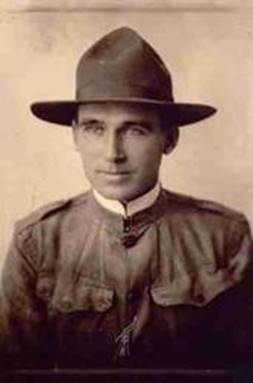
France, 2/6/17
Dear Mr Farandale
I deeply regret to inform you of the death in Action of your son 333852 Pte G Farandale on 27th May. He was a good soldier and a popular
fellow, beloved by us all and our deepest sympathy goes out to you and yours at
this time.
Believe me, Yours truly, D W Greenhulds, 2Lt, 9th HLI.
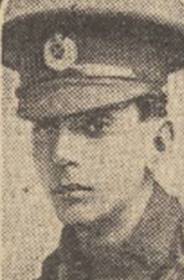
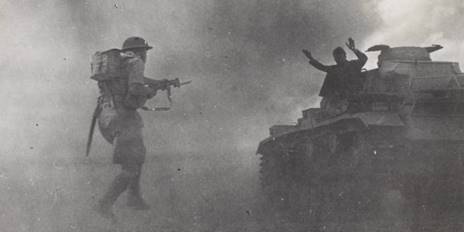
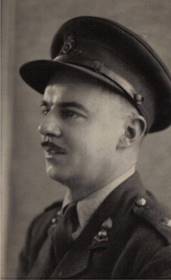
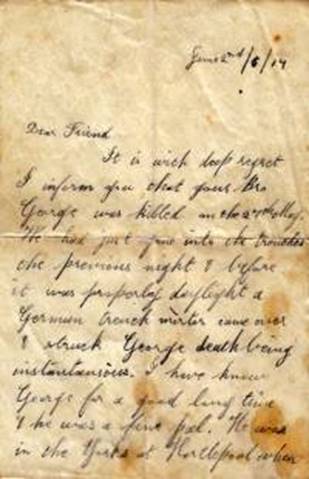
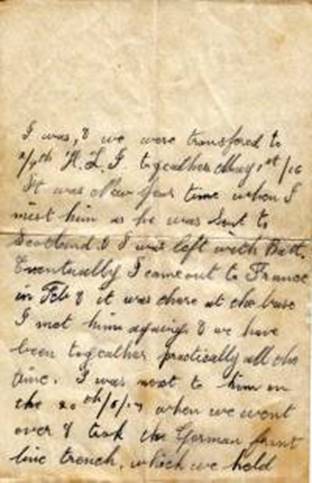
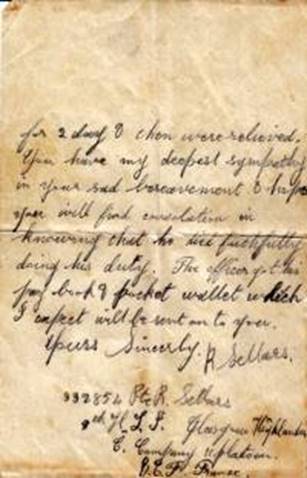
June 2nd/6/17
Dear Friend
It is with deep regret I inform you that your Bro George was killed on the 27th
May. He had just gone into the trenches the previous night and before it was
properly daylight a German trench mortar came over and struck George death
being instantaneous. I have know George for a good
long time and he was a fine pal. He was in the Yorks at Hartlepool when I was,
and we were transferred to 2/9th HLI together May 1st/16. It was New Years time
when I mist him as he was sent to Scotland and I was
left with Batt. Eventually I came out to France in Feb and it was there at the
base I met him again and we have been together practically all the time. I was
next to him on the 20th/5/17 when we went over and took the German front line
trench, which we held for 2 days and then were relieved. You have my deepest
sympathy in your sad bereavement and hope you will find consolation in knowing
that he died faithfully doing his duty. The officer got his pay book and pocket
wallet which I expect will be sent on to you.
Yours Sincerely
R Sellars
332854 Pte R Sellars 9th H.L.I. Glasgow Highlanders
C. Company 11 platoon.
B.E.F. France.
Shingle Hall,
Sawbridgeworth, Herts. Thursday
Dear Miss Farndale:-
I am deeply grieved on hearing from you yesterday
morning that dear George has been killed in action, and all at Shingle Hall
including myself wish to express our deepest sympathy with you all in this dark
hour of sadness.
It was an awful blow to me dear, and is one that I
shall never forget. He was such a nice quiet and gentle boy and was very much
liked by all who knew him in Sawbridgeworth, and no fellow could not think so
much of a girl as your dear brother did of me, and had he been spared to come
back safely we intended getting married. I don't know if he ever spoke about it
to you.
It will be awfully kind of you to copy those
letters for me and shall be most pleased to receive them.
Yes dear, I will see about another doz. p.cs. being copied and will write and let you know, as I
shall be only too pleased to do anything for you, for the sake of the dear one
I have just lost.
He sent me the Yorkshire badge (as he said no one
else should have it but me) also the cap badge of the H.L.I. and bought me a
small regimental brooch of the H.L.I. so I shall always think of the dear boy.
Now dear Miss Farndale I will draw to a close
trusting you will all accept our deepest sympathy once more.
With fondest love hoping to hear from you again
soon
I remain
Your sincere Friend
Dolly.
P.S. Please excuse pencil.
011374 Corporal George William Farndale (FAR00614)
served with the Royal Army Ordnance Corps and awarded the
Victory Medal and the British War Medal.
He was born in Middlesbrough in 1897 and
died on 21 August 1954.
19318 Private George Farndale (FAR00646A)
served with the East Yorkshire Regiment and was awarded the Victory medal,
British medal, and 15 Star. He arrived in the Balkans on 12 November 1915. He
was born in Whitby in 1891 and died in Lancaster on 15
May 1954.
G/445 Lance Corporal George James Farndale
(later Sergeant) (FAR00653)
served with the Second Battalion, The Royal Sussex Regiment and went to France
on 31 May 1915. He was awarded the Victory medal, British medal, 15 Star and
the Military Medal for bravery.
S4/199459 and TR9/16884 and
18216 George William Farndale (FAR00678)
served with the Army Service Corps and Army Pay Corps. There are quite
extensive military records with his own record.
18981 and 577701 Private Harry Farndale (FAR00688) served
with the 7th
Battalion, The East Lancashire Regiment. Harry enlisted on 15 February 1915 at
Liverpool. He served in France and Belgium from May 1915 to July 1916 and from
May 1917 to April 1919. He was awarded the Victory medal,
British medal, 15 Star. There are extensive military records on his own page.
204344 Regimental Quarter Master Sergeant
Henry Farndale (FAR00681A)
served with the Royal Field Artillery and was awarded the Victory Medal, and
British War Medal. He was gassed in November 1917. He was then promoted to
Regimental Quarter Master Sergeant and was engaged working on a cost accounting
scheme after the War ended. There are extensive records about him on his
personal page. He was born in Leeds in 1883 and died in Leeds in 1951.
4857 Sergeant Herbert Farndale later 238221
2nd Lieutenant H Farndale (FAR00652) served with the 10th Yorkshire Regiment (The
Green Howards) & 2nd West Yorkshire Regiment. He was awarded the Military
Medal as well as the Victory Medal, and British War Medal. My grandfather knew
him and we have many of his papers. He lived at Brotton.
He was born Guisborough 30 March 1892 and died on
23 June 1971 at Cleveland Cottage Hospital, Brotton.
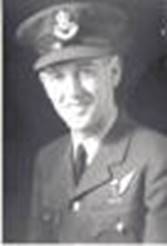
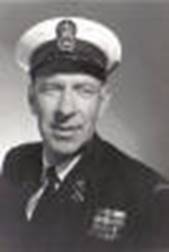
Herbert Farndale
wearing military medal in Green Howards
Herbert Smith at officer training unit in 1918
2898 Private Herbert Arthur Farndale (FAR00664)
served with the Norfolk Yeomanry, then as 43302 in the
Northern Regiment, then as 37425 in the Royal Berkshire Regiment He was awarded
the British War Medal and the Victory Medal.
19832 Private James Farndale (FAR00669) served
with the 1st Devonshire Regiment, then as 35864
in the Wiltshire Regiment. He arrived in Egypt on 9 October 1915. He served in both
World Wars. In WW1 he tended the horses. His war service was 31 Aug 1914 to 10
Mar 1919 and from 1939 to 1941. He was awarded the Victory medal, British medal, and 15 Star.
TR/5/211407 and
211407 Private W James Farndale (FAR00704B)
served with 53rd Battalion, West Yorkshire Regiment. He joined very
shortly before the War ended, immediately upon coming of age.
James Farndale (FAR00607)
served with the US Army. He joined up in 1917. He
went to France. He left the Army in 1919 and eventually became State Senator
for Nevada.
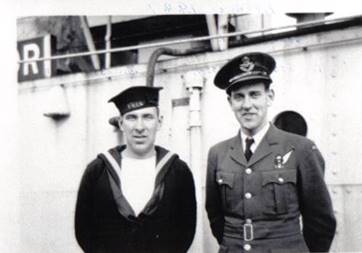
James
in Plymouth, Indiana in 1917
S/294809 Private
John Farndale (FAR00640)
served with the Army Service Corps and was awarded the Victory medal, British
medal.
89289 Gunner John
Joseph Farndale (FAR00581)
served with the Royal Garrison Artillery. He enlisted
on 4 December 1915 and was discharged on 14 December 1918.
38005 A/Corporal
John W Farndale (FAR00698)
served with the Lincolnshire Regiment, then as 29415 in the Labour Corps and
was awarded the Victory Medal and the British War Medal. He was born in Guisborough 1899 and died in 1970.
26042 Private
John W Farndale (FAR00653A)
served with the East Yorkshire Regiment, then as 570018 in the Labour Corps and
was awarded the Victory Medal and British War Medal.
L/28839 Driver
John W Farndale (FAR00663)
served with the Royal Field Artillery and was awarded the Victory Medal and the
British War Medal. He was born in Malton in 1894 and died on 29 June 1954.
151907 Gunner
John W Farndale (FAR00615)
served with the Royal Garrison Artillery and was
awarded the Victory Medal and the British War Medal. He was born in 1893 and
died on 2 March 1973.
247529 T/Warrant
Officer Class I Joseph Farndale (FAR00593) served
with the Army Service Corps and was awarded the Victory Medal and British War
Medal.
016314 Private
Joseph Farndale (FAR00675)
served with the Army Ordnance Corps and was awarded the Victory Medal and
British War Medal.
James Farndale (FAR00521)
probably signed up immediately at the start of World War 1 and joined the Royal
Field Artillery, though I have not found records afterwards of his military
service.
3758 & 201065
Private Richard Farndale (FAR00681)
aged 20 joined the 1/4th Battalion The Yorkshire Regiment, the Princess of Wales’ Own Yorkshire Regiment, also known as the Green
Howards. He died at 21st CCS in France of broncho-pneumonia on 25th February
1917. He enlisted at Redcar, resident at Coatham. The battalion served with the York and Durham
Brigade of the Northumbrian Division, renamed in 1915, the 150th Infantry
brigade of the 50th Division. At the time of his death the battalion was not in
the line but in reserve at Proyart. On 31 December
1916 it was at Bazentin le Petit and in reserve at Flers on 7 January 1917. On 11 January the battalion moved
to the front line at ‘Hexham Road.’ It was again in the front line from 30 Jan
to 11 Feb at Genercourt. The battalion moved to Proyart
on 19 Feb 1917. He was awarded the British War Medal and the Victory Medal
posthumously on 21 Jan 1921. He was presumably badly wounded at Hexham Road or
Genercourt or Proyart and evacuated to No 21 Casualty
Clearing Station at La Neuville, where he later died of pneumonia. He was the
son of George and Mary Farndale of 6, High Street, Coatham, Redcar Yorkshire.
His name is on a War Memorial at Coatham. He is buried at La Neuville Communal
Cemetery, Corbie, Somme .
44768 Private
Robert Farndale (FAR00552)
served with the King’s Own Yorkshire Light Infantry, then as 426393 in the
Labour Corps, then as G/30179 in the Royal Sussex Regiment. He was awarded the
British War and Victory Medals.
Z/6840 Thomas
Henry Farndale (FAR00699)
served in the Royal Navy Reserve in London in the first World War. He was a
telegraphist.
William Farndale (FAR00647)
served with the Canadian Army, 28th Saskatchuan Regiment. He served in France where he was
wounded from bayonet wounds. In 1918 he was back in Regina taking people to
hospital when he contracted ‘flu from which he died. William Farndale,
joined the Canadian Army on 19 April 1916 at Regina, Saskatchewan and went to
France. He was wounded in action at
Vimy Ridge on 13 December 1916 while serving with the 28th Battalion; he
had a gunshot wound in the right forearm and was in hospital in Epsom, England.
He was discharged from the Army at Calgary on 18 Feb 1918. He was awarded the
British War Medal and the Victory Medal. After his return to Regina, he used
his car to evacuate the sick during the great ‘flu epidemic of 1918. He caught
the ‘flu while still weak from his wound and died at Earl Grey, Saskatchewan,
Canada, aged 25 years on 23 Nov 1918. He was buried in Earl Grey, Saskatchewan. See also the For
King and Country website.
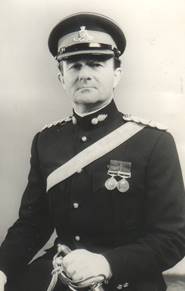
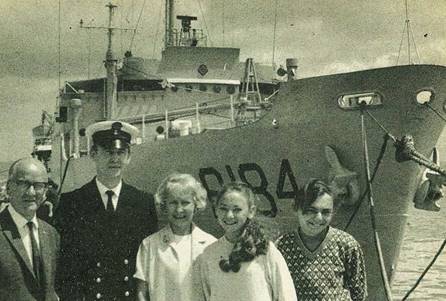
William Farndale
of Tidkinhow
131820 Lance
Corporal William Farndale (FAR00639),
25, from Great Ayton, served in 235th
Army Troops Company, Royal Engineers. He achieved the rank of Lance Corporal,
Royal Engineers Class ‘P’ AR. He enlisted on 17 November 1915 and was
discharged on 30 December 1918. The cause of discharge was Para 392 (xvia)(Gas psng). He was awarded
the Victory Medal, British Medal and Silver Badge Roll 11 November 1919. The
Silver War Badge was awarded to most servicemen and women who were discharged
from military service during the First World War, whether or not they had
served overseas. Expiry of a normal term of engagement did not count and the
most common reason for award of the badge was King’s Regulations Paragraph 392
(xvi), meaning they had been released on account of being permanently
physically unfit. This was as often a result of sickness, disease or uncovered
physical weakness and war wounds. Soldiers discharged during the war because of
disabilities they sustained after they had served overseas in a theatre of
operations (an area where there was active fighting) could also receive a
King’s Certificate. Entitlement to the Silver War Badge did not necessarily
entitle a man to the award of a King’s Certificate, but those awarded a
Certificate would have been entitled to the Badge. The main purpose of the
badge was to prevent men not in uniform and without apparent disability being
thought of as shirkers – it was evidence of having presented for military
service, if not necessarily serving for long.
27364 Private
William Farndale served with the East Yorkshire Regiment and was
awarded the Victory Medal and the British War Medal.
15271 Private
(later Corporal) William Farndale (FAR00651)
served with the Yorkshire Regiment (Green Howards). He
arrived in France on 27 August 1915. He was awarded the Victory Medal, British
Medal, and 15 Star.
1813 and 475088 Private William Claude Farndale (FAR00682)
served with the 1/2 East Anglian Area Field Ambulance
Company, Royal Army Medical Corps. He was attested on 16 September 1913 at
Norwich, aged 17 years and 2 months (in fact he was 16, so perhaps gave an
older age in order to enlist), a tinsmith at Barrow Works. He lived at 19 Onley
Street. There is a record on 7 May 1919 of his bounty of £15, with £5 for
present use and £10 to be issued subsequently as laid down in the Army Order.
His Medal
Records show he served in the Balkans and was awarded the Victory Medal and
British War Medal and 15 Star. He was demobilised on 3 August 1919.
12035 Private
William H Farndale (FAR00655)
served with the Royal Army Medical Corps, then as
53270 in the Lancashire Fusiliers. He arrived in France on 12 September 1915
and was awarded the Victory Medal, British Medal, and 15 Star.
436 and 403261 Private William Jameson Farndale (FAR00677)
served with the Royal Army Medical Corps and was awarded the Victory Medal and
British War Medal.
Lieutenant Graham
Price was
the brother in law of the Rev W E Farndale (FAR00576).
He went to Flanders in 1914 as a despatch rider. Towards the end of 1915 he
transferred to the Royal Flying Corps. He held the record in his squadron for
the number of air duels (fifteen) he had fought. He was also an artillery
observer over enemy lines. He was killed in action on 21 March 1916 when he
received a bullet in the heart in an air battle. See Lieutenant
Graham Price.
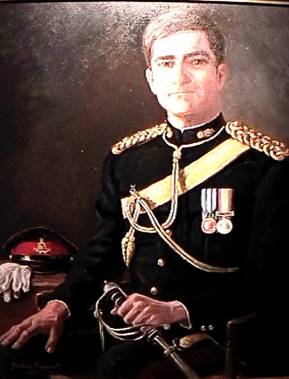
The Inter War Years
543695
Charles Farndale (FAR00738) was
born at Huttons Ambro and became a groom. He enlisted into the Royal Tanks
Corps on 9 May 1924. He attested at Winchester. He served with the 13/18th and
15th/19th Hussars in 1924 and 1925.
The West Sussex County Times, 23 November 1934: ROYAL
SUSSEX REGIMENT WIN REPLAY. 4TH BATTALION QUEEN’S ROYAL REGIMENT 0;
4TH BATTALION ROYAL SUSSEX REGIMENT 5 (Pte Farndale 4, Pte
Burchell). The side representing the 4th Battalion Royal Sussex Regiment was in
splendid form on Saturday when it defeated the 4th Battalion Queens Royal
Regiment at Mitcham by five goals to nil. It was a replayed match in the first
round of the Territorial Army Cup Competition. Play was fairly even at the
start but gradually the Royal Sussex began to assert themselves and they showed
a marked superiority. After 10 minutes, Birchell on the visitors left wing,
centred for Farndale to score. The Royal Sussex kept up the pressure and again
from Burchell’s centre Farndale headed in a lovely goal shortly after the
resumption. Standing started a movement which resulted in Burchall
racing forward and driving home number three. Farndale scored his third when he
gathered a nice centre from Fenner, and shot well out of Salter’s reach. The Royal
Sussex were well on top during the closing stages and the home side's defence
underwent a severe gruelling. Five minutes from time Farndale beat Salter for
possession and had no difficulty in putting in the fifth goal. 4th battalion
the Royal Sussex Regiment: Private Stanford, Private Kent, Private Boxall,
Private Lawrence, Corporal Ansell, Lance Corporal Linfield, Sergeant Fencer,
Lieutenant Woolcock, Private Farndale, Private Standing and Private Burchall.
The Second World War
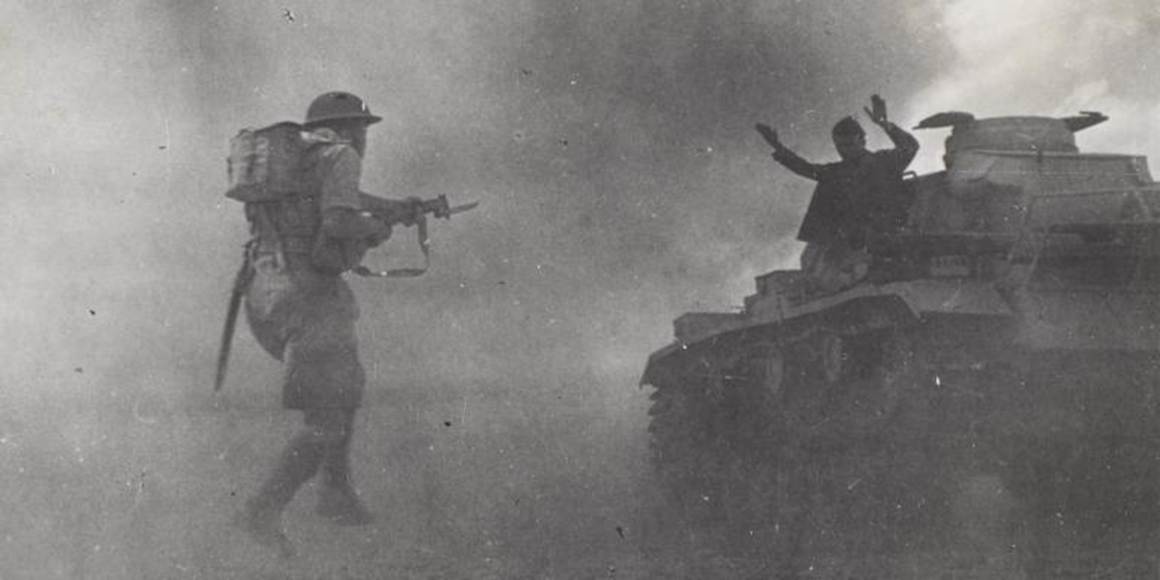
The
outbreak of War
At 11am on 3 September 1939,
Chamberlain, in a 5 minute broadcast on the Home Service, announced that as
Hitler had failed to respond to British demands to leave Poland, "this
country is at war with Germany". Chamberlain added that the failure to
avert war was a bitter personal blow, and that he didn't think he could have
done any more.
There was an
anticipation of air attack. Following the Prime Minister's speech there were a
series of announcements. All places of entertainment were to close with
immediate effect, and people were discouraged from crowding together, unless it
was to attend church. Details of the air raid warning were also given and it
was emphasised that tube stations were not to be used as shelters. In London
the air raid sirens sounded only 8 minutes later, and many of those remaining,
including commentator John Snagge, donned tin helmets and rushed to the roof of
Broadcasting House to watch the bombs falling. Sandbags appeared everywhere.
Cities were blacked out. The paintings in the National Gallery were moved to a
mine in North Wales.
The Official
evacuation plan, Operation Pied Piper, was part of widespread evacuations
totally 3.5M people.
Poland was lost.
However an immediate threat to Britain was a false alarm. Nazi bombers were
still out of range. The Allies had 3:1 superiority in manpower and 5:1 in
artillery. The Royal Navy was dominant at sea. The FAR were capable of
precision bomining. Italy and Japan had not yet
joined the war. In time the US might join. The British and French population
was 90M and GDP $470M, the German-Austrian 76M and GDP £375M.
There was a
perception that the French Army and the BEF could repulse a westward attack on
the Continent.
However Russia’s
pact with Germany had upset the calculations. Scandinavia was also an important
strategic consideration, particularly as a source of iron ore.
Phoney
War
The early months
were a period of stalemate. The
Phoney War was an eight-month period at the start of World War 2 during
which there was only one limited military land operation on the Western Front,
when French troops invaded Germany's Saar district.
On 9 April 1940, the Germans invaded Norway.
The
Battle for France
On 10 May 1940 a sudden German attack began on Holland,
Belgium and France at 5.35am.
After criticism
of Chamberlain for the disastrous Norwegian campaign, Churchill became Prime
Minister that afternoon. Chamberlain remained Deputy Prime Minister and Lord
Halifax remained Foreign Secretary.
On 13 May 1940 Winston Churchill,
in his first address as Prime Minister, told
the House of Commons of the United Kingdom, "I have nothing to
offer you but blood, toil, tears, and sweat." He felt “that all my
past life had been but a preparation for this hour and for this trial.”
The German attack
on France was in desperation, Hitler fearing that he would lose a long war. The
German army thrust through the woods of the Ardennes, and used surprise and
speed, gained by tanks and aircraft, crossing the River Meuse on 13 May 1940.
By 15 May 1940, 7 armoured Panzer divisions were
thrusting forward into France. The Allies, trained for static warfare, could
not stop the advance. The allied defensive force ran out of ammunition and
fuel. Most of the British army comprised raw territorials. In the European
theatre, Britain only had 14 hastily assembled divisions, to 141 German, 104
French and 22 Belgian. A minor success by the British at Arras
on 21 May 1940, was not enough. The French Prime Minister rang Churchill to
tell him they were defeated.
On 19 May 1940, only a week in to the German offensive,
the British began a fighting withdrawal to Dunkirk. Churchill declared in his
radio broadcast: Today is Trinity Sunday. Centuries ago words were
written to be a call and a spur to the faithful servants of truth and justice:
Arm yourselves, and be ye men of valour, and be in readiness for the conflict;
for it is better for us to perish in battle than to look upon the outrage of
our nation and our altars. As the will of God is in Heaven, even so let it be.
Hitler was also
losing confidence, worried about counter offensive and a pincer movement.
Alarmed at the risks, Hitler ordered a halt on 24 May
1940.
On 26 May 1940 the Dunkirk
evacuation, Operation Dynamo, began. It was organised by Admiral Bertram
Ramsay and his staff in Dover between 26 May and 3 June 1940. A broadcast
appeal was responded to by fishing boats, weekend sailors, lifeboats and by
barges and tugs from, the Port of London. The RAF lost 177 planes and shot down
244 Luftwaffe planes. Some 300,000 British and Allied troops were evacuated and
another 130,000 escaped later from ports still in French hands. However 54,000
vehicles, 2,500 artillery pieces and 68,0000 soldiers were lost.
On 4 June 1940, Churchill gave his
defiant response, We shall fight on the beaches, we shall fight on the
landing grounds, we shall fight in the fields and in the streets, we shall
fight in the hills; we shall never surrender.
On 7 June 1940, German panzer divisions pierced the
French defensive line.
On 10 June 1940, Mussolini declared war.
On 12 June 1940, the French army began a general retreat.
On 14 June 1940 the Germans reached Paris.
Churchill
suggested to France that Britain and France become a single Franco-British
nation. The Anglophobic deputy Prime Minister, Marshall Philippe Petain
rejected the proposal as an invitation to marry a corpse.
Talk of
negotiations had ended in Britain. On 16 June 1940 Churchill
told the cabinet that Britain was fighting for her life, and no chink should
appear in her armour.
On 17 June 1940 Petain became Prime Minister and ordered
fighting to stop.
On 18 June 1940 Churchill made his Finest
Hour speech. Let us therefore brace ourselves to our duties, and so bear
ourselves that if the British Empire and its Commonwealth last for a thousand
years, men will still say, 'This was their finest hour.'
Britain was left
without European allies.
Facing
the threat
The British
population soon grew used to the new state of things. Evacuees drifted back
home. People stopped carrying their gas masks.
There were still
those who called for peace through appeasement. The problem however was that
any such ambition rested on assumptions that Hitler’s intentions were limited,
whilst his central aim remained racial conquest and the winning of vast living
space. It was not Hitler’s primary aim to destroy Britian, but he had a hatred
of London and New York as centres of ‘Jewish’ capitalism.
The polls showed
that 75% of the population wished to fight on.
People sought
strong leadership. At this point in the war in particular, Churchill’s
leadership was an important factor. He was a master of words, making 2,000
speeches during his lifetime. Attlee later said Churchill’s main contribution
to the war was talking about it. He was satirised as Winstonocerous.
The Chief of the Imperial General Staff, General Brooke found working with him
to be unbearable; he didn’t know the detail and only got half the picture in
his mind. He led Britain into total war, without much thought, but with a
single purpose, to destroy Hitler’s ambitions.
Amongst the
general population there was a rush of marriages and 300,000 men and women
volunteered for the reserve and 1.5M for the Auxiliary Fire Service, Air Raid
Precautions (“ARP”) and the Special Constabulary.
The Military
Training Act 1939 had required young men to undergo 6 months training.
The National
Service (Armed Forces) Act 1939 extended the obligation to all men between
18 and 41, with universal
registration of men and their occupations.
The threat to
Britain was still very real. The Germans were starting to plan an invasion of
Britian, Operation Sealion, scheduled for late September 1940. A Black Book had
been prepared of targets for arrest, the Germans having shown themselves
capable of murdering the elite in order to reduce the nation to slavery.
The already weak
German navy had suffered badly in the Norwegian invasion. The Luftwaffe had
heavy losses in France, but still had 750 long range bombers, 250 dive bombers
and 750 fighters to Britain’s circa 750 fighters. Britain had developed a
system of control stations integrating radars and spotters. However the limited
range of radar meant only a few minutes warning, which then took 4 minutes to
reach RAF fighter stations, so fighters had to scramble into action and start
fighting even before the whole squadron was airborne.
The
Battle of Britain
The Battle of
Britain, the only decisive battle fought entirely in the air, began in August
1940, which was a month of intense daytime aerial combats.
On 20 August 1940 Churchill gave his famous speech,
echoing Shakespeare’s Henry V: The gratitude of every home in our Island, in
our Empire, and indeed throughout the world, except in the abodes of the
guilty, goes out to the British airmen who, undaunted by odds, unwearied in
their constant challenge and mortal danger, are turning the tide of the World
War by their prowess and by their devotion. Never in the field of human
conflict was so much owed by so many to so few.
On 5 September 1940 the German attack switched to cities,
especially London, Birmingham and Liverpool in the Blitz. On 7 September a
large raid started fires across the East End.
On 15 September 1940 German attacks on London were met by
massed fighters in Battle of Britain Day. It started to become clear that
German air strength was not sufficient to gain air superiority.
Between July and
October 1940 the RAF lost 790 planes to the Luftwaffe 1,300.
The Germans
switched to night attacks on cities. By mid November
the Luftwaffe had dropped 13,000 tons of high explosives and a million
incendiaries on London.
What ended the
Blitz was the diversion of the Luftwaffe to Russia. Its effect on Britian’s
economy had been limited, and its attempted impact on morale was counter productive.
Across Europe
resistance against German aggression saw in Britain what had been seen in the
Spanish Republicans – a sense of cheerfully stoical defiance, a ‘mustn’t
grumble’ attitude.
During the war
6,000 civilians were killed, half in London. Only 4% of the population used the
tube and most didn’t use shelters. ARP wardens, policemen and firemen worke3d
tirelessly. There were very few psychological breakdowns, and involvement in
important work was the therapy. Suicides fell.
The
global war
Britain was at
war with Germany and Italy and Japan was threatening on the other side of the
world. Britain had the resources and manpower of its empire, 2.5M in India,
500,000 in Africa, 1M in Canada, 1M in Australia and 3000,000 in New Zealand.
Leaders across
the world started to judge and make calculations as to who might win. Vichy
France and Franco’s Spain contemplated joining the war on Germany’s side. Many
disliked Jewish settlement in Palestine and anti semitism attracted some Arab
support. King Farouk in Egypt faltered in June 1940 and the pro
Nazi nationalist Rashid Ali seized power in Iraq. There were moves
towards self government in India. However Britain’s
continued fight denied the claim that Germany had won. Goebbels concluded from
a Commons debate in June 1941 that there was no sign of weakness.
The Italian army
was defeated in Abyssinia and eastern Libya by smaller British forces between October 1940 and April 1941.
The Italian army
invaded Greece unsuccessfully in October 1940 but again in April 1941 with German assistance.
Crete fell in May 1941.
The Germans came
to the aid of their Italian allies in north Africa by the dispatch of General
Erwin Rommel (“the Desert Fox”)’s Afrika Corps in February
1941.
However with no
obvious way to defeat Britain, Germany started to contemplate its Plan Z, to
build a huge battle fleet and long range bomber force by 1948, to attack US.
The
War at Sea
The Atlantic
routes to Canada and US were the principal lifeline. The Mediterranean was the
embattled route to north Africa, the Suez canal, and the Arab oilfields. The
south Atlantic was important for imports of meat and grain from South America.
Meantime the Royal Navy attempted a blockade on Germany.
Germany was much
weaker at sea than in 1914. In December 1939 the pocket battleship the Graf
Spee was tricked into scuttling itself in Montevideo harbour. The Bismark
managed a six day sortie in May 1941 and Sank the Hood, but was damaged
by the Prince of Wales. The German navy largely lurked away in Norwegian
fjords. It was also constrained by a lack of fuel. It could still wreak havoc
though – in July 1942 the codebreakers revealed that the Tirpitz was
about to go to sea, and the targeted convoy was ordered to scatter, but was
then picked off by aircraft and submarines.
In the
Mediterranean, Italy’s most effective military force was its navy. It suffered
significant losses in the Battle of Taranto
on 11 to 12 November 1940. The Mediterranean was
bitterly contested at sea and in the air until 1943. The exposed Royal Navy
outpost of Malta was constantly attacked, with 75% damage to the houses of
Valetta, uniquely awarded the George Cross for he whole island in April 1942.
The peak of
losses in the Atlantic was between June 1940 to March 1941, when over a million
tons of British shipping was sunk. Perhaps 9,000 convoys were escorted using
the global convoy system. Wolf packs of several dozen U boats attacked them.
However Germany struggled to maintain its submarine campaign. The biggest
difficulty for Britain was protection in the 600 mile Atlantic Gap, the mid
ocean area which was beyond air cover.
On 19 August 1942 a largely Canadian raid on Dieppe
brought the Allies briefly onto French soil.
By summer 1943 the Battle of the Atlantic had ben won.
The mastermind was Admiral Sir Max Horton who trained support groups of anti submarine ships and aircraft carriers coordinated by
long range shore based patrol aircraft.
Breaking
codes
The Germans used
the encoding machine Enigma developed in Germany in 1923. The Polish
intelligence service had begun to succeed n breaking its code in the early
1930s and shared its work with France and Britain. The British continued the
work at Bletchley Park and began to decipher messages by April to May 1940. The
Bletchley staff, often academics and students, increased its staff from 150 in
1939 to 3,500 in 1942 and 9,000 in 1945. Prominent members of the team were Max
Newman and Alan Turing.
The deciphering
system was codenamed Ultra, and used new computer technology and native
cunning. Great care was taken to conceal its successes from the enemy. An
important driver of the work was the use of regular phrases, such as Heil
Hitler. Daring actions allowed the recovery if lists of Enigma key settings,
including a daring recovery from a sinking submarine on 30 October 1942.
War
in the East up to 1943
By July 1940
Hitler started to consider an attack on his accomplice, Russia, a target for
living space, lebenstraum, and conceived to be
strategically advantageous as the elimination of Russia would free up Japan’s
power in the Far East, then America would be diverted to war with Japan.
Stalin had taken
advantage of his pact with Hitler to invade Poland, Estonia, Lithuania, Latvia,
Finland and Romania.
On 22 June 1941, Germany attacked Russia, Operation
Barbarossa, who were taken by surprise and quickly defeated, but recovered to
temporarily stop the German advance in December 1941.
On 7 December 1941 Japan launched simultaneous strikes on
the American naval base at Pearl Harbour in Hawaii and against British
colonies.
On 8 December 1941 the Japanese attacked the Philippines,
Malaya and Hong Kong.
The battleship Prince
of Wales and Battlecruiser Repulse were sent to disrupt Japanese
landings on the cost of Malaya but were sunk on 10
December 1941. The Japanese marched into Malaya with ruthless
efficiency.
The Japanese
occupied Hong Kong on 25 December 1941, in a spree of rape and killing.
Churchill
survived a vote of no confidence in the Commons in January 1942.
The Japanese
Empire captured the British stronghold of Singapore, with fighting lasting from
8 to 15 February 1942. At the outset, the
headmaster of Raffles school asked what his boys saw and Lee Kuan Yew, later
first president of an independent Singapore replied, “the end of the British
Empire”. Singapore was the foremost British military base and economic port
in South–East Asia and had been of great importance to British interwar defence
strategy. The capture of Singapore resulted in the largest British surrender in
its history.
The Japanese had
taken Hong Kong, Malaya, Singapore, Burma, and North Borneo for the loss of
5,000 soldiers.
However on 4 June 1942 the Americans caught a Japanese fleet at
Midway and sank four aircraft carriers.
In summer 1942, Gandhi and the Congress Party called for
a huge campaign of civil disobedience in its Quit India movement.
Famine in Bengal
in the summer of 1943 was exacerbated by world food shortages and later
mitigated by an improved harvest and a drive by the new viceroy, Field Marshall
Viscount Wavell.
In January 1943, the Germans faced their first disaster
on the eastern front when the survivors of the German 6th Army
surrendered at Stalingrad.
War
in North Africa and Italy
In Libya,
Rommel’s forces tipped the balance when they took the key port of Tobruk in June 1942.
However the Axis
forces in North Africa were hampered buy shortages of food, fuel and ammunition
where British naval power and air superiority was a problem for them.
In September 1942, a plan by Rommel to attack Egypt
having been intercepted and decoded by the Ultra project, Montgomery’s 8th
Army blocked Rommel at Alam Halfa.
The Second Battle of El Alamein
(23 October to 11 November 1942) took place near
the Egyptian railway halt of El Alamein. The First Battle of El Alamein and the
Battle of Alam el Halfa had prevented the Axis from
advancing further into Egypt. It was the first major defeat of the Germans and
Churchill ordered the ringing of church bells.
In November 1942
65,000 British and American troops landed in Morocco and Algeria.
In January 1943, at a conference
in Casablanca, the British Chiefs of Staff led by General Alan Brooke,
Chief of the Imperial General Staff, proposed that military and political
efforts were focused on the early conquest of North Africa, to reopen the
Mediterranean and open the soft belly of the Axis in southern Europe. Although
the strategy has been criticised, it was hard to see a realistic alternative –
the British and Americamns lacked the military force including ships for the
risky strategy of a cross channel invasion, but were already in north Africa,
including Tunisia, within easy reach of Sicily and Italy.
In July and August 1943 the Germans were fooled by a
corpse carrying bogus papers and Sicily was successfully invaded.
In September 1943 an Anglo-American landing at Salerno,
almost repulsed, began the Italian campaign.
Italy collapsed
in summer 1943.
The
Strategic Bombing Campaign
Despite allied
success at sea, in North Africa and a turning of the tide in the east, Hitler
retained a strong hold in Germany.
In the crisis of May 1940, Churchill had ordered air attacks on
Germany. In daylight, bombers were very vulnerable. However bombing was
Britain’s only serious weapon to strike Germany.
In February 1942, Air Chief Marshall Arthur (“Bomber”)
Harris took over Bomber Command.
He launched fire
raids on Luebeck and Rostock. The Germans retaliated with ‘Baedecker
raids’ on historic English towns, including York,
Norwich and Canterbury.
A new generation
of four engine bombers had been ordered in 1936 and the Lancaster was
operational from March 1942, able to carry 10 tons of bombs.
On 30 May 1942 in an escalation, Harris launched a ‘1,000
bomber raid’ against Cologne which inflicted massive damage. Harris planned to
de house industrial workers. There were concerns about breaches of
international law and the devastation of cities as threatening the roots of
civilisation. The German industry continued despite the bombings.
From 1942, a
systematic campaign was pursued.
In March 1943 the Battle of the Ruhr was launched.
In May 1943 the
Dambuster operations, Operation Chastise, attacked the Ruhr water supply
with bouncing bombs.
Between 24 July and 3 August 1943, the port city of Hamburg
was devastated.
In November 1943 the Battle of Berlin began.
Bomber command’s
losses approached the unsustainable. In the 1943 Ruhr campaign it lost 640
bombers. There was moral pressure to carry on. Downed airmen sometimes evaded
capture and intelligence believed that every airman who escaped cost the life
of one helper.
The bombing
campaign did have an important strategic impact on Germany’s fighting ability.
Bombing forced a large part of German industry to switch to air defence.
Germany was forced to deploy 850,000 workers to the aircraft industry. This
meant it could not build so many tanks and artillery for its eastern front, as
it was forced to protect its homeland. By July 1943 at the crucial battle of
Kursk, the Wehrmacht could only muster half the tanks of the Red Army. There
were 55,000 anti aircraft guns defending Germany.
Life in Germany was increasingly disrupted and demoralised workers became
absentees, By 1943 the Nazi party was losing grip on its control and members
were no longer wearing badges. There were looters in bombed cities. The German
home front was falling apart.
War
in the East after 1944
In January 1944 the 900 day German siege of Leningrad was
lifted.
Between 8 March and 18 July 1944 on the border with India,
Japan suffered its biggest defeat at the Battle of Imphal at the
hands of General William Slim’s Indian, British and African 14th
Army. The Battles of Imphal and Kohima were the
turning point of one of the most gruelling campaigns war. The decisive Japanese
defeat in north-east India became the springboard for the Fourteenth Army’s
subsequent re-conquest of Burma. Jaspan’s defeat at Imphal became a rout in
which they lost 60,000 soldiers, two thirds of their total force.
Land
invasion of western Europe
The Channel has
rarely been successfully crossed by an invading force. William of Orange had
managed it in 1688 when faced with no opposing force and William the Conqueror
in 1066 when Harold’s force was fighting the Danes in the north. Napoleon, the
Kaiser, and Hitler had been forced to abandon their plans to invade Britian.
Modern armies would require far greater resources in ammunition, food and fuel.
Churchill did not want to rush the inevitable opening of a second front across
the Channel.
Normandy was
chosen for the site for Operation Overlord, with wide beaches and a harbour at
Cherbourg once secured. Phantom armies were assembled in Scotland, Essex and
Kent and a disinformation campaign to suggest the main landing would be across
the Straits of Dover. The French Resistance were set to disrupt German
movement.
D
Day was delayed from 5 June to 6 June 1944 due
to storms. The invasion was under the supreme command of General Dwight D
Eisenhower and the local command of Montgomery, Air Chief Marshall Sir Trafford
Leigh Mallory and Admiral Bertram Ramsay. Airbourne troops landed in advance of
the mass seaborne landings.
On 13 June 1944 Germany began its V1 flying bomb
campaign, launching 10,0000 rockets, a third of which crashed, many landing in
London killing over 6,000 people.
The fight inland
in the narrow hedgerow bocage country of Normandy, was bitter and difficult.
The country was perfect for defence by a determined German defensive force.
Advance was made field by field. There followed a ten week battle of attrition.
Survival was often down to luck.
From 18 to 21 July 1944, the British army lost 6,000 men
and a third of its tanks.
On 15 August 1944 a mainly Franco American force
supported by British naval and air assets, landed in Provence and marched up
the Rhone valley.
On 8 September 1944 the first V2 rocket carrying nearly a
ton of explosive was launched from the Netherlands.
Operation Market
Garden was an Allied military operation fought in the German-occupied
Netherlands from 17 to 25 September 1944. Its
objective was to create a 64 mile salient into German territory with a
bridgehead over the Nederrijn (Lower Rhine River),
creating an Allied invasion route into northern Germany. This was to be
achieved by two sub-operations: seizing nine bridges with combined US and
British airborne forces ("Market") followed by British land forces
swiftly following over the bridges ("Garden"). Its failure ended
hopes of an end to the war that year.
The approach of
winter slowed the Allied advance.
Hitler’s last
gasp offensive through the Ardennes against the Americans in the Battle
of the Bulge from 16 December 1944 to 25 January
1945 was a surprise, but failed to meet its objectives.
The
end of war in the West
From 4 to 11 February 1945 the Big Three Allied leaders,
Winston Churchill, Franklin D Roosevelt and Joseph Stalin, met at Yalta
in the Crimea, to strike a deal on the division of postwar Europe.
On 13 to 14 February 1945 Dresden was attacked, targeted
as a transport hub by 800 Lancasters.
In March 1945 the allied armies crossed the Rhine into
western Germany.
In April 1945 British troops liberated Bergen Belsen
concentration camp and the young BBC reporter, Richard Dimbleby reported.
The Red Army
‘liberated’ Poland, Hungary, Romania, Czechoslovakia and Austria and the
eastern part of Germany.
On 30 April 1945 Hitler shot himself.
On 2 May 1945 Berlin fell.
On 3 May 1945 German forces in Italy surrendered.
On 4 May 1945 German forces in northern Germany
surrendered in Lüneburg, at Montgomery's control
centre. Admiral von Friedeburg signed the partial surrender of German forces
operating in the Northwest of Germany.
On 7 May 1945 German delegates signed an unconditional
surrender at Eisenhower’s headquarters in Reims and on 8 May 1945 did the same
for Stalin in Berlin.
The
end of the war in the east
A large part of
Britian’s fleet was sent to the Pacific and there were plans for a British army
to join the invasion of Japan.
In August 1945 two atomic bombs were dropped on Japan.
The idea of an atomic weapon had originated as early as 1904 when Frederick
Soddy had told the Royal Engineers about the possibility. Work began in
Britain in the 1940s and the research was transferred to US.
A new age had
begun.
(Robert Tombs, The English and their History, 2023,
Chapter 17, 687 to 756).
Farndales
in the Second World War
Raymond
Farndale (FAR00804)
served with the Royal Newfoundland Artillery. Raymond W S
Farndale, served in 59th (Newfoundland) Heavy Regiment Royal Artillery as
970929 Gunner RWS Farndale in England. He left Halifax on 6 Jun 1940 and went
to 23 OCTU at Catterick in March 1943 and was commissioned into the Royal
Artillery in September 1943. He was posted to 23rd Heavy Battery, 59th
(Newfoundland) Heavy Regiment RA at Ashford Kent. 20th and 23rd Heavy Batteries
were given 155mm guns and 21st and 22nd Heavy Batteries were given 7.2-inch
guns. The Regiment trained in Northumberland but by July1944 it was at
Worthing in Sussex. It went to France and took part in the battles for Caen. By
VE-Day it was at Hamburg. Lieutenant RWS Farndale RA went back to Canada in
September 1945 with the Defence Medal, the 1939-45 Star and War Medal with a
Mention in Dispatches. He joined 166th (Newfoundland) Field Regiment RCA
(Reserve) and was with them until 1954, retiring as a Major, earning the
Canadian Forces decoration (CD). He became an accountant and lived at
St Johns, Corner Brook, Toronto and Halifax
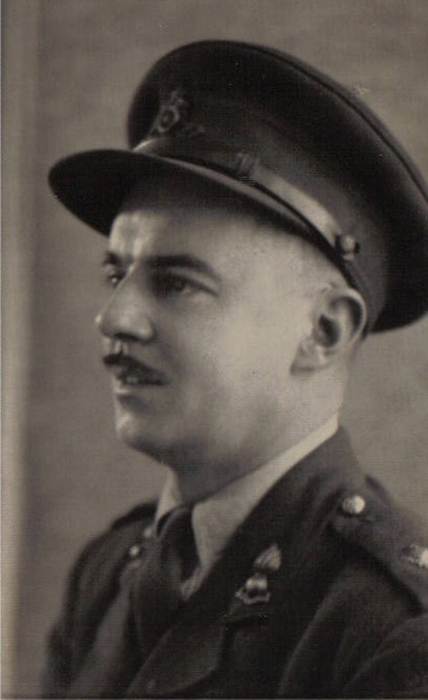
Raymond Farndale,
RCA, 1943
4272378 Cyril
Ernest Farndale (FAR00872)
enlisted into the Royal Artillery on 30 August 1939 and was discharged on 12
July 1942. He served in 100 Anti Tank Regiment Royal
Artillery.
Gordon Farndale (FAR00819)
served with the Royal Canadian Air Force. Wilfred Gordon Farndale, served as a Flight Lieutenant in the RCAF in
World War 2 in Europe and then became an accountant.
Gordon Farndale,
1944
Clarence Edward
Farndale (FAR00850)
served with the Royal Canadian Navy.


Clarence Farndale, 1960
Clarence and Gordon Farndale
Brigadier Cecil
Farndale Phillips (PHI0001
– see also http://www.generals.dk/general/Phillips/Cecil_Farndale/Great_Britain.html
and http://www.pegasusarchive.org/normandy/cecil_farndale_phillips.htm).
Lieutenant-Colonel Phillips was commanding 47 (Royal Marine) Commando during
the assault in the Le Hamel area on 6th June 1944. The task of this Commando
was to land behind the right assault brigade (231st Brigade) of the Division
and after passing through it advance and capture Port En Bessin, a distance of
some eight miles. Owing to the high wind and tempestuous seas several of the
assault landing craft were swamped and the occupants had to swim for it - much
equipment and many arms were lost. Undismayed by this fortune
Lieutenant-Colonel Phillips soon had his men assembled and re-organised, those
without weapon and equipment being made up from captured enemy material, and
the advance began. Soon after passing through the leading elements of 231st Brigade
the Commando ran up against stiff resistance and from then on until the port
fell to them the next day they had to fight the whole way. Never once did they
falter or hesitate and by the skill and leadership and determination of
Lieutenant-Colonel Phillips each successive point of resistance was
methodically and relentlessly overpowered - some 250 prisoners were captured as
well as a large number of enemy killed. The defence of the port was stronger
than had been anticipated, and included some well armed
flak ships. It was defended stubbornly and with great tenacity, but the
commando was not to be denied and by great feat of arms and endurance finally
triumphed. This outstanding achievement was largely due to Lieutenant-Colonel
Phillips' gallant conduct and resolution, the inspiring example he set and his
exceptional qualities as a leader and commander. After the conclusion of
the Normandy campaign, Lieutenant-Colonel Phillips continued to lead No.47
Commando until January 1945. He was subsequently promoted to Brigadier and
given command of the 116th Infantry Brigade RM. For his service with both of
these units in the Netherlands, he was made a Knight Commander of the Order of Oranje Nassau with Swords. His citation reads: The above
named officer commanded 47 (Royal Marine) Commando during the assault landing
on Walcheren and later, until January 1945, on River Maas North of Ousterhout,
when he returned to the United Kingdom on promotion. He returned the following
month in command of 116th Infantry Brigade RM which was deployed on the River
Maas between Tilburg and 's-Hertogenbosch. During the months of March and April
the Royal Netherlands Brigade served under command and took part in many highly
successful raids in strength across the river, notably at Hedel. In 1945 he
was Commanding Officer 116th Brigade Royal Marines, North-West Europe. Joined
Royal Marines 1923; Adjutant, Plymouth Div Royal Marines 1931-1934; HMS SUSSEX
1934-1937; battleship HMS RODNEY 1937; HMS ACHILLES (New Zealand) 1937-1939;
World War II 1939-1945; aircraft carrier HMS COURAGEOUS 1939; Staff College,
Camberley 1940; General Staff Officer Grade 2, 1 Div 1941; General Staff
Officer Grade 1, Royal Marine Div 1942; 47 Commando, Royal Marines 1943-1944;
Commander, 116 Infantry Bde, Royal Marines 1945;
Fleet Royal Marine Officer, British Pacific Fleet 1945-1946; Joint Sevices Staff College 1947-1948; School of Amphibious
Warfare 1949-1950; Commander, 3 Commando Bde, Royal
Marines, Malaya 1951-1952; Commander, Portsmouth Group Royal Marines 1952-1954;
Chief of Amphibious Warfare 1954-1957
4460826 Private
James Farndale (FAR00833) served
with the 2nd Battalion The West Yorkshire
Regiment (Prince of Wales’s Own). He died of wounds on 16 March 1941 at Keren,
Eritrea, aged 25, and his memorial is at Memorial 3.A.3, Keren War Cemetery.
1824896 Sergeant Bernard Farndale (FAR00783)
served with 115th Squadron RAF, and was killed in
action over Denmark on 30 August 1944. On the night before 30 August 1944
nearly 600 RAF bombers flew over Denmark on bombing raids to Königsberg and
Stettin. Particularly the planes for Stettin were attacked by German night
fighters, when they were passing the northern part of Jutland and the Kattegat.
LAN ME718 was hit and flew for a moment through the air before it crashed like
a burning torch at Oue (about 400 m west of Rinddalsvej
in Denmark). All of the bomb load exploded on impact. All of the crew were
killed.ME718 was attacked by a German night fighter and caught fire. At approx.
00:10 hours it crashed near Ove northeast of Hobro killing all onboard. The
bomb load exploded when the Lancaster hit the ground spreading wreckage and
human remains over a wide area. The Germans did not want to collect the human
parts and left them in the field. The locals were abused by this behaviour and
collected the remains in wickerwork baskets. The Wehrmacht ordered the Danes to
hand the baskets over, and these were thrown in the crater at the crash site
and covered it. When the Germans had left the area, the locals together with
members of the Civil Air Defence opened the crater and placed the remains in a
coffin which was driven to Ove church. On 4/9 1944 the flyers were laid to rest
in Ove cemetery unknown to the Wehrmacht, Vicar A. Bundgård officiating at the
graveside ceremony. The crew was: Pilot F/Lt Edward Chatterton RCAF, Flt. Engr.
Sgt Bernard Farndale, Air bomber Anthony Michael Kovacich RCAF, Navigator P/O
William George Sankey, W/Op Sgt Leslie Taylor, Air Gnr. P/O John Couzens Reeb,
Air Gnr. Sgt Donald Bullock. The German Wehrmacht took no steps to bury the
mortal remains of the 7 airmen in a decent manner. This caused heart felt
disagreements between the Danish bomb expert, other Danes and the Germans.
Later a coffin was procured. It was secretly brought to the chapel of rest by
the civil defence. On 4 November, 1944 the vicar A. Bundgård carried out the
funeral. The coffin was decorated with flowers, but there were only a few
mourners. Apparently the German Wehrmacht knew nothing of this funeral.
(Source: FAF). As the German did not want to pick up the many parts of bodies
of the airmen, Danes picked them up into baskets. The Wehrmacht ordered the
Danes to hand over the baskets which then were buried at the crash site. Danes
later disinterred the bodies when the Germans had left the area, procured a
coffin and took it to the chapel of rest at Oue Churchyard. (Source: Hjemmeværnets Historiske Samling i Himmerland about this plane and its crew.) One of
those killed was Sergeant (Flight Engineer) Bernard Farndale, 25, was the son
of Arthur Edwin and Mary Annie Farndale, of Robin Hood's Bay, Yorkshire, United
Kingdom. (Source: CWGC).
519912 Corporal
Albert Farndale, Royal Air Force
(FAR00820).
Ronald M Farndale (FAR00852)
served with the 6th Field Ambulance RAMC in Greece and Crete. He was
captured at Sidi Rezegh in 1941 and was a prisoner of war in Italy for the rest
of the war.
Sergeant William Derrick Farndale (FAR00811)
was patrol leader of the Withensea patrol on the east
Yorkshire coast.
521789 Corporal
Henry Stuart Farndale (FAR00832)
served with the Royal Air Force. He was a pilot under training and his aircraft
crashed and he was killed on 11 May 1945. His grave is at Section V Grave 265,
Leeds (Lawns Wood) cemetery..
185589, Private
(later Lieutenant) William Arthur James Farndale (FAR00829)
served with the Royal Army Ordnance Corps.
Bertram George Farndale (FAR00855)
served as a sergeant in the RAOC 1940 -45.
19199623 James Noel Farndale (FAR00889)
served with the US Army Air Corps in World War 2 in USA and in Europe. He
enlisted at Las Vegas into the Air Corps on 15 December 1942 as a Private.
36014559 Private Richard W Farndale (FAR00851C)
attested into the army on 28 March 1941 at Chicago, Illinois. He was a Mechanic
with the 43rd Division for 32 months in the Pacific.
The Cold War years
General Sir
Martin Farndale KCB (FAR00911) joined Indian Army 1946 and was commissioned
into Royal Artillery October 1948 from the first intakes at the Royal Military
Academy Sandhurst. He served Egypt, Germany, Malaya, N Ireland, South Arabia.
He retired January 1988 as Commander in Chief of the British Army of the Rhine
and commander of the Northern Army Group of NATO. He was awarded the General
Service
Medal, Malaya and for Northern Ireland and for South Arabia; the Coronation
Medal; CB; KCB; and the Canadian Medal. Martin Farndale was the inventor of the Farndale Cocktail. He died
on 10 May 2000.

Keith Alan
Farndale (FAR00976)
was from New Zealand, but served as a Petty Officer in the Royal Navy.

James Henry Farndale (FAR01064)
served with 1st Battalion Kings Own Scottish Borderers.
Gary R Farndale (FAR01121)
served with the British Army on The Rhine.
Gulf War 1
522843 Major
Richard Farndale (FAR01122) was commissioned into Royal Artillery in 1987 from the Royal Military
Academy Sandhurst and served in Germany, UN Forces Cyprus 1990, and as an
artillery forward observation officer during the First Gulf War 1991, Adjutant First Regiment Royal Horse
Artillery, 105 Regiment TA Scotland. He was awarded the UN Medal (UN Forces
Cyprus), and the Gulf War Medal.
